The Loaf That Comes with Every Meal
Think homemade bread requires a stand mixer, a starter, and a free weekend? Moroccan home bread says otherwise. This easy Moroccan bread recipe uses seven everyday ingredients, one bowl, and about ten minutes of actual hands-on work. The rest is just waiting while the dough does its thing.
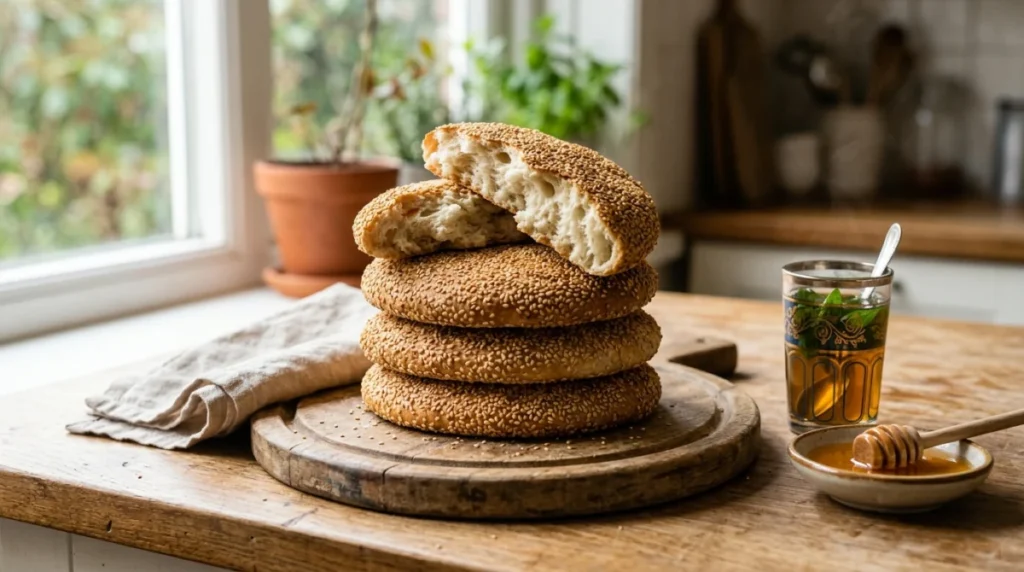
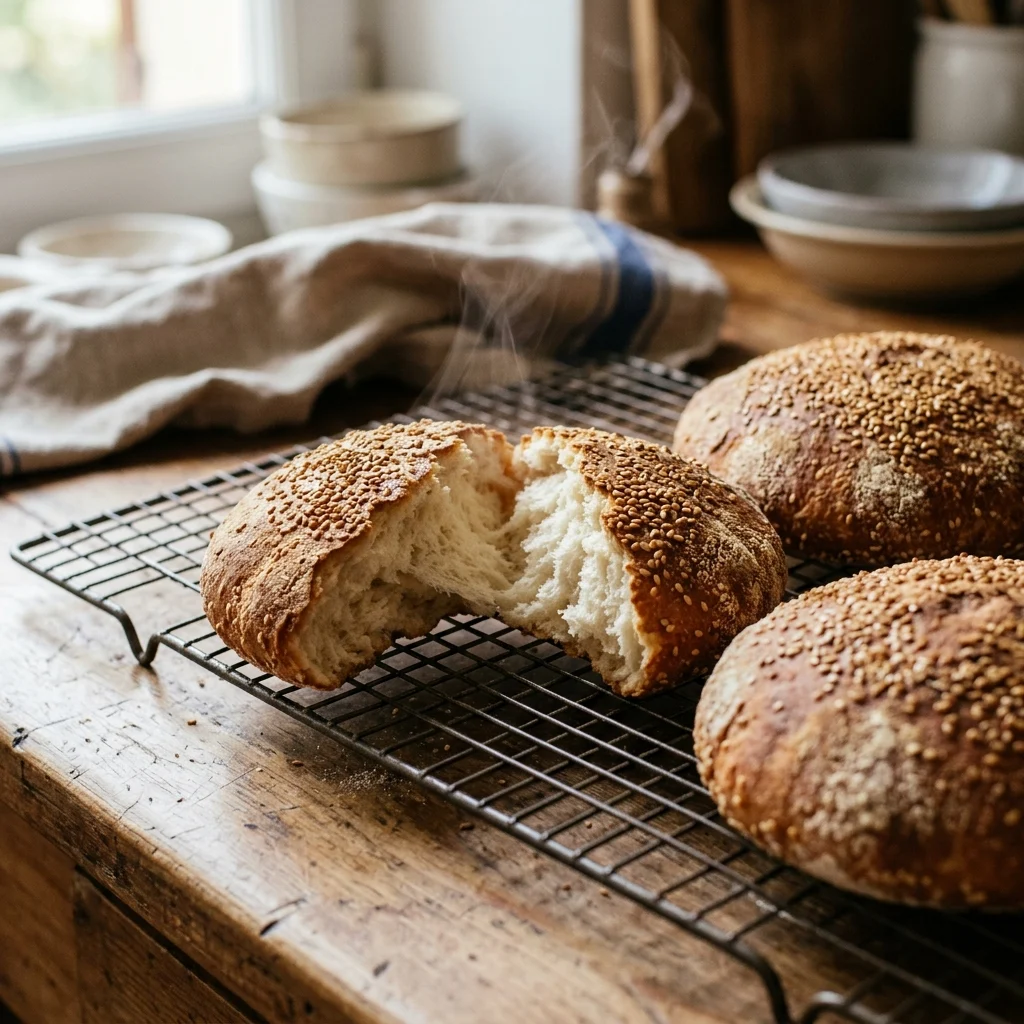
What comes out of your oven is a batch of golden, sesame-crusted rounds with a soft, pillowy crumb and a gentle chew. Torn open warm, they smell faintly sweet and nutty, and they are sturdy enough to scoop up stews, dips, or a drizzle of honey at breakfast.
This is the bread for when the basket is empty and dinner is already cooking. It is built around standard supermarket flour, so nothing special is needed to get it right.
Below you will find the short ingredient list, the one optional item worth hunting down (and its swap), six numbered steps with photos, the trick to a soft crumb, and answers to the questions new bread bakers ask most.
One Rise, Seven Ingredients
- Seven ingredients, all from a regular US or UK supermarket. Flour, yeast, sugar, salt, water, sesame seeds, and a beaten egg for the wash. The optional fine semolina gets a simple substitution below.
- Genuinely beginner-friendly. The dough is soft but forgiving, there is no stand mixer or bread machine involved, and the shaping is just patting rounds. No braiding, scoring, or steam tricks.
- Weeknight-realistic. About 15 minutes of hands-on time; the rest is rising (roughly an hour) and a quick 15 to 18 minute bake.
- Naturally fits most tables. The bread itself is vegetarian, halal, and dairy-free, and the vegan swap for the egg wash is one line in the Variations section.
About Khobz: Morocco’s Daily Bread
Khobz (the Arabic word for bread, pronounced roughly “khubz”) is the round, everyday loaf baked in homes across Morocco and much of North Africa. Traditionally, families shaped their dough at home and carried it to a shared neighborhood oven, and in many towns that tradition is still alive.
In Morocco, bread is not a side dish; it is the utensil. Meals like tagine (a slow-cooked North African stew) are eaten by tearing off pieces of khobz and scooping straight from the shared dish, which is why the bread is soft but sturdy, closer to a thick pita than a French baguette.
If you have only baked Western sandwich loaves, khobz will feel refreshingly low-stakes: flat-ish rounds, one rise that matters, and no loaf pan required.
Seven Ingredients for Khobz
For the Dough
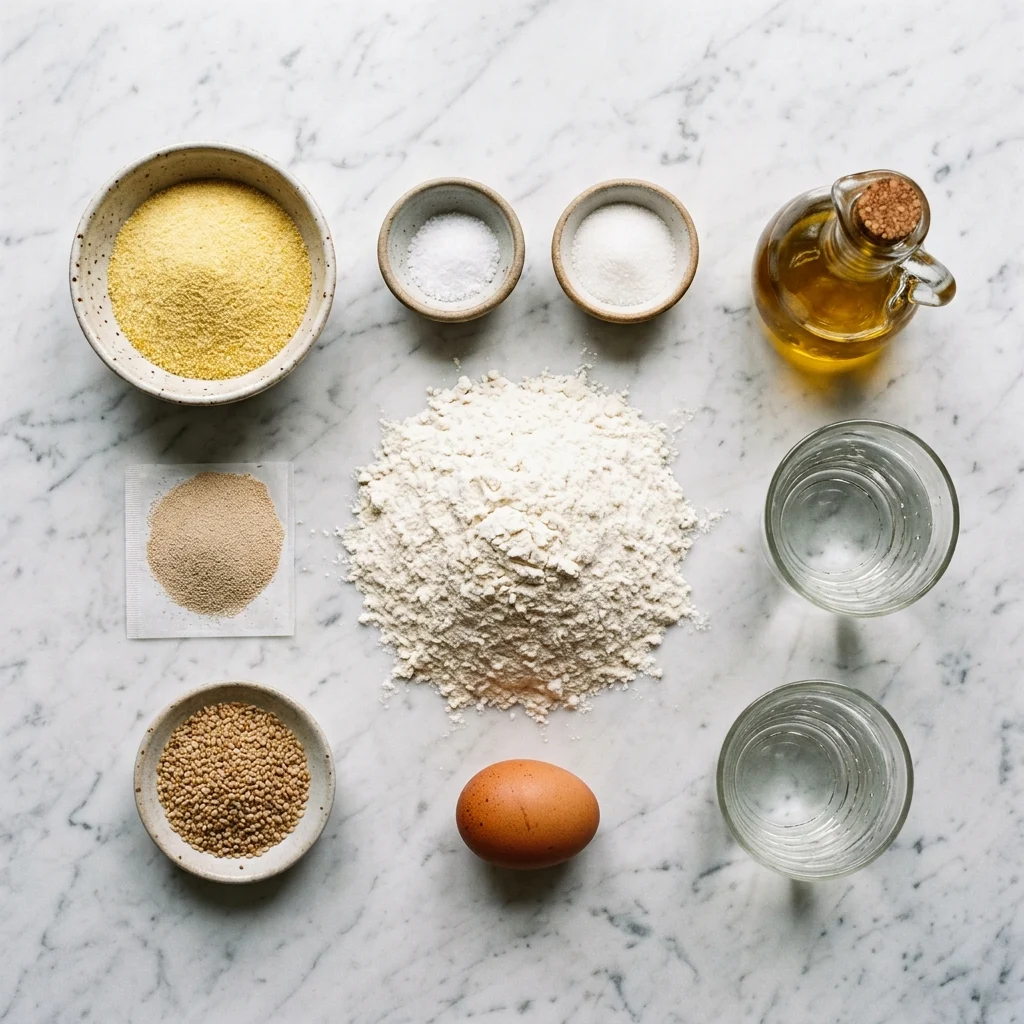
Makes 4 medium rounds:
- 3 cups (375 g) plain flour (all-purpose in the US), plus more for dusting
- ½ cup (80 g) fine semolina (optional but traditional, see substitutions)
- 1 tablespoon sugar
- 1½ teaspoons salt
- 2¼ teaspoons (7 g / 1 packet) instant yeast
- 1¼ cups (300 ml) warm water, plus a little more if needed
- 2 tablespoons olive oil
- 1 egg, beaten, for the wash
- 2 tablespoons sesame seeds
Where to Find Semolina and Sesame Seeds in the US and UK
Fine semolina is the only ingredient here that might send you searching. In the UK, most large supermarkets stock it in the baking or international aisle; in the US, look near the specialty flours (Bob’s Red Mill sells it widely) or in the pasta section, since it is the same semolina used for pasta-making.
A Middle Eastern or Mediterranean grocery will carry fine semolina cheaply in bigger bags, and Amazon has it too. Sesame seeds are in every supermarket’s baking or spice aisle, and much cheaper at an international grocery if you have one nearby.
Flour Swaps
- No semolina? Just use 3½ cups of plain flour total. The semolina adds a subtle golden color and a slightly rustic bite, but the bread is still excellent without it.
- Only active dry yeast (not instant)? Use the same amount, but dissolve it in the warm water with the sugar first and wait 5 to 10 minutes until foamy before mixing.
- No sesame seeds? Nigella seeds, poppy seeds, or a plain egg-washed top all work. Moroccan bakeries themselves vary the topping.
Kneading, Rising, Shaping, Baking
Step 1: Mix the Dough
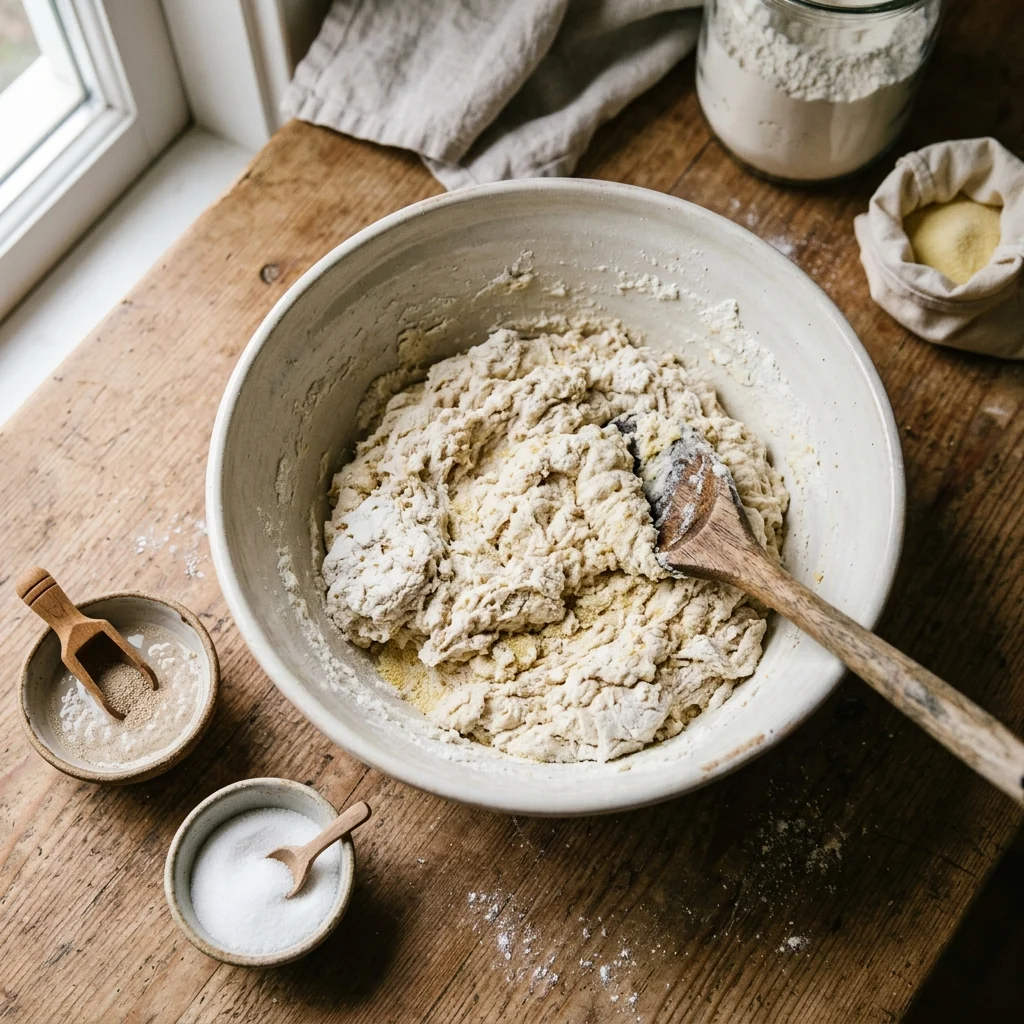
In a large bowl, whisk together the flour, semolina, sugar, salt, and yeast. Add the warm water and olive oil, and stir with a wooden spoon or your hand until a shaggy dough forms with no dry patches.
Prep tip: Warm water means comfortable-bath warm, around 100 to 110°F (38 to 43°C). Water that is too hot slows or kills the yeast, which is why hot-tap water in a hurry is the usual culprit behind a flat loaf. If it would feel hot on your wrist, let it cool a minute.
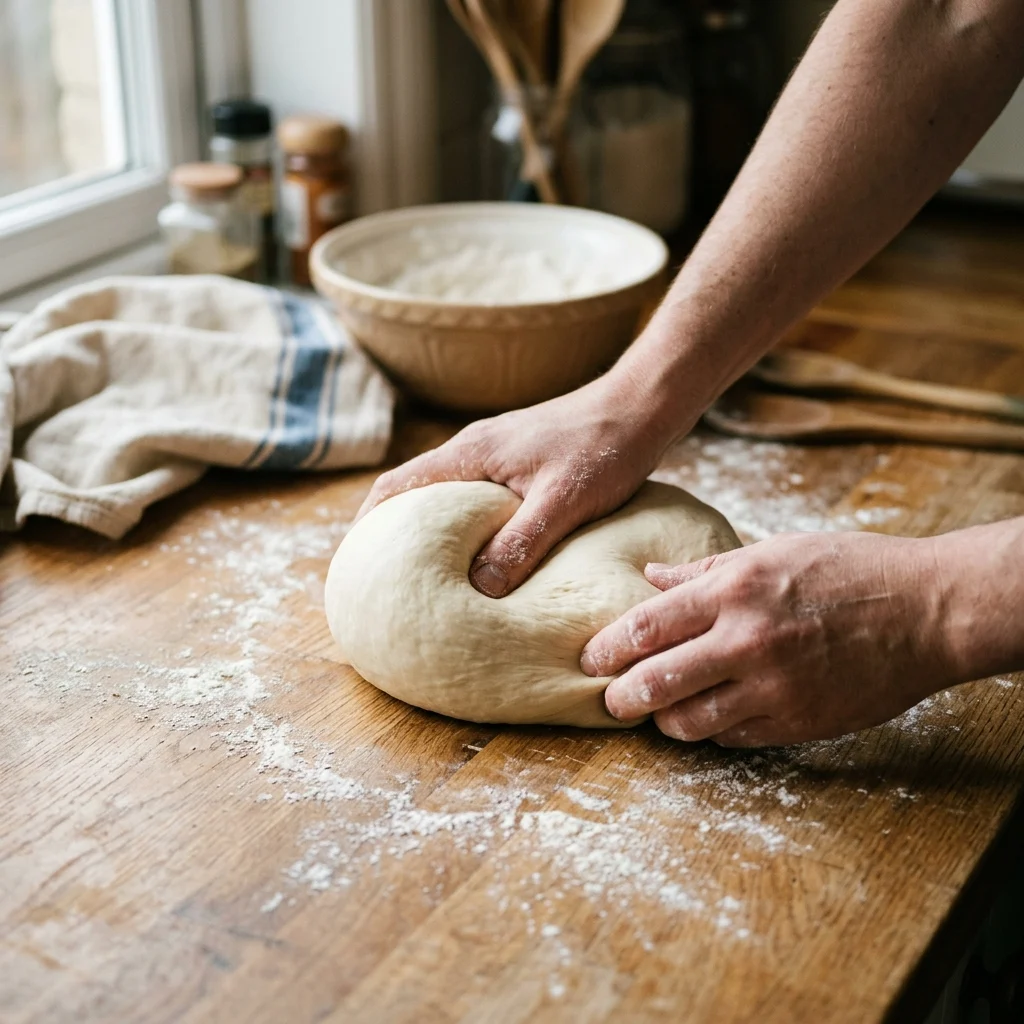
Step 2: Knead Until Smooth
Turn the dough onto a lightly floured counter and knead for 8 to 10 minutes, until smooth and springy. It should feel soft and slightly tacky but should not stick to your hands in clumps; add flour a spoonful at a time only if it does.
Prep tip: Set a timer and actually knead the full time. Under-kneaded khobz bakes up dense and crumbly instead of soft, and the full ten minutes is where the texture comes from. The 10 minutes is where the texture comes from.
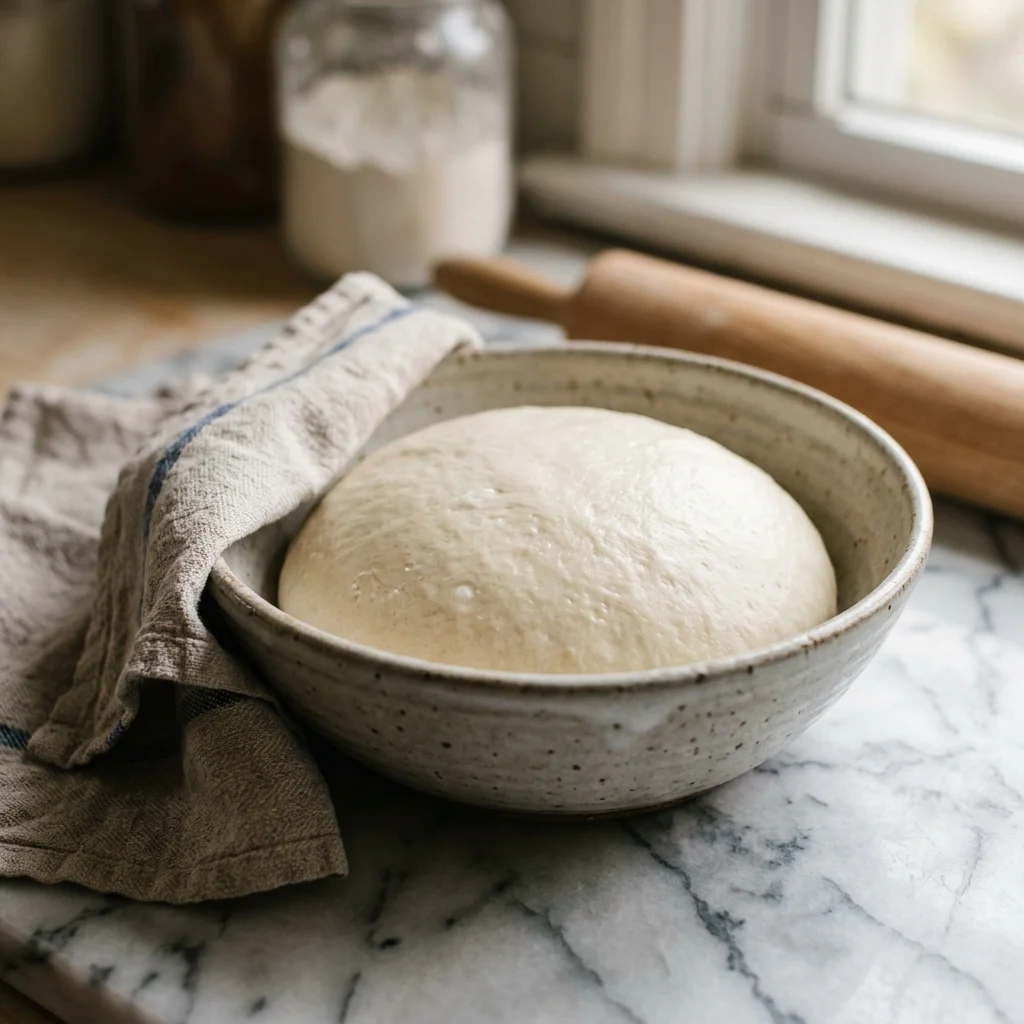
Step 3: Let the Dough Rest
Shape the dough into a ball, return it to the bowl, cover with a damp tea towel, and leave it somewhere warm for 20 to 30 minutes, until noticeably puffy. It will not fully double like Western bread doughs; khobz takes its main rise after shaping.
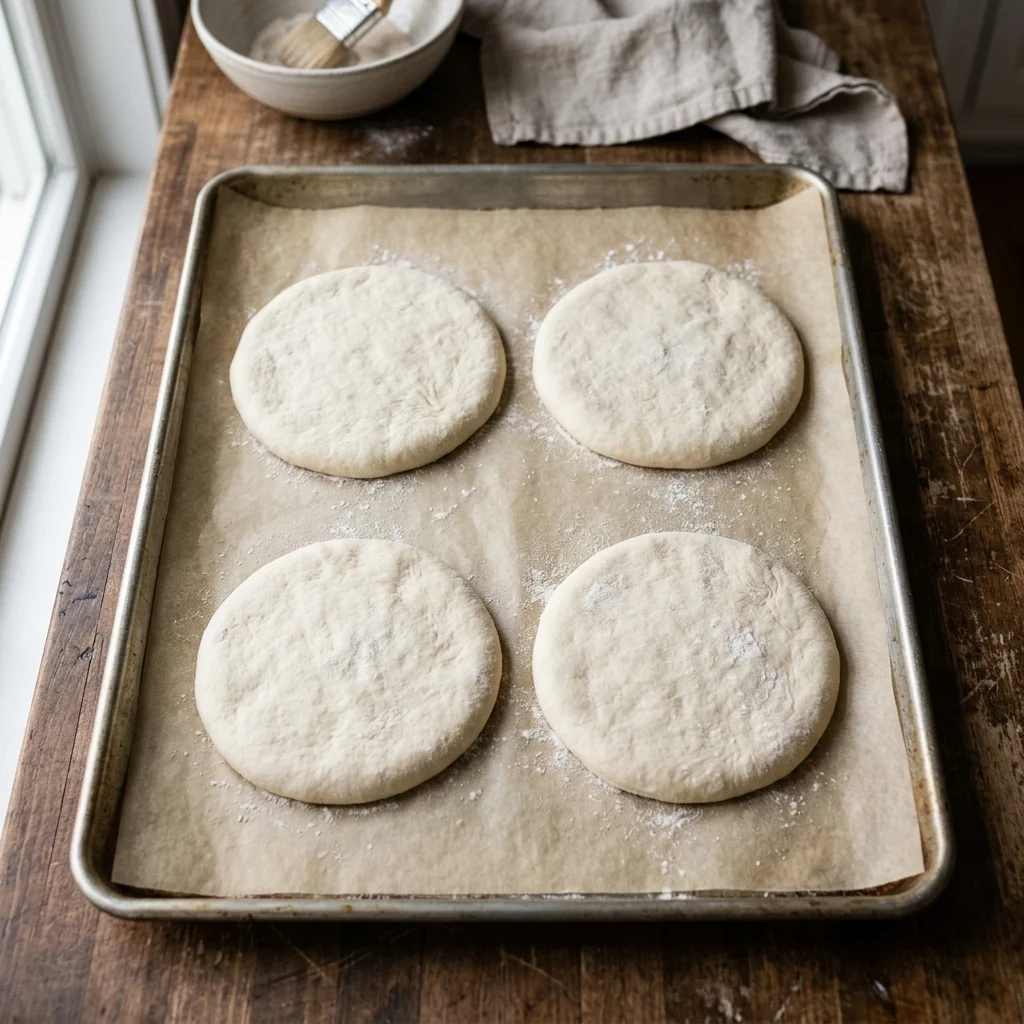
Step 4: Divide and Shape the Rounds
Divide the dough into 4 equal pieces. Roll each into a ball, then flatten gently with your palm into a disc about ¾ inch (2 cm) thick. Place the rounds on a parchment-lined baking sheet, cover again, and let them rise for 30 to 40 minutes until puffed.
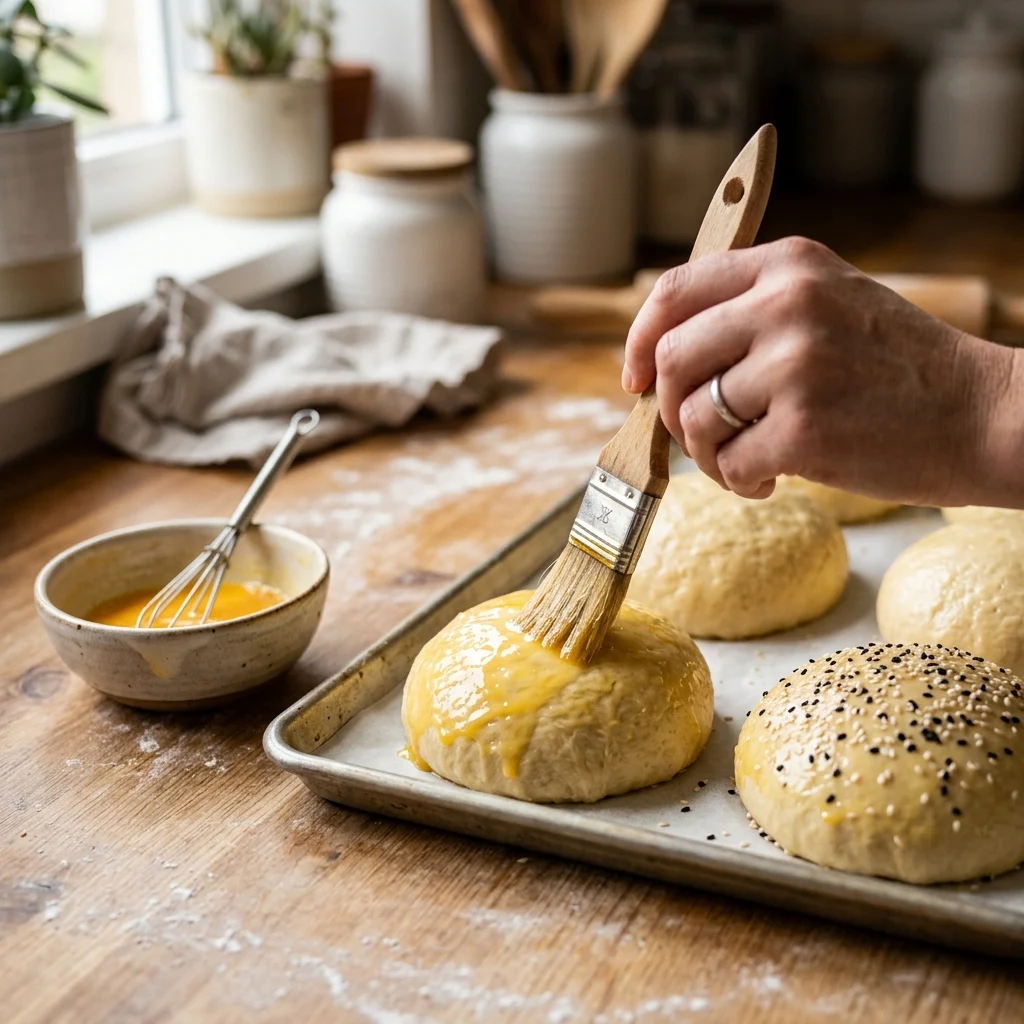
Step 5: Brush with Egg and Sprinkle Sesame
Heat your oven to 425°F (220°C) while the rounds finish rising. Brush each one gently with beaten egg, soft strokes so you do not deflate them, and sprinkle generously with sesame seeds. Prick each round a few times with a fork so they bake flat instead of ballooning.
Step 6: Bake Until Golden
Bake for 15 to 18 minutes, until the tops are deep golden and the bottoms sound hollow when tapped. Cool on a rack for at least 10 minutes (the crumb finishes setting as it cools), then serve warm.
Knowing When the Dough Is Ready
- Weigh your flour if you can. Cup measurements vary with how you scoop, and a cheap kitchen scale is the best tool upgrade in bread baking. Using cups? Spoon the flour in and level it rather than scooping.
- Give the second rise its full time. The rise after shaping is where khobz gets its soft interior; rushing it gives you flat, tight rounds.
- Storage: Khobz keeps at room temperature in a bread bag or wrapped in a tea towel for 2 days, and it freezes brilliantly. Freeze fully cooled rounds and refresh straight from frozen in a hot oven for 5 minutes.
- Stale khobz is an ingredient, not a loss. Tear it into a fattoush-style salad, toast it for dipping, or split and grill it with butter for breakfast.
Wholemeal, Seeded, and Smaller Rounds
Vegan Moroccan Bread
Swap the egg wash for a brush of olive oil or a mix of 1 tablespoon plant milk with ½ teaspoon maple syrup. The shine is slightly softer, the sesame still sticks, and the bread itself was already vegan.
Quick Weeknight Khobz Shortcut
Short on time? Skip the first rest: knead, shape immediately, and give the rounds one 40-minute rise before topping and baking. The crumb is a touch less airy, but you save half an hour and still beat anything from a supermarket shelf.
The Anise Version
A teaspoon of whole anise seeds worked into the dough itself, not just the top, is a common homestyle touch in Morocco. It makes the bread fragrant enough to eat plain. If you like fennel or licorice notes even slightly, try it once.
What Khobz Is For
This bread was born to sit next to saucy food. Serve it with chicken tagine or any stew, use it to scoop hummus (chickpea and tahini dip), or put it on the table with the easy chicken shawarma recipe for a full Middle Eastern-style spread. It holds up to juicy fillings better than pita.
For familiar Western pairings, treat it like a great dinner roll: alongside soup or chili, split for sandwiches, or warm at breakfast with butter, jam, or honey, which is exactly how it is eaten with mint tea across Morocco.
Khobz, Answered
Can I make Moroccan bread ahead of time? Yes: bake, cool completely, and freeze for up to 3 months, refreshing in a hot oven for 5 minutes. Or shape the rounds, refrigerate covered overnight, and bake fresh the next day.
What can I substitute for semolina in khobz? Use the same weight of plain (all-purpose) flour. The bread loses a little golden color but stays soft and delicious. Both versions are widely made.
Why didn’t my bread rise? Usually one of two things: water too hot when it met the yeast, or yeast past its date. Check the expiry, use wrist-warm water, and give the shaped rounds their full second rise somewhere warm.
How do I store leftover khobz? Room temperature in a bread bag or tea towel for 2 days, or the freezer for 3 months. Skip the fridge: it dries bread out faster than the counter does.
Is this recipe vegetarian, vegan, or halal? It is vegetarian and halal as written. For vegan, swap the egg wash for olive oil or plant milk as described in the Variations section; everything else is already plant-based.
Bake Your First Loaf Tonight
If you have been meaning to bake bread but every recipe looked like a project, start here. Six steps, one bowl, no special equipment, and a kitchen that smells like a Moroccan bakery by dinnertime. It is the perfect partner for a bowl of harira.
Bake a batch this week and tell me in the comments how it went, especially if you tried the anise version. And if you know someone convinced they can’t bake bread, share this recipe. Khobz is the loaf that proves them wrong.
Rate this recipe
No ratings yet — be the first!




If your bread did not rise, check the water temperature first. Wrist-warm is right; hot tap water slows or kills the yeast. It is the cause about nine times in ten.
Comments
No comments yet. Yours would be the first.
Baked a batch? Tell me how it went, and whether you tried the anise version.
Leave a comment
Comments are anonymous and appear after admin approval. If you rated this recipe above, your stars will show with your comment.