
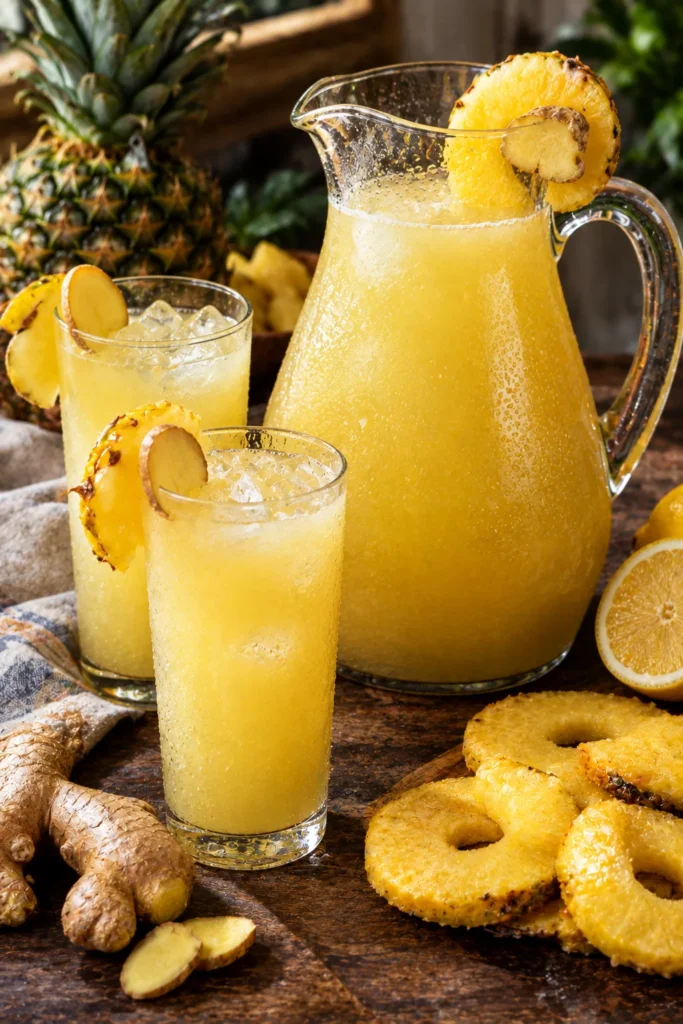
The Fastest Recipe on This Blog
There is no pot, no oven and no waiting. Everything goes into a blender, gets blended, gets strained, and you drink it. Five minutes from start to glass, and most of that is peeling the ginger.
What comes out is sharper and more bracing than it sounds on paper. Sixty grams of raw ginger in a litre of juice is a lot, deliberately so, and it gives the drink a genuine heat at the back of the throat that the pineapple and sugar soften without removing.
A note on the name. This is traditionally called a lemon and ginger juice, but look at the ingredient list and the pineapple is doing most of the work: it carries the body, most of the sweetness, and the thickness. The lemon is there to sharpen, and the quantity is deliberately left loose because the pineapple varies so much.
The one thing you genuinely cannot skip is the straining, and the reason is explained below.
Ahead: how to buy and peel ginger, the ingredient list, three steps with photos, why the fibres have to come out, and what the health claims are actually worth.
Buying and Preparing Ginger
Look for firm, smooth roots with tight skin. Wrinkled ginger is old, drier and more fibrous, which matters more here than in cooking because you are blending it raw.
Peel it with a spoon, not a knife or a peeler. Scrape the edge of a teaspoon along the surface and the skin comes away in thin sheets, following the knobbly shape without taking flesh with it. It is faster than a peeler and wastes considerably less.
Sixty grams is roughly a thumb-sized piece, and it is intentionally a lot. If you are new to raw ginger, start with forty and work up.
Store the rest in the freezer. Ginger freezes perfectly, grates straight from frozen, and stops the depressing cycle of buying a root and finding it shrivelled three weeks later.
Ingredients You’ll Need
Main Ingredients
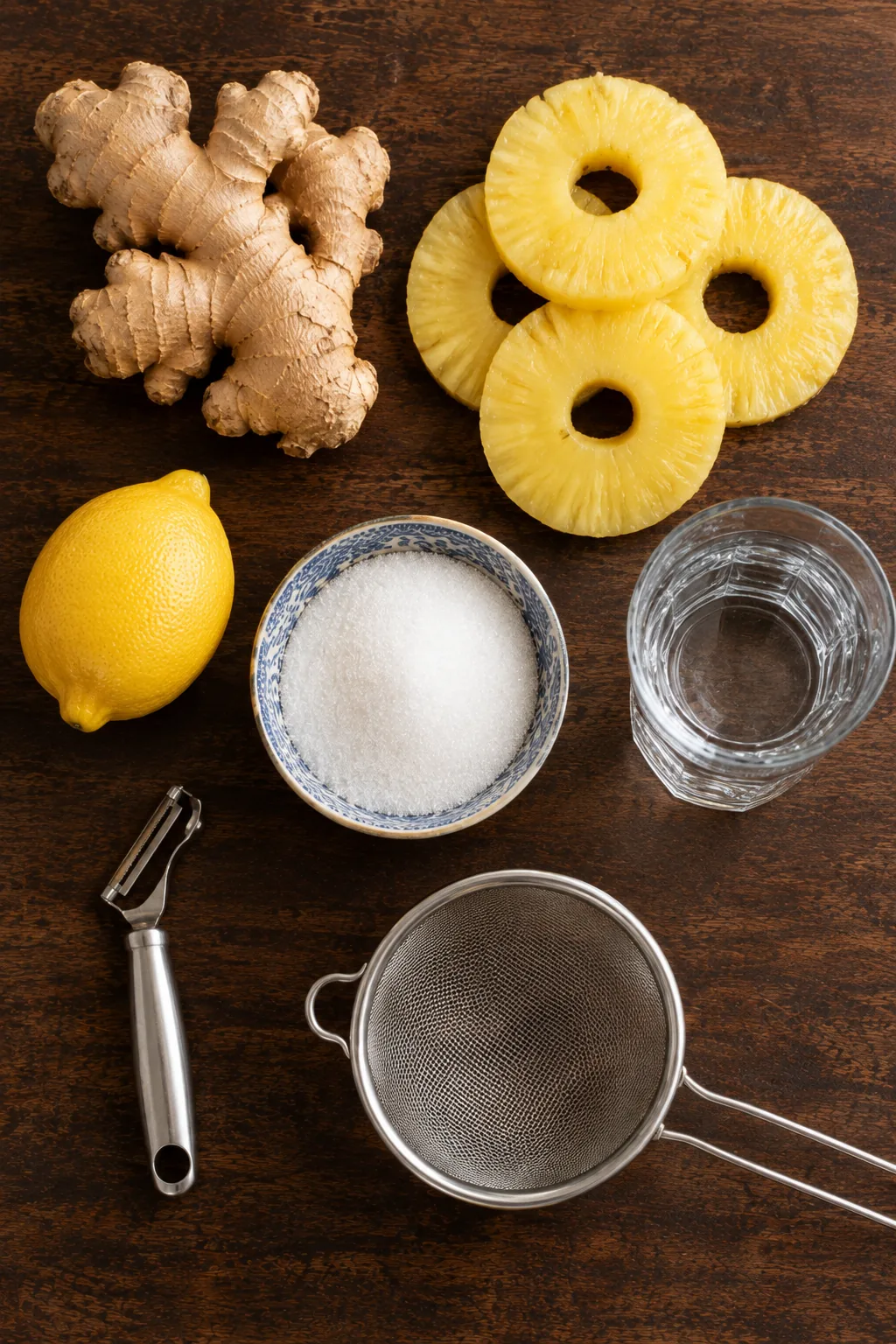
Serves 4
- 2 oz (60 g) fresh ginger, peeled
- 4 pineapple rings, fresh or tinned in juice
- 4 tablespoons granulated sugar
- 4 cups (1 litre) water
- Juice of 1 lemon, or to taste
- Ice cubes, to serve
On the Pineapple
- Fresh is better but tinned works genuinely well here, and it is what most households use.
- If using tinned, choose rings in juice rather than syrup, and reduce the sugar to two or three tablespoons since the fruit is already sweeter.
- Four rings is about 200 g. If you are cutting from a fresh pineapple, use roughly that weight of flesh.
On the Lemon
The original recipe says simply the juice of a lemon, without a quantity, and that is sensible rather than vague. Pineapples vary enormously in sweetness, so the right amount of lemon depends on the fruit in front of you. Start with half, taste, and add the rest if it needs sharpening.
Easy Substitutions
- No pineapple? Mango works and gives a thicker, sweeter drink. Orange works and gives a thinner, sharper one.
- No fresh ginger? Ground ginger is not a substitute here. The heat and the brightness both come from the fresh root, and the powder tastes dusty in a raw drink.
- Want it less sweet? Drop to two tablespoons of sugar, particularly with tinned pineapple.
Step-by-Step Instructions in 3 Steps
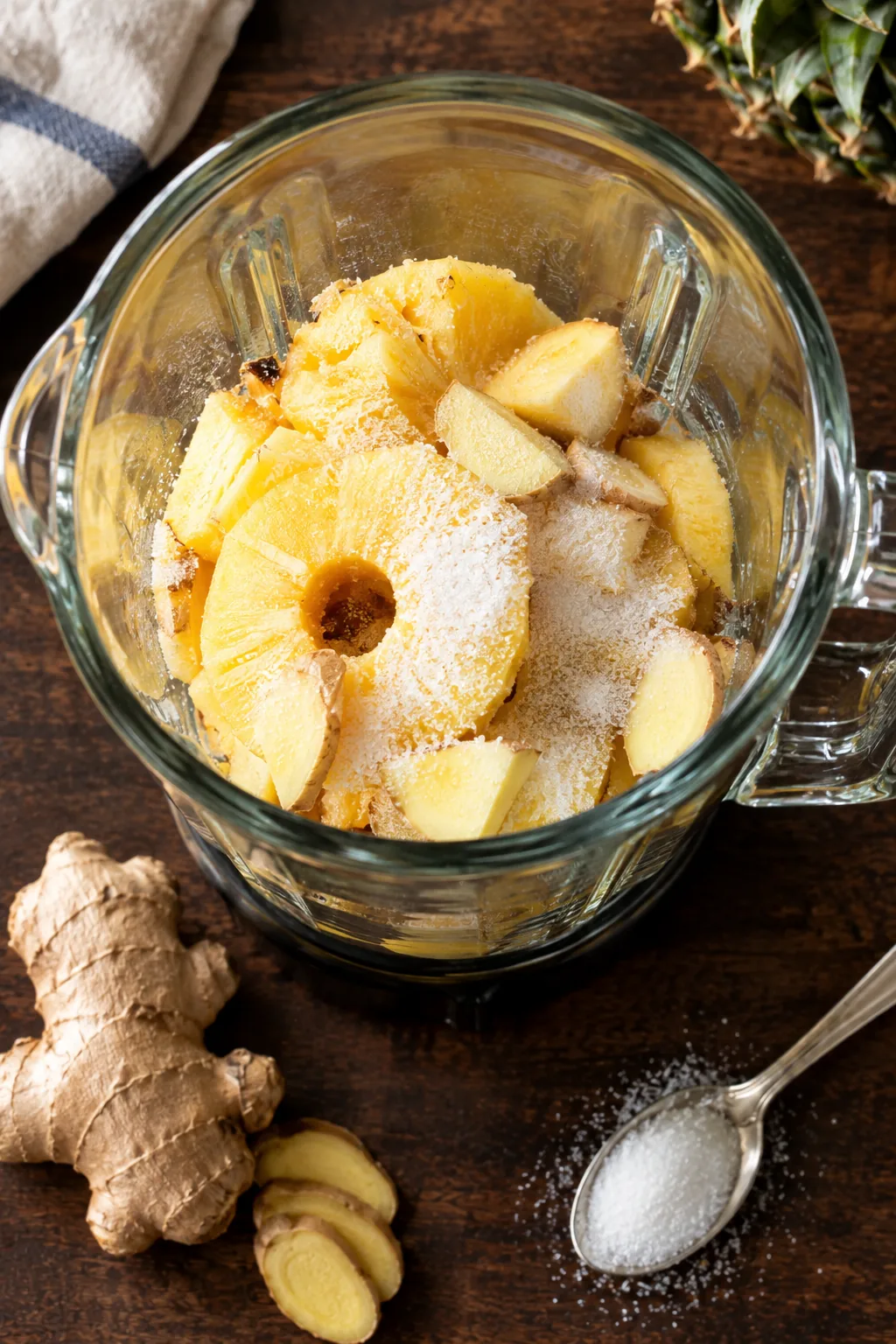
Step 1: Load the Blender
Put the pineapple rings into the blender. Peel the ginger, cut it into rough pieces, and add it with the sugar.
Prep tip: Cut the ginger small before it goes in. Large chunks bounce around the blades and end up only partly broken down, which means more fibre caught in the sieve later and less flavour in the drink.
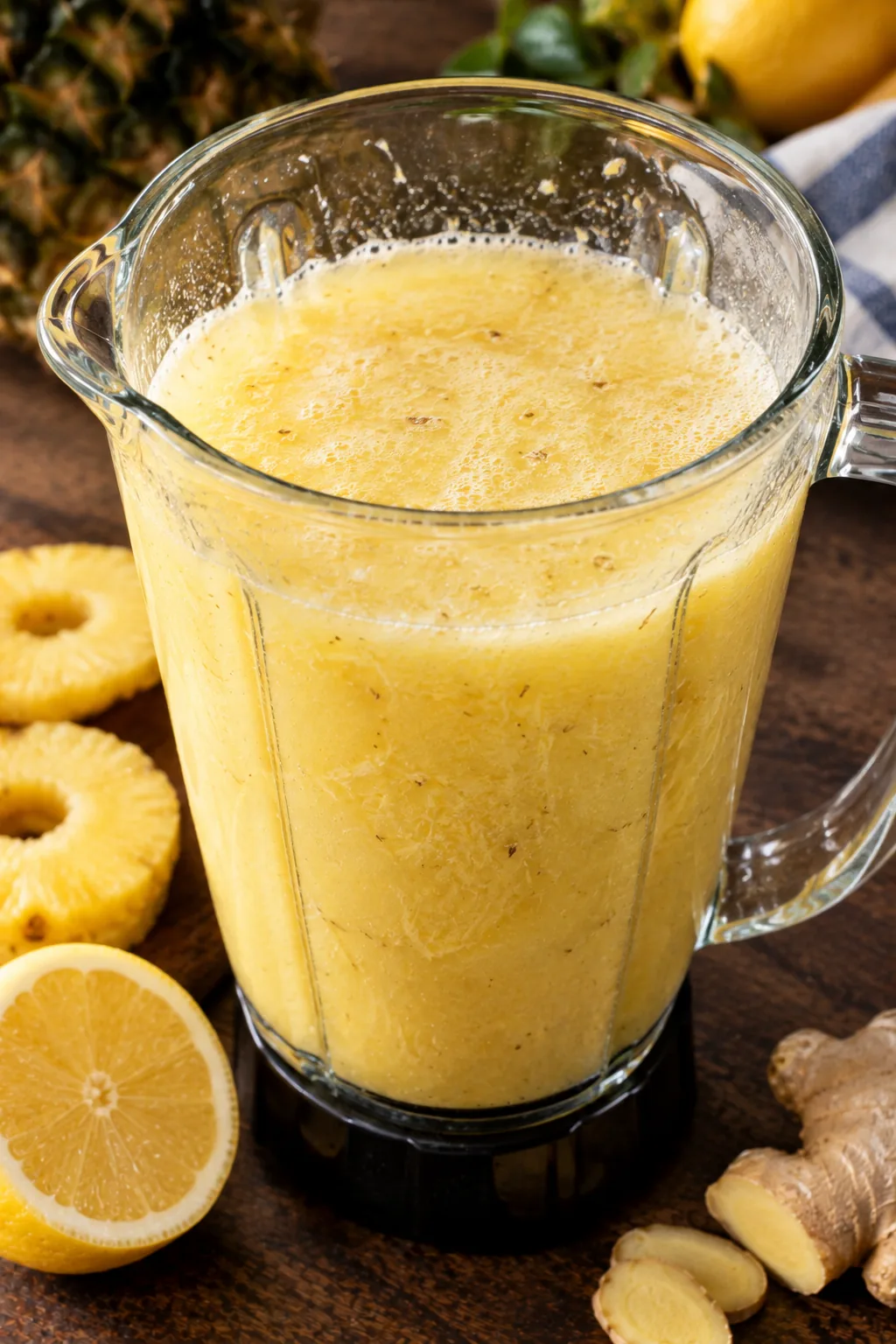
Step 2: Add Liquid and Blend
Pour in the water and lemon juice, put the lid on, and blend thoroughly for a good minute until no large pieces remain.
Prep tip: Blend longer than feels necessary. Ginger fibre is tough and a quick pulse leaves most of it intact, which means less of its flavour makes it into the liquid. A full minute at high speed extracts considerably more.
Step 3: Strain and Serve
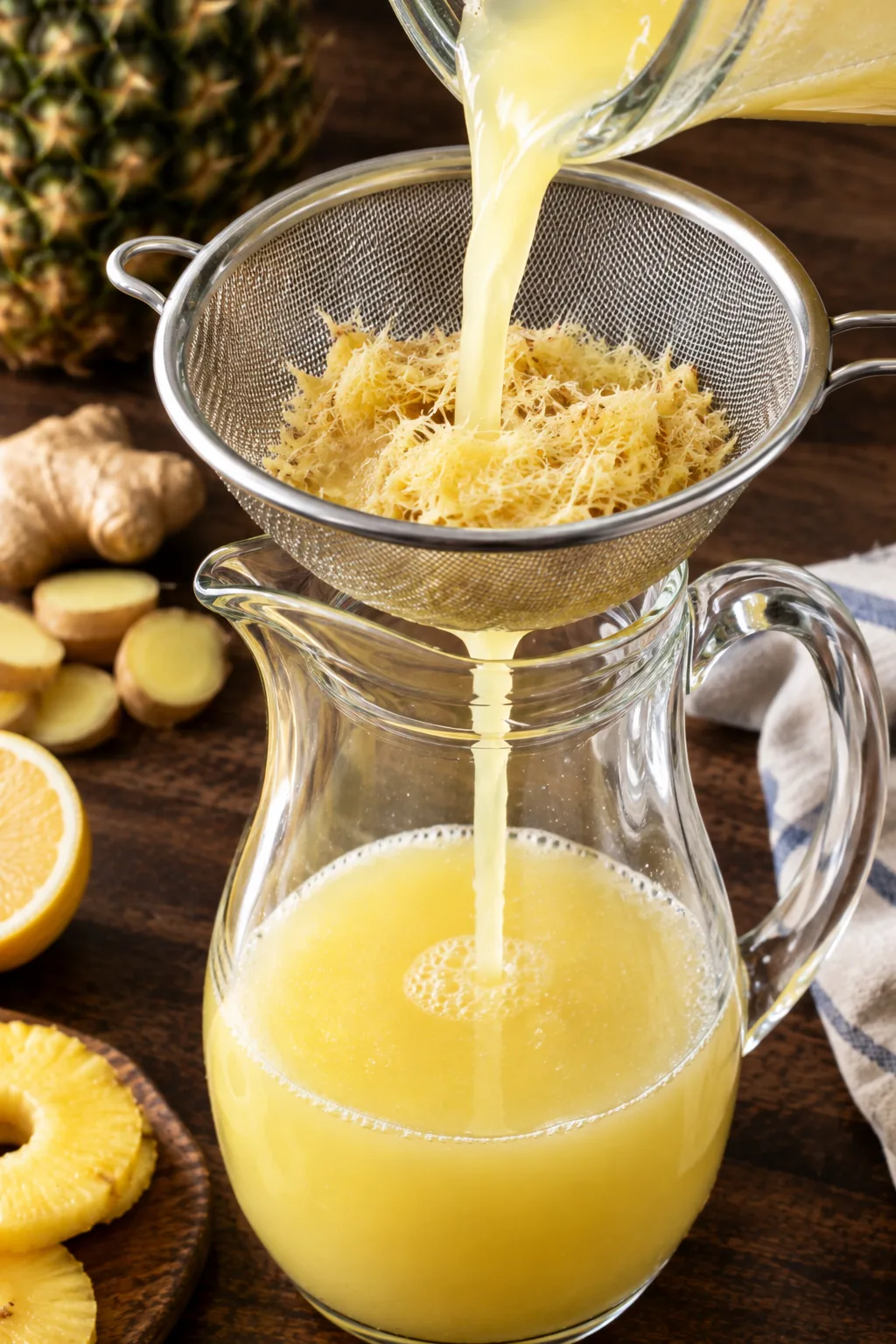
Pour the mixture through a fine sieve into a jug, pressing gently on the solids. Discard the fibres. Taste, adjust the lemon or sugar, and serve over ice.
Prep tip: This is the step people skip and should not. Raw ginger fibre does not break down fully even in a powerful blender, and unstrained it leaves a stringy texture that gets worse as the jug sits. A fine sieve takes ten seconds.
Why the Straining Is Not Optional
Ginger root is held together by tough cellulose fibres running along its length. They are what make it stringy when you bite into a piece, and they are largely indestructible in a domestic blender.
Blending shreds them into fine threads rather than dissolving them. Suspended in liquid they are unpleasant to drink and they gather in the bottom of the glass, and the longer the jug stands the more noticeable they become.
A fine mesh sieve removes them in seconds. A double layer of muslin gives an even cleaner result if you want it.
About This Drink
Fresh ginger drinks appear across North Africa and the Middle East in various forms, and this pineapple version is a modern household one rather than an old traditional recipe. It belongs to the same corner of the table as my citronnade recipe and my orange and lemon juice recipe: cold drinks made in quantity, kept in the fridge, poured through summer and at iftar.
What distinguishes it is that nothing is cooked. The other two both involve a pot. This one is a blender and a sieve, which makes it the thing you make when guests are already at the door.
On the traditional health claims: older recipe books often describe ginger as anti-inflammatory, good for cholesterol and protective of the digestive system and joints. Ginger has been used medicinally for a very long time and there is some research on its effects, but these are traditional claims rather than settled medical facts, and nothing here is medical advice. Enjoy it as a drink.
Pro Tips for the Best Result
- Taste before you chill it. Cold dulls both sweetness and acidity, so a jug that tastes balanced at room temperature will taste flatter once cold. Adjust while it is still warm.
- Serve it the same day. Unlike the boiled citrus drinks, this is raw and it loses its brightness after about 24 hours in the fridge.
- Keep the strained fibre for tea. A spoonful of the ginger pulp in hot water with honey makes a decent ginger tea, so nothing is wasted.
- Use ice in the glass, not the jug. Ice in the jug dilutes the whole batch as it melts.
Variations
With Mint
Add a handful of fresh mint leaves to the blender. It comes through clearly against the ginger and makes the drink noticeably more cooling.
With Turmeric
Add a small piece of fresh turmeric, about 15 g, peeled. It turns the drink a deep gold and adds an earthy note underneath the ginger.
Sparkling
Blend and strain as normal using half the water, then top each glass with cold sparkling water. Sharper and more refreshing.
My House Version
In my kitchen the ginger goes in at closer to eighty grams, because the point of this drink is the heat and the pineapple softens it more than people expect. The lemon goes in at the end rather than the start, so it can be adjusted after tasting.
What to Serve with It
It cuts through rich and fried food particularly well, so it suits a table with my briouates recipe or anything fried alongside.
At iftar it sits beside dates and my harira recipe, where something cold and sharp after a long fast is often more welcome than tea.
FAQs
Do I have to strain it? Yes. Raw ginger fibre does not break down fully even in a strong blender, and unstrained it leaves a stringy texture that worsens as the jug stands. A fine sieve takes ten seconds.
Can I use ground ginger instead of fresh? No. The heat and the brightness both come from the fresh root, and ground ginger tastes dusty in a raw uncooked drink. This is one of the few places where the powder genuinely will not do.
How much lemon should I use? Start with half a lemon, taste, and add more. The original leaves the quantity open deliberately, because pineapples vary a great deal in sweetness.
Can I use tinned pineapple? Yes, and most households do. Choose rings in juice rather than syrup, and reduce the sugar to two or three tablespoons since tinned fruit is sweeter.
How long does it keep? Best the same day. It is raw, so it loses its brightness after about 24 hours in the fridge, unlike the boiled citrus drinks which keep for days.
Blender, Sieve, Glass
Cut the ginger small, blend for a full minute, strain properly, and adjust the lemon at the end. Five minutes, no heat, and nothing to wash up but a jug and a sieve.
Make it next time someone arrives unannounced and report back: sixty grams of ginger or more, fresh pineapple or tinned, and whether anyone asked what the heat was. Usually they do.
Rate this recipe
No ratings yet — be the first!



Comments
No comments yet. Yours would be the first.
Made this? Tell me how it went, what you changed, and whether it worked in your kitchen.
Leave a comment
Comments are anonymous and appear after admin approval. If you rated this recipe above, your stars will show with your comment.