
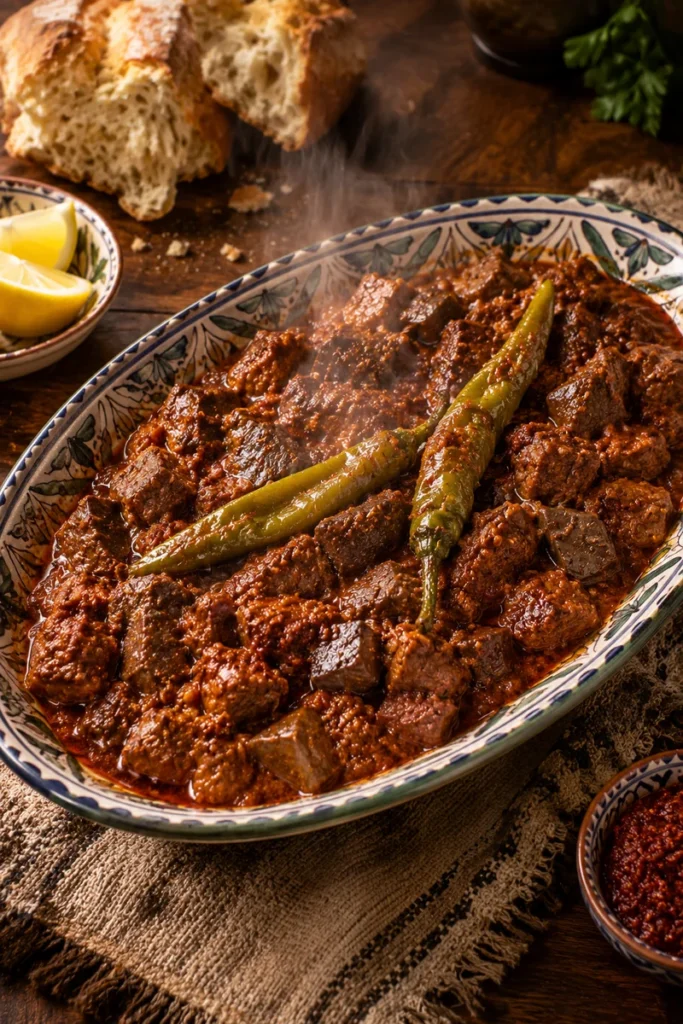
The Dish Named After a Spice
Most dishes are named for what they are made of. Kammounia is named for how it tastes. Kammoun is cumin in Tunisian Arabic, and this stew uses so much of it that the spice becomes the identity of the dish rather than a seasoning.
Underneath the cumin: beef and liver simmered in a harissa and tomato sauce with a great deal of garlic. The liver is the part that makes people hesitate, and it is worth being direct about that. Cooked badly it is grey, grainy and metallic. Cooked properly it is tender and rich and disappears into the sauce alongside the beef.
The difference is entirely timing, and it is the one rule this recipe turns on: the liver goes in late and comes off the heat early. Everything else here is a straightforward stew.
In my kitchen this is winter food, made in a single pot and eaten with bread rather than rice. It is also one of the cheapest things you can cook, since liver costs almost nothing and a small amount of beef stretches a long way.
Ahead: the Egyptian and Tunisian versions untangled, buying and preparing liver, the ingredient list, five steps with photos, and the timing that decides everything.
Egyptian Kamounia vs Tunisian Kammounia
Both exist, both are correct, and they share a name and a spice rather than a recipe.
Egyptian kamounia is usually liver alone, cooked with cumin, garlic and sometimes tomato into a thick, dark, intensely cumin-heavy stew. It is what many people mean when they say the word.
Tunisian kammounia combines liver with beef, leans on harissa alongside the cumin, and produces a redder, spicier sauce. The version in this recipe is the Tunisian one.
If someone tells you kammounia is Egyptian, they are not wrong. The name travels, and both countries have a genuine claim to their own version. What follows is how it is made in Tunisia.
Buying and Preparing the Liver
This is the part that decides whether the dish works, and it is worth two minutes.
- What to buy. Beef or veal liver, cut into medium cubes. Any butcher will have it and halal butchers always do. It should look glossy and deep red-brown, not dull or grey. Lamb liver works and is milder.
- Soak it if you are unsure. Thirty minutes in milk or salted water draws out some of the bitterness and softens the mineral edge. Not strictly traditional, but genuinely useful if liver is unfamiliar to your table.
- Trim it properly. Cut away any tough membrane or visible tubes. These stay chewy no matter how long you cook, and they are most of the reason people remember liver as unpleasant.
- Do not overcook it. Liver goes from tender to grainy in a couple of minutes. This is the whole game, and the method below is built around protecting it.
Ingredients You’ll Need for Kammounia
Main Ingredients
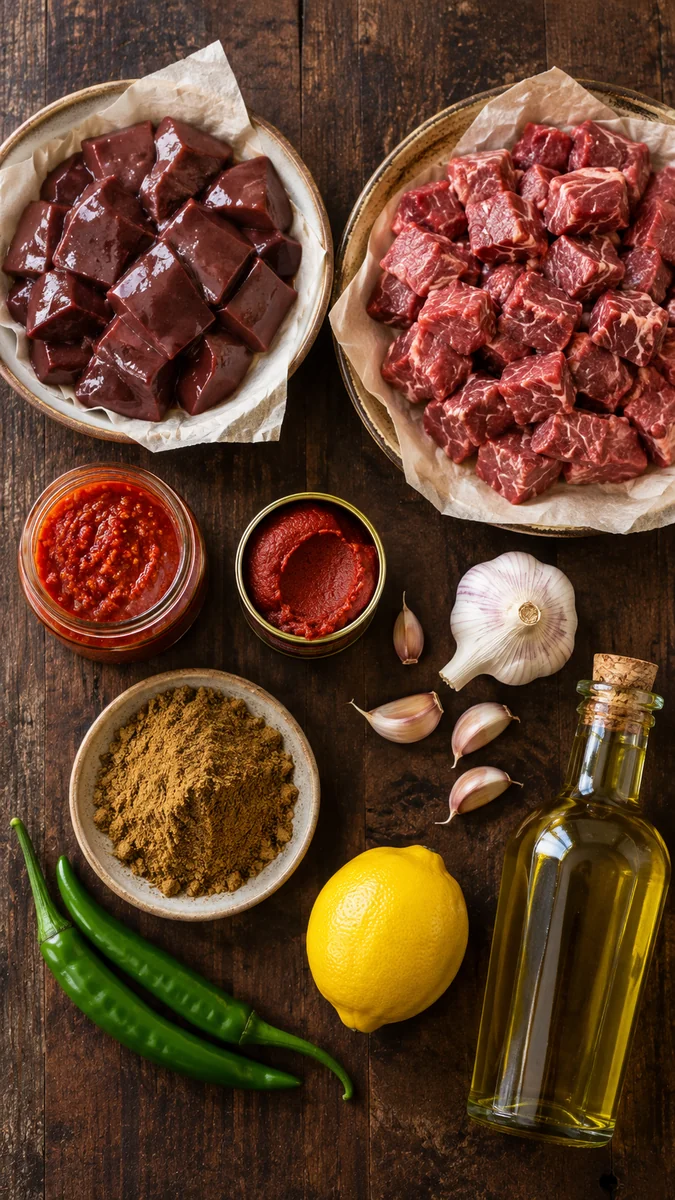
Serves 4
- 9 oz (250 g) beef or veal liver, cut into medium cubes
- 10½ oz (300 g) beef, cut into medium cubes
- 3 tablespoons olive oil
- 6 garlic cloves, finely chopped
- 1 tablespoon tomato paste
- 1 tablespoon harissa
- 1 teaspoon ground cumin, plus 1 teaspoon more to finish
- 1 teaspoon salt
- ½ teaspoon black pepper
- 2 cups (about 500 ml) water
- Optional: 2 long green chillies, whole
To serve:
- Crusty bread
- Lemon wedges
On the Cumin
Two teaspoons in a dish this size looks like a lot and it is deliberate. Half goes in with the sauce and cooks into it, half goes in at the very end and stays bright. That split is what makes kammounia taste of cumin rather than merely contain it.
Ground cumin loses its punch fast, so if your jar has been open a year, buy a new one for this. It is the one ingredient the dish cannot hide.
Easy Substitutions
- No liver? The dish becomes a beef and cumin stew, which is perfectly good but is not kammounia. If liver is a hard no at your table, this is a reasonable adaptation rather than a failure.
- No harissa? A teaspoon of tomato paste plus half a teaspoon of paprika and a pinch of cayenne. The homemade harissa recipe is worth a jar if you cook Tunisian food often.
- Lamb liver instead of beef? Milder and softer. Reduce its cooking time by a couple of minutes.
Step-by-Step Instructions: Kammounia in 5 Steps
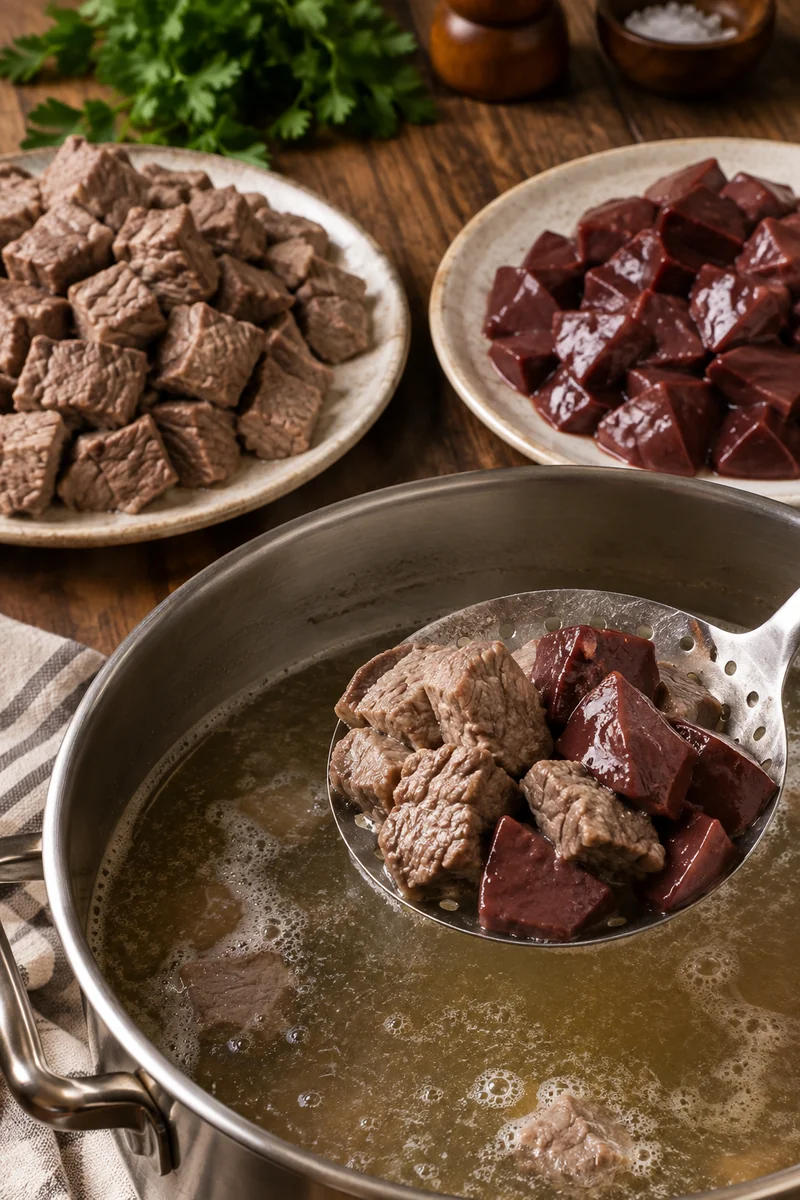
Step 1: Blanch the Beef, Then the Liver
Bring a pot of salted water to the boil. Add the beef cubes and cook for 5 minutes, then lift them out. Drop the liver into the same water for barely a minute, then remove it and set both aside.
Prep tip: The quick blanch firms the liver’s surface and removes some of the blood that would otherwise cloud the sauce and taste metallic. Barely a minute is enough. If it starts to look cooked through, it is already too long.
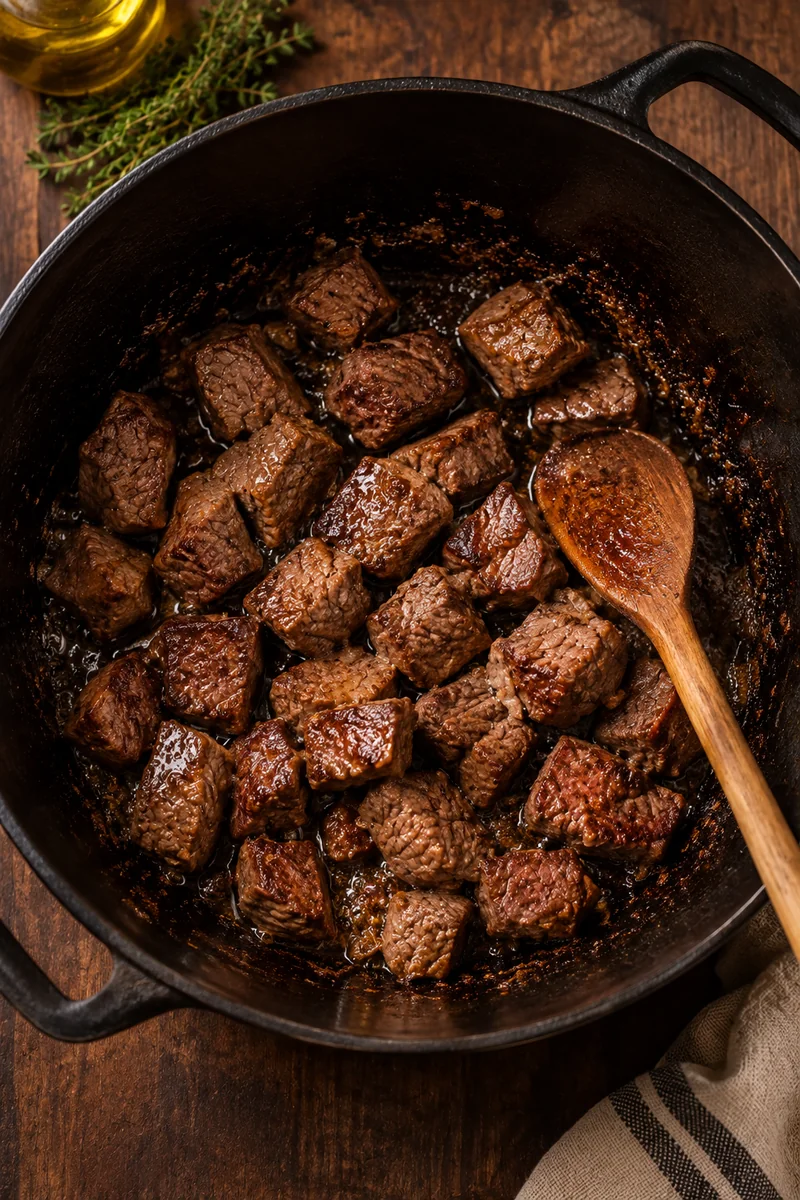
Step 2: Brown the Beef
Heat the olive oil in a heavy pot, add the blanched beef with the salt and pepper, and cook for 5 to 6 minutes until the pieces have colour on them.
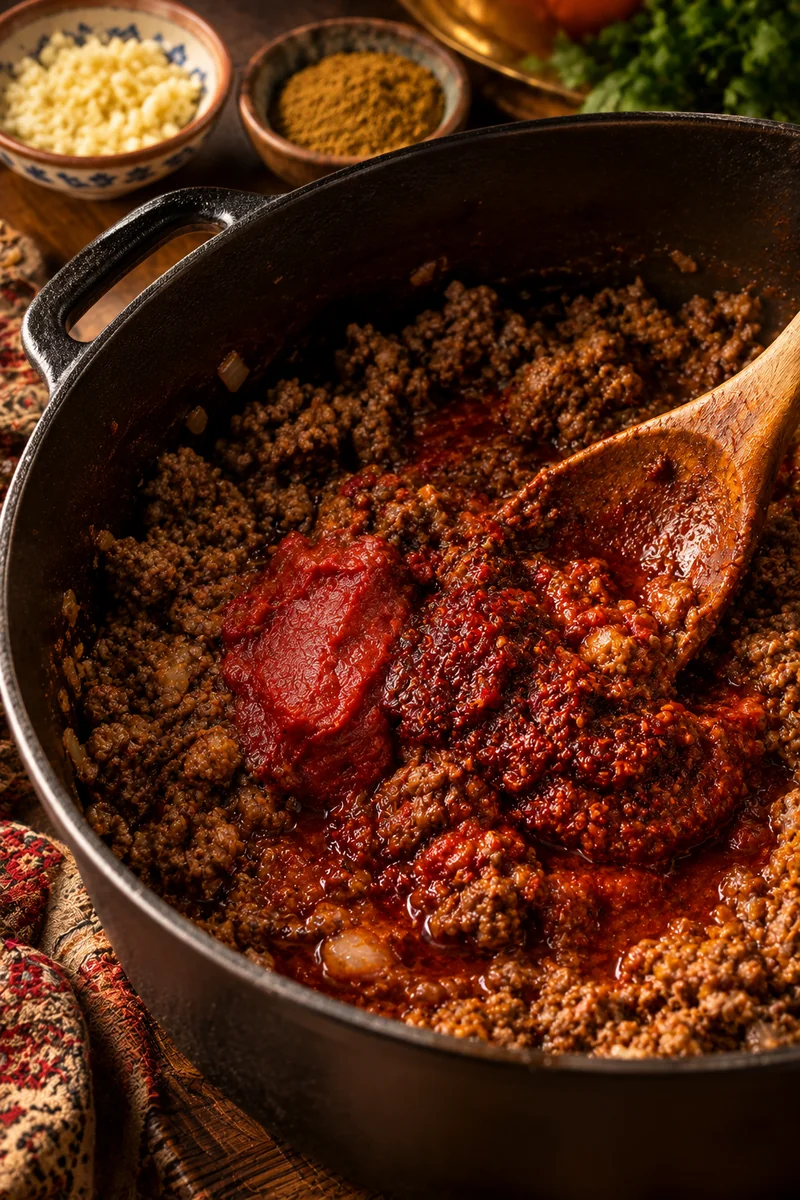
Step 3: Build the Cumin Sauce
Stir in the tomato paste, harissa and the first teaspoon of cumin, and cook for a minute until it smells rich rather than raw. Add the chopped garlic and cook 5 minutes more, then pour in the water and simmer for 20 minutes.
Prep tip: Fry the paste and spices in the oil before any liquid goes in. Tomato paste and harissa added straight to water taste flat and slightly raw, and one minute in hot oil is what gives the sauce its depth.
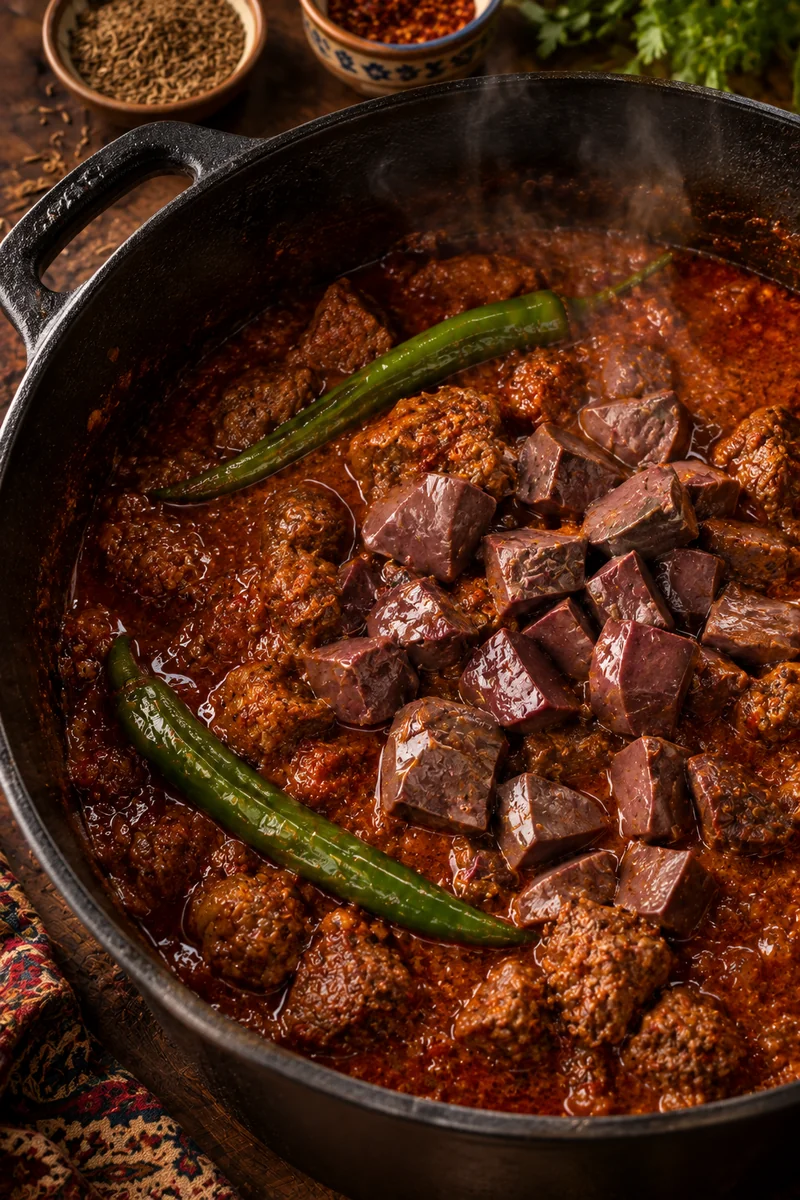
Step 4: Add the Liver Late
Once the beef is tender and the sauce has reduced, add the liver cubes and the whole green chillies if using. Simmer gently for 8 to 10 minutes only.
Prep tip: This is the rule the dish turns on. Liver added at the start, alongside the beef, would spend half an hour in the pot and come out grey and grainy. Eight to ten minutes at the end leaves it tender and rich. Set a timer if you need to.
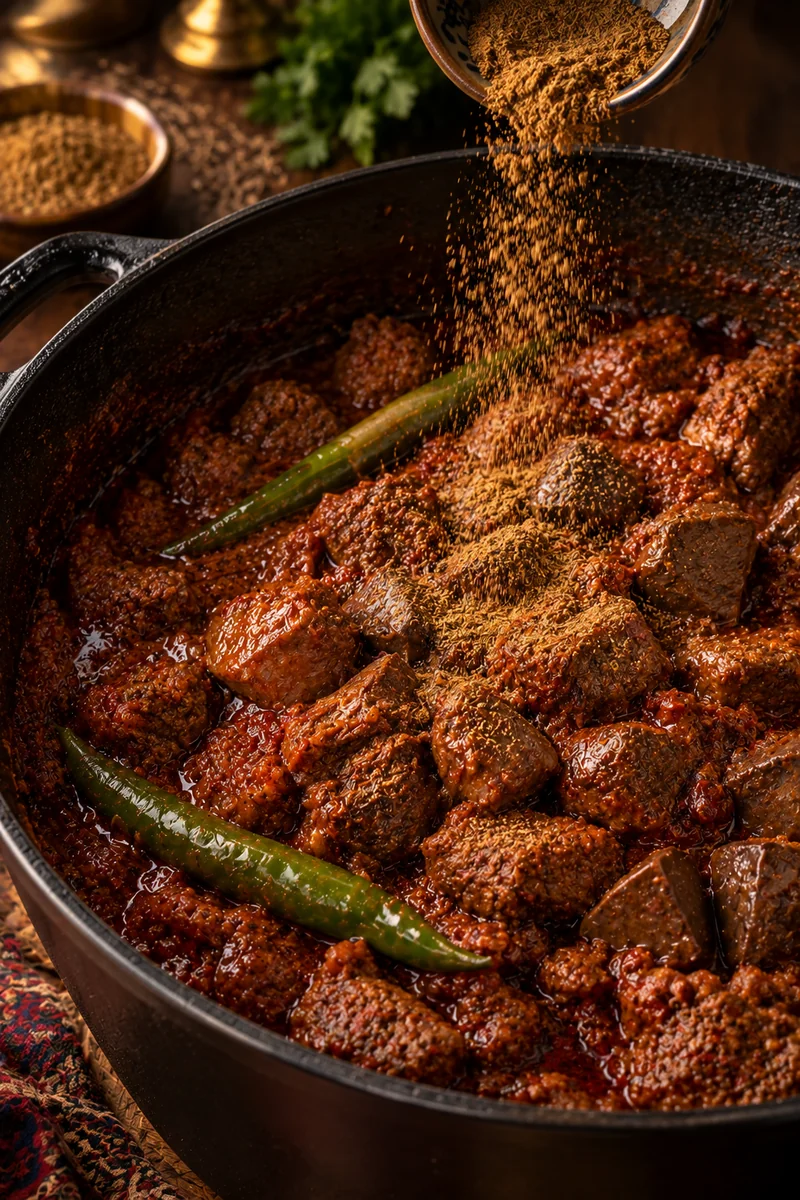
Step 5: The Second Cumin
Stir in the remaining teaspoon of cumin, cook uncovered for 2 to 3 minutes until the sauce is thick and glossy, then take the pot off the heat. Taste, adjust the salt, and serve hot with bread and lemon.
About Kammounia: Cheap, Bold, Everyday
Kammounia is home cooking rather than celebration food. Quick by North African standards, very cheap, and the kind of dish people make on a Tuesday in winter without thinking about it.
It sits in the same Tunisian family as my ojja merguez recipe and my kaftaji recipe: harissa, garlic, a red sauce, and heat that you control yourself. What separates it is the cumin, used at a quantity that would seem excessive in any of the others.
Organ meat has a much stronger place in North African home cooking than in most Western kitchens, where it fell out of fashion within living memory. If liver is unfamiliar, this is a good dish to meet it in, because the sauce carries so much flavour that nothing tastes stark.
Pro Tips for the Best Kammounia
- Cut the liver and beef the same size. They cook for very different lengths of time, but matching the cubes means the finished dish looks deliberate rather than accidental.
- Do not skip the garlic quantity. Six cloves is right. Alongside two teaspoons of cumin, less garlic disappears entirely.
- Serve lemon on the table. A squeeze over the top cuts through the richness of the liver, and it is standard in Tunisia.
- Storage: Keeps 2 days in the fridge, which is shorter than most stews on this blog because liver deteriorates faster than muscle meat. Reheat gently and briefly. It does not freeze well.
Variations
Kammounia with Liver Only
Closer to the Egyptian version: drop the beef, double the liver, and reduce the simmering time considerably since there is no tough meat to tenderise. Faster and more intense.
Milder Kammounia
Halve the harissa and leave out the chillies. The cumin still carries the dish, and it suits a table with children.
My House Version
In my kitchen the liver gets a 30 minute soak in milk before it goes anywhere near the pot, because it softens the mineral edge and makes the dish easier for people who think they do not like liver. The whole green chillies go in for anyone who wants them, and the lemon is not optional.
What to Serve with Kammounia
Crusty bread, torn and used to scoop. Kammounia is a sauce dish and bread is the correct tool, not rice, and my easy Moroccan bread recipe is the one I make for it.
Something sharp alongside works well: my slata mechouia recipe or a simple tomato and onion salad. Olives and pickles on the table finish it, and lemon wedges are essential.
Kammounia FAQs
Is kammounia Egyptian or Tunisian? Both countries have a version and both are genuine. Egyptian kamounia is usually liver alone with heavy cumin. Tunisian kammounia combines liver with beef and adds harissa for a redder, spicier sauce. This recipe is the Tunisian one.
How do I stop liver going grainy? Add it late and cook it briefly. Eight to ten minutes at the end of the cook is enough. Liver simmered for half an hour alongside the beef will be grey and grainy no matter what else you do.
Do I need to soak the liver? Not traditionally, but 30 minutes in milk or salted water softens the mineral edge and helps considerably if liver is unfamiliar to your table. Trimming away any membrane and tubes matters more.
Why is there so much cumin? Because the dish is named after it. Kammoun means cumin, and two teaspoons split between the sauce and the finish is what makes kammounia taste like itself rather than like a generic stew.
Is this recipe halal and gluten-free? Halal with halal-certified beef and liver, and naturally gluten-free, since nothing in the pot contains wheat. Serve with a gluten-free bread if needed.
One Pot, Two Meats, All That Cumin
Blanch both meats, build the sauce properly in hot oil, simmer the beef until tender, and add the liver only at the end. Ten minutes of restraint at that final stage is the difference between a dish people ask for again and the liver they remember from childhood.
Make it on a cold evening and report back: with beef or liver alone, mild or with the chillies, and whether anyone who claimed not to like liver finished their plate. In my experience they usually do, and they usually ask what the spice is.
Rate this recipe
No ratings yet — be the first!
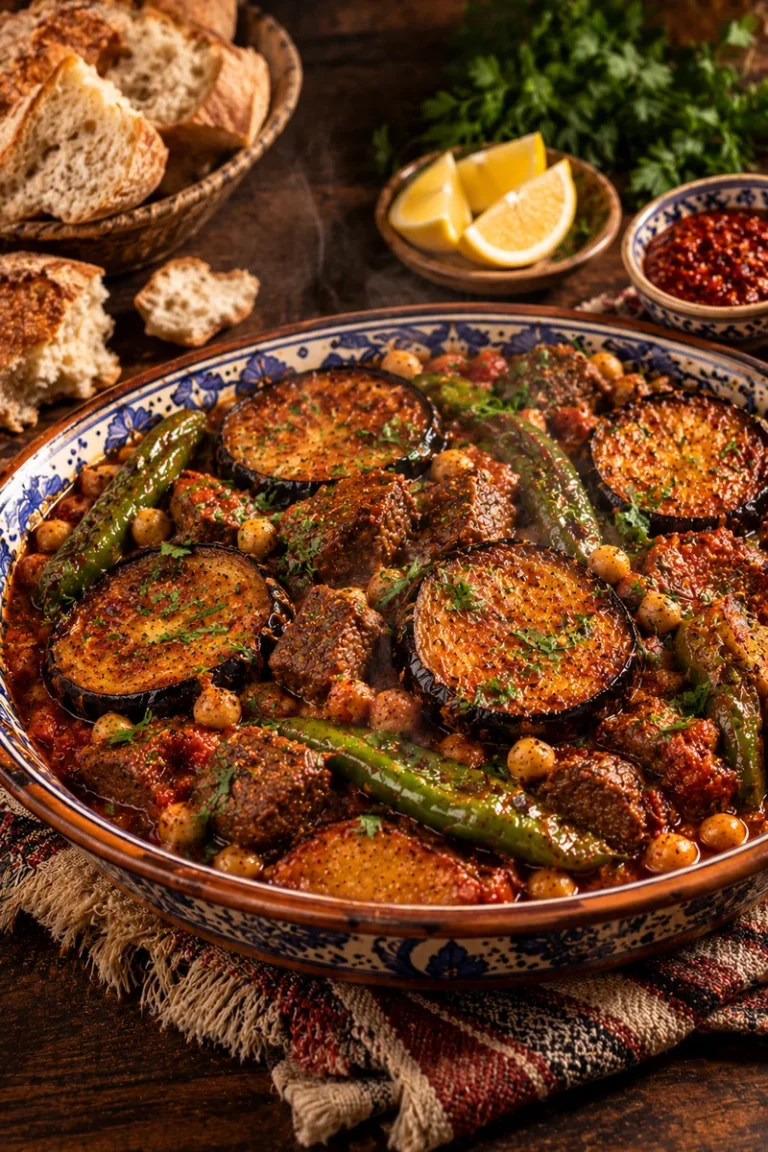
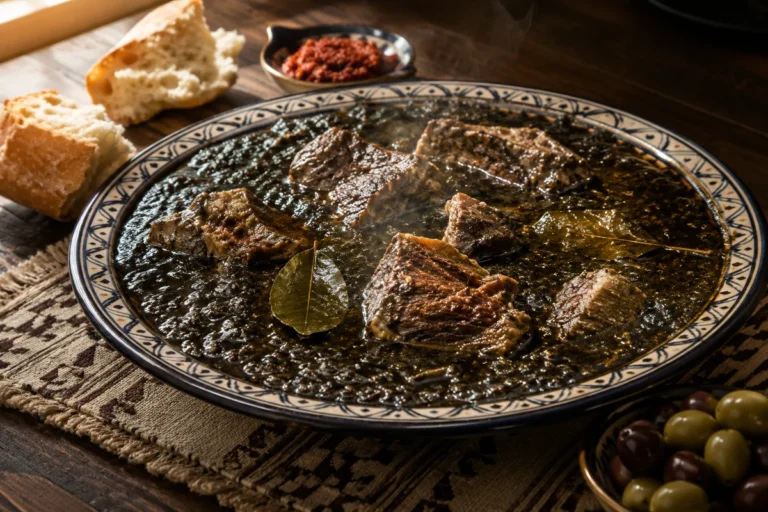

The liver gets a 30 minute soak in milk in my kitchen before it goes near the pot. It softens the mineral edge, and it is what makes the dish work for people who are certain they do not like liver.
Comments
No comments yet. Yours would be the first.
Made it? Tell me: with beef or liver alone, mild or with the chillies, and whether anyone who claimed not to like liver finished their plate.
Leave a comment
Comments are anonymous and appear after admin approval. If you rated this recipe above, your stars will show with your comment.