The Salad That Isn’t Really a Salad
Call it a salad and Western readers picture something raw and cold. Slata mechouia is neither. Every vegetable in it goes under fire until the skins blacken and blister, then gets peeled, chopped roughly, and dressed with olive oil and lemon. What you end up with is smoky, sweet, faintly bitter at the edges, and served warm or at room temperature with bread and whatever else is on the table.
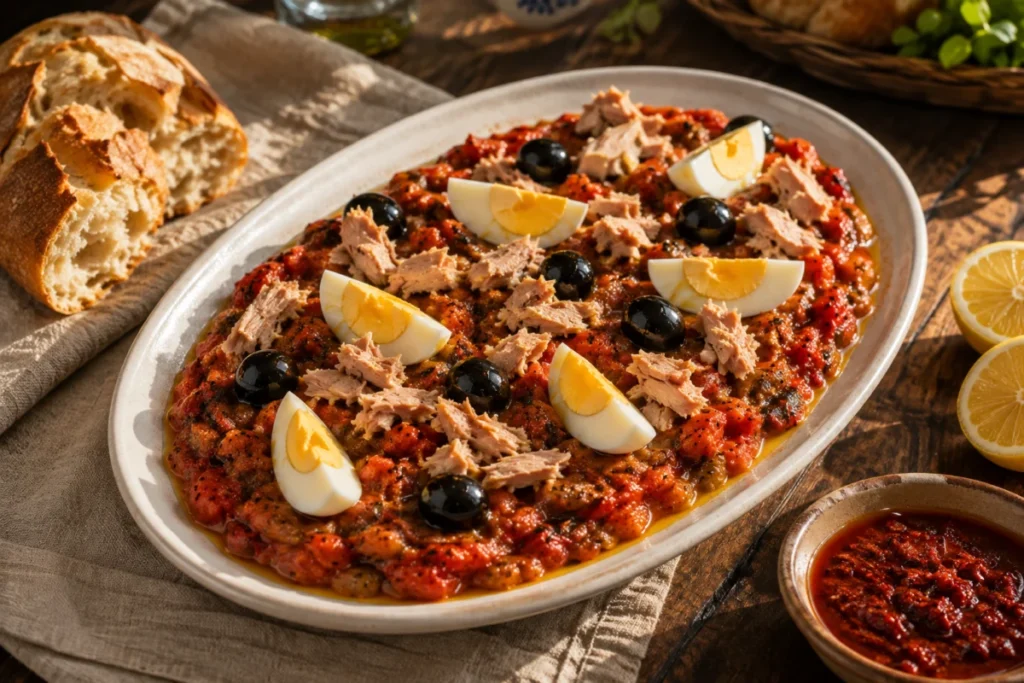
The name simply means grilled salad, and in Tunisia it is everywhere: on every restaurant table before you have ordered, on every home table at lunch, and on every Ramadan spread. It usually arrives topped with tuna, black olives and quartered hard-boiled eggs, which turns a side dish into something closer to a light meal.
There is one instruction in this recipe that matters more than all the others, and it is the one most people ignore because it feels wrong: do not wash the vegetables after peeling them. The blackened flakes and the sticky residue are the smoke. Rinse them off and you have made a perfectly nice pepper salad that tastes of nothing in particular.
This is a good thing to make whenever the oven is already hot for something else, since it costs nothing extra to slide a tray of peppers in underneath. The method below works in an oven, but the flame version is in the variations, and it is better.
Ahead: the ingredient list, four steps with photos, the peeling problem solved, the heat question answered honestly, and what to put on top.
About Slata Mechouia: Tunisia’s Table Standard
Slata mechouia belongs to the family of North African charred vegetable dishes that also includes Moroccan zaalouk and Algerian hmiss, all built on the same principle: fire first, then oil and lemon. Tunisia’s version leans hardest on peppers, and it is usually the spiciest of the three.
It appears at every stage of a Tunisian meal. Before the food arrives it is the thing you eat with bread while you wait. Alongside grilled fish or brik it is the sharp, smoky counterpoint. During Ramadan it is on the iftar table almost without exception, sitting beside the soup.
The garnish is not decoration. Tuna, eggs and olives are standard, and in many households the salad is served exactly this way as a light lunch in its own right, with nothing but bread beside it.
Ingredients You’ll Need for Slata Mechouia
Main Ingredients
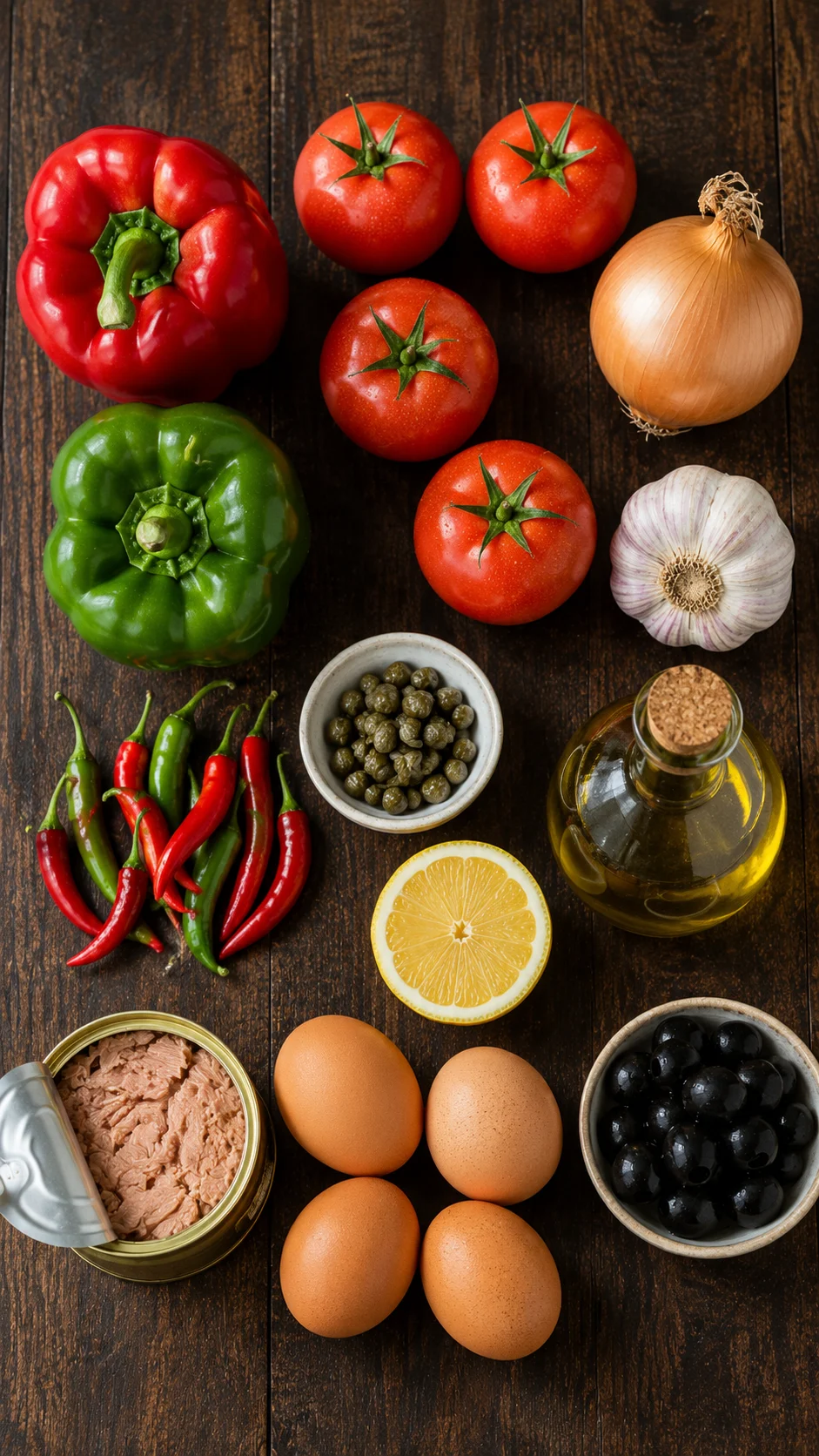
Serves 4 to 6
For the salad:
- 2 red bell peppers
- 2 green bell peppers
- 4 to 8 hot green or red chillies, to taste
- 5 medium tomatoes
- 1 medium onion, skin on
- 1 tablespoon finely chopped garlic
- ½ tablespoon capers, drained
- ½ teaspoon ground coriander
- ½ cup extra virgin olive oil
- 2 tablespoons lemon juice
- Salt, to taste
To garnish:
- 1 can good tuna in olive oil, drained
- 4 hard-boiled eggs, quartered
- A handful of black olives
- Optional: extra olive oil and a pinch of ground caraway
Where to Find the Ingredients
Everything here is supermarket-standard in the US and UK, which is part of why this dish travels so well. The one judgement call is the chillies: Tunisian versions use small hot green peppers and plenty of them, but the recipe works at any heat level, so buy according to your table rather than tradition.
Capers sit near the olives and pickles in both countries. Tuna in olive oil rather than brine is worth the small extra cost here, since the oil becomes part of the dish.
Easy Substitutions
- No fresh chillies? Use 1 to 2 teaspoons of harissa stirred in at the end, which is entirely traditional and much easier to control for heat.
- No capers? Leave them out, or use finely chopped green olives for a similar salty bite.
- Want it milder? Use only bell peppers and add harissa at the table so everyone sets their own level. Nobody will object.
Step-by-Step Instructions: Slata Mechouia in 4 Steps
Step 1: Char Everything
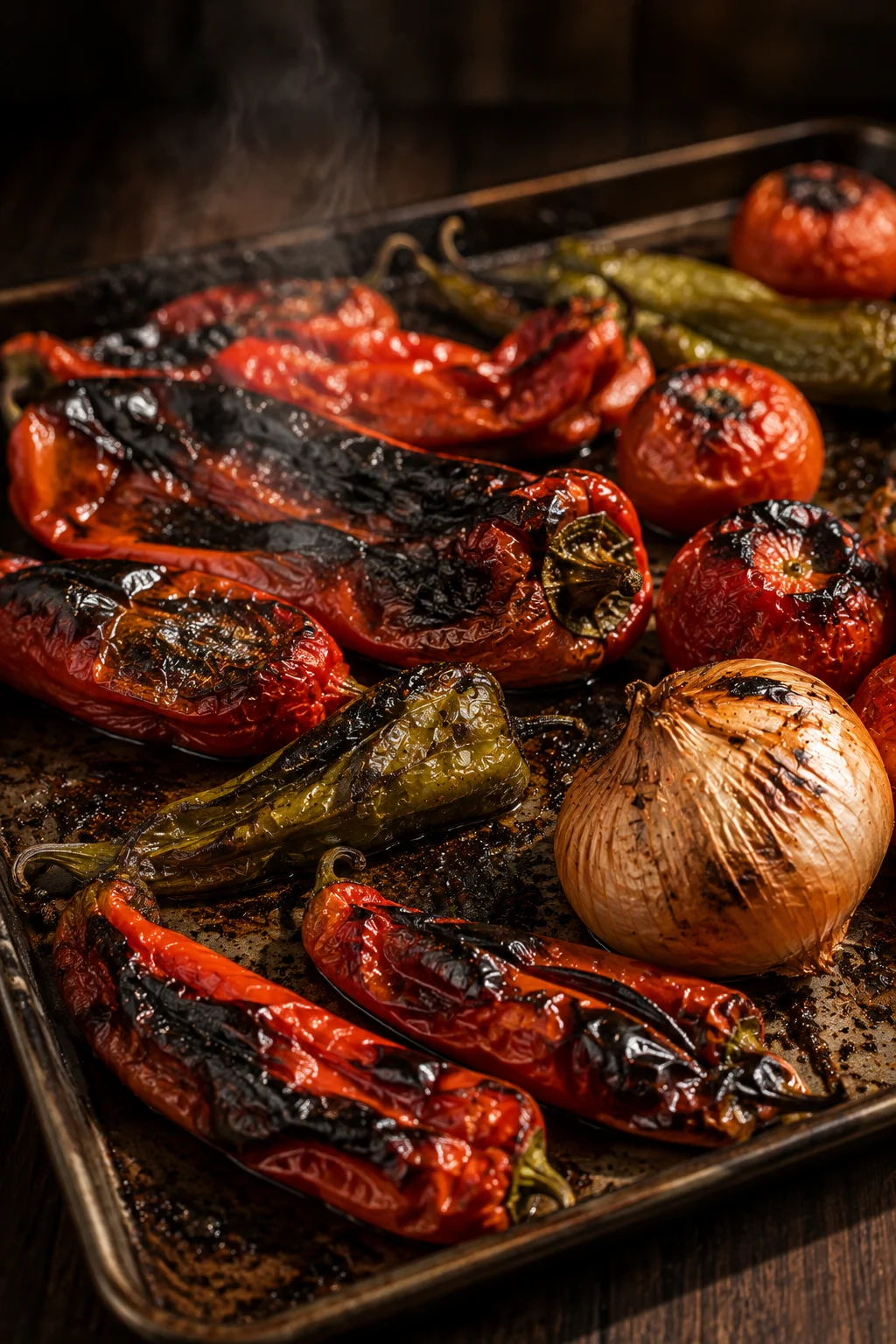
Heat the oven to 450°F (230°C) or the broiler to high. Put the whole peppers, chillies, tomatoes and the unpeeled onion on a baking tray and roast for 25 to 35 minutes, turning occasionally, until the skins are blackened and blistered and the flesh has collapsed.
Prep tip: Go further than feels comfortable. Lightly golden peppers give you a salad that tastes vaguely of roasted vegetables; properly blackened, papery, split-open skins give you smoke. The vegetables should look slightly ruined before you take them out.
Step 2: Steam, Then Peel Without Washing
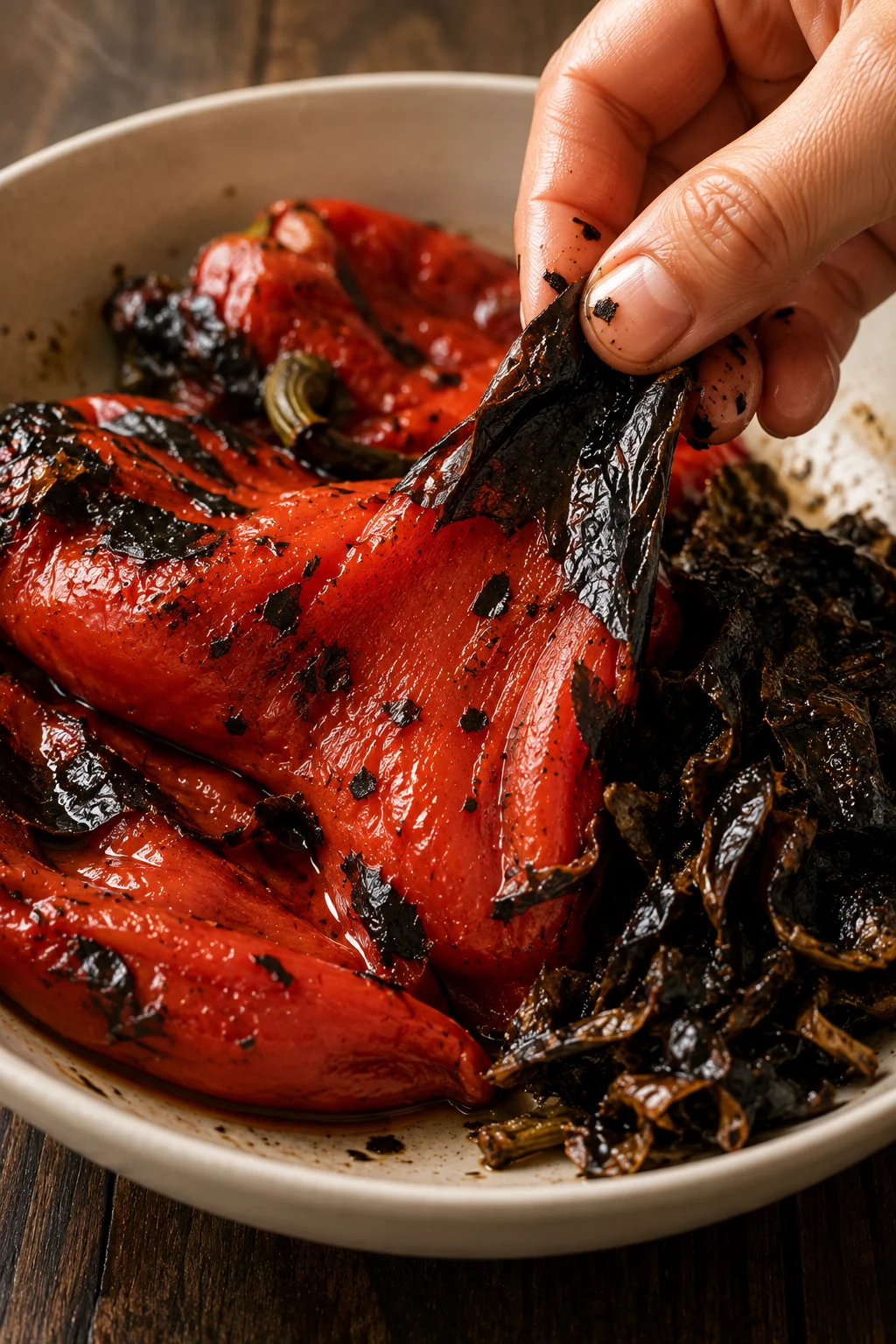
Tip everything into a bowl and cover it tightly with a plate or cling film for 10 minutes. The trapped steam lifts the skins away from the flesh. Then peel the peppers, tomatoes and onion with your fingers, and pull the seeds and stems out of the peppers.
Prep tip: Do not rinse anything, no matter how tempting. The dark flecks clinging to the flesh and the sticky residue on your fingers are the smoky flavour you spent half an hour creating. Washing takes thirty seconds and undoes the entire dish. A few stubborn black bits left behind are correct, not a mistake.

Step 3: Chop Rough, Not Smooth
Put the peeled peppers and onion in a food processor and pulse two or three times only. Add the tomatoes and pulse once more. The mixture should be chunky and uneven, with recognisable pieces of pepper still visible.
Prep tip: One pulse too many and you have soup. Mechouia should have texture you can feel against the bread, and the difference between chunky and smooth is about one second of processing. If you are unsure, chop it by hand on a board instead, which is how it was made long before food processors existed.
Step 4: Dress, Rest, and Garnish
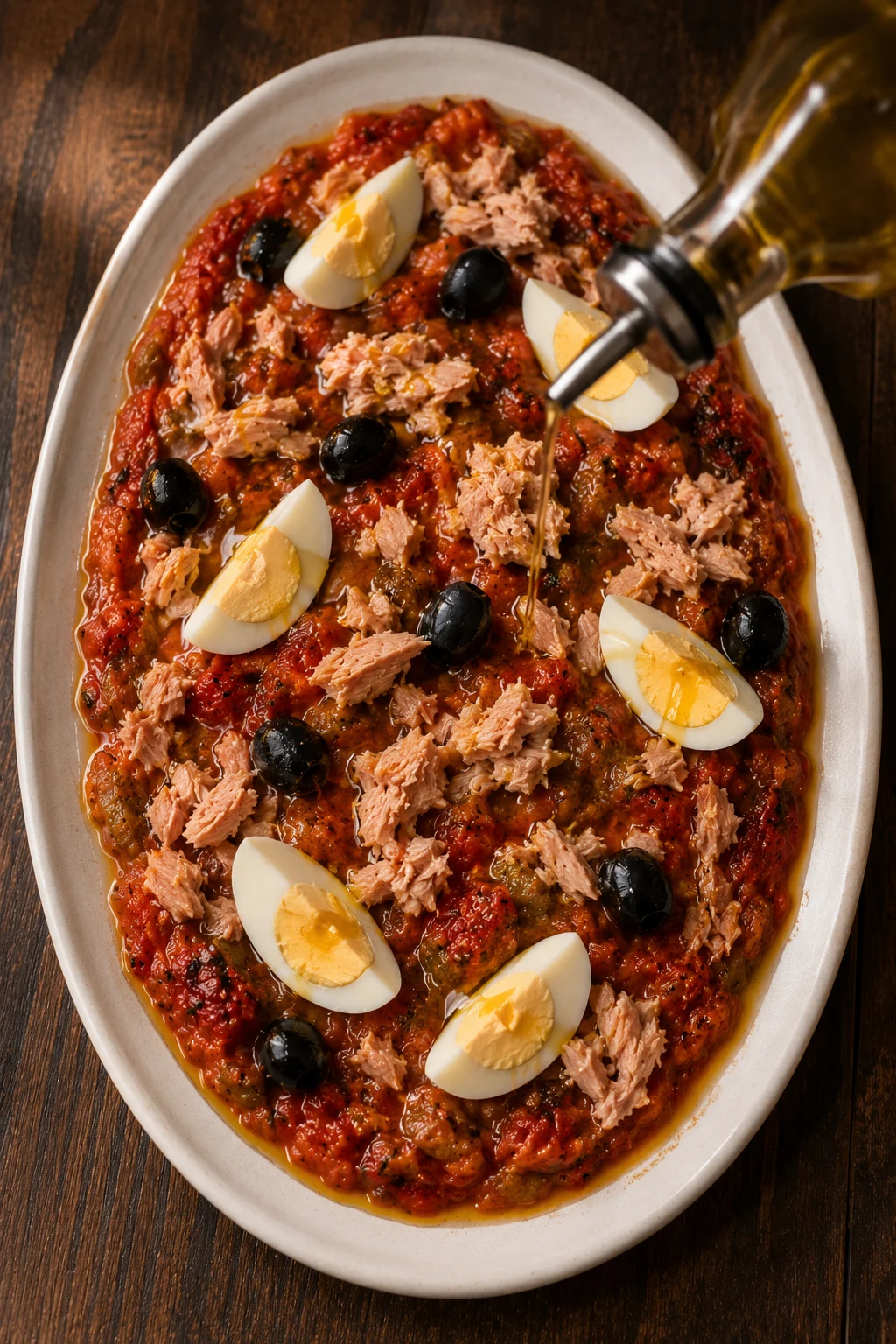
Transfer to a bowl and stir in the garlic, capers, ground coriander, olive oil, lemon juice and salt. Taste and adjust, then leave it for 20 minutes for the flavours to settle. Spread on a platter, arrange the tuna, quartered eggs and olives over the top, and finish with a last drizzle of olive oil.
Pro Tips for the Best Mechouia
- Char over an open flame if you can. A gas burner or barbecue gives a deeper, more genuine smoke than an oven ever will. Ten minutes per batch, turning with tongs, and it transforms the dish.
- Drain the tomatoes. Roasted tomatoes release a lot of liquid. Tip it off before chopping, or the salad turns watery and the olive oil will not cling.
- Storage: Keeps 4 days in the fridge, undressed of its garnish, and genuinely improves on day two once the garlic has mellowed. Add the tuna and eggs only when serving. Peppers are also a strong source of vitamin C, per the USDA food database.
- Serve it warm or at room temperature, never cold. Fridge-cold mechouia tastes dull and the olive oil goes cloudy. Take it out half an hour before it hits the table.
Variations on Slata Mechouia
The Flame-Grilled Version
The original. Char the vegetables directly over a gas flame or on a barbecue until the skins are black all over, turning with tongs, then steam and peel as above. This is how it is made across Tunisia and the difference in smokiness is not subtle.
Mechouia with Harissa
Skip the fresh chillies and stir 1 to 2 teaspoons of harissa into the dressed salad instead. Easier to control, deeper in flavour, and completely standard in Tunisian kitchens.
The Caraway Finish
Ground caraway alongside the coriander is a Tunisian habit that makes the whole bowl smell unmistakably North African. Quartering the eggs rather than slicing them lets people take a whole piece, and the olive oil is always more generous than a written recipe would admit.
What to Serve with Slata Mechouia
Bread first, and plenty of it: this is a dish designed to be scooped rather than forked. The easy Moroccan bread recipe or any crusty loaf does the job.
On a Tunisian table it sits beside the Tunisian brik recipe as the classic pairing, and it is excellent alongside grilled fish or the Tunisian fish soup recipe. For a full mezze spread, add the baba ghanoush recipe and the zaalouk recipe and you have three smoky dips that taste completely different from one another. The kaftaji recipe works the same fried-then-chopped logic if you want more from the same pantry.
Slata Mechouia FAQs
Why should I not wash the vegetables after peeling? Because the blackened flecks and sticky residue on the flesh are the smoke, and that smoke is the entire point of the dish. Rinsing gives you a clean-looking salad that tastes flat. Leave a few stubborn black bits behind; they belong there.
Can I make slata mechouia without a grill? Yes. A hot oven at 450°F or the broiler chars the vegetables well in 25 to 35 minutes. Open flame is better and gives deeper smoke, but the oven version is genuinely good and is how most people make it indoors.
How spicy should it be? That is entirely up to you. Tunisian versions are usually properly hot, but the salad works at any heat level. Use bell peppers only for a mild version and offer harissa at the table so people can adjust their own plate.
Can I make it ahead? Yes, and you should: it keeps 4 days in the fridge and tastes better on day two once the garlic settles into the oil. Add the tuna, eggs and olives just before serving rather than storing them on top.
Is this recipe vegan and gluten-free? The salad itself is both, naturally. The traditional garnish of tuna and eggs is neither, so leave them off for a vegan version and the dish loses nothing essential.
Blacken It, Peel It, Don’t Wash It
Half an hour of fire, ten minutes of peeling, and a bowl of something smoky that tastes like the whole Tunisian coast. The recipe asks almost nothing of you except that you char the vegetables further than instinct suggests and then resist the tap.
Make it the next time the oven is already on and report back: oven or open flame, mild or properly hot, and whether you managed not to rinse them. Everyone rinses the first time. Almost nobody rinses the second.
Rate this recipe
No ratings yet — be the first!
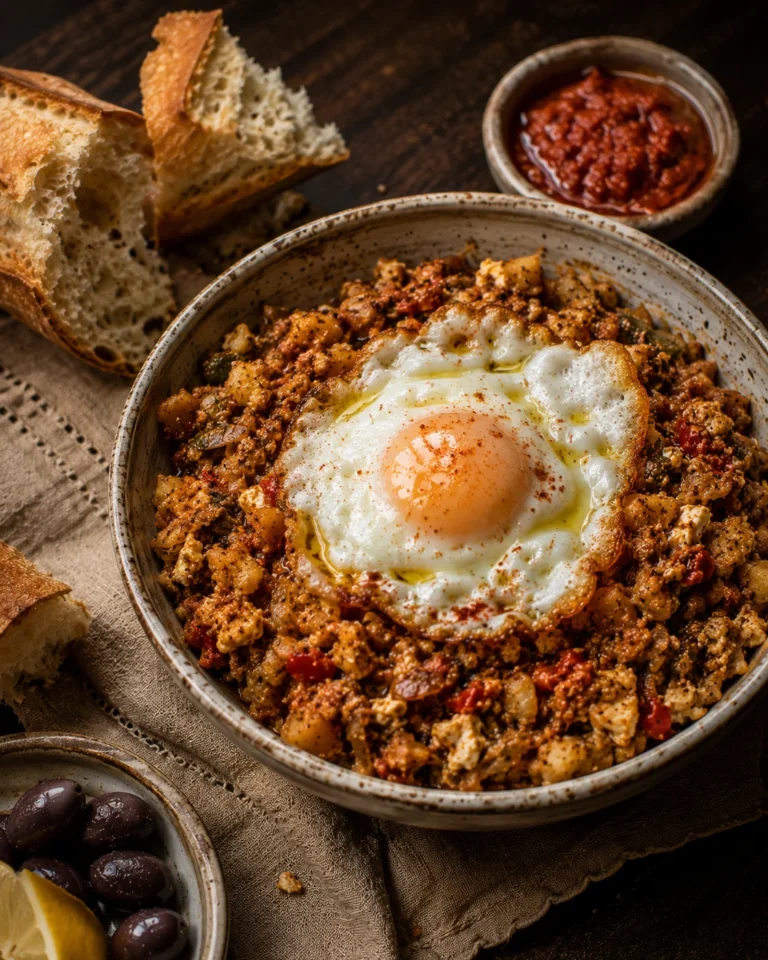

Do not rinse the peppers after peeling them, however tempting it looks. Those black flecks are the smoke you spent half an hour creating, and washing them off undoes the entire dish.
Comments
No comments yet. Yours would be the first.
Made this? Tell me: oven or open flame, and did you manage not to rinse them?
Leave a comment
Comments are anonymous and appear after admin approval. If you rated this recipe above, your stars will show with your comment.