
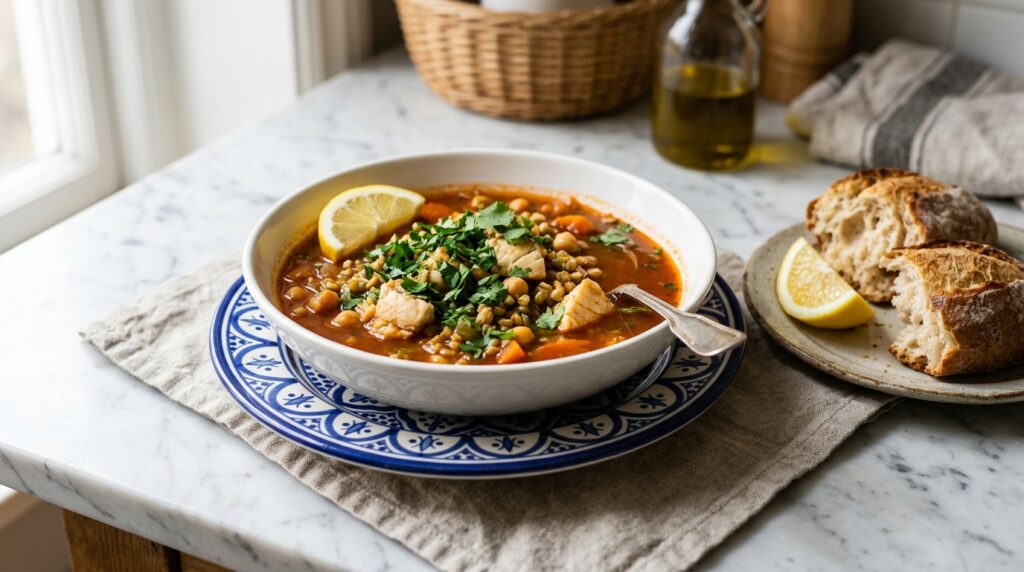
A Coastal Soup Built on Harissa
Think fish soup is restaurant food, all stock-making and bone-picking? Tunisia’s home cooks would disagree. This Tunisian fish soup recipe builds a rich, brick-red broth from pantry staples in one pot, then poaches chunks of white fish gently in it. No fish stock, no whole fish, no special skills.
Think fish soup is restaurant food, all stock-making and bone-picking? Tunisia’s home cooks would disagree. This Tunisian fish soup recipe builds a rich, brick-red broth from pantry staples in one pot, then poaches chunks of white fish gently in it. No fish stock, no whole fish, no special skills.
This is the soup for cold evenings and hungry crowds, and it is deliberately forgiving about fish: cod, haddock or whatever firm white fish is on offer all work. The substitutions below are chosen so the pot holds up far from any Tunisian market.
Below you’ll find the ingredient list, where to buy harissa and freekeh in the US and UK, five numbered steps with photo placeholders, the trick to fish that stays tender, and the most searched questions answered.
Broth First, Fish Last
- Supermarket-friendly. Any white fish fillet works, and the two North African
- ingredients (harissa and freekeh) are easier to find than you might think. Both get
- sourcing notes and substitutions below.
- One pot, weeknight timing. About 15 minutes of chopping and 30 minutes of mostly unattended simmering. There is no fish stock to make; the fish itself flavors the broth as it poaches.
- Naturally fits many diets. The soup is dairy-free and halal as written, and one grain
- swap in the FAQs makes it gluten-free.
- Forgiving by design. This is home cooking from a coastal tradition where the catch
- changes daily, so the recipe happily absorbs whatever white fish and vegetables you
- have.
About Chorba Samak: Tunisia’s Coastal Soup
This dish belongs to the chorba family, the everyday soups eaten across North Africa and the wider Arabic-speaking world. Chorba samak simply means fish soup, and along Tunisia’s Mediterranean coast it turns the day’s catch into a full meal with tomato, warm spices, and grain.
Chorba holds a special place during Ramadan, when a steaming bowl is one of the most common ways to break the fast across Tunisia and Algeria. But it is everyday food too, ladled out at family lunches all through the cooler months.
If you know Italian fish soups like zuppa di pesce, this is their North African neighbor across the sea: less wine and saffron, more cumin, garlic, and gentle chili heat.
What Goes Into Chorba Samak
For the Broth and the Fish
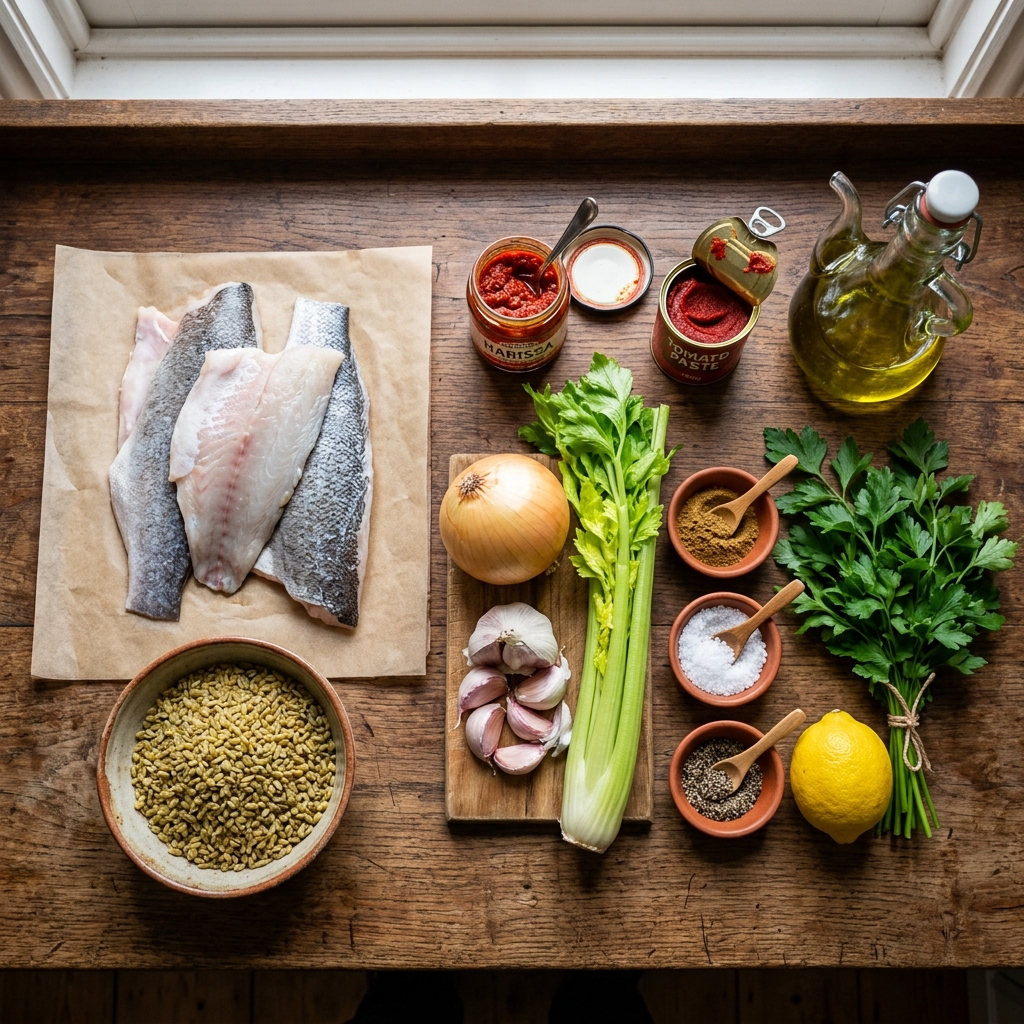
Serves 6:
- 1.5 lbs (700 g) firm white fish fillets (cod, haddock, hake, or halibut), cut into large chunks
- 3 tablespoons olive oil
- 1 large onion, finely chopped
- 1 celery stalk, finely chopped
- 4 garlic cloves, minced
- 2 tablespoons tomato paste
- 1 to 2 teaspoons harissa (a North African paste of chili, garlic, and spices), to taste
- 1½ teaspoons ground cumin
- ½ teaspoon black pepper
- 1½ teaspoons salt
- ½ cup (90 g) cracked freekeh (roasted green wheat, called frik in Tunisia; see sourcing below)
- 6 cups (1.5 liters) water
- ½ cup chopped fresh parsley, plus more to serve
- 1 lemon, cut into wedges
Where to Find Harissa and Freekeh in the US and UK
Harissa has gone mainstream: in the US, look in the international aisle or near the hot sauces at larger supermarkets and Trader Joe’s; in the UK, every major supermarket stocks it in tubes or jars near the world foods. Brands vary a lot in heat, so taste yours before committing to two teaspoons.
Freekeh is the trickier one. In the UK, look near the grains with the bulgur and quinoa in bigger stores; in the US, check Whole Foods or the natural grains section. A Middle Eastern or Mediterranean grocery will carry it (sometimes labeled frik or farik), and Amazon has several brands. If the hunt fails, the substitution below is reliable.
Other Fish, Milder Heat
- No freekeh? Coarse bulgur is the closest swap and needs no adjustment. Pearl barley works too but add 15 minutes of simmering. For gluten-free, use ⅓ cup of rice instead.
- No harissa? Stir together 1 teaspoon of paprika, ¼ teaspoon of cayenne, and 1 small grated garlic clove with a little olive oil. It lacks harissa’s depth but lands in the right neighborhood.
- No fresh fish? Frozen white fish fillets work well here. Thaw them fully and pat them dry before adding, and they poach exactly the same way.
Building the Broth, Then Adding the Fish
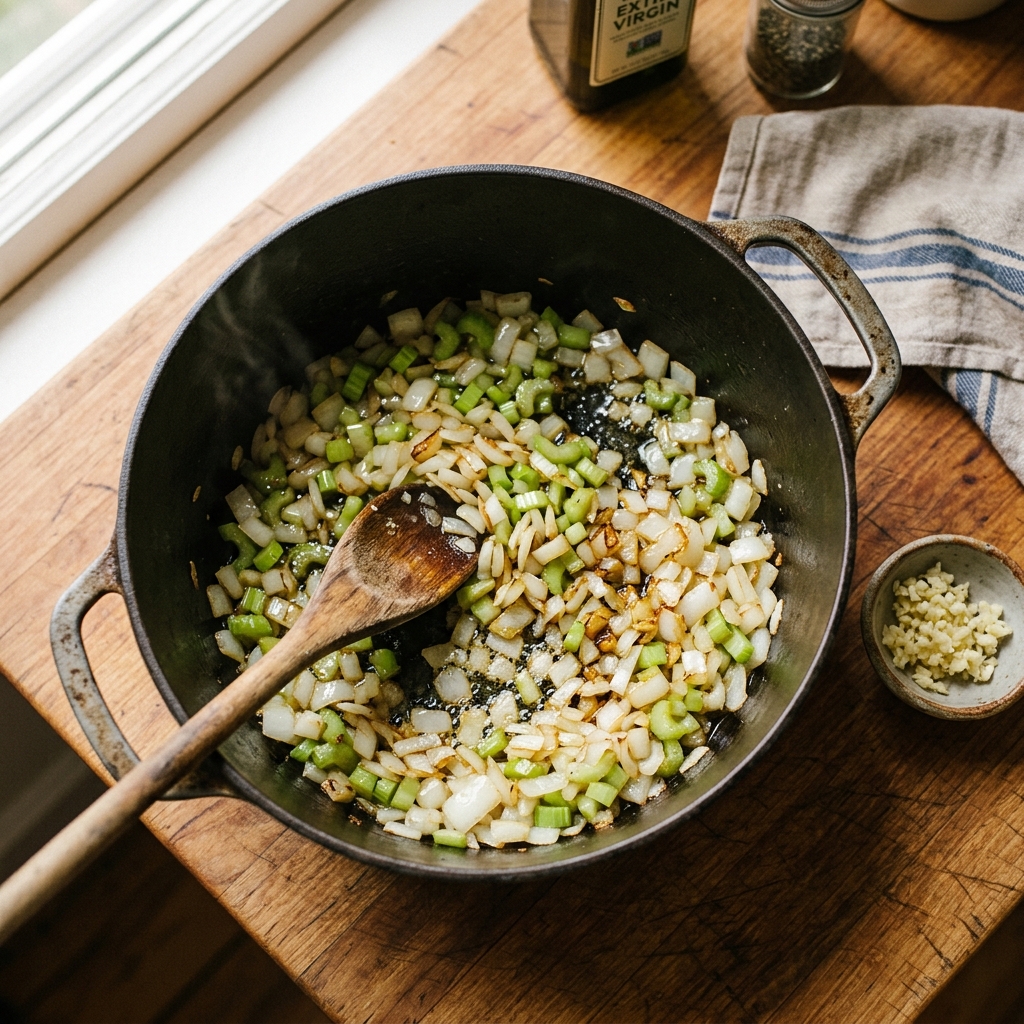
Step 1: Soften the Aromatics
Warm the olive oil in a large pot over medium heat. Add the onion and celery with a pinch of salt and cook for 6 to 8 minutes, until soft and translucent. Add the garlic and cook one minute more.
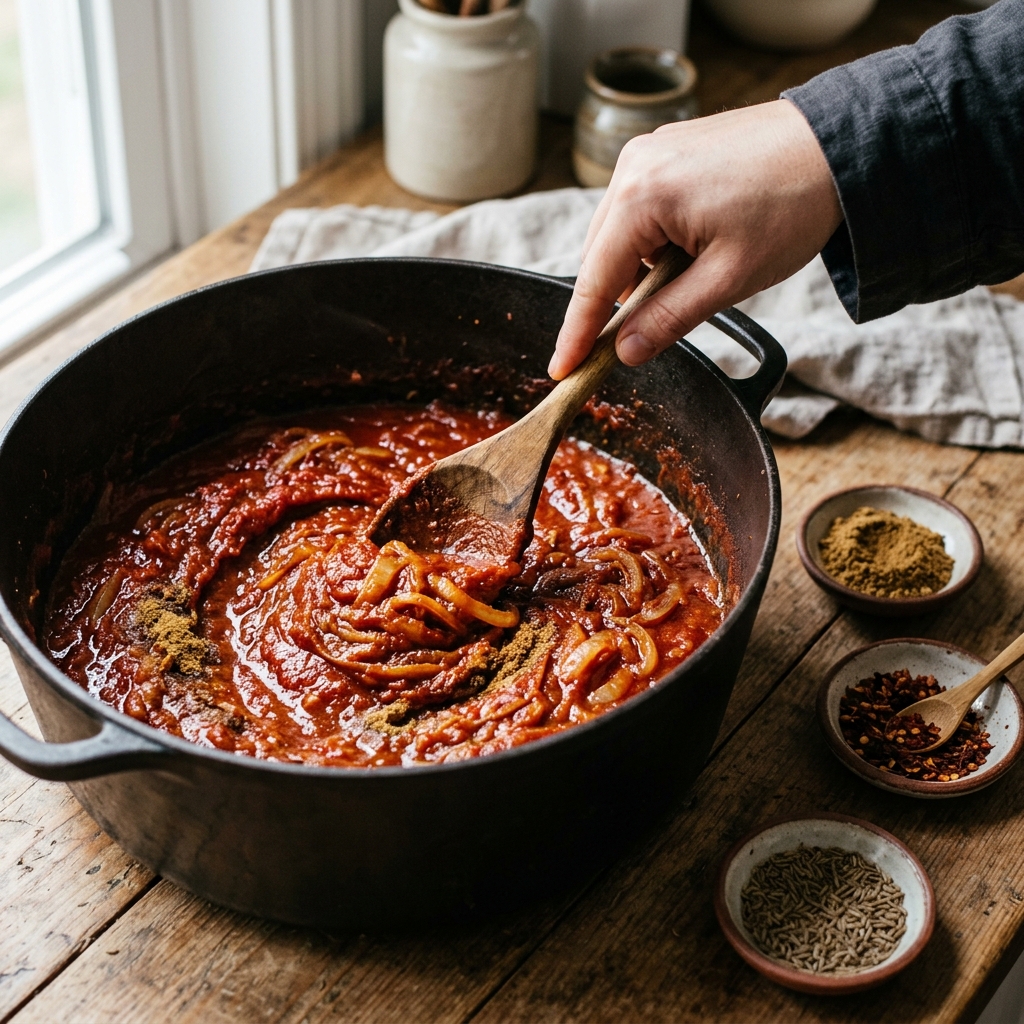
Step 2: Build the Spiced Tomato Base
Add the tomato paste, harissa, cumin, and black pepper to the pot. Cook, stirring constantly, for 2 minutes, until the paste darkens a shade and smells rich rather than raw.
Prep tip: Frying the paste and spices is where the broth gets its depth, and skipping it leaves the harissa raw and the broth thin. Stirred straight into water, the same ingredients taste flat and slightly tinny. Two minutes in hot oil transforms them, so do not rush this step.
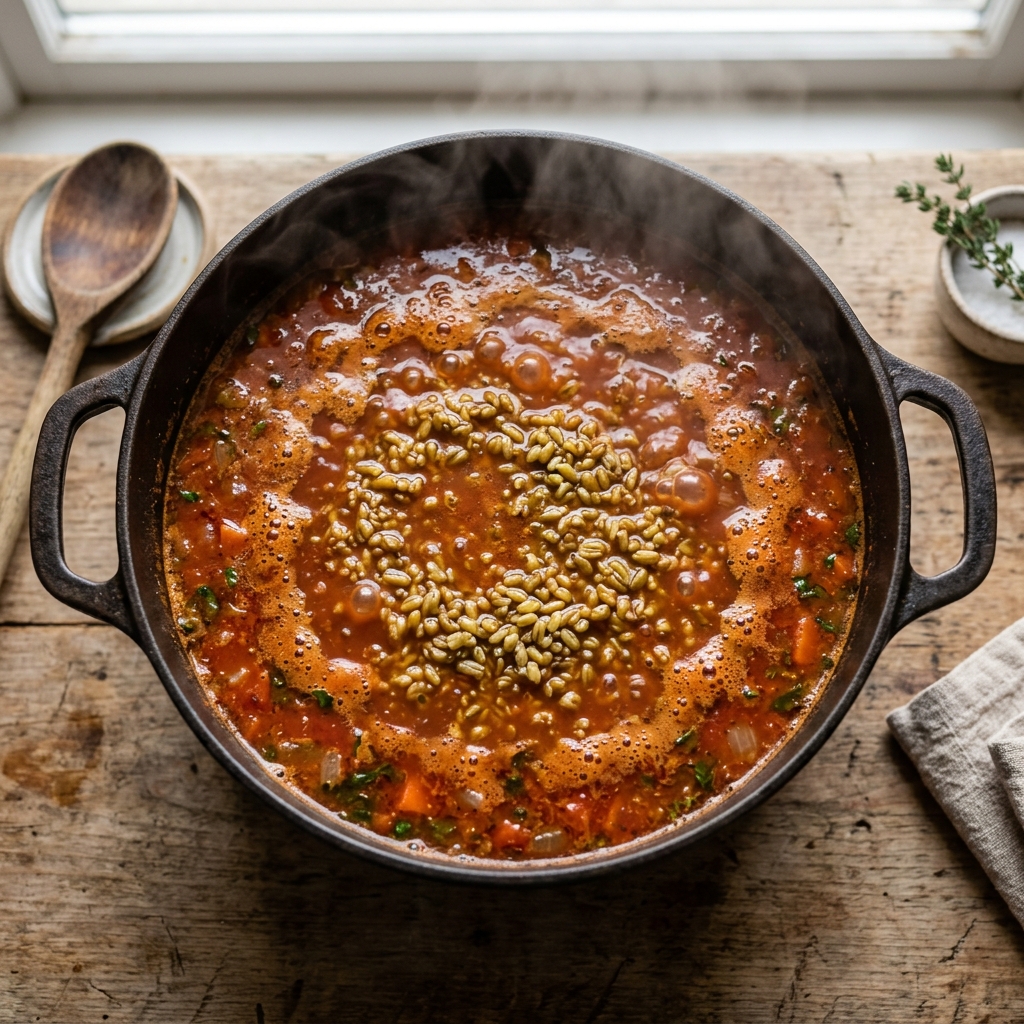
Step 3: Simmer the Broth with Freekeh
Pour in the water, add the salt and freekeh, and bring to a boil. Reduce to a steady simmer, cover partially, and cook for 20 to 25 minutes, until the freekeh is tender and the broth has thickened slightly.
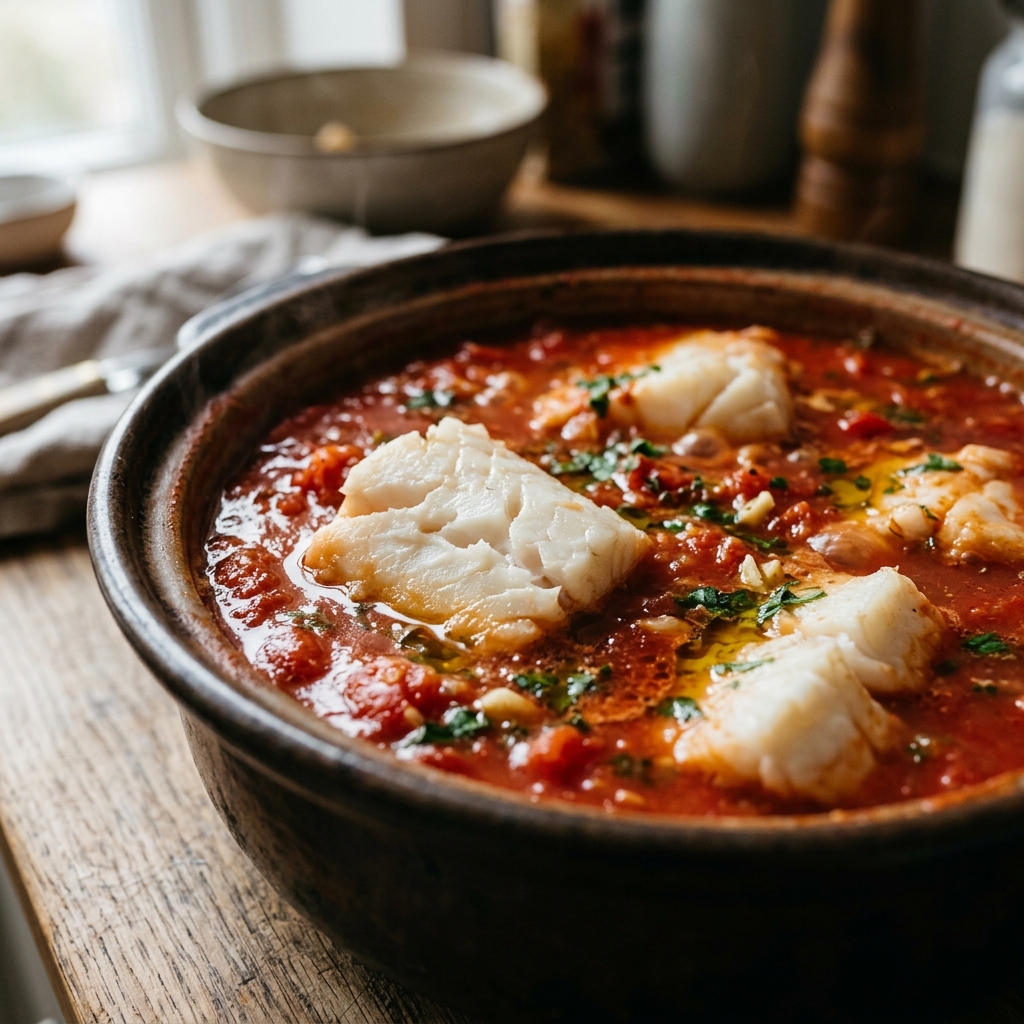
Step 4: Poach the Fish Gently
Lower the heat so the soup barely bubbles. Slide in the fish chunks and cook, uncovered and without stirring, for 6 to 8 minutes, until the fish is opaque and flakes easily.
Prep tip: Gentle is everything here. A rolling boil breaks the fish into shreds, and stirring does the same. Nudging the pot by the handles instead of stirring with a spoon, once the fish goes in, is what brings the chunks to the table whole.
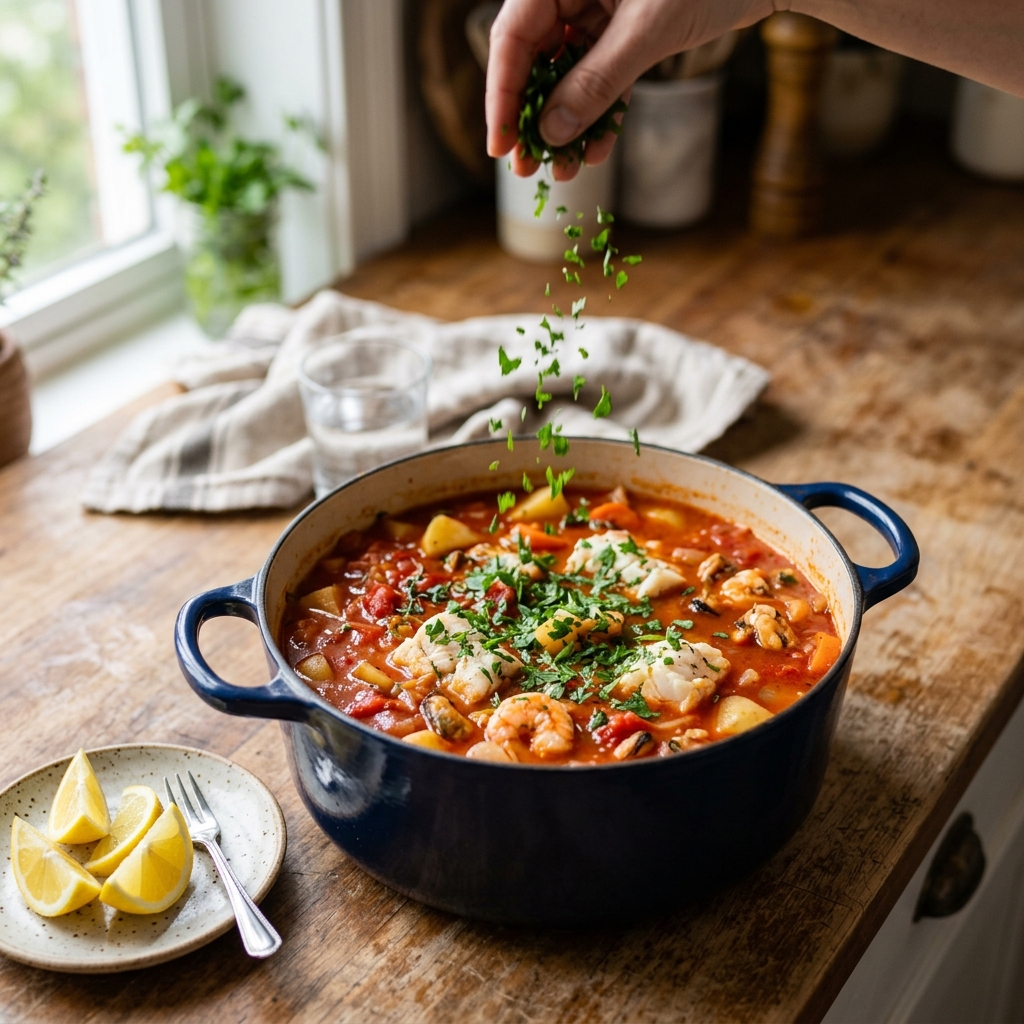
Step 5: Finish with Parsley and Lemon
Take the pot off the heat and scatter in the parsley. Taste the broth and adjust the salt and harissa. Ladle into bowls and serve with lemon wedges for squeezing at the table; the lemon is not a garnish here, it is the finishing ingredient.
Keeping the Fish Whole
- Choose a firm white fish. Cod, haddock, hake, and halibut hold their shape in broth. Very delicate fish like sole falls apart, and oily fish like salmon overwhelms the spices.
- Cut the fish large. Chunks of about 2 inches survive the simmer; small pieces disintegrate. They will break naturally into perfect flakes in the bowl.
- Storage: The soup keeps in the fridge for 2 days, and the flavor deepens overnight. Reheat gently below a boil to protect the fish. Planning for leftovers? Hold some fish back and poach it fresh in the reheated broth.
- Taste your harissa first. One brand’s teaspoon is another brand’s tablespoon. Start with less; you can always stir more into the finished pot.
Other Fish, Other Heat Levels
The Traditional Whole-Fish Version
Tunisian cooks often start with a whole cleaned fish, simmering it in the broth, then lifting it out to remove skin and bones before returning the flesh. It gives a deeper broth. If you are comfortable filleting cooked fish, try it once with sea bream or red snapper; otherwise the fillet method loses surprisingly little.
Quick Weeknight Chorba Shortcut
Use fine bulgur instead of freekeh and it needs only 10 minutes of simmering, cutting the total time to about half an hour. Frozen fish straight from the freezer aisle and a jarred harissa make this an entirely pantry-and-freezer dinner.
Everyday Variations on Chorba
A handful of canned chickpeas added with the freekeh stretches the pot for unexpected guests, which is exactly why Tunisian households do it. A thread of good olive oil over each bowl at the table is the standard finish. Half parsley and half coriander (cilantro) makes the brightest version of the finish, and both herbs are common in Tunisian kitchens.
Bread, Lemon, and What Else
In Tunisia, chorba arrives with bread and little else, because the soup is the meal. Warm crusty bread or a round from the easy Moroccan bread recipe is perfect for dipping, with olives and sliced cucumber to round out the table.
For familiar Western pairings, treat it like any hearty fish stew: a green salad alongside, or the easy tabbouleh recipe for a fresh, lemony counterpoint.
Questions Cooks Ask About Chorba Samak
Can I make Tunisian fish soup ahead of time? Partly, and it works beautifully: make the broth with freekeh up to 2 days ahead, then reheat and poach the fish fresh in 8 minutes before serving. Fully finished soup keeps 2 days but the fish softens.
What can I substitute for freekeh in chorba? Coarse bulgur is the closest match with no timing change. Pearl barley works with 15 extra minutes, and rice makes the soup gluten-free. All three are traditional somewhere in North Africa.
Is Tunisian fish soup spicy? As written, gently warming rather than hot. Harissa brings the heat, so use one teaspoon for mild and two or more for a proper Tunisian kick, and let people stir extra into their own bowls.
How do I store leftover fish soup? Covered in the fridge for up to 2 days. Reheat gently on the stove without boiling so the fish stays tender. Freezing is not worth it here, because the fish turns woolly when thawed.
What fish is best for Tunisian fish soup? Any firm white fish: cod, haddock, hake, halibut, or sea bass all work. Frozen fillets are fine if thawed and patted dry. Avoid delicate flatfish and oily fish like salmon or mackerel.
Make It the Next Cold Evening
If the dips and breads on this blog were your introduction to North African cooking, this soup is your first full main course from that coast. One pot, five steps, and a bowl that tastes like a harbor town in the cool months.
Make it this week and tell me in the comments which fish you used and how much harissa your table could handle. And if you know someone convinced that fish soup is beyond home cooking, share this recipe. This is the pot that proves otherwise.
Rate this recipe
No ratings yet — be the first!
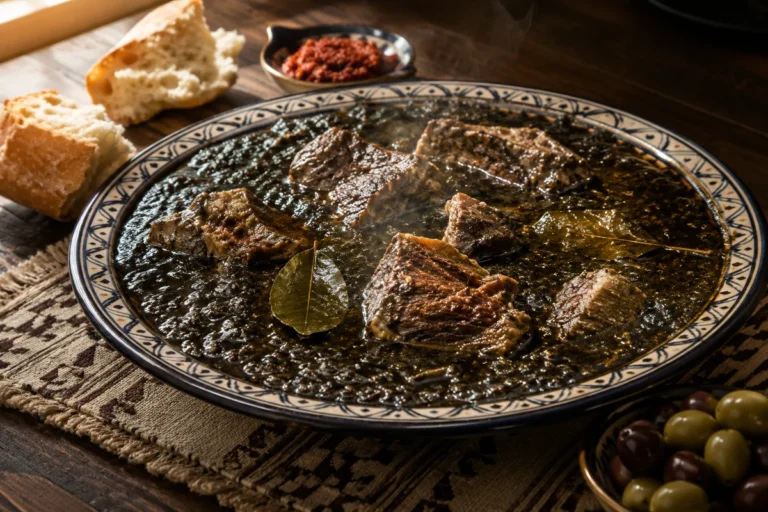

Fry the harissa briefly in the oil before any liquid goes in. It takes the raw edge off and lets it bloom through the whole pot rather than sitting on top of it.
Comments
No comments yet. Yours would be the first.
Made this? Tell me which fish you used, and whether you added more harissa at the table.
Leave a comment
Comments are anonymous and appear after admin approval. If you rated this recipe above, your stars will show with your comment.