
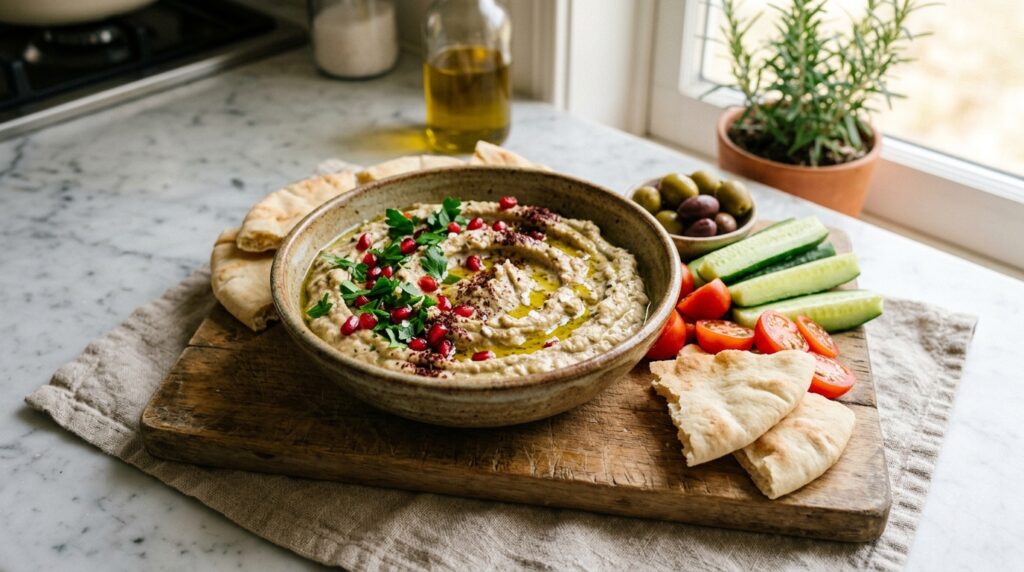
Why This Baba Ghanoush Recipe Might Replace Your Hummus
Think smoky restaurant flavor needs a charcoal grill and a chef’s touch? Baba ghanoush recipe proves otherwise. This baba ghanoush recipe needs two eggplants, a handful of pantry ingredients, and your regular stovetop or oven. The smokiness comes from a simple charring technique, not special equipment.
The result is a dip that is creamy, cool, and deeply savory, with a whisper of smoke behind the lemon and garlic. It scoops up silky on warm bread, and it has converted more than a few people who thought they didn’t like eggplant.
Baba ghanoush is what appears when hummus starts to feel routine. It is also the dip most often ruined at home, almost always at the same two points, so this recipe flags both and explains which shortcuts keep the smoke and which quietly throw it away.
Below you’ll find the short ingredient list, where to buy tahini in the US and UK, four numbered steps with photo placeholders, the fixes for bitter or watery dip, and answers to the five questions people search most.
Why Charring Beats Roasting
- Everything comes from a regular US or UK supermarket. Eggplant (aubergine in the UK), tahini, lemon, garlic, and olive oil. Tahini gets a full sourcing guide and a substitution below.
- Naturally vegan and gluten-free. No adjustments needed. It is also dairy-free and halal as written, which makes it one of the safest dishes to bring to any gathering.
- Realistic timing. About 10 minutes of hands-on work; the eggplant chars and drains mostly unattended. Start to finish in roughly 40 minutes.
- The technique carries over. Once you can char an eggplant, half of Levantine cooking opens up to you.
About Baba Ghanoush: The Smoky Side of the Mezze Table
Baba ghanoush (also spelled baba ganoush or baba ghanouj) is a classic of Lebanese and wider Levantine cooking, served across Lebanon, Syria, Palestine, and Jordan. The playful Arabic name translates roughly to “pampered papa,” and various family legends claim to explain it.
It sits on the mezze table (the Middle Eastern tradition of many shared small plates) right beside hummus, and the two are often confused in the West. The difference matters: hummus is chickpeas and tahini, while baba ghanoush is charred eggplant and tahini. That charring gives it the smoky depth hummus doesn’t have, which is exactly why some people never go back.
If you know Greek melitzanosalata or the eggplant dips of the wider Mediterranean, this is their Arabic cousin, distinguished by the tahini and the heavier smoke.
What Goes Into Baba Ghanoush
For the Dip
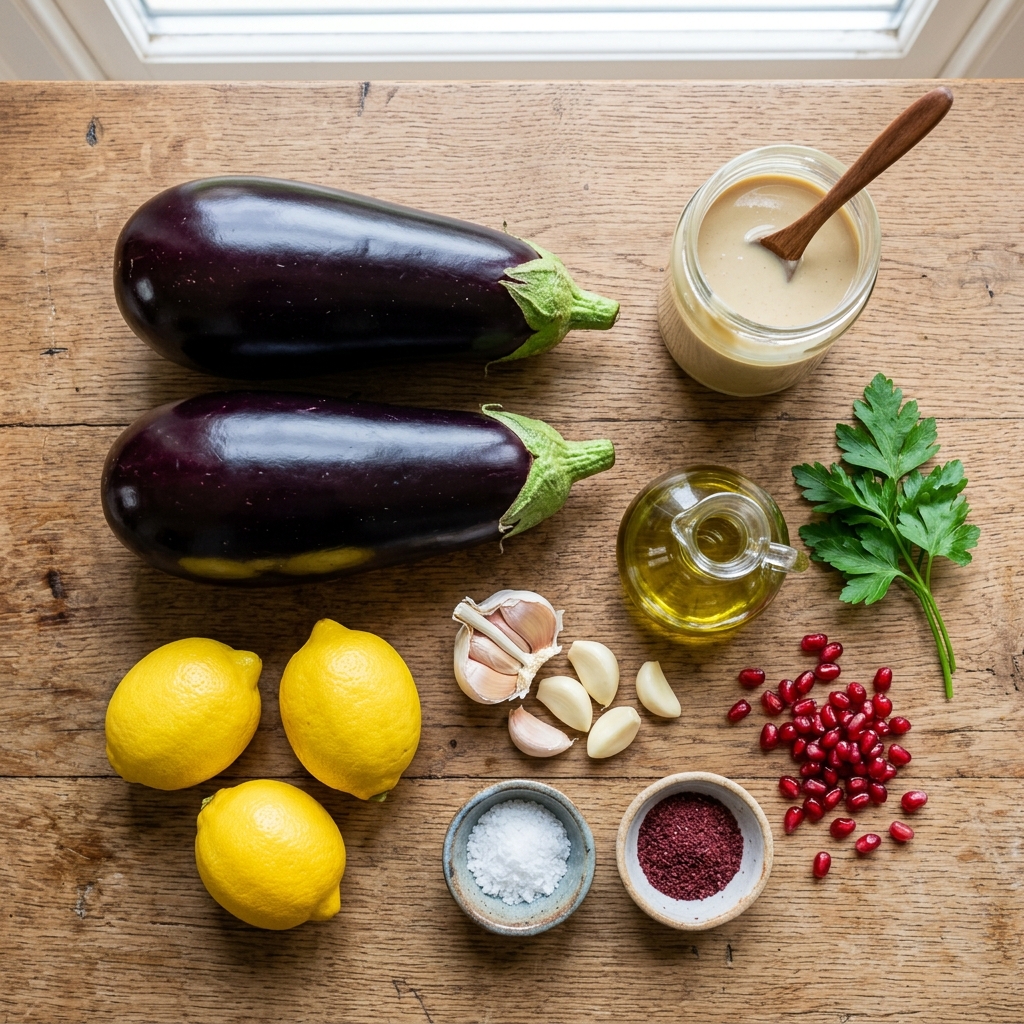
Serves 6 as a dip:
- 2 large eggplants (aubergines), about 2 lbs (900 g) total
- ⅓ cup (80 g) tahini (sesame seed paste, stirred well before measuring)
- ¼ cup fresh lemon juice (1 to 2 lemons)
- 2 garlic cloves, finely grated or minced
- 3 tablespoons extra virgin olive oil, plus more for garnish
- ¾ teaspoon salt, plus more to taste
For garnish (optional but lovely):
- Chopped fresh parsley
- Pomegranate seeds
- A pinch of sumac or smoked paprika
Where to Find Tahini in the US and UK
Tahini has gone fully mainstream. In the US, look near the peanut butter or in the international aisle; in the UK, it sits with the world foods or next to the nut butters in every major supermarket. A Middle Eastern or Mediterranean grocery will have larger jars of better quality for less money, and Amazon carries every major brand.
Two buying tips from experience: choose a tahini that pours rather than one that stands solid in the jar, and always stir it well, since the oil separates naturally.
Without Tahini
- No tahini? Use 3 tablespoons of plain Greek yogurt for a creamy (though no longer vegan) version, or simply leave it out and add an extra tablespoon of olive oil. The dip becomes lighter and smokier, closer to a style popular in parts of the Levant.
- No pomegranate seeds for garnish? Skip them, or use a few halved cherry tomatoes for the same pop of color and freshness.
- No fresh lemons? Bottled lemon juice works in a pinch, but start with less and taste, since it is sharper than fresh.
Char, Drain, Mash, Finish
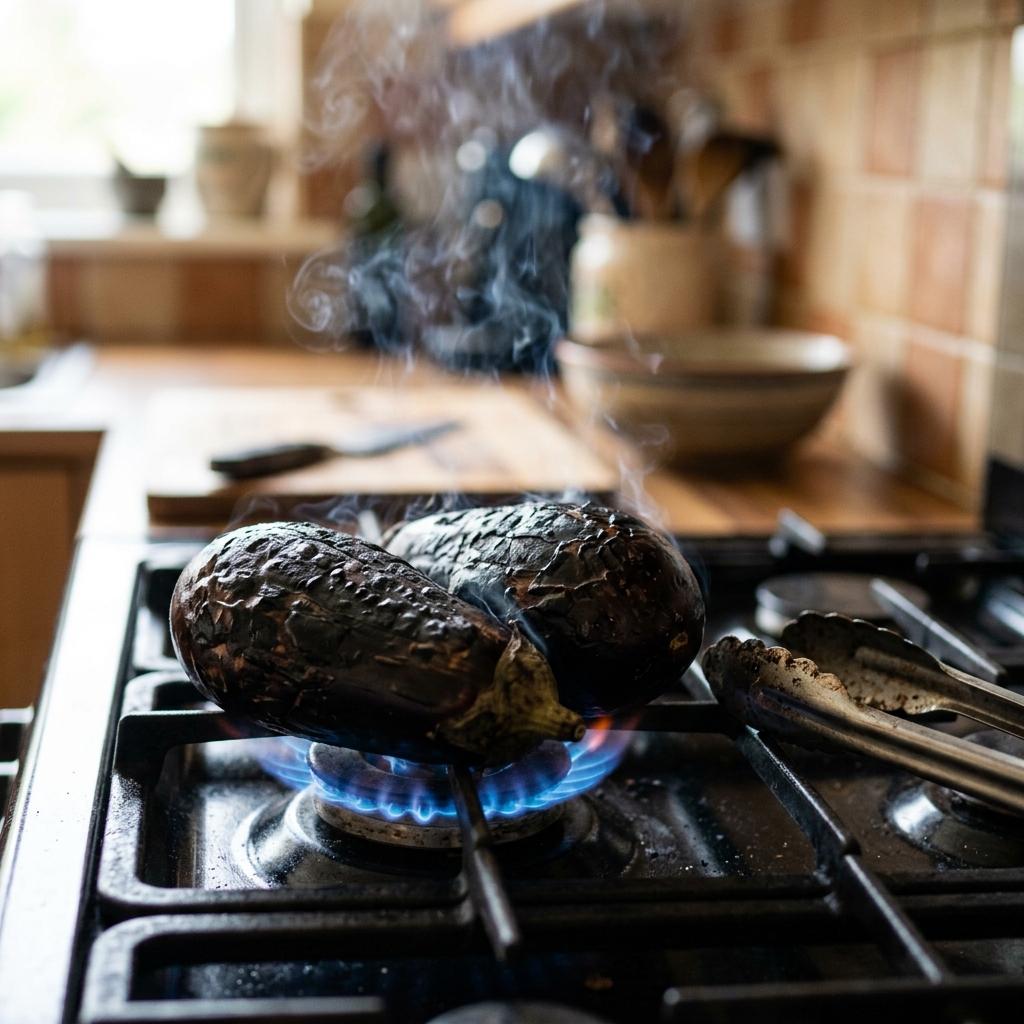
Step 1: Char the Eggplants
Prick each eggplant several times with a fork. Char them whole, turning occasionally with tongs, until the skin is blackened and the flesh is completely soft. Directly over a gas flame takes about 15 minutes; under a hot broiler (grill in the UK) takes 25 to 30 minutes; a 475°F (245°C) oven takes about 40.
Prep tip: Do not stop at golden. The skin should look genuinely burnt and the eggplant should slump when you press it. Undercooked eggplant is the usual culprit behind a chunky, bland dip: firm patches never break down, and they carry none of the smoke. Total collapse is the goal.
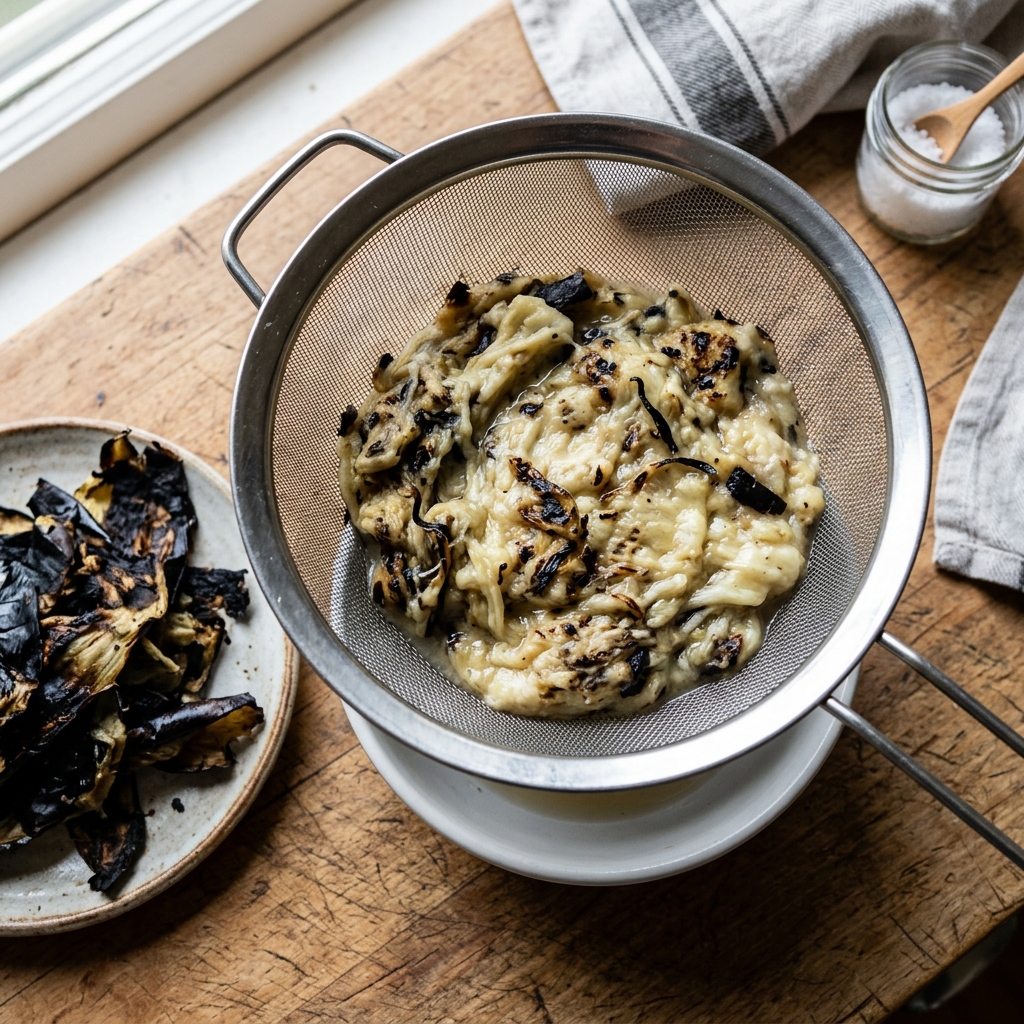
Step 2: Peel and Drain
Let the eggplants cool for 10 minutes, then split them open and scoop the soft flesh away from the charred skin. Put the flesh in a colander and let it drain for 10 to 15 minutes, pressing gently with a spoon near the end.
Prep tip: Draining is the step most recipes rush, and skipping it is what produces a watery dip. Undrained eggplant releases its liquid into the bowl and turns the dip watery within the hour. Fifteen patient minutes here is the difference between silky and soupy.
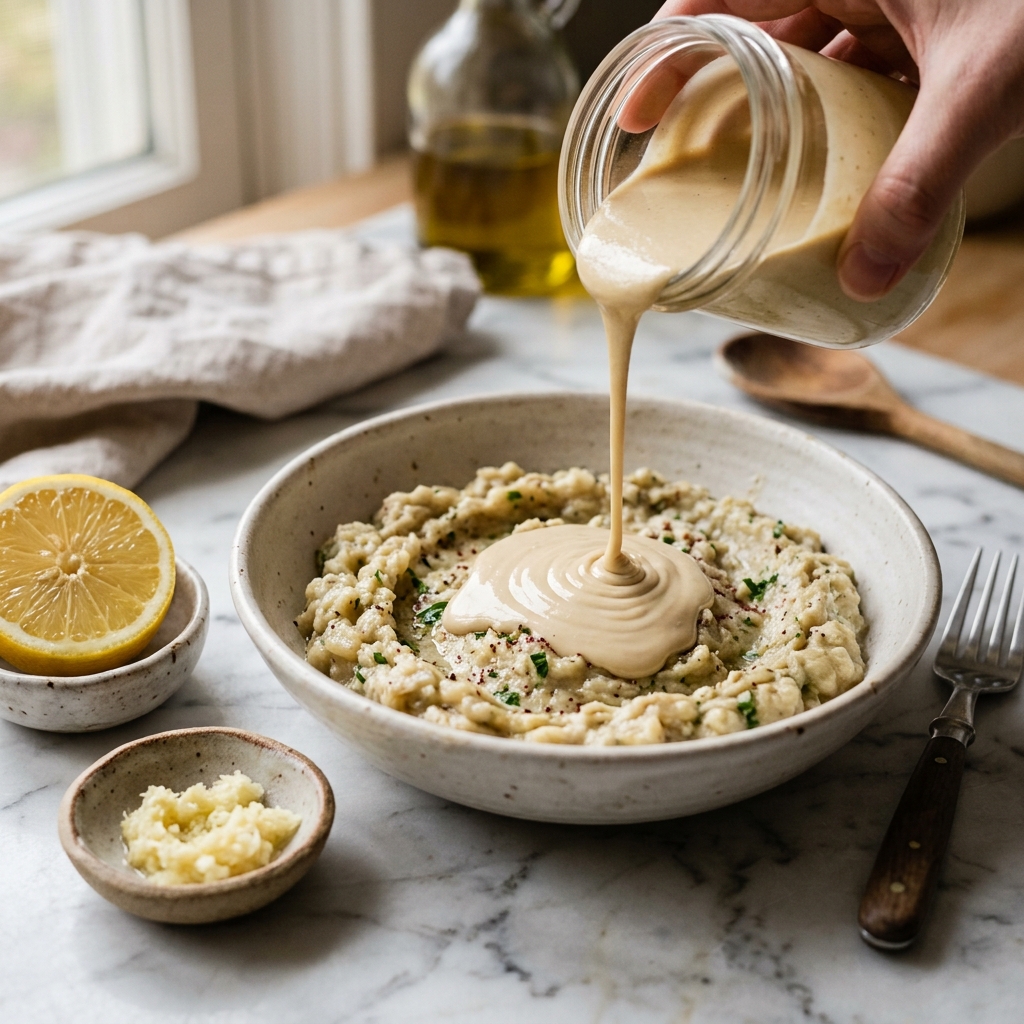
Step 3: Mash with Tahini, Lemon, and Garlic
Move the drained eggplant to a bowl and mash it with a fork, keeping a little texture. Add the tahini, lemon juice, garlic, olive oil, and salt, and stir until creamy and combined. Taste and adjust; it usually wants a touch more lemon or salt than you expect.
For an ultra-smooth, restaurant-style dip, pulse everything briefly in a food processor instead, but stop early. Over-blending makes the texture gluey.
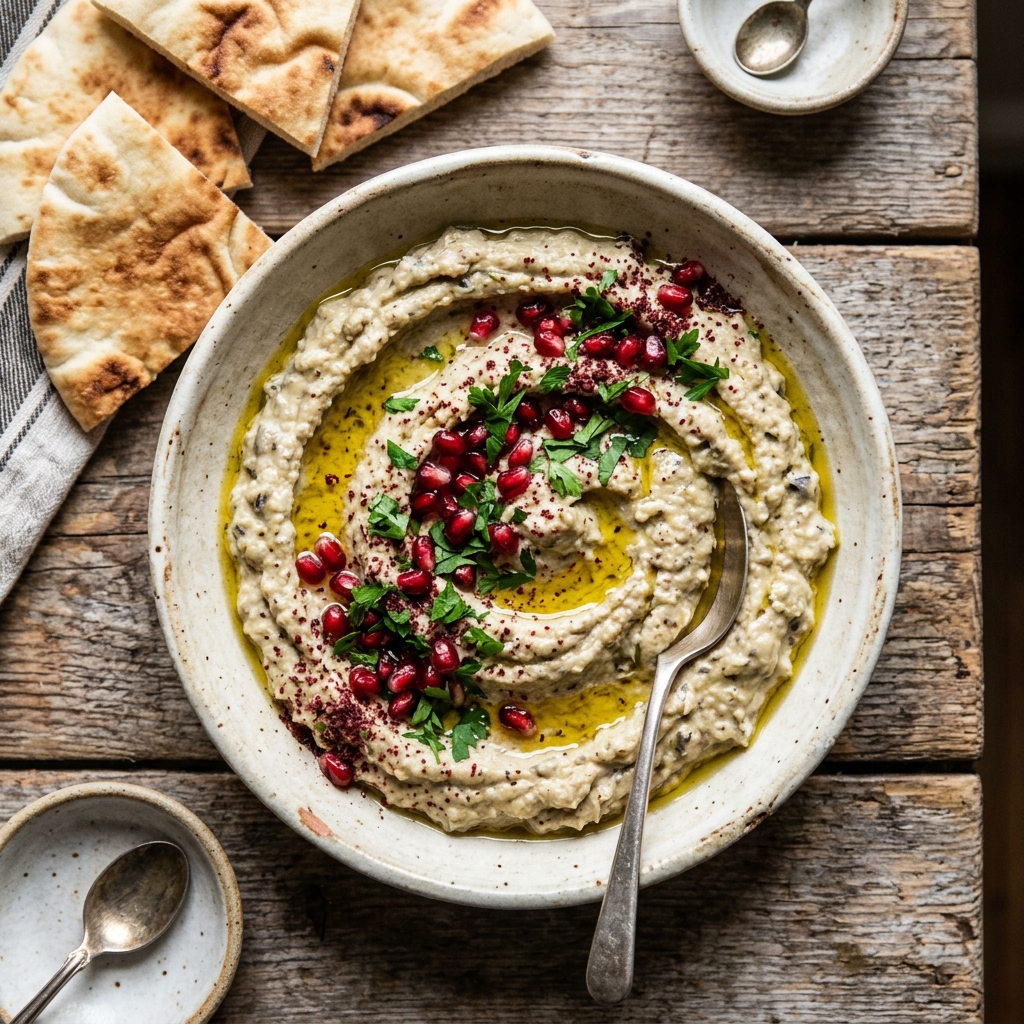
Step 4: Garnish and Serve
Spread the baba ghanoush in a shallow bowl, swirl the surface with the back of a spoon, and pour a generous drizzle of olive oil into the swirls. Scatter over the parsley, pomegranate seeds, and a pinch of sumac or smoked paprika. Serve at room temperature with warm bread.
Where Baba Ghanoush Usually Goes Wrong
- Char over a real flame when you can. The gas burner method gives the deepest smoke because the skin blisters in direct contact with fire. Put foil around the burner first and cleanup takes one minute.
- Serve at room temperature, not cold. Straight from the fridge, the flavors go quiet and the texture stiffens. Take it out 30 minutes before serving.
- Storage: Keeps covered in the fridge for 4 days, and the smoky flavor actually deepens overnight. Refresh with a stir and a drizzle of olive oil before serving. Freezing is possible but the texture suffers noticeably, so it is not worth doing.
- Choose lighter, firmer eggplants. Heavy ones for their size carry more water and more seeds, which means more bitterness and a longer drain.
Swaps and Regional Versions
No-Flame Baba Ghanoush (Still Smoky)
No gas stove and no broiler patience? Roast halved eggplants cut-side down at 475°F (245°C) for 30 minutes, then stir ¼ teaspoon of smoked paprika into the finished dip. It is not identical to fire-charred, but it convincingly delivers the smoky character.
Quick Weeknight Baba Ghanoush Shortcut
Char the eggplants a day or two ahead whenever the oven is already on, and keep the drained flesh in the fridge. The actual dip then takes five minutes to mash together, which turns baba ghanoush into a genuine weeknight side.
How It Is Finished Around the Region
Pomegranate is the finish worth seeking out when the fruit is in season, and it is standard across Syria and Lebanon. The sweet-tart seeds against the smoky cream is the combination this dip was built for, and a teaspoon of pomegranate molasses (a sweet-sour syrup of reduced pomegranate juice) stirred into the dip itself pushes it further in the same direction. If you bought a bottle for the fattoush recipe, this is its second job.
Bread, and What Else
On a Middle Eastern table, baba ghanoush belongs to the mezze spread: warm pita or the manakish za’atar flatbread for scooping, olives, and fresh vegetables. It is also outstanding next to grilled meats, and a spoonful inside a wrap from the easy chicken shawarma recipe is a genuine upgrade.
For familiar Western settings, treat it anywhere hummus goes: with crudités and crackers on a snack board, spread inside sandwiches instead of mayo, or spooned alongside roast chicken, grilled salmon, or lamb chops.
Questions Cooks Ask About Baba Ghanoush
Can I make baba ghanoush ahead of time? Yes, and it improves. Make it up to 2 days ahead, keep it covered in the fridge, and bring it to room temperature with a fresh drizzle of olive oil before serving.
What can I substitute for tahini in baba ghanoush? Greek yogurt gives a creamy result (no longer vegan), or leave it out entirely and add an extra spoonful of olive oil for a lighter, smokier dip. Both versions are eaten in the Levant.
Is baba ghanoush spicy? No. The flavor is smoky, garlicky, and lemony with no chili at all. If you want heat, a pinch of Aleppo pepper or chili flakes on top does the job without changing the recipe.
How do I store leftover baba ghanoush? Covered in the fridge for up to 4 days. Stir before serving and add a little fresh olive oil on top. Skip the freezer, which breaks the creamy texture.
Is baba ghanoush healthier than hummus? They are both nutritious, just different. Baba ghanoush is lower in calories and carbs because eggplant is lighter than chickpeas, while hummus brings more protein and fiber. The honest answer is to keep both in rotation.
Burn an Eggplant This Week
If you already bake the flatbreads from this blog, baba ghanoush completes the picture: something smoky and creamy to scoop up with them. Two eggplants, four steps, and a dip that tastes like it came off a charcoal grill in Beirut.
Make it this week and tell me in the comments which charring method you used, and whether the pomegranate seeds made it to the table or got eaten first. And if you know a devoted hummus person, share this recipe. Everyone deserves to meet the smoky cousin.
Rate this recipe
★ 4.0 · 2 ratings


The charring is the whole dish. If you only have an oven, get it as hot as it goes and accept a milder result, but do not skip the blackening entirely. Smoke is what separates baba ghanoush from roasted eggplant dip.
Comments (1)
Best baba ghanoush I've tried! Absolutely delicious!
July 13, 2026Leave a comment
Comments are anonymous and appear after admin approval. If you rated this recipe above, your stars will show with your comment.