
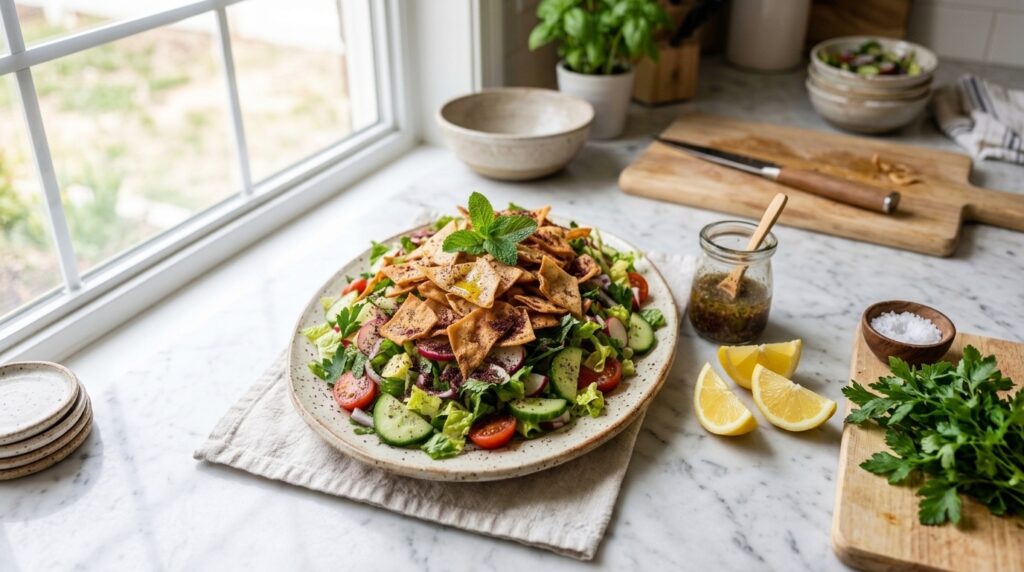
Why Fattoush Deserves a Spot on Your Table
Think Lebanese cooking demands special skills or a shopping trip across town? Fattoush Salad was literally invented by home cooks using up stale bread it’s thrift food, and it asks almost nothing of you. If you can toast pita and chop vegetables, you can make fattoush tonight. And what a reward for so little work: shards of crispy, golden pita tossed with crunchy cucumber, juicy tomatoes, and crisp lettuce, all coated in a tangy, garlicky dressing stained deep red with sumac. Every forkful has crunch, freshness, and a citrusy zing that wakes up everything else on the plate.
Fattoush is the salad that disappears first at most gatherings, faster than tabbouleh, and that is saying something. It has been adapted here for cooks far from a Middle Eastern grocery, so every ingredient below comes with a plan B.
Ahead you’ll find the full ingredient list, exactly where to find sumac in the US and UK (and what to use if you can’t), four numbered steps with photo placeholders, the trick to keeping the pita crispy, and answers to the five questions people ask about fattoush most.
Why the Bread Goes In Last
- Supermarket-friendly. Every vegetable here is in a regular US or UK supermarket. The only specialty item is sumac, and there is a store guide plus an easy substitution below.
- Fast and forgiving. About 25 minutes start to finish, and the quantities are flexible fattoush happily absorbs whatever crisp vegetables you have.
- A genius use for stale pita. That’s the whole origin of the dish, so those leftover pitas from shawarma night finally have a purpose.
- Naturally fits most diets. Fattoush is vegan, vegetarian, dairy-free, and halal as written. It contains wheat (the pita), but the gluten-free swap in the FAQs is simple.
About Fattoush: The Story Behind This Lebanese Salad
Fattoush comes from the Levant Lebanon and Syria in particular and its name comes from fatteh, an Arabic word family for dishes built on broken or crumbled bread. Farmers and home cooks would fry up day-old flatbread rather than waste it, then toss it with whatever vegetables and herbs the garden offered. It’s a fixture of the mezze table (the Middle Eastern tradition of shared small plates) and especially beloved during Ramadan, when its freshness and crunch are exactly what you want after a day of fasting.
What Goes Into Fattoush
Serves 4 as a side:
- 2 large pita breads (day-old is ideal)
- 3 tablespoons olive oil, for brushing the pita
- 1 small head romaine or 2 little gem lettuces, chopped
- 2 medium tomatoes, cut into chunks, or 1½ cups halved cherry tomatoes
- 1 large cucumber (or ½ an English cucumber), diced
- 4 radishes, thinly sliced
- 3 spring onions (scallions), sliced
- ½ cup fresh flat-leaf parsley, roughly chopped
- ¼ cup fresh mint leaves, torn
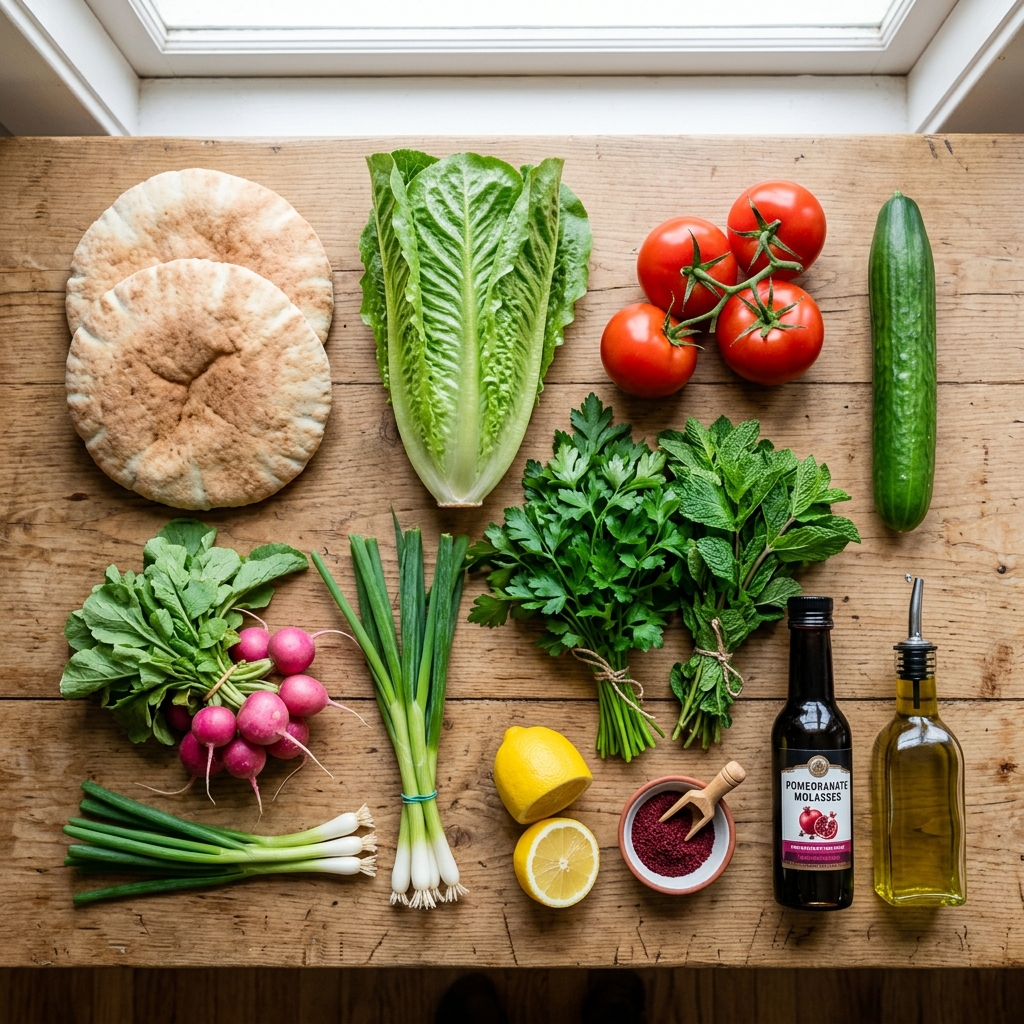
For the sumac dressing:
- ¼ cup extra virgin olive oil
- Juice of 1 large lemon (about 3 tablespoons)
- 1 garlic clove, finely grated
- 1½ teaspoons sumac (a crimson spice made from dried, ground sumac berries, with a bright, lemony tang), plus more for sprinkling
- 1 teaspoon pomegranate molasses (optional, a thick, sweet-sour syrup made from reduced pomegranate juice)
- ¾ teaspoon salt
- ¼ teaspoon black pepper
Where to Find Sumac and Other Middle Eastern Ingredients
Sumac is the heart of fattoush, and the good news is it’s gone mainstream. In the US, check the spice aisle of larger supermarkets or any Whole Foods; in the UK, most big supermarkets now stock it in the herbs and spices section. Failing that, Amazon carries several brands, and a Middle Eastern or Mediterranean grocery will sell a big bag for the price of a supermarket jar. Pomegranate molasses lives in the international aisle or near the vinegars in larger stores, and any Middle Eastern grocery will have it. It’s optional, but it adds a sweet-tart depth that makes the dressing taste restaurant-level, and a bottle keeps for a year in the cupboard.
Without Sumac or Pomegranate Molasses
- No sumac? Use the finely grated zest of 1 lemon plus an extra squeeze of juice and a small pinch of salt. You’ll lose the pretty red color but keep the tangy character.
- No pomegranate molasses? Simply leave it out, or stir in ½ teaspoon of balsamic vinegar mixed with a pinch of sugar for a similar sweet-sour note.
- Traditional recipes also use purslane, a lemony green herb that’s hard to find in Western supermarkets extra parsley and mint stand in perfectly, which is exactly what this recipe does.
Crisping the Bread, Then Building the Bowl
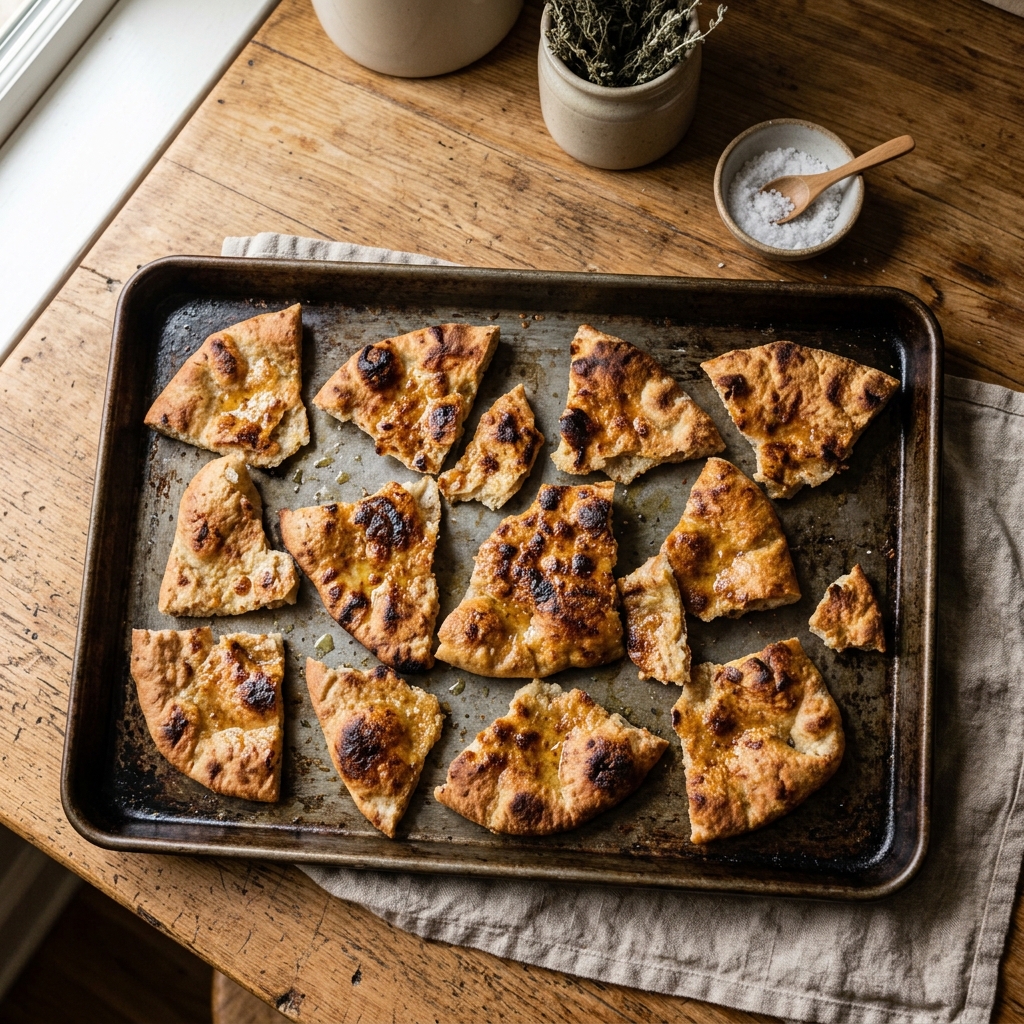
Step 1: Crisp the Pita
Heat your oven to 400°F (200°C). Split each pita into two thin rounds, brush both sides with olive oil, tear or cut into rough bite-sized pieces, and spread on a baking sheet. Bake for 8–10 minutes, tossing once, until deeply golden and completely crisp. Prep tip: Let the pita chips cool fully on the tray before they go anywhere near the salad. Warm pita softens on contact with the vegetables, while cooled chips stay crunchy twice as long. It is the one step worth waiting out.
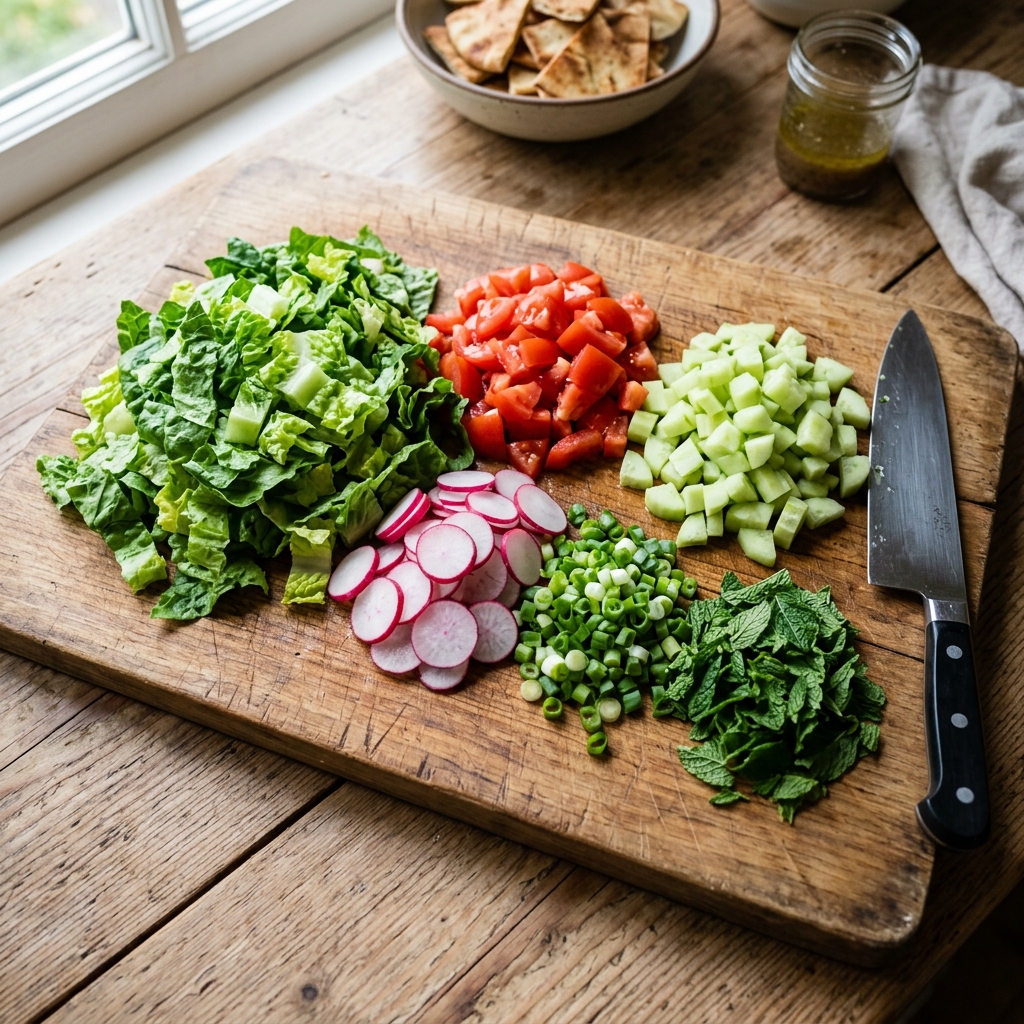
Step 2: Chop the Vegetables and Herbs
While the pita bakes, chop the lettuce, tomatoes, cucumber, radishes, and spring onions, and roughly chop the parsley and tear the mint. Aim for chunky, similar-sized pieces, fattoush is a rustic salad, not a fine dice. Prep tip: If your tomatoes are very juicy, scoop the seeds out before chopping. Extra tomato water is the fastest way to soggy pita, which is why seeding them becomes automatic once you have made this a few times.
Step 3: Whisk the Sumac Dressing
In a small bowl or jar, whisk together the olive oil, lemon juice, grated garlic, sumac, pomegranate molasses if using, salt, and pepper. Taste it, it should be punchy and tart, because the bread and lettuce will soften its edges.
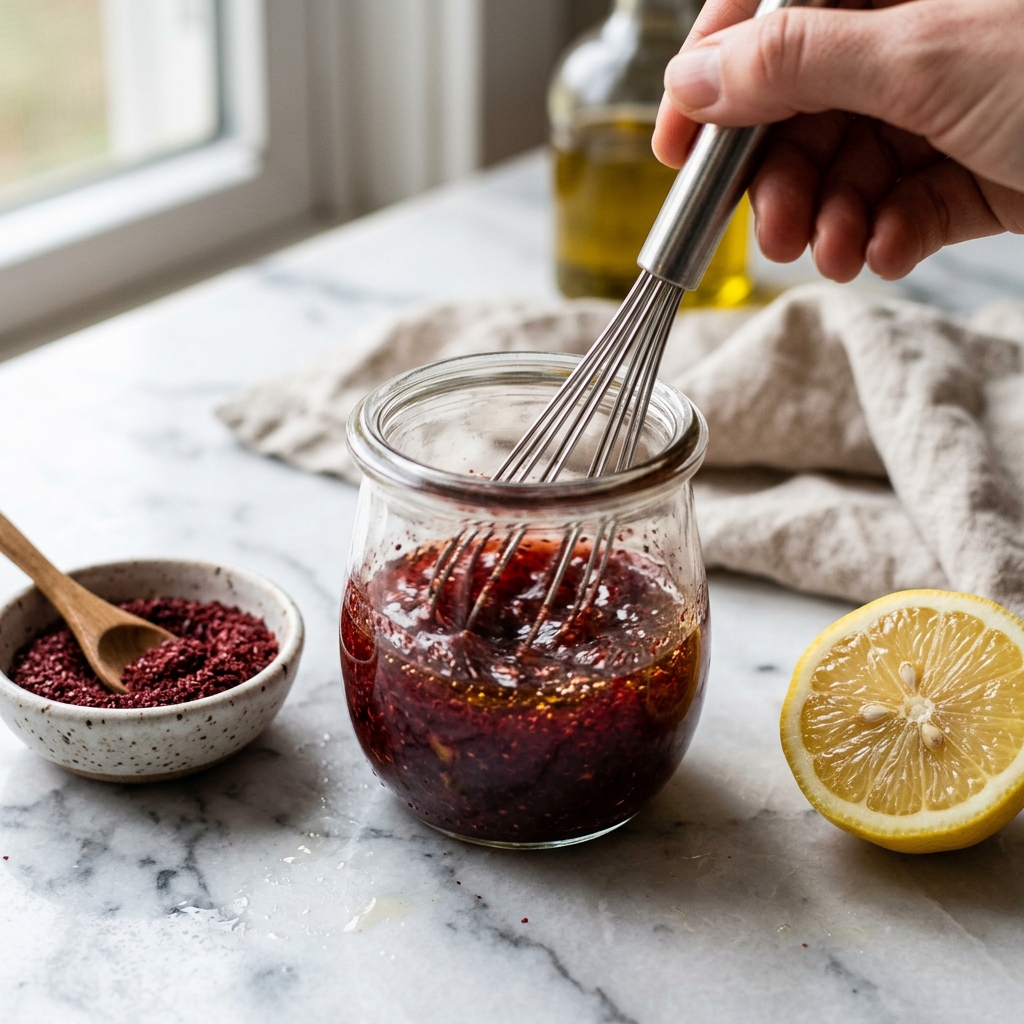
Step 4: Toss and Serve Immediately
In your biggest bowl, toss the vegetables and herbs with the dressing first. Add the pita chips, give everything two or three gentle turns, then pile onto a platter and finish with a generous pinch of sumac over the top. Serve straight away, while the contrast between crisp and fresh is at its peak.
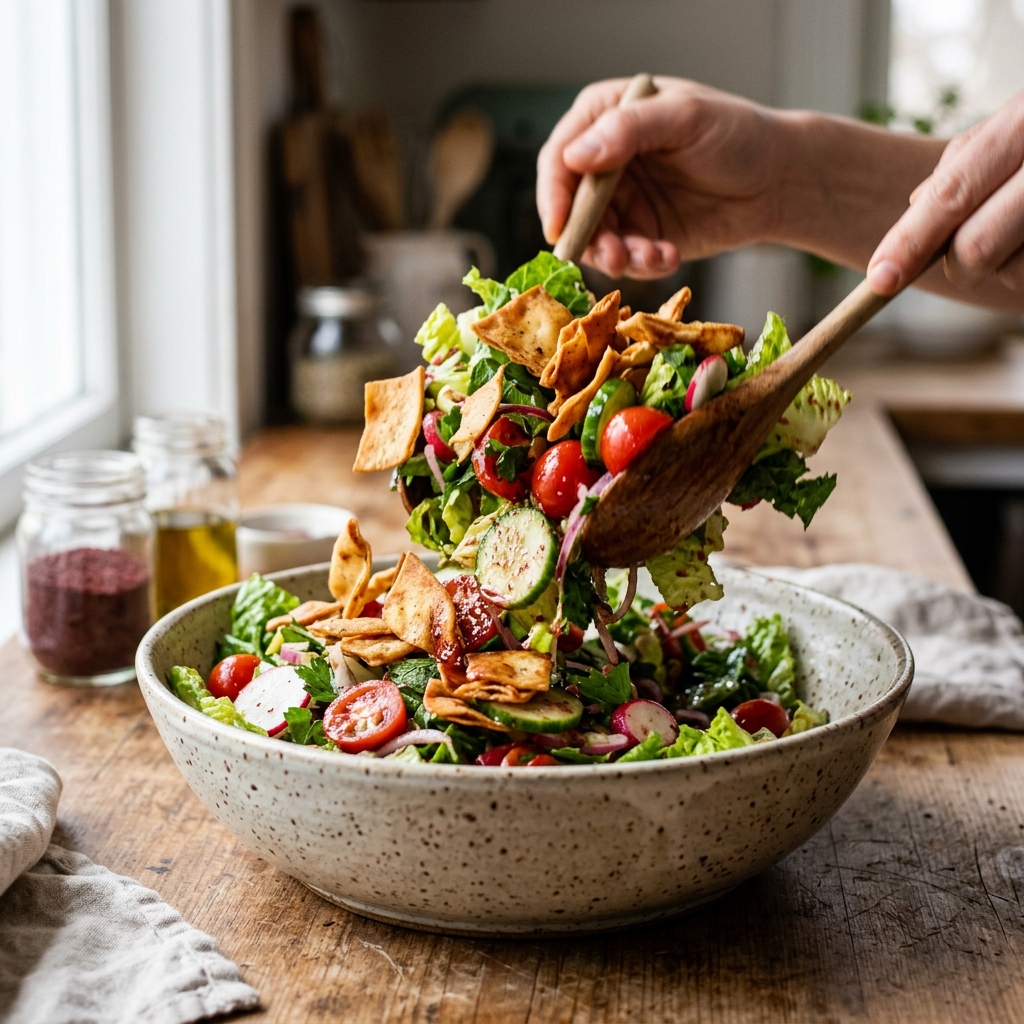
The Rule That Keeps the Pita Crisp
- Dress the vegetables, then add the bread. Tossing the pita in last, right before serving, is the single most important rule of fattoush. Bread sitting in dressing is panzanella; bread added last is fattoush.
- Bake, don’t fry,for weeknights. Traditional fattoush often uses fried pita, if you want that version, shallow-fry the pieces in ½ inch of neutral oil until golden. Baking is lighter and one less pan.
- Make the components ahead, not the salad. Pita chips keep for 3 days in an airtight container, the dressing keeps for 5 days in the fridge, and the chopped vegetables hold for a day. Assembled fattoush, though, is a right-now dish.
- Don’t skip the final sumac sprinkle. That dusting of red over the finished salad is both the traditional presentation and a real flavor boost.
Seasonal Swaps for the Bowl
Vegan and Vegetarian Fattoush
No changes needed, fattoush is naturally vegan as written. If you want to turn it into a full vegetarian main, add a crumble of feta (common in restaurant versions, though not traditional) or a can of drained chickpeas for protein.
Quick Weeknight Fattoush Shortcut
Skip the oven entirely: use a handful of good-quality plain pita chips or even thick tortilla chips from a bag, and use bagged chopped romaine. Whisk the dressing in the salad bowl first, pile everything on top, toss, and you’re eating in 10 minutes.
How Fattoush Changes With the Seasons
Fattoush was always a use-what-you-have salad, and it shifts with the seasons. In summer, green pepper and extra pomegranate molasses suit it; in winter, when tomatoes are poor, radishes and double the herbs carry it instead.
What Fattoush Sits Beside
For a Middle Eastern meal, fattoush is the classic partner for grilled and roasted meats it is the natural partner to the easy chicken shawarma recipe, and it sits naturally alongside baba ghanoush, warm kofta, or roast chicken with rice. For familiar Western pairings, treat it like a crunchy garden salad with attitude: brilliant next to barbecue, grilled salmon, or lamb chops. The crispy pita means you can skip serving extra bread.
Questions Cooks Ask About Fattoush
Can I make fattoush ahead of time? You can prep every component ahead pita chips, dressing, and chopped vegetables all keep separately, but only toss them together right before serving. Assembled fattoush goes soggy within the hour.
What can I substitute for sumac in fattoush? Finely grated lemon zest plus a pinch of salt is the closest swap, adding the same bright, citrusy tang. The salad won’t have sumac’s red color, but the flavor profile stays true.
Is fattoush spicy? No, there’s no chili in traditional fattoush. The dominant flavors are tangy, garlicky, and fresh, so it’s completely kid-friendly.
How do I store leftover fattoush? Once dressed, fattoush doesn’t keep well the bread softens fast. If you expect leftovers, store the components separately and assemble portions as you eat; undressed components keep 1–3 days in the fridge.
Is fattoush vegan or gluten-free? It’s naturally vegan, vegetarian, and halal. It’s not gluten-free as written because of the pita, but gluten-free pita or corn tortilla chips crisp up the same way and make an easy swap.
Make It the Night You Have Stale Bread
If you’ve already made shawarma and tabbouleh from this blog, fattoush completes the trio, and honestly, it might become the one you make most often. It’s fast, endlessly flexible, and it turns stale bread into the best part of dinner. Make it this week, and tell me in the comments what you tossed in especially if you tried the pomegranate molasses. And if you know someone whose pitas always go stale, share this recipe. Fattoush is the answer they didn’t know they needed.
Rate this recipe
No ratings yet — be the first!

Fry the bread rather than baking it if you want the real thing. Baked pita goes crisp; fried pita goes crisp and rich, and it holds up against the dressing for far longer.
Comments
No comments yet. Yours would be the first.
Made this? Tell me whether your bread stayed crisp, and how heavy you went on the sumac.
Leave a comment
Comments are anonymous and appear after admin approval. If you rated this recipe above, your stars will show with your comment.