
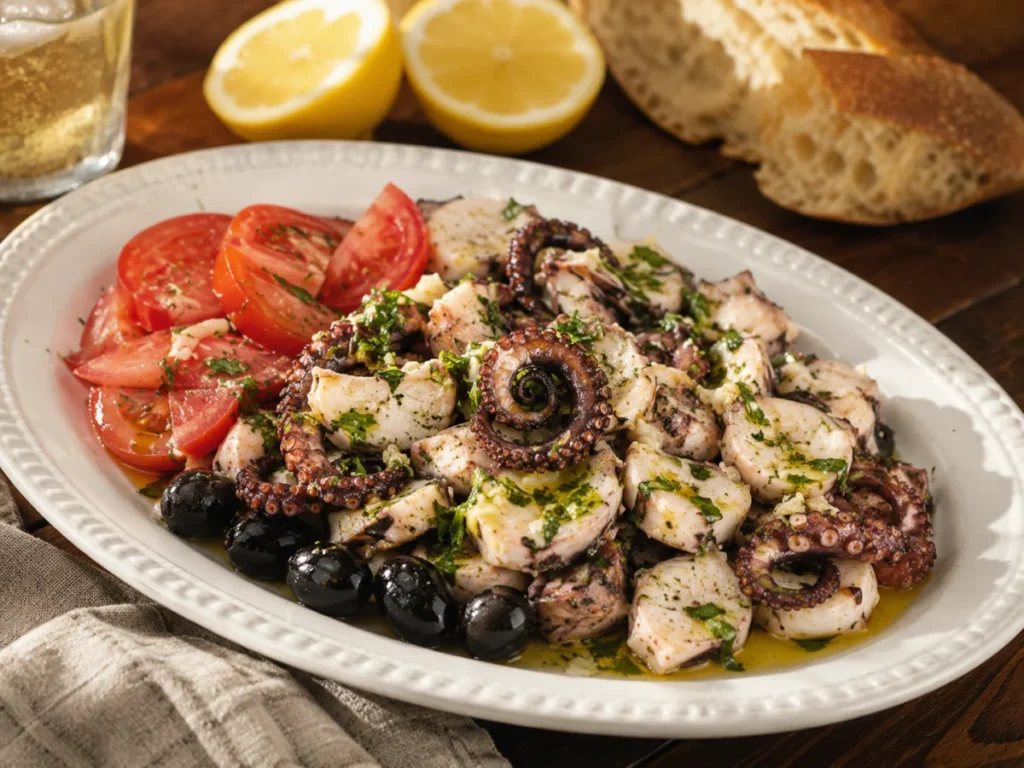
Four Ingredients and One Decision
There is almost nothing to this salad. Octopus, olive oil, lemon, garlic, parsley. It is the kind of dish that exists all along the North African and Mediterranean coast because it needs so little: whatever came off the boat, whatever was in the cupboard, and a cold hour in the fridge.
Which means everything in this octopus salad rests on one thing. Not the dressing, not the garnish, not the technique. Just whether the octopus is cooked correctly. Get that right and you have something clean, bright and faintly briny that tastes expensive. Get it wrong and you have flavoured rubber, and no amount of lemon will rescue it.
The good news is that octopus is far less mysterious than its reputation suggests, and the rule is simple enough to remember: it goes tough in the middle and comes out the other side. Stop halfway and you will be disappointed. Keep going and it turns tender again.
This is summer food, made in the morning and eaten cold in the afternoon, usually with bread and something else fried. Octopus is unforgiving about timing in both directions, and the windows below are the ones that work.
Ahead: how to buy octopus in the US and UK, the ingredient list, four steps with photos, the tenderness question answered properly, and what belongs beside it on the table.
Buying Octopus: What to Ask For
Frozen is not a compromise here, it is the recommendation. Freezing breaks down the muscle fibres and makes octopus more tender, which is why many fishmongers freeze their catch deliberately. Buy frozen cleaned octopus and thaw it overnight in the fridge, and you have done half the tenderising before you start.
In the UK, larger supermarkets and fishmongers stock it, and Mediterranean or Turkish groceries always do. In the US, look in the frozen seafood section of larger stores, at any Asian or Mediterranean market, or ask the fish counter to order it. Cleaned is what you want, meaning the beak and innards already removed. Octopus is also very lean and high in protein, per the USDA food database.
A 500 g octopus serves three or four as a starter. It shrinks considerably during cooking, which surprises people the first time.
Ingredients You’ll Need for Octopus Salad
Main Ingredients
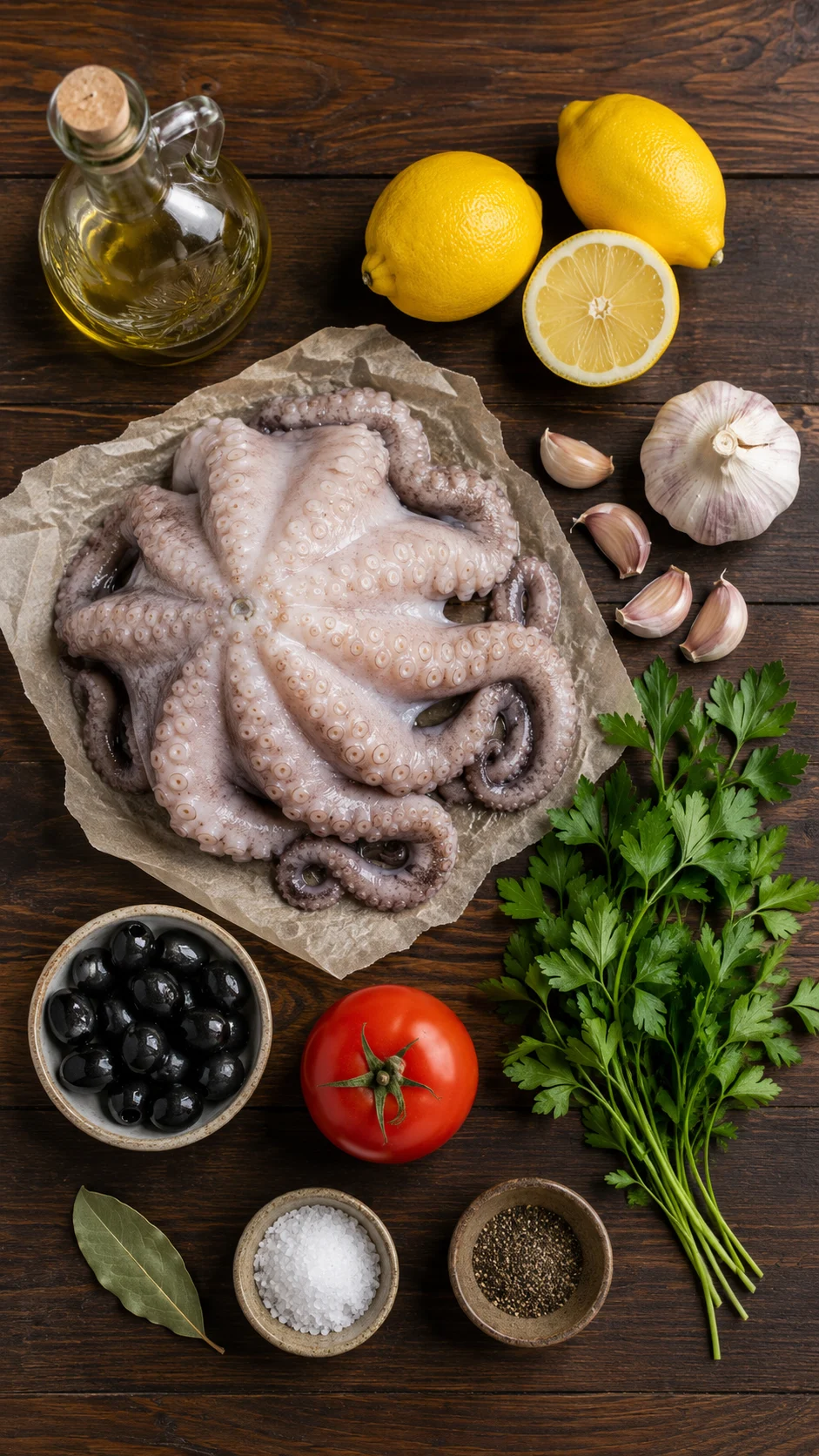
Serves 3 to 4 as a starter
For the octopus:
- 1 lb (500 g) cleaned octopus, thawed if frozen
- 1 bay leaf
- ½ onion
- 1 teaspoon salt for the cooking water
- Optional: a wine cork, if you follow the old tradition
For the dressing:
- 4 tablespoons extra virgin olive oil
- 2 tablespoons fresh lemon juice
- 1 tablespoon finely chopped garlic
- 1 tablespoon finely chopped parsley
- ½ teaspoon salt, plus more to taste
- ¼ teaspoon black pepper
To garnish:
- A handful of black olives
- 1 tomato, sliced
- Optional: a pinch of sumac or dried oregano, extra parsley
Where to Find the Ingredients
Beyond the octopus, this is a supermarket list. Good olive oil matters more here than in almost any other recipe on this blog, because there are so few ingredients to hide behind; if you keep a better bottle for finishing, this is the dish to use it on.
Fresh lemons are non-negotiable. Bottled juice tastes flat and slightly metallic, and in a dressing this simple there is nowhere for it to hide.
Easy Substitutions
- No octopus? Cooked squid rings work with the same dressing and need only 2 to 3 minutes of simmering. Cooked prawns work too, though the texture is softer.
- No fresh parsley? Fresh coriander or dill both suit this, and dill in particular is common along the eastern Mediterranean.
- Want it fuller? Add sliced red onion, boiled potato chunks, or capers. All three appear in coastal versions of this salad.
Step-by-Step Instructions: Octopus Salad in 4 Steps
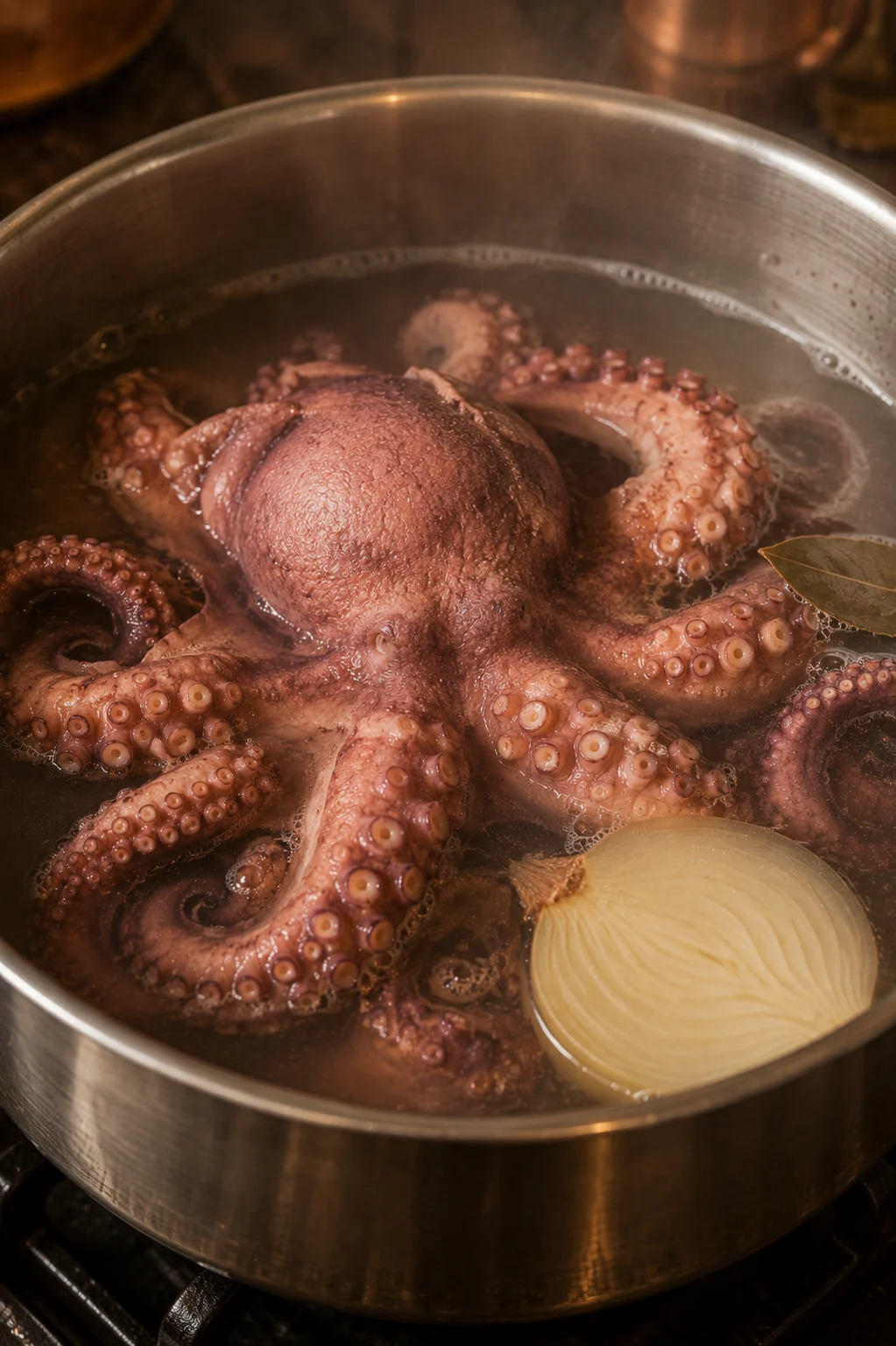
Step 1: Simmer the Octopus Gently
Bring a large pot of salted water to a boil with the bay leaf and half onion. Lower the octopus in, reduce the heat to a bare simmer, and cook uncovered for 40 to 50 minutes for a 500 g octopus, until a knife slides easily into the thickest part of a tentacle.
Prep tip: Simmer, never boil. A rolling boil seizes the flesh and toughens it, and the difference is dramatic. You want lazy bubbles at the edge of the pot and nothing more. And start testing at 40 minutes rather than trusting the clock, since size varies more than recipes admit.
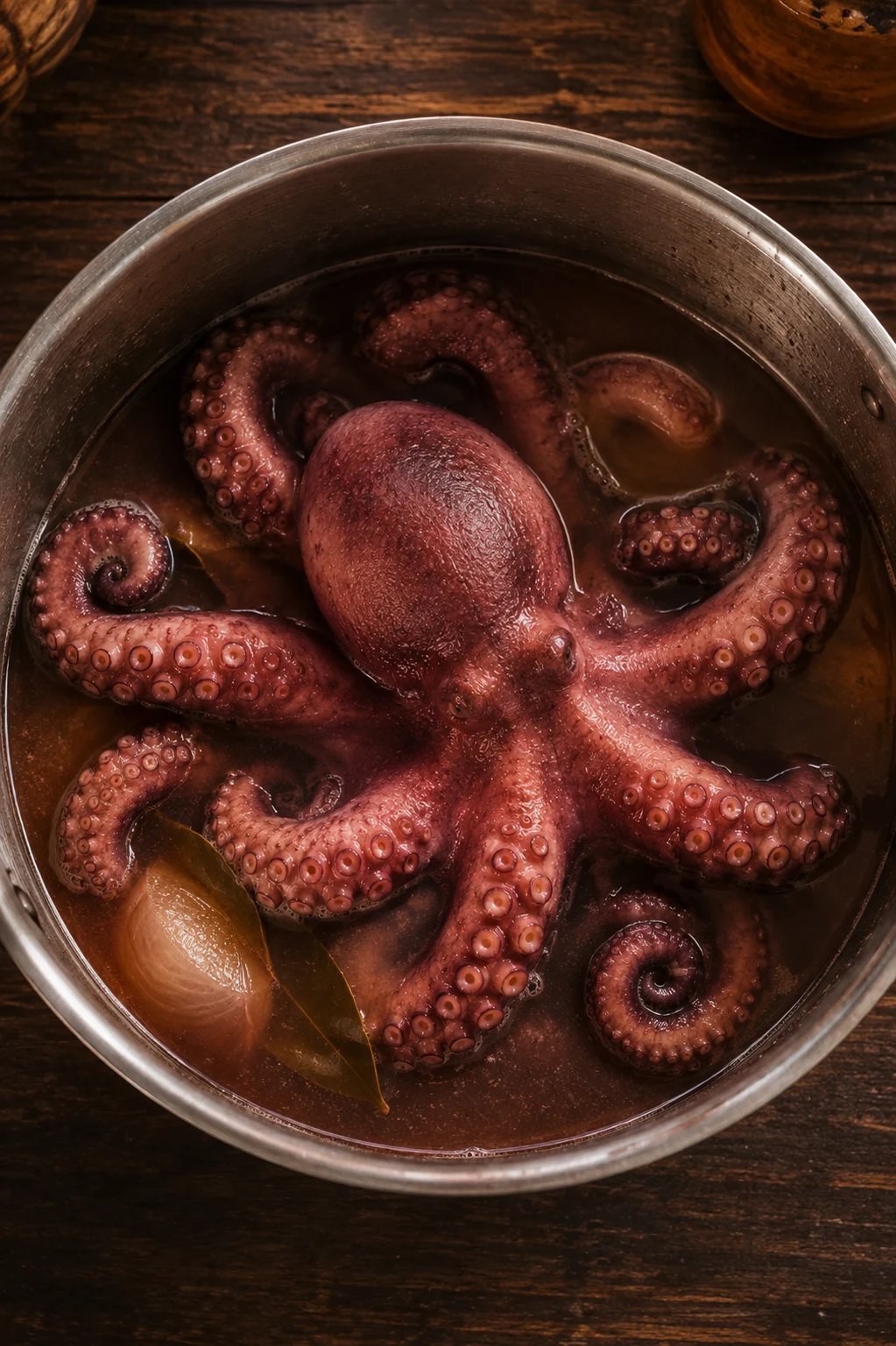
Step 2: Cool It in Its Own Water
Take the pot off the heat and leave the octopus to cool in the cooking liquid for 20 to 30 minutes before draining.
Prep tip: This is the step everyone skips and it matters more than the garnish, the oil, or the lemon. Octopus pulled straight into cold air tightens and dries. Cooling slowly in its own liquid keeps it moist and lets the tenderness settle. Twenty minutes of doing nothing is genuinely part of the recipe.
Step 3: Cut and Dress
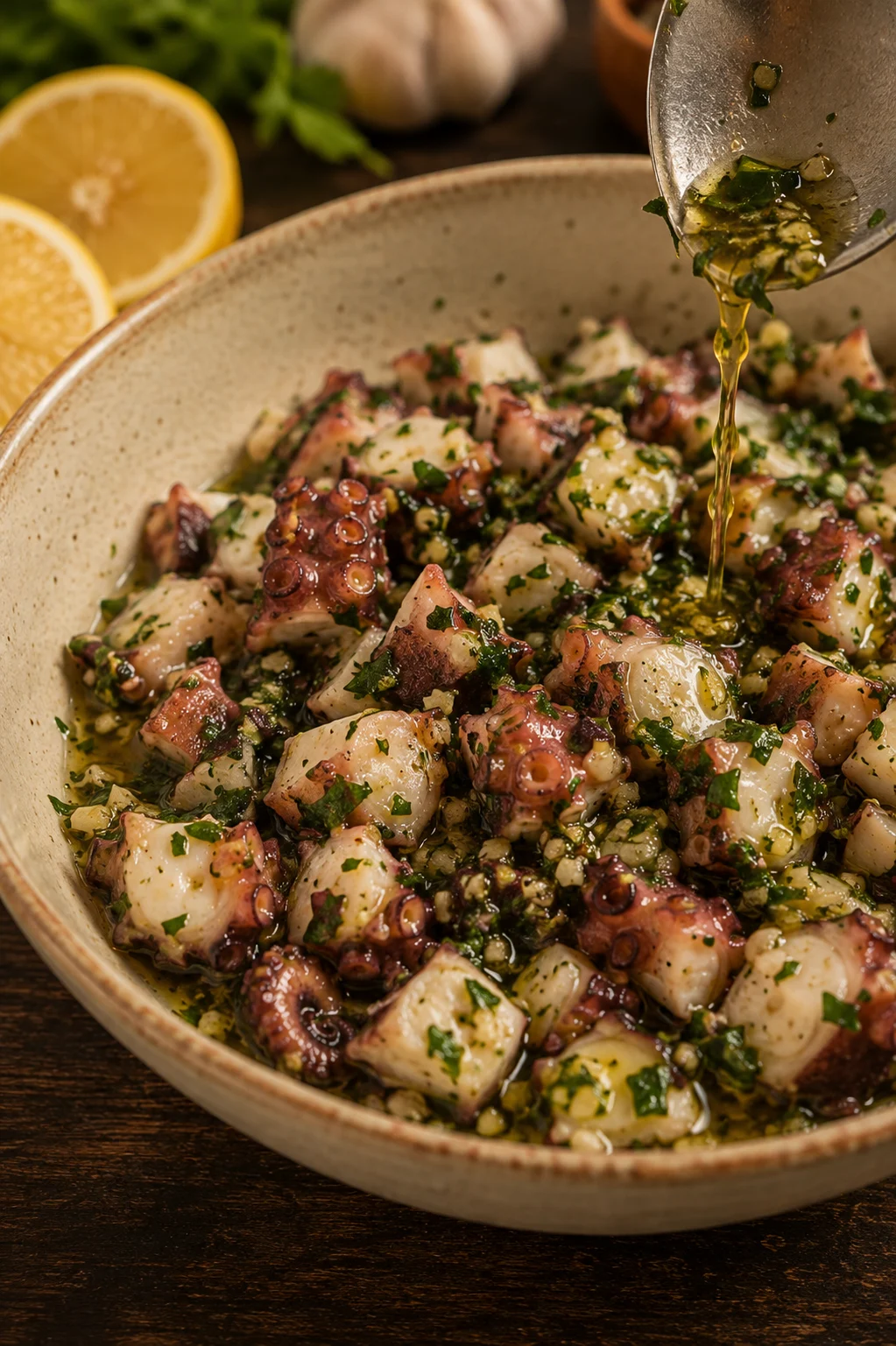
Drain the octopus and cut it into even bite-sized pieces, slicing the tentacles on a slight angle so the curls stay attractive. Put them in a bowl with the olive oil, lemon juice, garlic, parsley, salt and pepper, and toss until every piece is coated.
Step 4: Chill, Then Garnish and Serve
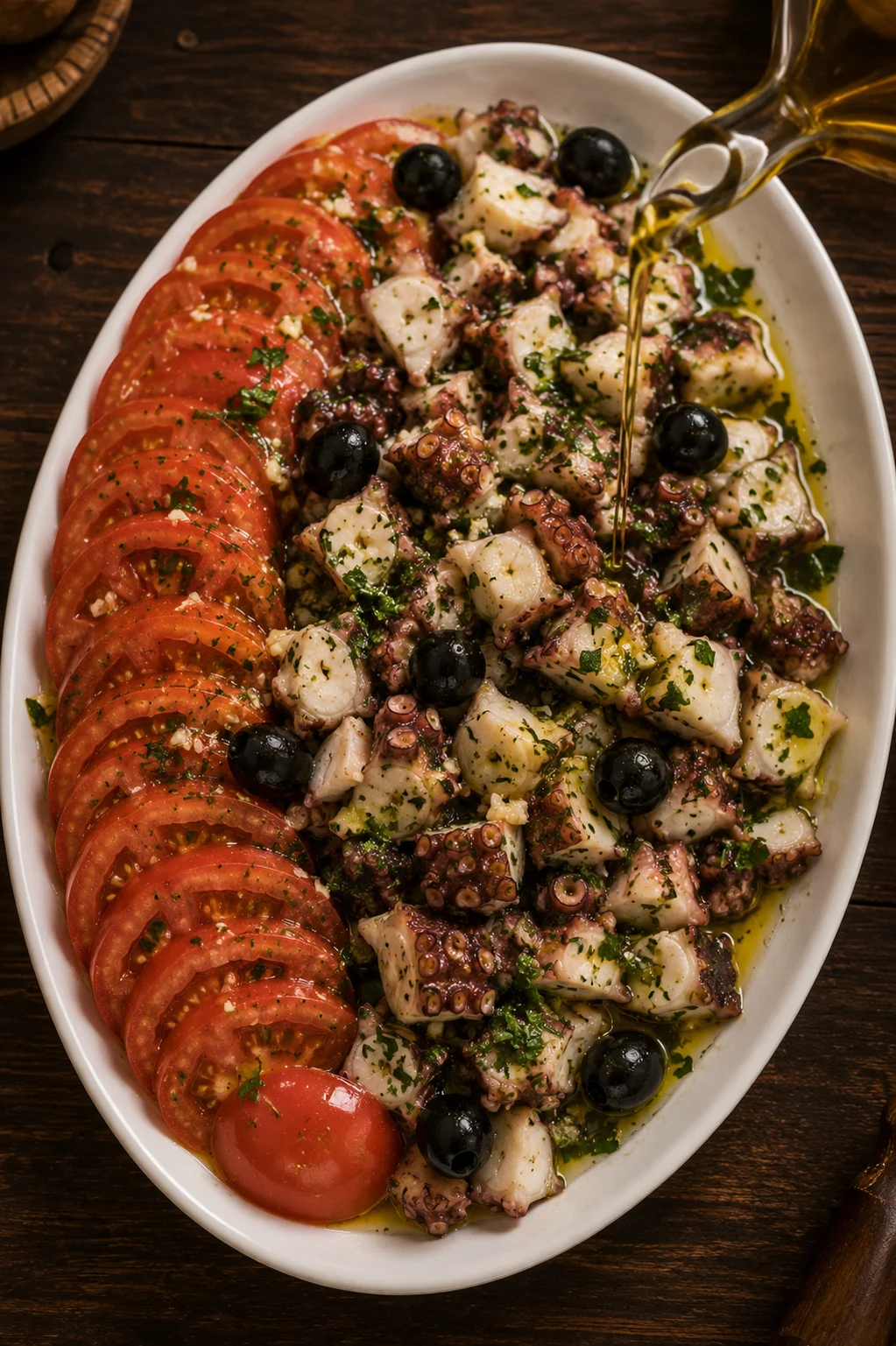
Cover and refrigerate for at least 1 hour, or up to overnight. Taste again before serving, since cold dulls seasoning and it will want more lemon and salt than it did warm. Arrange on a platter with the tomato slices and black olives, and finish with a last drizzle of olive oil.
Pro Tips for the Best Octopus Salad
- Buy it frozen on purpose. The freezing process tenderises the flesh, so frozen octopus often turns out better than fresh. Fishmongers know this and many freeze their stock deliberately.
- Do not salt the cooking water heavily. A teaspoon is plenty. Octopus is already briny, and heavily salted water pulls moisture out of the flesh as it cooks.
- Storage: Dressed, it keeps 2 days in the fridge and day two is arguably better once the garlic has mellowed into the oil. Do not freeze it after cooking, since the texture collapses.
- Season it cold, not warm. Chilled food tastes blander than warm food, so always do your final tasting after the hour in the fridge, never before it.
Variations on This Octopus Salad
With Potatoes
Add 2 boiled and cubed waxy potatoes to the bowl with the octopus. This makes it a proper light lunch rather than a starter, and it is how the dish is often served around the Mediterranean.
Grilled Octopus Salad
Simmer as above, then finish the tentacles on a hot grill or griddle for 2 minutes per side until charred at the edges before cutting and dressing. Smoky, slightly firmer, and worth doing if the barbecue is already lit.
Worth Knowing
Raw, generous garlic in the dressing works best when the salad sits overnight rather than an hour, by which point the garlic has softened into the oil and lost its edge. A pinch of sumac goes over at the end, and the tomato slices get their own small sprinkle of salt before they meet the plate.
What to Serve with Octopus Salad
Bread and something cold to drink is the honest answer. Warm flatbread or a crusty loaf handles the oil left on the platter, and the easy Moroccan bread recipe does the job well.
As part of a bigger spread this belongs on a mezze table: the baba ghanoush recipe, the zaalouk recipe, and a plate of the Tunisian brik recipe would make a genuinely coastal North African lunch, with the Tunisian fish soup recipe if the table wants something hot. the fattoush recipe adds the crunch that this soft, cool salad lacks.
Octopus Salad FAQs
How do I know when octopus is tender? A knife or skewer should slide into the thickest part of a tentacle with almost no resistance. Start checking at 40 minutes for a 500 g octopus. If it drags, keep simmering and check every 10 minutes; octopus toughens in the middle of cooking and turns tender again afterwards.
Should I use fresh or frozen octopus? Frozen, genuinely. Freezing breaks down the muscle fibres and tenderises the flesh before you cook it. Thaw it overnight in the fridge and proceed as normal.
Does the wine cork trick actually work? There is no good evidence that it does, but it is a real and widespread Mediterranean tradition, so add one if you like the ritual. What actually tenderises octopus is freezing, gentle simmering, and cooling it in its own liquid.
Can I make octopus salad ahead? Yes, and you should: an hour in the fridge is the minimum and overnight is better, since the garlic mellows and the flavours settle into the flesh. It keeps 2 days total.
Why is my octopus rubbery? Almost always one of two things: the water was boiling instead of simmering, or it was pulled out too early. Undercooked octopus is tough, and the fix is more time rather than less.
Cold, Bright, and Barely a Recipe
Five ingredients, one hour of waiting, and one decision that decides everything. Simmer it gently, let it cool in its own water, and the rest is olive oil and lemon doing what they have always done along that coastline.
Make it on a warm day and report back: plain or with potatoes, an hour in the fridge or overnight, and whether you used the wine cork. Half of the Mediterranean swears by it and nobody can explain why.
Rate this recipe
No ratings yet — be the first!


Simmer, never boil, and let it cool in its own water afterwards. Those two things decide whether octopus comes out tender or rubbery, and the cooling step is the one everybody skips.
Comments
No comments yet. Yours would be the first.
Made this? Tell me: plain or with potatoes, and did you use the wine cork?
Leave a comment
Comments are anonymous and appear after admin approval. If you rated this recipe above, your stars will show with your comment.