The Dish That Gets Chopped in Front of You
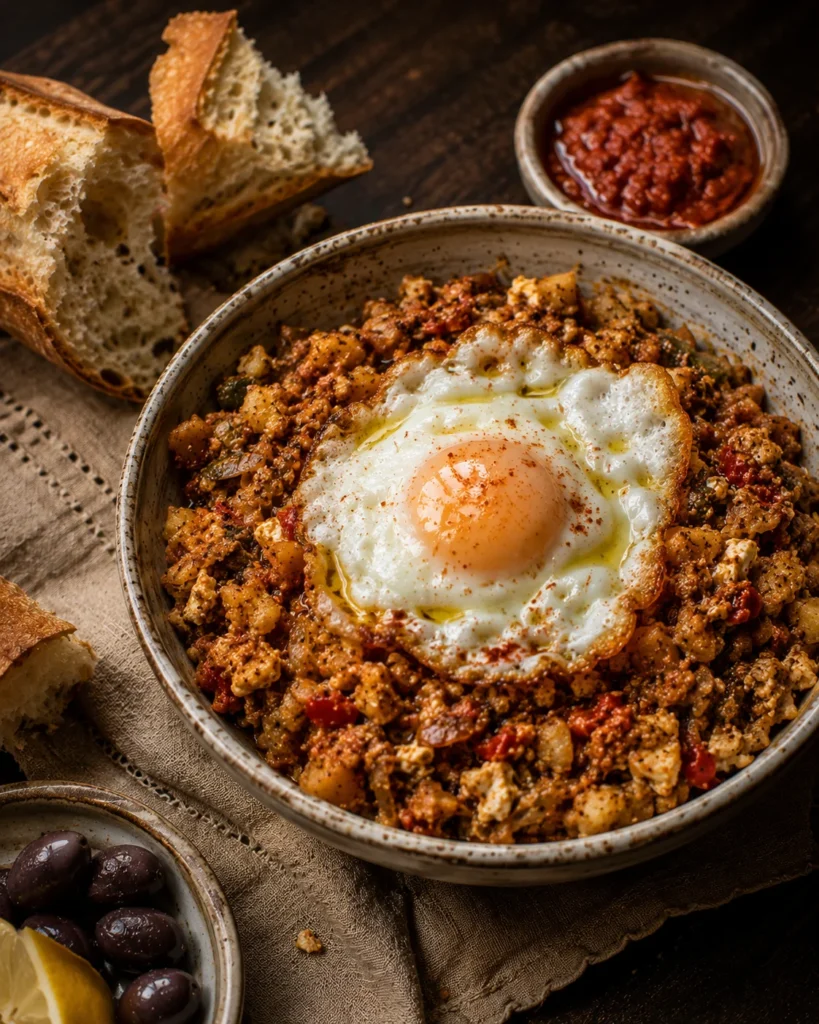
Order kaftaji from a Tunisian street stall and the last part happens where you can see it. The cook takes everything already fried and waiting, tips it onto a board, and goes at it with two knives, chopping fast and rhythmically until the peppers, potato, squash, tomato and egg have become one thing. Then it goes into a bowl, gets a spoon of harissa stirred through, and is handed over with bread.
That chopping is not showmanship. It is the recipe. Everything in kaftaji is fried separately so each vegetable cooks properly on its own terms, then chopping is what marries them, breaking the fried egg into the mixture and turning six separate things into a single savoury, softly rich mash that tastes of hot oil and harissa.
It is cheap, filling, entirely vegetable except for the egg, and eaten at any hour in Tunisia, most often as a fast lunch or late-night food. Many versions add fried liver, which is the classic street version, but the vegetable and egg one is what most households make.
This is what happens when the vegetable drawer needs clearing and nobody wants a salad. The frying takes twenty minutes, the chopping takes two, and it is the two minutes people remember.
Ahead: the ingredient list, four steps with photos, why everything fries separately, the liver version explained, and how to serve it properly.
Vegetables for the Fryer
For the Fryer
Serves 4
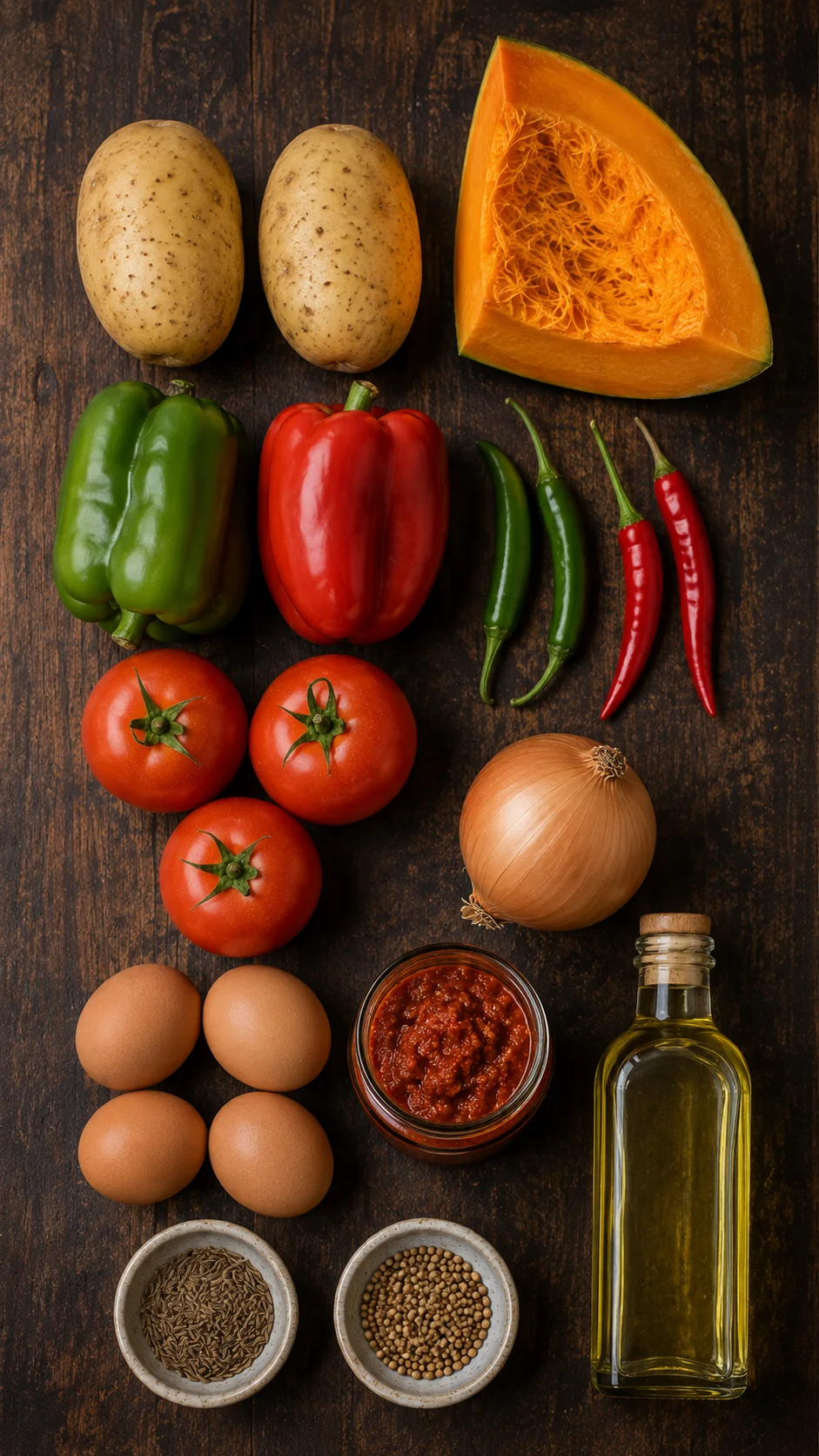
For frying:
- 2 medium potatoes, peeled and sliced into rounds
- 1 small pumpkin or butternut squash wedge (about 300 g), peeled and sliced
- 2 green peppers
- 1 red pepper
- 2 to 3 hot green chillies, to taste
- 3 tomatoes
- 1 onion, quartered
- 4 eggs
- Vegetable oil, for frying
For seasoning:
- 1 to 2 teaspoons harissa, to taste
- ½ teaspoon ground caraway
- ½ teaspoon ground coriander
- 1 teaspoon salt, plus more to taste
- ½ teaspoon black pepper
- Optional: 2 tablespoons olive oil to finish
To serve:
- Crusty bread or baguette
- Optional: extra harissa, black olives, a squeeze of lemon
Where to Find the Ingredients
There is nothing to hunt for beyond harissa, which now sits in the international aisle of most large supermarkets in the US and UK, near the hot sauces or world foods. Any Middle Eastern or North African grocery carries better versions cheaply, and Tunisian brands are the ones to look for since harissa is Tunisian in origin.
Ground caraway is the one spice that makes this taste specifically Tunisian rather than generically North African. It sits with the spices in larger supermarkets and is standard at any Middle Eastern grocer, and it also appears in the Tunisian fish soup recipe. If you cannot find it, ground cumin is an acceptable stand-in, though the flavour shifts.
Working With What You Have
- No pumpkin or squash? Use extra potato, or a courgette. Squash adds sweetness against the harissa, which is worth having, but the dish survives without it.
- No harissa? Mix 1 teaspoon of tomato paste with ½ teaspoon of paprika and a pinch of cayenne. Not the same depth, but it does the job.
- Not frying? Toss the vegetables in oil and roast at 425°F (220°C) for 25 to 30 minutes, then fry only the eggs. Lighter, less traditional, and genuinely good.
Frying Separately, Chopping Together
Step 1: Fry Everything Separately
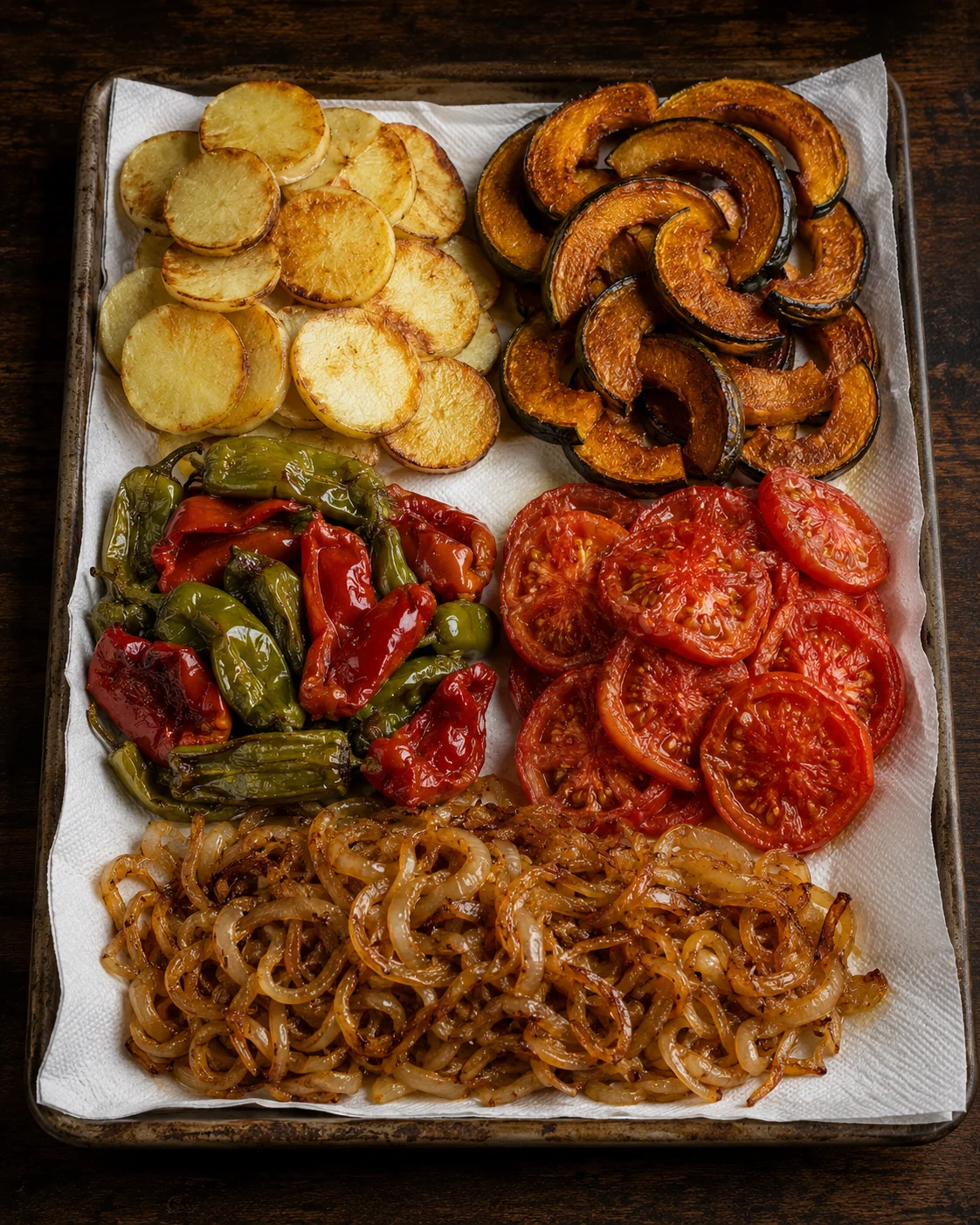
Heat about 1 inch of oil in a deep pan. Fry each vegetable on its own, draining each batch on paper towel before starting the next: potato rounds until golden, squash until soft and caramelised at the edges, whole peppers and chillies until blistered and collapsing, tomatoes until softened, onion until deep golden.
Prep tip: Separately is not fussiness, it is the method. Potato needs far longer than tomato, and squash caramelises at a different rate again. Everything thrown into one pan gives you burnt onion and undercooked potato in the same mouthful, which is exactly what this dish is designed to avoid.
Step 2: Fry the Eggs
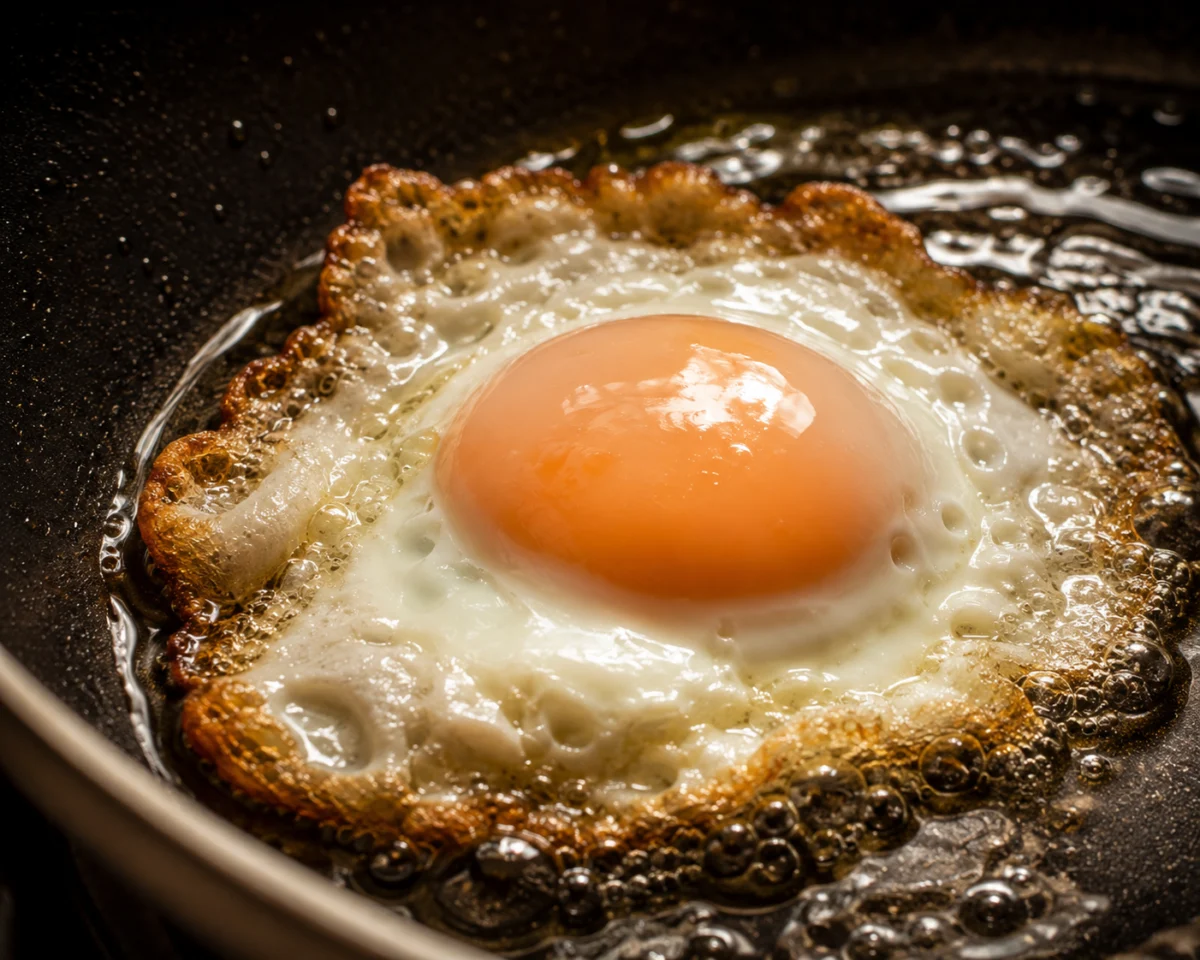
In the same oil, fry the eggs one or two at a time until the whites are set and the edges are lacy and crisp. The yolks should still be soft. Lift them out and set aside.
Step 3: Peel, Then Chop It All Together
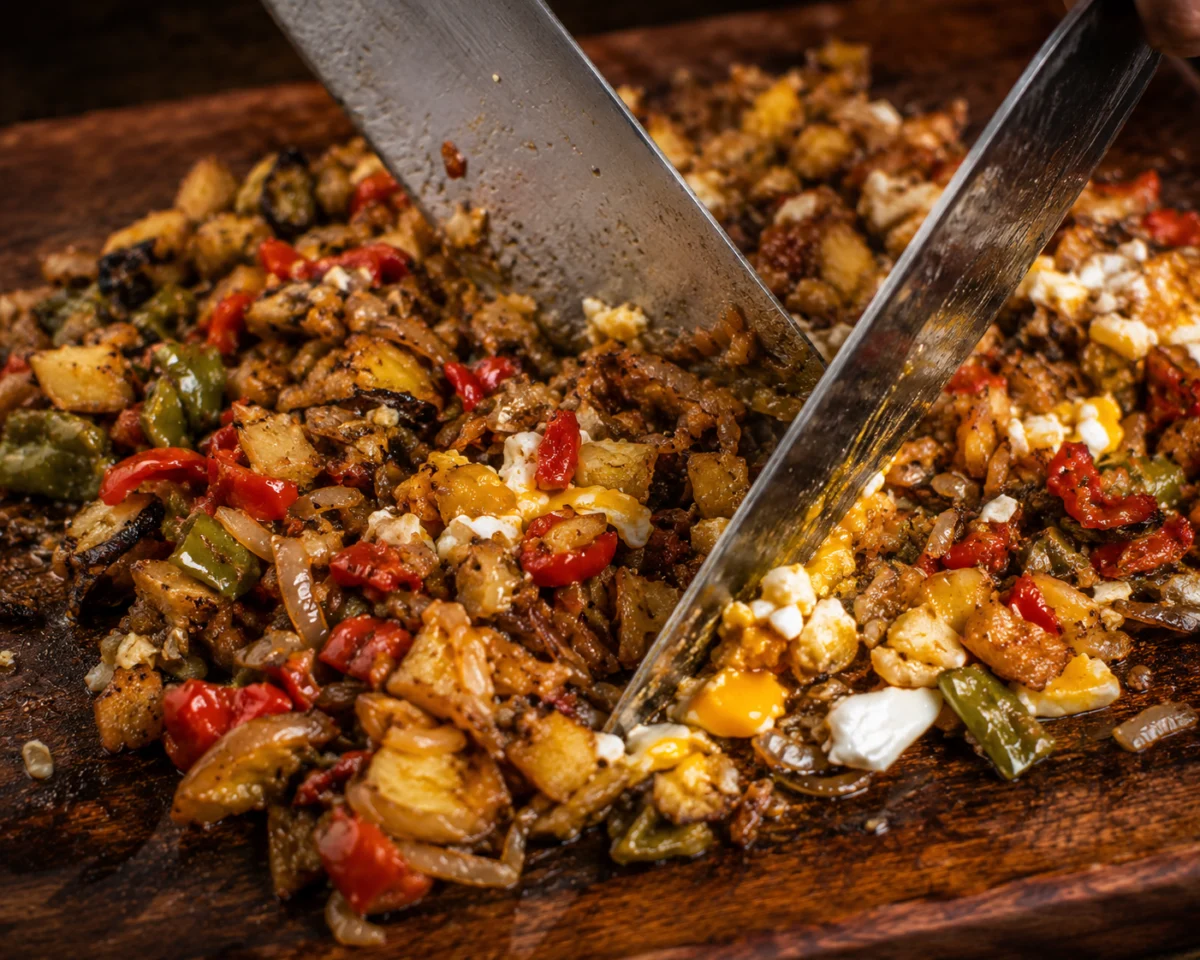
Peel the blistered skins off the peppers and tomatoes. Pile everything onto a large board, eggs included, and chop with two knives or a large heavy knife, working fast and turning the pile as you go, until it becomes a rough uneven mixture with no piece larger than a fingernail.
Prep tip: Chop, do not blend. A food processor turns kaftaji into a smooth paste and the whole character is gone. What you want is uneven, with recognisable flecks of red and green throughout and the egg broken through the mixture rather than dissolved into it. Two minutes of chopping is the entire technique.
Step 4: Season and Serve Immediately
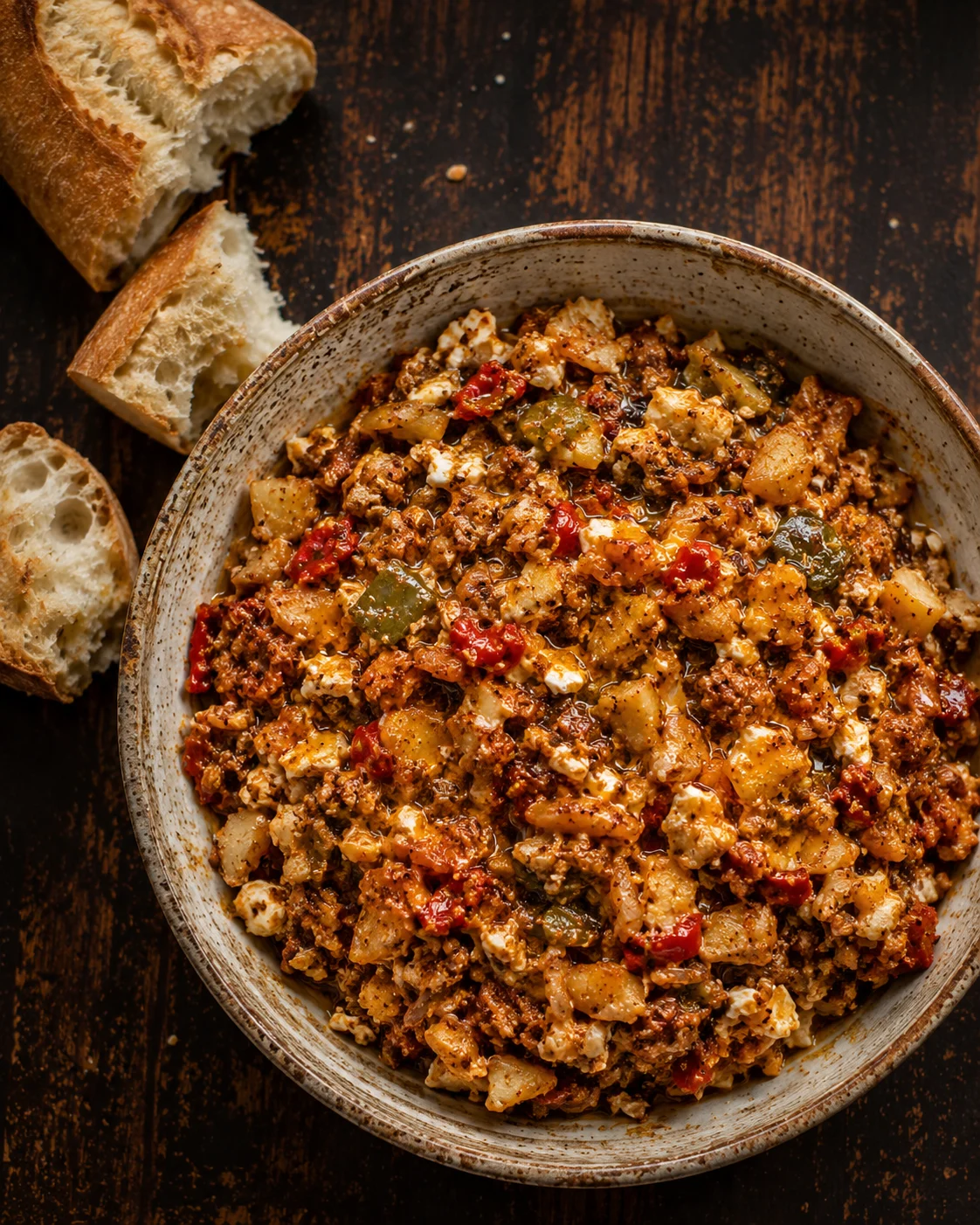
Scrape everything into a bowl and stir through the harissa, caraway, coriander, salt and pepper. Taste and adjust, add a drizzle of olive oil if you like, and serve hot with bread while the edges are still crisp.
About Kaftaji: Tunisia’s Chopped Street Food
Kaftaji belongs to Tunisia’s street food tradition alongside brik and lablabi, sold from small counters where the vegetables sit fried and ready and the final chopping is done to order. Watching it happen is part of buying it, and the sound of two knives working a board is as recognisable in Tunisia as the smell.
The name comes from the same root as kofta, referring originally to the chopping rather than to meat. The version with fried liver, sometimes called kaftaji bil kebda, is the classic street offering, while home cooks more often make it with vegetables and egg alone.
It shares its logic with several North African dishes: fry or char the vegetables first, break them down, then season heavily with harissa or spice. the zaalouk recipe works the same way, though it is served cool while kaftaji is eaten hot. For another egg-and-vegetable breakfast in the same spirit, the Egyptian breakfast guide covers ful medames.
Why Everything Is Fried Apart
- Drain everything properly. Each batch goes onto paper towel before the next starts. Kaftaji should be rich, not swimming in oil, and this one habit decides which you get.
- Fry in this order: potato first, then squash, then peppers, then tomato and onion, then eggs last. The oil picks up flavour as you go, and the eggs benefit from all of it.
- Storage: Best eaten immediately, since the crisp edges soften within the hour. Leftovers keep 2 days in the fridge and are excellent reheated in a hot pan, or eaten cold in a sandwich, which is a legitimate Tunisian move.
- Chop on a board, not in the bowl. You need a flat surface and room to work. Chopping in a bowl mashes instead of cutting and the texture goes wrong.
Liver, Merguez, and Meatless Plates
Kaftaji with Liver
The street version. Fry 200 g of lamb or chicken liver, cut small, seasoned with salt, pepper and caraway, and add it to the board before chopping. Richer, more traditional in stalls, and the version most Tunisians would name first.
The Roasted Version
Toss all the vegetables in olive oil and roast at 425°F for 25 to 30 minutes instead of frying, then fry only the eggs. Considerably less oil, still very good, and much easier if you are cooking for a crowd.
How I Chop Mine
In my kitchen the harissa goes in at the table rather than the bowl, because the heat tolerance in this house varies enormously. A soft-fried egg goes on top of each portion in addition to the ones chopped through, and there is always more bread than seems necessary.
Bread, Harissa, and a Fried Egg
Bread, and that is genuinely the whole answer: a crusty baguette torn into pieces, used to scoop rather than as a base, or rounds of the easy Moroccan bread recipe. In Tunisia it is often stuffed straight into half a baguette as a sandwich, which is worth trying at least once.
For a fuller Tunisian table, the Tunisian fish soup recipe makes a proper regional spread, and something smoky and cool alongside balances the hot fried vegetables. Black olives and a wedge of lemon on the side finish it.
Kaftaji, Answered
Why fry the vegetables separately instead of together? Because they cook at completely different rates. Potato takes far longer than tomato, and squash caramelises differently again. Frying separately means each one is properly cooked, which is exactly what makes the chopped mixture taste right.
Can I use a food processor instead of chopping? No, and this is the one place worth insisting on. A processor turns kaftaji into a smooth paste and the texture is the dish. Chop by hand on a board until nothing is bigger than a fingernail, but stop well before it becomes uniform.
What is kaftaji served with? Crusty bread, always. Either torn for scooping or stuffed into half a baguette as a sandwich, which is how it is most often eaten from Tunisian street stalls.
Is kaftaji vegetarian? The vegetable and egg version is vegetarian, and it is what most households make. The street version with fried liver is not. Skip the egg as well and the dish is fully vegan, though it loses the richness that binds it.
Can I make kaftaji ahead? Not really. The crisp fried edges soften within the hour and the dish is meant to be eaten hot from the board. You can fry the vegetables an hour ahead and chop at the last moment, which is exactly what street stalls do.
Two Knives, Two Minutes
Everything about kaftaji is straightforward except the discipline of frying things one at a time. Do that, then chop it all together fast on a board, and you have Tunisia’s best cheap lunch in under half an hour.
Make it the next time the vegetable drawer needs emptying and report back: with liver or without, harissa in the bowl or at the table, and whether anyone tried to reach for a food processor. Somebody always does.
Rate this recipe
No ratings yet — be the first!
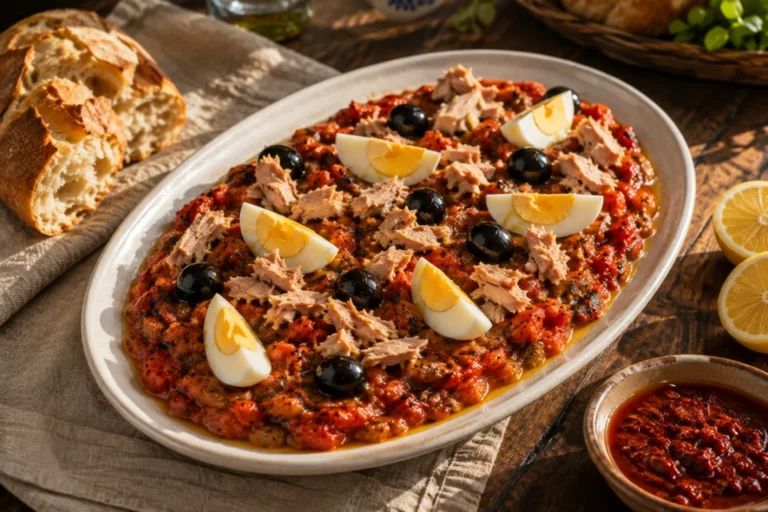

Chop it, do not blend it. A food processor turns kaftaji into smooth paste and the whole character disappears. Two minutes with a knife on a board is the entire technique.
Comments
No comments yet. Yours would be the first.
Made this? Tell me: with liver or without, and harissa in the bowl or at the table?
Leave a comment
Comments are anonymous and appear after admin approval. If you rated this recipe above, your stars will show with your comment.