
The Other Tajine
Say tajine and most people picture a conical clay pot and a slow-cooked Moroccan stew. In Tunisia the word means something else entirely, and the difference catches out almost everyone who meets it for the first time.
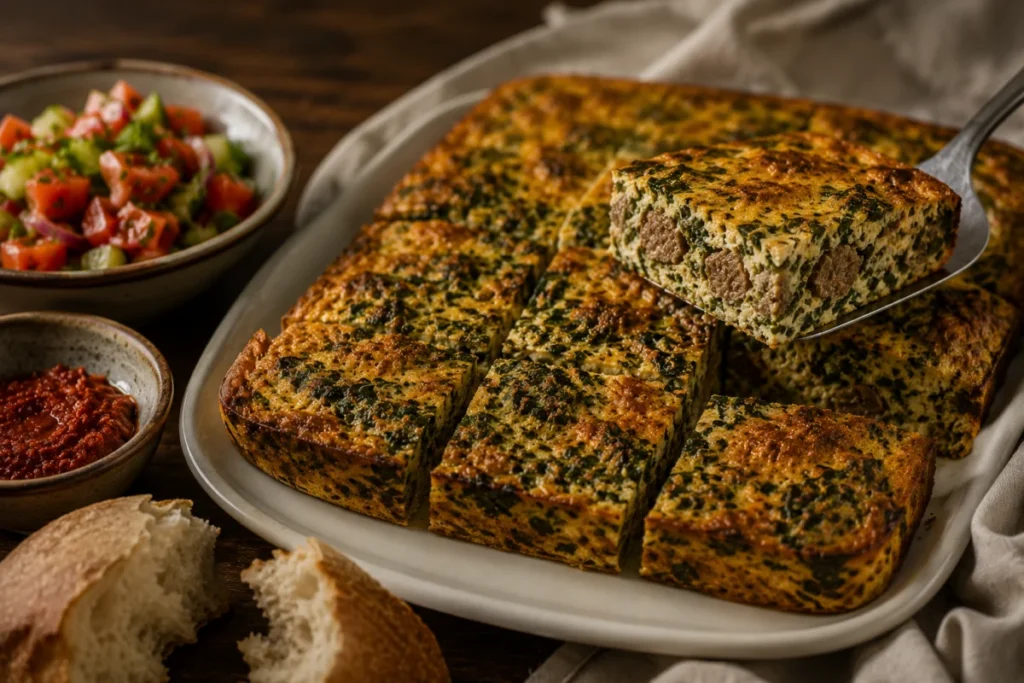
A Tunisian tajine is an oven-baked egg dish. Meat and vegetables are cooked down, mixed with a large number of eggs and a great deal of cheese, then baked in a dish until firm, golden and set enough to cut into neat squares. It is closer to a thick frittata or a crustless quiche than to anything Moroccan, and it is eaten hot, warm, or cold from the fridge the next day.
This version is tajine sbanekh, made with spinach, and it is one of the most common. Beef seasoned with saffron and turmeric, a great deal of spinach cooked down, white beans for substance, parmesan and Gruyère through the mixture, and eight eggs holding the whole thing together.
This is what gets made when a crowd is coming, because it cuts into squares, tastes good at any temperature, and can be baked in the morning and forgotten about until people arrive.
Ahead: the two-tajine confusion cleared up, the ingredient list, four steps with photos, why the egg count matters, and how to get a clean slice rather than a scoop.
Tunisian Tajine vs Moroccan Tagine
Same word, different roots, completely different dish.
Moroccan tagine is named for the clay vessel it cooks in: a shallow base with a tall conical lid that traps steam and drips it back down. The food inside is a slow-cooked stew of meat and vegetables, eaten with bread or couscous.
Tunisian tajine takes its name from the same Arabic root but refers to the baking dish rather than a specific pot, and the dish itself is an egg bake. Think eggs, cheese, and whatever filling the household favours: spinach, chicken, potato, parsley.
If you have made the chicken tagine recipe, you have made the Moroccan one. This is the other one, and the only thing they share is a name.
Eggs, Cheese, Spinach, Beef
What Goes in the Dish
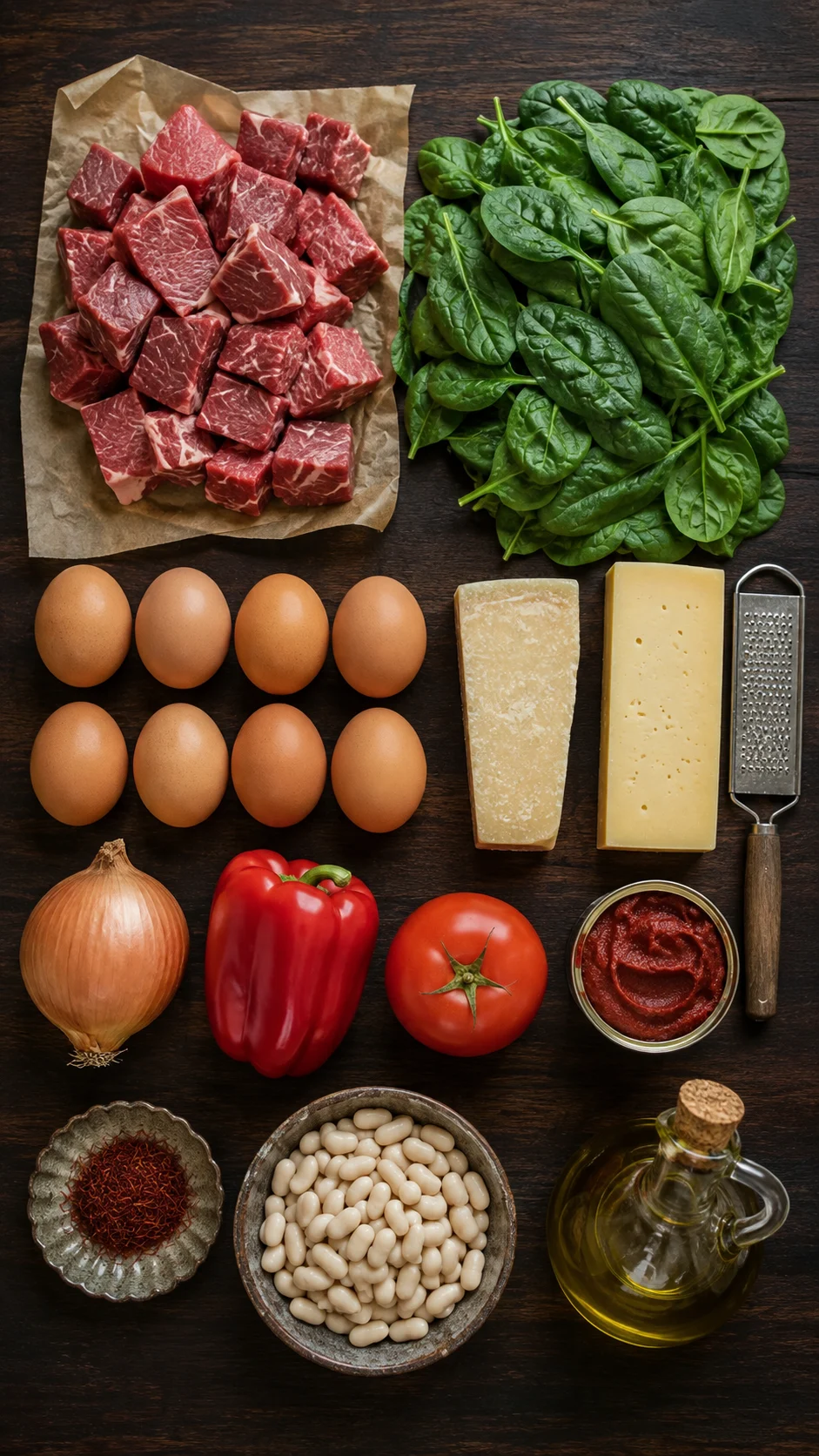
Serves 6 to 8, in a 9 x 9 inch (23 cm) baking dish
For the filling:
- 14 oz (400 g) beef, cut into small cubes
- 3 large handfuls fresh spinach (about 300 g), washed and roughly chopped
- 1 small onion, finely chopped
- ¼ red bell pepper, finely chopped
- 1 tomato, grated
- 1 tablespoon tomato paste
- 2 tablespoons cooked white beans, optional
- ¼ cup olive oil
- Pinch of saffron threads
- ½ teaspoon ground turmeric
- 1 teaspoon salt
- ½ teaspoon black pepper
For binding and topping:
- 8 eggs, beaten
- 1¾ oz (50 g) parmesan, finely grated
- 1¾ oz (50 g) Gruyère, grated
- ½ teaspoon baking powder
- 1 tablespoon butter, for the dish
Where to Find the Ingredients
Everything here is supermarket-standard. The saffron is the only luxury, and a genuine pinch is enough; if you would rather not, an extra ¼ teaspoon of turmeric gives you the colour and most people will not miss it.
Parmesan and Gruyère together are the traditional combination, parmesan for savoury depth and Gruyère for the melt. Any hard aged cheese plus any good melting cheese will do the same job.
Swaps That Work
- Frozen spinach? Absolutely fine, and easier. Use 300 g frozen, thawed and squeezed very dry. The squeezing matters more than with fresh.
- No beef? Cooked shredded chicken is the second most common version, and a fully vegetarian one made with spinach and cheese alone is excellent.
- No white beans? Leave them out, or use chickpeas. They add substance rather than flavour.
Cooking Down, Binding, Baking
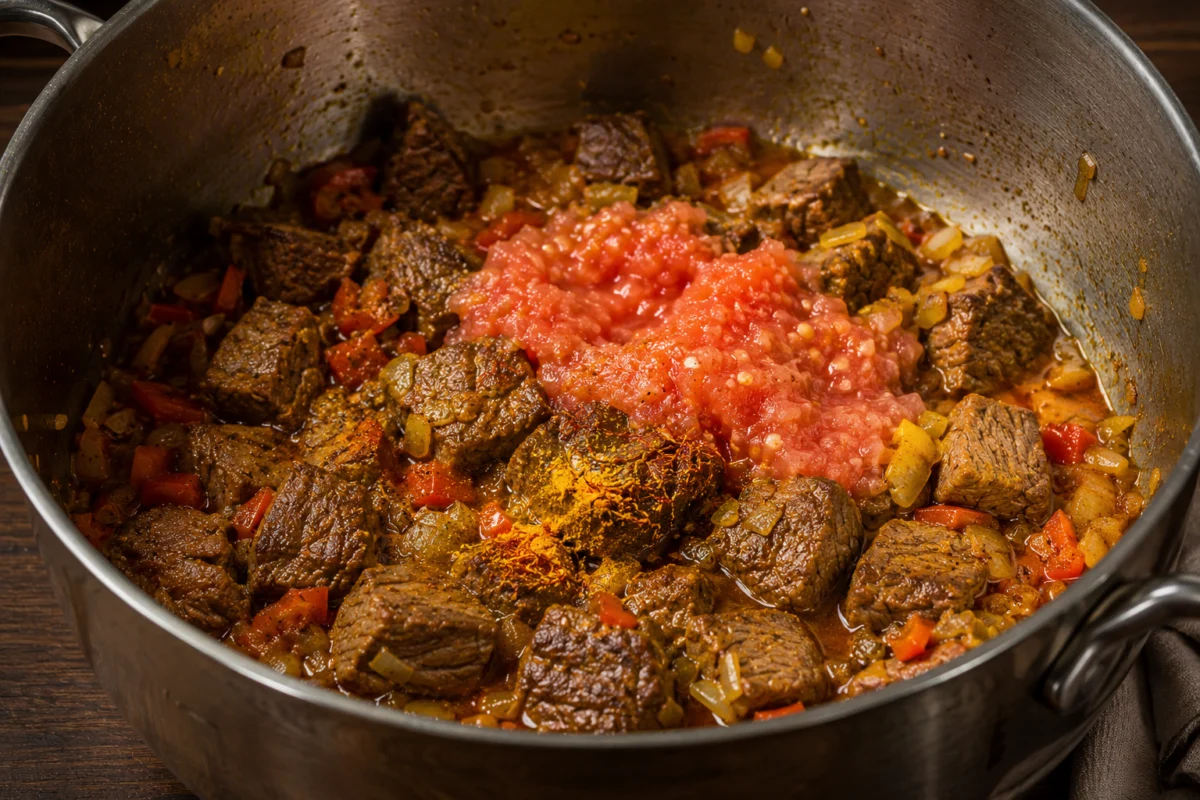
Step 1: Season and Brown the Beef
Toss the beef cubes with the salt, pepper, saffron, turmeric, onion, red pepper and half the olive oil, and leave for 15 minutes if you have time. Heat the rest of the oil in a pot and brown the meat well, then add the grated tomato, tomato paste and white beans and cook for 15 to 20 minutes, until the meat is tender and the pan is nearly dry.
Prep tip: Cook it until the pan is dry, not just until the meat is done. Any liquid left in the filling ends up as water in the bottom of your baked tajine, and a wet base is the most common way this dish disappoints. The mixture should look like a thick paste.
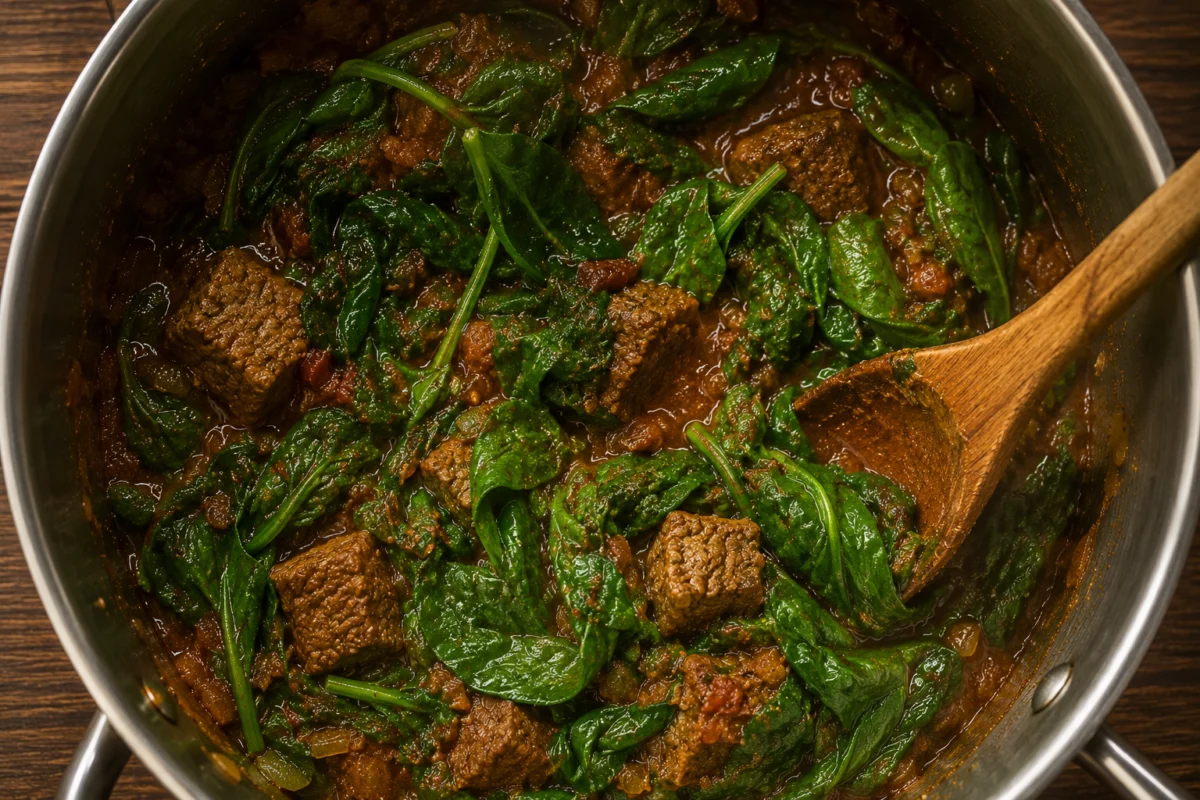
Step 2: Wilt and Squeeze the Spinach
Add the chopped spinach to the pot in handfuls, stirring until it collapses, then cook a few minutes more until any liquid it releases has evaporated. Tip the mixture into a bowl and let it cool for 10 minutes.
Prep tip: Spinach is almost entirely water and it will release it somewhere, either in the pan now or in your baking dish later. Cook it until the pan looks dry again. If you are using frozen spinach, squeeze it hard in a clean towel first; you will be surprised how much comes out.
Step 3: Mix in the Eggs and Cheese
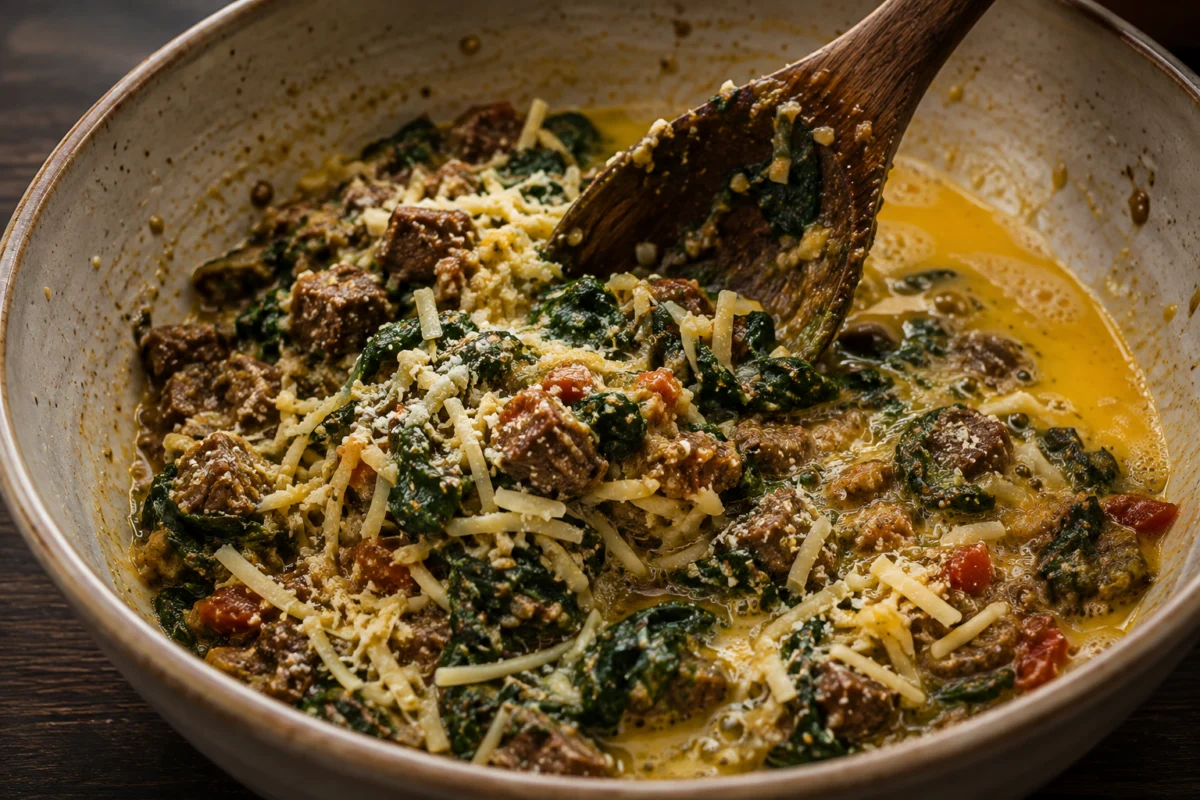
Beat the eggs with the parmesan, Gruyère and baking powder, then stir them thoroughly into the cooled filling until evenly combined.
Prep tip: The filling must be cool before the eggs go in, or they begin cooking on contact and the texture turns grainy. Ten minutes is enough. And do not reduce the eggs: eight sounds like a lot, but they are the structure of the entire dish, and fewer means a tajine that will not hold a slice.
Step 4: Bake Until Firm and Golden
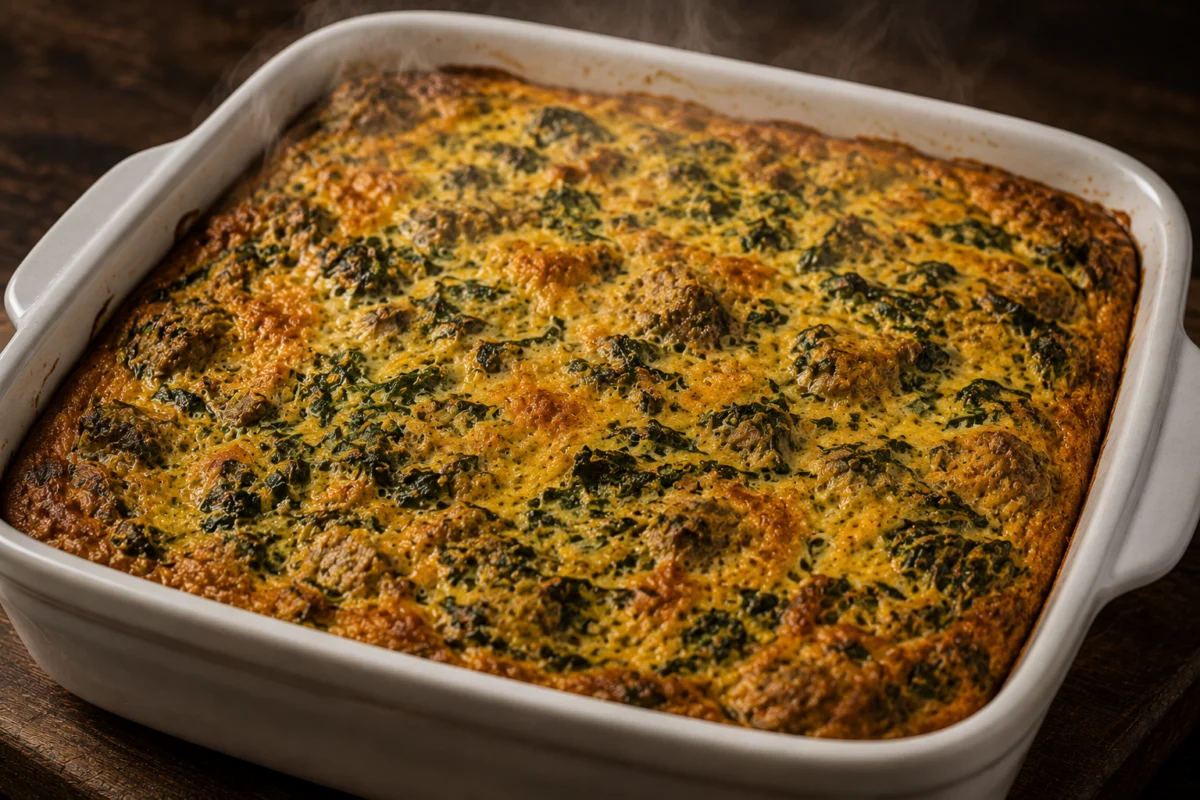
Heat the oven to 350°F (175°C). Butter the baking dish generously, pour in the mixture, level the top and scatter over a little extra cheese. Bake for 30 to 35 minutes, until the top is golden and the centre feels firm rather than wobbly. Let it rest 10 minutes before cutting into squares.
About Tunisian Tajine: Everyday and Everywhere
Tajine in Tunisia is home food and occasion food at once. It appears at family lunches, on Ramadan tables, at celebrations, and in lunchboxes, because it is one of the few dishes that is genuinely as good cold as hot.
The variations are almost endless and every household has its preference: tajine malsouka layers the mixture with pastry sheets, tajine djaj uses chicken, tajine bel batata is built on potato, and tajine sbanekh is this one. What stays constant is the architecture, which is eggs and cheese binding a cooked filling into something sliceable.
It also belongs to a wider Mediterranean family. Italian frittata, Spanish tortilla and Levantine ejjeh all do the same thing in different proportions, and the Tunisian version is distinguished by how much cheese goes in and how firmly it sets. Eggs are a complete protein source, per the USDA food database, which is part of why this dish sustains a table so well.
Getting a Firm Slice, Not a Wet One
- Do not reduce the eggs. Eight eggs for this quantity is correct. They are structural, and cutting back gives you a loose, crumbly bake that falls apart on the spatula.
- Butter the dish properly. This mixture sticks. A generously buttered dish, or a lining of parchment, is the difference between clean squares and a scraping operation.
- Storage: Keeps 4 days in the fridge and is genuinely excellent cold, which is unusual. It also freezes well in portions for 2 months. Reheat in a moderate oven, never the microwave.
- Rest before cutting. Ten minutes lets the eggs finish setting. Cut it straight from the oven and the squares slump.
Chicken, Potato, and Herb Versions
Tajine Malsouka
Line the buttered dish with sheets of malsouka pastry, pour in the mixture, and cover with more pastry brushed with butter before baking. This gives you a crisp golden crust top and bottom, and it is the version most often served at celebrations. Filo works if malsouka is unavailable.
Chicken Tajine
Replace the beef with 400 g of cooked shredded chicken, added at the spinach stage rather than browned first. Lighter, faster, and a good use for leftover roast chicken.
The Most Common Additions
A handful of chopped parsley with the spinach is a common addition, and extra Gruyère on top is worth it because the browned cheese crust is the part everyone picks at. It is baked in the morning and left on the counter, and by dinner about a third has quietly disappeared.
Salad, Harissa, Bread
Squares of tajine want something sharp beside them: the easy tabbouleh recipe or a simple tomato salad does the job. Bread and harissa on the table complete it, and rounds of the easy Moroccan bread recipe work well.
As part of a larger spread it sits naturally with the kaftaji recipe for a full Tunisian table, and a bowl of the Tunisian fish soup recipe ahead of it makes a proper meal.
Tunisian Tajine, Answered
Is this the same as a Moroccan tagine? No. They share a name and nothing else. Moroccan tagine is a slow-cooked stew named after its conical clay pot. Tunisian tajine is a baked egg dish, closer to a frittata or crustless quiche, cut into squares and often eaten cold.
Why is my tajine watery at the bottom? Liquid left in the filling. Cook the meat mixture until the pan is dry, cook the spinach until its water has evaporated, and squeeze frozen spinach hard before it goes anywhere near the pot.
Can I use fewer eggs? Not really. Eight eggs for this quantity is structural rather than generous, and reducing them gives you a bake that will not hold together when sliced.
Can I make Tunisian tajine ahead? Yes, and it is one of its main virtues. Bake it a day ahead, keep it in the fridge, and serve it cold or gently reheated. It keeps 4 days and freezes in portions for 2 months.
Is this recipe halal and gluten-free? Halal with halal-certified beef, and naturally gluten-free as written since nothing binds it but eggs and cheese. The malsouka pastry variation is not gluten-free.
One Dish, Eight Eggs, Endless Slices
Cook the filling dry, cool it, bind it with more eggs than feels reasonable, and bake it until it sets. That is the whole method behind this Tunisian tajine, and it produces a dish that works hot at dinner, warm at lunch, and cold from the fridge at midnight.
Make it before your next gathering and report back: beef or chicken, plain or wrapped in malsouka, and how much vanished from the dish before it reached the table. The answer is always more than expected.
Rate this recipe
No ratings yet — be the first!
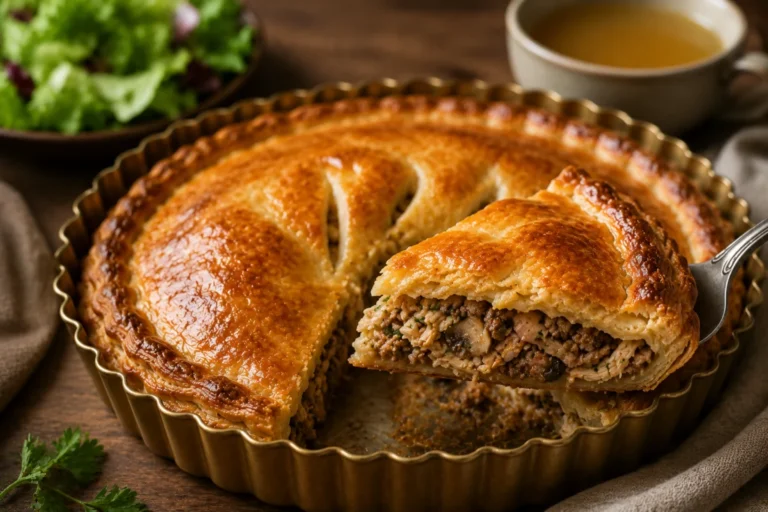


Do not reduce the eight eggs. They are structural here rather than generous, and fewer means a tajine that will not hold a slice when you cut it.
Comments
No comments yet. Yours would be the first.
Made this? Tell me: beef or chicken, and how much vanished before it reached the table.
Leave a comment
Comments are anonymous and appear after admin approval. If you rated this recipe above, your stars will show with your comment.