

Why This Easy Tabbouleh Recipe Belongs in Your Kitchen
Think Middle Eastern cooking always means long ingredient lists and a shelf of unfamiliar spices? Tabbouleh is the dish that proves otherwise. This easy tabbouleh recipe needs just a handful of fresh ingredients, most of them already in your supermarket basket, and there is no actual cooking involved.
What you end up with is a salad that tastes like summer in a bowl: bright lemon, a whisper of mint, juicy tomatoes, and heaps of fresh parsley, all tossed with tender grains of bulgur. It is crisp, zingy, and somehow both light and satisfying.
Tabbouleh is the dish that appears at nearly every gathering across the Levant, and it is deceptively easy to get wrong. This version is adapted for cooks far from a Middle Eastern grocery, with a clear line between the shortcuts that work and the ones that quietly ruin it.
Below you will find the full ingredient list, where to find anything unfamiliar, four numbered steps with photos, the tricks for avoiding soggy tabbouleh, and answers to the questions people ask most.
What Makes This Version Work
- Everything comes from a regular US or UK supermarket. Parsley, mint, tomatoes, lemon, olive oil. The only possibly unfamiliar item is bulgur, and the sourcing section below covers exactly where to find it, plus what to swap in if you cannot.
- Genuinely fast. About 20 minutes of relaxed chopping, and the “cooking” is just soaking bulgur in water. No stove, no oven, no skill barrier.
- Naturally fits almost every diet. Tabbouleh is vegan, vegetarian, dairy-free, and halal by nature, and it is easy to make gluten-free with one simple swap covered in the Variations section.
- It keeps beautifully. Unlike most salads, tabbouleh actually improves after an hour in the fridge, which makes it perfect for meal prep and potlucks.
About Tabbouleh: A Middle Eastern Classic
Tabbouleh (sometimes spelled tabouli) comes from the mountains of Lebanon and Syria, where it is a cornerstone of the mezze table, the Arabic tradition of sharing many small dishes at once. It is everyday food, served at family lunches, festive gatherings, and everything in between.
Here is the thing that surprises most Western cooks: real tabbouleh is a parsley salad with a little bulgur, not a bulgur salad with a little parsley. If you have only had the grain-heavy deli-tub version, this recipe will taste like a completely different, and much fresher, dish. It pairs beautifully with our fattoush salad on any mezze spread.
What Goes Into Tabbouleh
For the Salad

Serves 4 as a side (or 2 very happy people as lunch):
- 3 large bunches flat-leaf parsley (about 3 packed cups once chopped)
- ¼ cup fine bulgur (parboiled cracked wheat that only needs soaking, not cooking)
- 2 medium ripe tomatoes, finely diced
- 3 to 4 spring onions (scallions), finely sliced, or ¼ small red onion, finely diced
- ¼ cup fresh mint leaves, finely chopped
- Juice of 1½ lemons (about ¼ cup)
- ¼ cup extra virgin olive oil
- ¾ teaspoon salt, plus more to taste
- ¼ teaspoon black pepper
- Optional: ¼ teaspoon ground allspice or a pinch of cinnamon, the way many Lebanese kitchens season it
Where to Find Middle Eastern Ingredients in the US and UK
The only item on this list you might not already know is bulgur. In the US, look in the grains or international aisle near the rice and couscous; Bob’s Red Mill is a common brand. In the UK, most large supermarkets stock it near the couscous and quinoa.
The catch is the grind: this easy tabbouleh recipe wants fine bulgur (sometimes labeled #1), which softens with just a soak. If your supermarket only carries coarse or medium bulgur, that works too; see the substitutions below. A Middle Eastern or Mediterranean grocery will always have fine bulgur, usually for less than half the supermarket price, and Amazon carries it as well.
Quinoa and Other Swaps
- Only coarse or medium bulgur available? Soak it in boiling water instead of cold, covered, for 20 to 25 minutes, then drain and squeeze it dry. Same result, slightly longer wait.
- Cannot find bulgur at all (or need gluten-free)? Use cooked, cooled quinoa in the same quantity. It is not traditional, but the texture is close and the salad stays true to itself.
- No fresh mint? Just leave it out rather than using dried; the parsley and lemon carry the salad on their own.
Soak, Chop, Dress, Rest
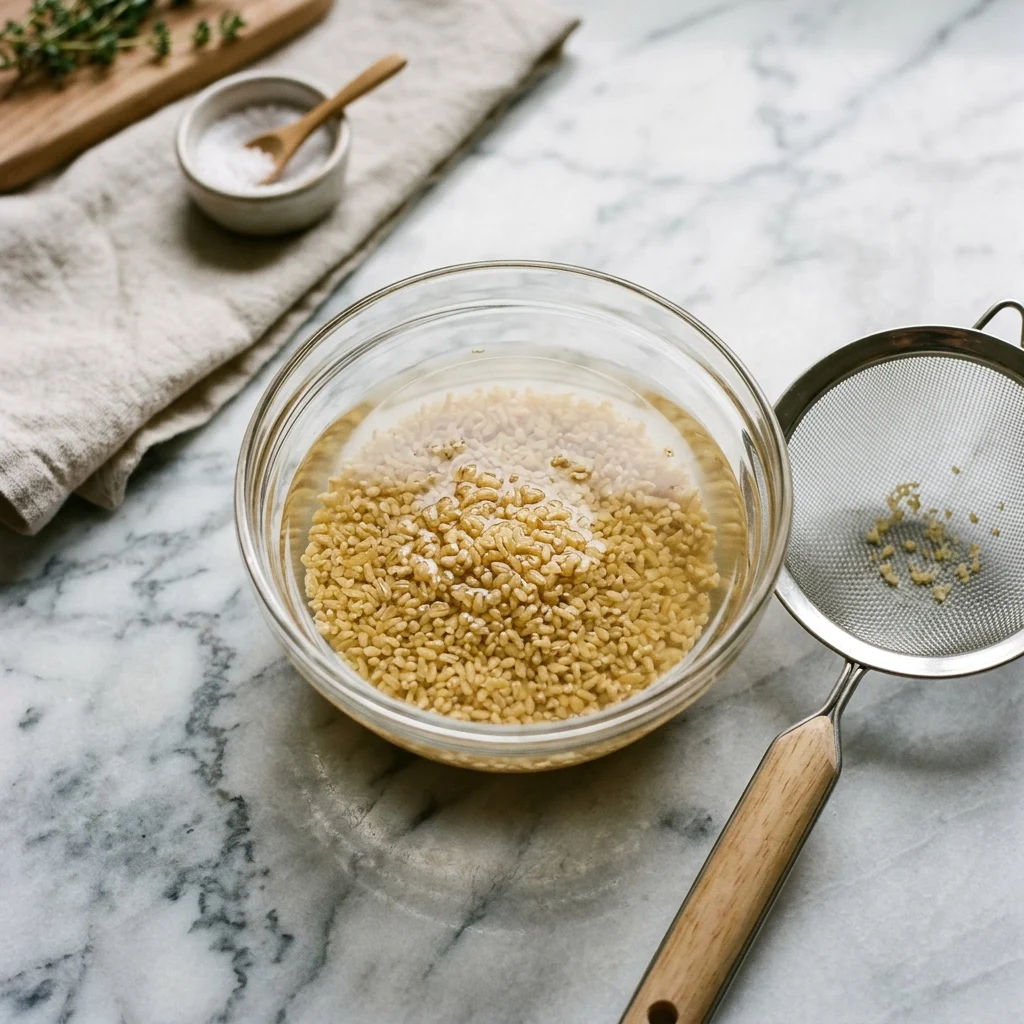
Step 1: Soak the Bulgur
Put the fine bulgur in a small bowl and cover it with cold water by about an inch. Let it sit for 15 minutes while you prep everything else, then drain it in a fine sieve and press out as much water as you can with the back of a spoon.
Prep tip: Squeeze the bulgur properly dry. Skipping this is what turns the finished salad watery within the hour, since even a little extra water spreads through the whole bowl. A firm press in the sieve (or a squeeze in a clean tea towel) makes a real difference.
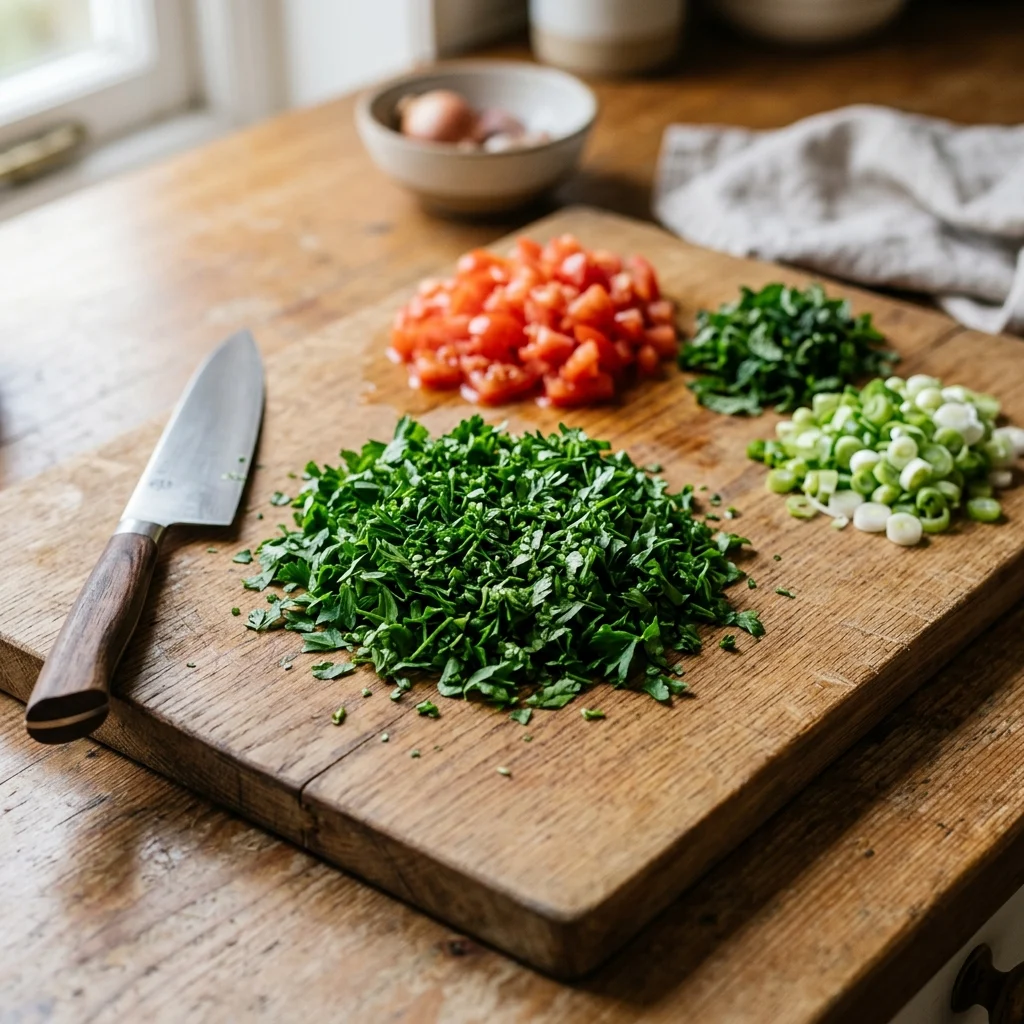
Step 2: Chop the Parsley, Mint, and Vegetables
Wash the parsley and dry it very well, then chop it finely, leaves and tender upper stems both. Chop the mint, dice the tomatoes small, and slice the spring onions thinly.
Prep tip: Dry herbs chop cleanly; wet herbs bruise and turn mushy. Spin the parsley dry, then roll it in a tea towel for ten minutes before chopping. It is the single biggest upgrade you can make to homemade tabbouleh.
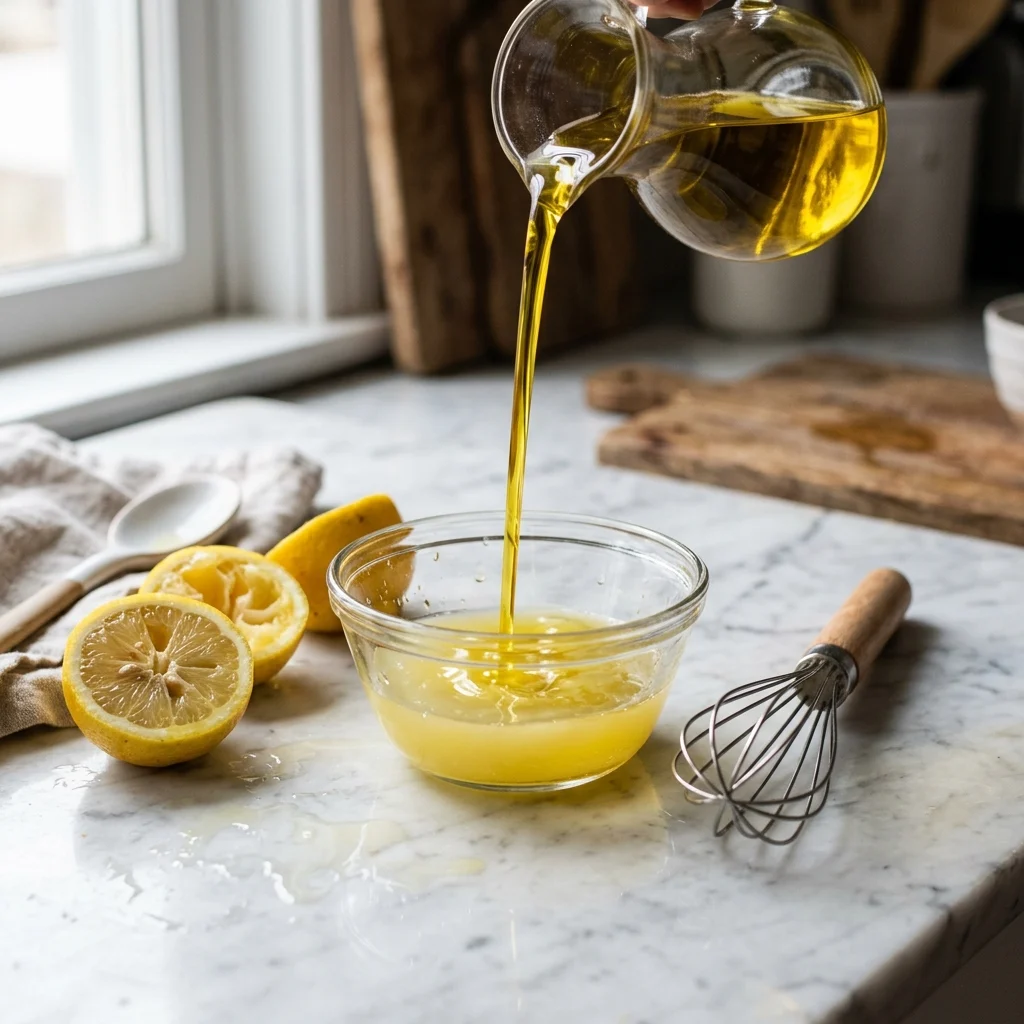
Step 3: Make the Lemon Dressing
In a small bowl, whisk together the lemon juice, olive oil, salt, pepper, and the allspice if you are using it. Taste it: it should be bright and noticeably lemony, because the parsley and bulgur will mellow it out.
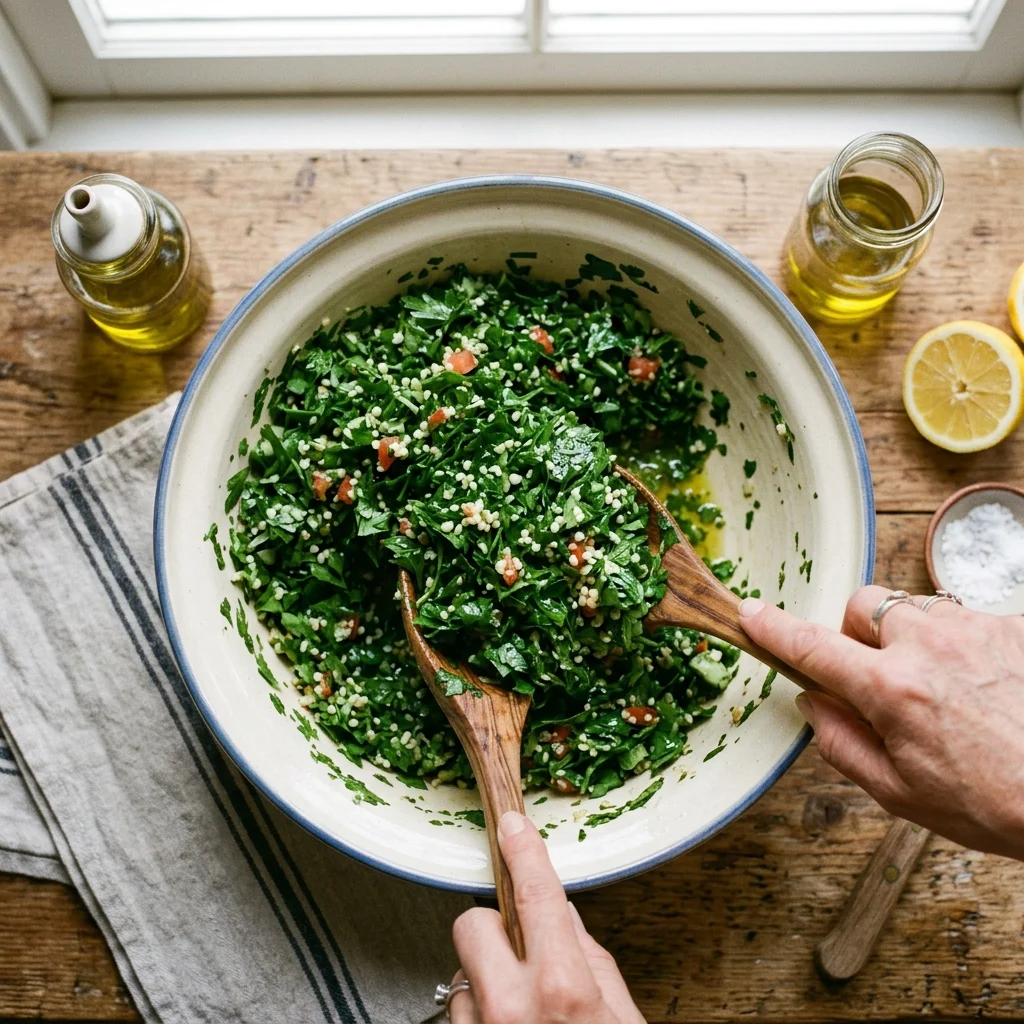
Step 4: Toss and Rest
Combine the parsley, mint, tomatoes, onions, and drained bulgur in a large bowl. Pour the dressing over, toss gently but thoroughly, and let the salad rest for 10 to 15 minutes before serving so the bulgur can drink up the lemon and tomato juices.
Taste one last time and adjust: tabbouleh almost always wants a touch more lemon or salt than you think.
Why Dry Herbs Matter More Than Anything
- Use flat-leaf parsley, not curly. Flat-leaf (Italian) parsley is tender and sweet; curly parsley is tougher and can taste grassy in this quantity. Both are in every supermarket, so choose deliberately.
- Chop by hand, not in a food processor. A processor bruises the parsley and releases water, and you will taste the difference. A sharp knife and five minutes of chopping is all it takes.
- Seed watery tomatoes. If your tomatoes are very juicy, scoop out the seeds before dicing so the salad stays fresh, not soggy.
- Storage: Tabbouleh keeps in an airtight container in the fridge for up to 3 days. The parsley softens a little by day two, but the flavor gets even better.
Swaps and Seasonal Changes
Gluten-Free Tabbouleh (Naturally Vegan Already)
Good news: tabbouleh is already vegan and vegetarian as written, with no adjustments needed. For a gluten-free version, swap the bulgur for an equal amount of cooked, cooled quinoa; everything else stays exactly the same.
Quick Weeknight Tabbouleh Shortcut
Pressed for time? Use one 200 g pouch of pre-cooked bulgur or quinoa (sold near the microwave rice), skip the soaking step entirely, and halve the chopping by using cherry tomatoes quartered instead of diced. You will have tabbouleh on the table in 10 minutes.
The Traditional Way to Eat It
In Lebanon, tabbouleh comes to the table with small inner leaves of romaine or little gem lettuce tucked around the bowl. You scoop the salad up with the leaves instead of a fork; it is the traditional Lebanese way to eat it, and it turns a side salad into finger food people hover around.
What to Put Beside It
For a Middle Eastern spread, tabbouleh is a natural partner for hummus (chickpea and tahini dip), warm pita, a scoop of zaalouk, and grilled meats. It is also the classic sidekick to shawarma; if you made the easy chicken shawarma recipe, this is the salad that belongs next to it.
For familiar Western pairings, treat it the way you would treat any bright salad: alongside grilled chicken or salmon, next to lamb chops, spooned over a barbecue plate, or packed into lunchboxes with feta and olives for a Mediterranean-style lunch.
Questions Cooks Ask About Tabbouleh
Can I make tabbouleh ahead of time? Yes, up to a day ahead is ideal. Keep it covered in the fridge, and hold back a squeeze of lemon to refresh it just before serving. It actually tastes better after a few hours.
What can I substitute for bulgur in tabbouleh? Cooked, cooled quinoa is the best swap, matching the texture closely and making the salad gluten-free. Couscous works in a pinch, though it is softer and less traditional.
Is tabbouleh spicy? Not at all; there is no chili anywhere in it. The flavor is fresh and lemony, with black pepper as the only heat, which makes it very kid-friendly.
How do I store leftover tabbouleh? Keep it in an airtight container in the fridge for up to 3 days. Give it a toss and a small squeeze of fresh lemon before serving again, and do not freeze it; the fresh herbs and tomatoes will not survive thawing.
Is this recipe vegetarian, vegan, or gluten-free? It is naturally vegan, vegetarian, dairy-free, and halal. It is not gluten-free as written because bulgur is wheat (see celiac.org for guidance), but the quinoa swap above makes it fully gluten-free.
Chop More Parsley Than Feels Sensible
If shawarma was your gateway into Arabic cooking, tabbouleh is the perfect second step: no oven, no unfamiliar techniques, just a knife, a bowl, and 20 minutes. One taste of the homemade version and the deli tub will never look the same.
Give it a try this week, and come tell me in the comments how it went, especially if you tried the quinoa version or the lettuce-scoop trick. And if you know someone who swears they do not like salad, share this recipe with them. This is the one that changes minds.
Rate this recipe
No ratings yet — be the first!

Real tabbouleh is a parsley salad with a little bulgur, not the other way round. If you have only met the grain-heavy deli version, this will taste like a different dish entirely.
Comments
No comments yet. Yours would be the first.
Made this? Tell me whether you tried the lettuce-scoop trick, and how you liked the ratio.
Leave a comment
Comments are anonymous and appear after admin approval. If you rated this recipe above, your stars will show with your comment.