
The Breakfast That Feeds a Country
Before sunrise in Cairo, the ful carts are already steaming. By seven the queues have formed, and by nine a substantial share of Egypt has eaten the same thing: a bowl of slow-cooked fava beans, mashed rough, drowned in olive oil and lemon, dusted heavily with cumin, and scooped up with warm bread.
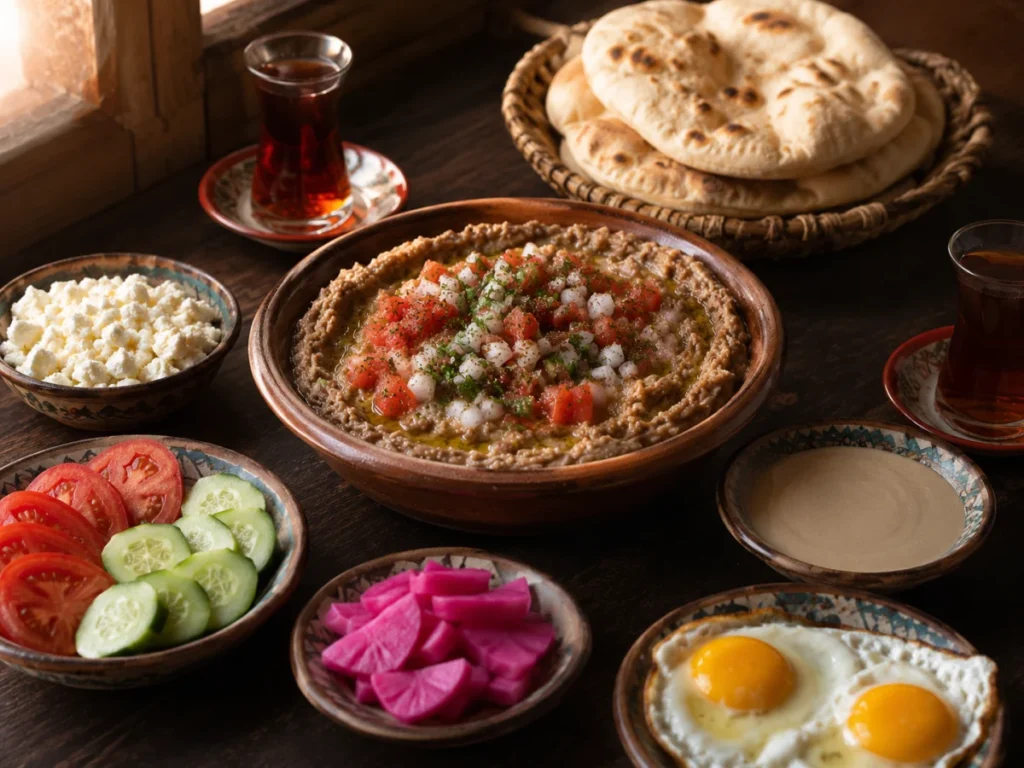
An Egyptian breakfast is not a plate, it is a table. Ful medames sits at the centre, surrounded by small dishes that everyone reaches into at once: crumbled white cheese, sliced tomato and cucumber, pickles, a bowl of tahina, sometimes fried eggs, and on a good morning a plate of ta’ameya, the green-hearted Egyptian falafel.
The whole thing costs almost nothing and keeps you going until late afternoon, which is exactly why it has survived for centuries. Some form of ful has been eaten in Egypt since the pharaohs, and the modern version would still be recognisable to them.
This is the weekend breakfast that turns into lunch because nobody leaves the table. The recipe below is the ful itself, and the section after it tells you how to build everything around it without spending your morning cooking.
What’s Actually on an Egyptian Breakfast Table
- Ful medames. The anchor. Slow-cooked fava beans, partly mashed, dressed at the table rather than in the pot.
- Ta’ameya. Egyptian falafel, made from split fava beans rather than chickpeas, which makes it lighter and green inside. Sold hot from carts alongside the ful.
- Eggs. Fried, boiled, or scrambled with tomato. Often cooked in the same pan the ta’ameya came out of.
- Cheese. Gebna beida, a salty white cheese similar to feta, or the creamier gebna areesh. Feta is a perfect stand-in.
- Vegetables and pickles. Sliced tomato, cucumber, spring onion, and torshi, the bright pink and yellow pickled vegetables that cut through everything rich.
- Tahina. Sesame paste loosened with lemon and water, for dipping bread and spooning over the ful.
- Bread. Aish baladi, the puffed wholemeal flatbread. Any pita or flatbread does the job, warmed.
You do not need all of it. Ful, bread, tomato, and cheese is a complete Egyptian breakfast on a Tuesday.
What Goes Into the Ful
For the Ful
Serves 4
For the beans:
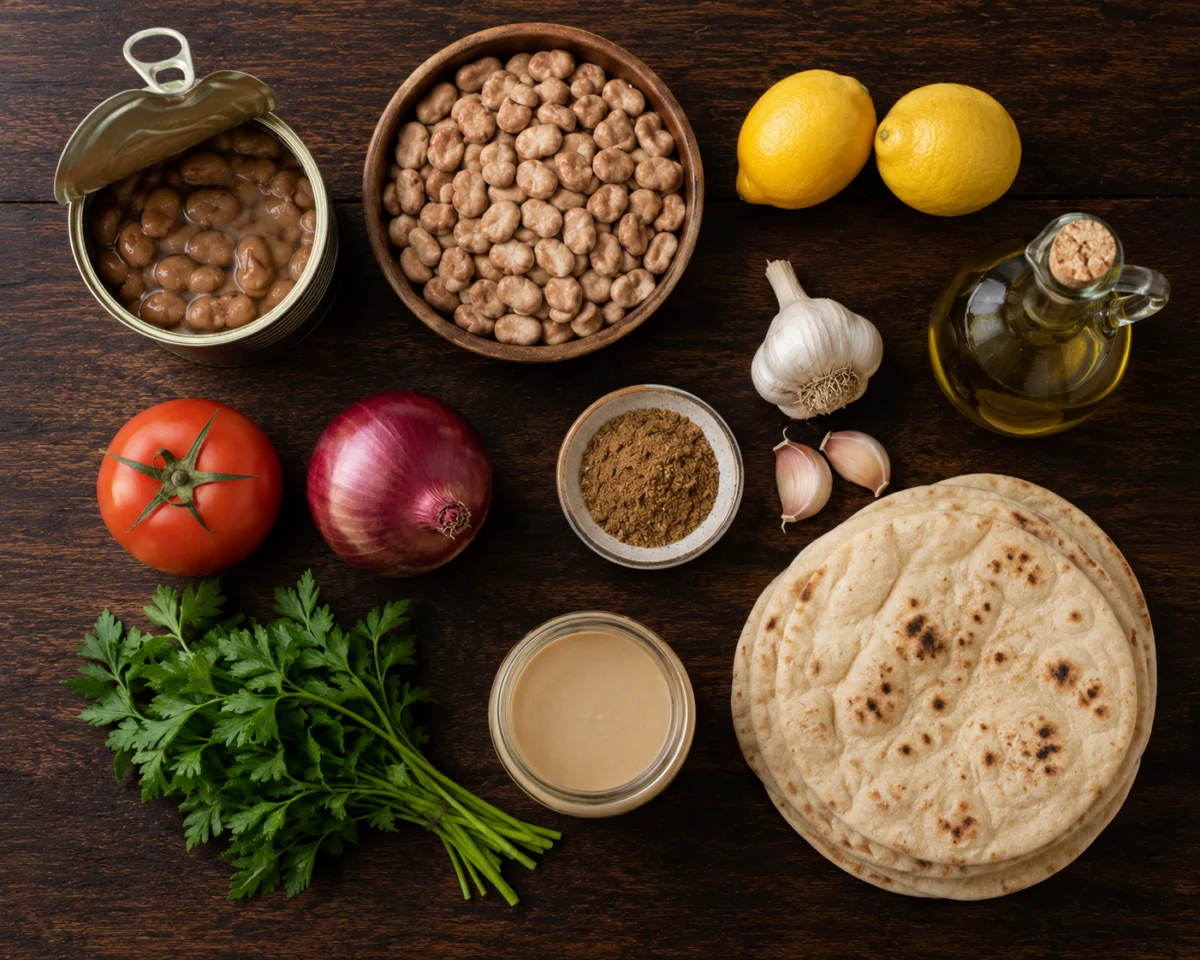
- 2 cans (14 oz / 400 g each) ful medames, or 1½ cups dried fava beans soaked overnight
- ½ cup of the canning liquid or cooking water
- 1 teaspoon salt
For the dressing, mixed at the table:
- ¼ cup extra virgin olive oil
- Juice of 1½ lemons
- 2 garlic cloves, crushed to a paste with a pinch of salt
- 1½ teaspoons ground cumin, plus more for sprinkling
- ½ teaspoon black pepper
To top:
- 1 tomato, finely diced
- ½ small onion or 2 spring onions, finely chopped
- ½ cup chopped parsley
- Optional: chopped green chili, 2 tablespoons tahina loosened with lemon and water, a boiled or fried egg per person
- Warm flatbread, to serve
Where to Find Ful Medames in the US and UK
Canned ful medames is stocked by every Middle Eastern grocery, in the international aisle of most large UK supermarkets, and by well-stocked US stores; the Egyptian and Lebanese brands in plain tins are the ones to look for. Amazon carries them by the case. If you cannot find tins labelled ful medames, canned fava beans (broad beans) work with the same method.
Dried fava beans need an overnight soak and 2 to 3 hours of simmering, and the result is genuinely better. But the canned version is what most Egyptian households use on a weekday, so use it without guilt. Fava beans are also a strong source of plant protein and fibre, per the USDA food database, which is why this breakfast sustains people through long working days.
Canned Versus Dried
- No fava beans at all? Brown lentils or even chickpeas, mashed the same way and dressed identically, make a respectable stand-in. Not authentic, still excellent breakfast.
- No tahina? Skip it, or use a spoon of plain yoghurt for creaminess.
- No fresh lemons? This is the one place to insist on fresh. Bottled juice tastes flat in a dish this simple.
Simmering, Mashing, Dressing
Step 1: Warm the Beans Gently
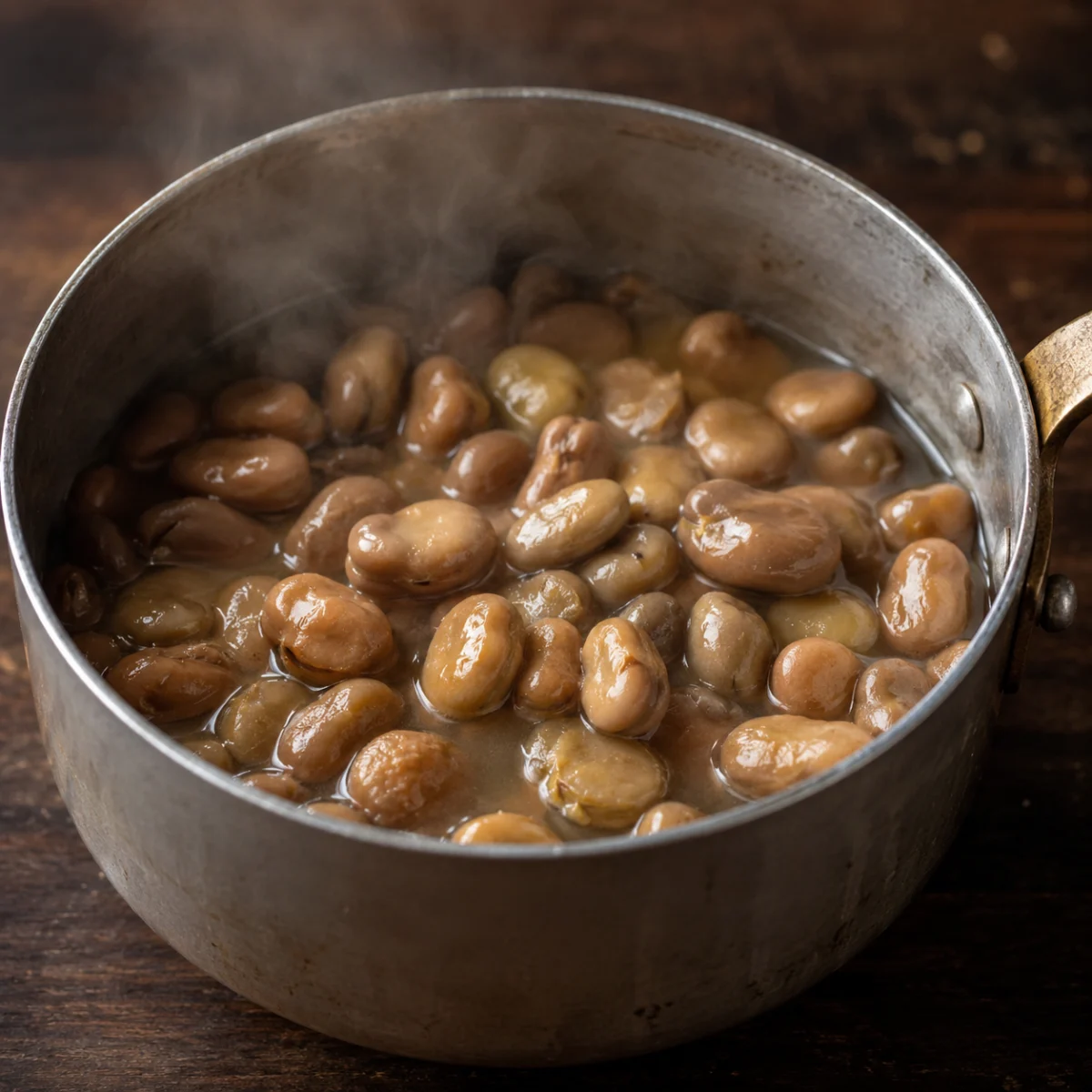
Tip the beans with their liquid into a saucepan, add the salt, and heat gently for 10 minutes, until steaming and soft. If using soaked dried beans, simmer them 2 to 3 hours until completely tender before this stage.
Step 2: Mash, But Only Halfway
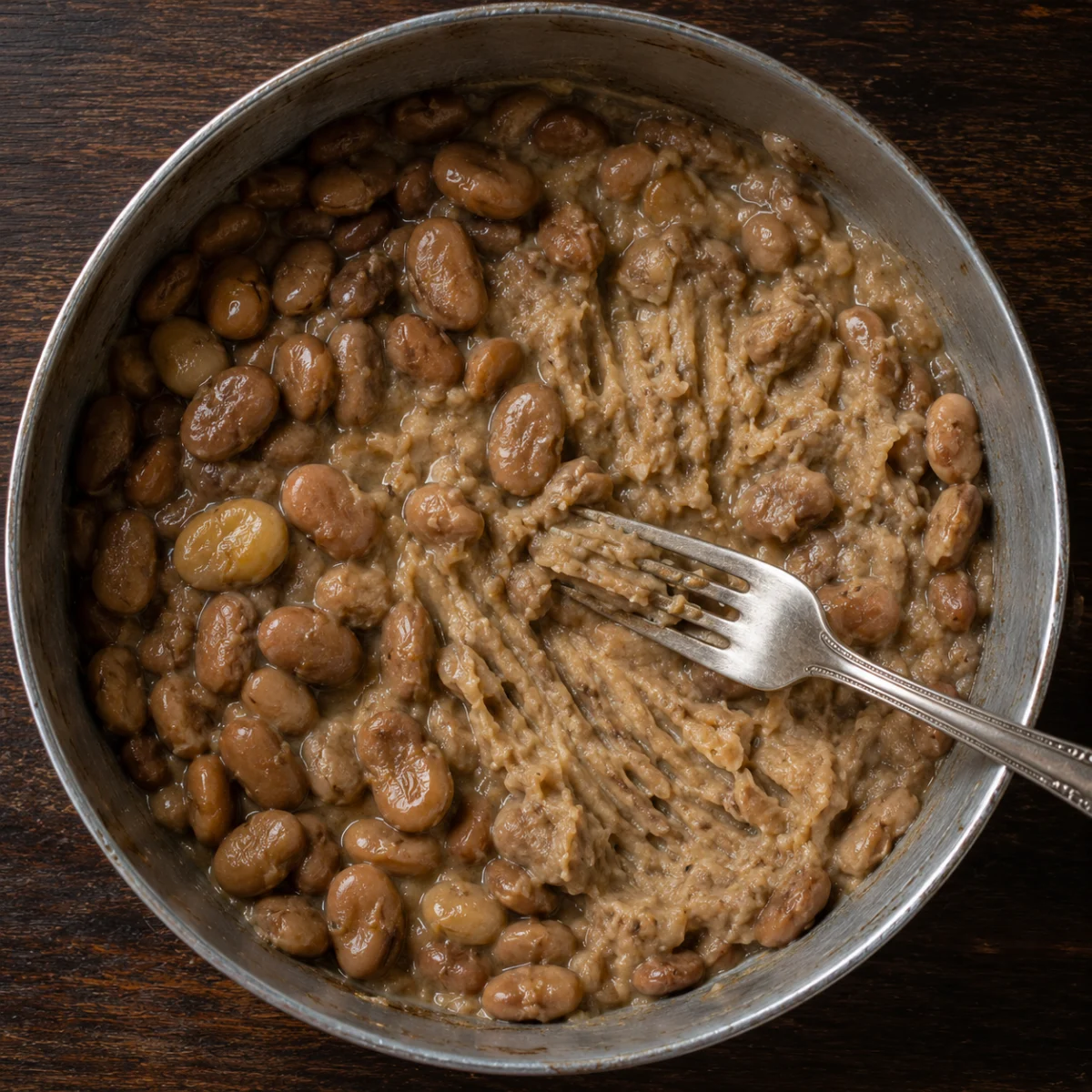
Using a fork or a potato masher, crush about half the beans against the side of the pan, leaving the rest whole. Add a splash of hot water if it tightens.
Prep tip: Texture is the whole personality of ful. Fully mashed, it becomes baby food; completely whole, it eats like a bean salad. Half crushed gives you a creamy base holding intact beans, which is what the carts serve and what everyone is actually chasing.
Step 3: Dress It Generously
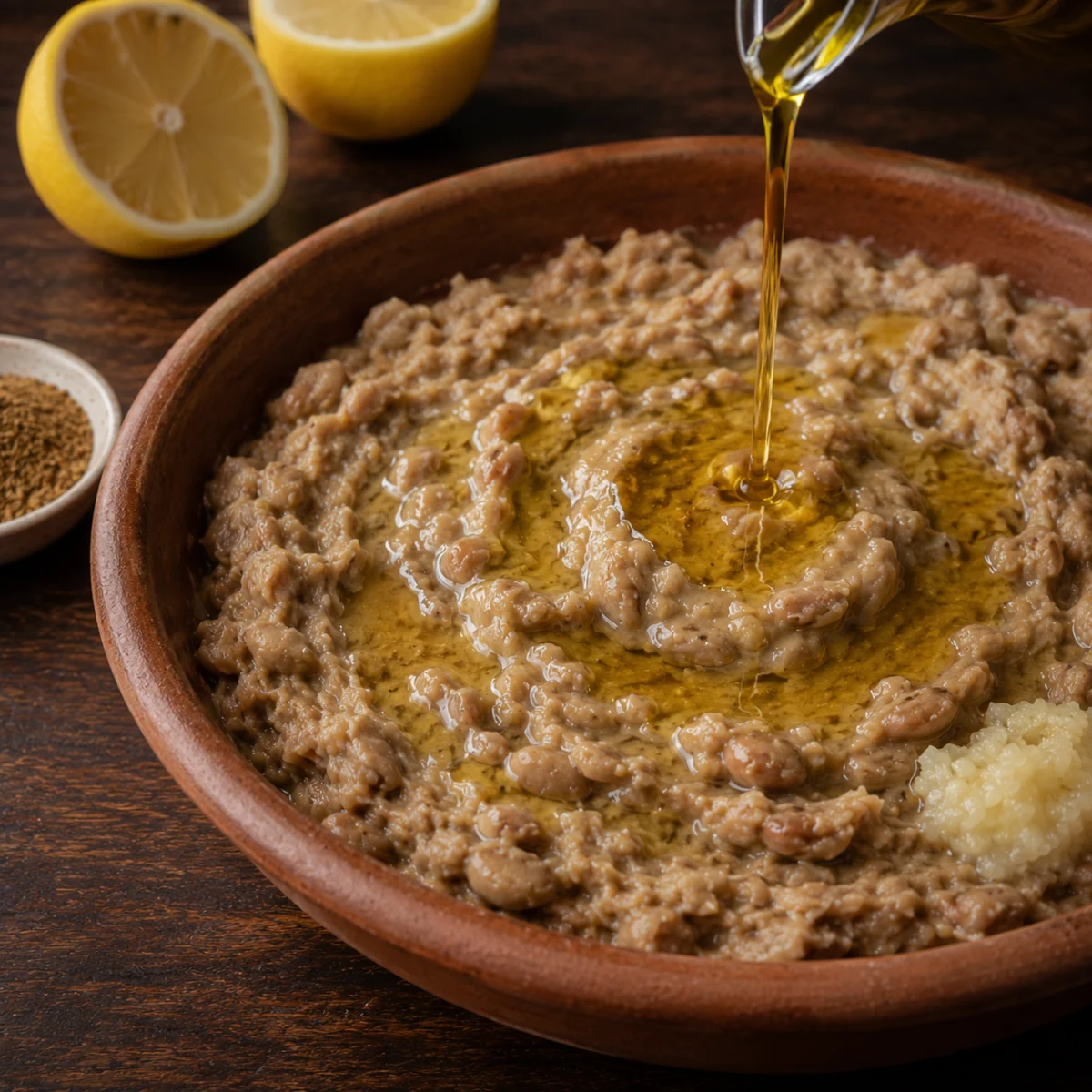
Transfer the beans to a wide shallow bowl. Add the garlic paste, cumin, and pepper, then pour over the olive oil and lemon juice and stir just enough to combine. Taste and add more lemon and salt; ful takes far more than you expect.
Prep tip: Dress the beans in the bowl, not in the pot, and be heavier handed than feels reasonable with the oil, lemon, and cumin. This is a dish of four plain ingredients, so under-seasoned ful is simply bland ful, and there is nowhere for it to hide.
Step 4: Top and Serve Immediately
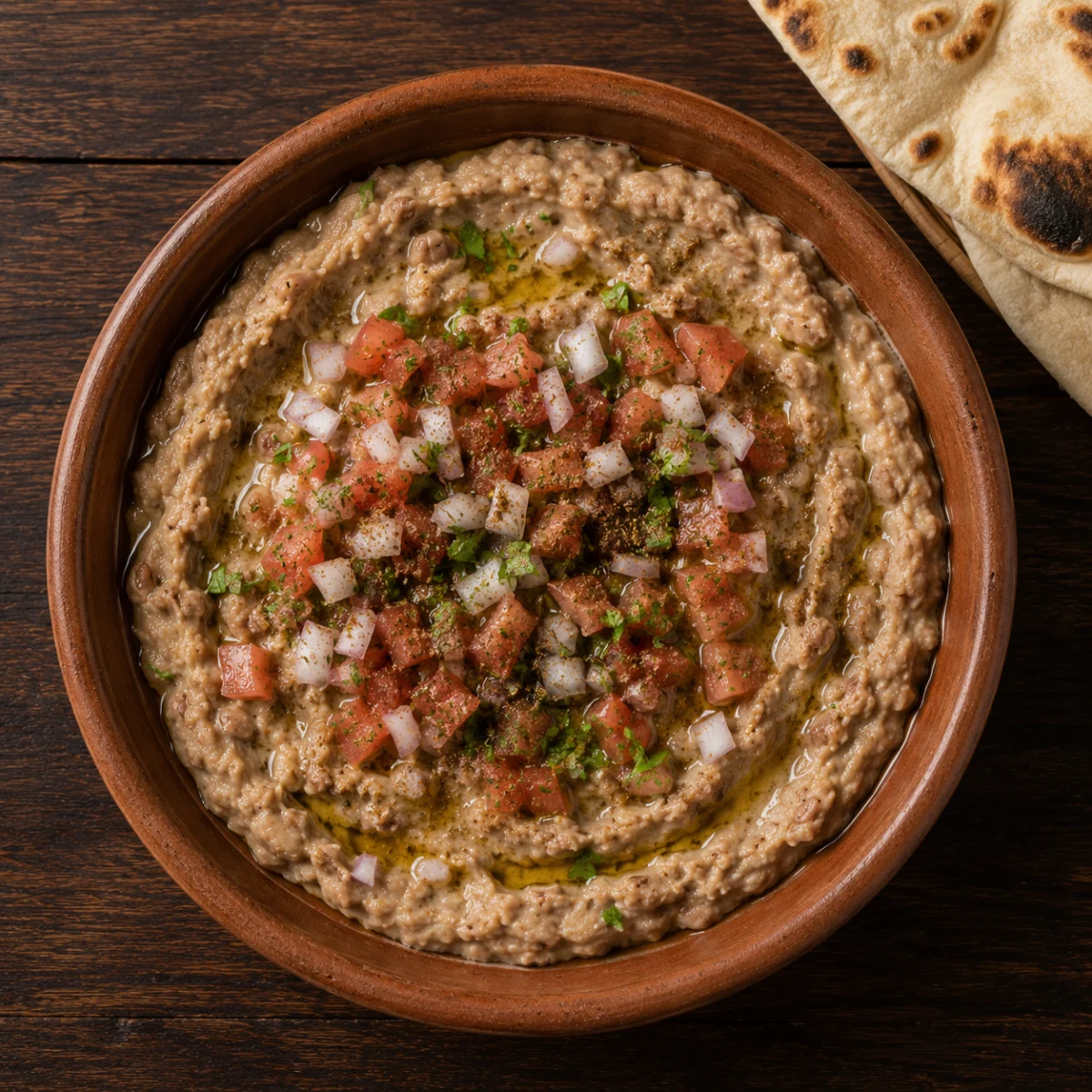
Scatter over the tomato, onion, and parsley, add chili, tahina, or an egg if using, and finish with one more drizzle of olive oil and a final dusting of cumin. Serve hot, with warm bread and everything else on the table.
Building the Rest of the Table in 15 Minutes
The trick to an Egyptian breakfast is that almost nothing needs cooking. While the ful warms:
- Minute 1 to 3. Slice tomatoes, cucumber, and spring onions onto one plate. Crumble feta onto another and drizzle it with olive oil.
- Minute 4 to 6. Loosen 2 tablespoons of tahina with lemon juice and cold water until it pours, and salt it.
- Minute 7 to 12. Fry or boil the eggs, and open a jar of pickles.
- Minute 13 to 15. Warm the bread, wrapped in foil in a hot oven or straight on a dry pan, and put everything on the table at once.
Nobody plates anything. The bowls go in the middle, everyone tears bread, and the meal takes as long as the conversation does.
Texture Is the Whole Argument
- Cumin is not optional. It is the flavour people recognise as ful, more than the beans themselves. Add it to the bowl and again on top.
- Serve it hot in a warm bowl. Ful cools fast and thickens as it cools. A bowl rinsed with hot water buys you fifteen good minutes.
- Storage: Undressed beans keep 4 days in the fridge and reheat with a splash of water. Dress only what you are eating, since dressed ful goes dull overnight.
- Cook dried beans in a big batch. Simmer a full bag, then freeze in portions with their liquid. Weekend-you will be grateful, and the texture beats canned every time.
Alexandrian, Levantine, and Spiced Versions
Ful bil Tahina
Stir 3 tablespoons of loosened tahina straight into the mashed beans before the toppings go on. The bowl turns creamy, pale, and rich, and this is how many Cairo cafés serve it.
Ful Iskandarani (Alexandria Style)
Cook the beans with diced tomato, green pepper, and chili, so the dish arrives already vegetable-heavy and spicier. Popular in the north and excellent with a fried egg on top.
How the Bowl Gets Finished
Ful takes more lemon than most recipes admit to. A spoon of tahina and a soft-boiled egg broken into the middle, so the yolk runs through the beans, is how it is most often finished. The chili goes on one side of the bowl only, because the household is divided and diplomacy matters at breakfast.
What to Serve Alongside
Everything above, plus tea. Egyptian breakfast tea is strong black tea, often with mint, poured sweet. If you prefer coffee, the Arabic coffee recipe suits the table, though it belongs more to the afternoon.
For a bigger weekend spread, the manakish za’atar recipe works beautifully alongside as extra bread, the easy Moroccan bread recipe does the same job, and the baba ghanoush recipe fits right in among the small dishes. A bowl of tabbouleh would not be Egyptian, but nobody has ever complained.
Egyptian Breakfast, Answered
What is ful medames made of? Fava beans, also called broad beans, slow cooked until soft and dressed with olive oil, lemon juice, garlic, cumin and salt. Everything else, from tomato and onion to tahina and egg, is a topping rather than part of the base.
Can I use canned beans for ful medames? Yes, and most Egyptian households do on weekdays. Warm them in their liquid, mash half, and dress generously. Dried beans soaked overnight and simmered for a few hours taste better, so save that for weekends or batch-cook and freeze.
Is Egyptian breakfast vegetarian? The core of it is: ful, tahina, bread, cheese, vegetables and pickles are all vegetarian, and ful itself is naturally vegan before the egg and cheese arrive. It is also high in protein and fibre, which is why it sustains people through long working days.
What bread is used for Egyptian breakfast? Aish baladi, a puffed wholemeal flatbread baked in very hot ovens. Outside Egypt, any pita or flatbread warmed through does the job perfectly.
Why does my ful taste bland? Almost always under-dressing. Ful needs considerably more lemon, salt, cumin and olive oil than seems reasonable, because the beans themselves are mild. Dress it in the bowl, taste, and then add more of all four.
Pull Up a Chair
There is no ceremony to an Egyptian breakfast and no plating, which is exactly its charm: bowls in the middle, bread torn by hand, cumin in the air, and a meal that costs pennies and lasts hours.
Make it this weekend and report back: canned or dried, tahina in or on top, and whether anyone at your table put the chili on the wrong side of the bowl. In plenty of households that is a serious matter.
Rate this recipe
No ratings yet — be the first!



Ful needs far more lemon, salt, cumin and olive oil than seems reasonable. The beans are mild, and there is nowhere for under-seasoning to hide. Dress it in the bowl, taste, then add more of all four.
Comments
No comments yet. Yours would be the first.
Made this? Tell me what else made it onto your table, and whether the chili went on one side of the bowl or all over.
Leave a comment
Comments are anonymous and appear after admin approval. If you rated this recipe above, your stars will show with your comment.