Shakshuka’s Spicier Tunisian Cousin
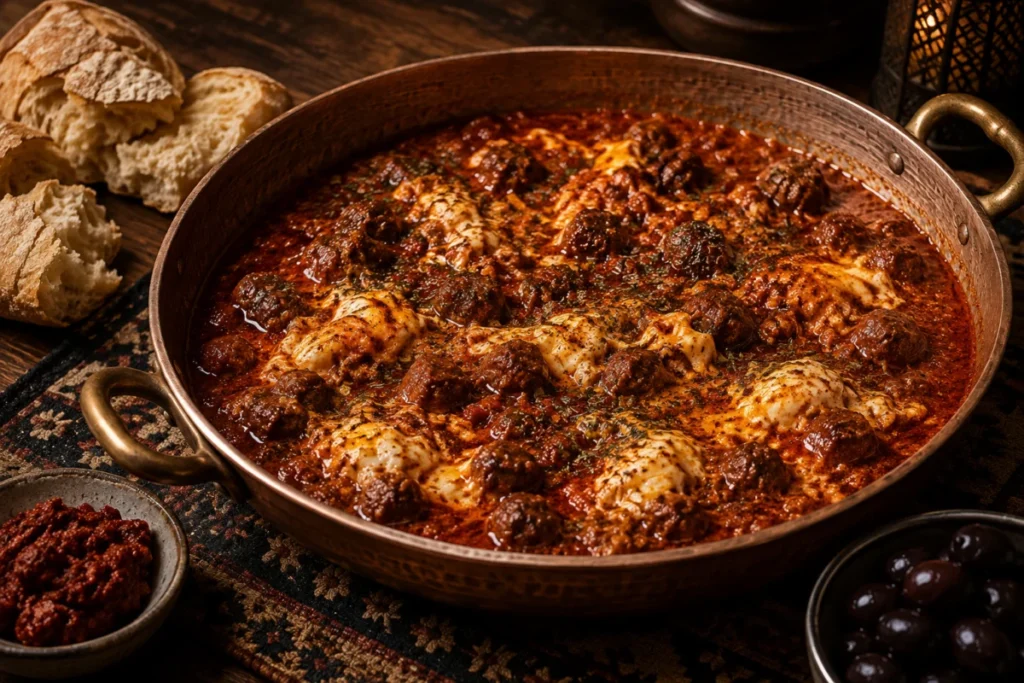
If you know shakshuka, you already understand the shape of this dish: eggs cooked in a tomato sauce in one pan, brought to the table in the pan, eaten with bread. Ojja merguez is what Tunisia does with that idea, and the differences are not small.
The sauce is built on harissa rather than sweet peppers, so it is properly hot. It carries caraway and coriander, the two spices that make Tunisian food taste Tunisian. And the eggs are stirred through rather than left as whole set yolks, so the dish is looser, with egg running through the sauce instead of sitting on top.
Then there is merguez: the spiced lamb sausage that gives this version its name, red with harissa and paprika, releasing its oil into the sauce as it cooks. Ojja exists with prawns, with offal, and with nothing but eggs, but merguez is the version most Tunisians would name first.
It is a fifteen minute dinner that tastes like more effort than it took, and one of the few dishes that is just as good reheated for breakfast the next morning.
Ahead: how ojja differs from shakshuka, the ingredient list, four steps with photos, where to find merguez in the US and UK, and how to get the egg texture right.
Ojja vs Shakshuka: The Honest Differences
They belong to the same family and nobody should be precious about it, but three things separate them.
- The heat. Shakshuka is usually built on sweet peppers with mild spice. Ojja is built on harissa and is genuinely hot, though you control how much goes in.
- The spices. Ojja carries ground caraway and coriander, which give it a distinctly Tunisian flavour that shakshuka’s cumin and paprika do not.
- The eggs. Shakshuka cracks whole eggs into wells and sets them with runny yolks intact. Ojja stirs the eggs through the sauce in the final minute, so the result is softer and more integrated, closer to a very saucy scramble.
If you have made shakshuka, you can make this in the same pan tonight with almost no new skills.
Ingredients You’ll Need for Ojja Merguez
Main Ingredients
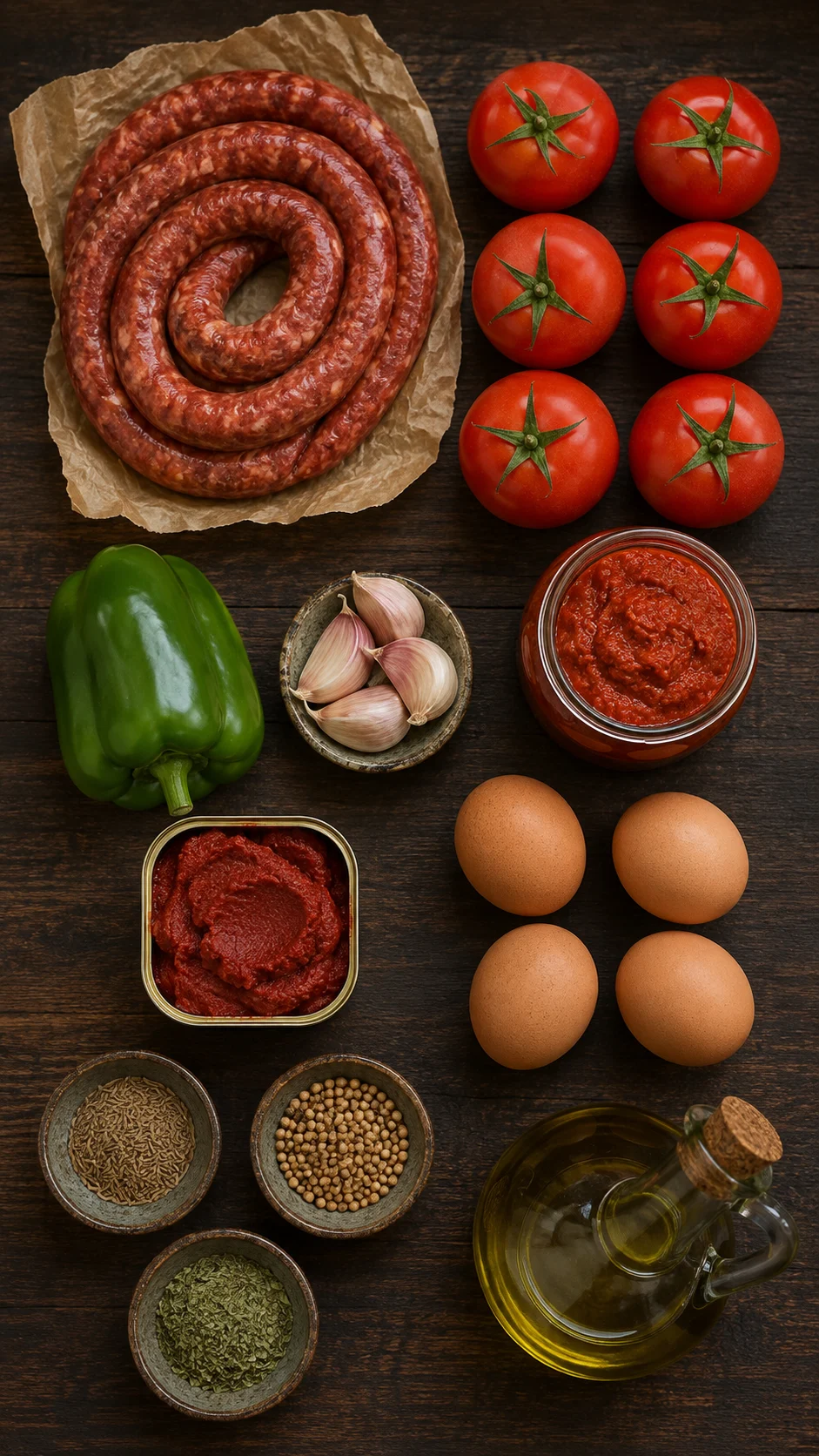
Serves 4
For the sauce:
- 14 oz (400 g) merguez sausages, cut into chunks
- 2 tablespoons olive oil
- 3 garlic cloves, crushed
- 1 green pepper, chopped small
- 6 ripe tomatoes, peeled and chopped, or 1 can (400 g) chopped tomatoes
- 2 tablespoons tomato paste
- 1 tablespoon harissa, or to taste
- ½ teaspoon ground caraway
- ½ teaspoon ground coriander
- 1 teaspoon salt
- ½ teaspoon black pepper
- ½ cup (120 ml) water
To finish:
- 4 eggs
- 1 teaspoon dried mint
- Crusty bread, to serve
Where to Find Merguez in the US and UK
Merguez is a North African lamb sausage, heavily spiced with harissa, paprika and garlic, and it is what makes this dish. In the UK it is stocked by larger supermarkets, halal butchers and Middle Eastern groceries. In the US it is less common in supermarkets but reliably available at halal butchers, Middle Eastern and French markets, and online.
If you cannot find it, use plain lamb sausages and add an extra teaspoon of harissa plus ¼ teaspoon of paprika to the sauce. It is not the same, but it gets you close. Harissa itself now sits in the international aisle of most large supermarkets in both countries, and Tunisian brands are worth seeking out since harissa is Tunisian in origin.
Easy Substitutions
- Ojja with prawns. Add 300 g of raw peeled prawns in the last 4 minutes instead of the merguez, which is the second most popular version in Tunisia and excellent in summer.
- Vegetarian ojja. Skip the sausage entirely and add a drained can of chickpeas. The harissa and caraway carry it easily.
- No caraway? Ground cumin is the closest substitute, though the flavour shifts away from Tunisian and toward generic North African.
Step-by-Step Instructions: Ojja Merguez in 4 Steps
Step 1: Brown the Merguez
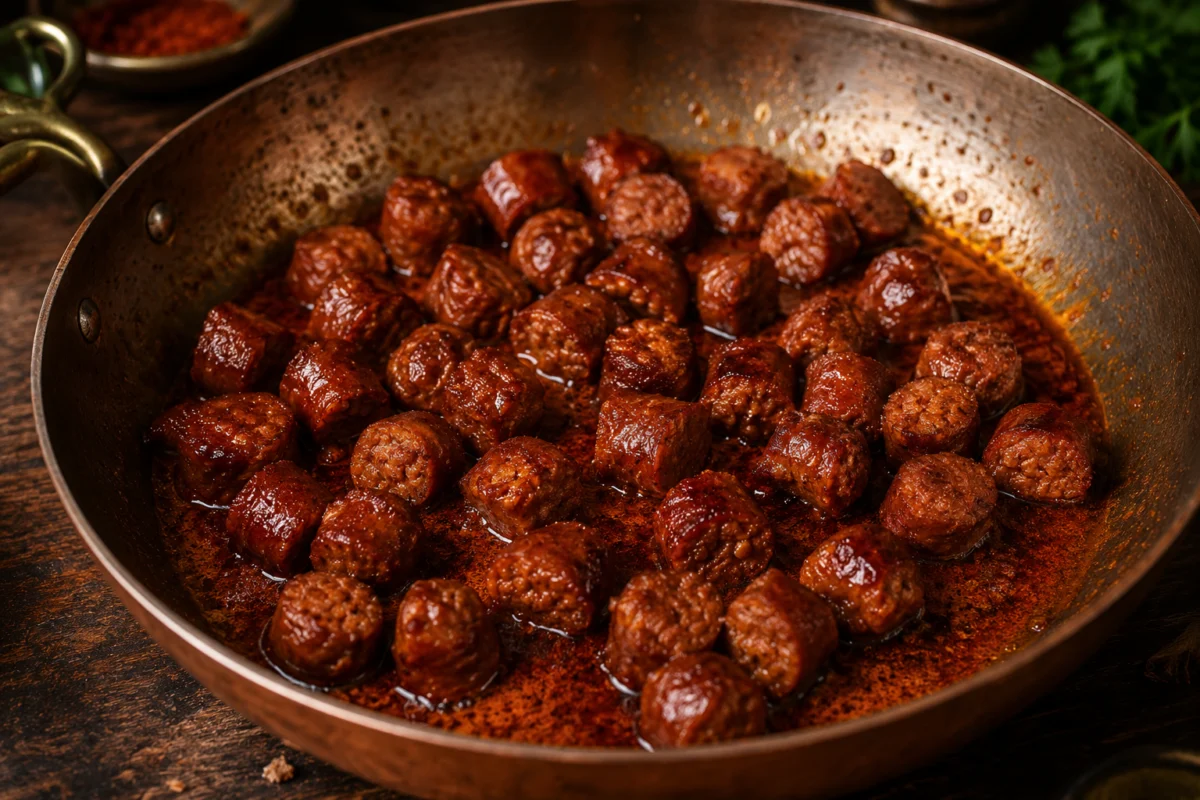
Heat the oil in a wide pan over medium heat and cook the merguez chunks for 5 to 6 minutes, turning, until browned and their red oil has released into the pan. Lift the sausage out with a slotted spoon and set it aside, leaving the oil behind.
Prep tip: Keep that red oil in the pan, it is the flavour base of the whole dish. And take the sausage out before building the sauce, because merguez left simmering for the full cooking time turns dry and grainy. It goes back in at the end.
Step 2: Build the Harissa Tomato Sauce
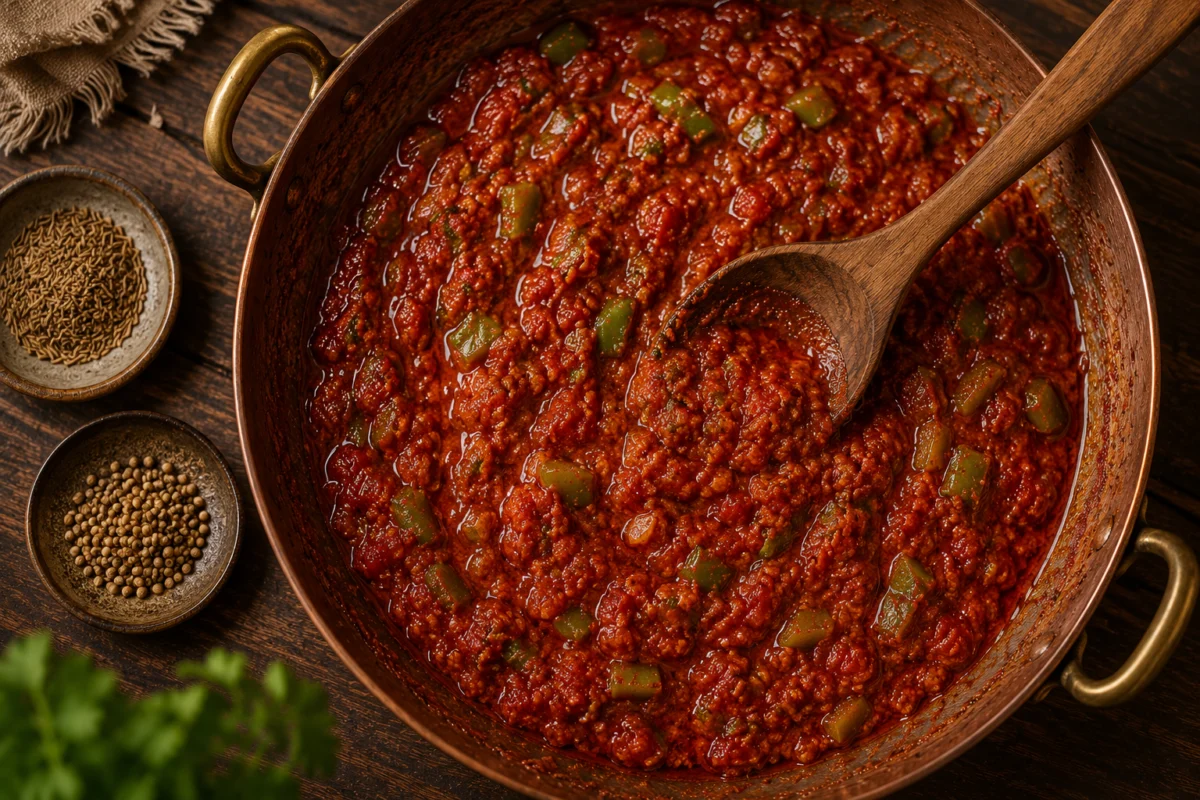
Add the garlic and green pepper to the spiced oil and cook for 3 minutes. Stir in the tomato paste, harissa, caraway, coriander, salt and pepper and cook for 1 minute until fragrant, then add the chopped tomatoes and the water. Simmer for 10 to 12 minutes, until thickened and the oil separates at the edges.
Prep tip: Wait for the oil to rise to the surface at the edges of the pan. That separation is the sign the sauce has cooked properly and the raw tomato taste has gone. Rush this and the finished ojja tastes thin and sharp.
Step 3: Return the Sausage
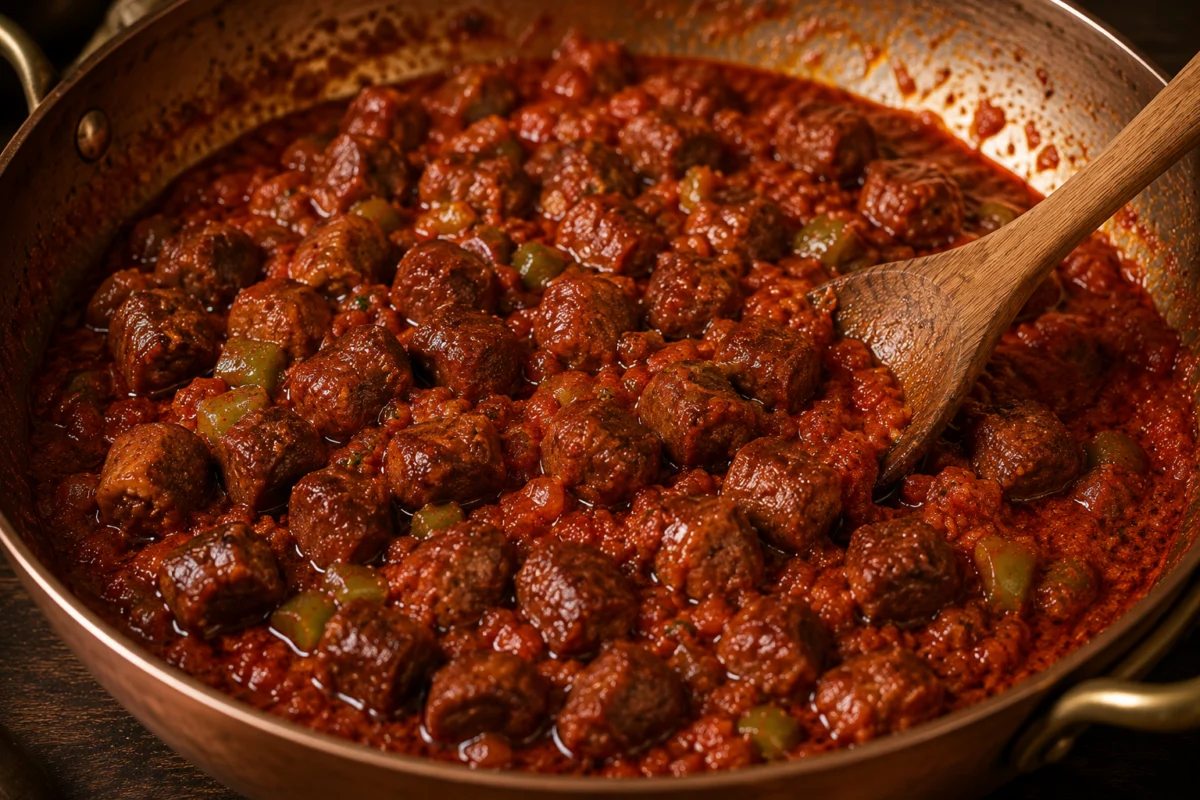
Stir the browned merguez back into the sauce and simmer for 3 minutes so the flavours come together. Taste and adjust the salt and harissa.
Step 4: Stir In the Eggs
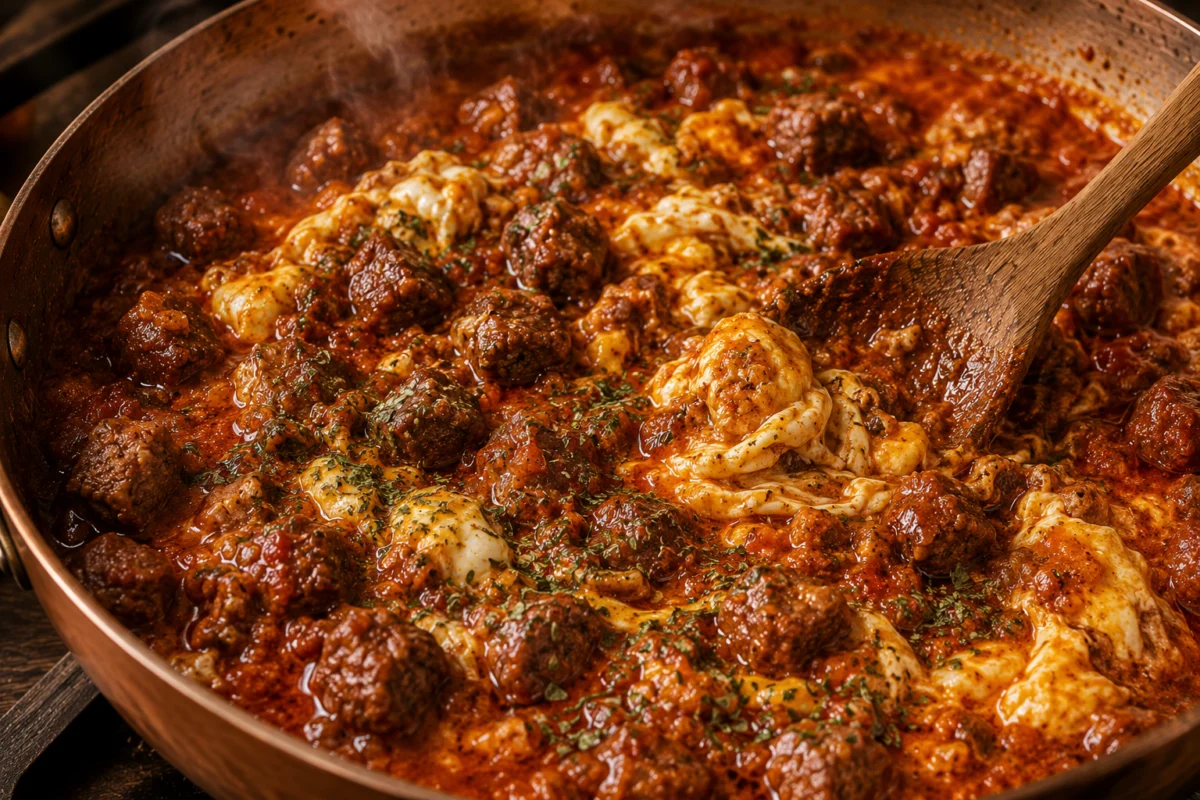
Crack the eggs directly into the pan and stir them gently through the sauce with a wooden spoon for 1 to 2 minutes, until they are just set but still soft. Take the pan off the heat immediately, scatter over the dried mint, and bring it to the table in the pan with plenty of bread.
Prep tip: Take it off the heat while it still looks slightly underdone. Eggs keep cooking in a hot pan of sauce, and ojja should be soft and loose rather than firm and rubbery. This is a thirty second window and it is the only part of the recipe that needs full attention.
About Ojja: Tunisia’s Everyday Pan
Ojja is home cooking and cafe food across Tunisia, eaten at any hour, most often for dinner or as a late breakfast. It is cheap, fast, and what people make when they want something satisfying without planning.
The name comes from an Arabic root meaning to mix or stir, which describes exactly what separates it from its neighbours: the stirring of the eggs into the sauce rather than poaching them whole on top.
It belongs to a wide family of North African egg-in-sauce dishes, and the kaftaji recipe shares its logic of peppers, harissa and heat. On a Tunisian table it sits beside the Tunisian brik recipe and the Tunisian tajine, and one harissa jar serves all of them. For a comparable egg-based breakfast from further east, the Egyptian breakfast guide covers ful medames.
Pro Tips for the Best Ojja
- Get the sauce right before the eggs go near it. Everything up to Step 3 can be unhurried. Only the last two minutes need attention.
- Peel the tomatoes if using fresh. Score, blanch in boiling water for 30 seconds, and the skins slip off. Tomato skins curl into unpleasant strips in a sauce like this, and canned tomatoes avoid the problem entirely.
- Storage: The sauce keeps 3 days in the fridge and freezes for 2 months, and reheating it with fresh eggs takes four minutes. Ojja with the eggs already in does not keep well, since they toughen. Eggs should be cooked to a safe temperature per USDA guidance.
- Serve it in the pan. It cools fast in bowls, and the whole point is everyone tearing bread and eating from the middle.
Variations on Ojja
Ojja with Prawns
Swap the merguez for 300 g of raw peeled prawns, added in the last 4 minutes before the eggs so they poach in the sauce. Lighter, faster, and the most popular coastal version.
Ojja with Merguez and Prawns
Both, which is how it is often served in Tunisian restaurants. Brown the merguez as in Step 1 and add the prawns just before the eggs.
Serving the Heat at the Table
Keeping the harissa at a moderate level in the pan and bringing the jar to the table is the sensible approach, since heat tolerance varies and it is far easier to add than to remove. The dried mint at the end is not optional; it lifts the whole pan.
What to Serve with Ojja
Bread, and this is not a case where anything else is really needed. A crusty baguette or flatbread torn into pieces for scooping straight from the pan is how it is eaten across Tunisia, and rounds from the easy Moroccan bread recipe do the job well.
If you want more on the table, something cool and smoky alongside is the classic pairing against the hot pan. Olives, pickles and a wedge of lemon finish it, and the Tunisian fish soup recipe makes a fuller regional spread.
Ojja Merguez FAQs
What is the difference between ojja and shakshuka? Three things: ojja is built on harissa so it is properly spicy, it uses caraway and coriander rather than cumin and paprika, and the eggs are stirred through the sauce rather than poached whole on top. The result is looser and softer than shakshuka.
What is merguez and what can I use instead? Merguez is a North African lamb sausage spiced with harissa, paprika and garlic. If you cannot find it, use plain lamb sausages plus an extra teaspoon of harissa and a pinch of paprika in the sauce.
How spicy is ojja? Traditionally quite hot, but you control it entirely through the harissa. Start with a teaspoon rather than a tablespoon if you are unsure, and put the jar on the table so everyone can adjust their own portion.
Why did my eggs go rubbery? They were left on the heat too long. Eggs keep cooking in a hot pan of sauce, so take the pan off while they still look slightly underdone. Two minutes of stirring is usually enough.
Can I make ojja ahead? Make the sauce ahead, up to 3 days in the fridge or 2 months frozen, then reheat it and stir in fresh eggs when you serve. Ojja with the eggs already cooked does not reheat well.
One Pan, Fifteen Minutes, Plenty of Bread
Brown the sausage, build the sauce properly, put the merguez back, and stir the eggs through at the very end. The only difficult part is knowing when to stop, and the answer is always slightly sooner than you think.
Make it this week and report back: merguez, prawns, or both together, and how much harissa your table could handle. Tunisian households would probably say you went easy, and that is fine.
Rate this recipe
No ratings yet — be the first!
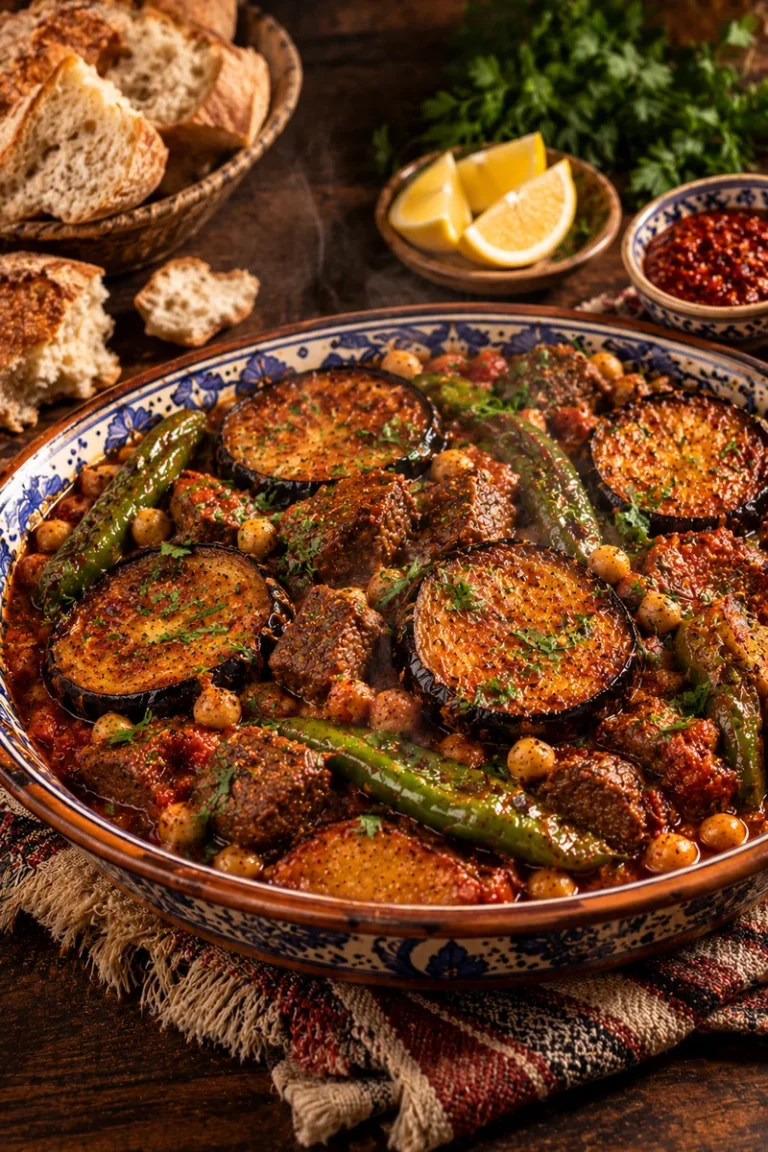

Take the pan off the heat while the eggs still look slightly underdone. They keep cooking in the hot sauce, and that thirty second window is the difference between soft ojja and rubbery ojja.
Comments
No comments yet. Yours would be the first.
Made this? Tell me: merguez, prawns, or both, and how much harissa your table could handle.
Leave a comment
Comments are anonymous and appear after admin approval. If you rated this recipe above, your stars will show with your comment.