The Dish Built Around Stale Bread
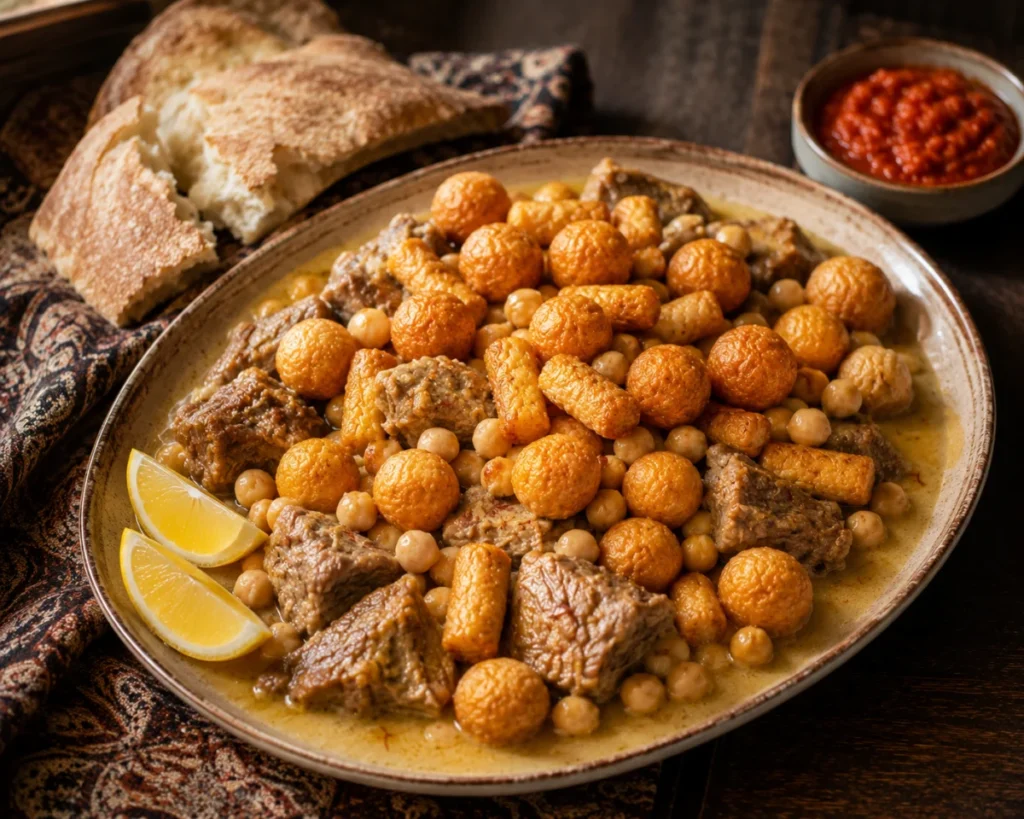
Sfiria is a celebration dish built on something every household already has. Underneath is a straightforward pot: lamb and chickpeas simmered in a saffron and turmeric broth until tender. What lifts it out of the ordinary is scattered on top.
Breadcrumbs, mixed with soft cheese, egg, cinnamon and pepper, rolled into small balls and short sticks, fried until golden, and dropped into the pot at the very end. They drink up the broth without dissolving, so each one arrives soft inside with a firm golden shell, sitting in a sauce that has been thickened with tempered egg and lemon.
It is Algerian, tied to Eid, weddings and Friday tables, and it shows a household’s thrift and its generosity at once. Stale bread and a handful of chickpeas, turned into something people request by name.
This is the dish for when there is bread going hard on the counter and lamb in the freezer. The frying is the fiddly part; the rest looks after itself.
Ahead: the ingredient list, five steps with photos, how to get the balls to hold together, the egg and lemon finish, and what to serve alongside.
Ingredients You’ll Need for Sfiria
Main Ingredients
Serves 5 to 6
For the pot:
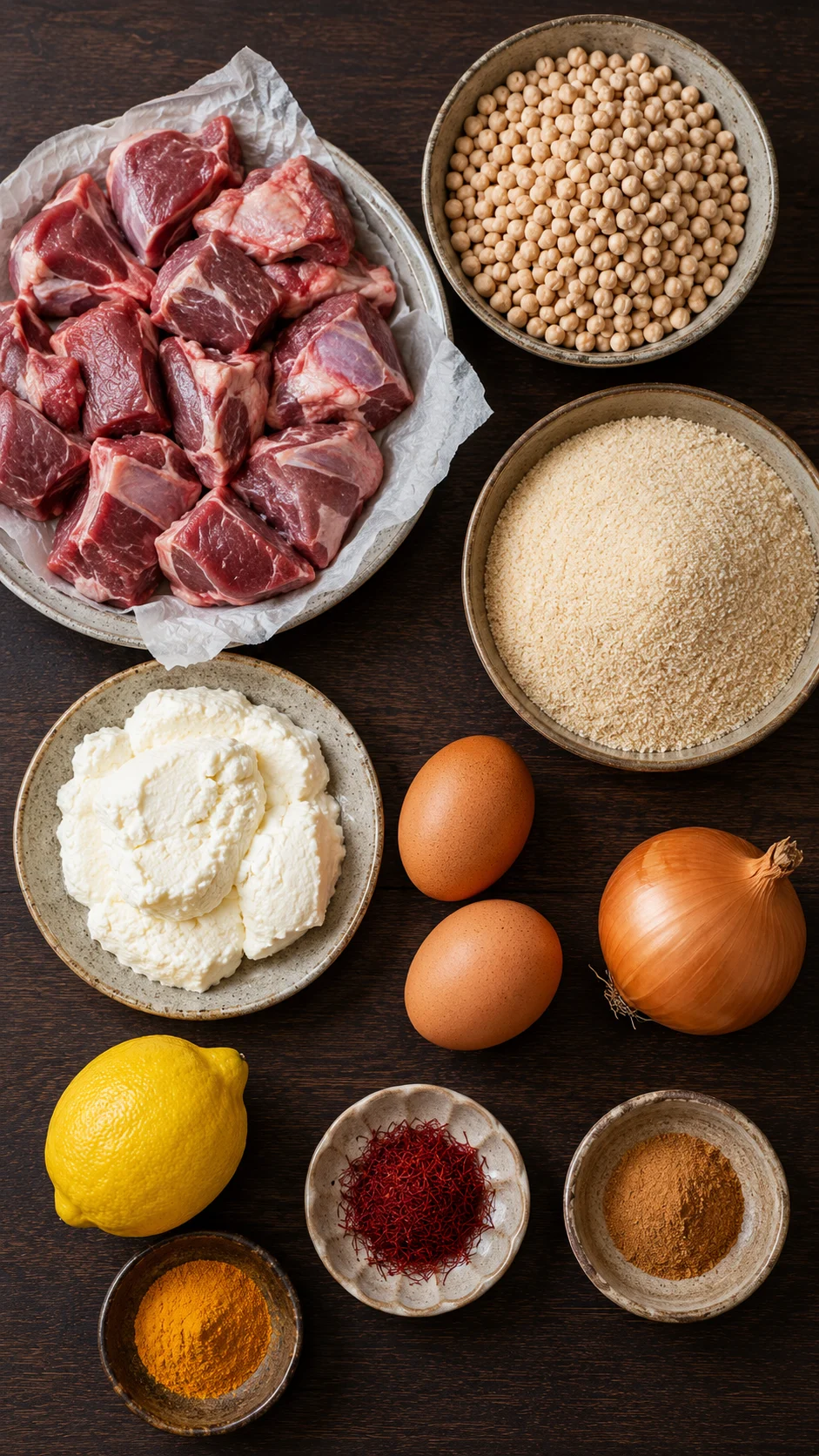
- 2¼ lbs (1 kg) lamb, cut into medium pieces
- 3 tablespoons olive oil
- 1 onion, grated
- 1 cup chickpeas, soaked overnight, or 1 can drained
- ½ teaspoon ground turmeric
- Pinch of hot saffron or ¼ teaspoon paprika
- 1½ teaspoons salt
- 1 teaspoon black pepper
- 6 cups (1.5 liters) water
For the fried balls and sticks:
- 3½ oz (100 g) fine dry breadcrumbs
- 3½ oz (100 g) soft white cheese, such as ricotta or a mild fresh cheese
- 1 egg
- ½ teaspoon ground cinnamon
- ½ teaspoon salt
- ¼ teaspoon black pepper
- Vegetable oil, for frying
For the finish:
- 1 egg yolk
- 1 tablespoon lemon juice
Where to Find the Ingredients
There is nothing unusual here. The cheese is the only choice worth thinking about: you want something soft, white and mild that binds rather than melts, so ricotta, a fresh farmer’s cheese, or even a well-drained cottage cheese all work. Avoid anything strong or anything that melts stringily, which will pull the balls apart in the oil.
For the breadcrumbs, dry and fine is what you need. Stale bread blitzed in a processor and left to dry out is the traditional and best option, and it is the entire point of the dish. Shop-bought fine breadcrumbs work perfectly well.
Easy Substitutions
- No lamb? Chicken pieces work and cook faster, around 30 minutes rather than an hour. Beef also works with a longer simmer.
- No soft cheese? Use an extra egg and 2 tablespoons of milk to bind the breadcrumbs. The balls are less rich but they hold together fine.
- Not frying? Bake the balls at 400°F (200°C) for 15 minutes, turning once, brushed with oil. Less golden, considerably less mess.
Step-by-Step Instructions: Sfiria in 5 Steps
Step 1: Brown the Lamb and Build the Broth
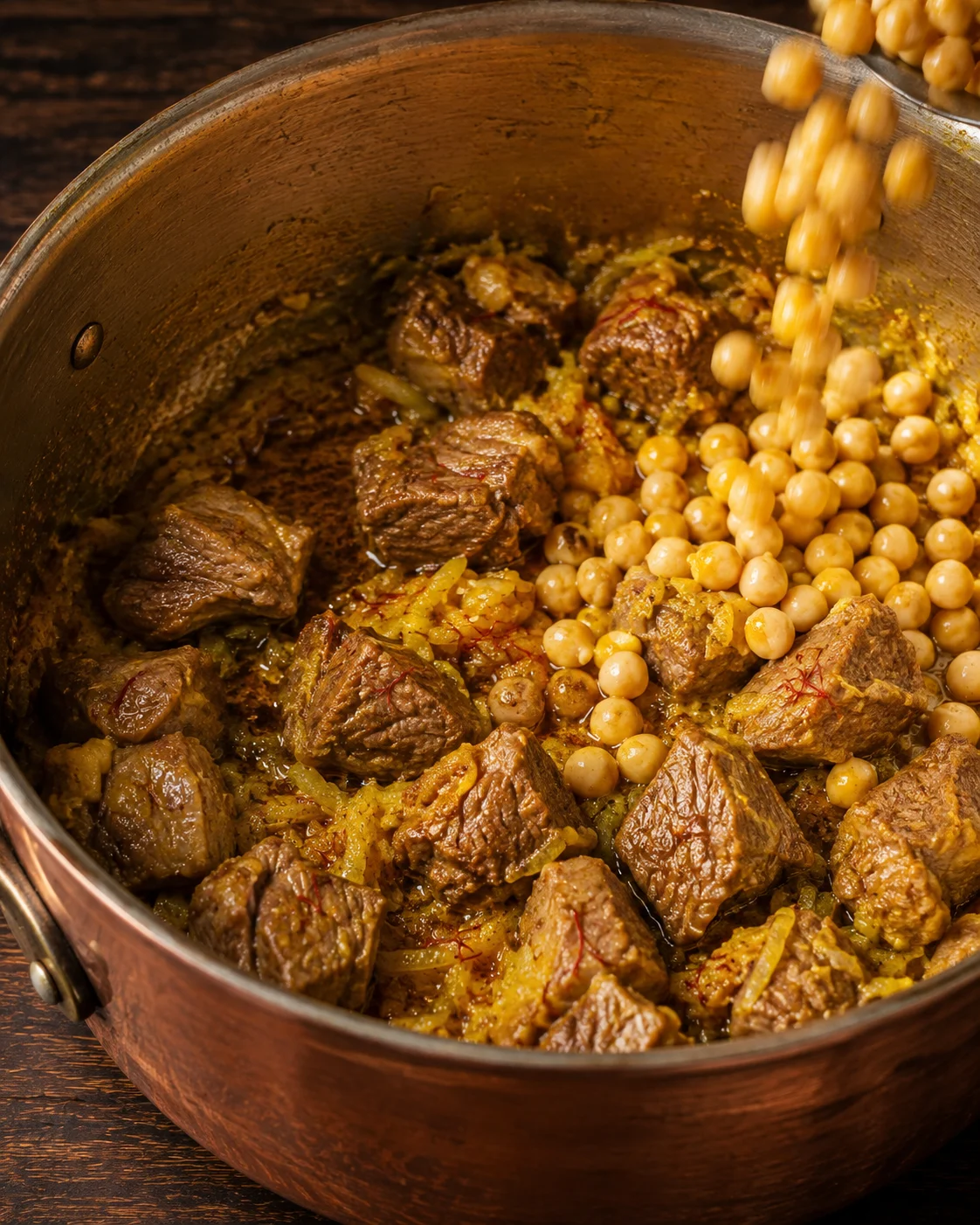
Heat the oil in a large pot, add the grated onion and the lamb, and season with the turmeric, saffron, salt and pepper. Brown for 8 minutes, stirring, then add the chickpeas and the water. Bring to a boil, reduce to a simmer, cover, and cook for 1 hour to 1 hour 15 minutes, until the lamb is tender and the chickpeas are soft.
Step 2: Mix the Breadcrumb Paste
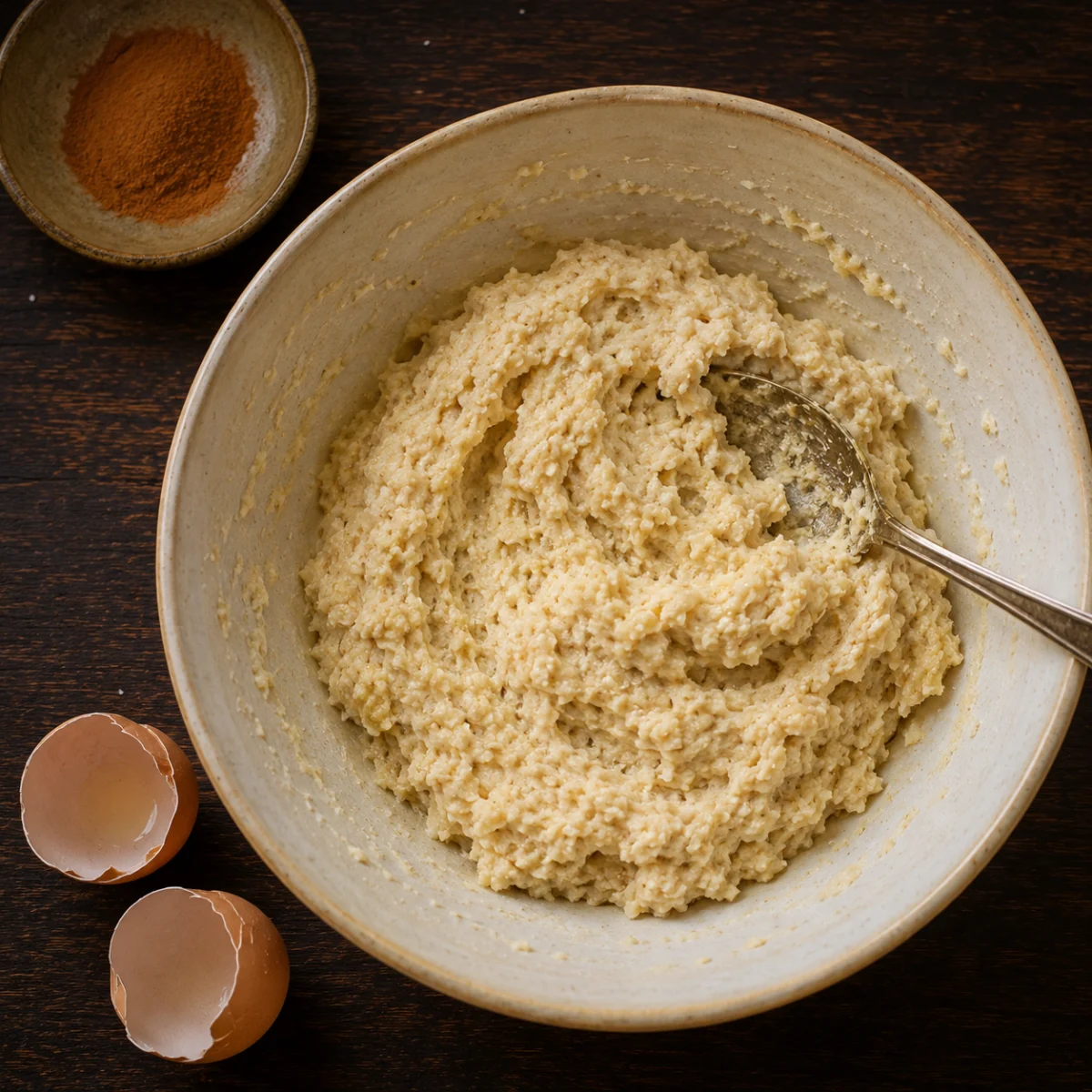
While the lamb cooks, mash the breadcrumbs, soft cheese, egg, cinnamon, salt and pepper together into a firm paste that holds its shape when squeezed. If it feels loose, add more breadcrumbs; if it will not come together, add a spoonful of milk.
Prep tip: Aim for a paste that feels like soft modelling clay rather than a batter. Too wet and the balls disintegrate the moment they meet hot oil, too dry and they crack. Squeeze a small piece in your palm: if it holds its shape cleanly, it is right.
Step 3: Shape and Fry
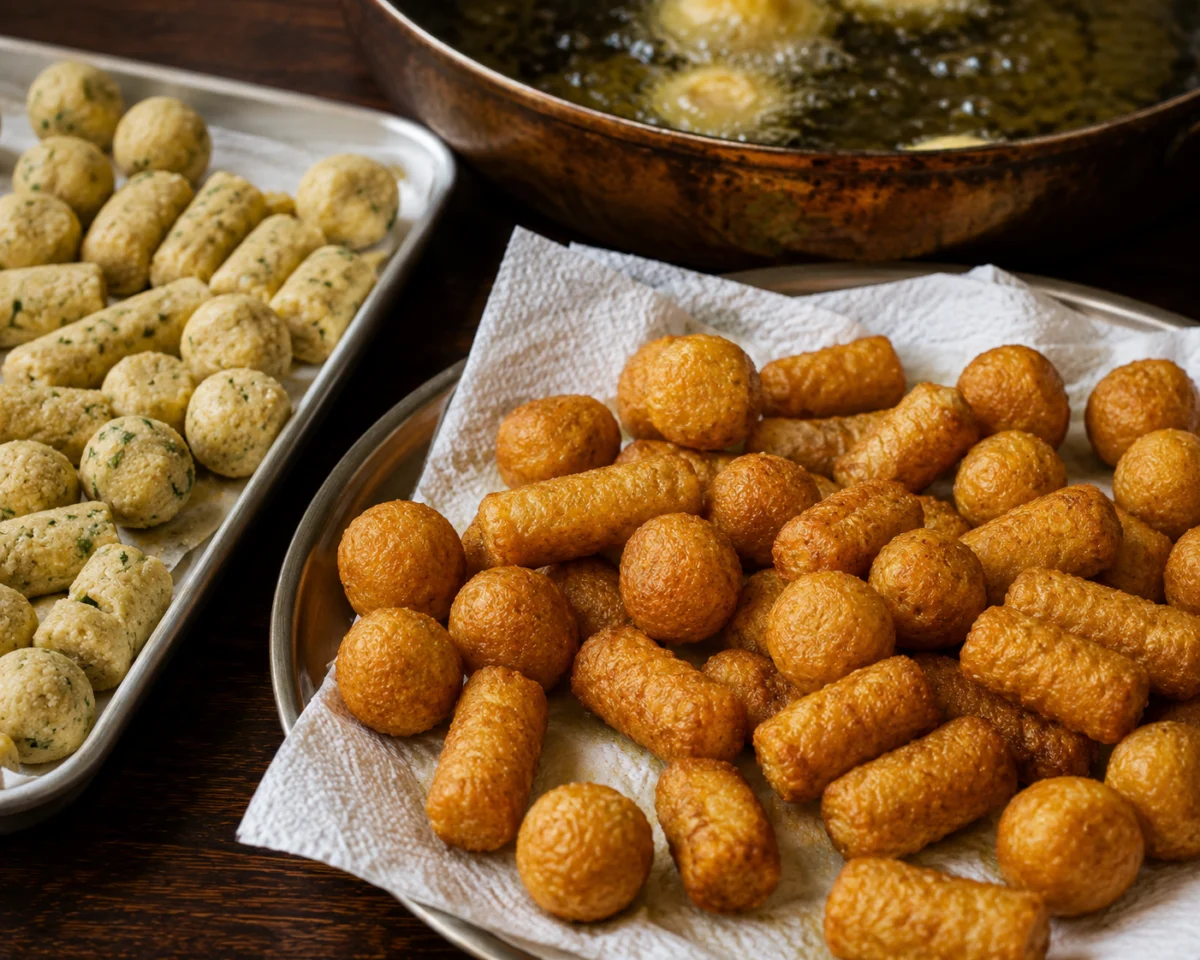
Divide the paste in half. Roll one half into small balls the size of marbles, and the other into short sticks about the length of your thumb. Fry them in batches in hot oil at around 350°F (175°C) for 2 to 3 minutes, until deep golden all over, then drain on paper towel.
Prep tip: Fry a single test piece first. This mixture varies with the moisture in your cheese and the fineness of your crumbs, and one test ball tells you immediately whether it holds together or needs more breadcrumbs. Thirty seconds of checking saves a pan of disintegrated paste.
Step 4: Temper the Egg and Lemon
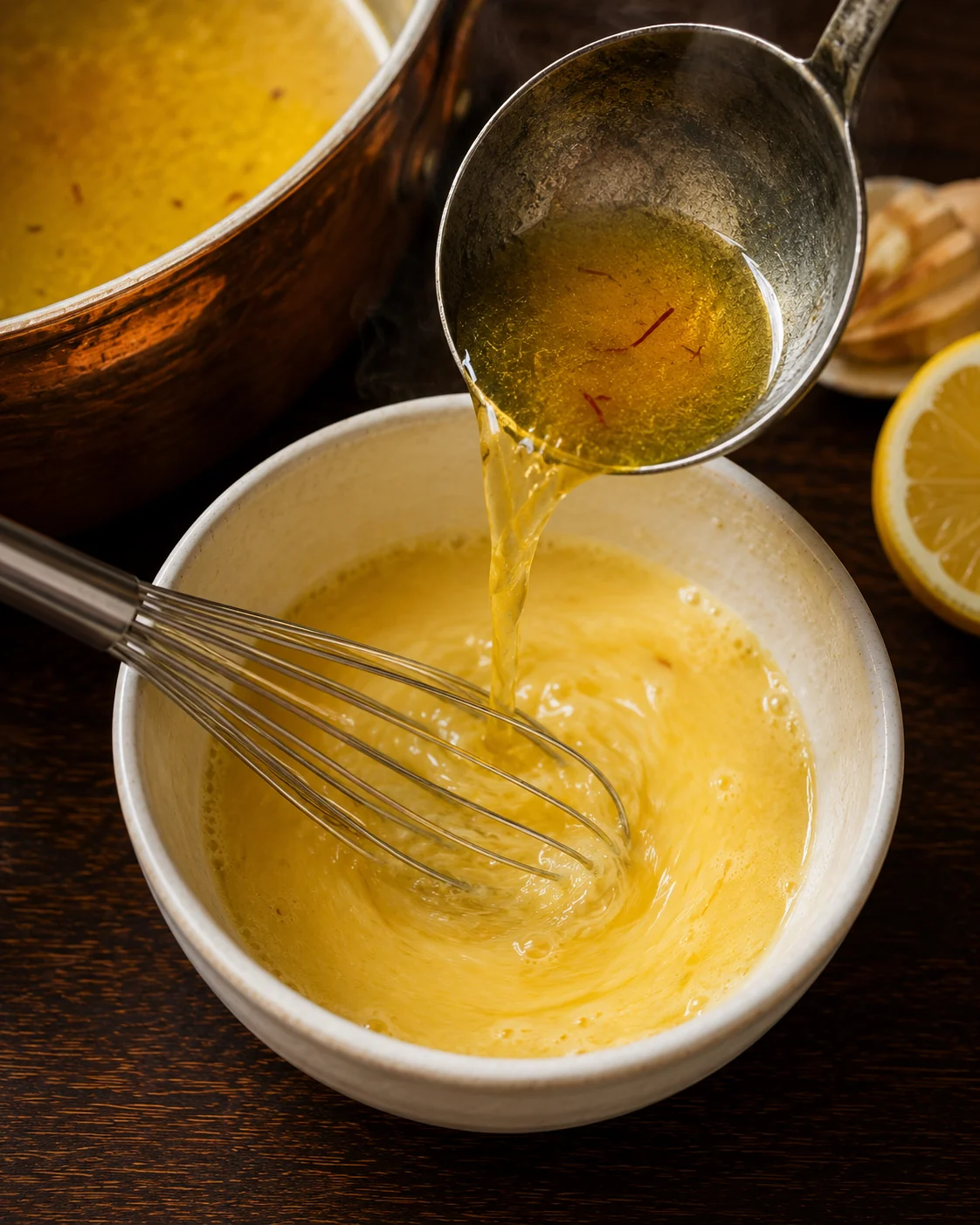
Beat the egg yolk with the lemon juice in a small bowl. Take a ladleful of the hot broth and pour it very slowly into the yolk while whisking constantly, then stir the mixture back into the pot off the heat.
Prep tip: This is tempering, the same technique used in the Arabic chicken soup recipe. The yolk must be warmed gradually with hot broth before it goes into the pot, or it cooks on contact into threads. Pour slowly, whisk constantly, and take the pot off the heat first.
Step 5: Add the Fried Pieces and Serve
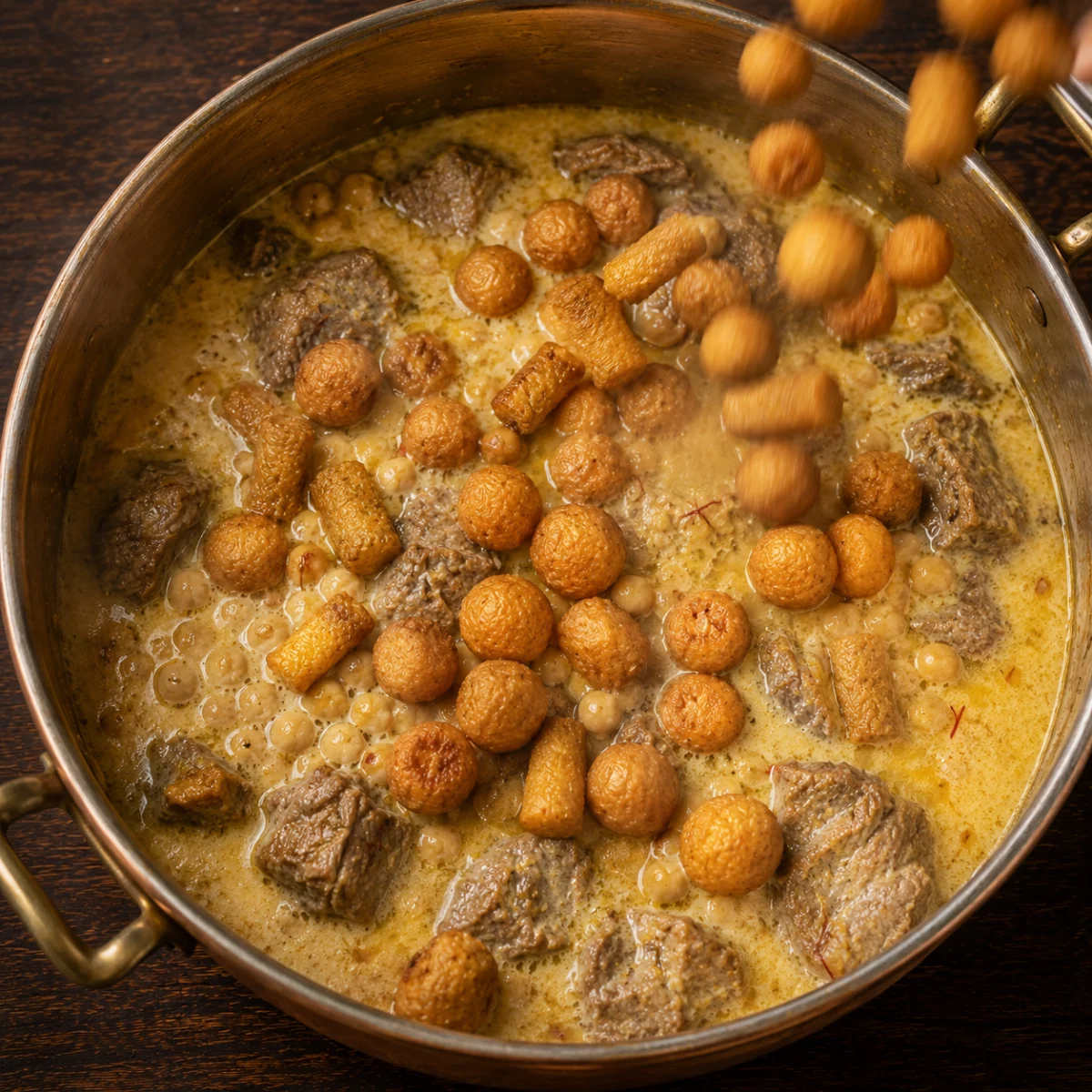
Return the pot to a low heat, add the fried balls and sticks, and simmer very gently for 5 minutes only, so they absorb some broth without collapsing. Serve immediately, with the lamb and chickpeas in the centre and the golden pieces scattered over the top.
Prep tip: Five minutes and no longer, and serve straight away. The balls are meant to be soft inside with a firm golden shell, and left in the broth for twenty minutes they turn to porridge. This is a dish that waits for nobody.
About Sfiria: Thrift Turned Into Celebration
Sfiria belongs to a family of North African dishes where stale bread becomes the star rather than the afterthought. It carries family memory too: people tend to describe their grandmother’s version rather than a written recipe.
The same logic drives the fattoush recipe, where stale bread becomes the point of the salad rather than a way of using it up. The egg and lemon finish links it to the wider Mediterranean habit of thickening broths this way, the same technique behind Greek avgolemono.
Pro Tips for the Best Sfiria
- Dry your breadcrumbs properly. Fresh soft crumbs hold too much moisture and the balls will not set. Blitz stale bread and leave it spread on a tray for an hour, or use shop-bought dry crumbs.
- Fry in small batches. Crowding the pan drops the oil temperature and the balls absorb oil instead of sealing. Six or seven at a time, and let the oil recover between batches.
- Storage: The lamb and chickpea broth keeps 3 days in the fridge and improves. Store the fried pieces separately in an airtight container and add them to reheated broth, since anything left sitting in liquid overnight turns to mush. Lamb should reach a safe internal temperature per USDA guidance.
- Make two shapes. Balls and sticks is traditional and not only decorative: they soak up broth at different rates, so there is variety in every spoonful.
Variations on Sfiria
Chicken Sfiria
Use chicken pieces instead of lamb and reduce the simmer to about 30 minutes. Lighter, quicker, and a good weeknight version of a celebration dish.
With Almonds
Some households add blanched almonds to the pot alongside the chickpeas, which softens them into the broth. It suits the saffron and cinnamon well and makes the dish feel more festive.
Balls or Sticks
Sticks are easier to roll and quicker to fry, which is why there tend to be more of them, and a few always get eaten straight from the paper towel before the pot is finished. A slightly heavier hand with the cinnamon in the paste is worth it, since it is what makes the fried pieces taste of something rather than just of bread.
What to Serve with Sfiria
This is a complete dish and it needs very little: bread for the broth and something sharp on the side. A simple tomato and onion salad works well against the richness, and rounds from the easy Moroccan bread recipe handle the broth.
For a celebration table it sits beside the Tunisian brik recipe or the kefta roll, and the stuffed lamb neck makes the grander centrepiece if the occasion calls for one. A bowl of yoghurt with mint is a good addition for anyone who finds the saffron broth rich.
Sfiria FAQs
Why do my fried balls fall apart in the oil? The paste was too wet, or the oil was not hot enough. The mixture should hold its shape cleanly when squeezed in your palm, and the oil should be around 350°F. Fry one test piece before committing the whole batch.
Can I make sfiria ahead? Partly. The lamb and chickpea broth is better made a day ahead, and it keeps 3 days. Fry the balls fresh, or store them separately and add them to the reheated broth for the final 5 minutes.
How do I stop the egg from scrambling? Temper it. Take the pot off the heat, whisk a ladleful of hot broth very slowly into the beaten yolk and lemon, then stir that back into the pot. Adding the yolk straight into the hot broth is what causes threads.
Why did my fried pieces go soggy? They sat in the broth too long. Five minutes is the maximum, and the dish should be served immediately after. Left longer, the golden shell softens and the insides turn to paste.
Is this recipe halal and can it be gluten-free? Halal with halal-certified lamb. It is not gluten-free as written since the balls are made of breadcrumbs, though gluten-free breadcrumbs work with the same method and quantities.
Golden Pieces, Saffron Broth, Serve at Once
Simmer the lamb properly, get the breadcrumb paste firm enough to hold, fry in small batches, temper the egg off the heat, and give the fried pieces five minutes in the pot and no more. That last instruction is what separates a good sfiria from a soggy one.
Make it for the next occasion that deserves effort and report back: lamb or chicken, balls or sticks, and how many pieces made it from the paper towel into the pot. The number is always fewer than were fried.
Rate this recipe
No ratings yet — be the first!

Fry one test ball before committing the batch. The paste varies with the moisture in your cheese, and that single test tells you immediately whether it holds together or needs more breadcrumbs.
Comments
No comments yet. Yours would be the first.
Made this? Tell me: lamb or chicken, and how many fried pieces actually made it into the pot.
Leave a comment
Comments are anonymous and appear after admin approval. If you rated this recipe above, your stars will show with your comment.