
The Dish You Carry to the Table With Both Hands
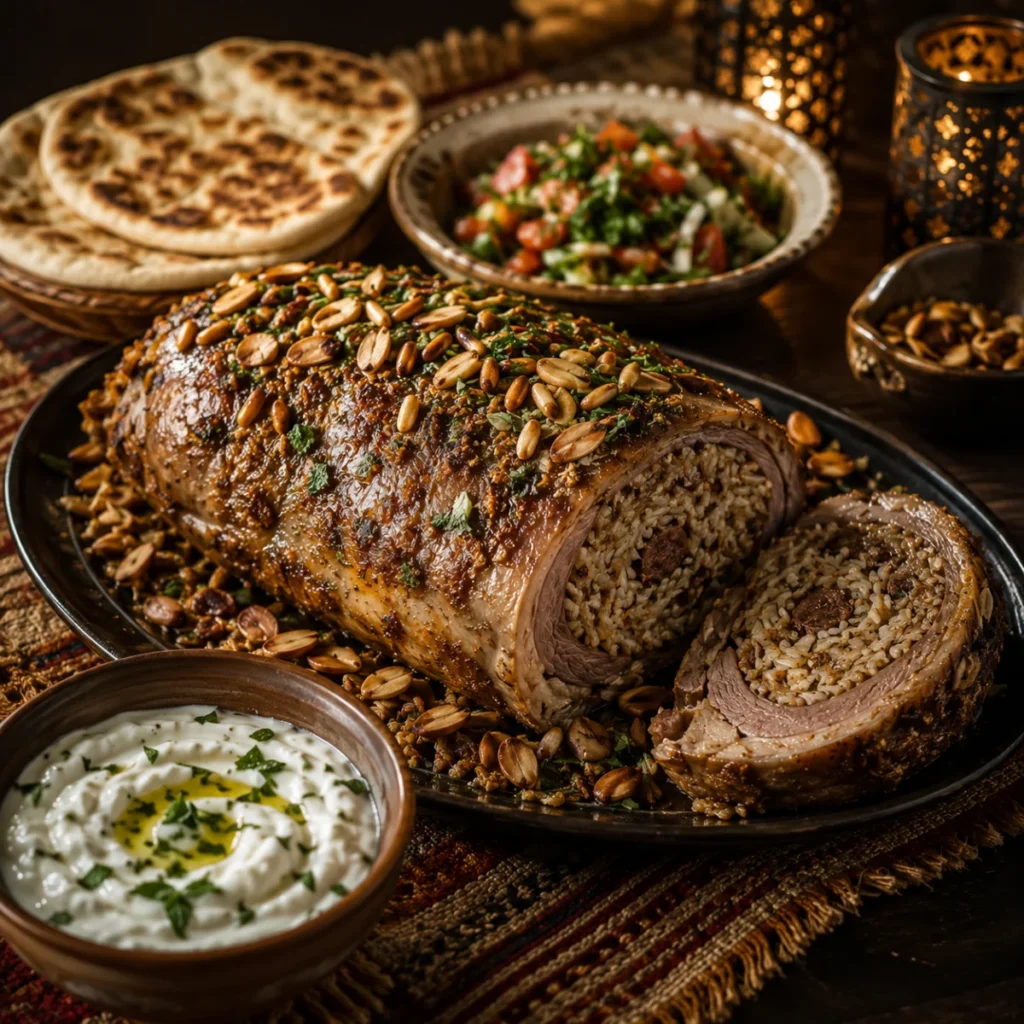
Some dishes exist purely to make a room go quiet when the platter arrives. A whole boned lamb neck, filled with cinnamon-scented rice and minced lamb, simmered until it surrenders, then blasted golden in a hot oven and buried under toasted almonds and pine nuts.
This stuffed lamb neck is the food of Eid tables, weddings, and the kind of Friday where somebody important is visiting. Across Lebanon, Syria, Jordan and the Gulf it appears in slightly different dress, but the architecture never changes: humble cut, generous stuffing, slow cooking, spectacular arrival.
Here is the part nobody says out loud: lamb neck is one of the cheapest cuts at the counter. This dish looks like a month’s budget and costs like a weeknight, which is exactly the trick traditional cooking specialises in.
This is a dish for the tables that matter, and the sequence matters as much as the ingredients: simmer first for tenderness, roast second for colour. The one mistake that ruins it, fully cooked rice going into the stuffing, is flagged clearly in the steps.
Ahead: how to ask your butcher for this cut, the ingredient list, five steps with photos, the two rules that decide whether it slices or bursts, and the broth you must not pour away.
Talking to Your Butcher: How to Ask for This Cut
The recipe depends on a five-second conversation, so here is the wording: ask for a whole lamb neck, boned out but left in one piece, so it can be stuffed and rolled. Any halal butcher will know immediately; a supermarket counter may need the explanation.
Lamb neck is usually sold sliced into rounds for stews, so order a day or two ahead. Ask them to leave a reasonable fat layer on the outside, since that bastes the meat during the simmer and crisps in the oven. If they offer to butterfly it flat, say yes: a flat sheet rolls far more easily than a tube.
If a whole neck simply cannot be found, boned lamb shoulder does the same job with the same method, and the FAQ covers the small differences.
The Lamb and the Rice Stuffing
Meat and Stuffing
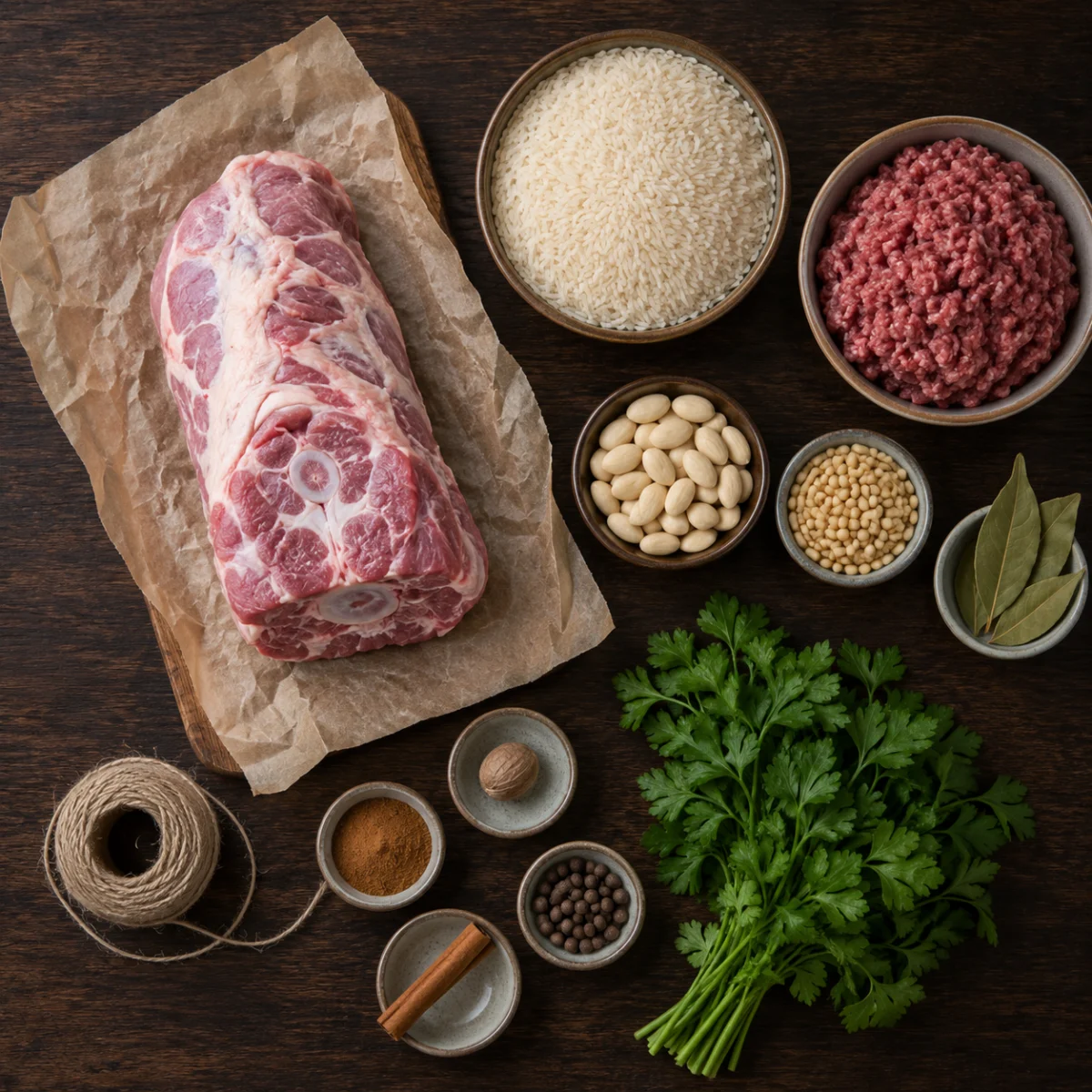
Serves 6 to 8
For the lamb and stuffing:
- 1 lamb neck, about 4½ lbs (2 kg), boned and left whole
- 10 oz (300 g) ground lamb
- 1½ cups long-grain rice, rinsed until the water runs clear
- ¼ cup vegetable or olive oil
- 2 teaspoons salt
- 1 teaspoon black pepper
- 1 teaspoon ground cinnamon
- ¼ teaspoon ground nutmeg
- ½ teaspoon ground allspice
- 2½ cups water, for the rice
For the simmering pot:
- 3 bay leaves
- 1 cinnamon stick
- 1 onion, halved
- 1 teaspoon salt
- Water to cover
To finish and garnish:
- 2 tablespoons oil, for brushing
- ½ cup toasted almonds
- ¼ cup toasted pine nuts
- ½ cup chopped parsley
You will also need kitchen twine and a trussing needle, or short metal skewers.
Other Cuts That Work
- No lamb neck? Boned lamb shoulder rolls and stuffs the same way with the same timings, and is easier to find in most US and UK supermarkets.
- Nut allergy? Leave the almonds and pine nuts out entirely and garnish with extra parsley and fried onions, which is common in many households anyway.
- No trussing needle? Close the seam with short metal skewers laced like a shoelace, or tie the whole roll tightly at intervals with twine, seam side down.
Filling, Tying, Simmering, Roasting
Step 1: Cook the Rice Halfway, No Further
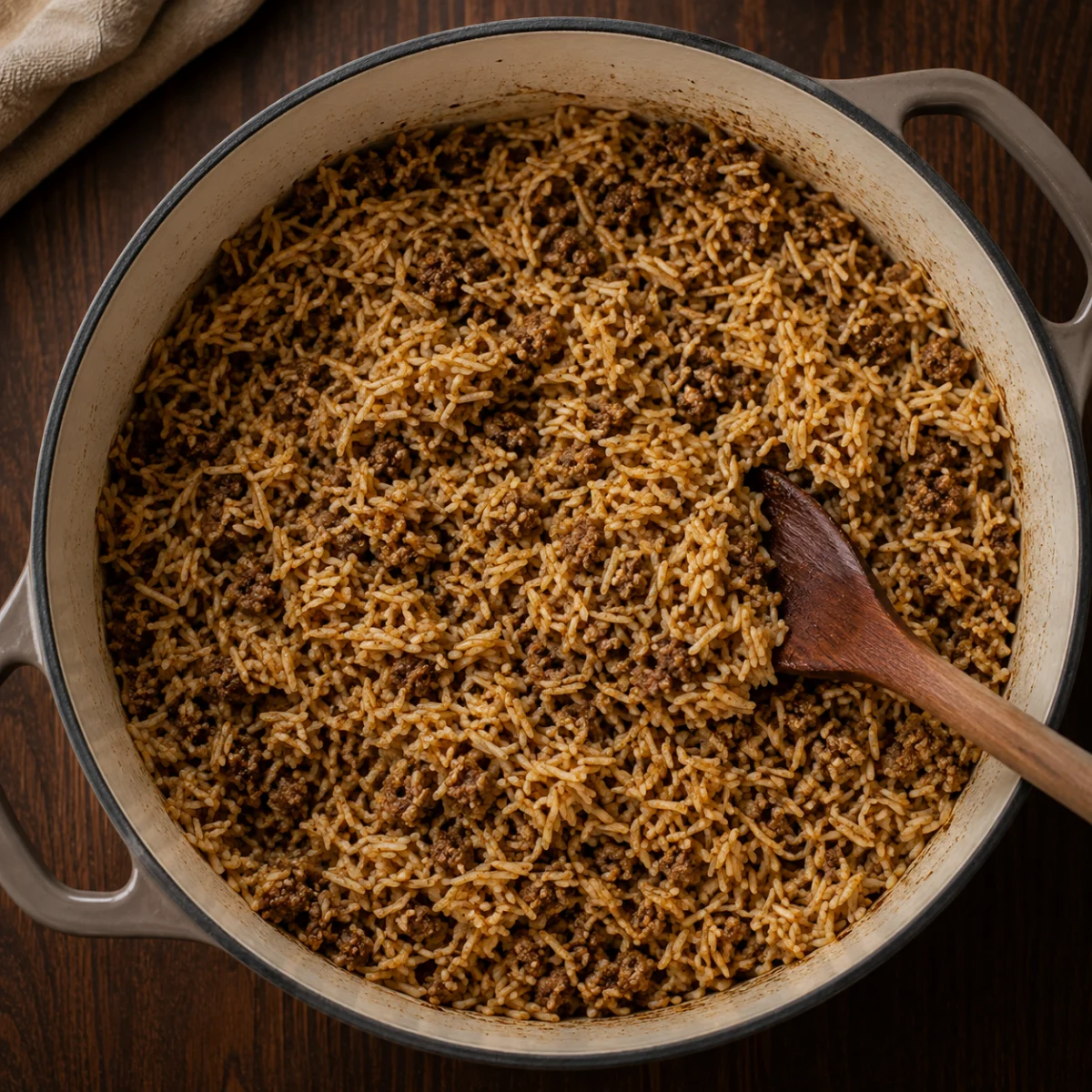
Heat the oil in a pot and brown the ground lamb for 10 minutes, breaking it up. Stir in the rice for 1 minute, then add the water, salt, pepper, cinnamon, nutmeg, and allspice. Simmer covered on low for 12 minutes, then take it off the heat and leave it to stand 15 minutes. The grains should be firm at the centre and only partly cooked.
Prep tip: Fully cooked rice is the mistake that ruins this dish. Rice swells as it drinks the simmering broth, so a cooked stuffing turns to paste and splits the seam. Half cooked is the target, and it will taste underdone. Trust the pot.
Step 2: Stuff and Sew
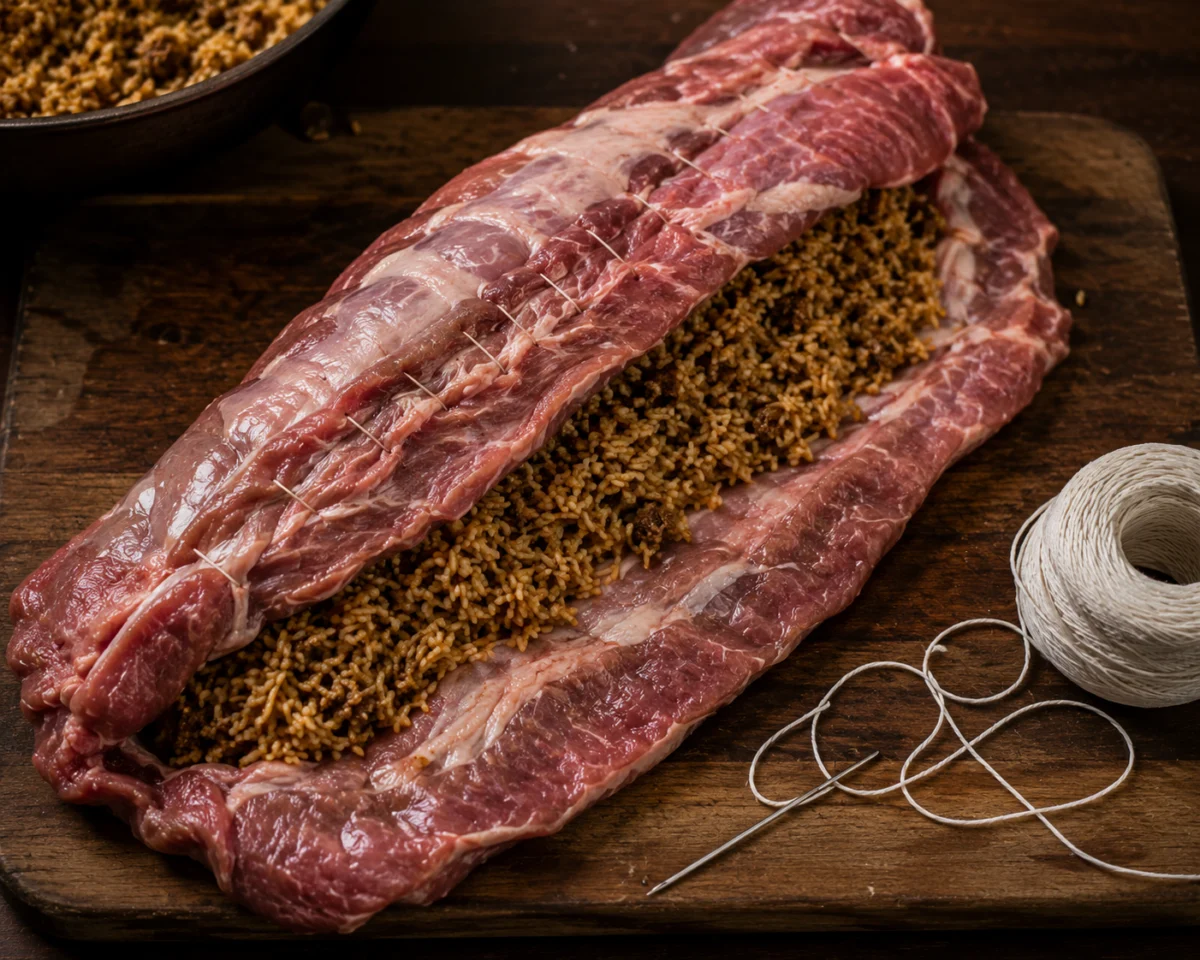
Lay the boned neck flat, season the inside, and spoon in the cooled rice mixture, filling it loosely to about three quarters. Fold the meat over and sew the seam closed with kitchen twine, then tie the whole roll at 2 inch intervals.
Prep tip: Loose filling, tight stitching, never the reverse. The stuffing needs room to expand and the seam needs to hold. Any rice that will not fit goes into a small covered dish alongside, which nobody has ever objected to.
Step 3: Simmer Until Tender
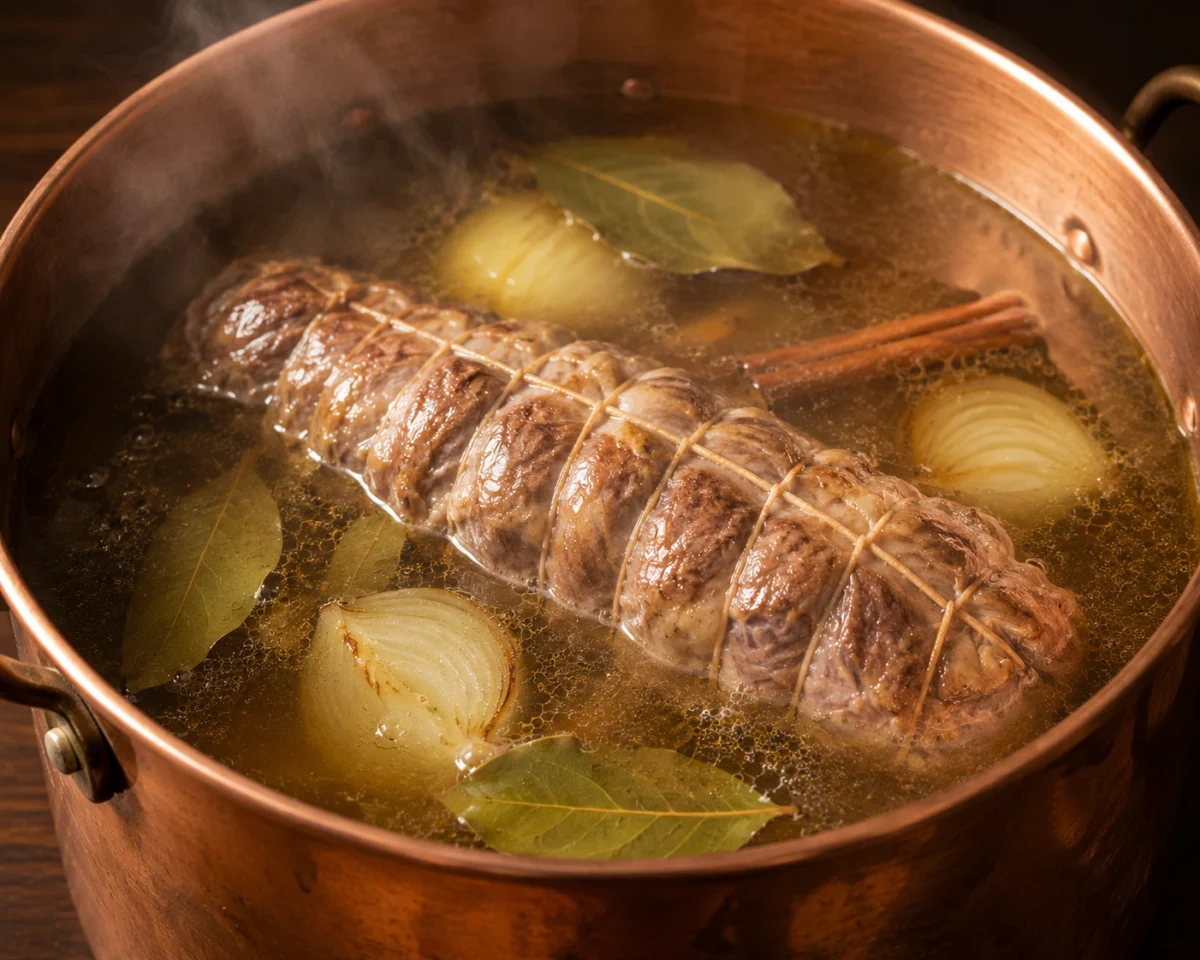
Lower the stuffed neck into a large pot, cover with water, and add the bay leaves, cinnamon stick, onion halves, and salt. Bring to a bare simmer and cook, partly covered, for 1½ to 2 hours, until a skewer slides into the meat with no resistance. Skim the surface occasionally.
Step 4: Dry, Oil, and Roast Hot
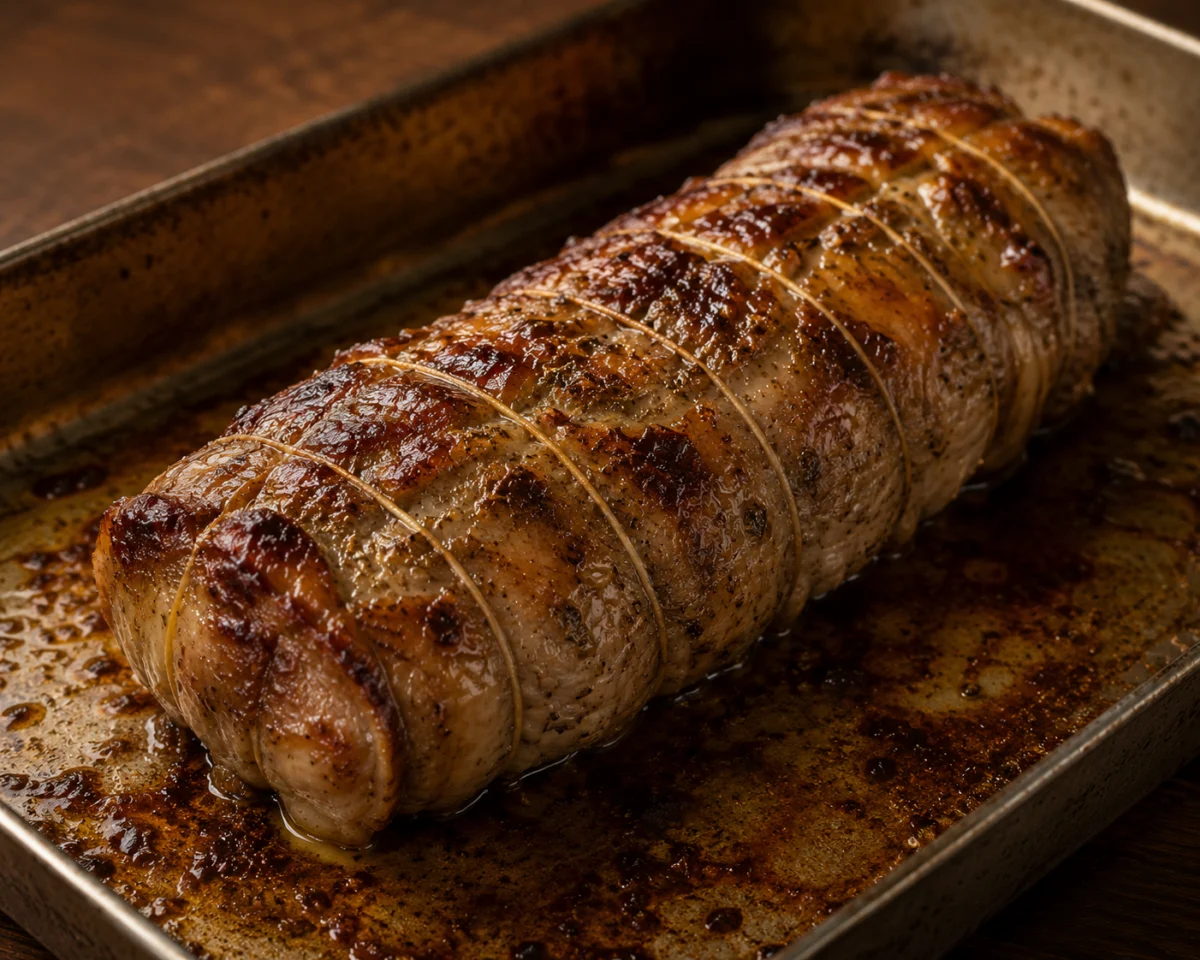
Heat the oven to 425°F (220°C). Lift the neck out carefully, let it drain and cool for 10 minutes, then pat it thoroughly dry and brush all over with oil. Roast on a tray for 20 to 25 minutes, until the surface is deep golden and crisp.
Prep tip: The meat is already cooked, so this stage is purely about colour. Longer is not better; the surface scorches and the stuffing dries. Twenty five minutes at high heat gives a burnished exterior with everything inside still juicy.
Step 5: Rest, Unwrap, and Crown It
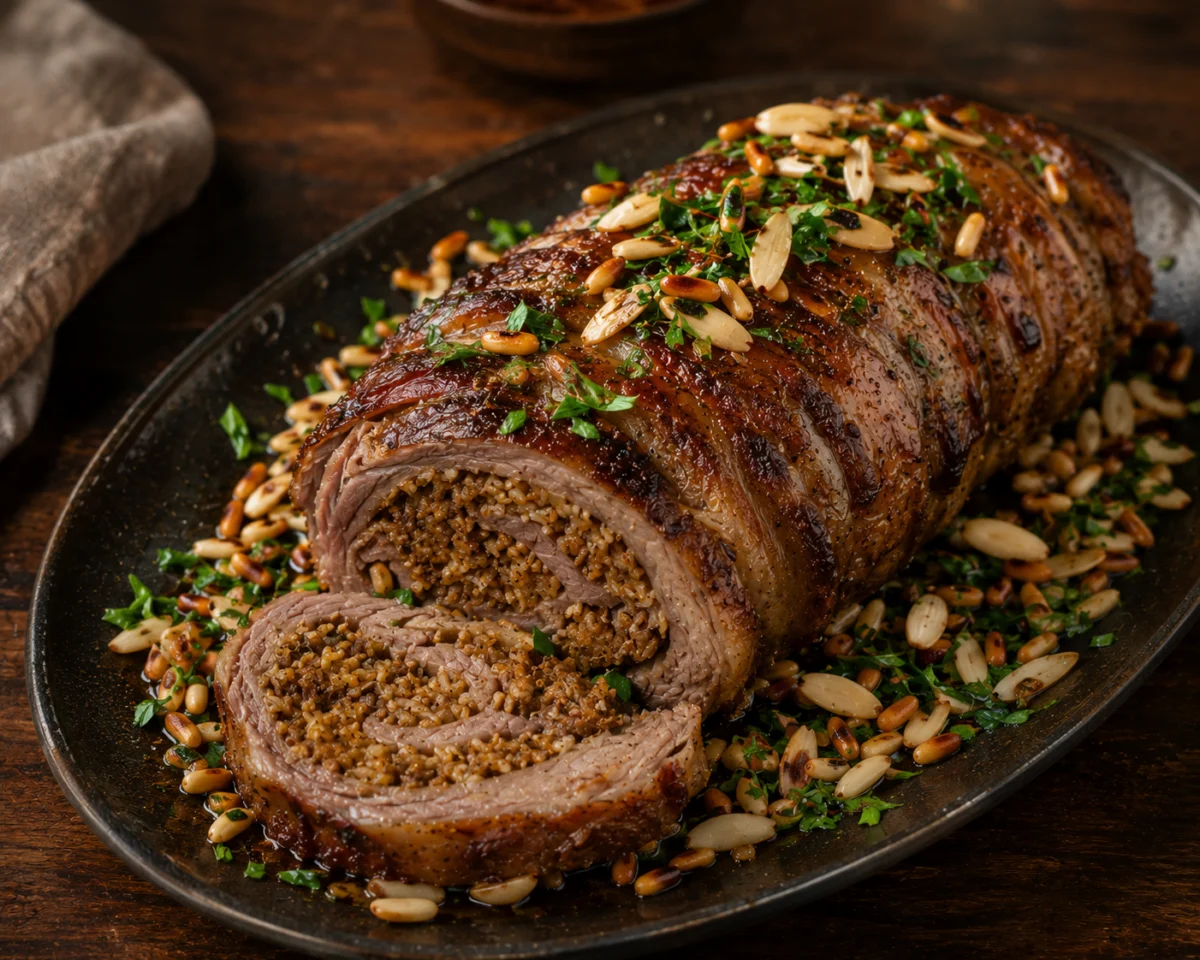
Rest the neck for 15 minutes under loose foil. Snip and remove every piece of twine, then transfer it to a warm platter, scatter generously with the toasted almonds, pine nuts, and parsley, and carry it to the table whole. Slice into thick rounds at the table so everyone sees the spiral of rice inside.
Simmer Before You Roast
- Keep the broth. All of it. What is left in the pot is deeply flavoured lamb stock with cinnamon and bay. Strain it, chill it, lift off the fat, and it becomes the best base for the harira recipe or a pilaf alongside.
- Toast the nuts last, in butter. Almonds and pine nuts toasted in a knob of butter just before serving taste dramatically better than nuts toasted an hour earlier. Two minutes, constant attention, they burn in seconds.
- Storage: Keeps 3 days in the fridge, and cold slices are excellent. Reheat covered in a moderate oven with a spoonful of the reserved broth so the rice stays moist. Lamb should reach a safe internal temperature per USDA guidance.
- Slice at the table, not in the kitchen. Half the value of this dish is the reveal. Carrying out pre-sliced meat is a waste of two hours of work.
Shoulder, Breast, and Other Cuts
The Freekeh Version
Swap the rice for freekeh, parboiled 10 minutes, for a smoky, nuttier stuffing that many Levantine households prefer. If you bought a bag for the Tunisian fish soup recipe, this is its finest hour.
The Oven-Only Method
No large pot? Wrap the stuffed neck tightly in two layers of foil, roast at 325°F (160°C) for 2½ hours, then unwrap, brush with oil, and blast at 425°F for 20 minutes to colour. You lose the broth, which is a real loss, but the meat is just as tender.
Regional Touches Worth Adding
A handful of raisins or chopped dried apricots in the rice with the nuts is common across the Gulf, and that sweetness against the cinnamon and lamb is what many households prefer. And the small dish of leftover stuffing baked alongside is always claimed before the platter is carved.
What the Platter Needs
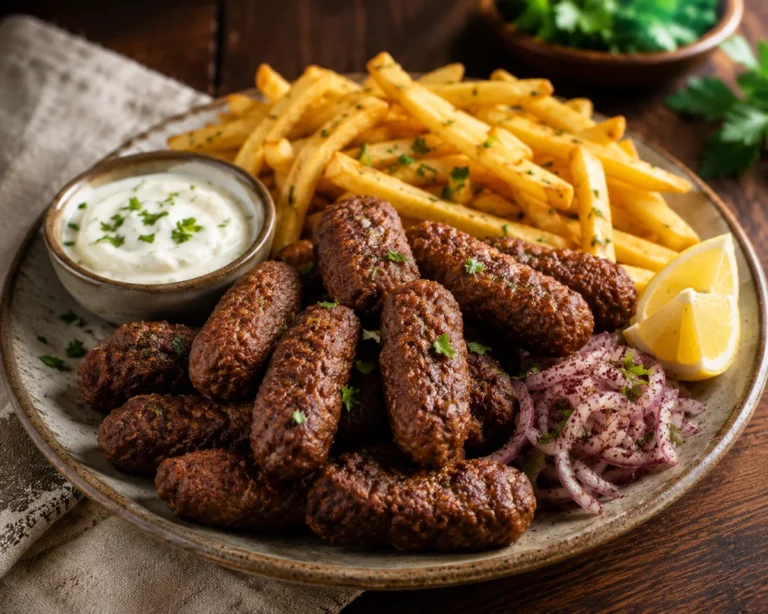
This is a centrepiece, so everything else stays simple and sharp. Yoghurt with cucumber and mint cuts the richness, the easy tabbouleh recipe brings the acidity, and warm flatbread handles anything that falls off the platter. If the grill is already lit for a bigger gathering, the kofta kebab recipe makes a generous second dish.
If you are building a full feast, the baba ghanoush recipe and rounds of the easy Moroccan bread recipe open the meal, and the Moroccan mint tea recipe or Arabic coffee with dates closes it. That is a table nobody forgets.
Lamb Neck, Answered
Can I use lamb shoulder instead of neck? Yes, and it is often easier to find: ask for boned shoulder in one piece. Roll and tie it the same way, and keep the timings identical. Shoulder is slightly fattier and even more forgiving.
Why did my stuffing burst out of the seam? Almost always fully cooked rice, which swells and has nowhere to go, or a neck packed too full. Cook the rice halfway, fill to three quarters, and stitch the seam tightly at close intervals.
Can I make stuffed lamb neck ahead? Yes, and it is the sane way to serve it: simmer it a day ahead, cool it in its broth, refrigerate, then dry, oil, and roast for 25 to 30 minutes before serving. The flavour improves and the timing stops being stressful.
How do I know when the lamb is tender enough? A skewer or thin knife should slide into the thickest part with almost no resistance after the simmer. If it drags, give it another 20 minutes. Under-simmered lamb neck will not be rescued by the oven.
Is this recipe halal? Entirely, with halal lamb: there is no alcohol or pork product anywhere, and the whole dish belongs to a tradition built around halal butchery. Halal butchers are also the most likely place to find the neck boned to order.
Carry It Out Whole
Two hours of quiet work, a cheap cut, and a platter that stops conversation. Simmer for tenderness, roast for colour, crown it with nuts, and let the first slice do the talking.
Cook this stuffed lamb neck for the next table that deserves an occasion and report back: rice or freekeh, with or without the apricots, and how long the platter lasted once you started carving. In most households the answer is the same, and it is not long.
Rate this recipe
No ratings yet — be the first!
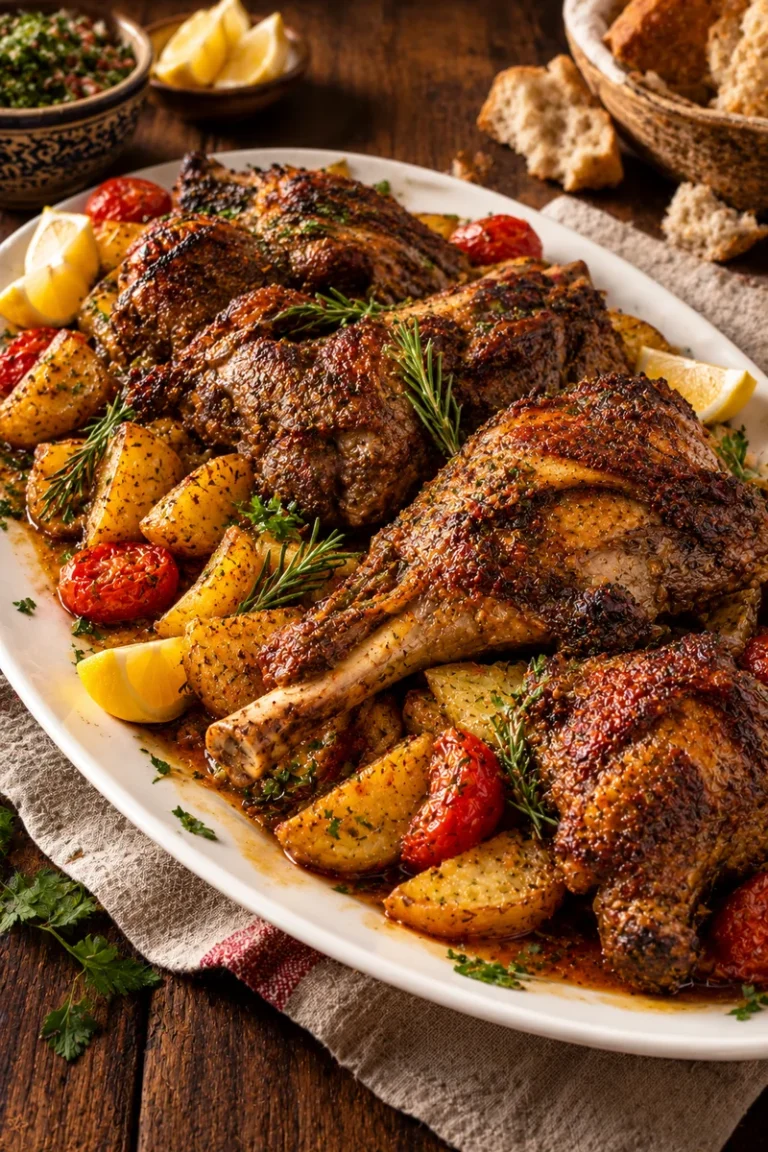

Cook the rice halfway and no further. It swells as it drinks the simmering broth, so fully cooked rice turns to paste and splits the seam. It will taste underdone in the pot. Trust it.
Comments
No comments yet. Yours would be the first.
Made this? Tell me: rice or freekeh, and how long the platter lasted once you started carving.
Leave a comment
Comments are anonymous and appear after admin approval. If you rated this recipe above, your stars will show with your comment.