
The Jar That Runs a Whole Cuisine
There is a tube of harissa in most Western supermarkets now, and it is fine. But it is not really the same thing, and once you have made a jar yourself you will understand why Tunisians treat it as a staple rather than a condiment.
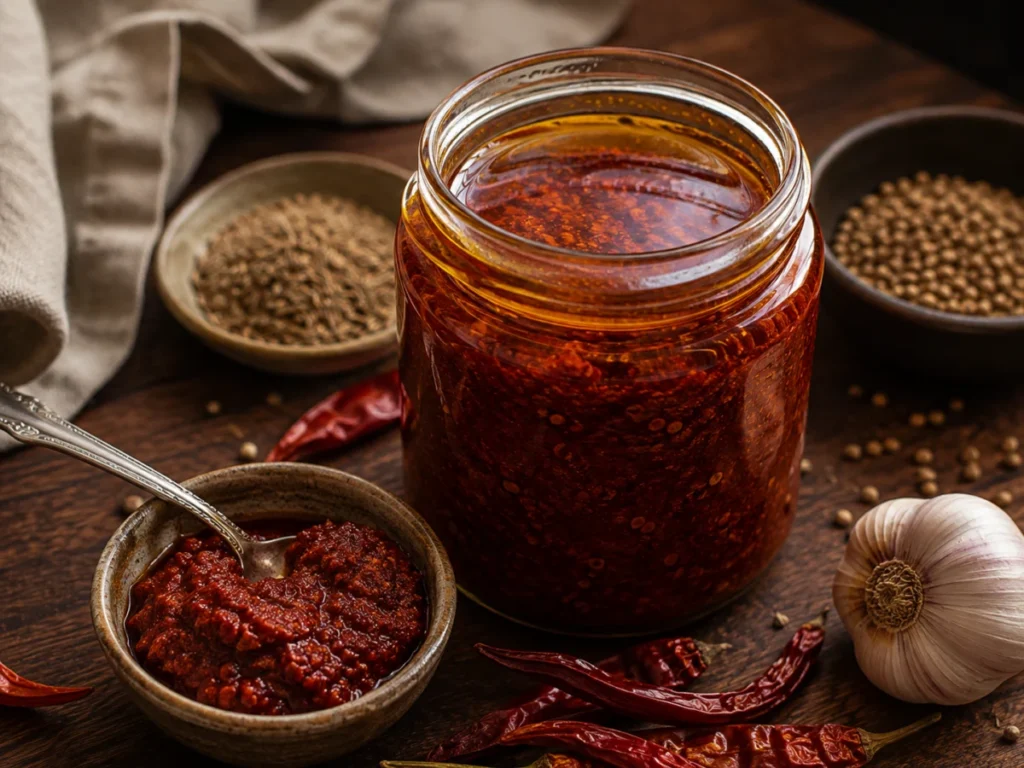
Real homemade harissa is dried red chillies soaked soft, then pounded with garlic, caraway, coriander seed and salt into a thick brick-red paste, sealed under olive oil. That is the whole list. No tomato, no vinegar, no thickener, none of the additions that commercial versions use to stretch it.
The flavour is different from anything else in the chilli world. Caraway is the reason. It gives harissa a warm, slightly aniseed depth that hot sauce built on vinegar and fruit simply does not have, and it is the note that makes Tunisian food taste Tunisian.
Traditionally it is pounded in a mortar. A food processor works too, and the honest comparison between them is below.
Ahead: which chillies to buy, the ingredient list, four steps with photos, the safety habit worth adopting, how long it really keeps, and the seven dishes on this blog that want it.
Choosing the Chillies
This is the only decision that matters, and it determines how hot your jar will be.
For a traditional, properly hot harissa: dried baklouti chillies are the Tunisian variety, sold at North African groceries. Failing that, dried árbol or cayenne chillies get you close.
For a milder, sweeter, deeply red harissa: use dried guajillo or New Mexico chillies, which are widely available in the US and increasingly in the UK. They bring colour and body with far less heat.
For a first batch, mix them. Two thirds mild chillies for body and colour, one third hot for the heat. That way you control the result rather than discovering it.
Remove the seeds and stems from all of them. Seeds add harshness rather than useful heat, and the traditional method discards them.
Ingredients You’ll Need for Harissa
Main Ingredients
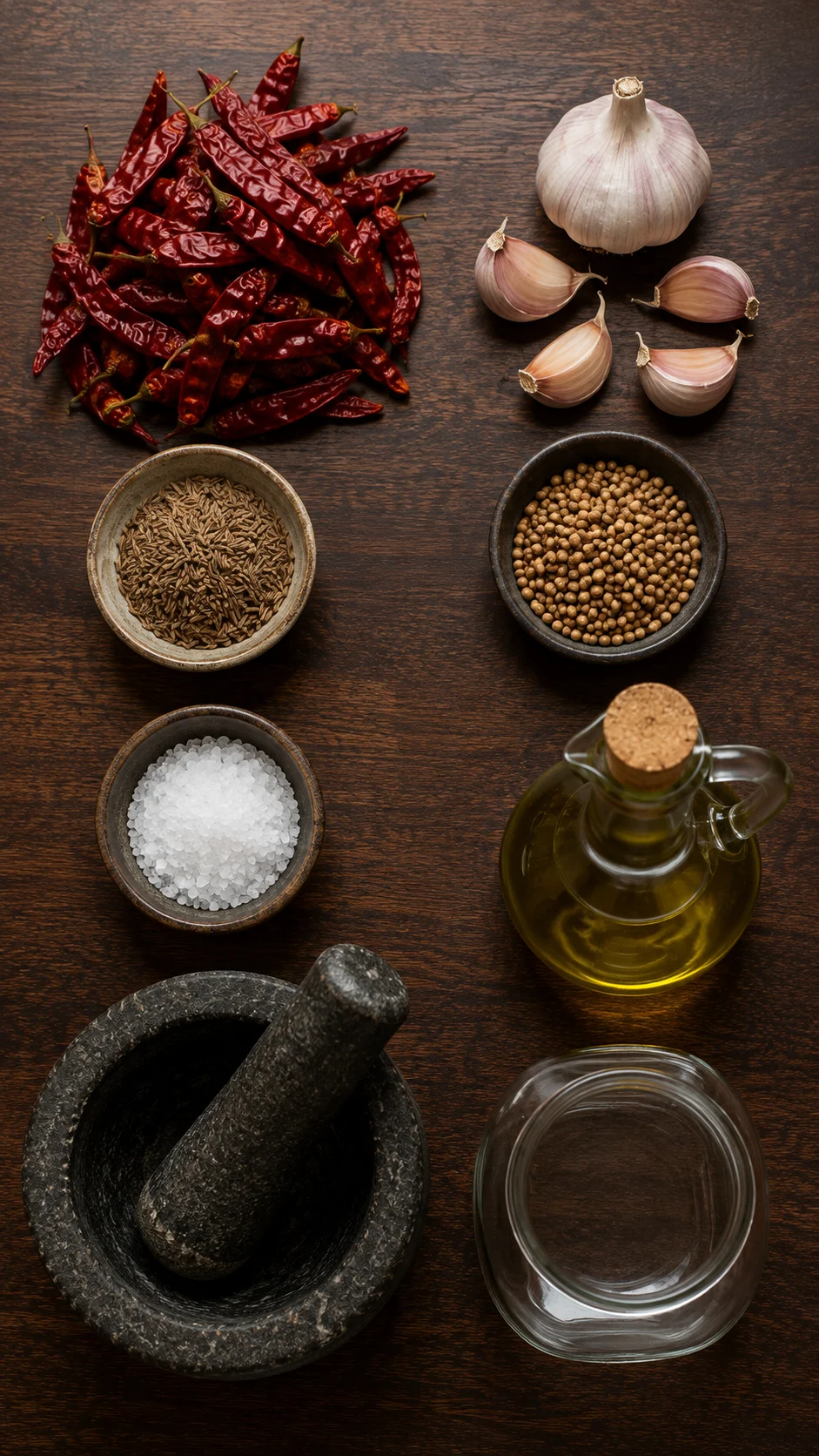
Makes about 1 cup
- 3½ oz (100 g) dried red chillies, stems and seeds removed
- 6 garlic cloves, peeled
- 1 tablespoon ground coriander seed
- 1 tablespoon ground caraway seed
- 1 tablespoon salt
- ¼ cup extra virgin olive oil, plus more for sealing
Optional:
- 1 teaspoon dried mint, common in some households
- 1 roasted red pepper, for a milder, sweeter paste
- 1 teaspoon tomato paste, which is not traditional but common in commercial versions
Where to Find the Ingredients
Dried chillies are the one item worth a specific trip. Any Middle Eastern, North African, Mexican or Indian grocery carries them cheaply, and Mexican shops in the US are particularly good for guajillo and árbol. Online works too. Chillies are also very high in vitamin C, per the USDA food database.
Caraway seed is the ingredient people skip and should not. It sits with the spices in most large supermarkets in both countries, and it is what separates harissa from generic chilli paste. Grind it fresh if you can; the flavour fades fast once ground.
Easy Substitutions
- No caraway? There is no true substitute, and the sauce becomes something else without it. Fennel seed is the closest in character if you are truly stuck.
- No dried chillies? Fresh red chillies work, roasted first until blistered and peeled, though the paste is looser and keeps less well.
- Want it mild? Guajillo chillies plus one roasted red pepper makes a genuinely gentle version that still tastes like harissa.
Step-by-Step Instructions: Harissa in 4 Steps
Step 1: Soak the Chillies
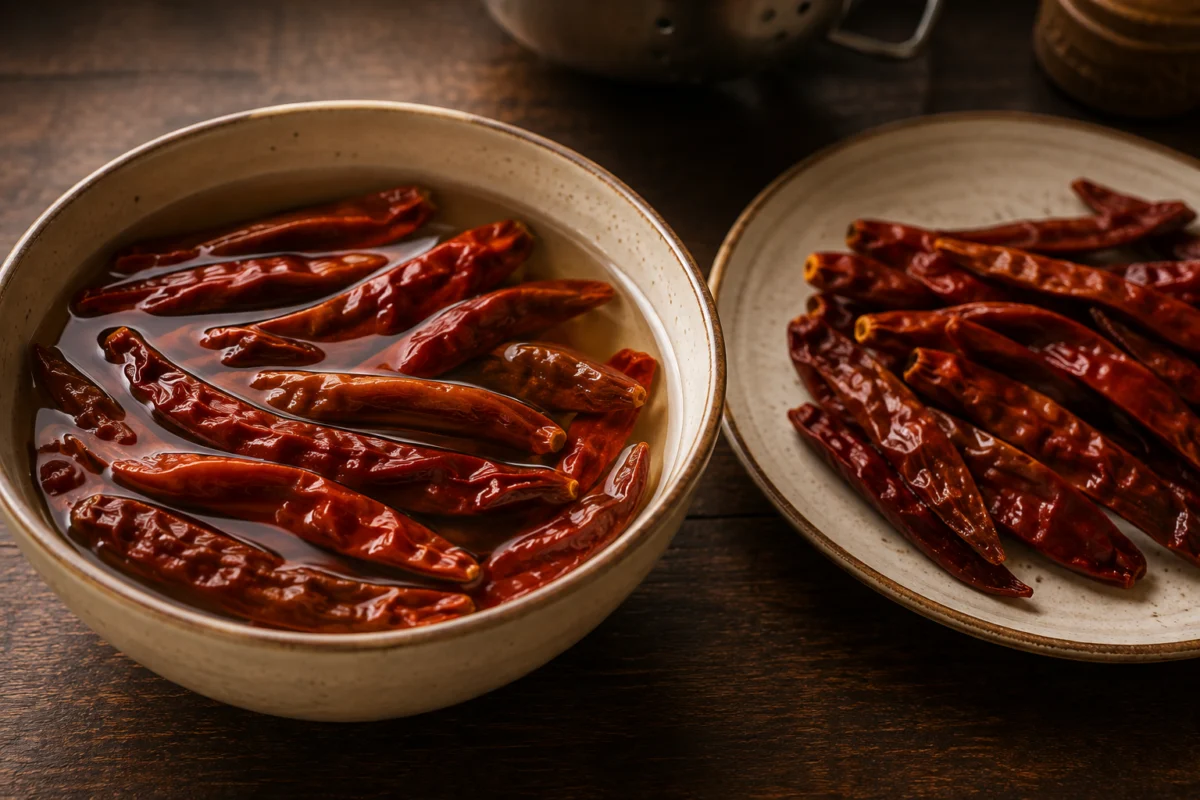
Put the deseeded dried chillies in a bowl, cover with boiling water, and leave for 30 minutes until completely soft and pliable. Drain them well and squeeze out the excess water.
Prep tip: Squeeze them properly dry. Water left in the chillies makes a thin harissa that separates in the jar and spoils faster, and the paste should be thick enough to hold its shape on a spoon. Save a spoonful of the soaking water in case you need to loosen it later.

Step 2: Wear Gloves and Pound the Garlic
Put on kitchen gloves. Pound the garlic with the salt in a mortar until it becomes a paste, or pulse it in a food processor.
Prep tip: The gloves are not optional advice, they are the thing every Tunisian cook tells you first. A hundred grams of chilli will stay on your fingers for a day and find your eyes at some point during it. Disposable gloves cost almost nothing and this is the one step where improvising is a bad idea.
Step 3: Add the Chillies and Spices
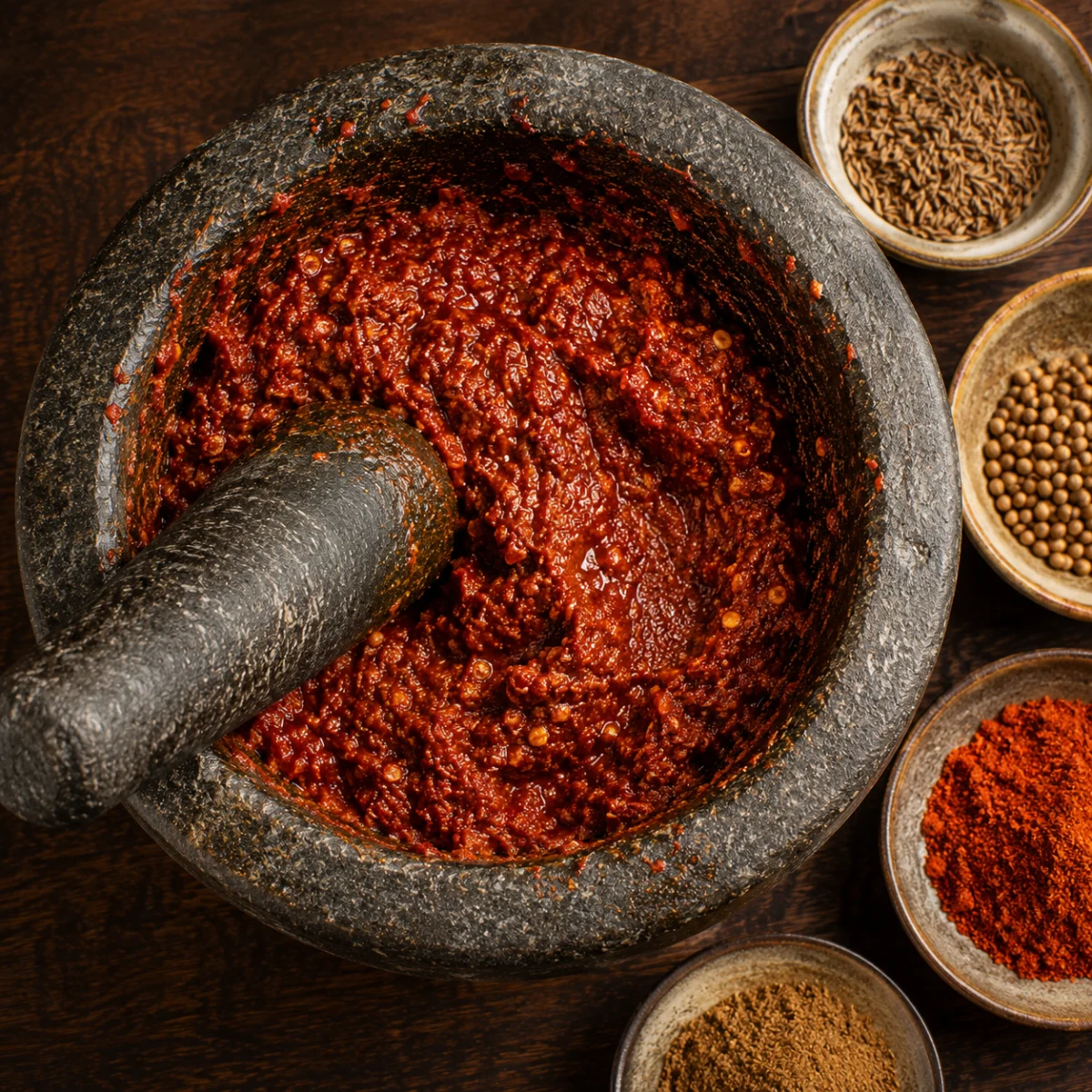
Add the drained chillies in batches, pounding or pulsing until you have a thick, coarse red paste. Work in the ground coriander and caraway. Taste carefully and adjust the salt.
Prep tip: Coarse, not smooth. Harissa should have a slight texture rather than the uniform gloss of a commercial tube, and that roughness is part of what it contributes to a dish. Stop while you can still see structure in it.
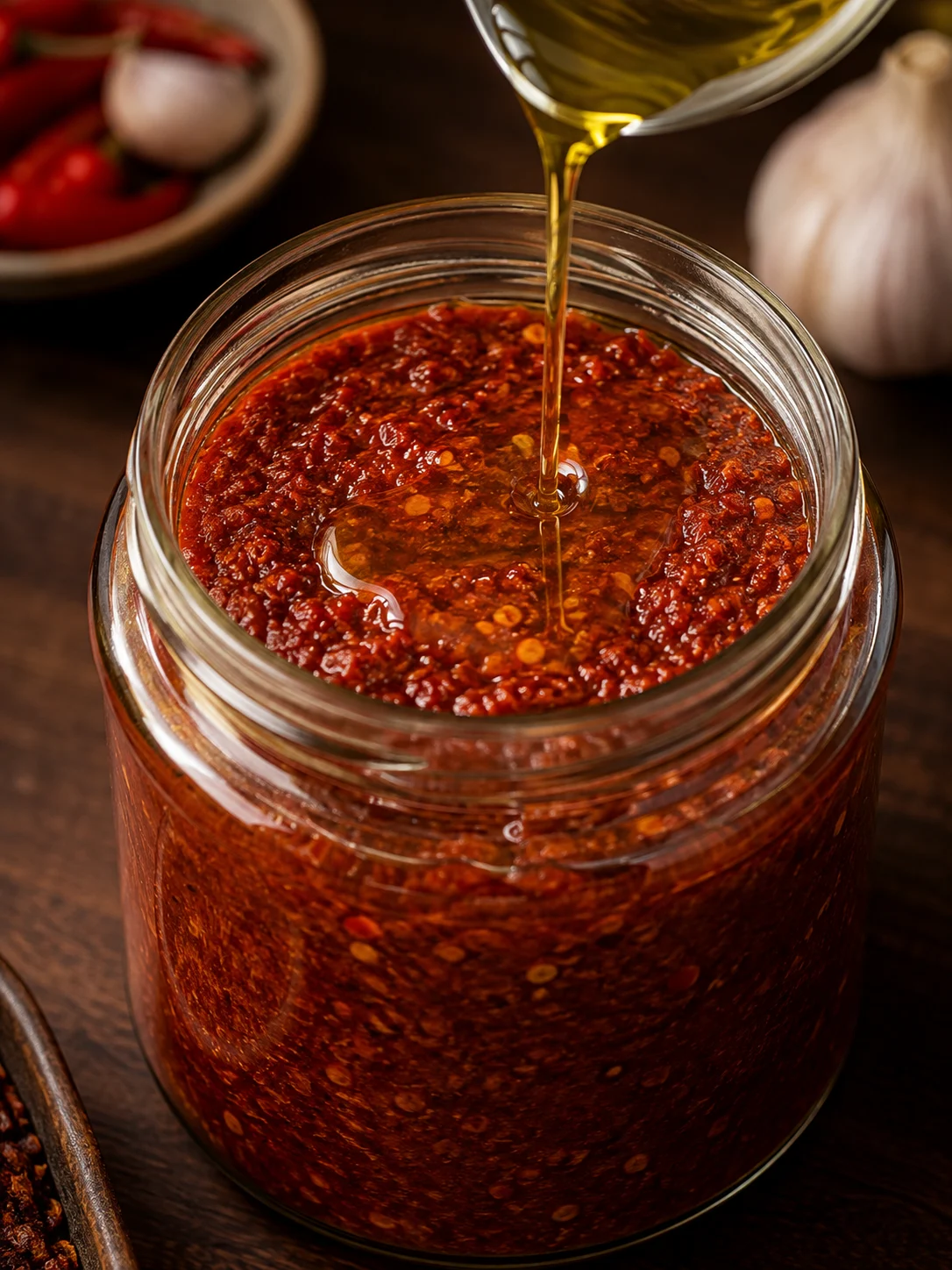
Step 4: Jar It and Seal Under Oil
Stir in the olive oil, then pack the paste firmly into a clean glass jar, pressing out air pockets. Level the surface and pour a thin layer of olive oil over the top so the paste is fully covered. Seal and refrigerate.
Prep tip: The oil layer is what preserves it. Air is what spoils harissa, so press it flat, cover it completely, and top the oil up again each time you take some out. Done properly it keeps for months.
The Mortar or the Machine?
Every traditional recipe pounds it. Here is the honest comparison.
A food processor is the practical choice for a full jar. A hundred grams of soaked chillies is a lot of pounding, and the machine gets you a perfectly good coarse paste in under a minute.
The mortar genuinely gives a better texture. Pounding crushes the chilli walls rather than shredding them, and the paste is slightly thicker and rougher for it. If you are making a small batch, it is worth the effort.
Either way, stop early. The mistake is not which tool you use, it is going too far with it. A smooth purée is not harissa.
Where to Use It on This Blog
This is the ingredient that unlocks the most recipes here, which is a good reason to keep a jar. The ojja merguez recipe is built on it, with a tablespoon in the sauce base. Kaftaji gets a spoonful stirred through at the end, and slata mechouia takes it as an option depending on how hot you want the salad.
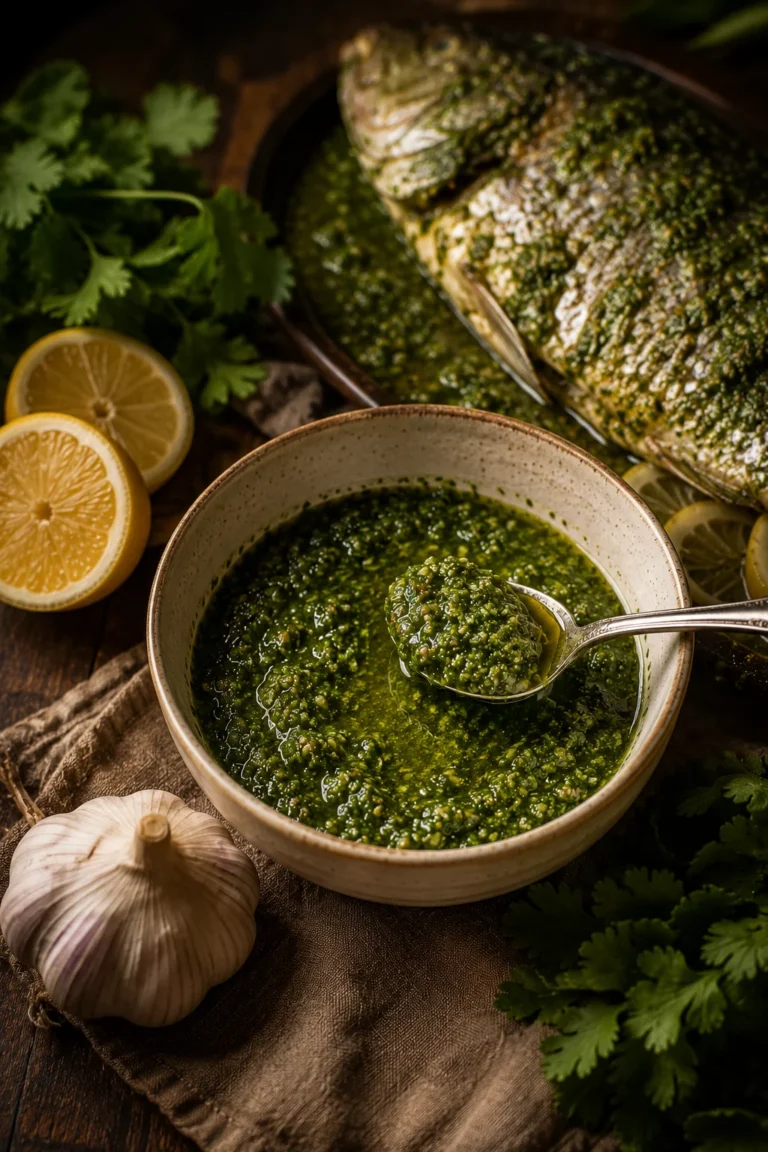
The Tunisian fish soup recipe uses it as the backbone of the broth, Tunisian brik wants a small spoon in the filling, and Moroccan couscous is traditionally served with a bowl of broth loosened with harissa on the side for the heat seekers. A teaspoon stirred into chermoula turns it Tunisian.
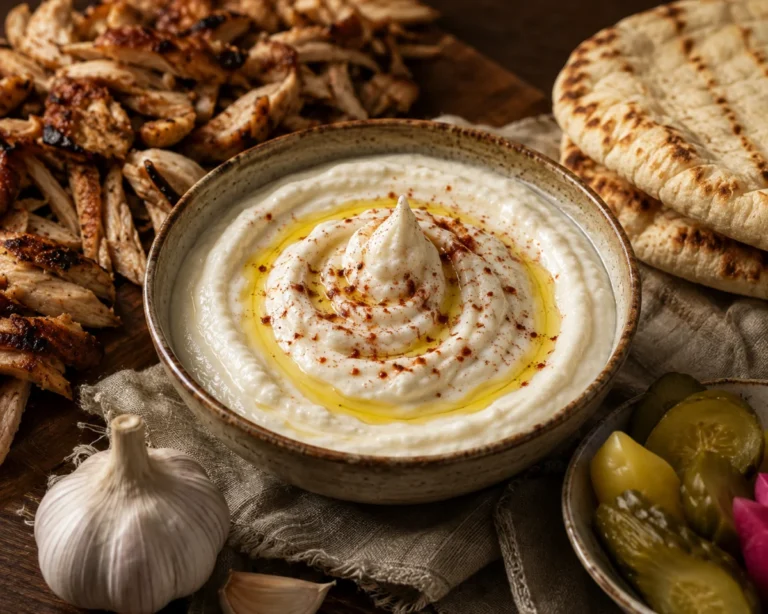
Beyond the blog: eggs, roast vegetables, sandwiches, and stirred into yoghurt as a dip. For the opposite end of the sauce shelf, the toum recipe covers the white, garlicky one.
Pro Tips for the Best Harissa
- Grind the caraway fresh. Whole seeds toasted briefly in a dry pan and ground make a noticeably better paste than pre-ground caraway sitting in a jar. Ninety seconds of work.
- Salt is a preservative here, not just seasoning. A tablespoon sounds like a lot for one cup, and it is doing a job. Do not reduce it if you want the jar to last.
- Storage: Months in the fridge under oil, and it improves for the first two weeks as the garlic mellows. Top up the oil layer after every use.
- Freeze in an ice cube tray if you make a large batch. One cube is roughly a tablespoon, and it means a fresh jar rather than an old one.
Variations
Rose Harissa
Add 1 tablespoon of dried rose petals, ground, at the spice stage. Floral, softer, and increasingly popular abroad. Not traditional in most Tunisian households but genuinely good on roast vegetables.
Green Harissa
Made with fresh green chillies, coriander and parsley instead of dried red chillies. Brighter, sharper, and used more in Libya and eastern Algeria. Keeps a week rather than months.
Setting the Heat
Two thirds mild chillies to one third hot is the sensible ratio for a household jar, since a jar nobody can eat is a wasted jar. Dried mint is a common addition, and putting a small bowl of harissa loosened with olive oil on the table lets people set their own level rather than arguing with the pot.
Harissa FAQs
How hot is homemade harissa? Entirely up to your chilli choice. Guajillo or New Mexico chillies make a mild, sweet paste; árbol or baklouti make a properly hot one. Mixing two thirds mild to one third hot gives you a controllable middle.
How long does harissa keep? Months in the fridge if it is packed tight and sealed under a layer of olive oil, with the oil topped up after each use. Air is what spoils it. It also freezes well in ice cube trays.
What makes harissa different from other chilli pastes? Caraway. That warm, slightly aniseed note is what distinguishes harissa from sriracha, sambal or gochujang, all of which are built on completely different flavour logic.
Do I need to remove the chilli seeds? Yes. Seeds add harshness rather than useful heat, and traditional recipes discard them along with the stems.
Is harissa vegan and gluten-free? Both, naturally. Chillies, garlic, spices, salt and olive oil, with nothing else in a proper jar. Check labels on commercial versions, which sometimes add other ingredients.
One Jar, Half a Cuisine
Soak, pound, jar, seal. Four steps and a pair of gloves, and you have the ingredient that half the Tunisian dishes on this blog are built on, sitting in your fridge for months.
Make a jar this weekend and report back: hot or mild, mortar or machine, and how quickly it disappeared. The first jar usually teaches you to make the second one bigger.
Rate this recipe
No ratings yet — be the first!


Wear gloves. A hundred grams of chilli stays on your fingers for a day and finds your eyes at some point during it. This is the one step where improvising is a bad idea.
Comments
No comments yet. Yours would be the first.
Made a jar? Tell me: hot or mild, mortar or machine, and how fast it disappeared.
Leave a comment
Comments are anonymous and appear after admin approval. If you rated this recipe above, your stars will show with your comment.