Mostly Filling, Barely Pastry
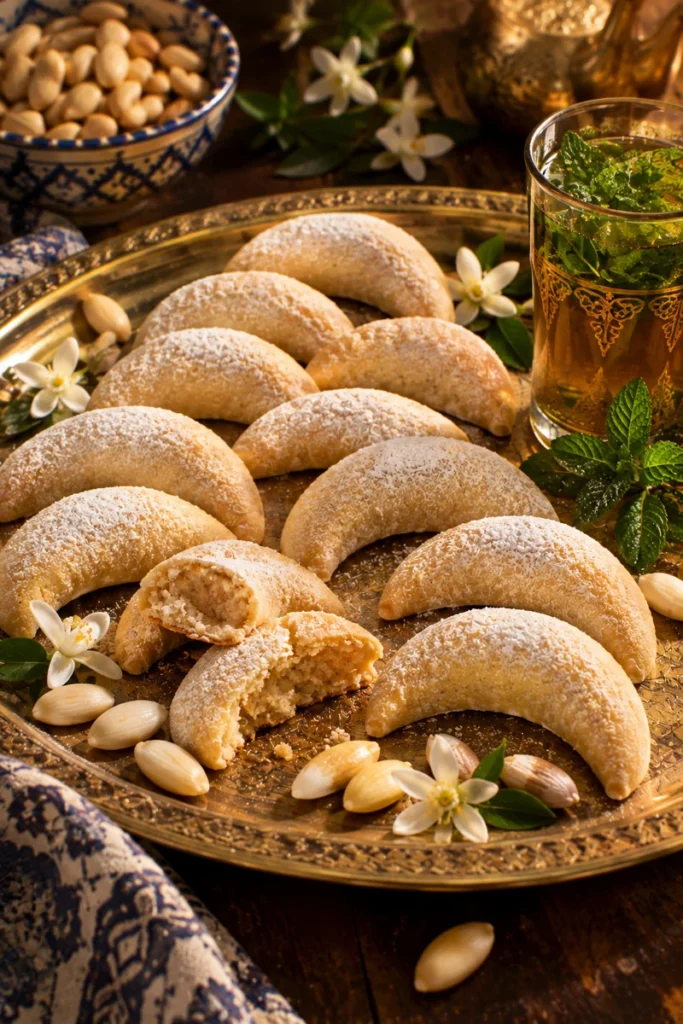
The ratio tells you what this pastry is. A kilo of almonds to half a kilo of flour, which means kaab ghzal is almond paste that happens to have a wrapper, not a pastry that happens to have a filling. Get that the wrong way round and you have made something else.
The name means gazelle horns, after the crescent shape, and they appear on every Moroccan tea table worth the name: at weddings, at Eid, and whenever guests arrive and someone opens the good tin. Inside is ground almond with sugar, cinnamon, orange blossom water and a pinch of mastic. Outside is a sheet of dough rolled thin enough to see through.
I learned this from an old Moroccan cookbook, and like most of them it assumes you already know things. It gives no oven temperature at all. Its measures are kass kbir and kass sghir, a large cup and a small cup, which in practice mean roughly 200 ml and 100 ml. Working those out is part of what this article is for.
The two things that decide whether these come out right are how thin you roll the dough and how pale you keep them. Both are counterintuitive, and both are covered below.
Ahead: the mastic question, the ingredient list with real measures, five steps with photos, why they must not brown, and how to stop them bursting.
The Two Ingredients Worth Sourcing
Mastic (مسكة حرة). Small translucent resin crystals from the mastic tree, sold at Middle Eastern and North African groceries and online. The flavour is piney and faintly resinous and there is genuinely no substitute, though the quantity is tiny. Crush the crystals with a little sugar in a mortar, since they are sticky and will clump on their own. A small packet lasts years.
Orange blossom water. Now stocked by most large supermarkets in the international aisle, and much cheaper at Middle Eastern shops. Buy the real distilled kind rather than a flavouring, and note that it appears twice in this recipe: two tablespoons in the dough and five in the filling. That is not a typo. It is what makes these taste Moroccan rather than merely almond.
On the almonds. Blanched almonds ground at home give a better texture than shop-bought almond flour, which is milled too fine and too dry. Pulse them in a food processor with the sugar, stopping while there is still a little texture left.
Ingredients You’ll Need for Kaab Ghzal
Main Ingredients
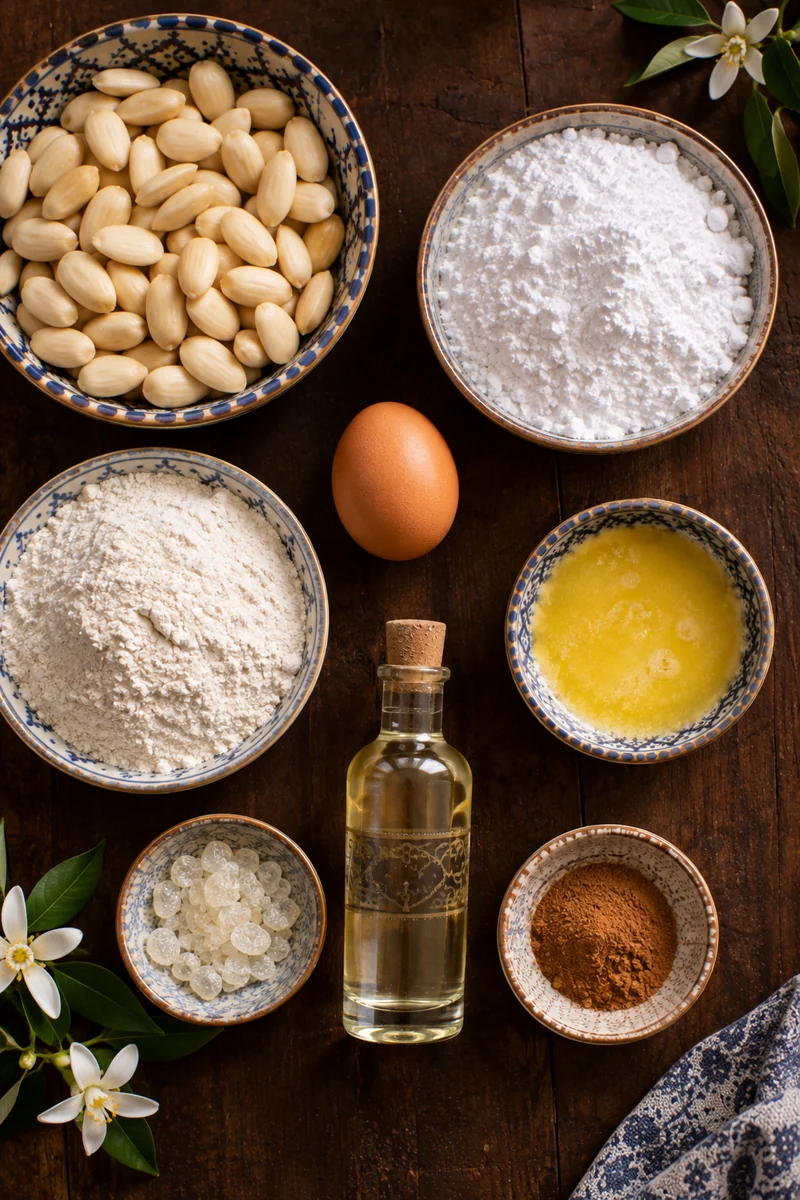
Makes about 40 pieces
For the dough:
- 1 lb 2 oz (500 g) plain flour
- 1 egg
- About ½ cup (100 ml) melted butter
- Pinch of salt
- 2 tablespoons orange blossom water
- Warm water, as needed to bring it together
For the almond filling:
- 2¼ lbs (1 kg) blanched almonds
- 1 lb 2 oz (500 g) icing sugar
- ½ teaspoon ground cinnamon
- Pinch of ground mastic, about 2 or 3 crystals crushed
- About ¼ cup (50 ml) melted butter
- 5 tablespoons orange blossom water
Also:
- A little vegetable oil, for brushing
- A sterilised needle or a fine skewer
A Note on the Measures
Older Moroccan cookbooks use kass kbir and kass sghir, a large cup and a small cup, without defining either. In practice they mean roughly 200 ml and 100 ml, so a half large cup of butter is about 100 ml and a half small cup about 50 ml. The quantities above are those conversions.
Easy Substitutions
- No mastic? Leave it out rather than substituting. The pastry is still good, just less distinctive. Nothing else tastes like it.
- No orange blossom water? There is no real substitute here either, and this one matters more. Rose water is a different flavour but closer than vanilla, which would be wrong.
- Shop-bought almond flour? Works, but add an extra tablespoon of orange blossom water, since it is drier than freshly ground almonds.
Step-by-Step Instructions: Kaab Ghzal in 5 Steps
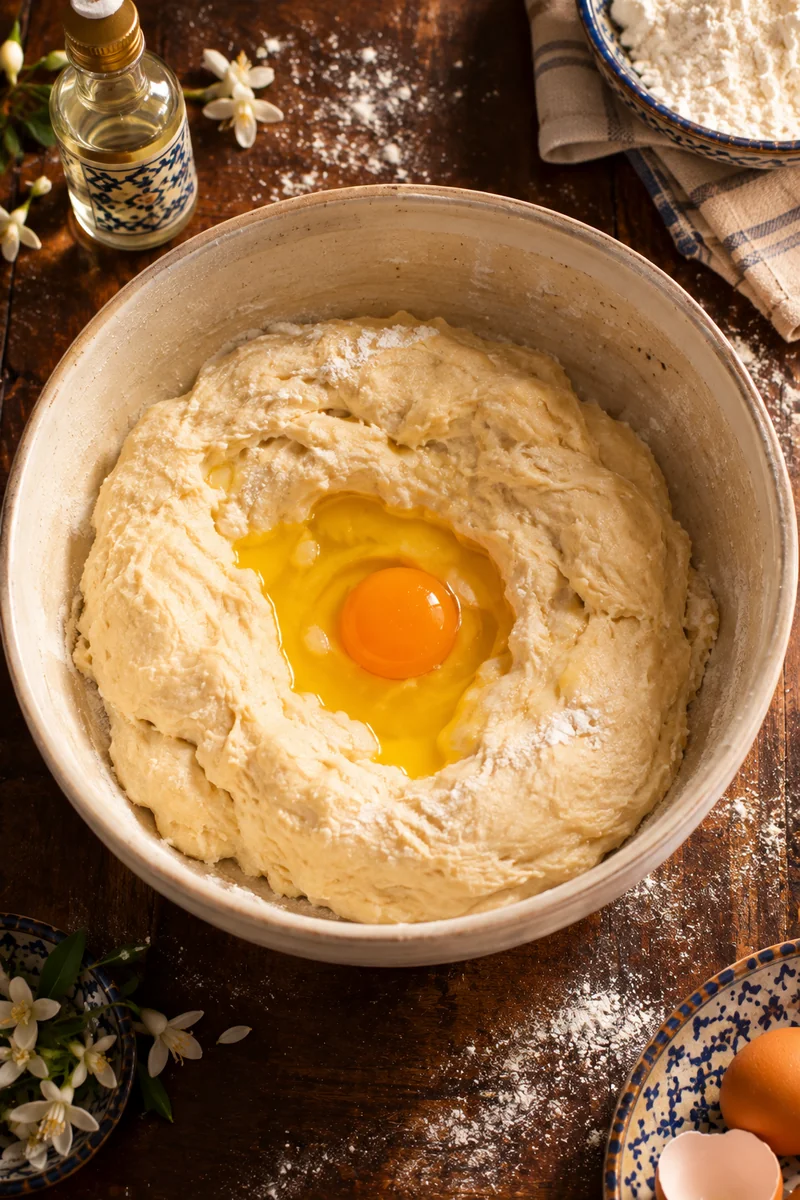
Step 1: Make the Dough
Put the flour in a wide bowl and make a well in the centre. Add the egg, melted butter, salt and orange blossom water, and work it together, adding warm water a little at a time until you have a soft, pliable dough. Knead until smooth, then roll into small balls and cover them with cling film.
Prep tip: Cover the dough balls properly and keep them covered as you work. This dough is made to be rolled paper thin, and a skin forming on the surface makes that impossible. Take one ball out at a time and leave the rest wrapped.
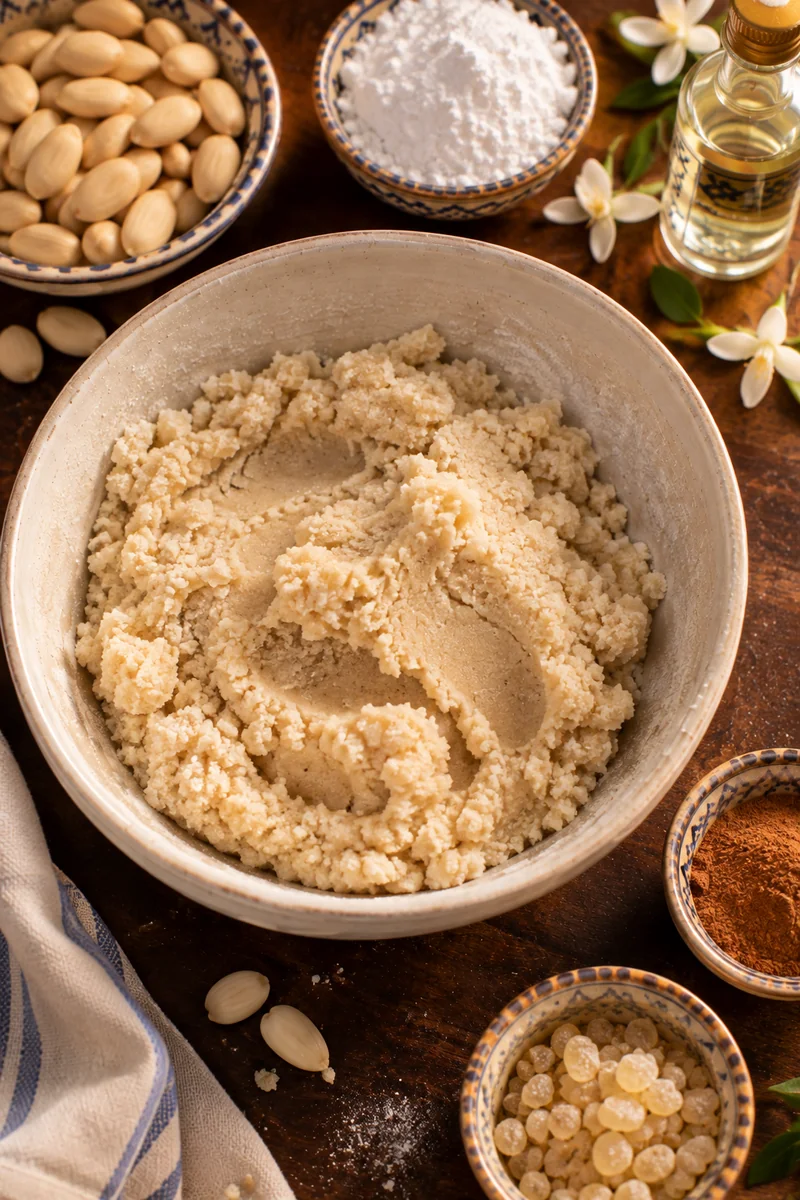
Step 2: Make the Almond Paste
Grind the blanched almonds with the icing sugar, cinnamon and crushed mastic until fine but not oily. Transfer to a bowl and work in the melted butter and orange blossom water until you have a paste that holds together and can be shaped.
Prep tip: Squeeze a small piece in your palm. If it holds its shape cleanly, it is right. If it crumbles, add orange blossom water a teaspoon at a time; if it feels greasy and heavy, you have ground the almonds too long and released their oil.
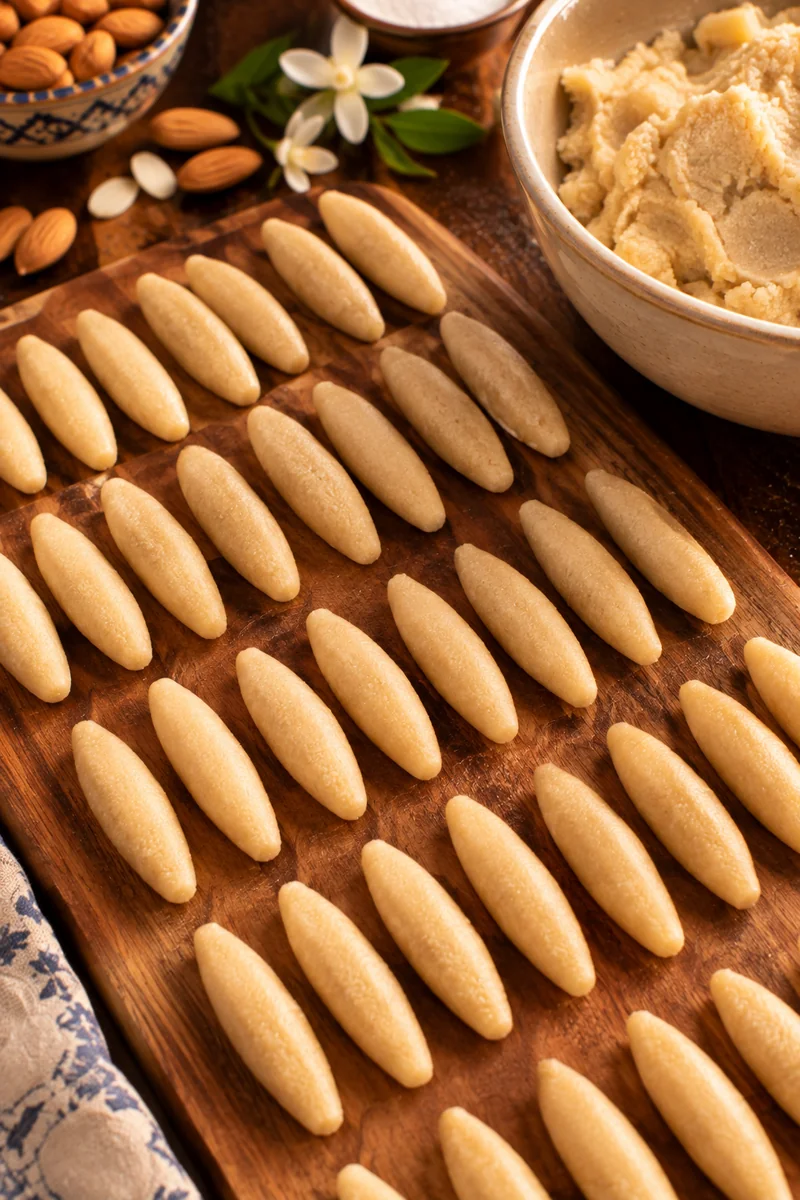
Step 3: Roll the Fingers
Roll the almond paste into short finger-shaped lengths, slightly tapered at each end, about the thickness of your thumb. Line them up on a tray while you work.
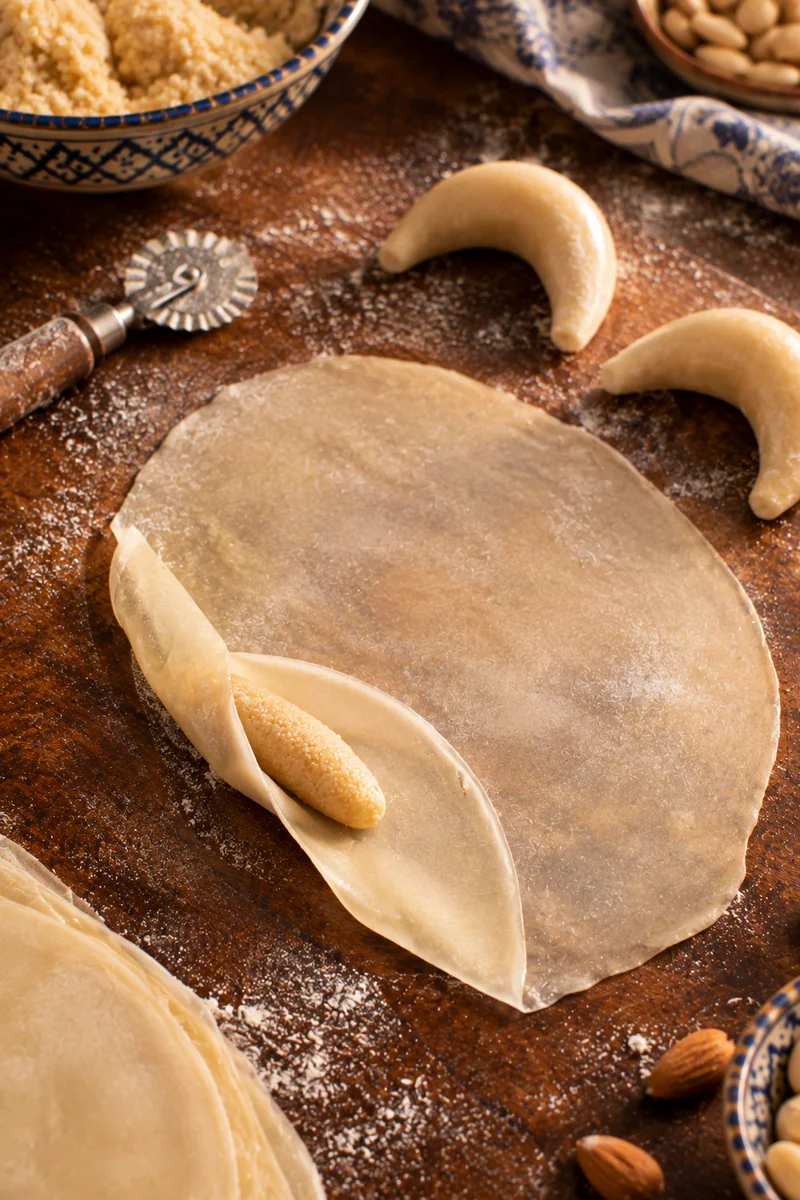
Step 4: Roll Thin and Wrap
Take one dough ball at a time and roll it into a very thin sheet, thin enough to see the surface beneath it. Brush lightly with oil, lay an almond finger near one edge, and wrap the dough around it. Trim the edge with a pastry wheel, then bend the whole piece into a crescent.
Prep tip: Thin is the entire skill of this pastry. A thick wrapper gives you a bready pastry with almond inside, which is the most common way kaab ghzal goes wrong. You should almost be able to read through the sheet before the filling goes on.
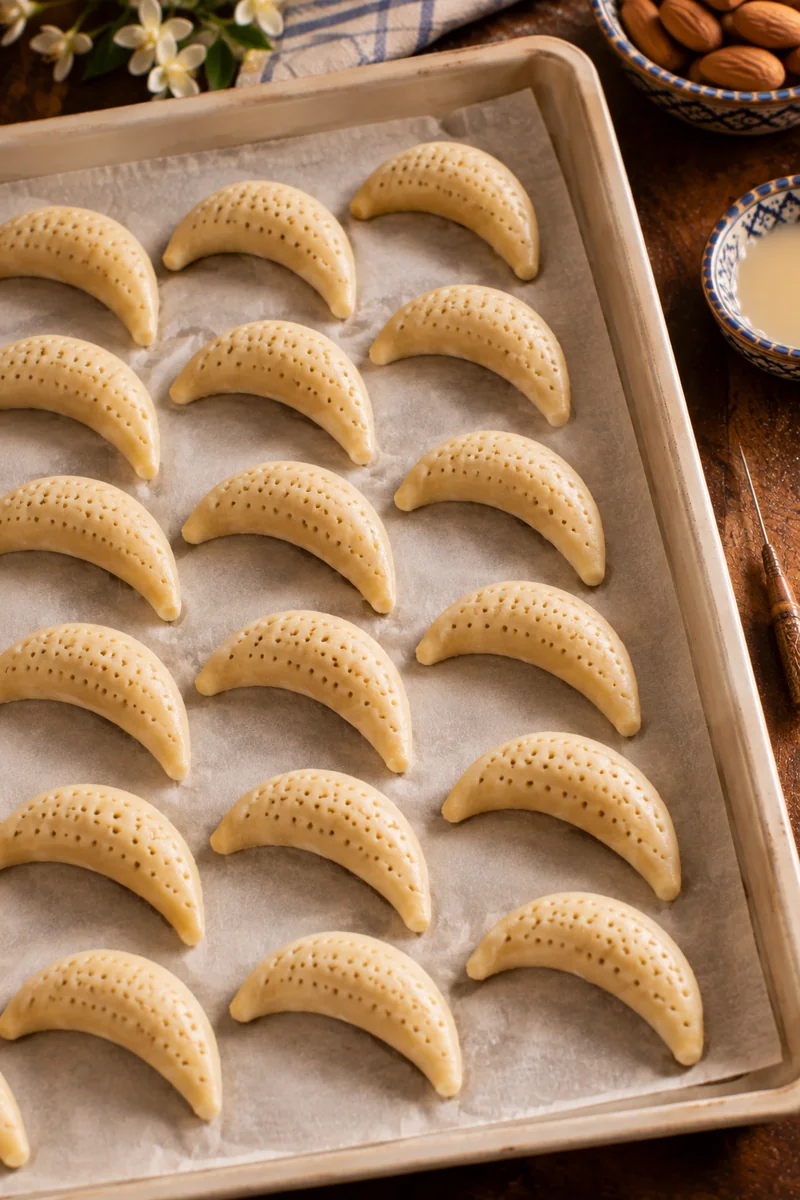
Step 5: Prick, Then Bake Pale
Heat the oven to 350°F (175°C). Arrange the crescents on a lined baking sheet and prick each one several times with a sterilised needle. Bake for about 25 minutes, until set and barely coloured.
Prep tip: These should come out pale, not golden. Browned kaab ghzal is overbaked, and the filling dries out before the colour arrives. The pricking matters too: it lets steam escape so the pastry does not balloon away from the almond inside and split.
About Kaab Ghzal: The Tea Table Pastry
Moroccan tea is not really about the tea. It is about what sits beside it, and kaab ghzal is the most prestigious thing on that plate. Making them well is a mark of skill, and households that produce them for a wedding or an Eid table are showing something.
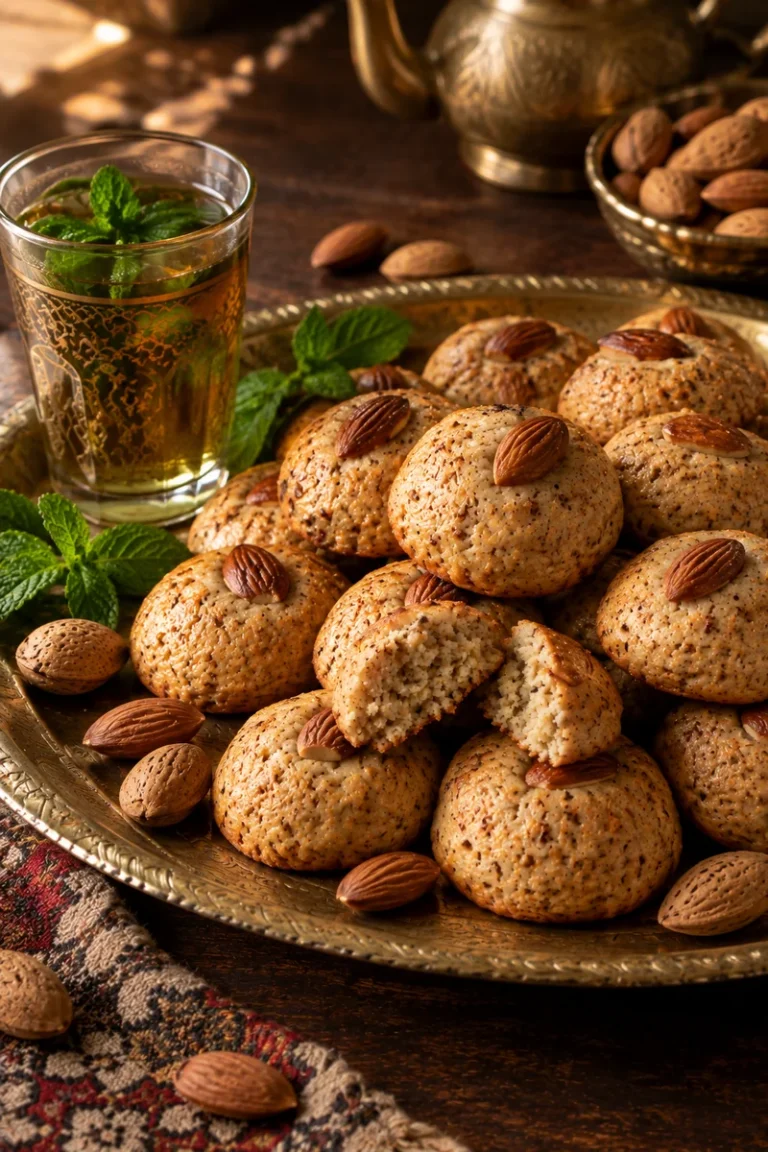
They belong to a wider family of North African almond sweets. My Moroccan almond cookies recipe is the everyday version of the same instinct: ground almonds, sugar, and very little else. Kaab ghzal is what happens when you have time and want to demonstrate it.
The orange blossom water is the throughline. It runs through Moroccan sweets the way vanilla runs through European ones, and it belongs with my Moroccan mint tea recipe on the same table.
Pro Tips for the Best Kaab Ghzal
- Work with one dough ball at a time. The rest stay wrapped. Dough that dries even slightly will not roll thin.
- Do not grind the almonds too long. They release oil and the paste turns heavy and greasy. Pulse in bursts and stop while the texture is still slightly coarse.
- Dust with icing sugar only after they cool completely. Warm pastries absorb it and turn damp.
- Storage: Two weeks in an airtight tin, and they genuinely improve after a day as the orange blossom settles through the filling. They freeze for 3 months, baked.
Variations
With a Glaze
Some households dip the baked crescents briefly in warm orange blossom syrup, then roll them in icing sugar. Sweeter and more festive, though it softens the pastry.
Smaller and Neater
For a formal tea table, make them half the size. More work, considerably more elegant, and they go further.
My House Version
In my kitchen the mastic goes in, because without it these taste like a very good almond pastry rather than specifically like kaab ghzal. The dough gets rolled thinner than feels sensible, and the first two always tear, which I have decided is simply part of the process.
What to Serve with Them
Moroccan mint tea, poured from height, and nothing else. This is the pairing, and any Moroccan household would consider the question settled. My Moroccan mint tea recipe covers the method.
On a larger tea table they sit alongside my Moroccan almond cookies recipe and dates, but kaab ghzal is the centrepiece and the rest is supporting.
Kaab Ghzal FAQs
What oven temperature should I use? Around 350°F (175°C). Older Moroccan cookbooks often give no temperature at all, which is why this trips people up. Moderate heat and about 25 minutes, and they should stay pale.
Why did mine turn brown? Overbaked, or the oven was too hot. Kaab ghzal is meant to be pale and barely coloured. By the time the surface browns, the almond filling inside has dried out.
Why did my pastry split open? It was not pricked, or not pricked enough. Steam builds between the pastry and the filling and pushes them apart. Several pricks per crescent with a fine needle solves it.
Can I make the filling ahead? Yes. The almond paste keeps a week in the fridge in an airtight container, and shaping it into fingers a day ahead makes the assembly much faster.
Are these gluten-free? No, the pastry is wheat flour. The filling alone is gluten-free, and if you want an almond sweet without wheat, my Moroccan almond cookies recipe is naturally gluten-free.
Thin Pastry, Pale Bake, Good Tea
Keep the dough covered, roll it thinner than feels reasonable, prick every crescent, and take them out before they colour. Four disciplines, and the first one is the one most people skip.
Make a batch before your next tea table and report back: with mastic or without, and how many tore before you found the right thickness. Mine still tear, and I have stopped counting.
Rate this recipe
No ratings yet — be the first!



The mastic goes in, always. Without it these taste like a very good almond pastry rather than specifically like kaab ghzal. And the first two always tear, which I have decided is part of the process.
Comments
No comments yet. Yours would be the first.
Made a batch? Tell me: with mastic or without, and how many tore before you found the right thickness.
Leave a comment
Comments are anonymous and appear after admin approval. If you rated this recipe above, your stars will show with your comment.