
The Almond Cookie That Keeps Its Skins
Almost every almond sweet in North Africa starts by blanching and peeling the nuts. This one deliberately does not, and that single decision is what separates makroun from everything else on the tea table.
Leaving the skins on gives you a darker, flecked, faintly rustic cookie rather than a pale elegant one. It also gives a slightly deeper, more roasted almond flavour, since the skins carry a good deal of it. Set a plate of makroun next to a plate of ghriba and you can tell them apart across the room.
The method is simple: grind the almonds, mix them with sugar, yolks and baking powder, then fold in whipped whites until you have a soft dough. Roll into balls, press a half almond into each, and bake.
What nobody warns you about is what happens afterwards. They come out soft, firm up as they cool, and then soften again in the fridge. Three different textures over two days, and the last one is the one people prefer.
I learned this from an old Moroccan cookbook, and like the others in it there is no oven temperature anywhere. It says only hot oven, which for these means hotter than the moderate heat used for ghriba, since the surface needs to set and take colour around the almond on top.
Ahead: why the skins stay on, the ingredient list, five steps with photos, the texture timeline, and how these differ from ghriba.
Makroun vs Ghriba: Two Almond Cookies
Both sit on the same Moroccan tea table and people mix them up constantly.
Ghriba uses blanched peeled almonds, is rolled thickly in icing sugar, and cracks across the top as it bakes. Pale, crackled, very sweet, and the texture is sandy and short.
Makroun keeps the almond skins on, uses whipped egg whites for lift, and carries a half almond pressed into the top. Darker, flecked, softer, and less sweet.
Worth knowing: the word makroun is used for quite different things across North Africa. In Tunisia and Algeria a similar-sounding name often refers to a fried semolina pastry stuffed with dates and soaked in honey, which is not this at all. If a recipe you have seen looks nothing like these, that is probably why. This article is the almond macaroon version.
Ingredients You’ll Need for Makroun
Main Ingredients
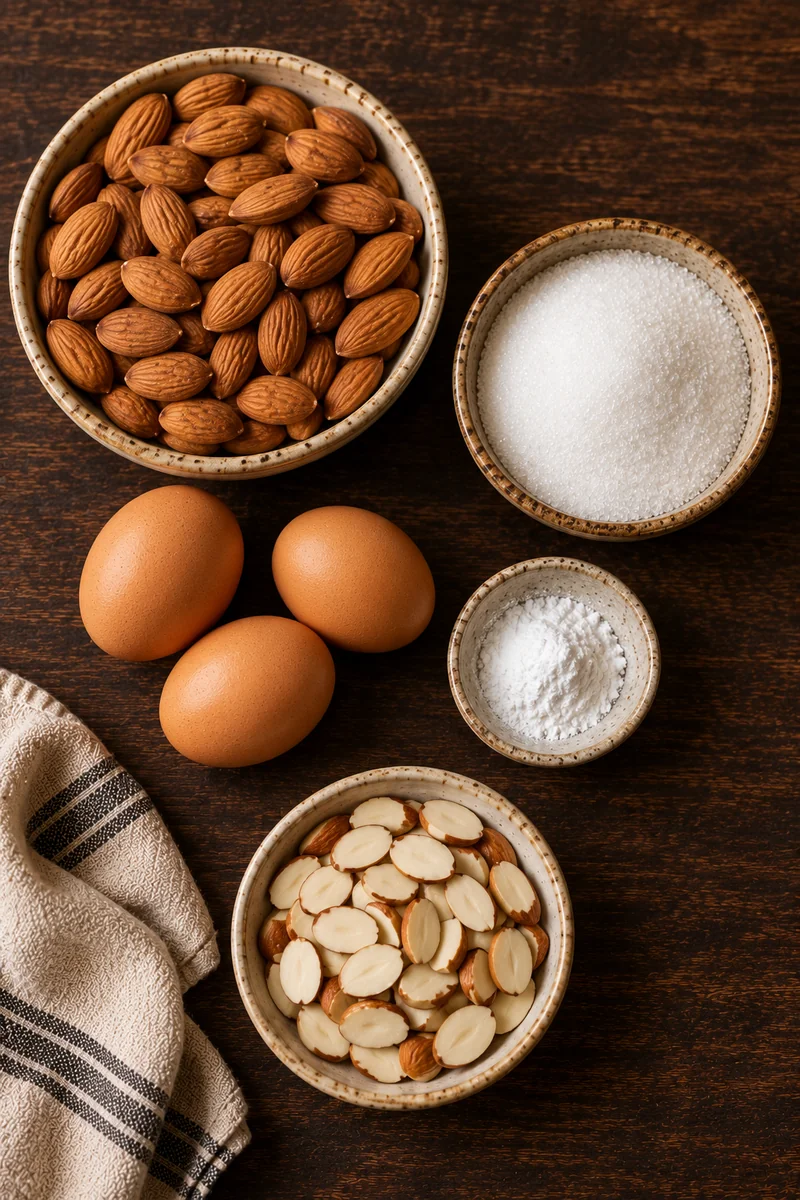
Makes about 30 cookies
- 1 lb 5 oz (600 g) almonds, unpeeled
- 10½ oz (300 g) granulated sugar
- 3 eggs, separated
- 1 teaspoon baking powder
To decorate:
- Whole almonds, split in half, one per cookie
Also:
- A little oil, for the tray, or parchment paper
On the Almonds
- Do not peel them. It is the defining feature of the recipe and it is the reason these look and taste different from every other almond cookie in the Moroccan repertoire.
- Clean them with a damp cloth rather than washing them under a tap. Almonds soak up water readily, and wet almonds grind into a paste rather than a meal, which changes the whole texture of the dough.
- Grind them yourself. Shop-bought almond flour is made from blanched almonds, so it is the wrong product entirely here, and it is milled finer than you want. Pulse in a food processor and stop while there is still a little texture.
Easy Substitutions
- No baking powder? The cookies are flatter and denser without it. Not ruined, but noticeably different, since it is what gives them their slight lift.
- Want them sweeter? Increase the sugar to 350 g. The traditional ratio here is less sweet than most Moroccan sweets, which is part of their appeal.
- No whole almonds for the top? A blanched almond, a pine nut or half a walnut all work. The garnish is traditional but not structural.
Step-by-Step Instructions: Makroun in 5 Steps
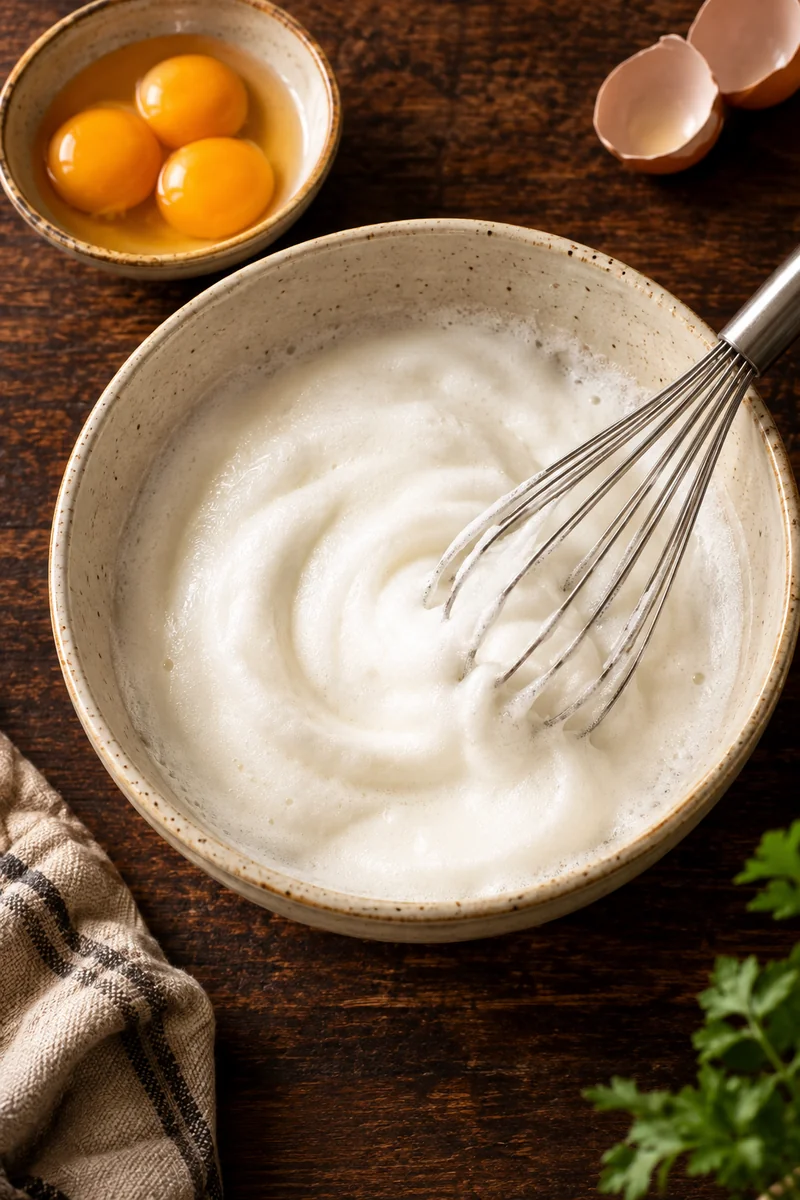
Step 1: Whip the Egg Whites
Separate the eggs, keeping the yolks aside. Whisk the whites until they turn frothy and foamy, light and airy but not stiff peaks.
Prep tip: Frothy, not stiff. These are not meringues. You want the whites aerated enough to lighten the dough, and whites beaten to firm peaks are difficult to fold into a heavy almond mixture without knocking all the air out anyway.
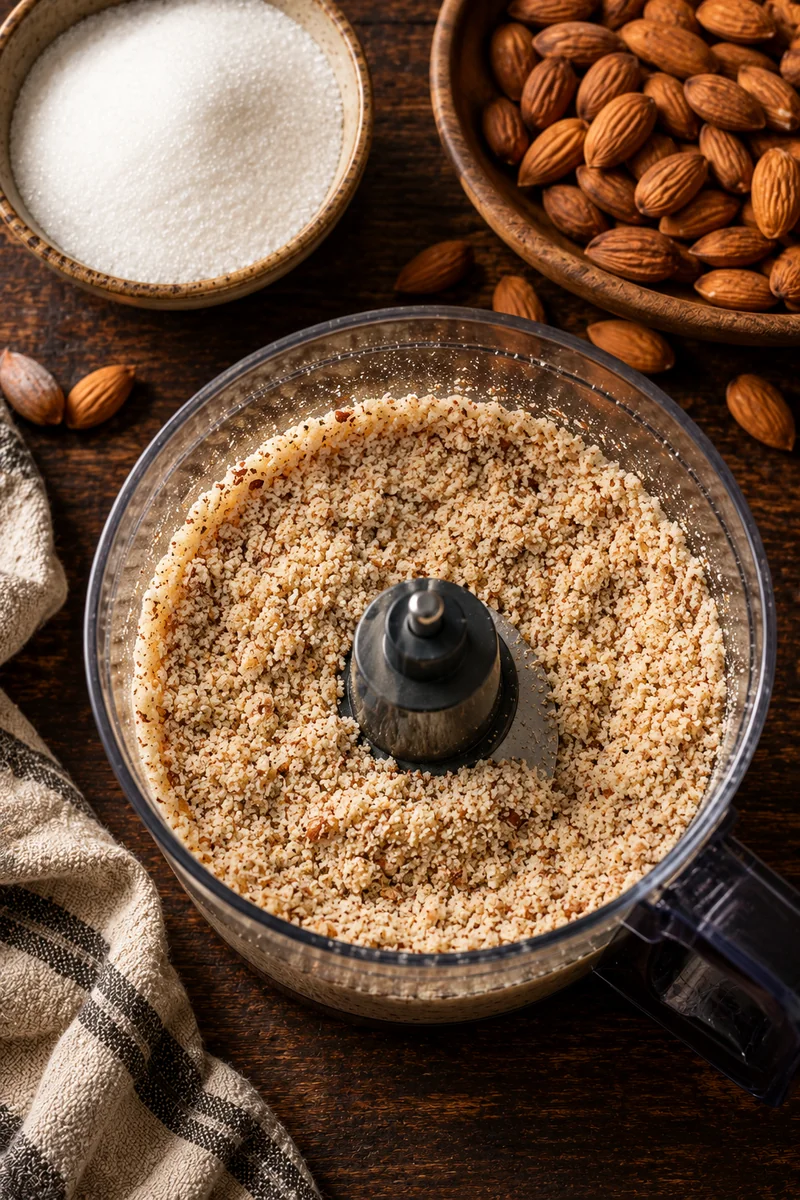
Step 2: Clean and Grind the Almonds
Wipe the almonds with a damp cloth, leaving the skins on, and dry them. Grind them finely, then combine with the sugar, the reserved egg yolks and the baking powder.
Prep tip: Wipe rather than wash. Almonds absorb water quickly, and damp nuts grind to a sticky paste instead of a dry meal. If they do get wet, spread them on a tray and let them dry completely before grinding.
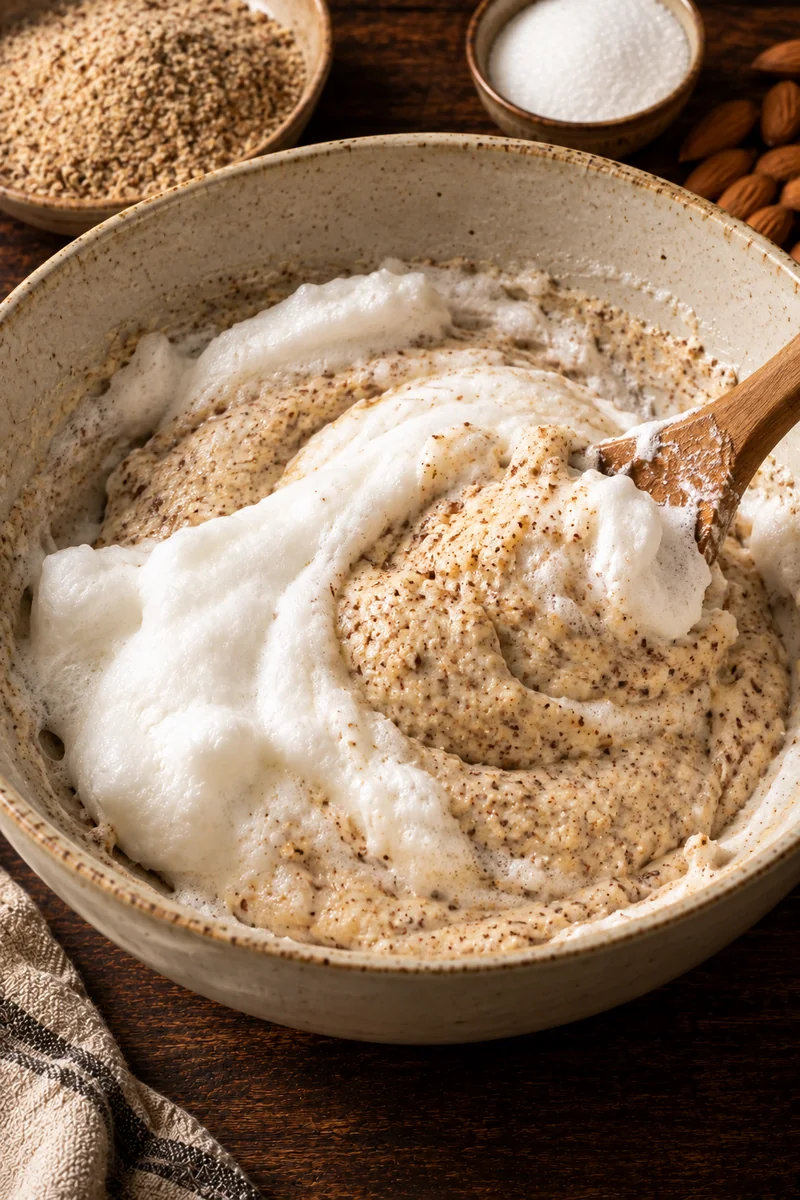
Step 3: Fold in the Whites
Add the whipped egg whites to the almond mixture gradually, folding with a wooden spoon, until you have a soft dough you can shape. You may not need all of them.
Prep tip: Add them in stages and stop when the dough holds together. Almonds vary in how much moisture they carry, and a dough that is too wet spreads flat on the tray instead of holding its dome.
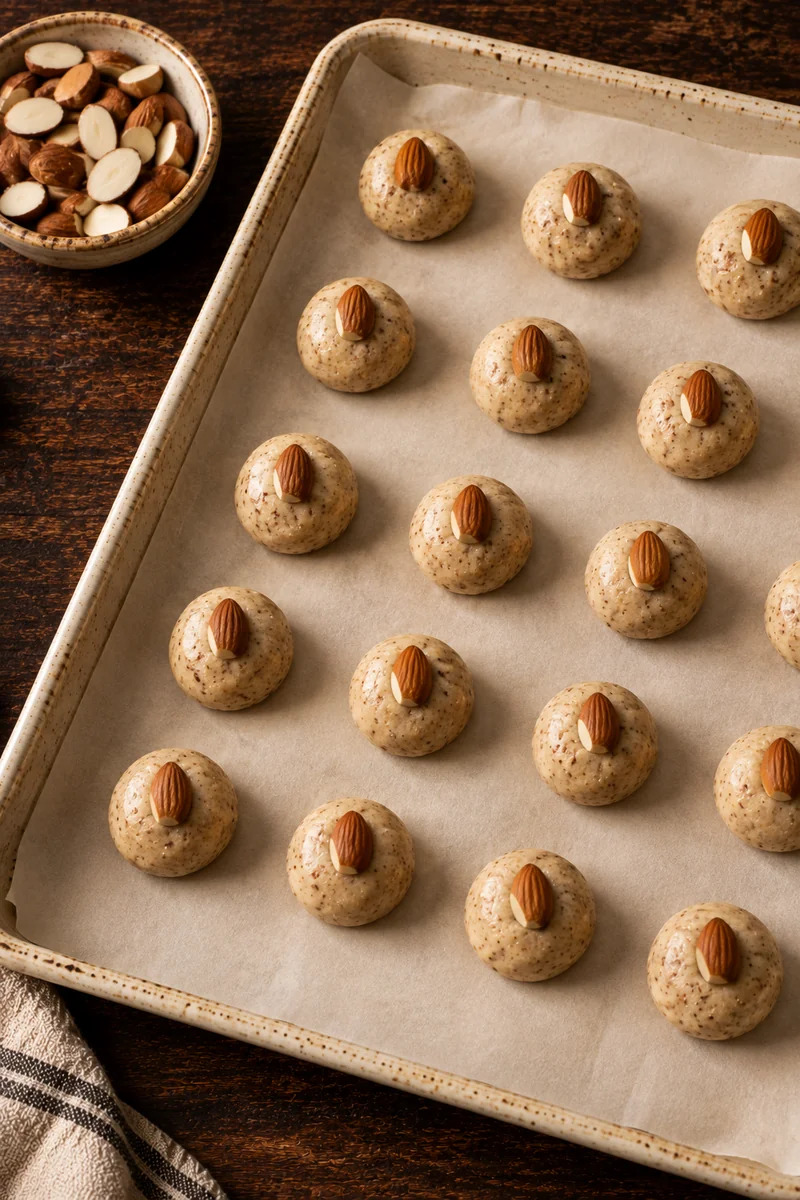
Step 4: Shape and Top
Roll the dough into small balls and arrange them on a lightly oiled or lined baking sheet, leaving space between them. Press a half almond into the top of each one, cut side down.
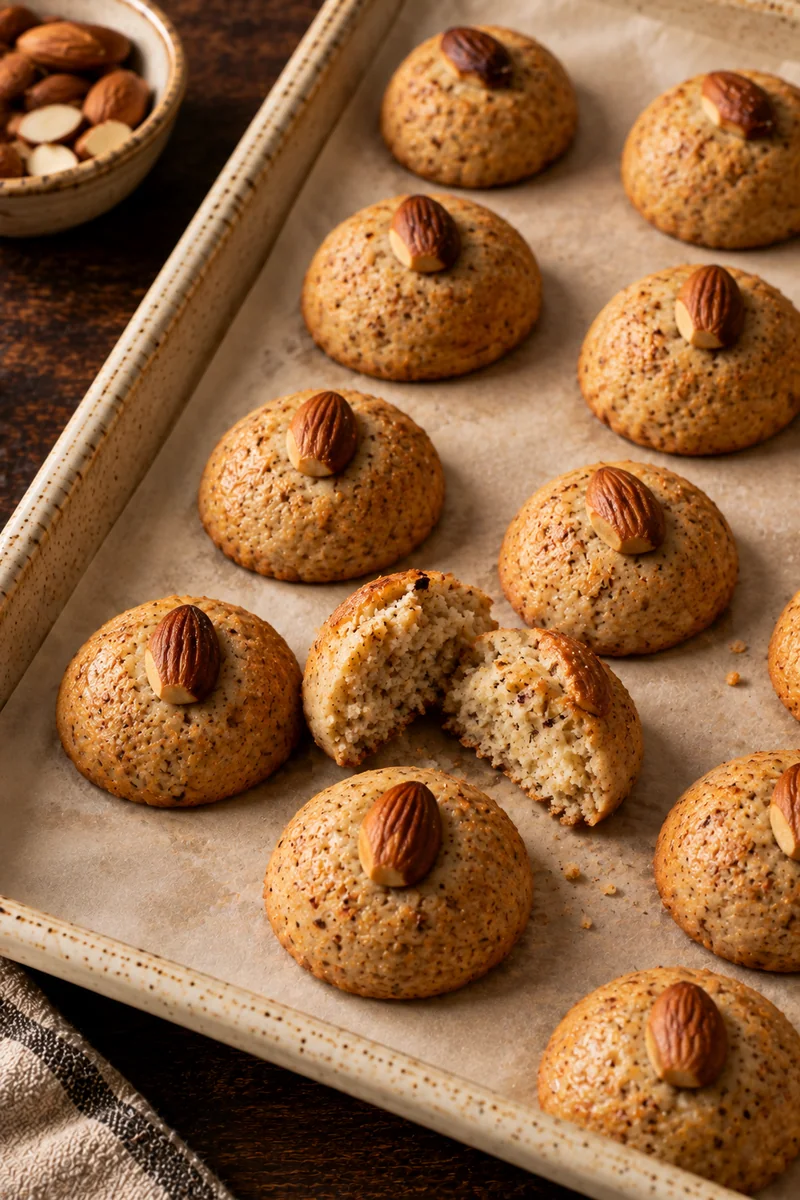
Step 5: Bake Until Golden
Heat the oven to 375°F (190°C). Bake for about 20 minutes, until the surface is set and golden around the almond on top. They will still feel soft when they come out.
Prep tip: Soft out of the oven is correct, so do not leave them in longer trying to firm them up. They set as they cool. Baking until they feel firm gives you a dry, hard cookie that no amount of resting will rescue.
The Texture Timeline
This is the part of the recipe that confuses people, and it is worth knowing before you start.
- Straight from the oven: soft, almost fragile. This is correct and not a sign of underbaking.
- Once cooled, after an hour or two: firm and set, with a slight crispness at the edges. Most people would call this done.
- After a day in a sealed container in the fridge: soft again, tender and moist all the way through. This is how Moroccan households serve them, and it is the texture the recipe is actually aiming for.
So if your first batch seems firmer than you expected on the day you make them, wait. The cookie you want arrives tomorrow.
About Makroun: Tea Table Company
Moroccan sweets exist to accompany tea rather than to be eaten alone, and makroun belongs to the everyday end of that tradition rather than the ceremonial end. My kaab ghzal recipe is what a household makes to impress. Makroun is what sits in a tin for whoever arrives.
It shares the basic instinct of my Moroccan almond cookies recipe: almonds, sugar, egg, and almost nothing else. Between them these two cover most of what an almond cookie can be, and the difference between them is entirely in the details, one peeled and crackled, one unpeeled and soft.
Serve them with my Moroccan mint tea recipe, which is the pairing, and which is also less sweet than people expect for exactly the same reason.
Pro Tips for the Best Makroun
- Leave space on the tray. They spread a little as the baking powder works, and cookies that merge into each other lose their shape and their garnish.
- Press the almond in firmly. A half almond resting on the surface falls off once baked. Push it in enough that the dough comes up slightly around it.
- Do not grind the almonds too far. Past a certain point they release their oil and the dough turns heavy and greasy. Pulse, check, pulse again.
- Storage: A sealed container in the fridge, where they soften into their best texture and keep about two weeks. They freeze well for 3 months.
Variations
With Orange Blossom Water
Add a tablespoon to the dough with the yolks. Common in some households and it sits well against the almond skins without dominating.
Half and Half
Use half unpeeled and half blanched almonds for a lighter cookie that still carries some of the flecked character. A reasonable compromise if the rustic look is not what you want.
My House Version
In my kitchen these get made in a double batch, because the tin empties faster than the effort deserves, and because the version that comes out of the fridge two days later is genuinely better than the one on the day.
Makroun FAQs
Why are the almonds not peeled? It is deliberate. The skins give makroun its darker flecked appearance and a deeper, more roasted almond flavour, and it is the main thing that distinguishes it from ghriba and other Moroccan almond cookies.
What oven temperature should I use? About 375°F (190°C). Older Moroccan cookbooks frequently give no temperature at all, saying only hot oven, which for these means hotter than the moderate heat used for ghriba so the surface sets and colours around the almond.
Why are mine still soft after baking? That is correct. They come out soft and firm as they cool. Leaving them in the oven until they feel firm produces a dry, hard cookie.
Why do they go soft again in the fridge? The moisture in the dough redistributes as they rest, which is why Moroccan households store them sealed and cold. That softer texture after a day is the one the recipe is aiming for.
Are these gluten-free? Yes, naturally. Almonds, sugar, eggs and baking powder, with no flour at all. Check that your baking powder is certified gluten-free if you need to be strict.
Skins On, Out Soft, Better Tomorrow
Wipe the almonds instead of washing them, leave the skins on, whip the whites only to a froth, and take the cookies out while they still feel soft. Four small decisions, and the last one is the one people get wrong.
Make a batch before your next pot of tea and report back: on the day, or from the fridge two days later. Almost everyone prefers the second, and almost nobody expects to.
Rate this recipe
No ratings yet — be the first!


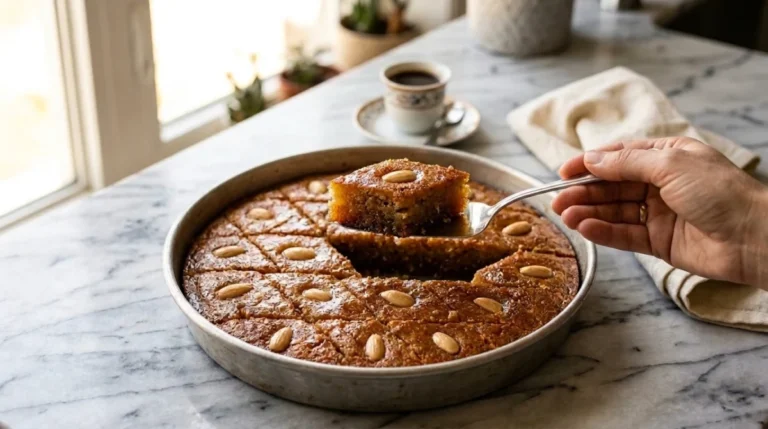


These get made in a double batch in my kitchen, because the tin empties faster than the effort deserves, and because the version that comes out of the fridge two days later is genuinely better than the one on the day.
Comments
No comments yet. Yours would be the first.
Made a batch? Tell me: on the day, or from the fridge two days later. Almost everyone prefers the second.
Leave a comment
Comments are anonymous and appear after admin approval. If you rated this recipe above, your stars will show with your comment.