Two Temperatures, One Moment
Most of what goes wrong with briouates happens in about four seconds, in the gap between the fryer and the honey.
The pastry has to go into the honey hot, straight from the oil, because hot pastry draws honey in while cool pastry just wears it. And the honey has to be warm but never boiling, because warm honey flows into the layers while hot honey scorches the pastry and turns bitter. Get both right and you have a crisp triangle saturated with honey. Get either wrong and you have something soggy, or something merely sticky.
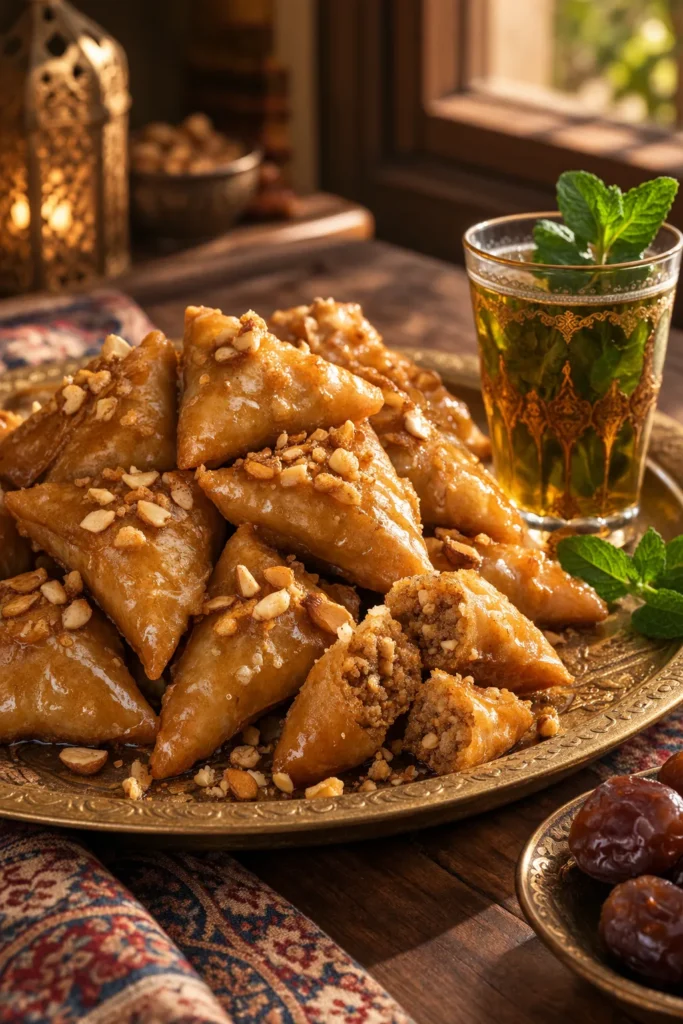
Inside is almond paste: ground almonds, icing sugar, butter, cinnamon, a pinch of mastic and orange blossom water. Outside is warqa, the paper-thin Moroccan pastry, folded into triangles the way a flag is folded.
These belong to the same tea table as kaab ghzal but occupy a different position on it. Kaab ghzal is baked, pale and restrained. Briouates are fried, golden and glossy with honey, and they are what appears when someone wants the plate to look generous.
I learned this from an old Moroccan cookbook that, like the others in it, gives no oil temperature and no frying time. It says only until golden. The working numbers are below.
Ahead: warqa and what to use instead, the ingredient list, five steps with photos, the triangle fold, and how to freeze them raw.
Warqa Pastry, and the Substitute
Warqa is the Moroccan pastry used for briouates and pastilla, made by dabbing dough onto a hot surface until it forms a translucent sheet. It is thinner than filo and slightly more pliable.
It is sold frozen at North African and Middle Eastern groceries, often labelled warqa, feuilles de brick or brick pastry. Thaw it in the fridge overnight rather than on the counter, and keep the sheets covered with a damp cloth while you work or they dry out and crack within minutes.
If you cannot find it, filo works. Use two stacked sheets rather than one, since filo is thinner and more fragile, and brush lightly between them. The result is slightly crisper and a little less pliable, which shows in the folding more than in the eating.
Tunisian malsouka also works and is closer to warqa than filo is, if your local shop carries one and not the other. It is the same pastry family used in my Tunisian brik recipe.
Ingredients You’ll Need for Briouates
Main Ingredients
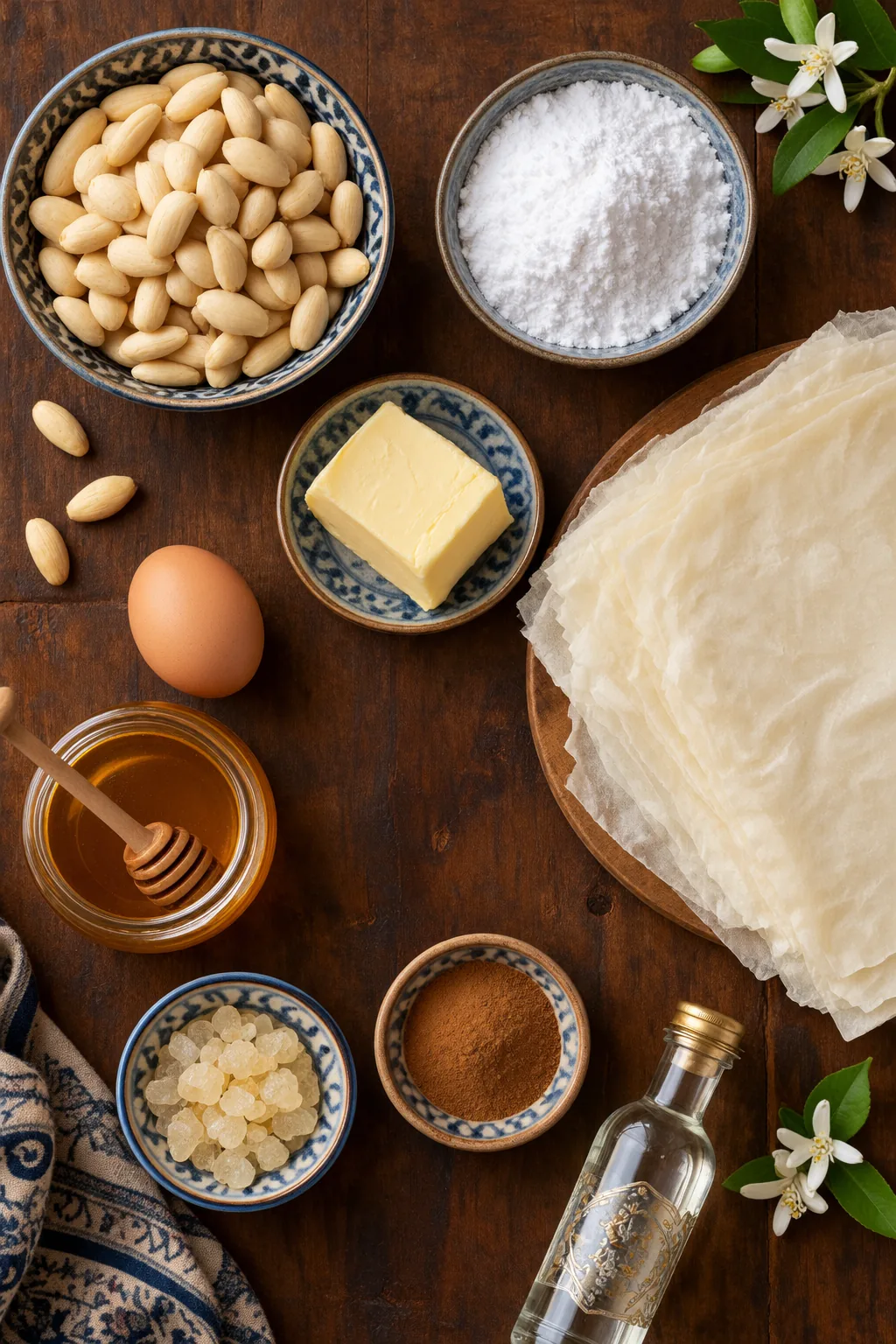
Makes about 24
For the filling:
- 9 oz (250 g) blanched peeled almonds
- 3½ oz (100 g) icing sugar
- 1¾ oz (50 g) butter, softened
- ½ teaspoon ground cinnamon
- Pinch of crushed mastic, about 2 or 3 crystals
- 1 tablespoon orange blossom water
For assembly and frying:
- 24 small to medium sheets of warqa or brick pastry
- 1 egg yolk, beaten
- Vegetable oil, for deep frying
To finish:
- 1 lb 2 oz (500 g) honey
- 1¾ oz (50 g) almonds, fried and chopped
On the Two Fats
- The 50 g of butter belongs in the almond filling, not the pan. It binds the paste and gives it richness.
- The frying oil is separate and is vegetable oil, not butter, which would burn long before the pastry browned.
- Worth stating plainly because the original ingredient list places them close together and people do conflate them.
Easy Substitutions
- No mastic? Leave it out rather than substituting. Nothing else tastes like it, and the pastry is still good without.
- No orange blossom water? There is no real substitute, and this one matters. It is the flavour that makes these read as Moroccan.
- Prefer baking to frying? Brush with melted butter and bake at 400°F (200°C) for 15 to 20 minutes until golden, then dip in honey as normal. Less rich, considerably less mess, and genuinely good.
Step-by-Step Instructions: Briouates in 5 Steps
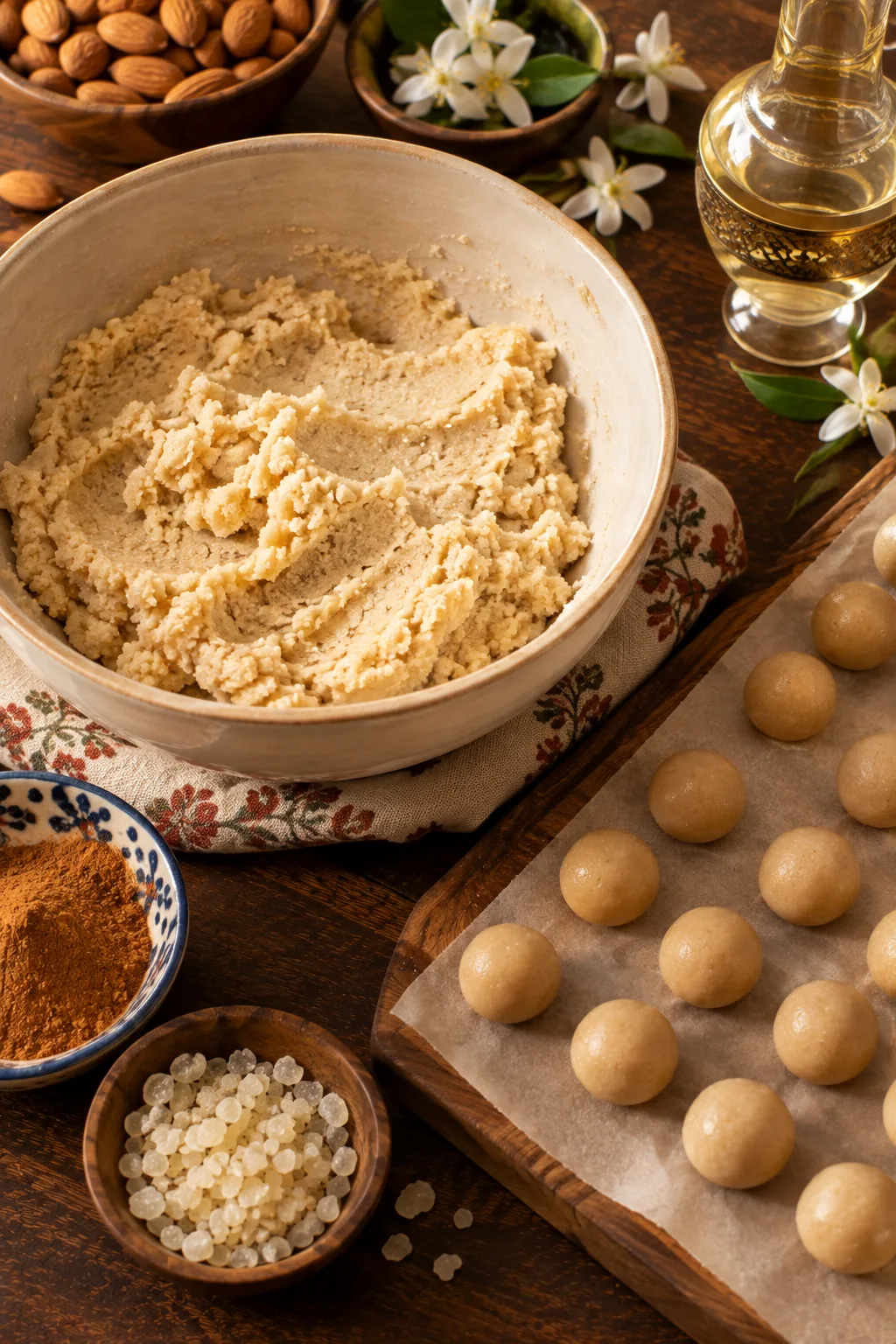
Step 1: Make the Almond Paste
Grind the blanched almonds with the icing sugar until fine. Add the cinnamon, crushed mastic, softened butter and orange blossom water, and work it together by hand until it holds. Roll into small balls, one per pastry strip.
Prep tip: Work it with your hands rather than a spoon. The warmth of your palms softens the butter and brings the paste together properly, and you can feel immediately whether it needs another splash of orange blossom water.
Step 2: Cut and Brush the Pastry
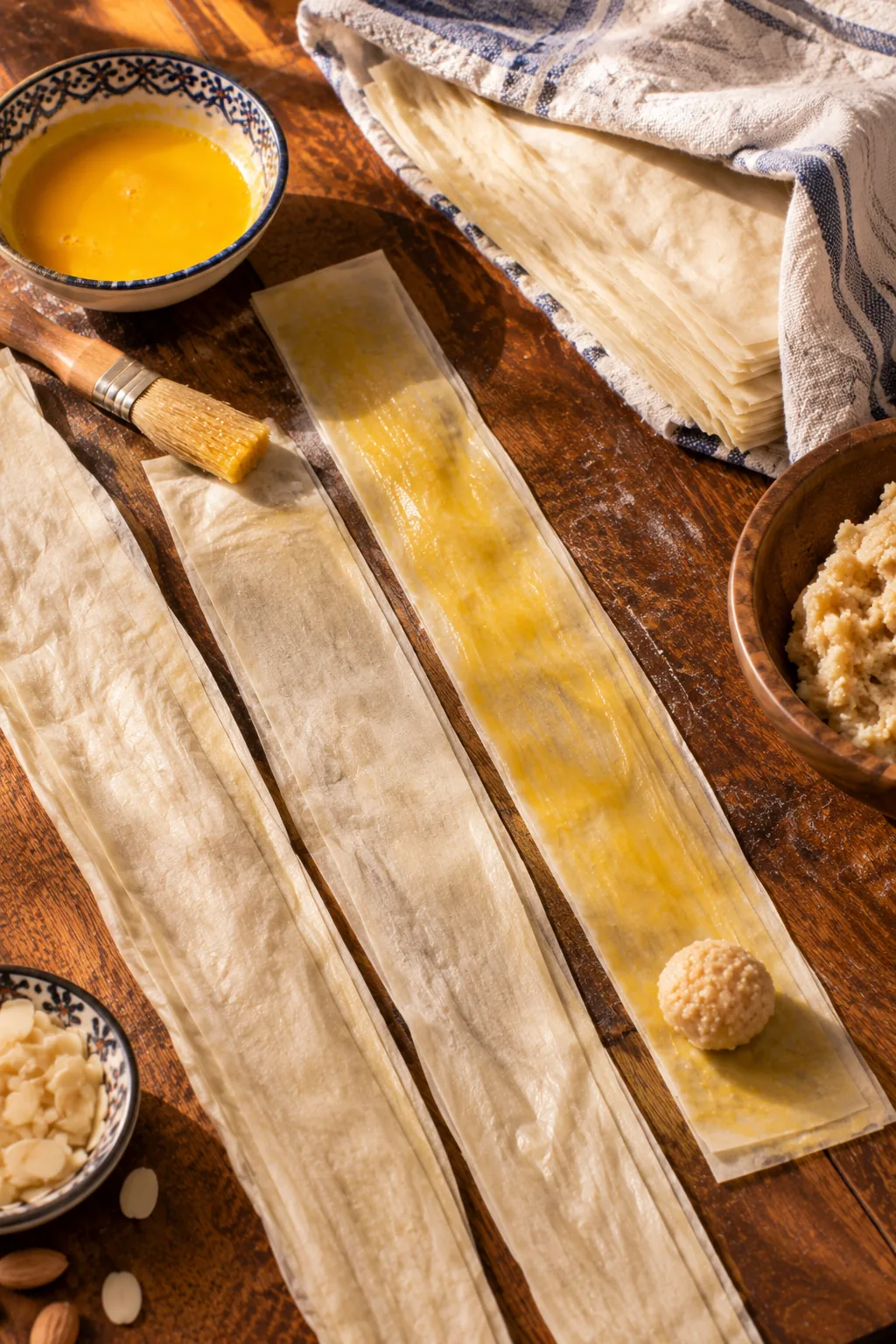
Cut each warqa sheet into a long strip. Brush the strip lightly with beaten egg yolk and place a ball of almond paste at one end.
Prep tip: Keep the sheets you are not using under a damp cloth. Warqa dries out in minutes and dry pastry cracks along every fold, which is the most common reason briouates leak in the oil.
Step 3: Fold the Triangle
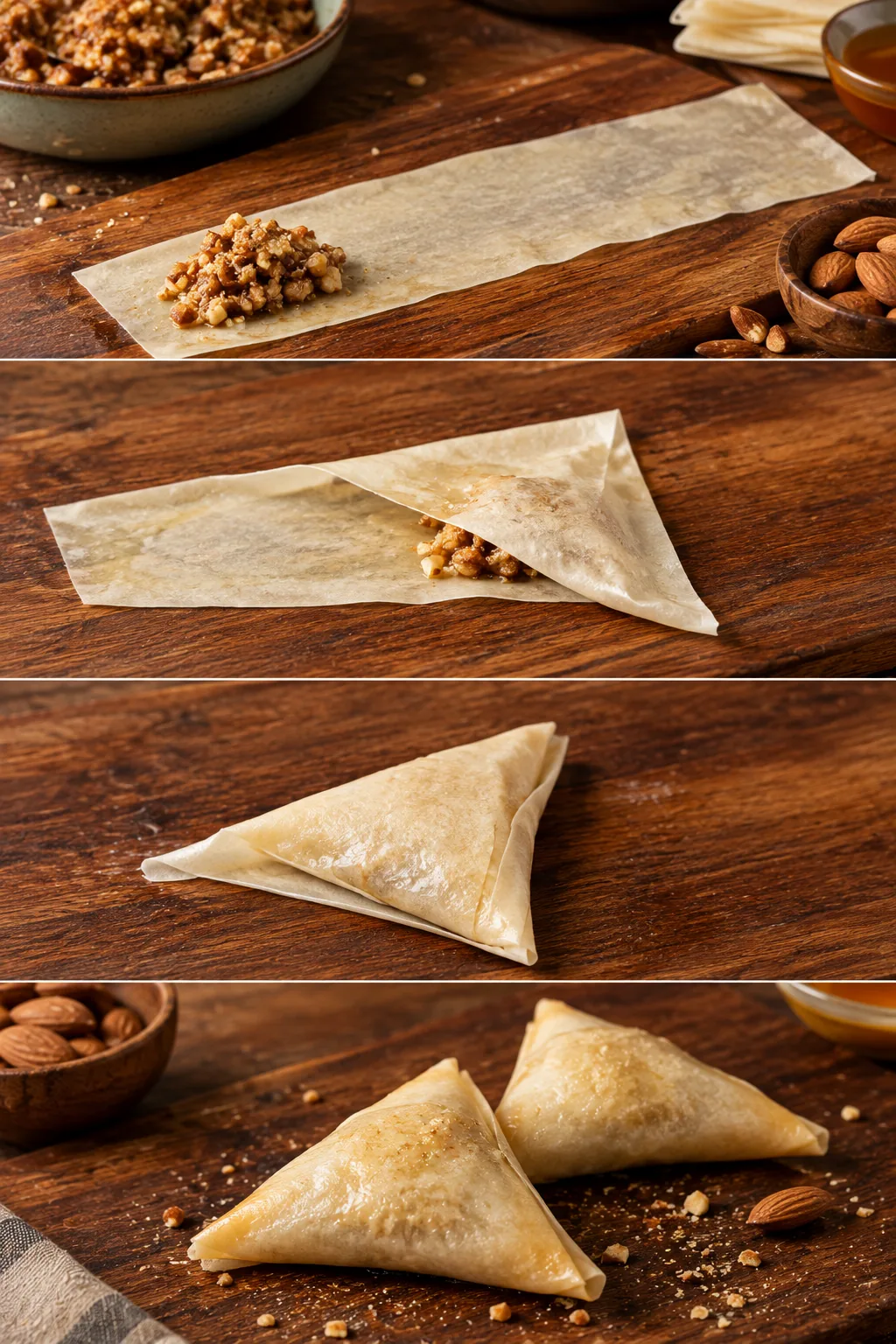
Fold the corner of the strip diagonally over the filling to make a triangle, then keep folding along the strip, right to left and left to right, turning the triangle over on itself until the strip is used up. Seal the final flap with a dab of egg yolk.
Prep tip: This is the flag fold, and it takes a few attempts before your hands learn it. Fold firmly enough that there are no air pockets, since trapped air expands in hot oil and forces the layers apart. The first three will look wrong and the fourth will not.
Step 4: Fry Until Golden
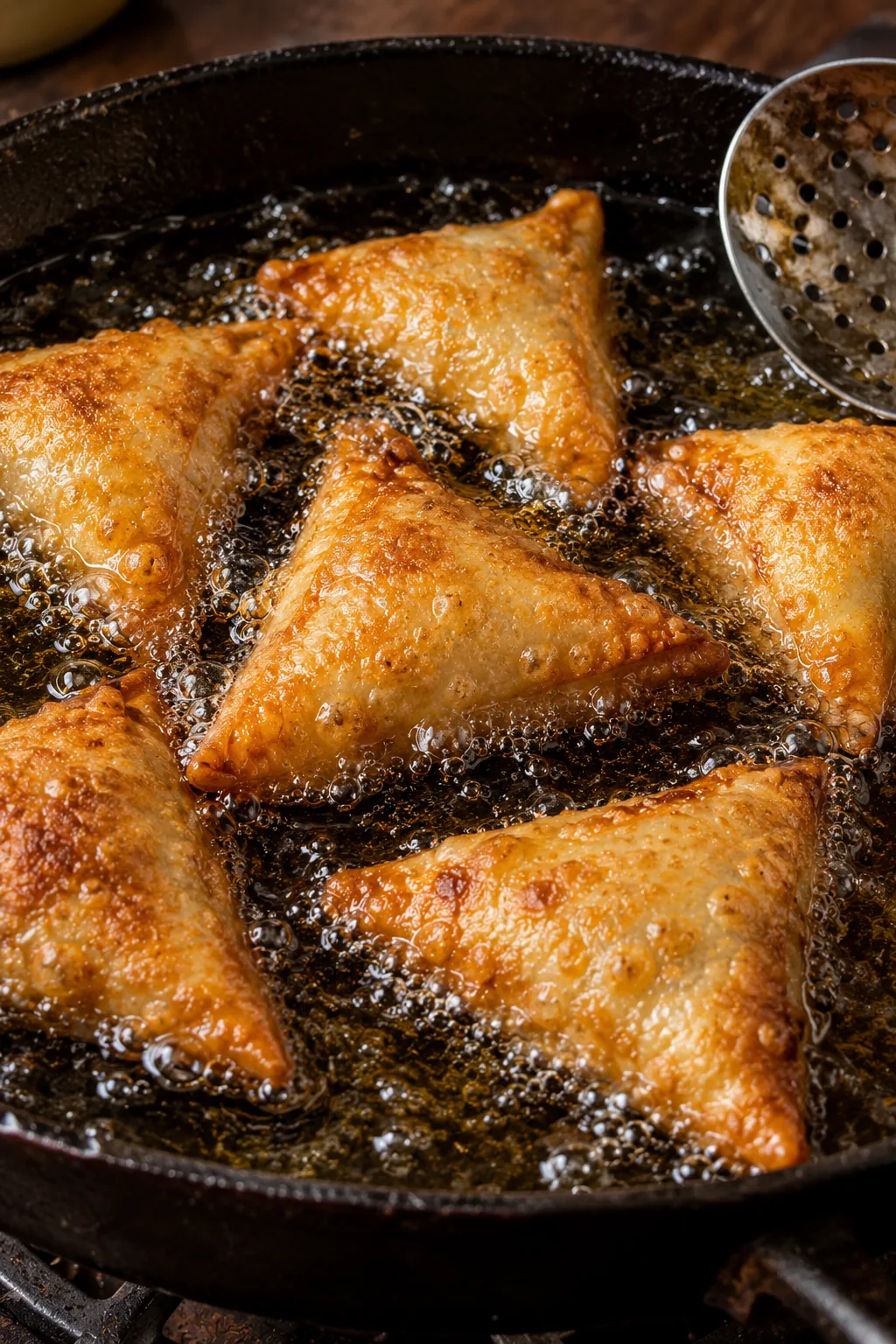
Heat the oil to about 340°F (170°C) and fry the briouates in batches for a couple of minutes per side, until deep golden. Have the warm honey ready before you start.
Prep tip: Medium-hot oil, not screaming hot. These are thin pastry around a sweet filling, and oil that is too hot browns the outside before the inside warms through. Test with one before committing the batch.
Step 5: Straight Into Warm Honey
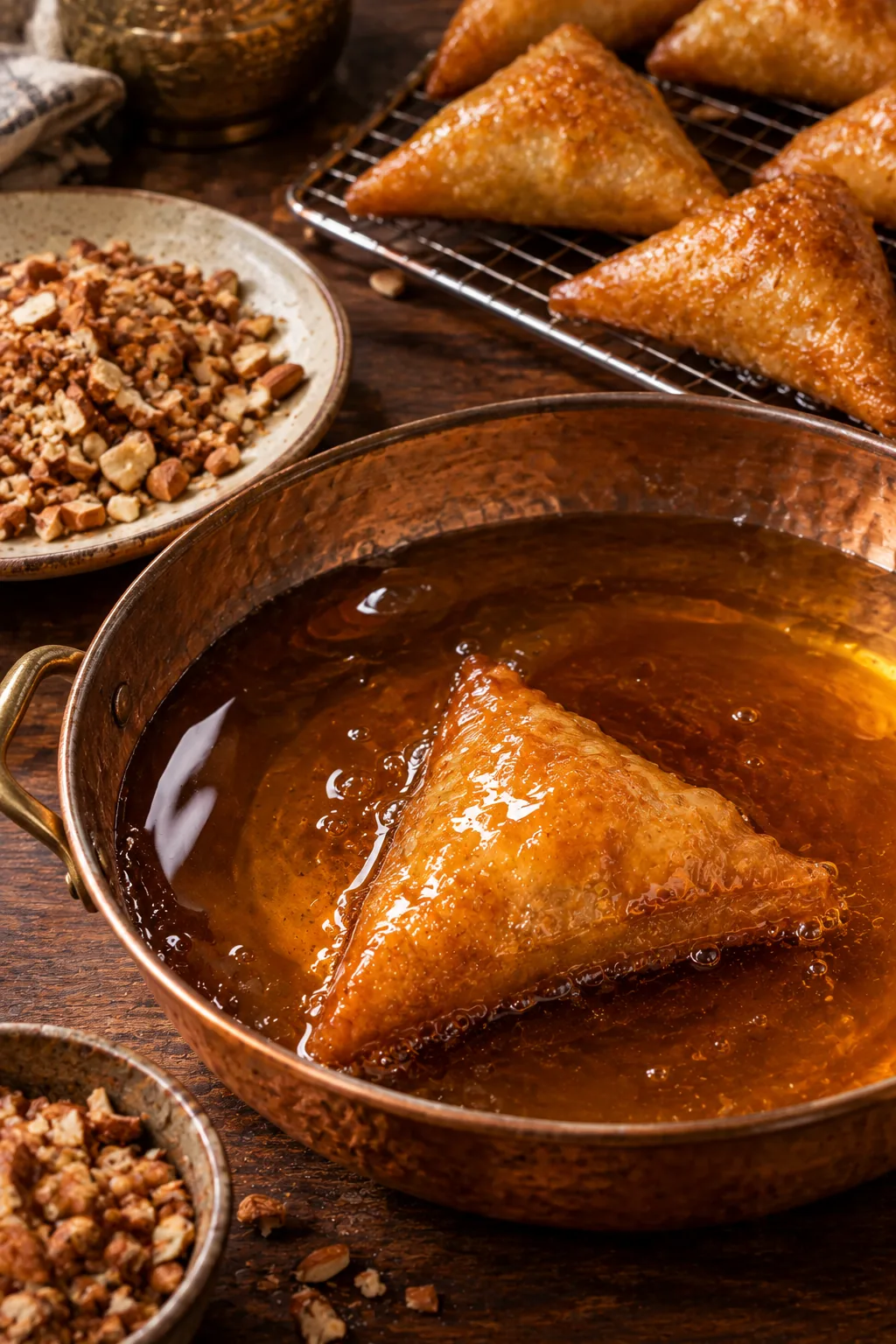
Warm the honey gently in a wide pan until it is fluid but nowhere near boiling. Lift each briouate from the oil and put it straight into the honey, turning to coat, then lift it out to drain. Scatter with the fried chopped almonds while still sticky.
Prep tip: Hot pastry, warm honey, no gap between them. Hot pastry pulls honey into its layers; pastry that has cooled simply gets coated on the outside. And honey heated too far scorches, turns bitter and sets hard on the pastry instead of soaking in.
About Briouates: The Fried Half of the Tea Table
Moroccan sweets divide roughly into the baked and the fried, and briouates lead the fried side. They appear at Ramadan tables alongside chebakia and sellou, at weddings, and whenever a plate needs to look abundant rather than restrained.
The same pastry and the same fold are used for savoury briouates, filled with spiced minced meat, chicken or cheese, and served as a starter. Only the filling and the honey change. It is a close cousin of my Tunisian brik recipe, which uses the same family of paper-thin pastry and the same principle of fry fast, eat immediately.
The mastic and orange blossom water are what place these firmly in Morocco rather than anywhere else, and they run through my kaab ghzal recipe too. For the baked, less sweet end of the same tea table, see my makroun recipe.
Pro Tips for the Best Briouates
- Set up before you fry. Warm honey in one pan, chopped almonds in a dish, a rack for draining. The window between oil and honey is seconds, and it is not the moment to go looking for a bowl.
- Do not crowd the pan. Four or five at a time. Crowding drops the oil temperature and the pastry absorbs oil instead of crisping.
- Storage: Two weeks in an airtight container at room temperature. Do not refrigerate, which makes the honey weep and the pastry soften.
- Freeze them raw. Assembled and unfried, they freeze for a month. Fry straight from frozen with an extra minute, no thawing.
Variations
Baked Instead of Fried
Brush with melted butter and bake at 400°F (200°C) for 15 to 20 minutes, then dip in warm honey as normal. The texture is a little less shattering but the dish works, and the kitchen stays clean.
With Sesame
Roll the honey-dipped triangles in toasted sesame seeds instead of chopped almonds. Common at Ramadan and slightly less rich.
My House Version
In my kitchen these get assembled in a big batch and frozen raw, because the folding is the slow part and frying from frozen takes minutes. The honey pan goes on the heat before the oil does, so there is never a moment of waiting with a hot briouate in the tongs.
What to Serve with Them
Moroccan mint tea, and this is not negotiable in any Moroccan household. My Moroccan mint tea recipe is the pairing, and its relative lack of sweetness is exactly what these need beside them.
On a Ramadan table they sit with dates, chebakia and my harira recipe, which is the traditional order of things: soup first, sweets alongside.
Briouates FAQs
What oil temperature should I use? About 340°F (170°C), medium-hot rather than very hot, for a couple of minutes per side. Older Moroccan cookbooks typically give neither temperature nor time, saying only until golden, which is why this catches people out.
Why must the honey be warm and not hot? Warm honey stays fluid and flows into the pastry layers. Honey heated too far scorches, turns bitter and sets hard on the surface instead of soaking in.
Why do mine leak in the oil? Either the pastry dried out and cracked along a fold, or air was trapped inside and expanded. Keep unused sheets under a damp cloth and fold firmly with no air pockets.
Can I freeze them? Yes, and it is the best way to work. Assemble them raw, freeze flat, and keep for a month. Fry straight from frozen with about an extra minute per side.
What can I use instead of warqa? Two stacked sheets of filo, brushed lightly between, or Tunisian malsouka. Filo is thinner and more fragile so it cracks more readily during folding.
Fry Fast, Dip Hot, Eat Warm
Keep the pastry covered, fold with no trapped air, fry at a moderate temperature, and move each triangle straight from the oil into warm honey. Four disciplines, and the last one is the only one that has to happen quickly.
Make a batch before Ramadan or your next tea table and report back: fried or baked, and how many folds it took before your hands understood the triangle. Mine took about six.
Rate this recipe
No ratings yet — be the first!



Comments
No comments yet. Yours would be the first.
Made this? Tell me how it went, what you changed, and whether it worked in your kitchen.
Leave a comment
Comments are anonymous and appear after admin approval. If you rated this recipe above, your stars will show with your comment.