More Than a Drink
Think mint tea means dunking a teabag and adding a sprig? Morocco would like a word. This Moroccan mint tea recipe uses just three ingredients (green tea, fresh mint, sugar), but the method is what turns them into something else entirely: a bright, sweet, almost sparkling glass that Moroccans pour all day, every day.
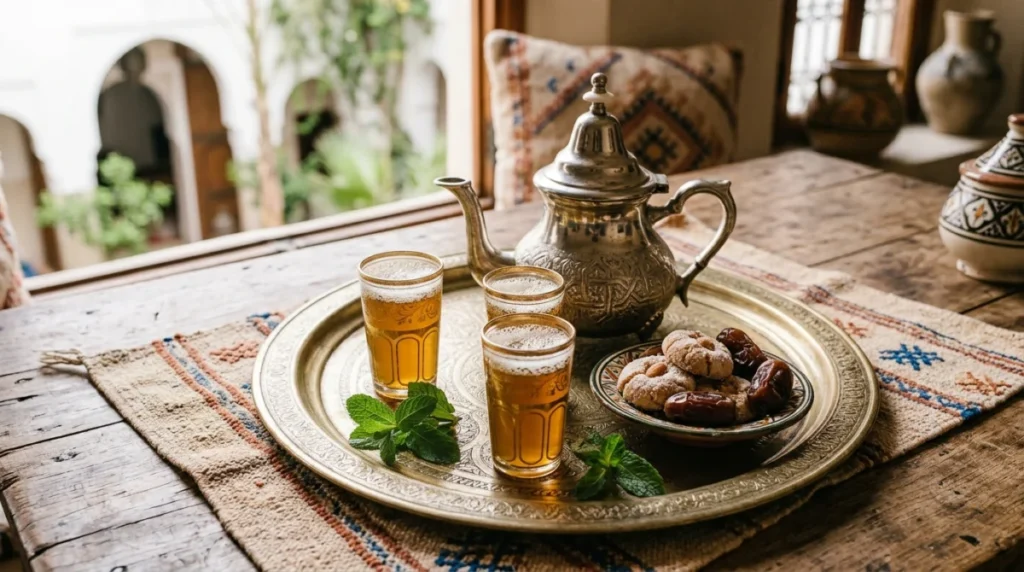
Done right, the tea is aromatic and refreshing rather than heavy, the mint riding on top of the green tea instead of drowning it, with a light foam on each glass from the famous high pour. It is the drink that ends every meal on this blog and starts most mornings in Morocco.
The tea tray comes out whenever guests do, and two things are worth promising up front: you do not need the silver teapot, and the high pour is a learnable trick rather than a birthright. Both the why and the how are below.
You will find the three-ingredient list, where to buy gunpowder green tea in the US and UK, five numbered steps with photos, the step that keeps tea from turning bitter, and the most-searched questions answered.
Why the Pour Matters
- Three ingredients, all findable. Gunpowder green tea is the only item needing a note, and any green tea stands in. Fresh mint from every supermarket is the right mint (more on that below).
- No special equipment. A regular teapot or even a saucepan works. The traditional silver pot is beautiful but changes nothing about the flavor.
- Ten minutes, start to glass. This is the fastest recipe on this blog, and the one you will repeat most often once it clicks.
- Naturally everything. Vegan, gluten-free, halal, and dairy-free without trying. The only decision is how much sugar, and the recipe shows you how to scale it honestly.
About Atay: Morocco’s National Ritual
Mint tea, called atay, is the heartbeat of Moroccan hospitality. It is offered the moment a guest sits down, refusing it is nearly impossible, and preparing it is traditionally a small ceremony performed at the table.
The tea itself is Chinese gunpowder green tea, which arrived through trade in the nineteenth century and met North African mint and sugar to create something new. The famous pour from high above the glass is not showing off (well, not only): it aerates the tea, raises a delicate foam, and cools each glass to drinking temperature.
Across Morocco and much of North Africa, the saying goes that the first glass is gentle as life, the second strong as love, and the third bitter as death, because the same pot is traditionally steeped and poured three times. This recipe gives you the crowd-pleasing first-glass style.
Tea, Mint, Sugar, Water
What You Need on the Tray
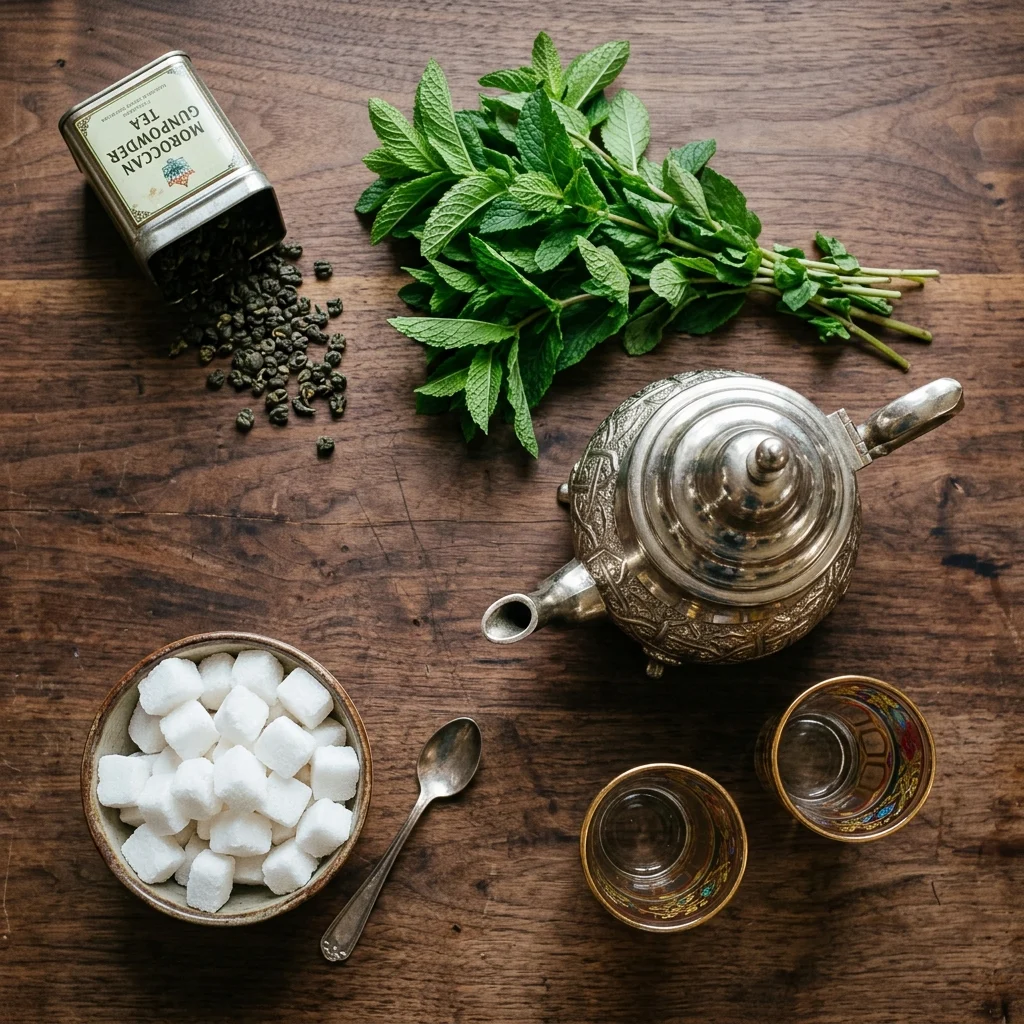
Serves 4 to 6 small glasses:
- 1 tablespoon gunpowder green tea leaves (see sourcing note)
- 1 large handful fresh spearmint sprigs (about 15 to 20 stems), washed
- 3 to 5 tablespoons sugar, to taste
- 4 cups (1 liter) water, just off the boil
That is the whole list. The optional extras Moroccans reach for by season: a few leaves of fresh absinthe wormwood (sheeba) in winter, or orange blossoms in spring. Skip both without guilt.
Where to Find Gunpowder Green Tea in the US and UK
Gunpowder tea (green tea rolled into small pellets, named for the resemblance) is the traditional base. In the US and UK, look in the tea aisle of larger supermarkets, at any Middle Eastern or Mediterranean grocery, in Chinese groceries, or on Amazon, where a large tin costs very little.
The mint is easier than you think: standard supermarket mint in the US and UK is spearmint, exactly the right species. A living potted mint on the windowsill pays for itself in three pots of tea.
Without Gunpowder Tea
- No gunpowder tea? Any plain green tea works, loose or even bags (use 3 bags). Avoid jasmine or flavored green teas, which fight the mint.
- Dried mint only? Use 2 tablespoons, and add a strip of lemon peel to fake the freshness. Better than no mint tea, though fresh is the soul of it.
- Cutting sugar? Start with 1 tablespoon rather than none. Traditional atay is genuinely sweet, but the recipe survives at any level; only zero sugar changes its character completely.
Rinsing, Steeping, and the High Pour
Step 1: Rinse the Tea Leaves
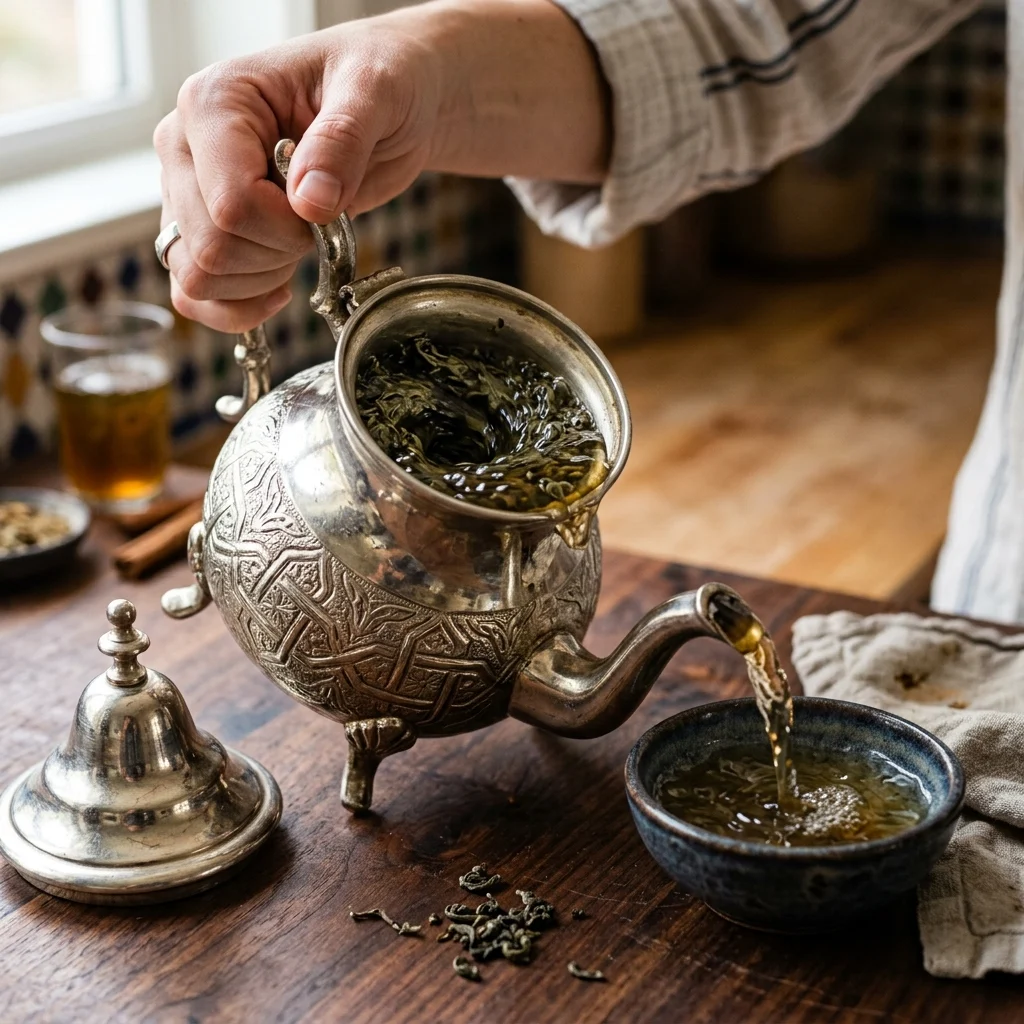
Put the gunpowder tea in your teapot and pour in about ½ cup of the hot water. Swirl for 30 seconds, then pour that water away, holding the leaves back. This quick rinse washes off dust and, crucially, much of the bitterness.
Prep tip: This is the step nobody skips in Morocco and everybody skips abroad, and it is the whole difference between smooth and bitter tea. The same leaves rinsed and unrinsed produce noticeably different pots, and the unrinsed one needs roughly twice the sugar to hide its edge.
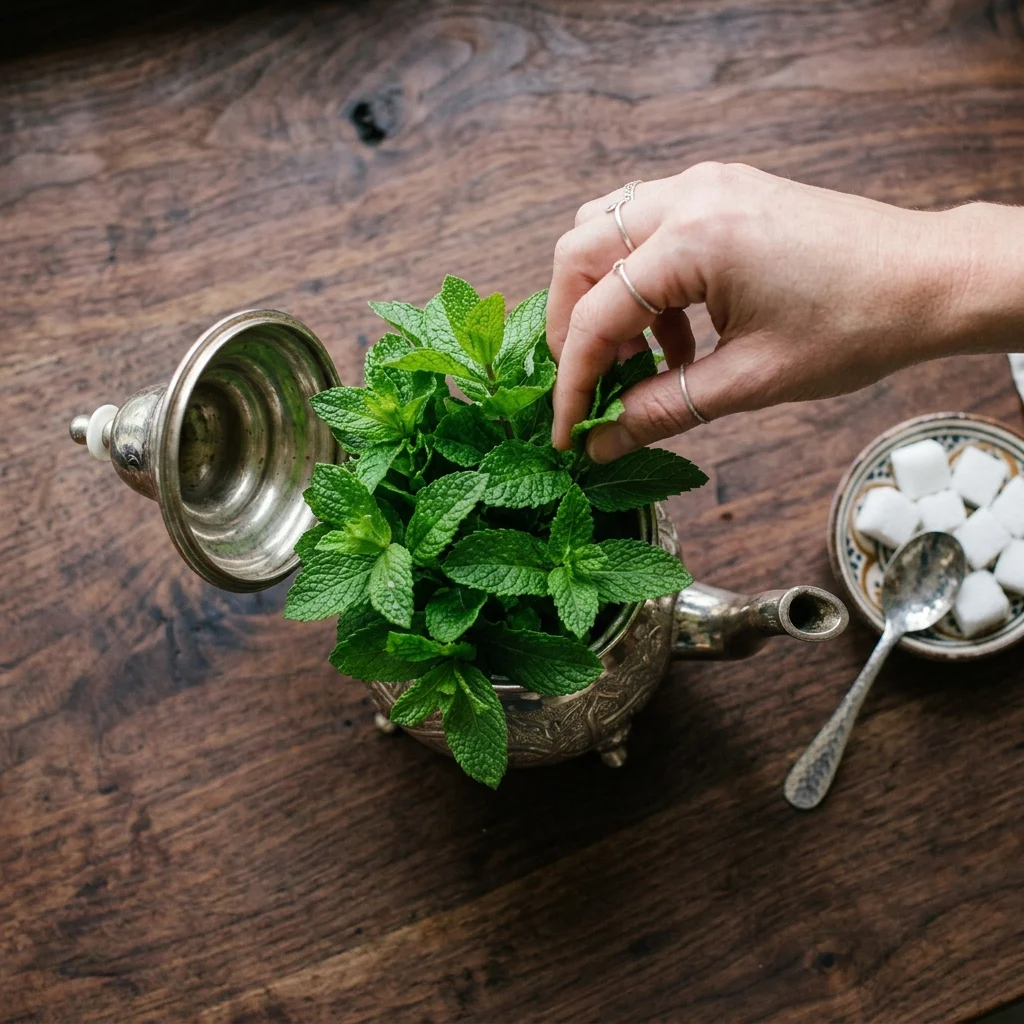
Step 2: Add the Mint and Sugar
Pack the mint sprigs into the pot, stems and all, and add the sugar on top. Do not chop or crush the mint; whole sprigs release aroma without turning the tea muddy or dark.
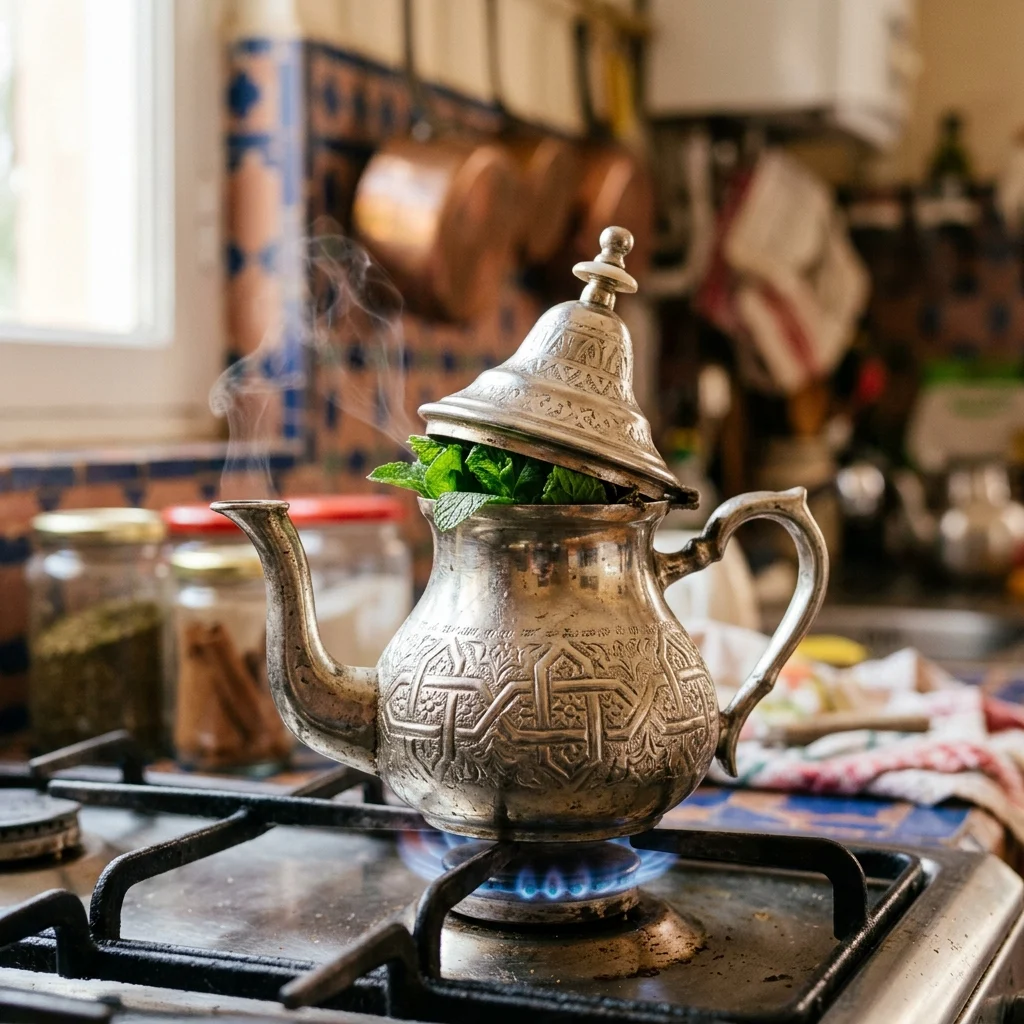
Step 3: Brew Gently
Pour in the rest of the hot water, put the pot over low heat (or just cover it if your pot cannot go on the stove), and let it brew for 3 to 5 minutes. If it is on the heat, catch it as it barely returns to a simmer, then remove it.
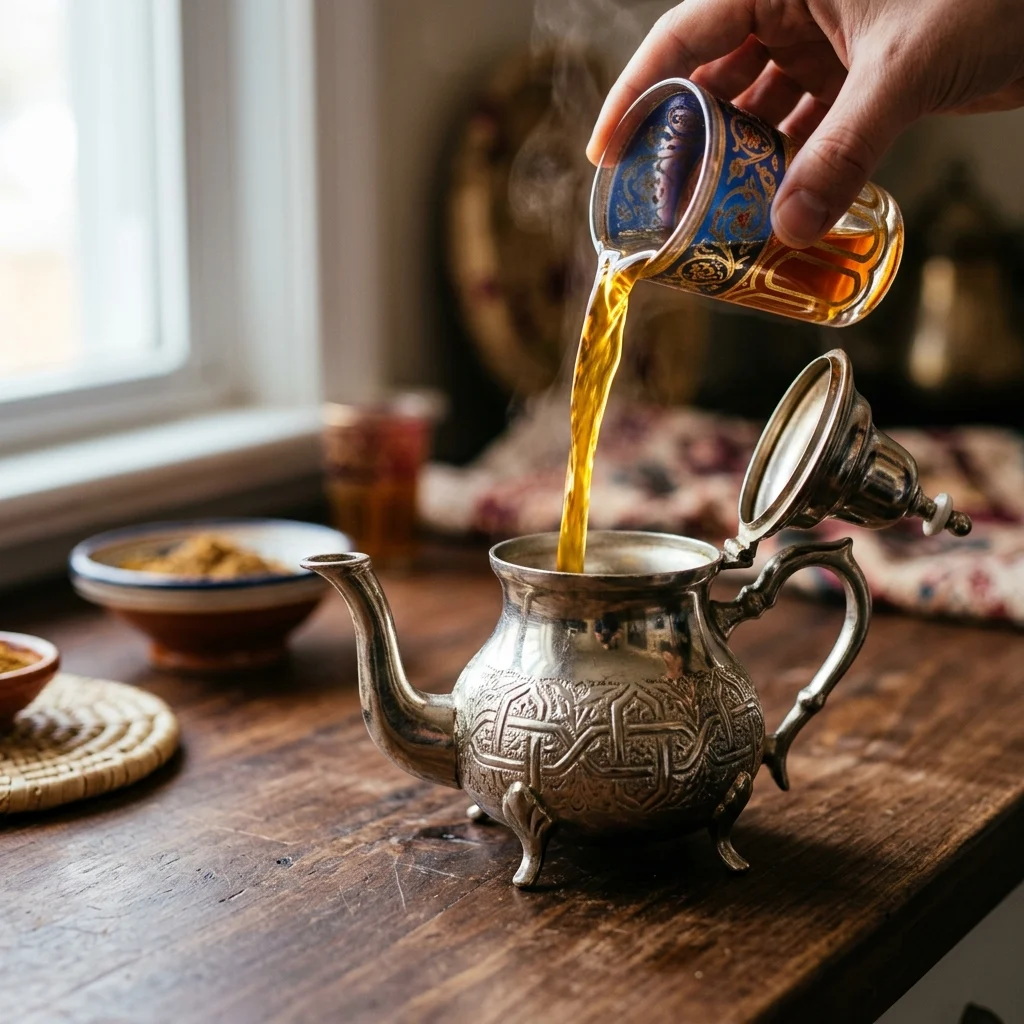
Step 4: Mix by Pouring
Pour one glass of tea, then pour it straight back into the pot. Do this twice more. This is how Moroccans dissolve the sugar and blend the brew without stirring, and it works better than a spoon ever does.
Prep tip: Taste that third glass before pouring it back. This is your moment to adjust: more sugar, another minute of brewing, or a splash of hot water if it is too strong. Once it is right in the glass, it is right in the pot.
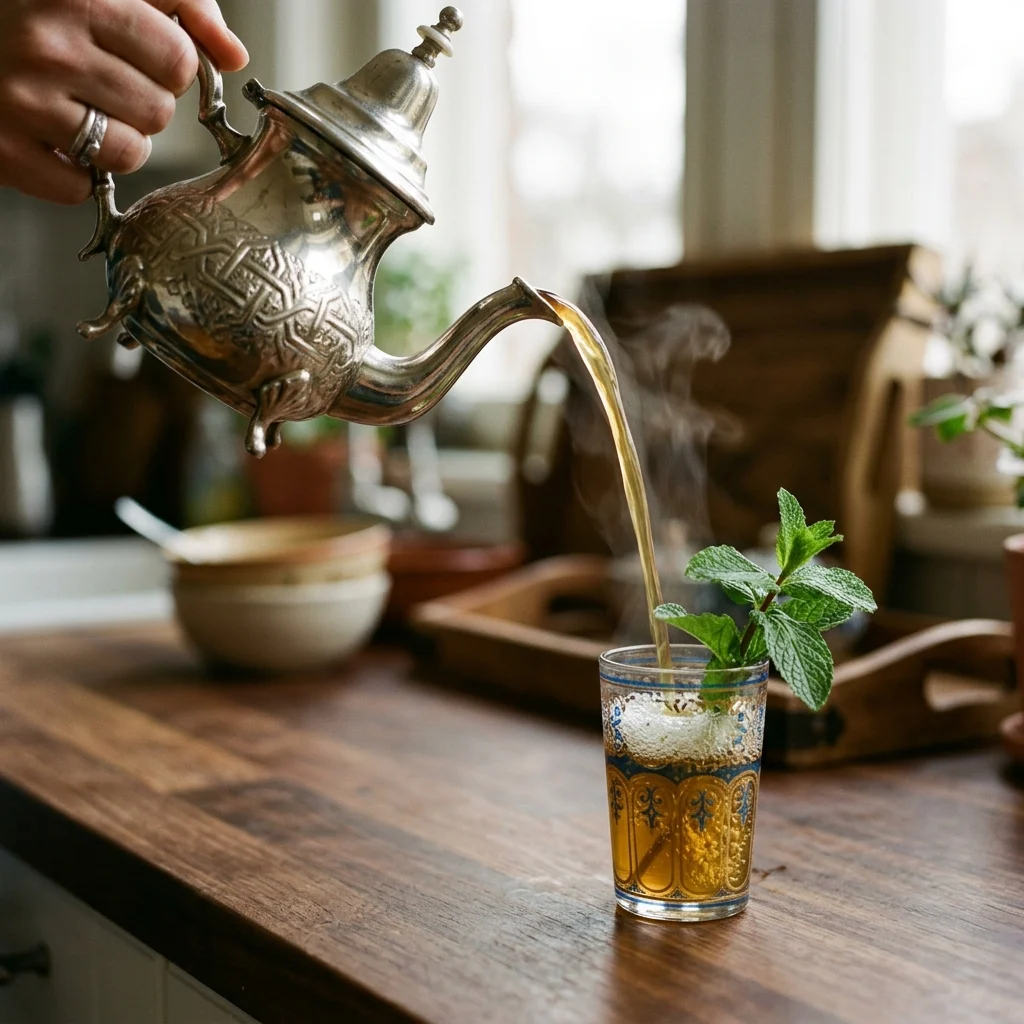
Step 5: Pour from Height
Fill each glass by pouring from as high as you can manage steadily, starting low and lifting the pot as you pour. A light foam should crown each glass. Serve hot, in small glasses, with something sweet alongside.
Avoiding Bitterness
- Practice the high pour over the sink. Everyone spills the first few times, and the trick is a thin, steady stream rather than maximum height. Even eight inches raises foam.
- Small glasses, not mugs. Moroccan tea glasses hold a few ounces for a reason: the tea stays hot to the last sip and the sweetness reads as festive rather than heavy. Espresso cups or small tumblers work.
- Storage is not really a thing. Mint tea is made to be drunk within the hour; the mint stews and darkens if it sits. For a crowd, brew fresh pots in rounds, which is exactly what tradition does.
- Refresh the pot, not the leaves. For a second round, add fresh mint, a little more sugar, and more hot water to the same leaves. That progression of strength is the three-glasses saying in action.
Sugar Levels and Winter Herbs
Iced Moroccan Mint Tea
Brew the recipe at double strength (same water, double tea and mint), sweeten while hot, and pour over full glasses of ice with fresh mint sprigs. This has become common in modern Moroccan cafés in summer and converts perfectly to a US or UK heatwave.
Lighter, Less Sweet Atay
Use 1 tablespoon of sugar for the whole pot and add a strip of orange or lemon peel with the mint. The citrus oil fills the space the sugar leaves behind. This is the everyday version; the full-sugar pot is for guests.
What Rides Along With the Tray
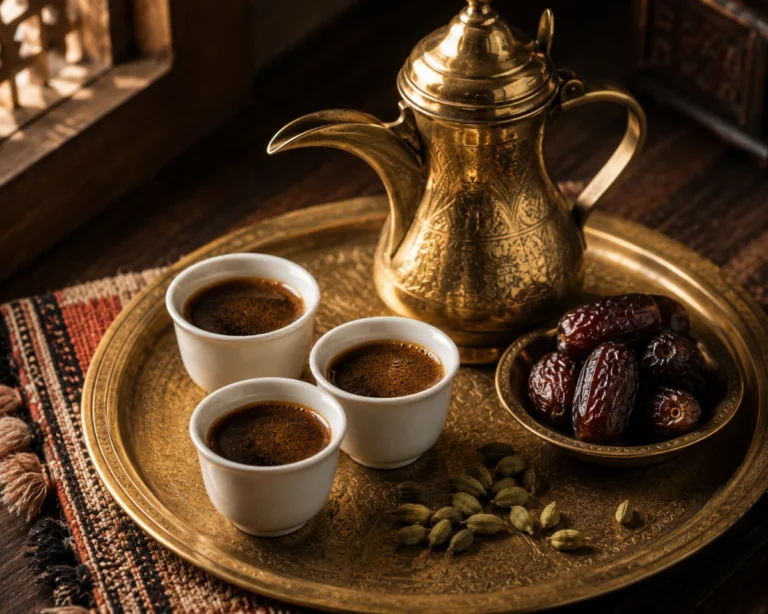
The tea tray never travels alone in Morocco: something sweet always rides along, even just a few dates. When there has been baking, it carries the Moroccan almond cookies or squares of namoura, and the tea’s job is to be the bright, hot counterpoint to all that syrup and almond.
What Comes on the Tray
Traditionally, atay accompanies sweets in the afternoon (the Moroccan almond cookies and namoura exist for this moment) and cuts through rich breakfasts of bread, honey, and olive oil, so the easy Moroccan bread recipe belongs beside it in the morning.
For familiar Western settings, treat it as you would good coffee after dinner: it is the perfect light ending after a heavy meal like the chicken tagine recipe, and an iced pitcher of it upgrades any summer barbecue table.
Mint Tea, Answered
Does Moroccan mint tea have caffeine? Yes, moderately: green tea carries roughly a third of coffee’s caffeine per glass, and the small glass size lowers it further. For an evening pot, brew briefly or use decaf green tea; the mint does most of the aromatic work.
What kind of mint is used in Moroccan tea? Spearmint, which is conveniently the standard mint sold in US and UK supermarkets. Peppermint is stronger and more menthol-heavy; it works in a pinch but tastes noticeably different from the real thing.
Can I make Moroccan mint tea ahead of time? It is best fresh within the hour, since the mint darkens and stews as it sits. The iced version is the exception: brew it strong, chill it without the mint, and add fresh sprigs when serving.
Why is Moroccan tea poured from so high? Three practical reasons wrapped in one beautiful gesture: the height aerates the tea, raises the signature foam on each glass, and cools the tea to drinking temperature. It also signals care for the guest.
How much sugar is traditional in Moroccan mint tea? Genuinely a lot: traditional pots run sweet, often several tablespoons. This recipe gives a range from 3 to 5 tablespoons and works at 1 for a lighter pot, so sweeten to your own table’s taste.
Pour Your First Glass from a Height
Every recipe on this blog eventually points here: the glass that ends the tagine, accompanies the cookies, and welcomes the guest. Three ingredients, ten minutes, and one pour worth practicing over the sink.
Brew a pot this week and tell me in the comments how your high pour went, foam or splash. And pour a glass for someone: in Morocco, mint tea is never really made for one.
Rate this recipe
No ratings yet — be the first!

Do not skip the first rinse of the tea leaves. Thirty seconds of hot water poured away is the difference between smooth atay and a pot that needs twice the sugar to hide its bitterness.
Comments
No comments yet. Yours would be the first.
Brewed a pot? Tell me how the high pour went, foam or splash.
Leave a comment
Comments are anonymous and appear after admin approval. If you rated this recipe above, your stars will show with your comment.