
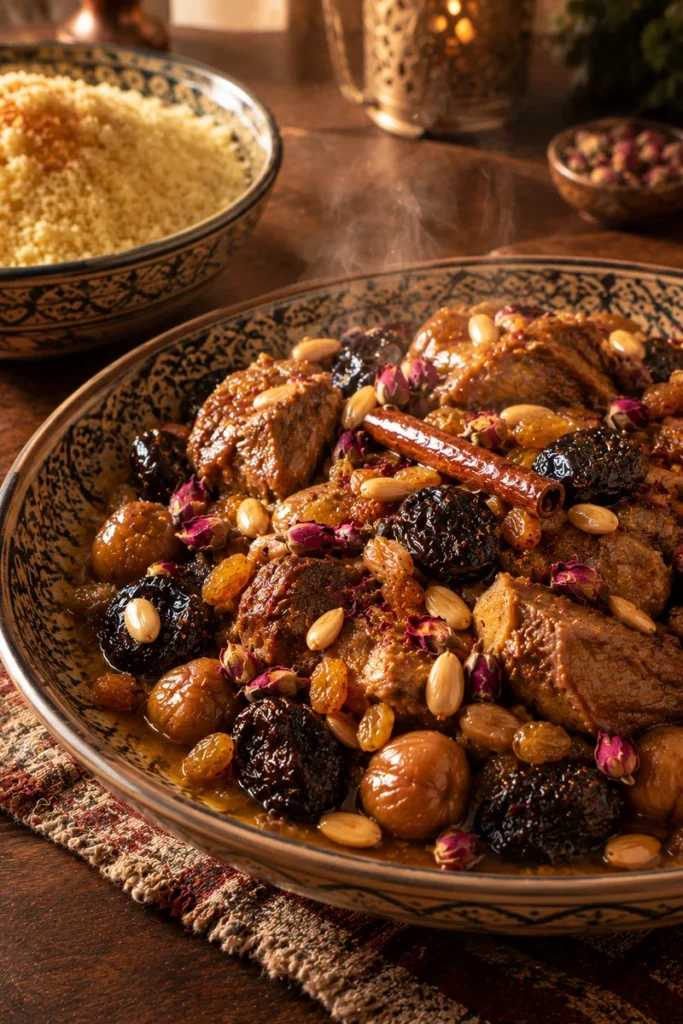
The Dish That Breaks Every Rule You Know
Almost everything else on this blog is savoury in the way Western cooking understands savoury. Sauce douce is not. It is lamb simmered until tender with prunes, raisins, chestnuts and honey, scented with cinnamon, saffron and dried rose buds, and it arrives at the table tasting like nothing else in the North African repertoire.
If sweet meat sounds wrong, it is worth saying that this pairing is much older than the modern separation of sweet from savoury. Medieval cooking across the Mediterranean and Middle East did this constantly, and Tunisia kept it for the dishes that matter: weddings, Eid, and the tables where a household shows what it can do.
The name simply means sweet sauce, and the balance is the whole skill. Done well it is rich and fragrant with the sweetness sitting underneath the lamb rather than on top of it. Done carelessly it tastes like dessert with meat in it, and the difference comes down to when the honey goes in.
In my kitchen this appears for celebrations rather than weeknights, partly because of the chestnuts and partly because it deserves an occasion. The method below is unhurried, and the one thing it asks is that you resist adding the honey early.
Ahead: where to find rose buds and chestnuts, the ingredient list, five steps with photos, the timing that keeps it balanced, and what to serve alongside.
Finding the Two Unusual Ingredients
Most of this is a normal shopping list. Two items are worth planning for.
Dried rose buds. Sold whole or ground as boutons de rose at North African and Middle Eastern groceries, and widely available online. They are floral rather than perfumed and they give the dish its distinctive scent. If you cannot find them, half a teaspoon of rose water stirred in at the very end is an imperfect but workable substitute. Grind whole buds in a spice grinder or crush them in a mortar.
Chestnuts. Vacuum-packed cooked chestnuts are the easiest option and are stocked by most supermarkets, especially around winter. Tinned works too. Fresh chestnuts need scoring, roasting and peeling, which is an afternoon in itself, and the packed ones are genuinely fine here.
Everything else is standard. Prunes and raisins from any supermarket, saffron from the spice aisle or a Middle Eastern shop where it costs considerably less.
Ingredients You’ll Need for Sauce Douce
Main Ingredients
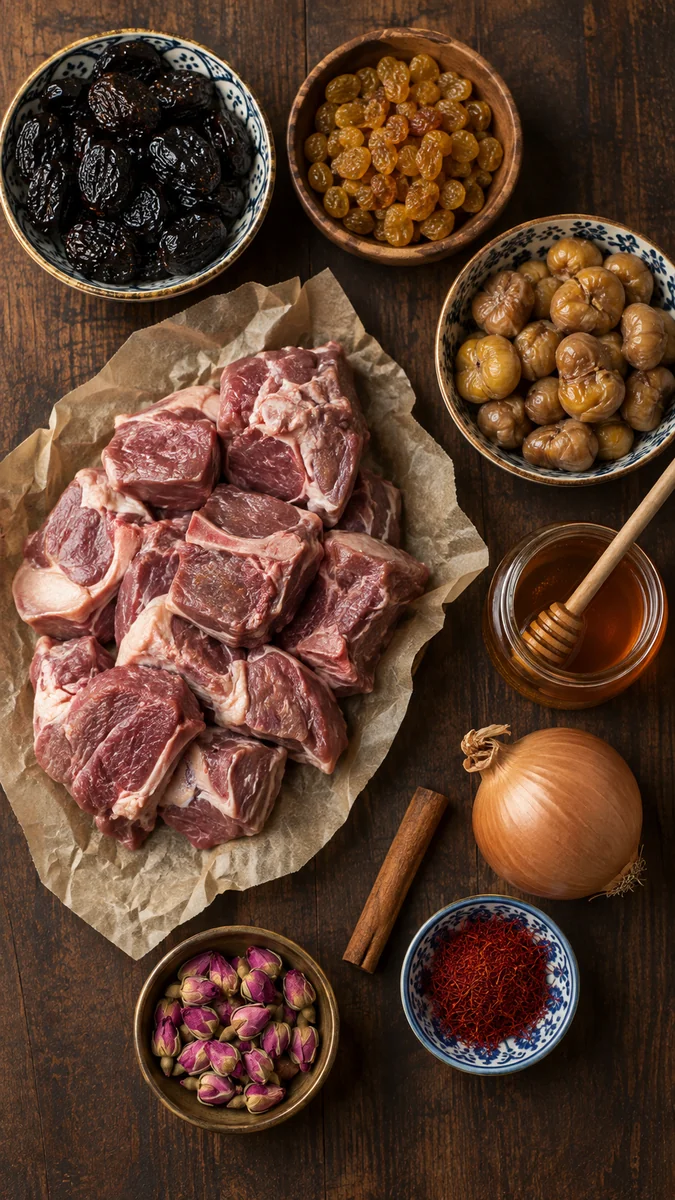
Serves 6
For the lamb:
- 1 lb 2 oz (500 g) lamb, cut into medium pieces
- 1 medium onion, finely chopped
- ½ cup (about 100 ml) olive oil
- Pinch of saffron threads
- 1 teaspoon salt
- ½ teaspoon black pepper
- ¼ teaspoon ground dried rose buds
- 2 cups (about 500 ml) water
For the fruit and nuts:
- 7 oz (200 g) prunes, pitted
- 3½ oz (100 g) raisins
- 5 oz (150 g) cooked chestnuts
To finish:
- 1 tablespoon honey
- ½ teaspoon ground cinnamon
- ¼ teaspoon ground dried rose buds
- Optional: 2 tablespoons toasted almonds or sesame seeds
Easy Substitutions
- No chestnuts? Blanched almonds are the usual alternative and give a different but very good result. Add them with the fruit.
- No prunes? Dried apricots work, and the dish becomes brighter and slightly more tart. Many households use a mix of both.
- No saffron? A quarter teaspoon of turmeric gives the colour. You lose the perfume, which matters more here than in most dishes.
Step-by-Step Instructions: Sauce Douce in 5 Steps
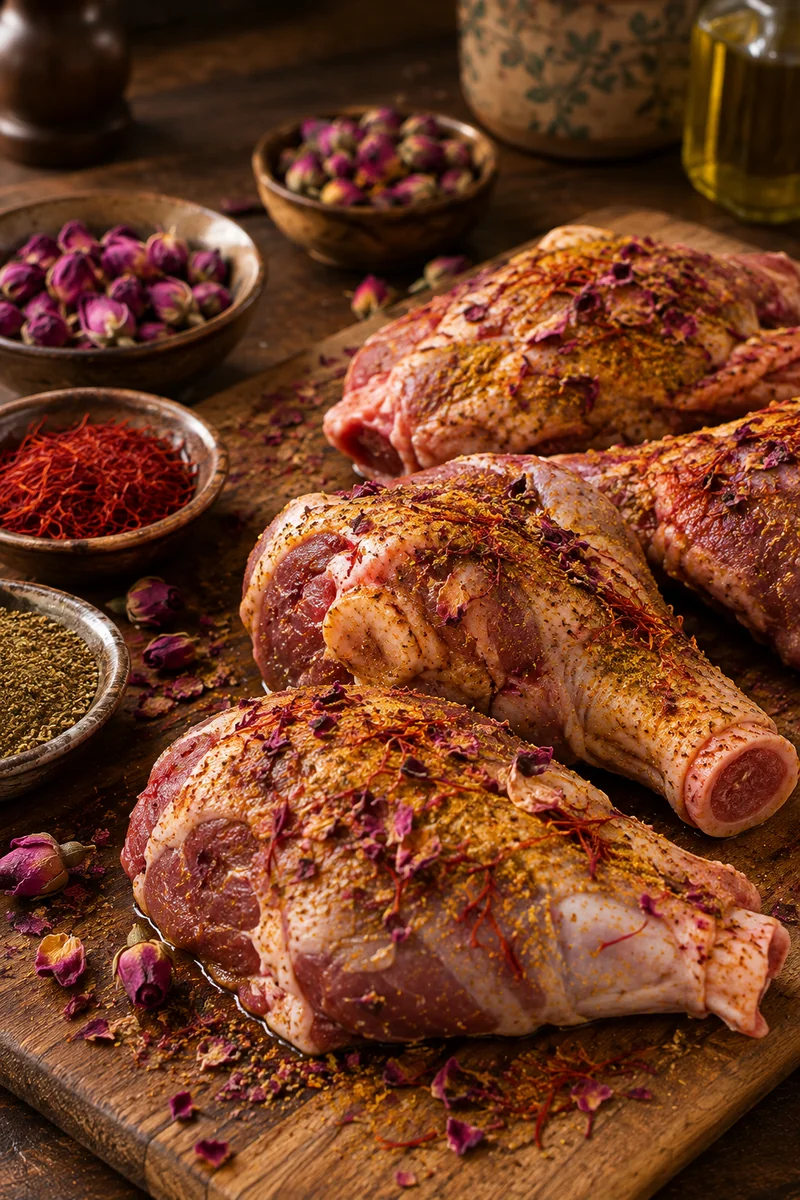
Step 1: Season the Lamb and Let It Sit
Rub the lamb pieces with the salt, pepper, saffron and the first quarter teaspoon of ground rose buds. Leave for 15 minutes while you chop the onion.
Prep tip: The rose goes in twice in this recipe, once now and once at the end, and the two do different jobs. Early rose cooks into the meat and becomes a background note. Late rose stays floral and sits on top. Using it only at the end gives you perfume without depth.
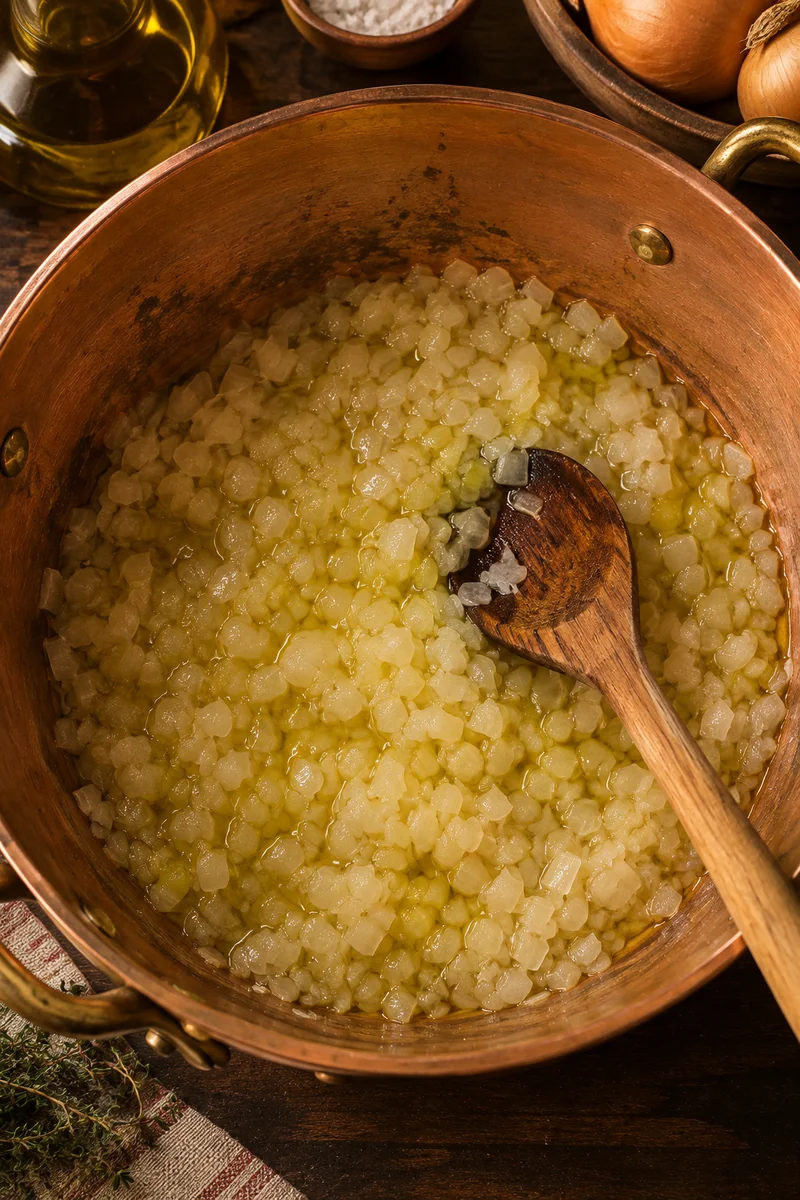
Step 2: Soften the Onion
Heat the olive oil in a heavy pot and cook the chopped onion gently for 5 to 10 minutes, stirring, until soft and translucent but not coloured.
Prep tip: Keep the onion pale. Browning it adds a savoury depth that fights the sweetness later, and this is one of the few dishes on this blog where you genuinely do not want caramelisation at the start.
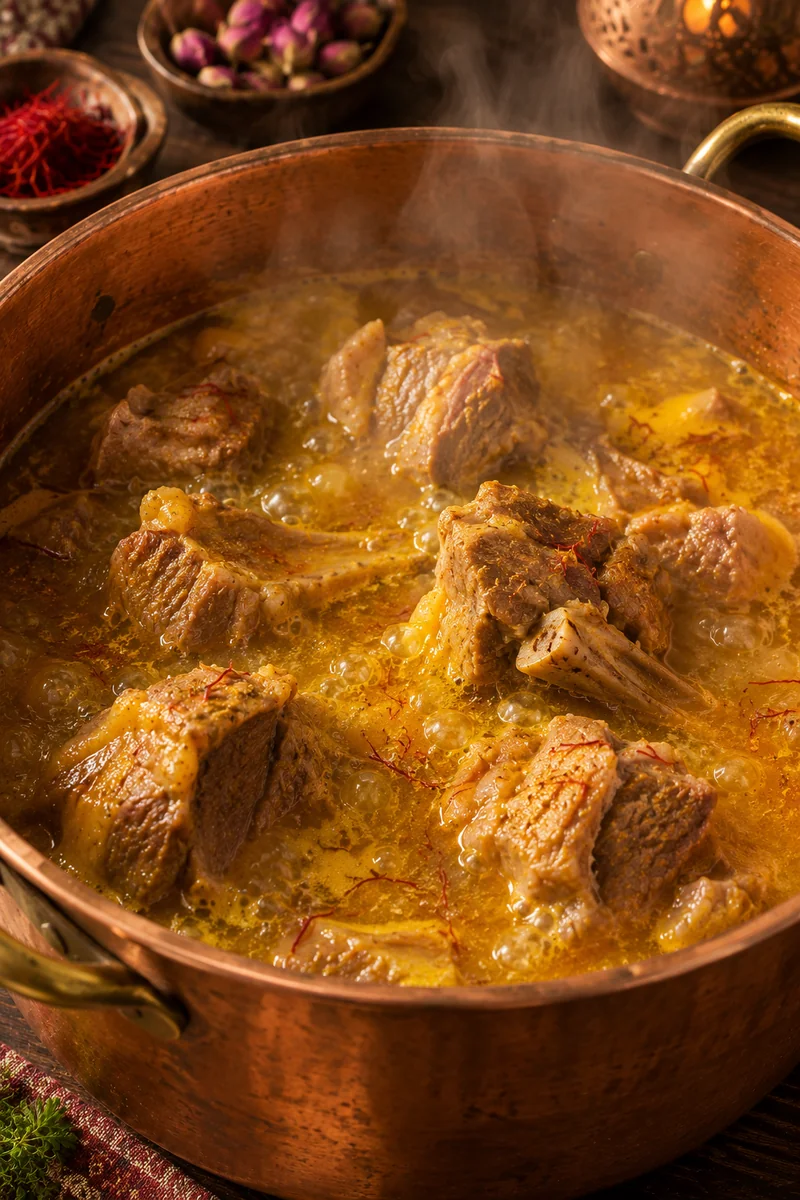
Step 3: Add the Lamb and Simmer
Add the seasoned lamb to the pot and turn it in the oil for a few minutes, then pour in the water. Bring to a simmer, cover, and cook on low for 20 to 30 minutes, until the lamb is tender and the liquid has reduced.
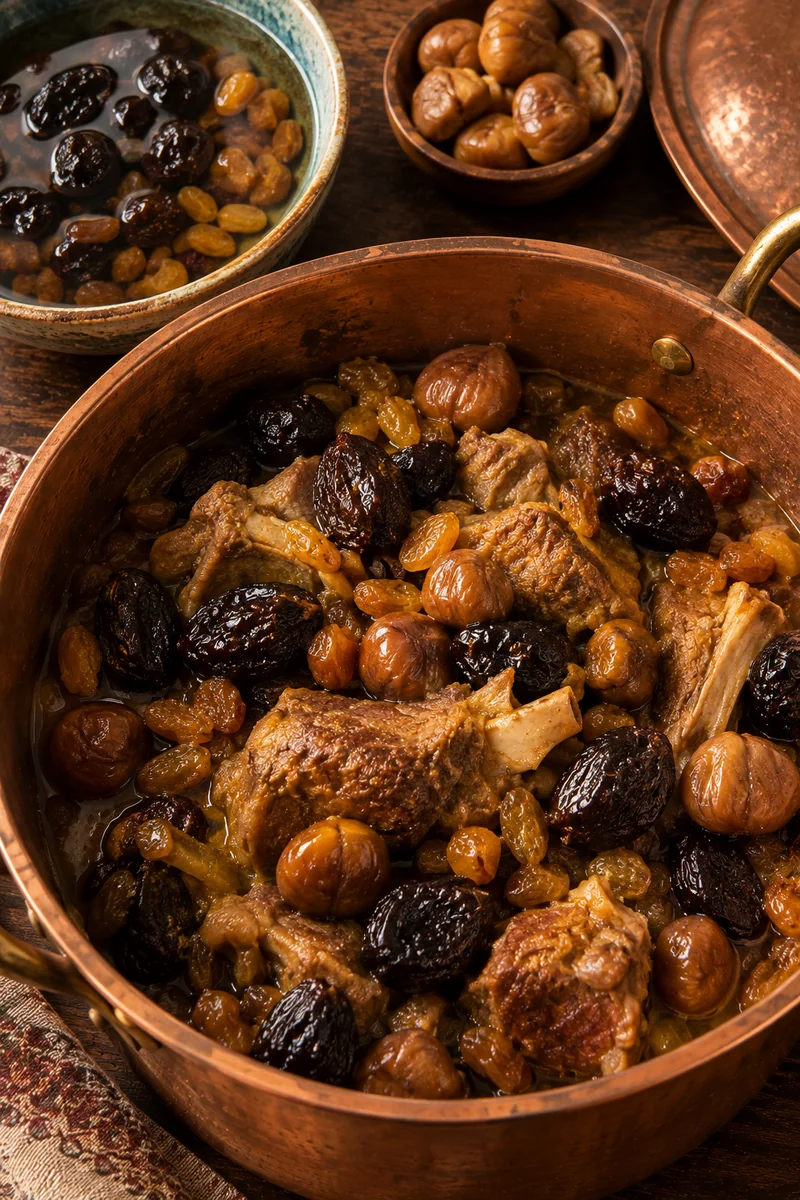
Step 4: Soak the Fruit, Then Add It
While the lamb cooks, soak the prunes and raisins in warm water for 10 minutes, then drain them. Add them to the pot with the chestnuts and cook gently for 10 to 15 minutes more, until the fruit has plumped and softened into the sauce.
Prep tip: Soak the dried fruit rather than adding it straight from the packet. Unsoaked prunes and raisins draw liquid out of the sauce as they rehydrate, which leaves the pot dry and the fruit still chewy. Ten minutes in warm water solves both.
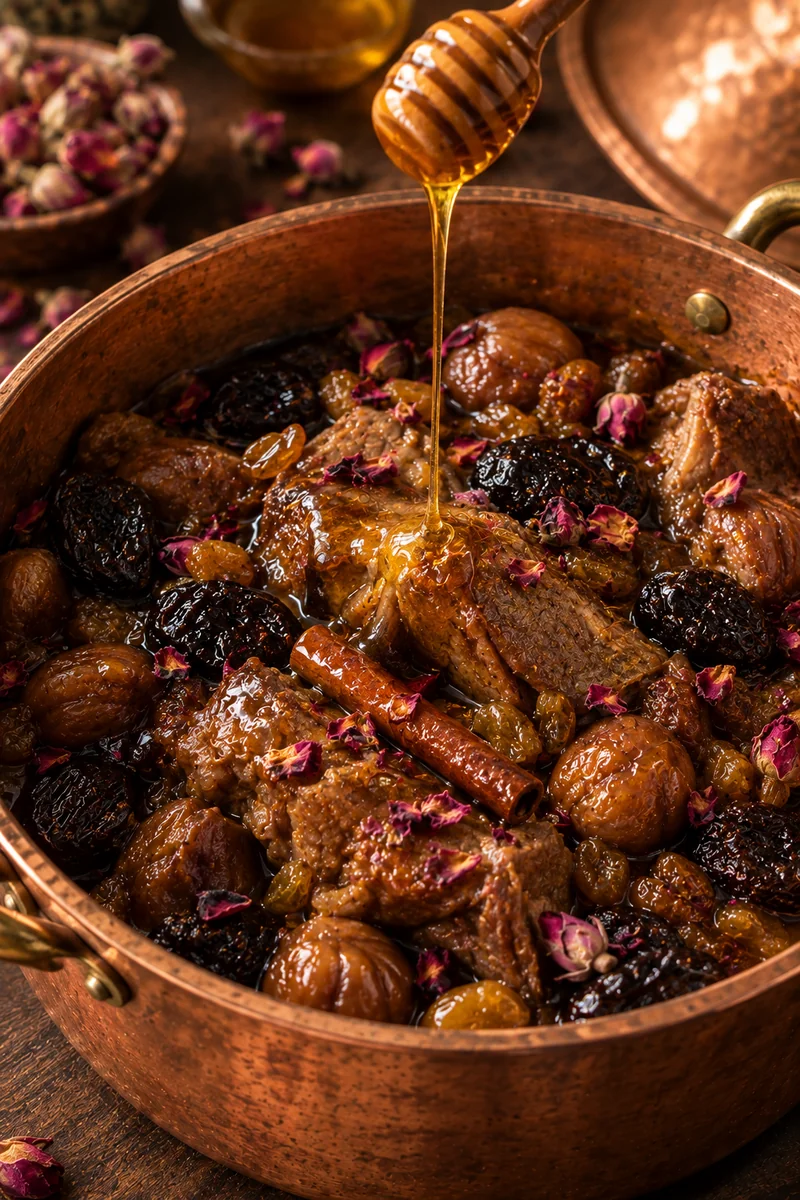
Step 5: Honey and Rose at the End
Stir in the honey, cinnamon and the second quarter teaspoon of ground rose buds. Cook uncovered for 5 minutes more, until the sauce is glossy and slightly thickened. Taste and adjust. Scatter with toasted almonds if using and serve hot.
Prep tip: The honey goes in at the end and only at the end. Added early it cooks down, loses its floral character and turns the whole pot flatly sugary, which is exactly how this dish gets its reputation for being too sweet. Five minutes at the finish is all it needs.
About Sauce Douce: Festive Food with Old Roots
Sweet and savoury meat dishes run right through the historical cooking of the Mediterranean and the Middle East, and North Africa preserved them more faithfully than most. Morocco has lamb with prunes and almonds, and its couscous tfaya with caramelised onions and raisins. Tunisia has sauce douce.
It belongs to celebration cooking rather than everyday cooking. It appears at weddings, at Eid, and at the meals where a family is feeding guests it wants to impress, which is partly why the ingredient list includes things a household would not buy casually.
The rose buds are the detail that marks it as Tunisian rather than Moroccan. They appear in Tunisian spice blends and sweets, and their floral note against lamb and honey is unlike anything else in the region.
Pro Tips for the Best Sauce Douce
- Taste before you finish. Prunes vary enormously in sweetness, and a very sweet batch may mean you want less honey than the recipe says. Adjust at the end rather than committing early.
- Keep the pot at a bare simmer. A hard boil breaks the prunes apart and clouds the sauce. You want them plump and whole in the finished dish.
- Serve it in a shallow dish. The fruit and nuts should be visible on top rather than buried, since half the appeal of this dish is how it looks.
- Storage: Keeps 3 days in the fridge and improves overnight as the fruit and the sauce settle together. Freezes for 2 months, though the chestnuts soften slightly.
Variations
With Apricots
Replace half the prunes with dried apricots for a brighter, slightly sharper version. Common in some households and worth trying if the full prune version feels too dark.
With Almonds Instead of Chestnuts
Blanched almonds, added with the fruit, are the standard alternative. They stay firmer than chestnuts and give the dish more bite.
My House Version
In my kitchen a little of the fruit soaking water goes into the pot rather than being discarded, because it carries flavour and helps the sauce along. And the toasted almonds go on at the table rather than in the pot, so they stay crisp against the soft fruit.
What to Serve with Sauce Douce
Plain couscous is the traditional accompaniment and the best one, since it soaks up the glossy sauce without competing with it. White rice works equally well, and my Moroccan couscous recipe covers the method if you steam it from scratch.
Something sharp on the side balances the sweetness, and my slata mechouia recipe or a simple tomato and onion salad both do the job. Bread is welcome for the last of the sauce, and my easy Moroccan bread recipe is the one I make for it.
Sauce Douce FAQs
Is sauce douce very sweet? It should not be. The sweetness sits underneath the lamb rather than dominating it, and the balance depends almost entirely on adding the honey at the very end rather than early in the cook.
Where do I buy dried rose buds? Any North African or Middle Eastern grocery, sold as boutons de rose, and easily found online. Grind them yourself in a spice grinder. Half a teaspoon of rose water at the end is a workable substitute if you cannot find them.
Can I use fresh chestnuts? You can, but vacuum-packed or tinned cooked chestnuts are genuinely fine and save you an afternoon of scoring, roasting and peeling. Most Tunisian households use the packed ones now.
Why did my sauce turn out too sweet? Almost always because the honey went in early. Cooked for a long time it loses its floral character and turns flatly sugary. Add it in the last five minutes and taste before you commit to the full tablespoon.
Is this recipe halal? Yes, with halal-certified lamb. There is no alcohol or pork product anywhere in it, and the dish belongs to a tradition built around halal cooking.
Sweet, Savoury, and Worth the Occasion
Soften the onion without colouring it, simmer the lamb until tender, soak the fruit before it goes in, and keep the honey until the last five minutes. That final rule is the one that separates a balanced sauce douce from something that tastes like dessert.
Make it for a table that deserves an occasion and report back: prunes or a mix with apricots, chestnuts or almonds, and whether anyone guessed the rose. Most people cannot place it, and that is rather the point.
Rate this recipe
No ratings yet — be the first!
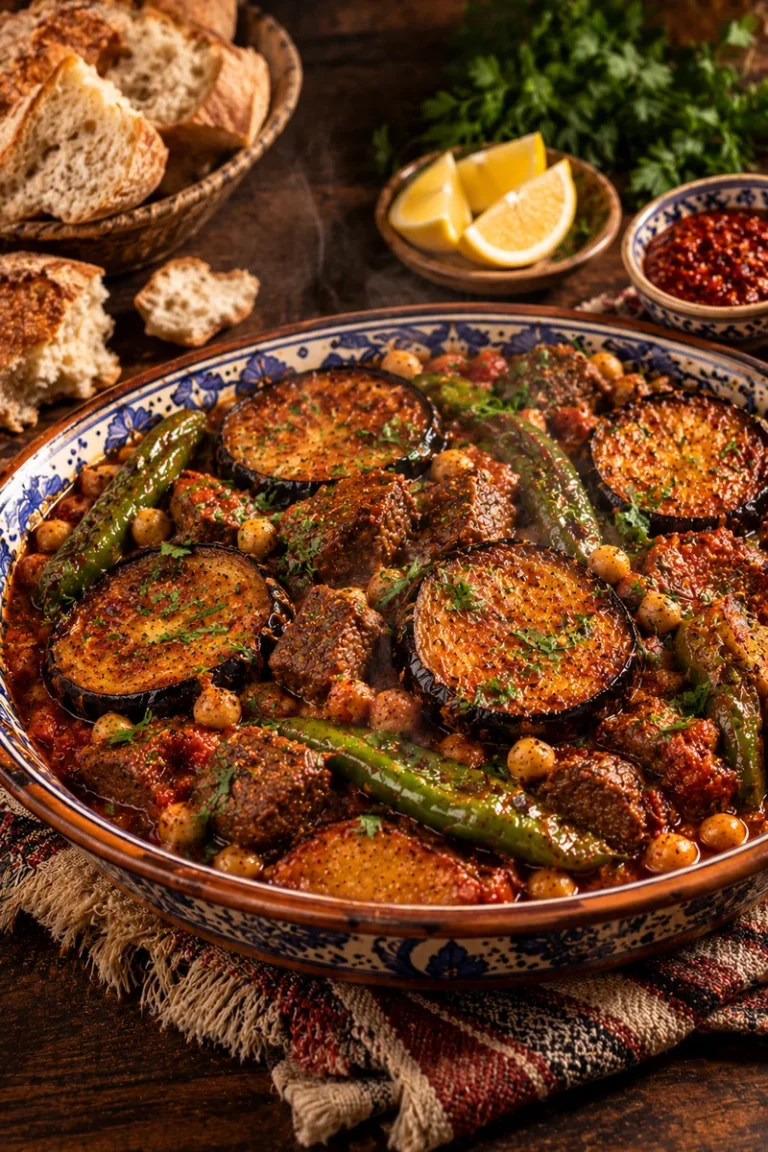
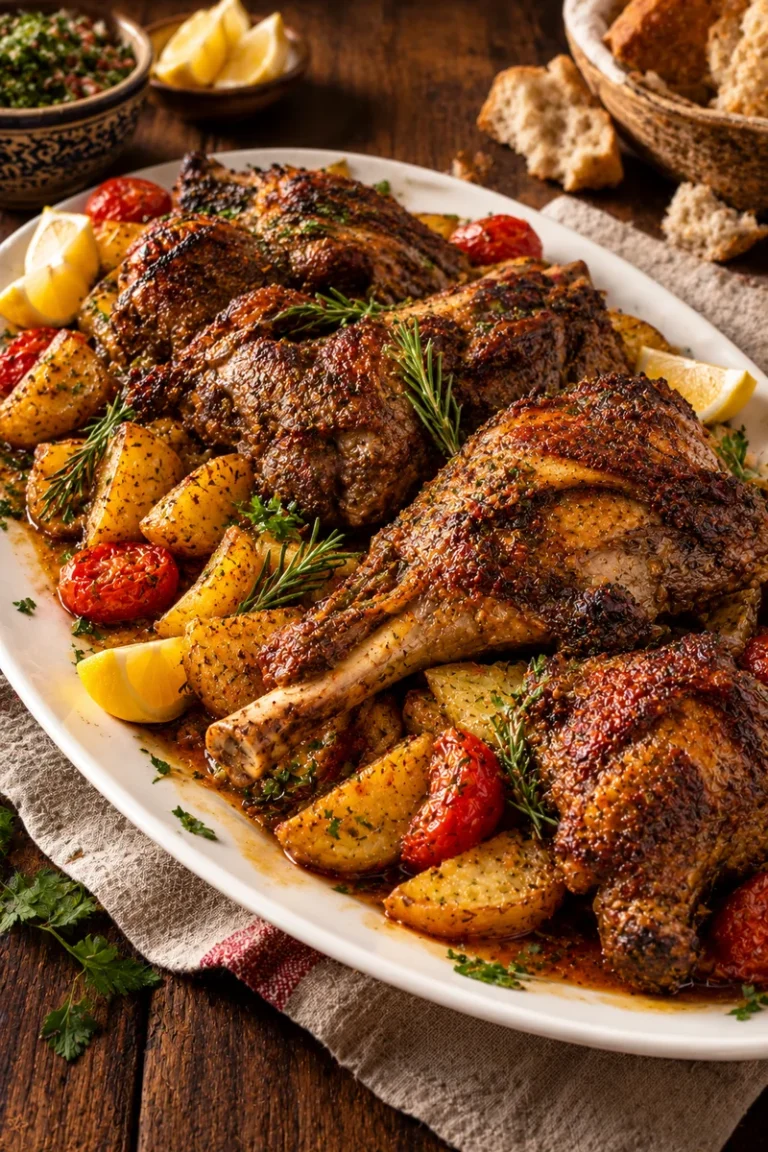
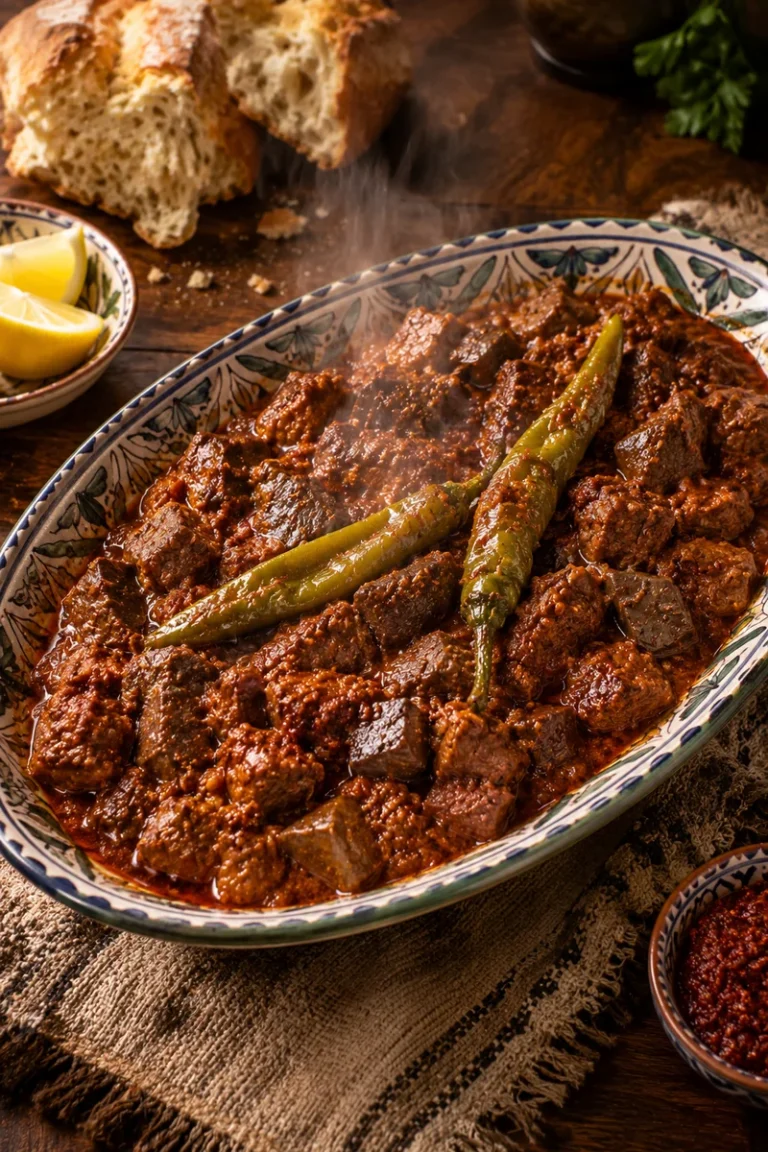
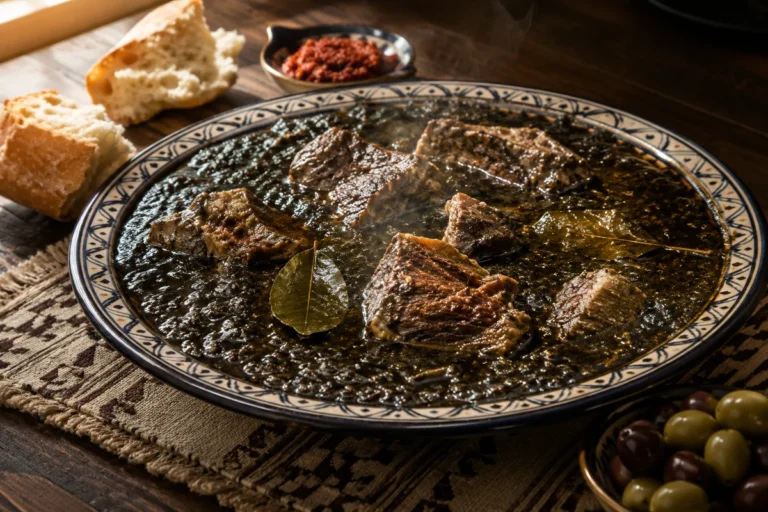

The honey waits until the last five minutes. I have rushed it once, and the whole pot tasted like a pudding with lamb in it, which is exactly the reputation this dish does not deserve.
Comments
No comments yet. Yours would be the first.
Made it? Tell me: prunes or a mix with apricots, chestnuts or almonds, and whether anyone guessed the rose.
Leave a comment
Comments are anonymous and appear after admin approval. If you rated this recipe above, your stars will show with your comment.