
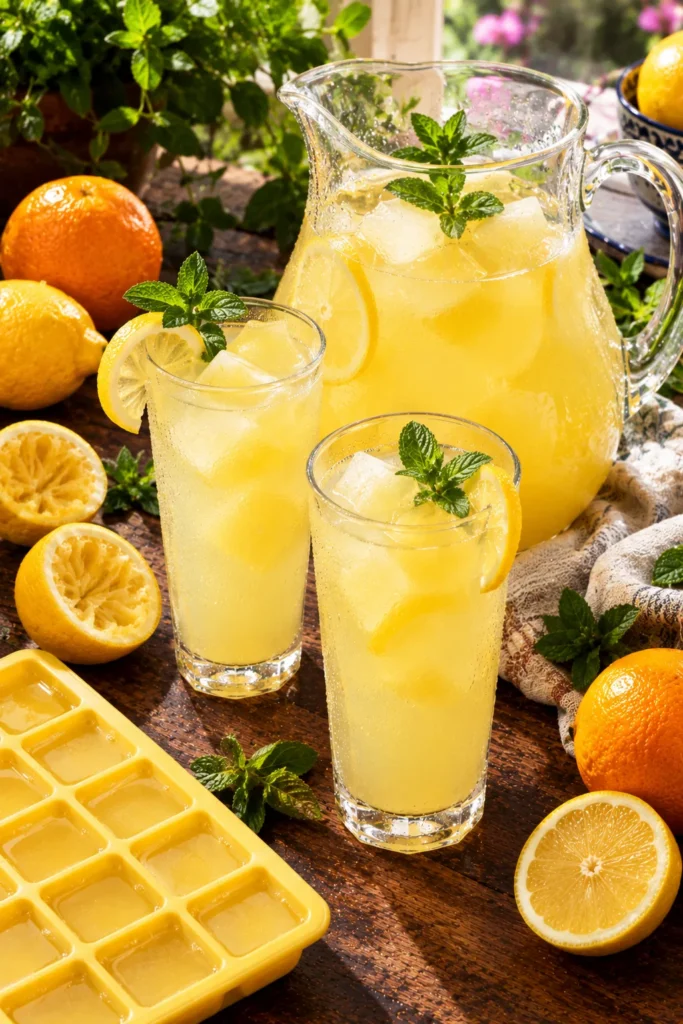
Not Lemonade, and That Is the Clever Part
If you skim this recipe you will make it wrong, because it looks like lemonade and it is not.
What you are making is a concentrate: a syrup of sugar, lemon zest, lemon juice and orange juice, infused for an hour, then frozen into ice cubes. The drink itself only happens at the moment you serve it, when four or five of those cubes go into a jug of plain water.
That solves the oldest problem with iced lemonade. Normal ice melts into your drink and dilutes it, so the last glass in the jug is always weaker than the first. Here the ice is the lemonade, so the drink gets stronger as it melts rather than weaker. It also means you can keep a bag of cubes in the freezer for months and make a jug in thirty seconds whenever someone arrives.
Citronnade is a North African café and home drink, poured in summer, at iftar tables during Ramadan, and whenever it is too hot for tea. The orange juice alongside the lemon is what stops it being purely sharp, and the zest is where most of the actual perfume lives.
In my kitchen a tray of these lives in the freezer through the summer and gets refilled about once a fortnight.
Ahead: why the zest matters more than the juice, the ingredient list, five steps with photos, the dilution question, and what to serve it with.
Why the Zest Does the Heavy Lifting
The juice of a lemon gives you acidity. The zest gives you the smell of a lemon, which is most of what people actually taste.
Lemon oil sits in the coloured outer layer of the peel, not in the juice, and it is far more aromatic than anything in the flesh. Grating two lemons’ worth of zest into a warm syrup and letting it infuse for an hour extracts that oil properly, which is why this recipe tastes considerably more lemony than its juice content suggests.
Two practical consequences. Wash the lemons properly first, especially if they are waxed, since you are using the outside. And grate only the yellow, stopping before the white pith underneath, which is bitter and adds nothing.
Ingredients You’ll Need for Citronnade
Main Ingredients
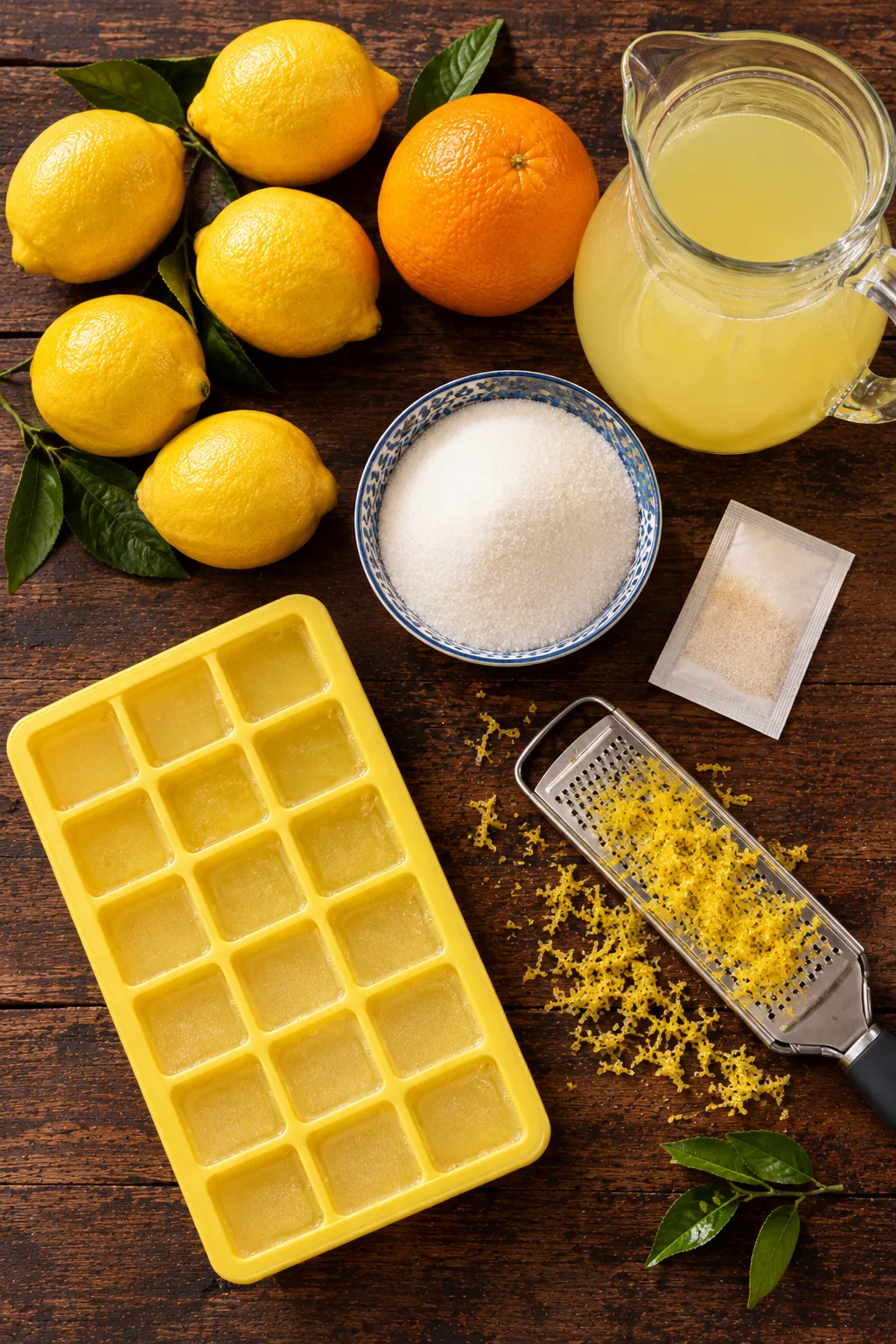
Makes about 20 cubes, enough for 4 to 5 jugs
- 7 oz (200 g) granulated sugar
- 2 cups (500 ml) water
- 1 packet vanilla sugar, about 2 teaspoons
- Zest of 2 lemons, finely grated
- Juice of 3 lemons
- Juice of 1 orange
To serve, per jug:
- 2 cups (500 ml) cold water
- 4 to 5 frozen cubes
- Optional: fresh mint, lemon slices
On the Lemons
- Three lemons is a guideline, not a measurement. Lemons vary enormously in size and juiciness, so expect somewhere between 90 and 150 ml of juice.
- It matters less than it would in a baked recipe, because the dilution at the end is adjustable. Taste the first jug and use more or fewer cubes next time.
- That flexibility is built into the method, which is part of why the concentrate approach is so forgiving.
Easy Substitutions
- No vanilla sugar? A teaspoon of ordinary sugar plus a few drops of vanilla extract, or leave it out. It softens the sharpness rather than adding an obvious vanilla flavour.
- No orange? Use four lemons instead of three and add an extra tablespoon of sugar. The drink is sharper and less rounded.
- Want it less sweet? Reduce the sugar to 150 g. Note that sugar also affects how firmly the cubes freeze, so going much below that gives you slushy cubes rather than solid ones.
Step-by-Step Instructions: Citronnade in 5 Steps
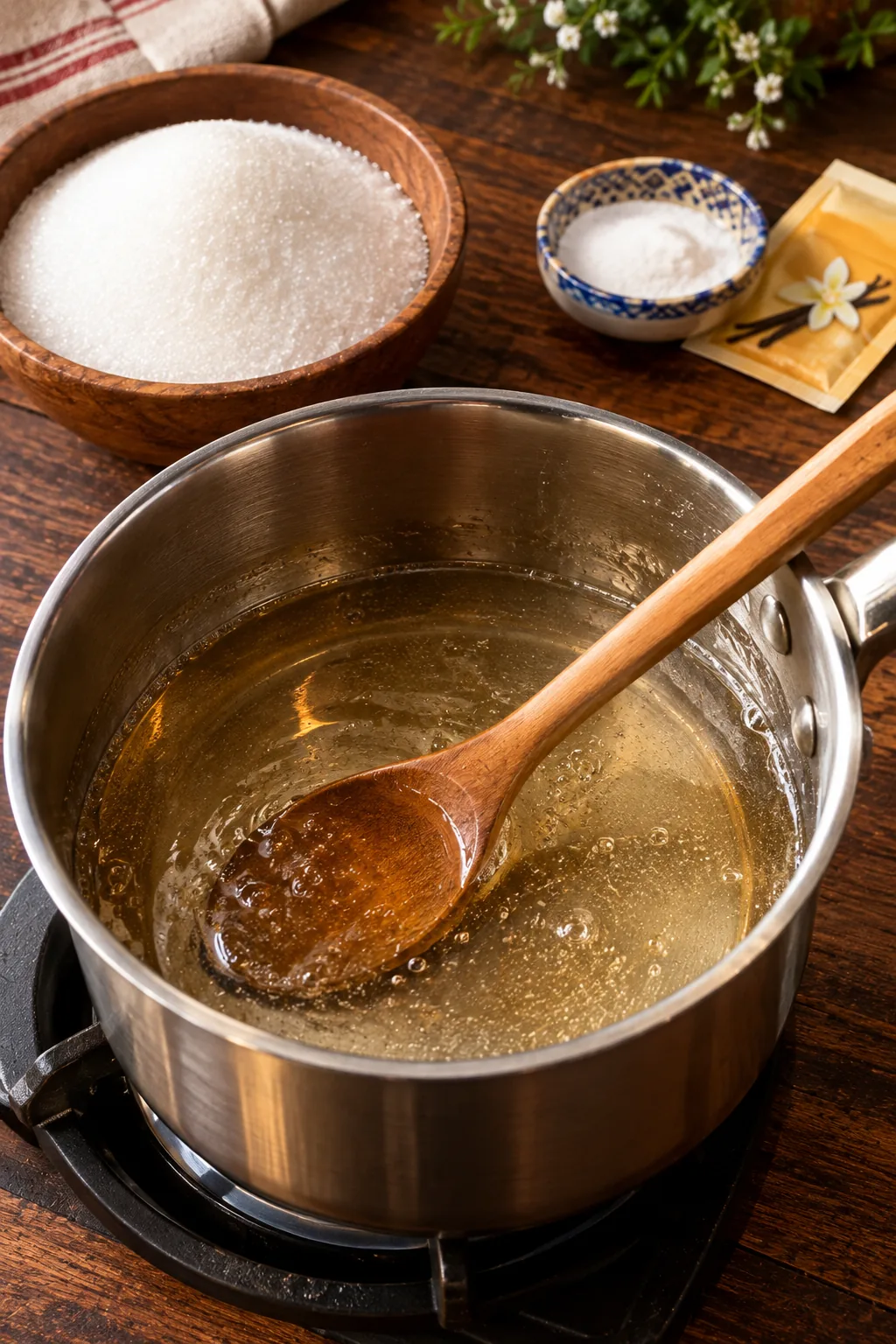
Step 1: Make the Syrup
Combine the water, sugar and vanilla sugar in a saucepan over medium heat. Stir for about 5 minutes until the sugar has completely dissolved.
Prep tip: Dissolved, not boiling. You are making a simple syrup, not a caramel, and boiling it down concentrates it in ways the rest of the recipe does not account for. As soon as the liquid runs clear with no grittiness on the bottom of the pan, it is ready.
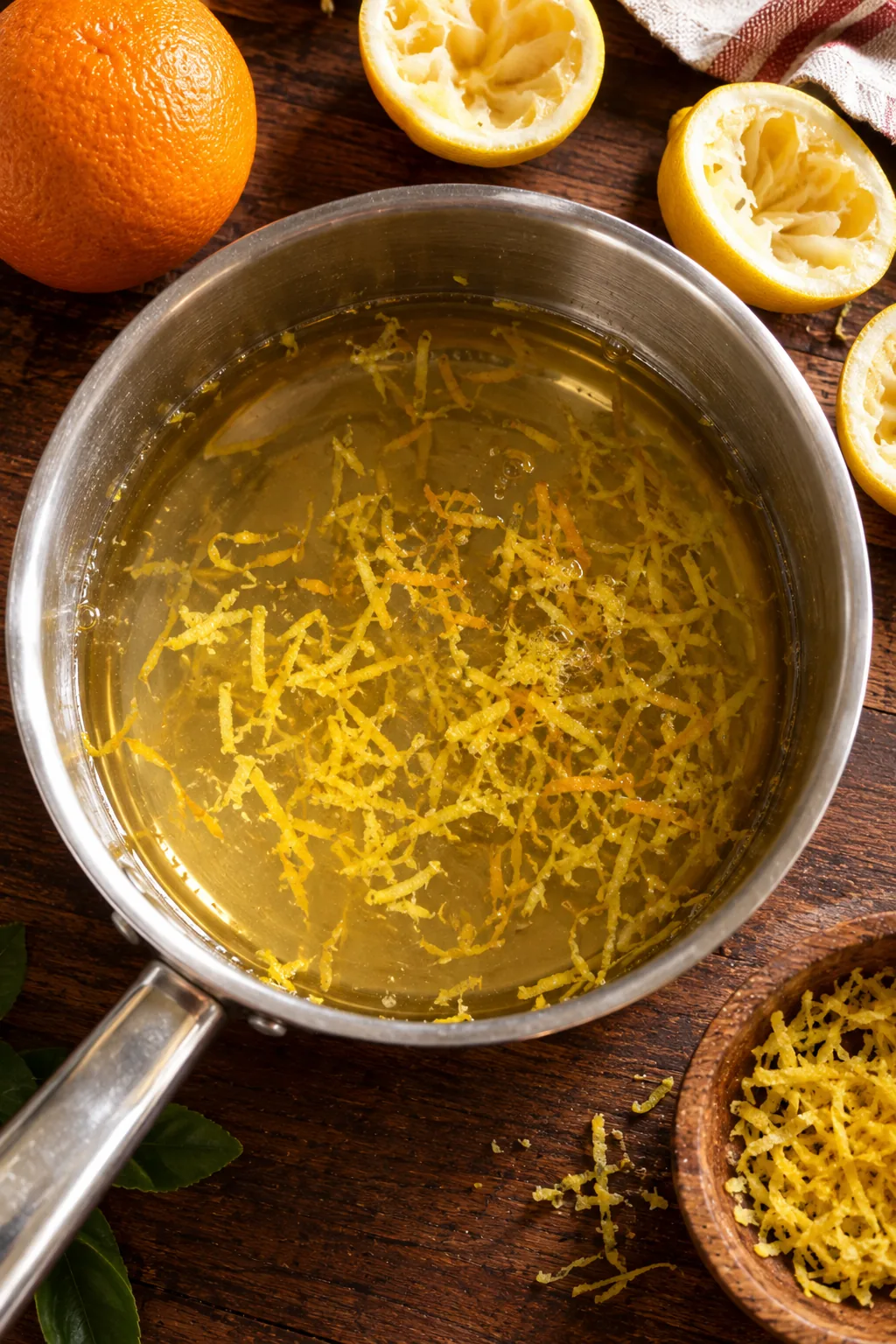
Step 2: Add the Citrus and Infuse
Take the pan off the heat and stir in the lemon zest, lemon juice and orange juice. Leave it to sit and infuse for about an hour.
Prep tip: Off the heat before the juice goes in. Fresh citrus juice held at heat loses its brightness and starts tasting cooked, which is the difference between this and the bottled stuff. The residual warmth of the syrup is enough to draw the oil out of the zest.
Step 3: Strain
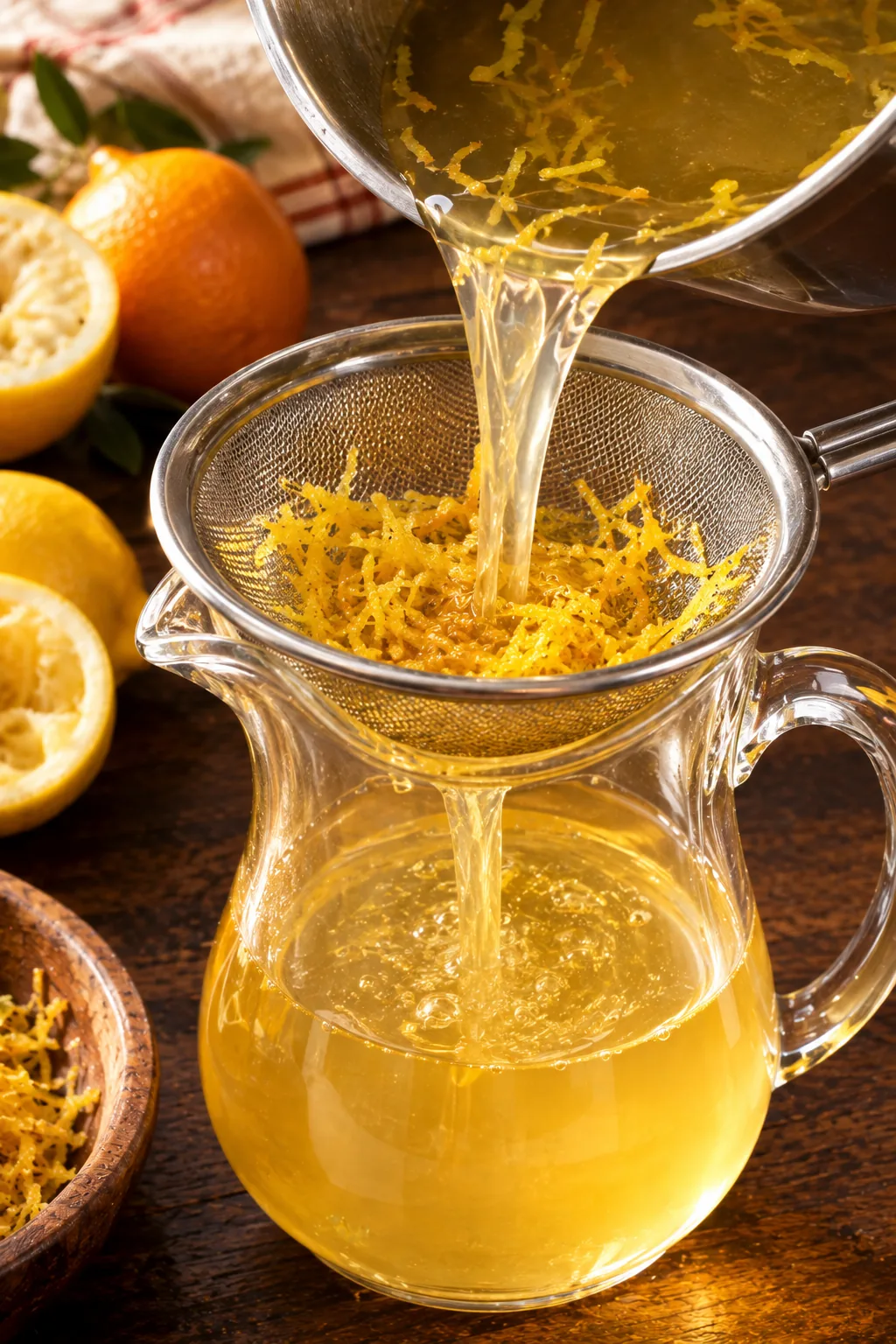
Pour the mixture through a fine sieve into a jug or container, pressing gently on the zest to get the last of the liquid out, then discard the solids.
Prep tip: Press the zest, but gently. You want the liquid it is holding, not the bitterness that comes from grinding it against the mesh.
Step 4: Freeze in Trays
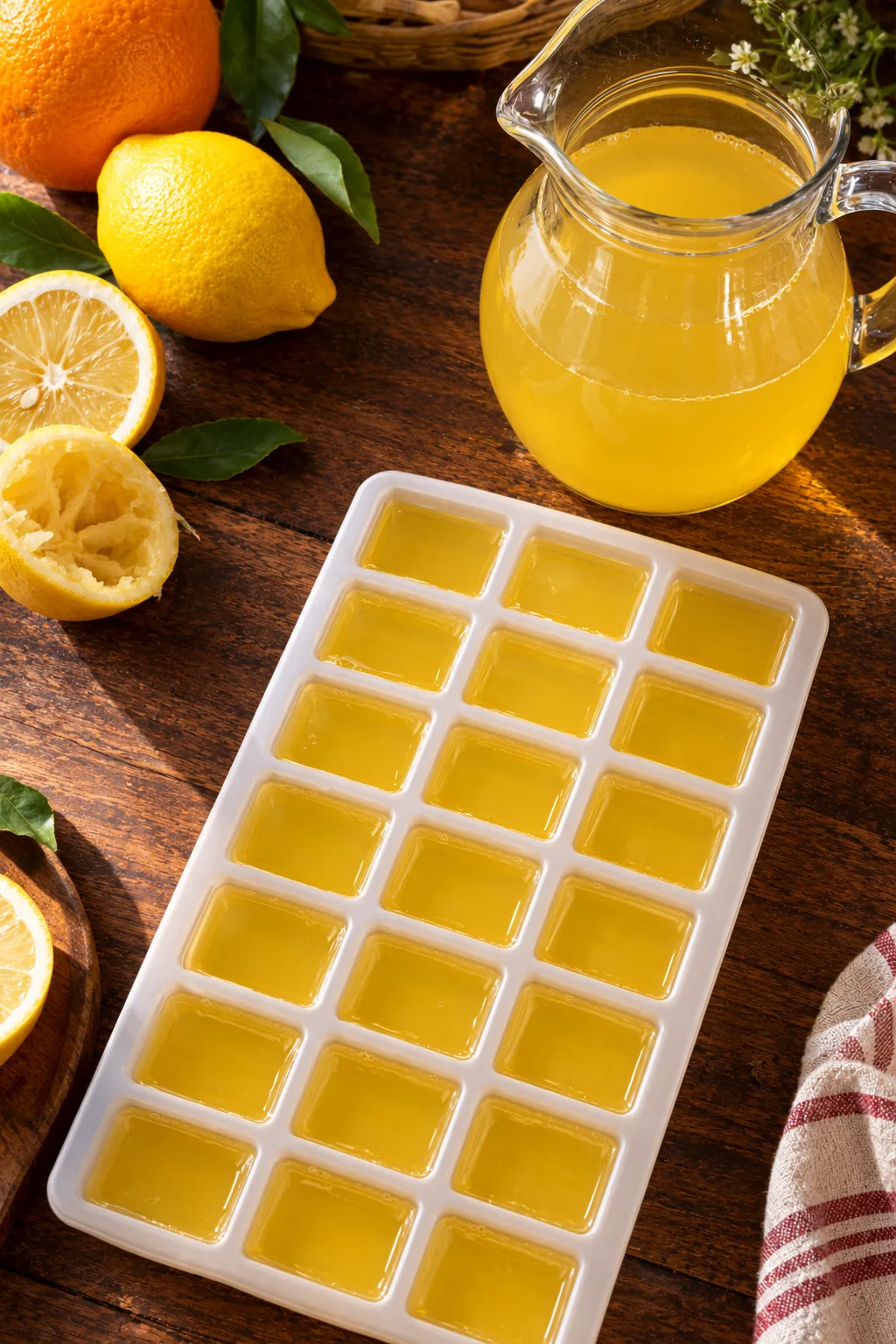
Pour the strained concentrate into ice cube trays and freeze overnight, at least 8 hours.
Prep tip: Give it a full night. Sugar lowers the freezing point, so a sweet syrup takes considerably longer to freeze solid than water does. Cubes that seem firm after three hours will often still be slushy in the middle.
Step 5: Dilute and Serve
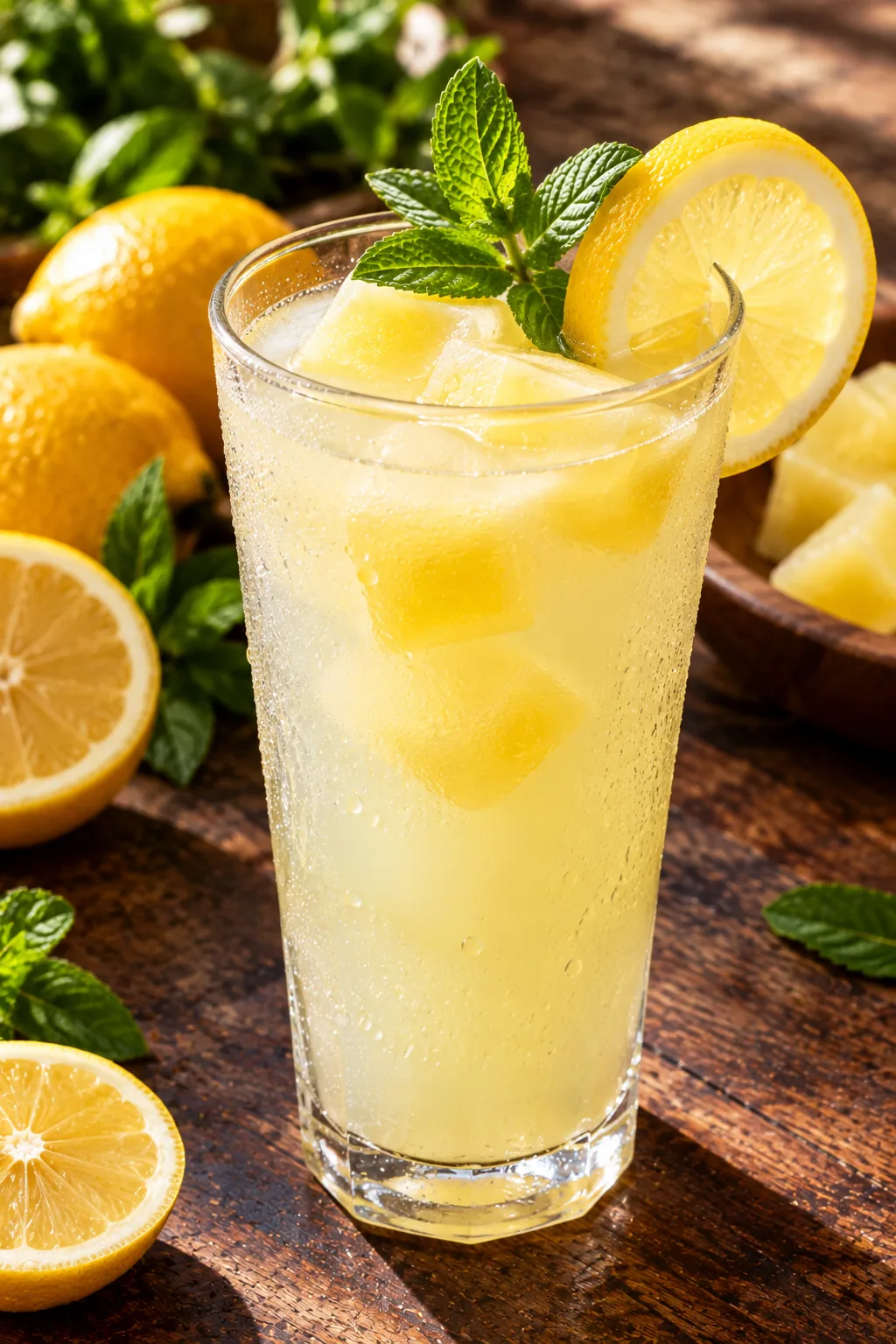
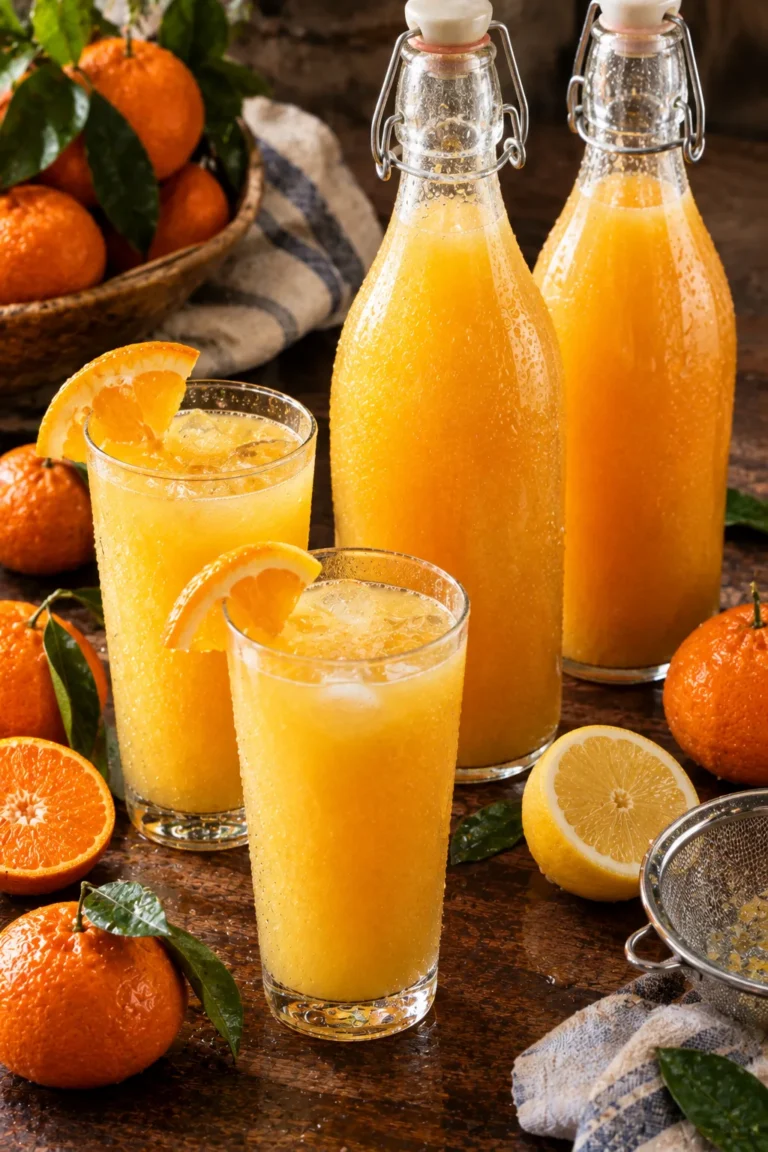
Pour 500 ml of cold water into a jug, add 4 or 5 frozen cubes, and stir until they begin to melt. Taste and add another cube if you want it stronger. Serve cold, with mint and lemon slices if you like.
Prep tip: Start with four and add more. The cubes keep releasing flavour as they melt, so a jug that tastes right immediately will taste strong twenty minutes later. Under-dosing slightly is the safer error.
About Citronnade: Summer and Ramadan
Citronnade is a fixture of North African summers, sold in cafés from Casablanca to Tunis and made at home in almost every household. The French name reflects the long culinary exchange across the Maghreb, and the drink itself sits somewhere between a French citronnade and a Middle Eastern lemon sharbat.
It comes into its own during Ramadan, when it appears on iftar tables beside dates, my harira recipe and the sweets. After a long fast, something cold and sharp is often more welcome than something hot, which is why it holds its place on a table that is otherwise built around tea.
The freezing method is not decorative. In a hot climate without reliable refrigeration, a concentrate that keeps in a freezer and dilutes on demand is simply practical, and it has stayed in use because it works better than the alternative.
On the traditional health claims: lemons are a genuine source of vitamin C, which is well established. Older recipe books often add that lemon strengthens the digestive system and resists germs, and those are traditional beliefs rather than medical facts. Enjoy the drink for what it is.
Pro Tips for the Best Citronnade
- Zest before you juice. Grating a lemon that has already been squeezed is unpleasant and inefficient. Zest all the lemons first, then cut and juice them.
- Use a silicone tray. Sugar syrup cubes stick harder to rigid plastic than water does, and a silicone tray lets you pop them out without a fight.
- Bag them once frozen. Turn the cubes out into a freezer bag and refill the tray. They keep 3 months and you always have a tray free.
- Make a double batch. The effort is identical and the only limit is freezer space. In summer a single batch disappears quickly.
Variations
With Mint
Add a handful of fresh mint leaves to the syrup along with the zest and strain them out with everything else. The mint comes through as a background note rather than dominating.
With Orange Blossom Water
A teaspoon stirred in after the syrup comes off the heat. Common in Moroccan households and it makes the drink noticeably more perfumed.
Sparkling
Dilute with cold sparkling water instead of still. The cubes take slightly longer to release into carbonated water, so give it an extra stir.
My House Version
In my kitchen these get made with a little less sugar than the recipe states and the mint goes into the syrup rather than the glass, because straining it out leaves the flavour without anyone finding a leaf in their drink.
What to Serve with It
At a summer table it goes with everything, but it is particularly good against rich or fried food, where its sharpness does the job a squeeze of lemon would.
On a Ramadan table it belongs beside dates, my harira recipe and the sweets: my briouates recipe and my kaab ghzal recipe both sit well with something cold and sharp alongside.
For the hot end of the same table, see my Moroccan mint tea recipe.
Citronnade FAQs
Why freeze it instead of just making lemonade? Because normal ice dilutes a drink as it melts, so the last glass is always weaker than the first. Here the ice is the concentrate, so the jug gets stronger rather than weaker. It also keeps for months and makes a jug in seconds.
How many cubes per jug? Four or five to 500 ml of water is the starting point. Lemons vary a lot in size and juiciness, so taste the first jug and adjust. Start with fewer and add more, since the cubes keep releasing flavour as they melt.
How long do the cubes keep? About 3 months in a sealed freezer bag. Turn them out of the tray once frozen so you can refill it.
Why is my concentrate not freezing solid? Sugar lowers the freezing point, so a syrup takes much longer than water. Give it a full night, at least 8 hours. If it is still slushy after that, the mixture is probably sweeter than intended.
Can I use bottled lemon juice? It works, but the zest is doing most of the aromatic work in this recipe and bottled juice comes without any. If you use it, grate the zest from a fresh lemon anyway.
One Tray, A Whole Summer
Dissolve the sugar without boiling it, add the citrus off the heat, infuse for an hour, strain, and freeze overnight. Then it is thirty seconds to a jug whenever you want one.
Make a tray this week and report back: four cubes or five, still water or sparkling, and whether the tray survived a fortnight. Mine usually does not.
Rate this recipe
No ratings yet — be the first!


Comments
No comments yet. Yours would be the first.
Made this? Tell me how it went, what you changed, and whether it worked in your kitchen.
Leave a comment
Comments are anonymous and appear after admin approval. If you rated this recipe above, your stars will show with your comment.