
- Prep
- 20 min
- Cook
- 10 min
- Total
- 1 hr 30 min
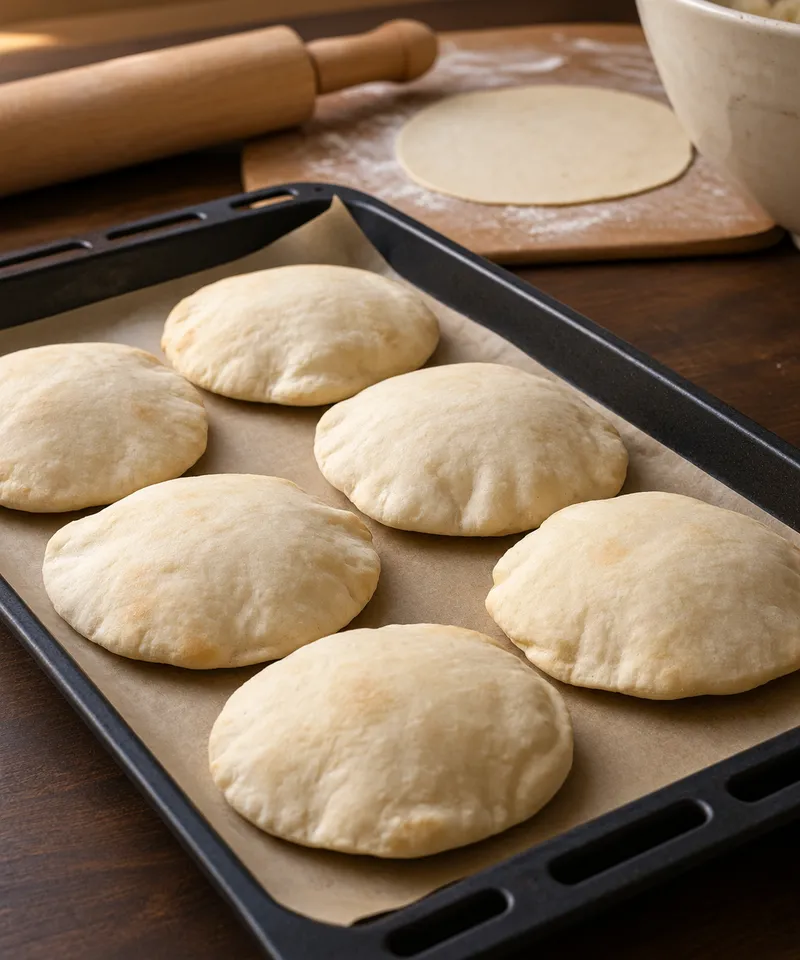
Thin Rounds That Puff in a Hot Oven
This is the thin, round bread that puffs up in the oven: a simple yeast dough rolled out to about 2 mm and baked very briefly in a hot oven.
The ingredient list is short. Flour, salt, a little sugar, yeast, olive oil and warm water. The hands-on work takes about 20 minutes. The dough rises for about an hour, then it is divided into small balls, rolled thin, and baked at 400°F (200°C) for 3 minutes per tray. One batch makes 10.
There is one detail worth knowing before you start. These 3 minutes are not meant to cook the bread all the way through. The breads come out of the oven puffed but not fully cooked, and you finish cooking them when you fill them. So this is a bread made to be used, rather than served exactly as it leaves the tray.
Below you will find the ingredients, the four steps, and what that short bake means in practice.
Ingredients for Lebanese Bread

Makes 10 pieces
- 1 lb 2 oz (500 g) white flour
- 1 teaspoon salt
- 1 teaspoon powdered sugar
- 1 tablespoon bread yeast
- 1 tablespoon olive oil
- 1 large glass of warm water (about 300 ml / 1¼ cups), added gradually
A Note on the Water
A large glass holds about 300 ml (1¼ cups), which is roughly what 500 g of flour takes for a soft dough like this. The water goes in gradually, and you stop adding it once the dough holds together. Flour absorbs water differently from one bag to the next, so judging by the dough is the reliable way to do it.
Step-by-Step Instructions
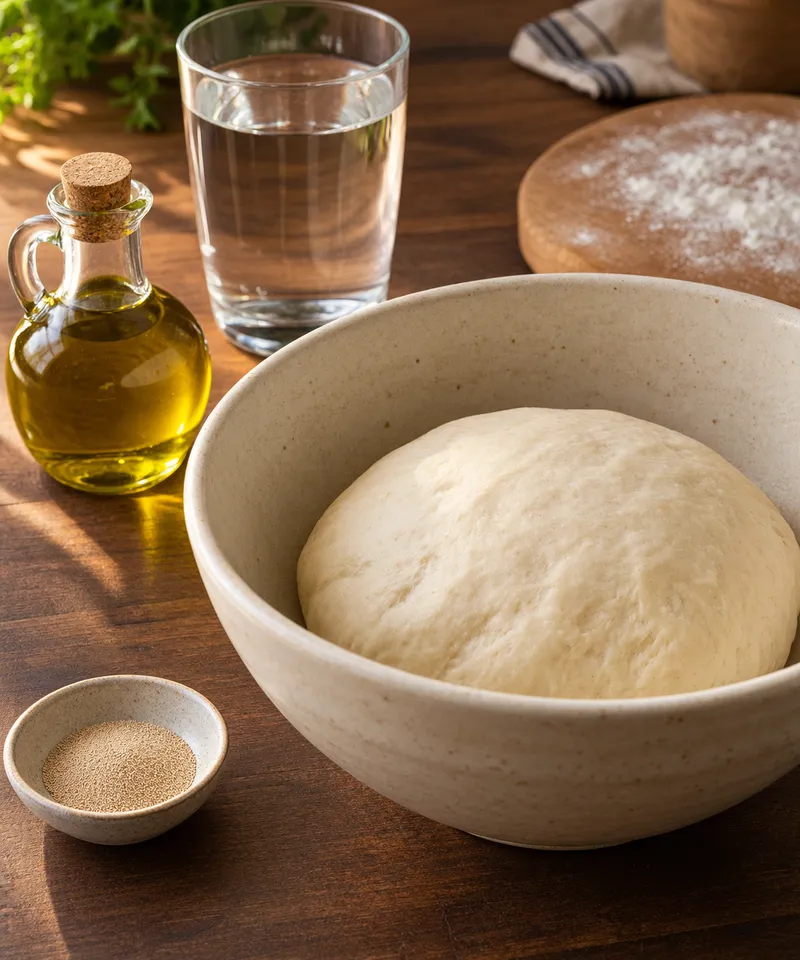
Step 1: Make the Dough and Let It Rise
Mix the flour and salt in a bowl. Add the sugar, yeast and olive oil, then pour in the warm water gradually, mixing until the dough holds together. Knead well until it is soft. Leave it to rise for about one hour.
Tip: Add the water slowly toward the end. The point where the dough holds together is your guide, and adding the last of the water gradually makes it easy to stop at the right moment.
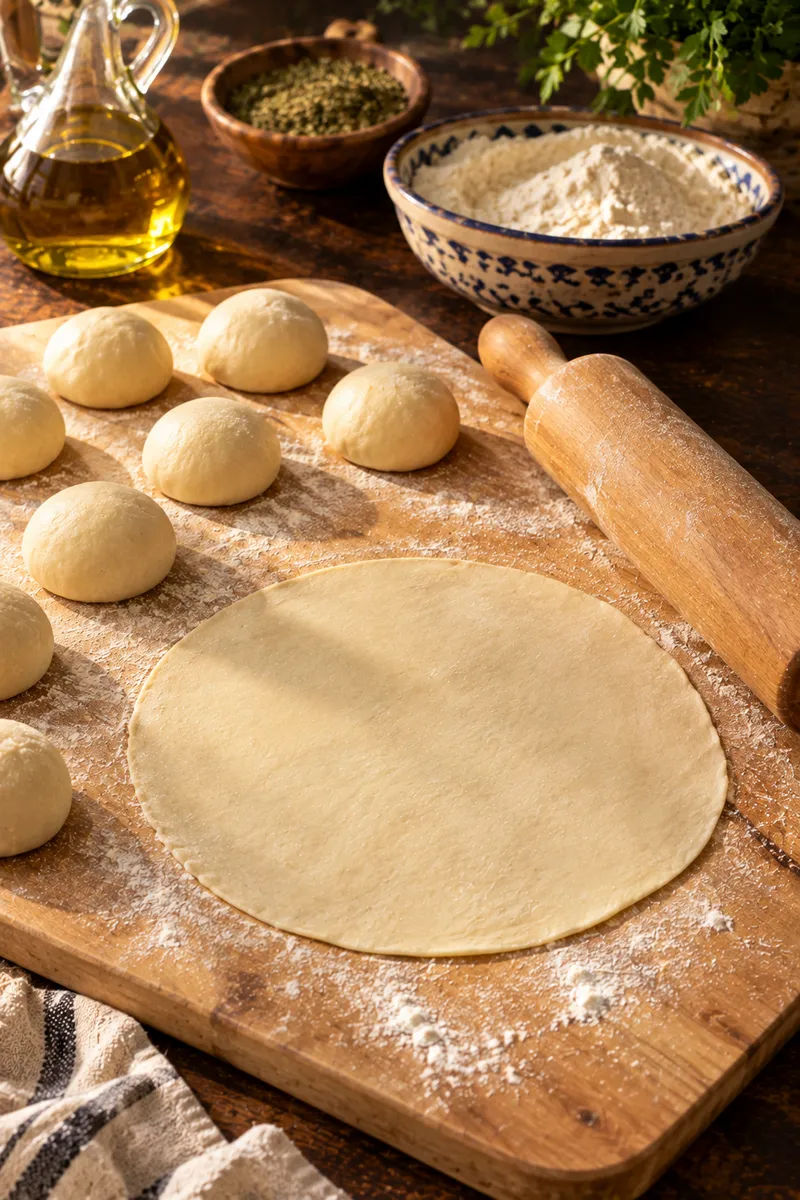
Step 2: Shape and Roll
Knead the dough again and make 10 small balls. Roll each one out with a rolling pin to a thickness of about 2 mm (1/16 inch).
Tip: Keep the thickness even across the whole round. A round that is thicker in the middle than at the edges bakes unevenly in such a short time.
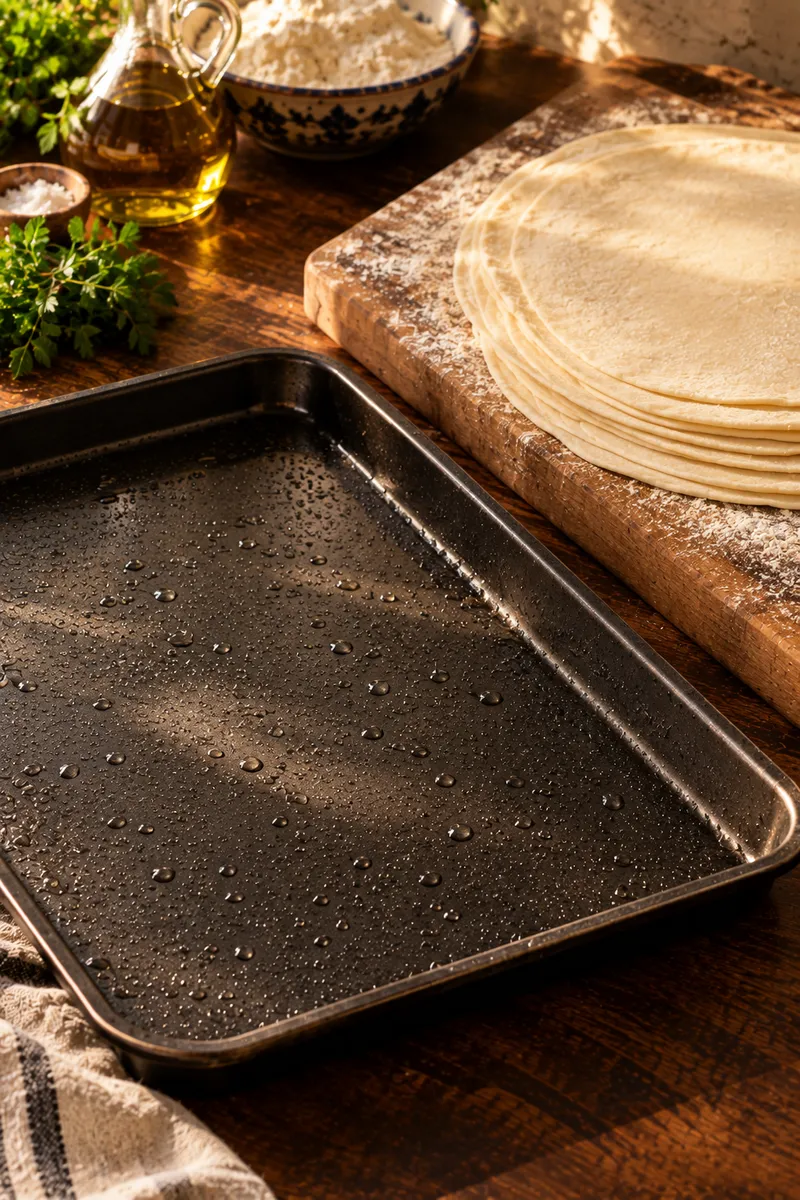
Step 3: Prepare the Oven and Tray
Heat the oven to 400°F (200°C) and sprinkle a baking tray with a little water.
Step 4: Bake Briefly
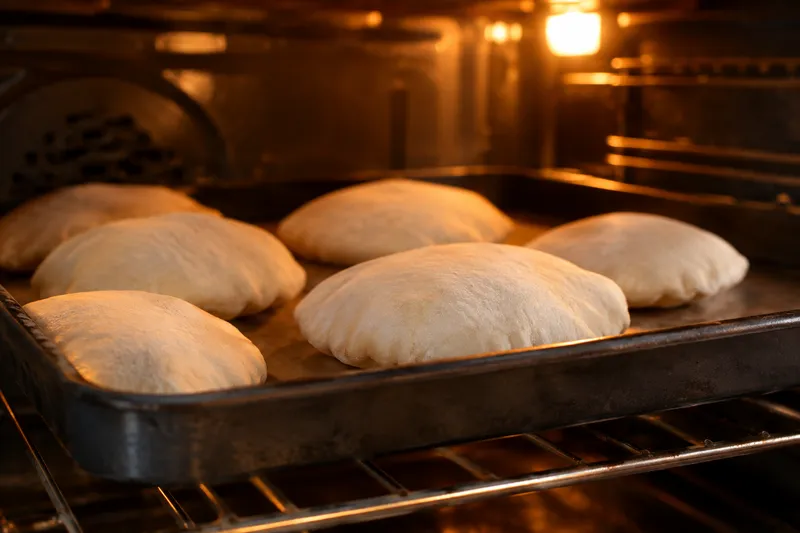
Lay as many breads on the tray as fit without touching and bake them for 3 minutes, until they puff up but are not fully cooked. Bake the rest in batches the same way.
Why the Bake Is So Short
Three minutes at 400°F (200°C) is a very short time, and the breads should come out puffed but not fully cooked. The cooking is finished later, when the breads are filled.
That is the sense of the recipe: a bread that will go back into the heat once it has a filling only needs a partial bake now. If it were fully baked at this stage, the second round of cooking would take it further than you want.
So watch for the puff rather than for colour. Once the rounds have puffed, they are ready to come out.
Rolling to 2 mm
The thickness is the most important measurement in the recipe after the bake time. At about 2 mm the rounds are thin enough to puff in 3 minutes.
There is no need to measure it with a ruler. Rolled to 2 mm, the dough is thin and even, and it holds its shape when you lift it onto the tray.
On the Same Table
Lebanese bread sits alongside a lot of the dishes on this site. Our baba ghanoush recipe and our toum recipe are both made for scooping and spreading, and our fattoush salad is built on crisp pieces of bread. For something grilled, our kofta kebab recipe and our chicken shawarma recipe belong on the same table. And if you enjoy flatbreads, our manakish za’atar recipe is another Lebanese dough, topped before baking, and our chapati is cooked on the stove instead of in the oven.
Lebanese Bread FAQs
Why are the breads not fully cooked after 3 minutes? That is the intent. They come out puffed but not fully cooked, and you finish cooking them when you fill them.
How long does the dough rise? About one hour, after kneading.
How thin should I roll the dough? About 2 mm (1/16 inch).
Do I need to prepare the tray? Yes. Sprinkle the baking tray with a little water before laying the breads on it.
How much water does the dough need? One large glass of warm water, about 300 ml (1¼ cups), added gradually. Stop when the dough holds together.
Do all 10 fit in the oven at once? Usually not. Bake as many as fit on the tray without touching, 3 minutes per batch, which comes to about 10 minutes of oven time in all.
Thin, Quick, and Made to Be Filled
Make a soft dough, let it rise about an hour, divide it into balls, roll each to about 2 mm, and bake for 3 minutes at 400°F (200°C) on a tray sprinkled with water, until the rounds puff. Then finish them when you fill them.
Rate this recipe
No ratings yet. Be the first!
About this recipe: cooked and tested in our home kitchen before publishing. Written with the help of an AI assistant and checked for accuracy. Photos are AI-generated illustrations.


Comments
No comments yet. Yours would be the first.
Baked a batch? Tell us what you filled them with, and how long they took to puff in your oven.
Leave a comment
Comments are anonymous and appear after admin approval. If you rated this recipe above, your stars will show with your comment.