
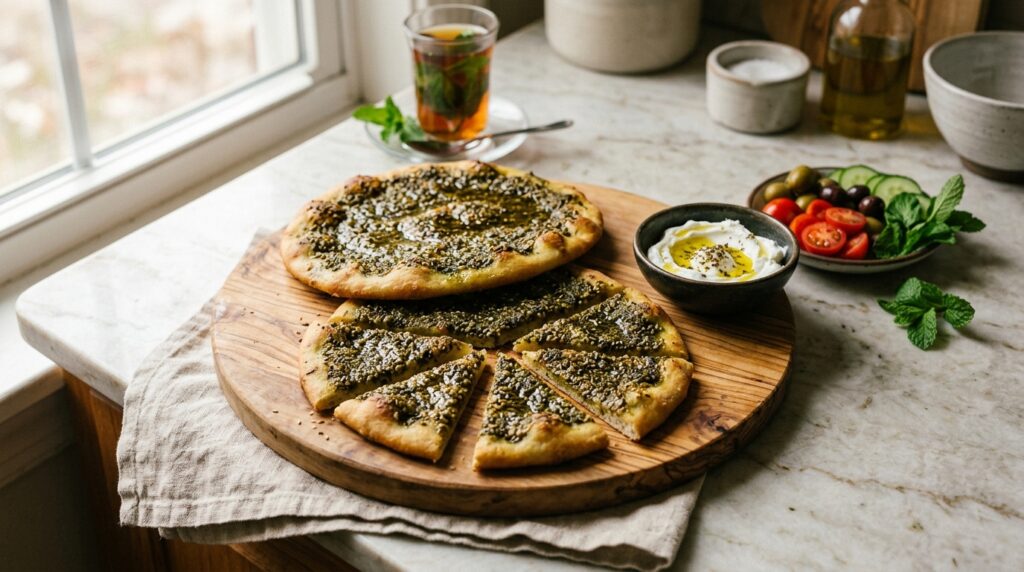
Lebanon’s Answer to Breakfast Bread
Think pizza dough is the ceiling of what a home cook can bake? Lebanon has been proving otherwise every morning for generations. This manakish za’atar recipe gives you soft, golden flatbreads topped with a fragrant herb-and-olive-oil paste, and if you can make (or even buy) pizza dough, you can make manakish today.
Fresh from the oven, they’re pillowy at the center with crisp edges, and the za’atar topping bakes into something earthy, tangy, and toasty all at once. The smell is the smell of a Lebanese bakery at 7 a.m. herbal, nutty, and impossible to walk past.
Manakish is weekend breakfast across the Levant: the dough comes together while the kettle boils, rises while the house wakes up, and bakes in ten minutes flat. This version is built around regular supermarket flour and store-bought za’atar, so nothing depends on a specialty shopping trip.
Below you’ll find the ingredient list, where to find za’atar in the US and UK (plus a make-ityourself blend), six numbered steps with photo placeholders, the tricks behind bakery-style results, and the questions readers ask most.
Soft Dough, Very Hot Oven
- Supermarket-friendly. Flour, yeast, olive oil, salt, sugar, water, and za’atar, which has quietly gone mainstream. Below you will find where to buy it and how to blend your own from common dried herbs.
- Naturally vegan. The dough and topping contain no animal products at all, no adjustments needed, and it’s halal and dairy-free by nature too.
- Realistic timing. About 20 minutes of hands-on work; the one-hour rise is passive. Total time is around 90 minutes, or 30 with the shortcut in the Variations section.
- One dough, endless breakfasts. The same base takes cheese, minced meat, or vegetable toppings, so this recipe is really a whole category of Lebanese baking in one post
About Manakish: Lebanon’s Breakfast Flatbread
Manakish (also spelled manakeesh or man’oushe in the singular) is the definitive breakfast of Lebanon, sold every morning from neighborhood bakeries across the Levant, Lebanon,Syria, Jordan, and Palestine. The name comes from an Arabic root meaning “to stamp or engrave,” after the way the dough is dimpled with fingertips before topping.
The classic topping is za’atar: a Middle Eastern blend of dried wild thyme or oregano, tangy sumac, toasted sesame seeds, and salt, mixed with olive oil into a spreadable paste. Folded around fresh vegetables and labneh (a thick, tangy strained yogurt), it’s breakfast on the walk to work or school.
If you’re thinking “so it’s Lebanese pizza”, close, but manakish is older, simpler, and breakfast food first. Think of it as the Mediterranean answer to the morning bagel.
The Dough and the Za’atar
Dough and Topping
Makes 6 individual flatbreads:
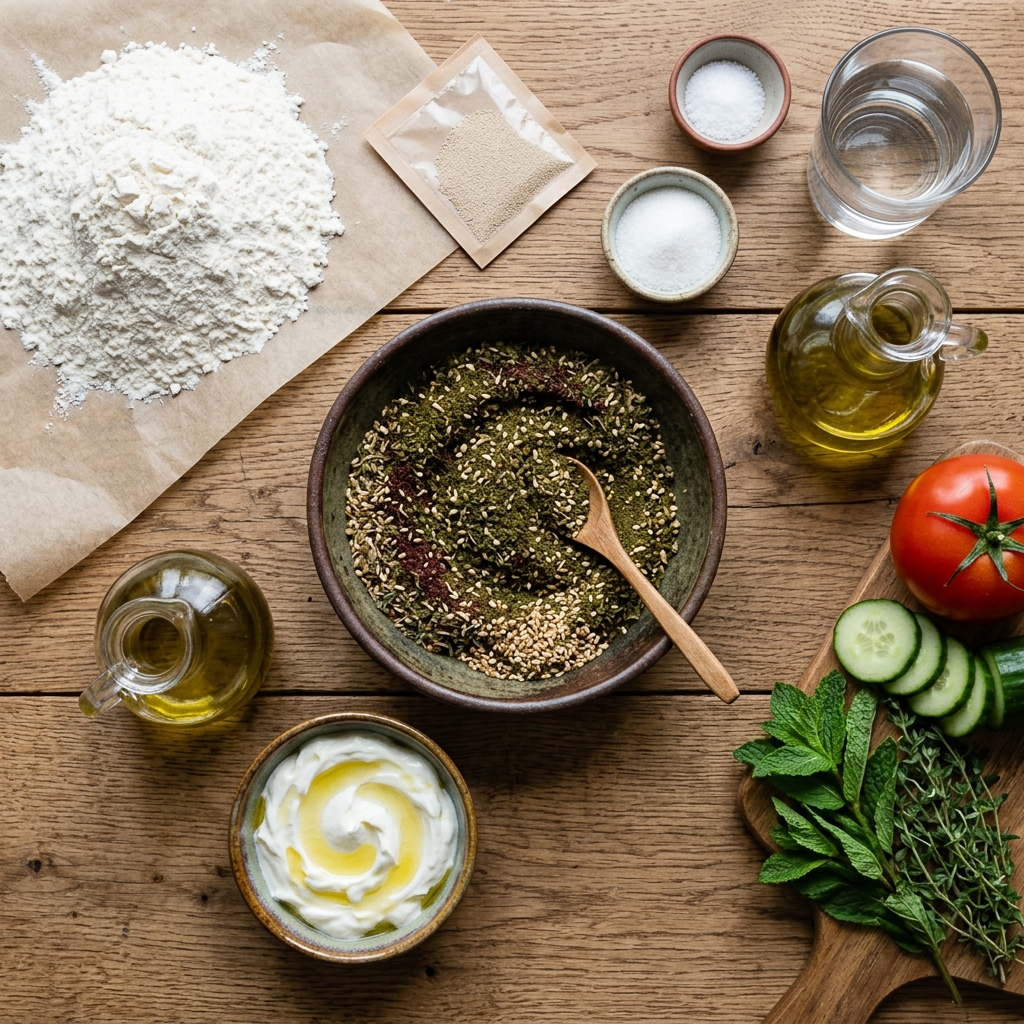
For the dough:
- 3 cups (375 g) all-purpose flour (plain flour in the UK), plus more for dusting
- 1 tablespoon sugar
- 2¼ teaspoons (7 g / 1 packet) instant yeast
- 1 teaspoon salt
- 1¼ cups (300 ml) warm water
- 2 tablespoons olive oil
For the za’atar topping:
- ½ cup za’atar spice blend
- ½ cup extra virgin olive oil
For serving (optional but traditional):
- Labneh (thick strained yogurt, or use full-fat Greek yogurt)
- Sliced tomatoes, cucumber, fresh mint, and olives
Where to Find Za’atar in the US and UK
Za’atar has crossed into the mainstream: in the US, look in the spice aisle at larger supermarkets, Trader Joe’s, or Whole Foods; in the UK, most big supermarkets stock it with the herbs and spices. Quality varies, though, a Middle Eastern or Mediterranean grocery sells fresher, greener za’atar in generous bags for less, and Amazon carries dozens of brands if neither is nearby.
Labneh is in the international or yogurt aisle at larger stores, at any Middle Eastern grocery, or easily swapped for thick Greek yogurt with a pinch of salt.
Buying Za’atar Ready-Made
- Can’t find za’atar? Blend your own: 3 tablespoons dried thyme (or 2 of thyme and 1 of oregano), 2 tablespoons toasted sesame seeds, 1 tablespoon sumac, and ½ teaspoon salt. No sumac either? Use 2 teaspoons of lemon zest for the tang, see the fattoush recipe for more on sumac, the crimson lemony spice both recipes share.
- No time for dough? One pound of store-bought pizza dough works shockingly well, details in the Variations section.
- No labneh or Greek yogurt? Just serve with the fresh vegetables; manakish needs no accompaniment to disappear quickly.
From Dough to Blistered Edges
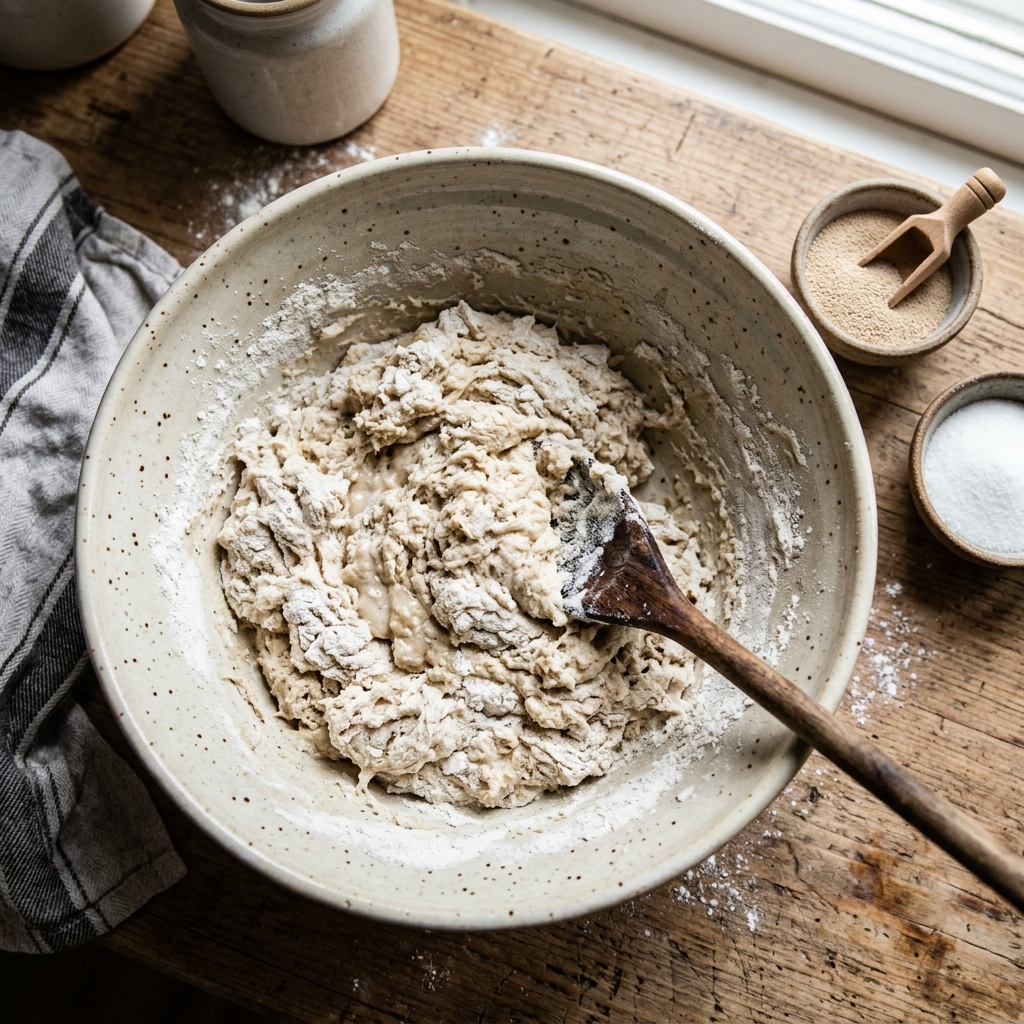
Step 1: Mix the Dough
In a large bowl, whisk together the flour, sugar, yeast, and salt. Add the warm water and olive oil, and stir until a shaggy dough forms with no dry pockets.
Prep tip: Warm means wrist-warm, around 100–110°F (38–43°C), water that feels hot will slow or kill the yeast. It is the same rule as the Moroccan bread recipe, and it is the number one cause of dough that will not rise.
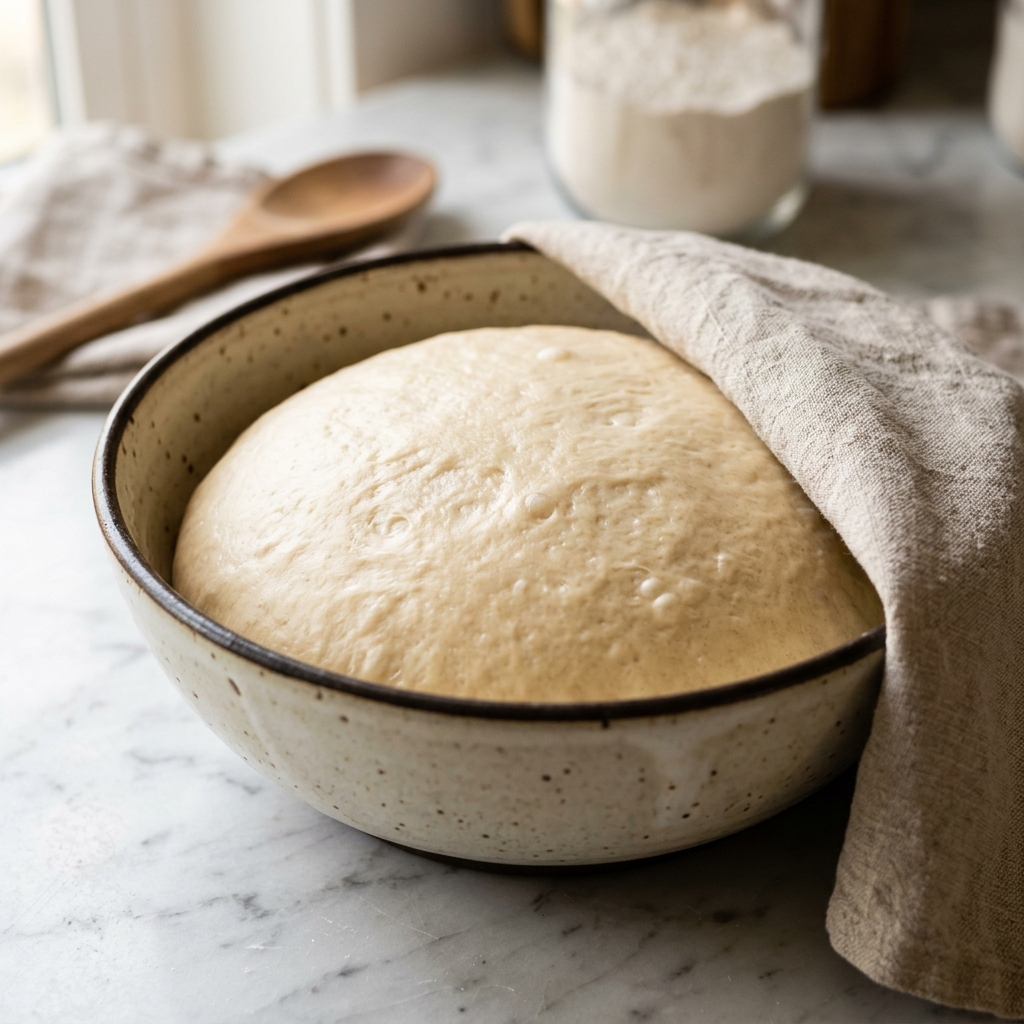
Step 2: Knead and Let It Rise
Knead on a lightly floured counter for 8 minutes, until smooth and elastic. Return the dough to an oiled bowl, cover with a damp tea towel, and leave somewhere warm for about 1 hour, until doubled in size.
Step 3: Divide and Roll the Rounds
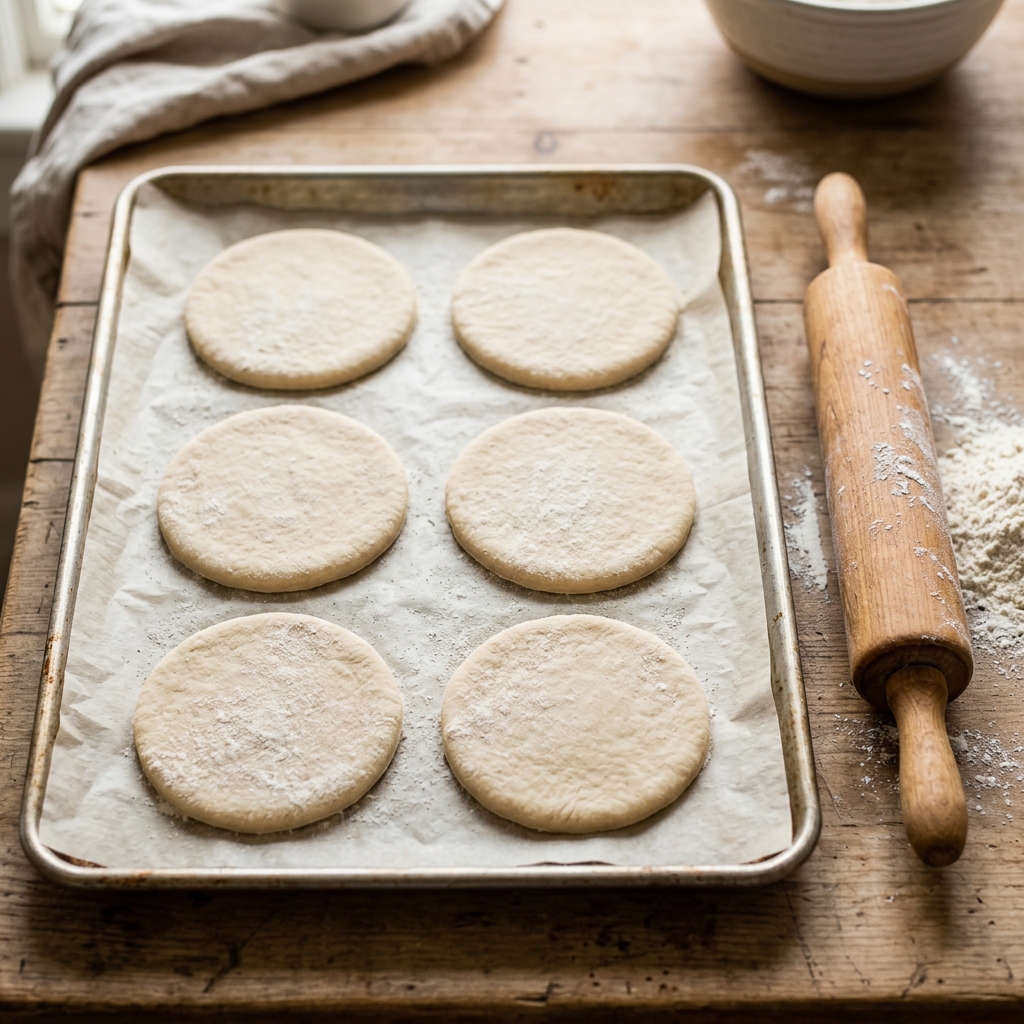
Punch the dough down gently and divide it into 6 equal pieces. Roll each into a ball, then flatten and roll out into circles about 6 inches (15 cm) across and ¼ inch thick, placing them on parchment-lined baking sheets.
Step 4: Mix the Za’atar Paste
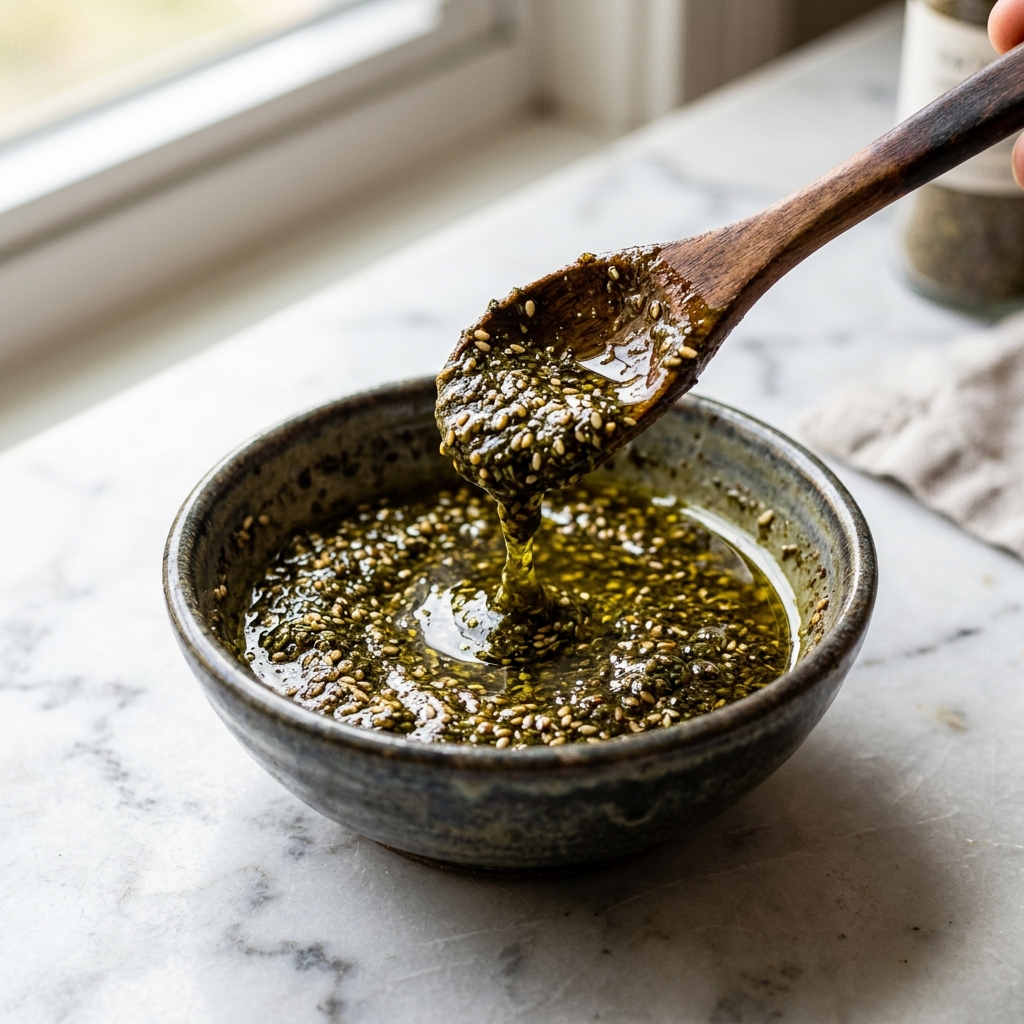
Stir the za’atar and olive oil together in a small bowl until you have a loose, spreadable paste, it should slide off a spoon slowly, like runny pesto. Add oil a spoonful at a time if it’s stiff,or more za’atar if it pools.
Prep tip: The ratio is the whole secret of manakish. Too dry and the topping bakes dusty and bitter; too wet and it slides off and burns. Glistening but not soupy is the target, and it is worth mixing fresh each time, since the paste separates as it sits.
Step 5: Dimple and Top the Dough
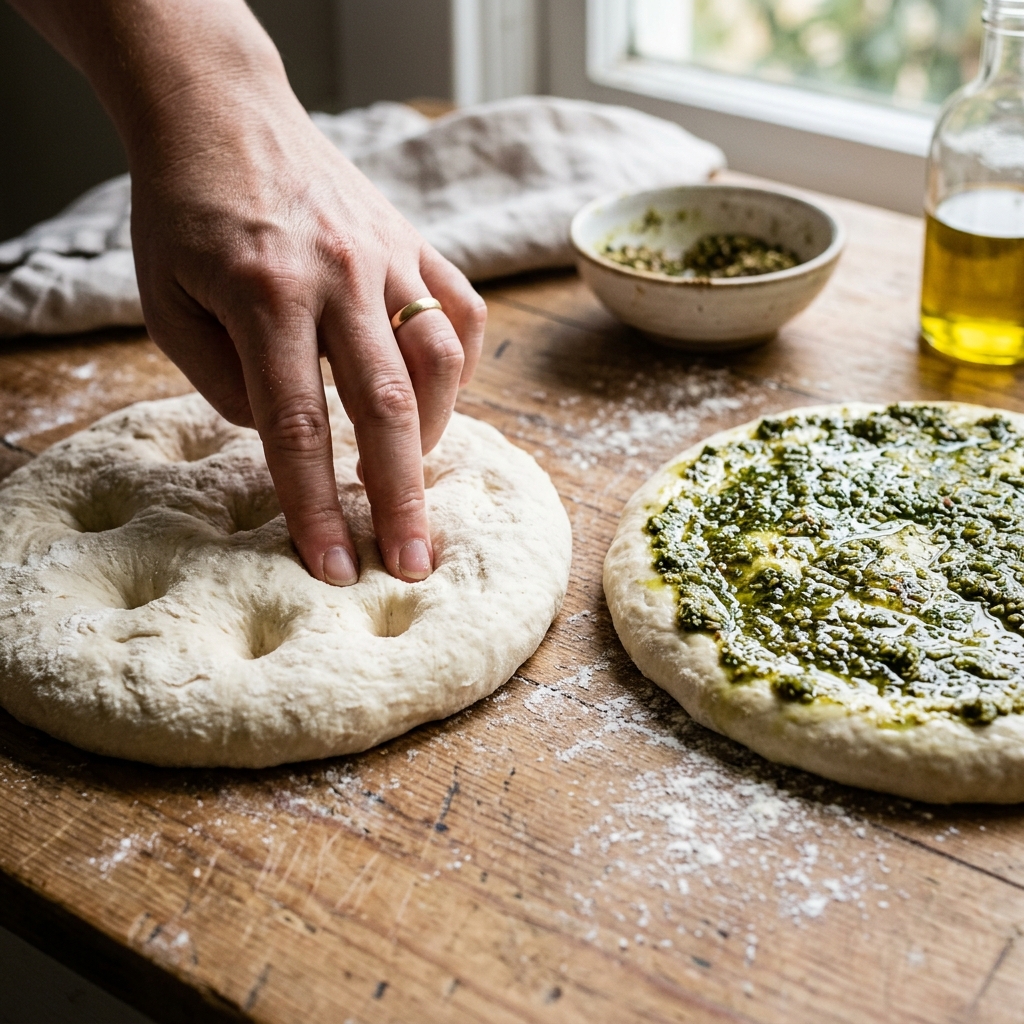
Press your fingertips firmly all over each round, leaving deep dimples, this is the signature manakish move, and those pockets are what hold the topping in place. Spread 2 generous tablespoons of za’atar paste over each round, right to the edge.
Step 6: Bake Hot and Fast
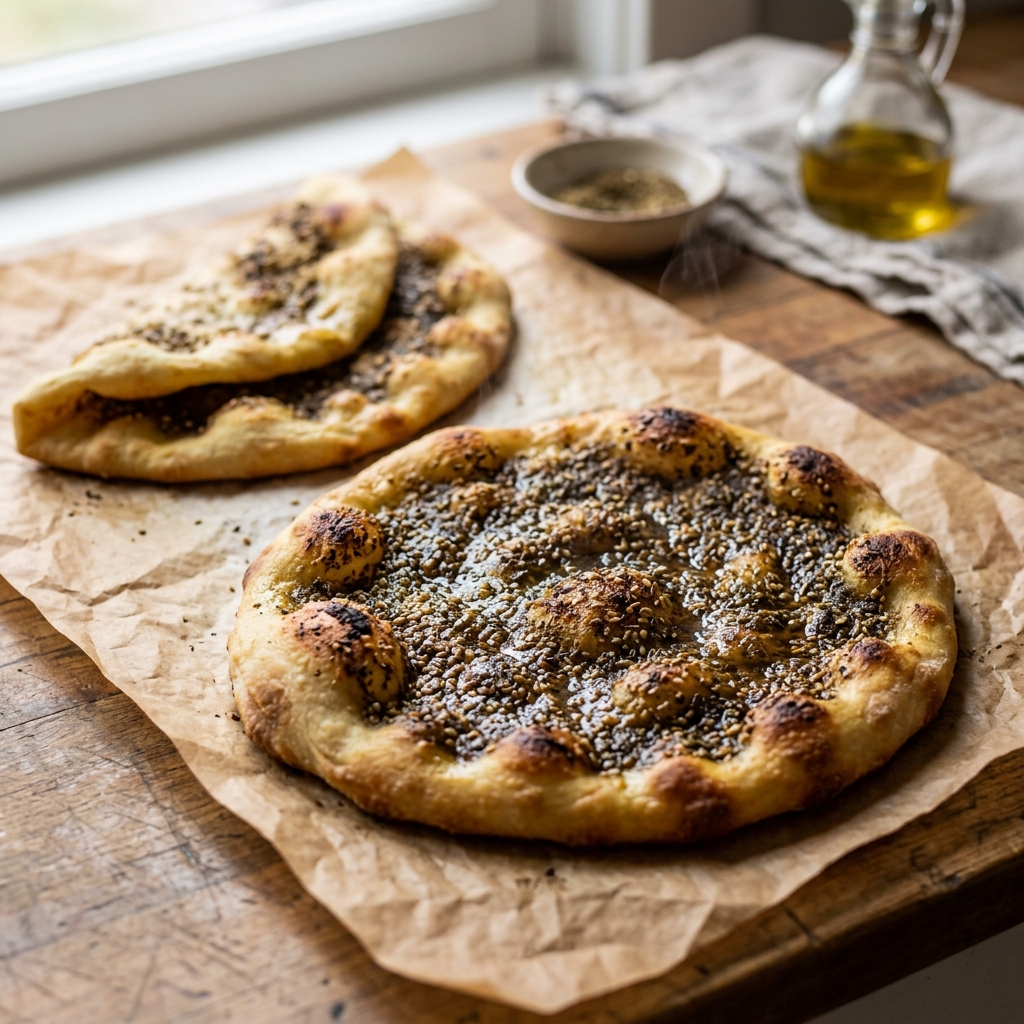
Heat the oven to 450°F (230°C) while the topped rounds rest for 10 minutes. Bake for 8–10 minutes, until the edges are golden and the za’atar is fragrant and bubbling slightly. Eat warm, ideally folded around labneh, tomato, cucumber, and mint.
Getting the Za’atar Ratio Right
- Heat your baking sheet. For the closest thing to a bakery oven, put the empty tray in the oven while it heats, then slide the parchment with the topped rounds onto it. The bottom crisps beautifully.
- Don’t skip the dimples. Flat, undimpled rounds puff like pita and shed their topping. Deep fingertip pockets keep the za’atar where it belongs.
- Storage: Manakish is best warm, but leftovers keep wrapped at room temperature for a day or in the freezer for 2 months. Refresh in a hot oven or dry skillet for 2–3 minutes, never the microwave, which turns them chewy.
- Buy za’atar in small quantities. Its flavor fades within months, so a vivid green, fragrant blend from a busy Middle Eastern grocery beats a dusty jar every time.
Cheese, Meat, and Other Toppings
Cheese Manakish (Vegetarian Favorite)
The second-most-loved topping in Lebanon: swap the za’atar paste for 2 cups of grated mozzarella mixed with crumbled feta (standing in for Akkawi, the traditional brine cheese). Or do half za’atar, half cheese, the combination, called “cocktail” in Lebanese bakeries, is the best of both.
Quick Weeknight Manakish Shortcut
Use 1 pound of store-bought pizza dough, divide into 6, and go straight to rolling, dimpling, and topping. From fridge to table in about 30 minutes, and honestly closer to bakery manakish than anyone will admit.
How Manakish Is Eaten at Home
The last flatbread of the batch is traditionally baked plain and torn open at the oven, drizzled with the leftover za’atar oil from the bowl. It is the baker’s share, and it never reaches the table. When tomatoes are good, thin slices pressed straight into the za’atar before baking turn breakfast manakish into lunch. This is a common summer variation across Lebanon and Syria.
The Breakfast Table Around It
The traditional Lebanese breakfast spread is manakish with labneh, olives, sliced tomato and cucumber, fresh mint, and sweet tea. For a fuller Middle Eastern brunch, add the easy tabbouleh recipe, the lemony parsley salad cuts the richness of the bread perfectly.
For familiar Western settings, treat manakish as you would focaccia: alongside soup or salad, cut into wedges with dips, or as the bread course next to the easy chicken shawarma recipe for a full Levantine dinner.
Manakish, Answered
Can I make manakish ahead of time? Yes, the dough can rise slowly in the fridge overnight (bring it to room temperature before rolling), and baked manakish freezes well for 2 months. Refresh frozen ones in a hot oven for 4–5 minutes.
What can I substitute for za’atar? Blend 3 tablespoons dried thyme, 2 tablespoons toasted sesame seeds, 1 tablespoon sumac (or 2 teaspoons lemon zest), and ½ teaspoon salt. It won’t have wild-thyme depth, but it’s genuinely close.
Is manakish vegan? The za’atar version is naturally vegan, dough and topping are entirely plant-based. Just serve the labneh on the side rather than on top, or skip it for a fully vegan table.
How do I store leftover manakish? Wrapped at room temperature for a day, or frozen for up to 2 months. Reheat in a hot oven or dry skillet for 2–3 minutes; the microwave makes the bread tough.
What’s the difference between manakish and pizza? The dough is similar, but manakish is a breakfast food, topped before a short hot bake with za’atar or cheese rather than sauce, and eaten folded in hand. Think morning flatbread, not dinner pie.
Bake It for Saturday Breakfast
If bread baking felt approachable after the Moroccan khobz post, manakish is your next step, same easy dough skills, plus the topping that made Lebanese breakfast famous. One batch and your kitchen will smell like a Beirut bakery.
Make it this weekend and tell me in the comments which topping won, za’atar, cheese, or the cocktail. And if you know someone who puts za’atar on everything but has never baked with it, share this recipe. This is what the jar was made for.
Rate this recipe
No ratings yet — be the first!

A very hot oven and a preheated tray are what give you the puff. A lukewarm oven bakes flat, dense manakish no matter how good the dough was.
Comments
No comments yet. Yours would be the first.
Baked these? Tell me: za'atar, cheese, or half and half?
Leave a comment
Comments are anonymous and appear after admin approval. If you rated this recipe above, your stars will show with your comment.