
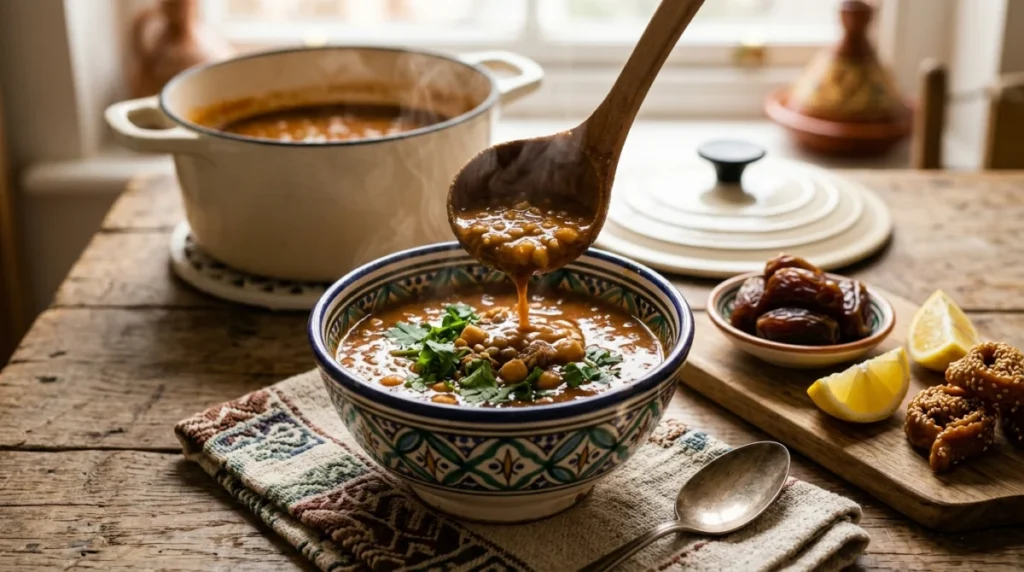
Morocco in a Bowl
Think a soup this famous must be complicated? Harira has a long ingredient list but an honest secret: it is mostly pantry staples in one pot. This harira recipe walks you through Morocco’s most beloved soup in six steps, all from a regular US or UK supermarket.
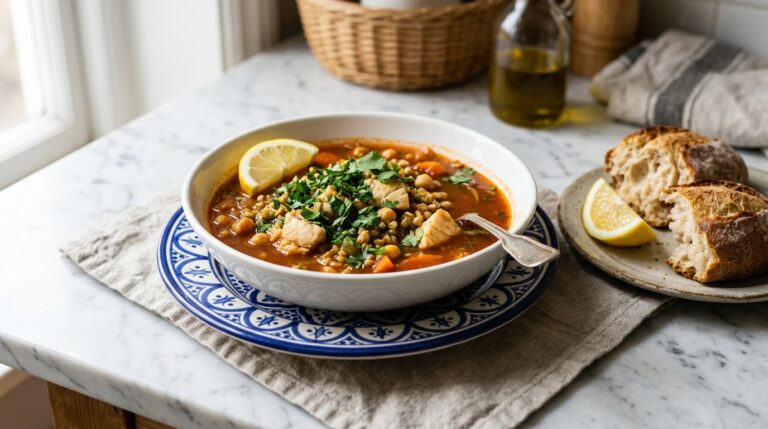
The reward is a bowl that eats like a meal: a silky tomato broth fragrant with ginger and cinnamon, tender lentils and chickpeas, fine noodles, and a lift of lemon and fresh herbs at the end. It is warming without being heavy, and the smell alone explains why millions of homes make it weekly.
Harira is the pot that improves every time you make it, and the thickening step divides Moroccan households to this day. The method below is the easiest reliable one, with the traditional alternative alongside it.
You will find the full ingredient list, the two items worth a note on sourcing, six numbered steps with photos, the secret to the signature silky texture, and the most-searched questions answered.
Why the Tedouira Changes Everything
- Everything is supermarket-friendly. Lentils, canned chickpeas, canned tomatoes, and everyday spices do the heavy lifting. The full sourcing notes below cover the only two items that need a word.
- One pot, flexible timing. About 20 minutes of chopping, then a mostly unattended simmer. Total time is around 1 hour 15 minutes, and the shortcut version in Variations brings it under an hour.
- Naturally adaptable. Harira is halal as written and becomes fully vegetarian or vegan by simply leaving out the meat, with no other changes. Many Moroccan homes make it meatless all the time.
- It improves overnight. Like most legume soups, harira on day two is deeper and better, which makes it ideal for meal prep and gatherings.
About Harira: The Soup That Breaks the Fast
Harira is Morocco’s national soup, with cousins across North Africa and roots that reach back centuries. During Ramadan it is the traditional first taste after sunset: across the country, the fast is broken with a bowl of harira, sweet dates, and often chebakia (sesame-honey pastries).
But harira is not only Ramadan food. It is a year-round supper, ladled out at home and sold steaming from stalls, and every family guards its own version. The constants: a tomato base, lentils and chickpeas, warm spices, fresh herbs, and a final thickening that gives the broth its velvety body.
If you know Italian minestrone or Spanish lentejas, harira sits in that same comforting family, but the ginger, cinnamon, and cilantro place it unmistakably in the Arabic and wider Mediterranean kitchen.
What Goes Into the Pot
For the Soup
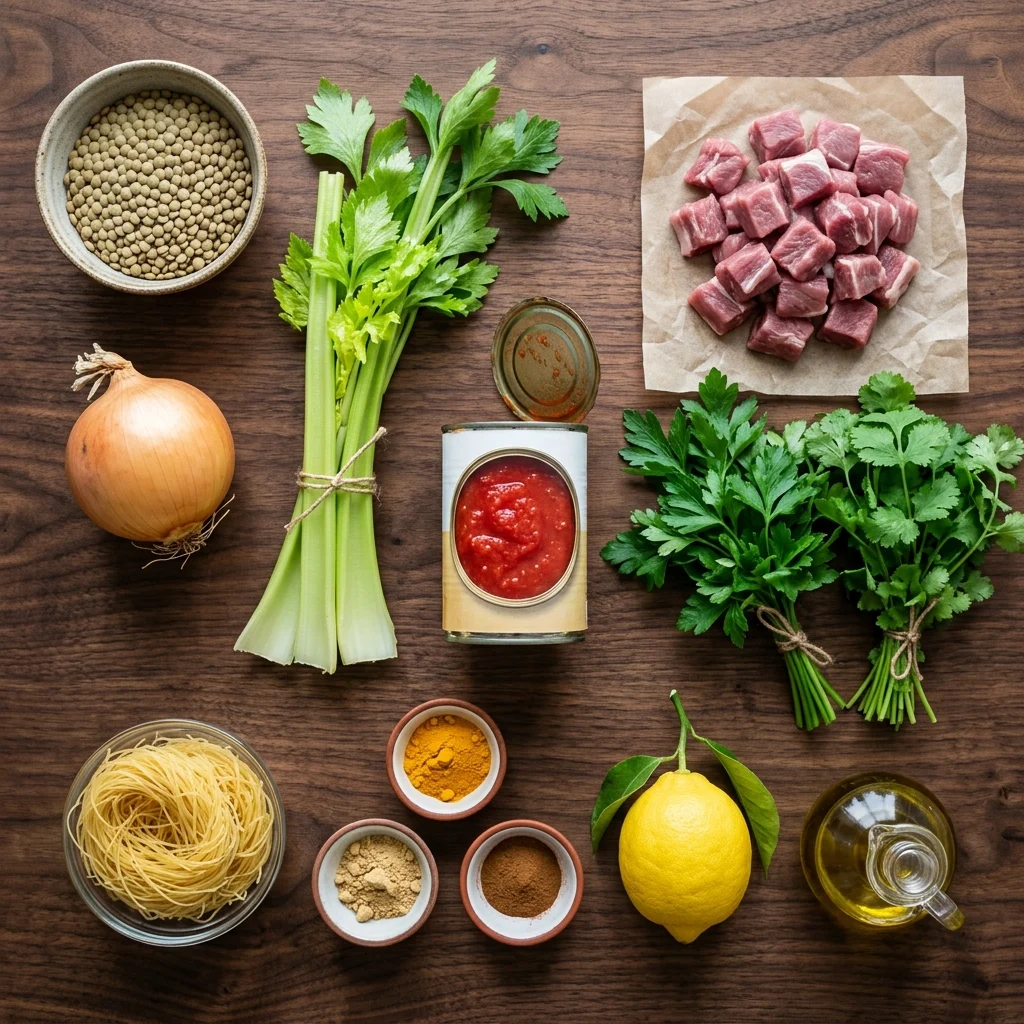
Serves 6 to 8:
- 2 tablespoons olive oil
- ½ lb (225 g) lamb or beef, cut into small ½ inch cubes (optional; see Variations)
- 1 large onion, finely chopped
- 2 celery stalks with leaves, finely chopped
- 1½ teaspoons ground ginger
- 1½ teaspoons ground turmeric
- 1 teaspoon ground cinnamon
- 1 teaspoon black pepper
- 1½ teaspoons salt
- 1 can (28 oz / 800 g) crushed tomatoes
- 2 tablespoons tomato paste
- ¾ cup (150 g) dried green or brown lentils, rinsed
- 1 can (15 oz / 400 g) chickpeas, drained
- 8 cups (2 liters) water
- ½ cup broken vermicelli noodles or orzo
- 1 cup chopped fresh cilantro (coriander)
- 1 cup chopped fresh parsley
- ¼ cup (30 g) flour whisked with 1 cup cold water, for thickening
- 1 lemon, cut into wedges, to serve
Where to Find the Less Common Ingredients in the US and UK
Almost everything here is standard. Vermicelli noodles are with the pasta in any supermarket (the thin nests; just crush them), and orzo works identically. Lentils and canned chickpeas are aisle staples in both countries.
If you shop at a Middle Eastern or Mediterranean grocery, look for two upgrades: better dried chickpeas if you prefer soaking your own, and fresh bunches of cilantro and parsley at half the supermarket price. Nothing in this recipe requires Amazon or a specialty trip.
Meatless Swaps
- Not a cilantro household? Use all parsley. The soup loses one of its signature notes but remains completely itself, and plenty of Moroccan cooks lean parsley-heavy anyway.
- No vermicelli or orzo? Use 3 tablespoons of rice, added 5 minutes earlier, or skip the starch entirely for a lighter, gluten-free-friendly pot (see the FAQs for the thickener swap too).
- No lamb or beef? Just leave it out. Meatless harira is traditional, not a compromise, and the recipe needs no other adjustment.
Layering the Pot, Thickening at the End
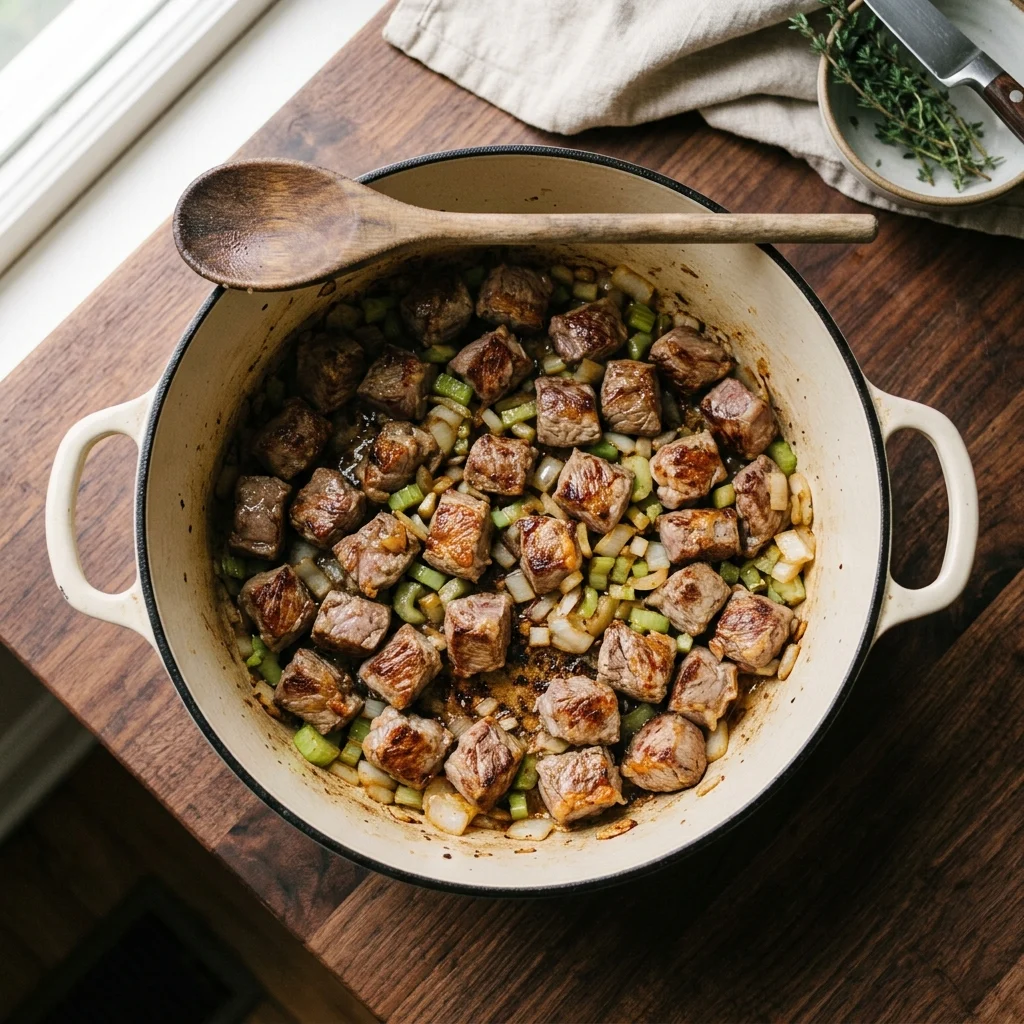
Step 1: Brown the Meat and Soften the Aromatics
Warm the olive oil in your largest pot over medium heat. Add the meat (if using) and brown it lightly on all sides, then add the onion and celery and cook for 6 to 8 minutes, until soft.
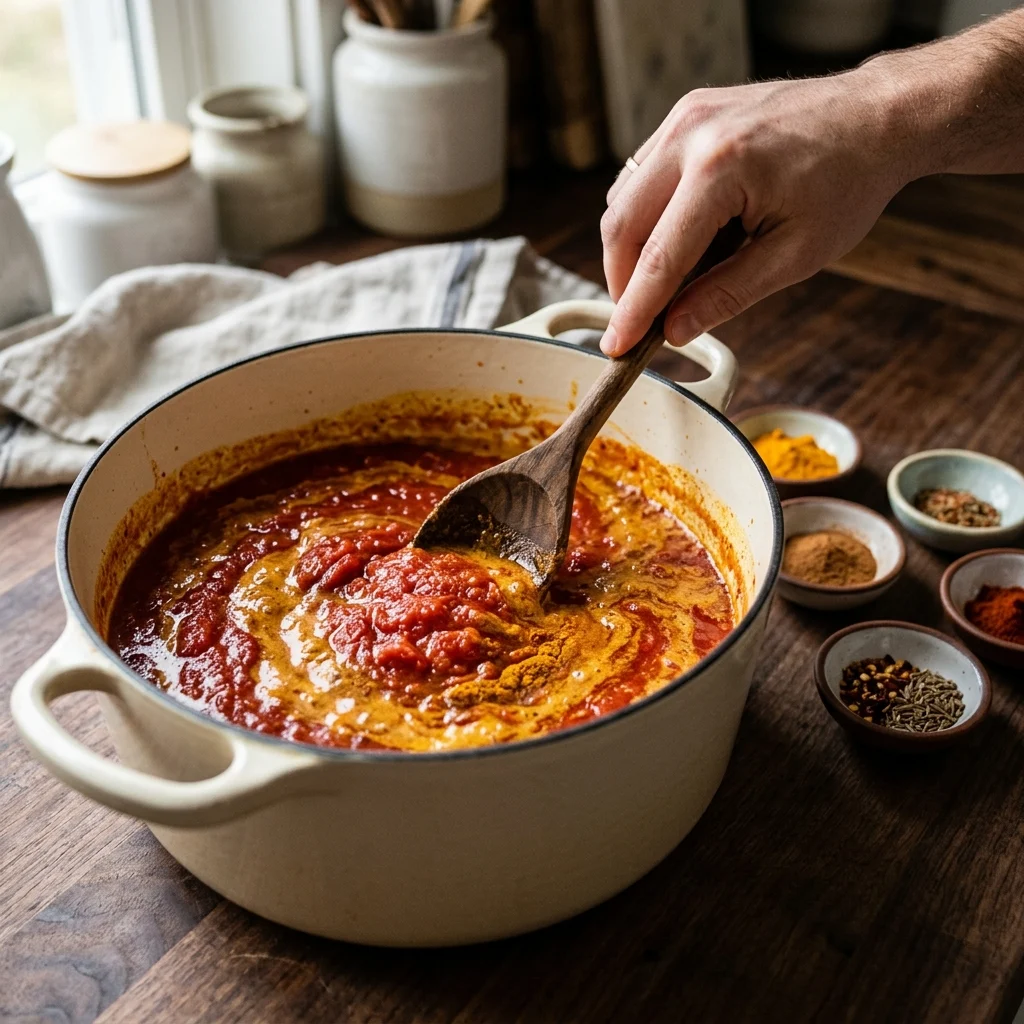
Step 2: Bloom the Spices and Add the Tomatoes
Stir in the ginger, turmeric, cinnamon, pepper, and salt and cook for 1 minute, until fragrant. Add the crushed tomatoes and tomato paste and simmer for 5 minutes, stirring now and then.
Prep tip: That one minute of frying the spices in oil before any liquid goes in is what separates rich harira from flat harira. Added straight into the broth instead, the same amounts taste weaker and slightly dusty. Give them their minute.
Step 3: Simmer the Lentils and Chickpeas
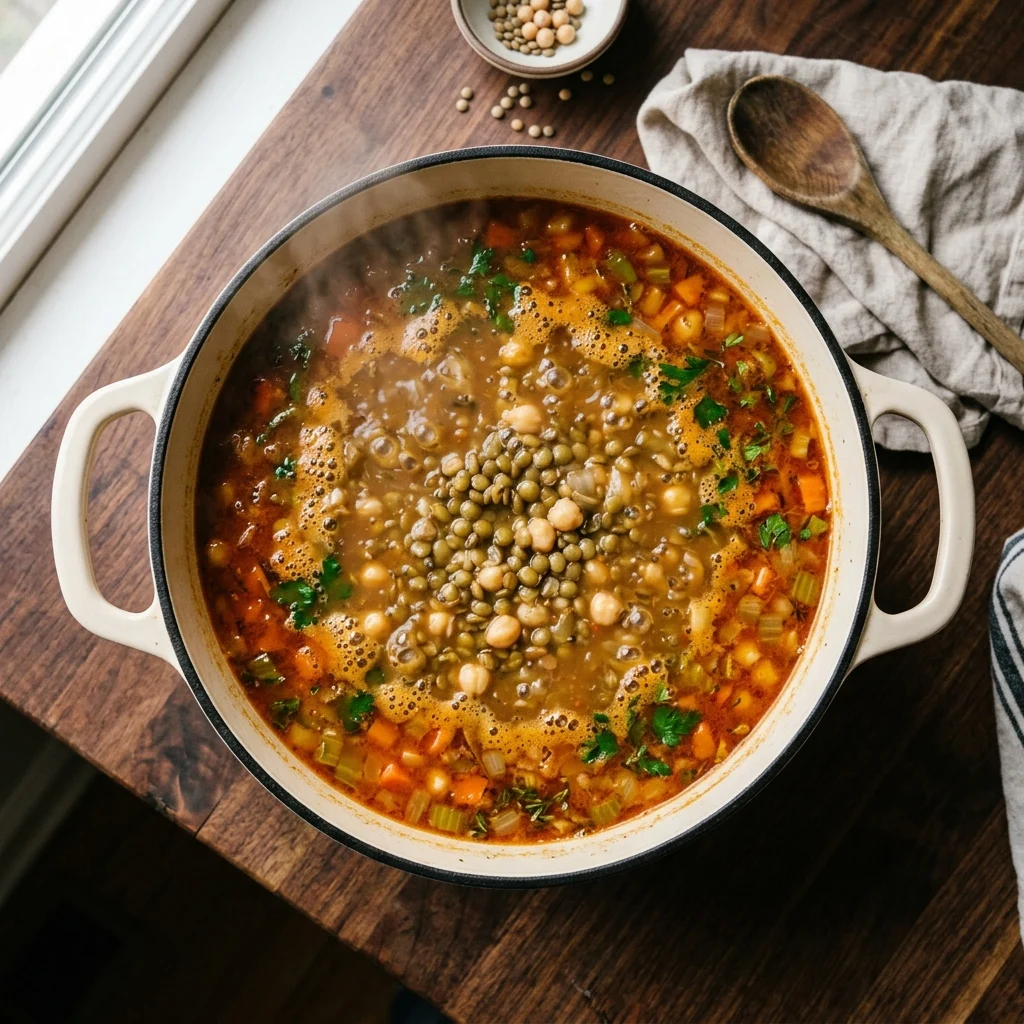
Add the lentils, chickpeas, and water. Bring to a boil, then lower to a steady simmer, cover partially, and cook for 40 to 45 minutes, until the lentils are fully tender and the meat, if used, is soft.
Step 4: Add the Noodles
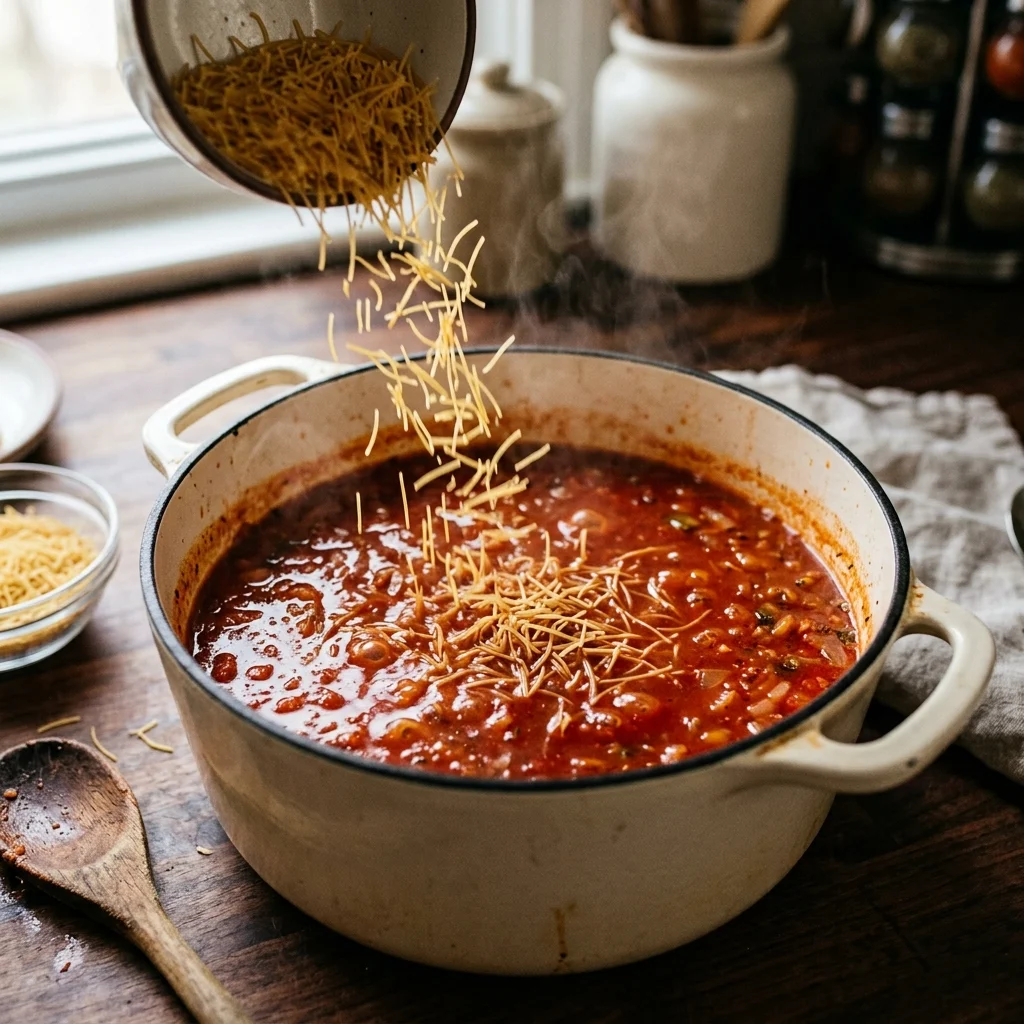
Stir in the vermicelli or orzo and simmer for 8 to 10 minutes, until tender. The soup will already be thickening slightly from the pasta’s starch.
Step 5: Thicken to Silky (the Tedouira)
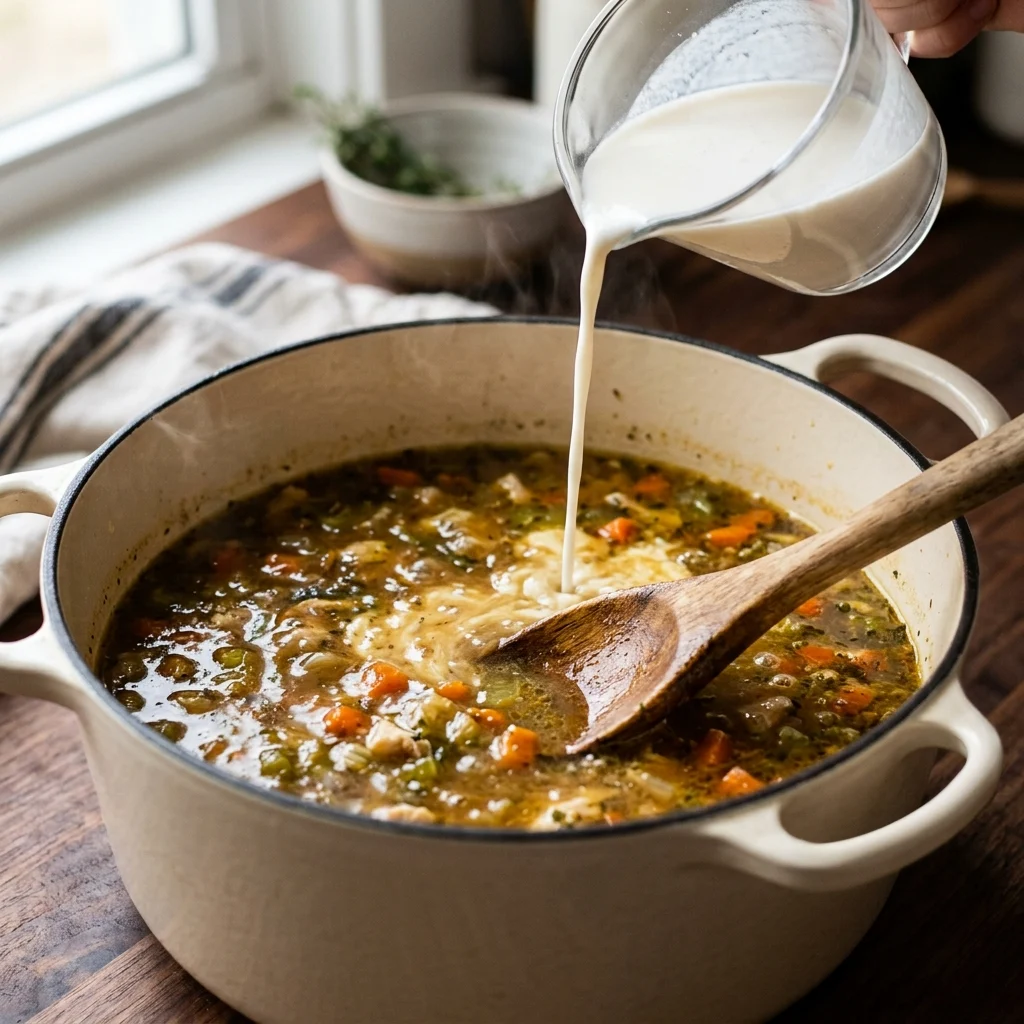
Whisk the flour and water mixture once more, then pour it into the simmering soup in a thin stream, stirring constantly. Simmer for 5 to 7 minutes, stirring often, until the broth turns glossy and coats the spoon like thin cream.
Prep tip: Pour slow, stir fast, and the flour never lumps. This slurry is a simplified tedouira (the flour-and-water starter Moroccan cooks use to give harira its velvet body). Some families thicken with beaten egg instead; flour is the most forgiving for a first pot.
Step 6: Finish with the Herbs and Serve
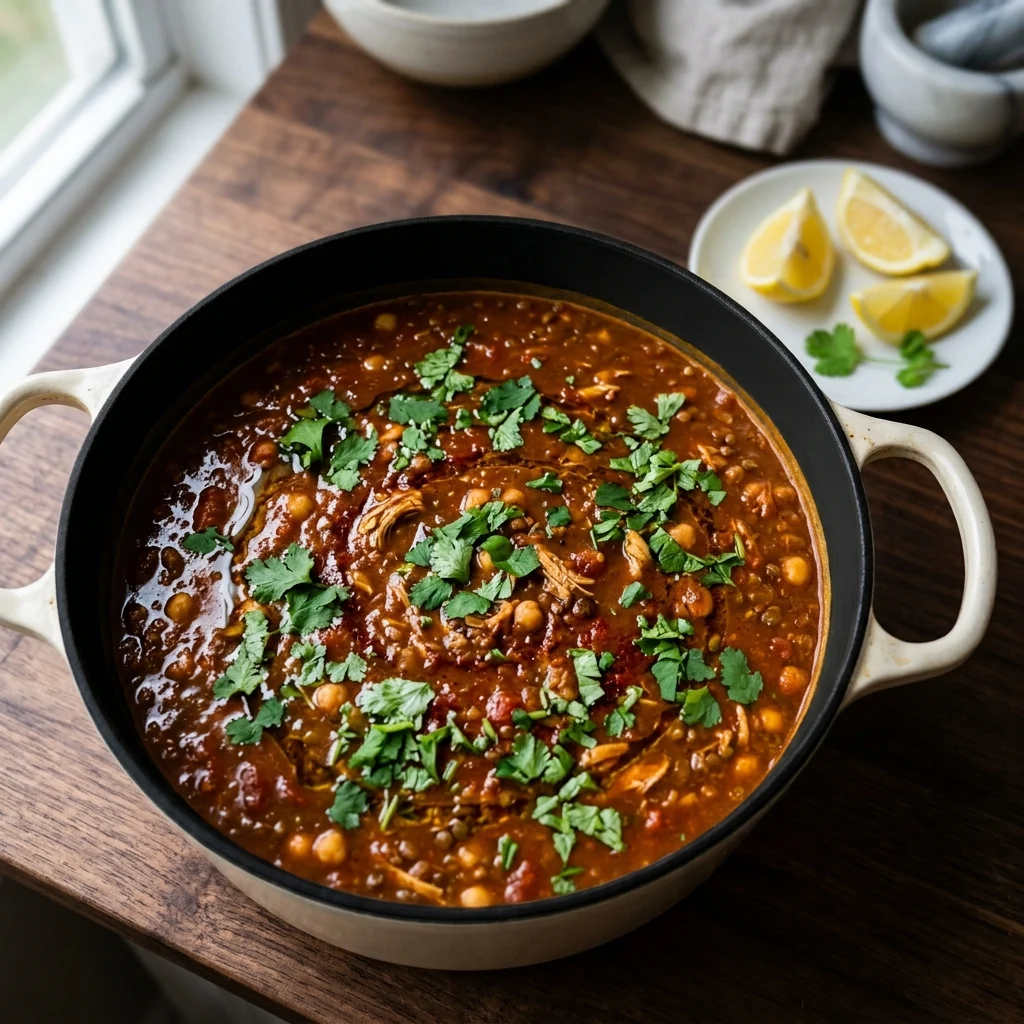
Stir in the cilantro and parsley and simmer for 2 final minutes. Taste and adjust the salt. Ladle into bowls and serve hot with lemon wedges; the squeeze at the table brightens everything and is not to be skipped.
Whisking the Tedouira Without Lumps
- Stir from the bottom once the soup thickens. Lentils and flour both catch on the base of the pot in the last twenty minutes. A flat-edged wooden spoon every few minutes prevents any scorched taste.
- Let it rest ten minutes before serving. Harira settles into itself off the heat, and the texture is noticeably better for a short wait.
- Storage: Keeps in the fridge for 3 days and freezes well for 3 months, though the noodles soften over time. If you are cooking specifically to freeze, leave the noodles out and add them when reheating.
- Thin it, don’t fight it. The soup thickens dramatically as it sits. Loosen leftovers with a splash of water while reheating and the silkiness comes right back.
Meatless and Regional Versions
Vegetarian and Vegan Harira
Skip the meat and start at the onions; everything else stays the same. For extra body, some cooks add a second can of chickpeas or a handful of extra lentils. This version is fully vegan and completely traditional.
Quick Weeknight Harira Shortcut
Use red lentils instead of green: they collapse in 20 minutes, so the simmer in Step 3 drops by half. Skip the meat, and the pot lands in about 45 minutes. The texture is softer and more rustic, and no one has ever complained.
How Moroccan Households Adjust It
The celery leaves matter as much as the stalks, and the herb amounts on paper are a starting bid: most Moroccan cooks add an extra handful of cilantro at the end. Served Ramadan style, dates sit on the table, because that salty-sweet first mouthful is the whole point.
Dates, Chebakia, and the Iftar Table
The classic Moroccan iftar pairing is harira with dates and chebakia, and any sticky-sweet pastry captures the idea. A round of warm Moroccan bread is exactly what the soup wants, and the Moroccan almond cookies make a fitting sweet finish.
For familiar Western settings, treat harira like any hearty lentil soup: a full lunch with crusty bread, or a starter before grilled meats. It also sits happily next to a fresh salad as a bright counterpoint to the warm spices.
Harira, Answered
Can I make harira ahead of time? Yes, and it improves overnight as the flavors settle. Make it up to 3 days ahead and loosen with a little water when reheating. For freezing, leave out the noodles and add them fresh.
Is harira vegetarian? It can be, with zero compromise: simply omit the meat. Meatless harira is common across Morocco, and the lentils and chickpeas keep it a complete meal. Without meat it is also fully vegan.
Is harira spicy? No. The spices are warm rather than hot: ginger, turmeric, cinnamon, and black pepper. Anyone who wants heat can add a spoon of harissa to their own bowl, which is a common table move.
How do I store leftover harira? Fridge for 3 days or freezer for 3 months. It thickens as it sits, so stir in a splash of water while reheating gently. Noodles soften in storage, so freeze noodle-free if you plan ahead.
Is harira gluten-free? Not as written, because of the vermicelli and the flour thickener. Swap the noodles for rice and thicken with 2 tablespoons of cornstarch in cold water instead of flour, and the pot becomes fully gluten-free.
Make a Pot Before Ramadan
If the Tunisian fish soup on this blog opened the door to North African soups, harira is the main event: the pot an entire country turns to, made entirely from things you can buy this afternoon. Six steps, one big pot, and dinner for days.
Make it this week and tell me in the comments whether your household lands team flour or team egg on the thickening. And if you know someone who thinks lentil soup is boring, share this harira recipe. Morocco respectfully disagrees, and so will they.
Rate this recipe
No ratings yet — be the first!

Team flour or team egg for the tedouira? Both are traditional, and households defend their version fiercely. I give the flour method here because it is the most forgiving for a first pot.
Comments
No comments yet. Yours would be the first.
Made a pot? Tell me how you thickened it, and whether it lasted past day two.
Leave a comment
Comments are anonymous and appear after admin approval. If you rated this recipe above, your stars will show with your comment.