The Coffee That Is Really an Invitation
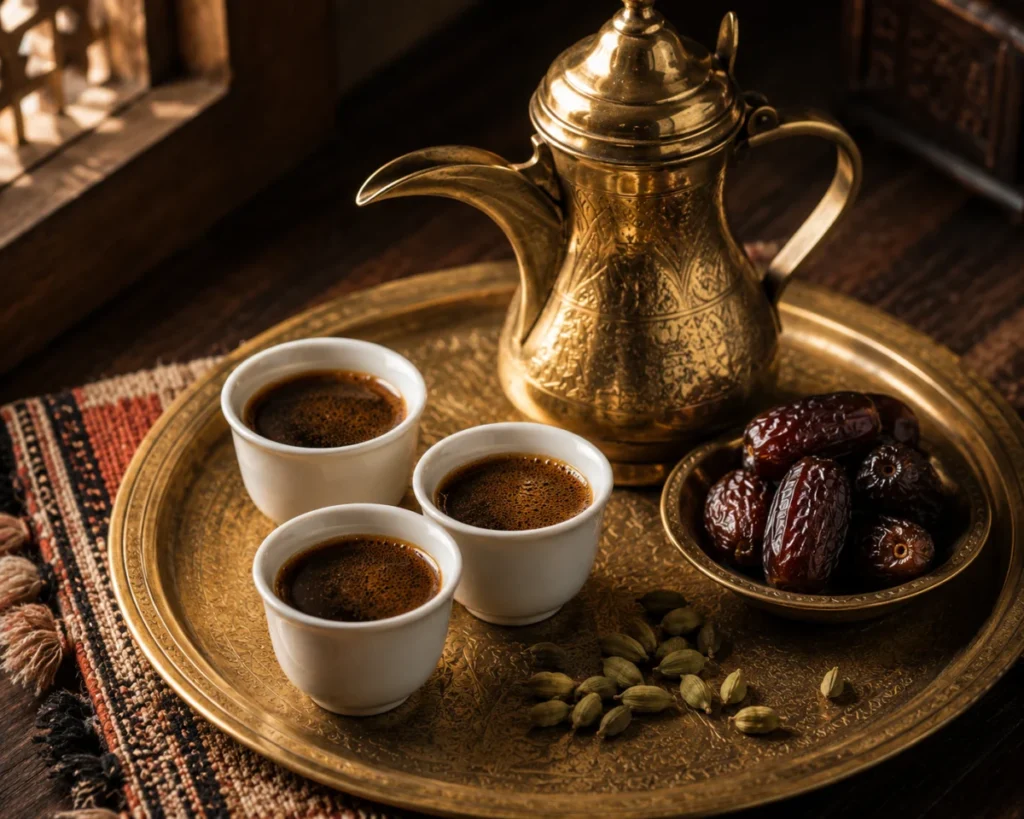
If you are picturing something dark, bitter, and thick in a tiny cup, that is Turkish coffee, and this is not it. Arabic coffee, qahwa, is its pale opposite: golden, translucent, generously perfumed with cardamom, unsweetened, and poured from a long-spouted pot into cups the size of an egg.
It tastes lighter than any coffee a Western drinker expects, more like a spiced herbal infusion with a coffee backbone, and it is drunk in threes across the Gulf, the Levant, and North Africa as the opening move of hospitality. The pot arrives before the conversation does.
The dallah comes out whenever a guest stays longer than a polite half hour, which is most people. Beans roasted anywhere from bone-pale to medium will work, and the guidance below is built around what a US or UK shopper can actually buy.
Ahead: what makes qahwa different from Turkish coffee, where to buy the pale roast (and how to fake it with normal beans), four steps with photos, the serving etiquette that will make an Arab guest smile, and the questions people ask most.
About Qahwa: Rules You Should Know Before You Pour
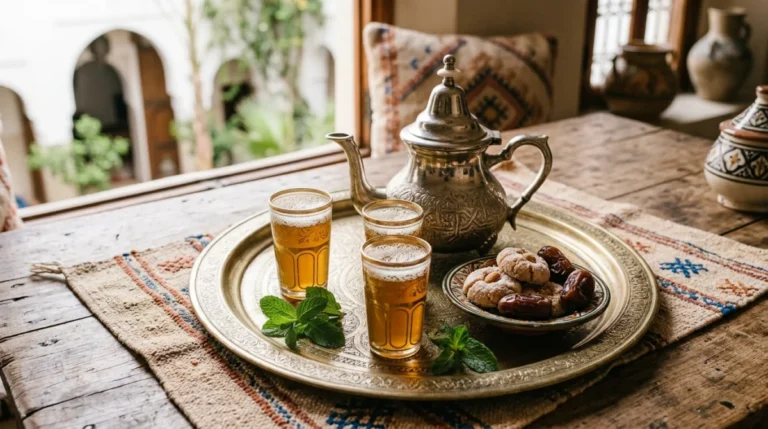
Arabic coffee is served, not helped yourself to. The host pours with the right hand, from a dallah (the long-spouted brass or steel pot), into finjan cups filled only a quarter to a third full. A full cup is not generosity here; it signals that you would like the guest to leave.
Three cups is the traditional rhythm: the first for the guest, the second for the pleasure, the third for the sword or the household, depending on which region is telling it. When you have had enough, you tilt or shake the cup gently from side to side as you hand it back. Without that shake, a good host will keep refilling indefinitely, which is a delightful problem to have once and a caffeine event the third time.
Dates sit alongside, always, because the coffee is unsweetened and the two were built for each other. The tradition runs deep enough that Arabic coffee is inscribed on the UNESCO list of intangible cultural heritage as a symbol of generosity.
Beans, Cardamom, Water
What You Need
Serves 6 small cups
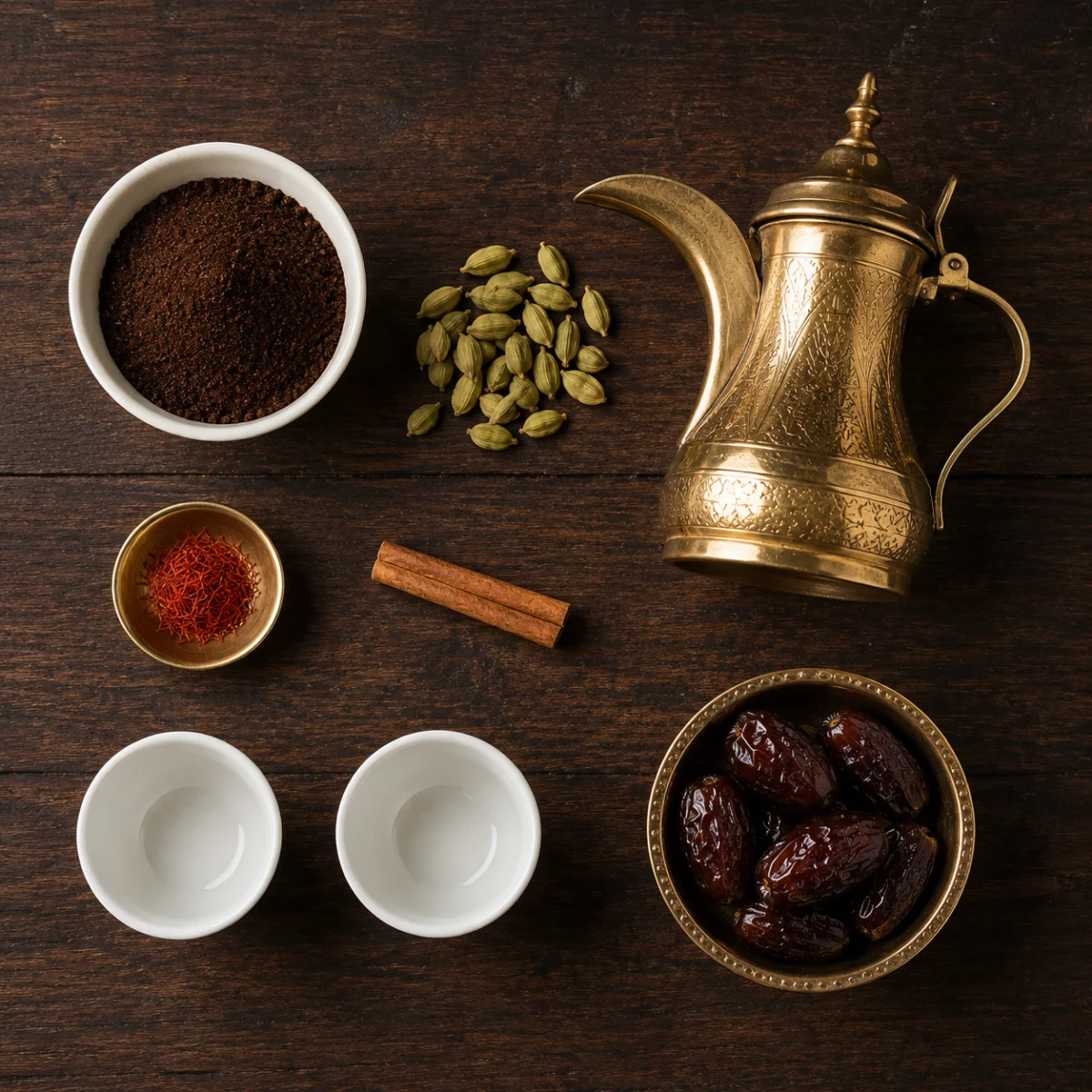
- 4 cups (1 liter) water
- 3 tablespoons coarsely ground light-roast Arabic coffee (see sourcing below)
- 1½ teaspoons ground cardamom, or 8 green pods, cracked
- Optional: 2 or 3 strands of saffron, a pinch of ground cloves, or a small piece of cinnamon stick
- Optional: a splash of rose water at the end
- To serve: dates, and unsweetened is the rule
Where to Find Arabic Coffee Beans in the US and UK
The bean matters more than any technique here. Arabic coffee uses a very light, almost blonde roast that produces that signature pale gold cup. Look for bags labeled qahwa arabiyya, Arabic coffee, or Saudi or Gulf coffee at any Middle Eastern grocery, where it is often sold pre-ground with the cardamom already blended in, which is a perfectly respectable shortcut. Amazon carries several brands, and specialty coffee roasters increasingly stock light Ethiopian or Yemeni beans that work well.
If neither is available, use the lightest roast in your supermarket, ground coarse, and accept a darker cup with honest flavor. Green cardamom pods live in the spice aisle of most large supermarkets in both countries.
Without a Dallah
- No light roast? Medium roast makes a browner, stronger qahwa that is still delicious; use 2 tablespoons instead of 3, since darker beans extract harder.
- No dallah? Any small saucepan works, and a teapot serves the theater. The pot is tradition, not requirement.
- No whole cardamom? Ground cardamom is fine and faster; add it in the second stage so it does not turn bitter.
Roasting, Grinding, Simmering, Pouring
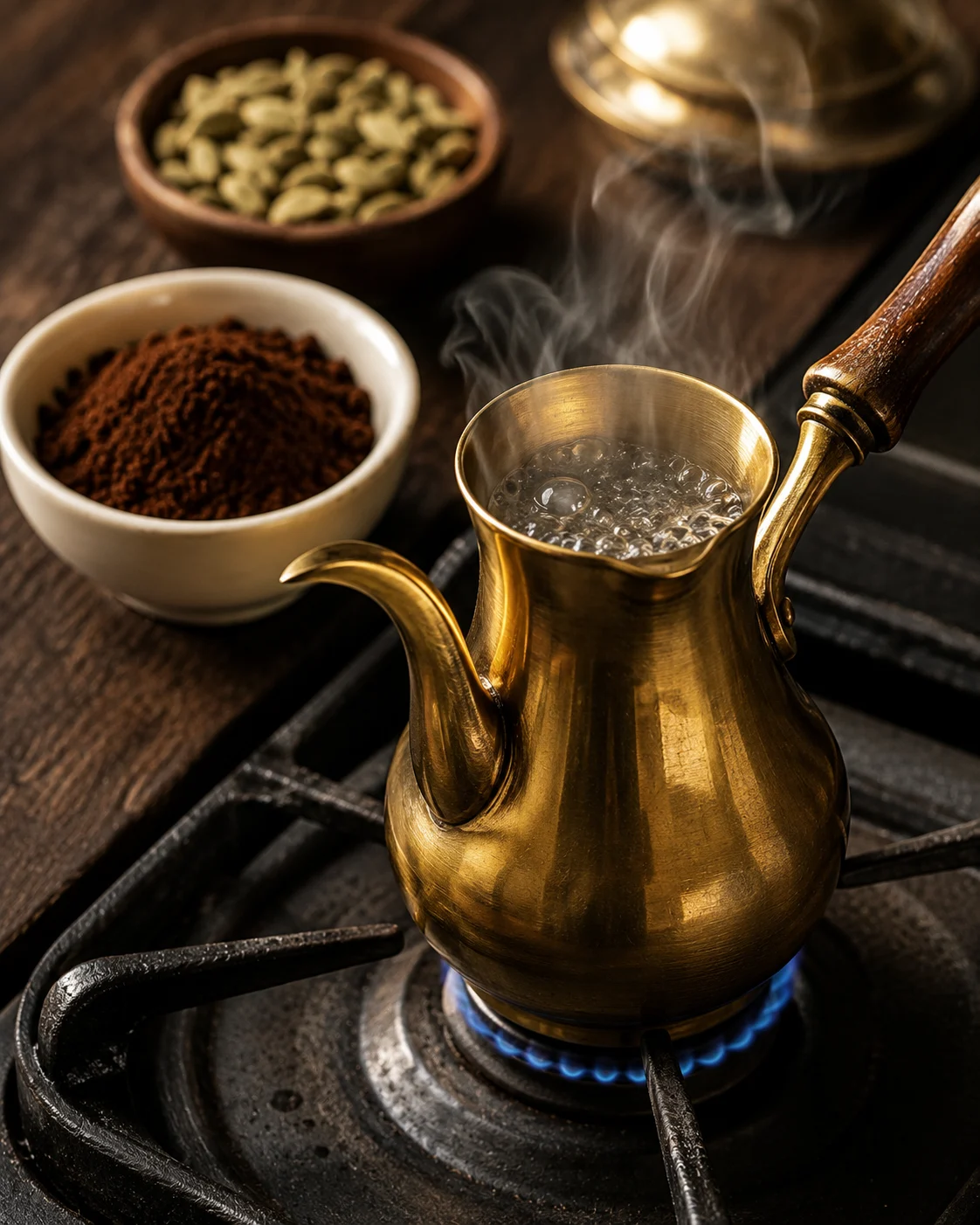
Step 1: Boil the Water
Bring the water to a rolling boil in your pot, then reduce to a bare simmer. Nothing else goes in until the water is fully boiling; qahwa is brewed by simmering, not steeping.
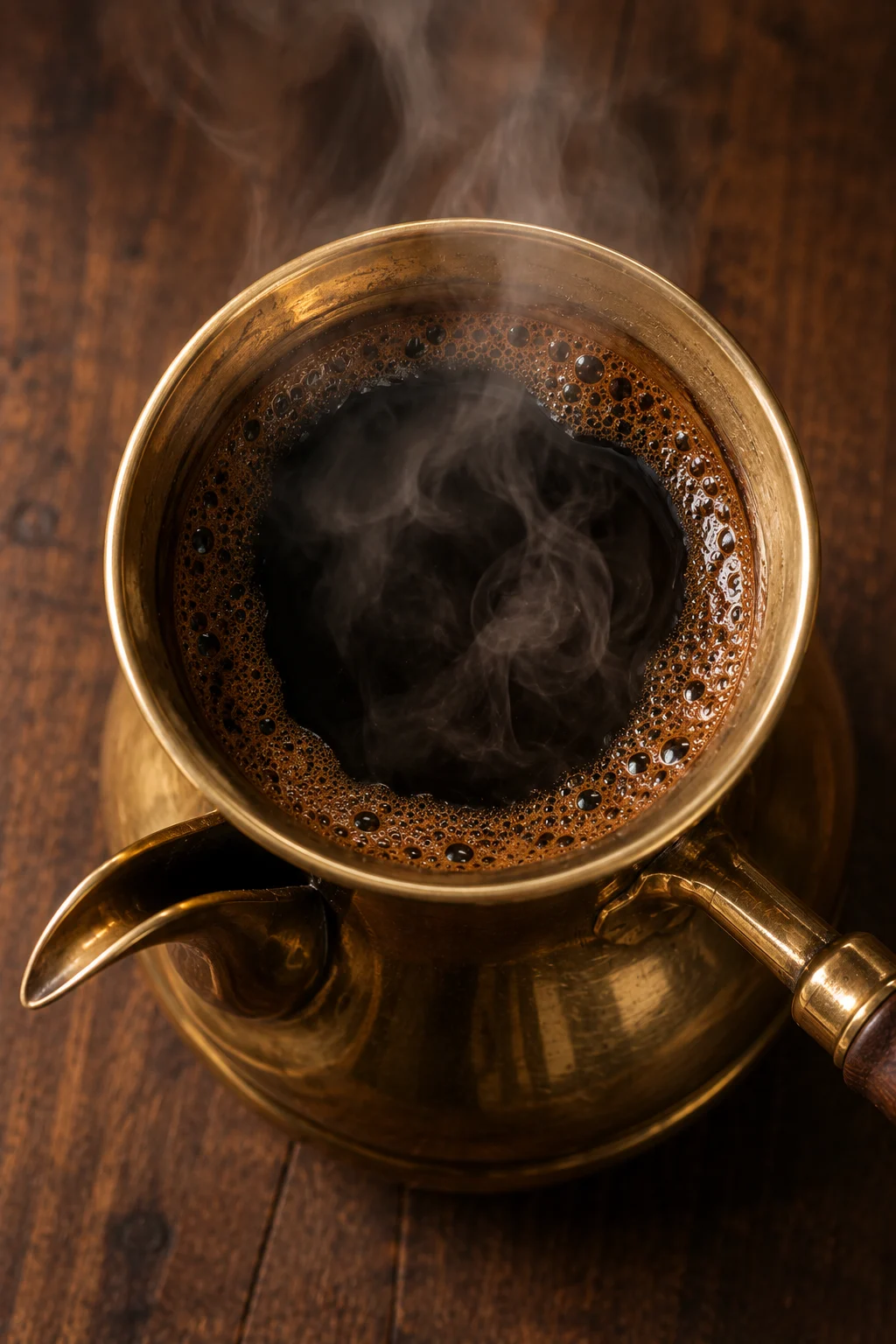
Step 2: Add the Coffee and Simmer Gently
Stir in the coffee grounds and simmer uncovered on low for 10 minutes. Keep the heat low enough that the surface barely trembles.
Prep tip: A hard boil at this stage is what makes qahwa bitter and muddy. You want lazy bubbles at the edge of the pot and no foam volcano; low and slow is where the pale gold color survives.
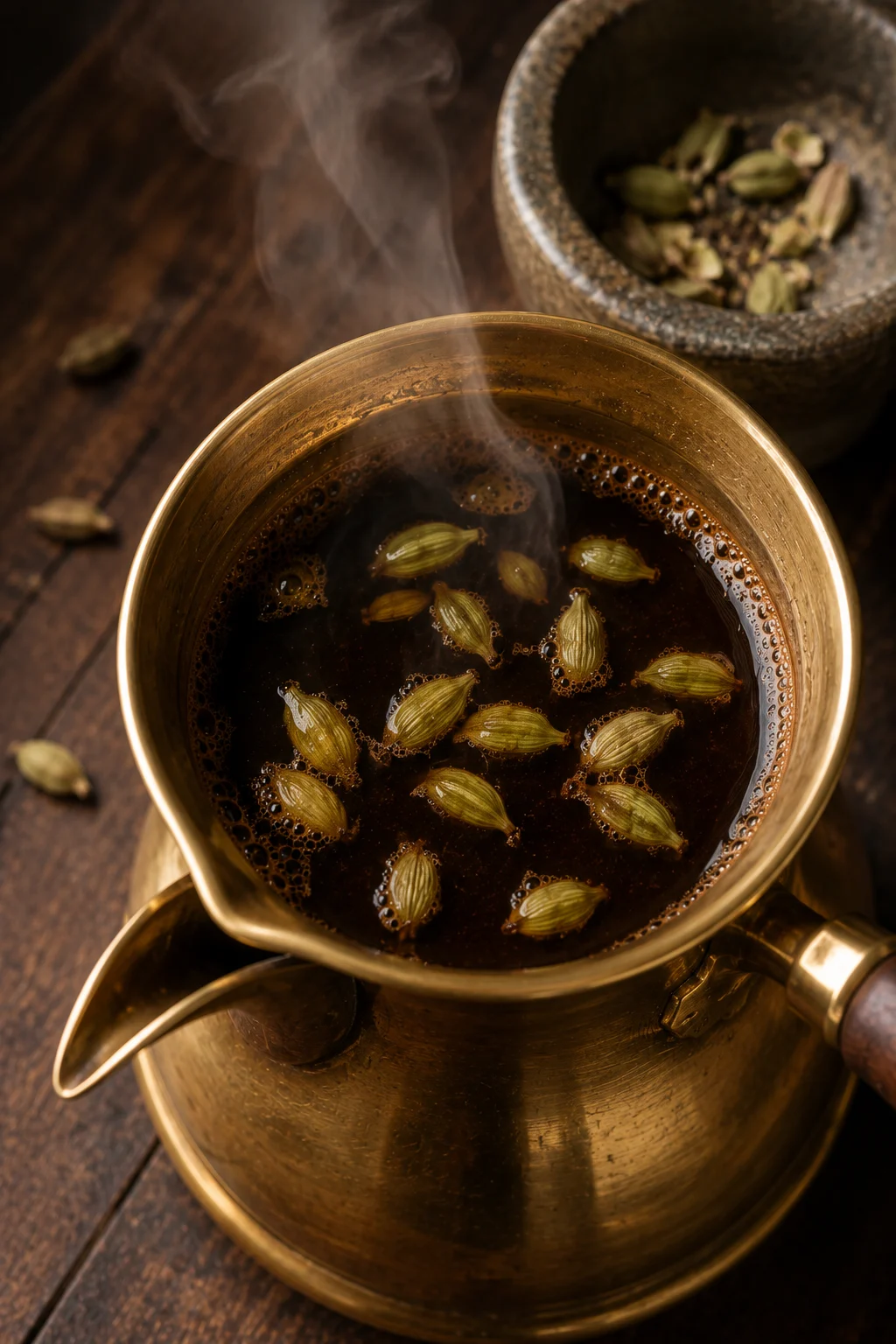
Step 3: Add the Cardamom and Rest
Add the cardamom (and saffron, cloves, or cinnamon if using), simmer 5 minutes more, then take the pot off the heat and let it stand 5 minutes so the grounds settle to the bottom.
Prep tip: Cardamom goes in late on purpose. Boiled for the full twenty minutes it turns harsh and medicinal; five minutes gives you all the perfume and none of the bite. This is the single detail that separates good qahwa from great.
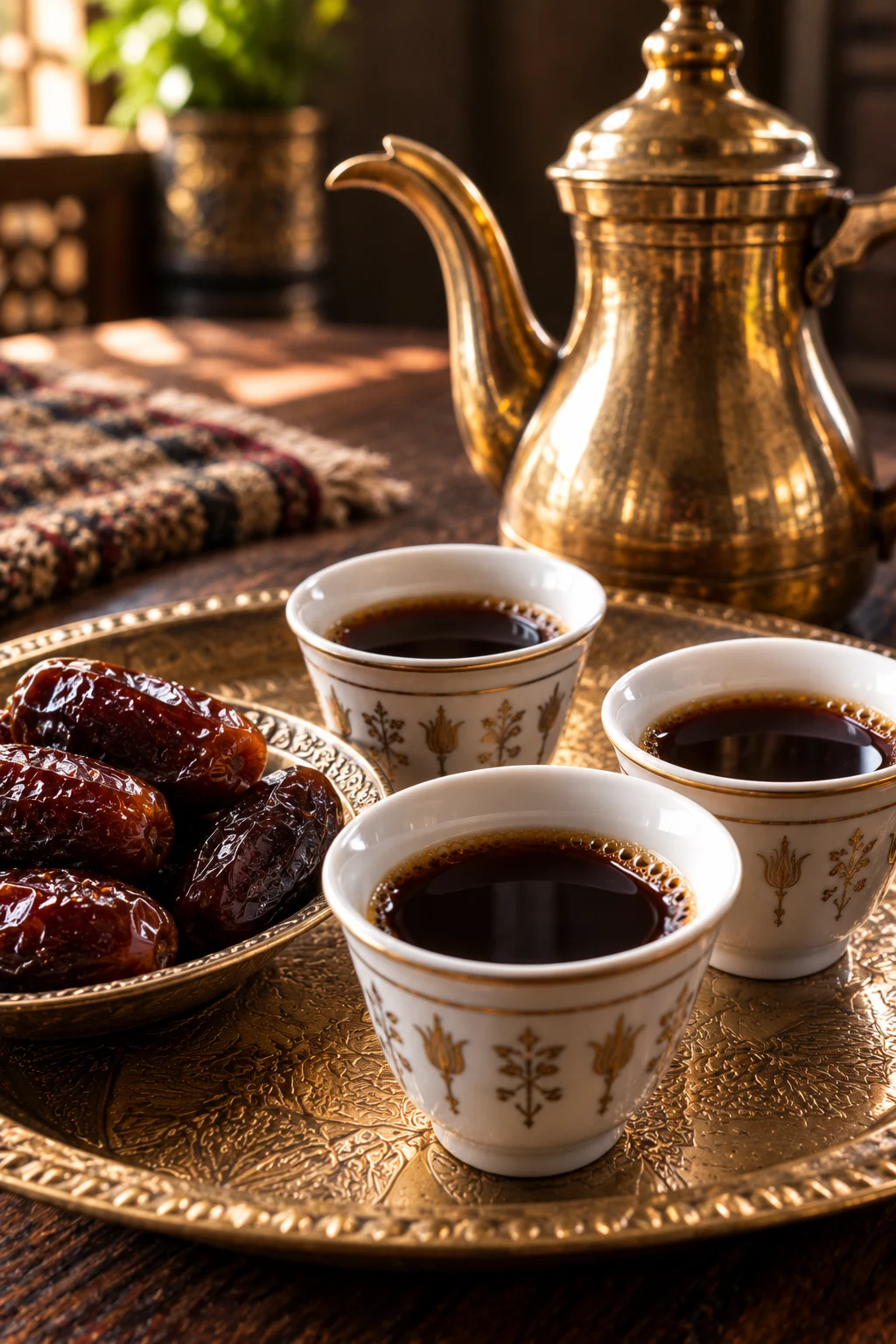
Step 4: Strain and Serve in Threes
Pour slowly through a fine strainer into the serving dallah or a warmed jug, leaving the settled grounds behind. Add the rose water now if using. Serve in small cups filled a third full, with dates alongside, and offer a second cup before anyone asks.
Never Let It Boil
- Grind coarse, not fine. Fine espresso grind clouds the cup and slips through the strainer. Coarse grounds settle cleanly and give the clear golden pour that defines qahwa.
- Keep it unsweetened. Sugar in the pot is not the tradition here; sweetness comes from the dates. If a guest asks, sweeten the individual cup rather than the batch.
- Storage: Best fresh, but it keeps warm in a thermos for hours, which is exactly how it travels to majlis gatherings and picnics across the region. Refrigerated and reheated, it loses the aromatics.
- Warm the cups. A rinse of hot water in the finjan before pouring keeps the small volume from going cold in three sips.
Saffron, Cloves, and Regional Styles
Saudi-Style with Saffron
Add 3 strands of saffron with the cardamom for a deeper gold cup and a honeyed, almost floral aroma. This is the version most associated with Gulf hospitality, and it turns a simple pot into an occasion.
Levantine Style, Darker and Bolder
Use a medium roast and half the cardamom for a browner, stronger cup closer to what is served across Jordan, Palestine, and Syria. Neither version is more correct; they are regional dialects of the same sentence.
How I Pour It
In my kitchen a single clove joins the cardamom in winter, and the pot goes onto the table with a small dish of dates and, when there has been baking, squares of namoura or a plate of the Moroccan almond cookies. Nobody has ever objected to that arrangement.
Dates, and Why They Are Always There
Dates are the classic and the only genuine requirement, ideally soft medjool or the smaller khudri. Beyond that, the sweets table on this blog is exactly what qahwa was designed to interrupt: the Moroccan almond cookies for the almond-and-cardamom pairing, or namoura when something syrupy is wanted.
For familiar Western settings, treat it as you would an after-dinner espresso: served at the end of a meal such as the chicken tagine, alongside something small and sweet, or offered the moment guests arrive as a warmer welcome than a glass of water. If you prefer your hospitality sweet and minty instead, the Moroccan mint tea recipe is the other half of this tradition.
Qahwa, Answered
What is the difference between Arabic coffee and Turkish coffee? Roast and method. Arabic coffee uses a very light roast, is simmered with cardamom and strained, and pours pale gold and unsweetened. Turkish coffee uses a dark, powder-fine grind that is boiled and poured grounds and all, dark and often sweetened.
Does Arabic coffee have a lot of caffeine? Less than you might expect per cup: light roasts brew mild, the cups are tiny, and much of the flavor is cardamom. Three traditional cups land roughly around one regular mug of drip coffee.
Can I use regular coffee for Arabic coffee? Yes, with adjustments: pick the lightest roast available, grind it coarse, and use 2 tablespoons instead of 3 since darker beans extract more strongly. The color will be browner but the character survives.
How do I stop the host from refilling my cup? The shake: hold the cup and tilt or wobble it gently side to side as you hand it back. It is the universal signal for thank you, that is enough, and using it correctly will absolutely earn a smile.
Is Arabic coffee sweetened? Traditionally no. The sweetness comes from the dates served alongside, which is why the pairing is inseparable. Sweeten individual cups if a guest prefers, never the pot.
The Pot Is Ready. Who Is Coming Over?
Qahwa is the least demanding recipe on this blog and the most social: four steps, three ingredients, and a set of small rituals that turn a hot drink into a welcome. Pale gold in the cup, cardamom in the air, dates on the side, and the second pour offered before anyone has to ask.
Brew a pot of this Arabic coffee for the next person who visits and report back: saffron or plain, Gulf pale or Levantine dark, and whether anyone at your table needed to be taught the shake. Teaching it is half the pleasure.
Rate this recipe
No ratings yet — be the first!



Cardamom goes in late, not at the start. Boiled the full twenty minutes it turns harsh and medicinal; five minutes gives you all the perfume and none of the bite.
Comments
No comments yet. Yours would be the first.
Brewed a pot? Tell me: saffron or plain, and did anyone need to be taught the cup shake?
Leave a comment
Comments are anonymous and appear after admin approval. If you rated this recipe above, your stars will show with your comment.