The Pancake With a Thousand Holes
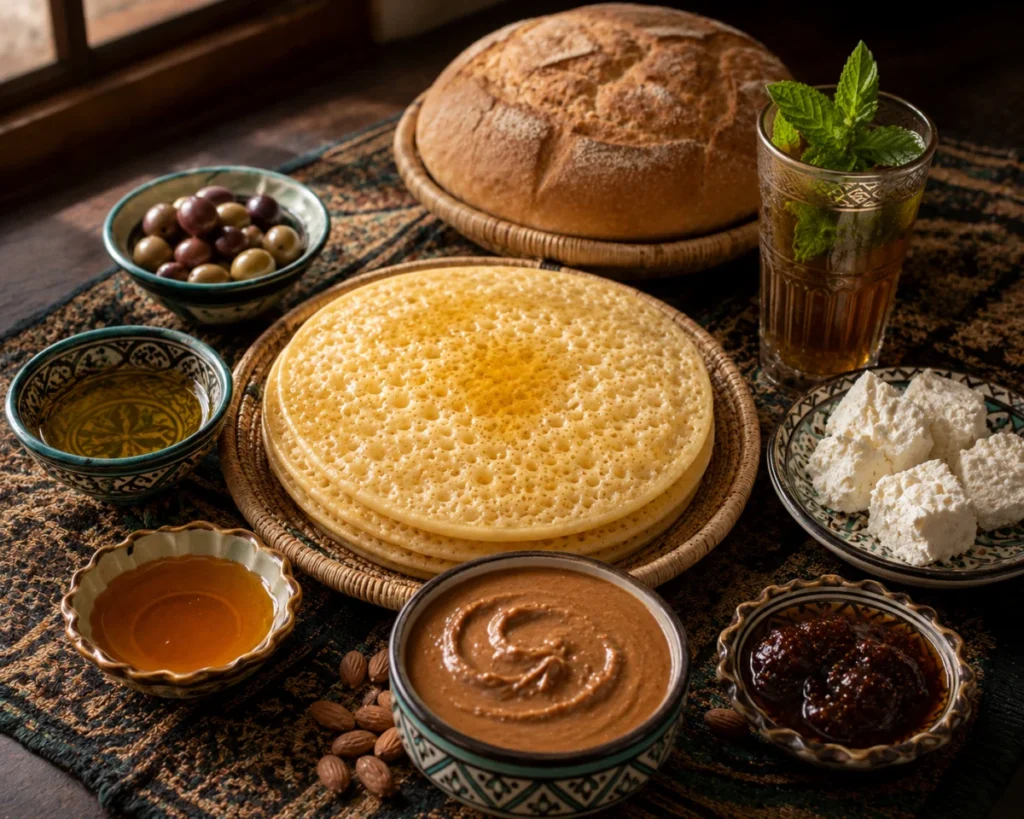
Pour the batter into a hot dry pan and watch: within seconds the surface begins to open, hundreds of tiny craters rising and setting, until the whole disc is a honeycomb. That is baghrir, and it is the most quietly spectacular thing in Moroccan home cooking.
The holes are not decoration. They are the delivery system. Baghrir is never flipped, so the top stays soft and porous, and when you spoon over melted honey butter it sinks straight through and saturates the whole pancake instead of sliding off. One bite explains the entire design.
A Moroccan breakfast is built around bread of some kind, and baghrir shares the table with msemen, harcha, khobz, a bowl of amlou, olives, cheese, and glasses of mint tea poured from height. It is unhurried food, eaten on weekends and holidays and during Ramadan evenings, when the whole spread appears at once.
This is Saturday morning food, mostly because the batter takes three minutes in a blender and the rest is standing at the stove watching the holes appear, which never stops being satisfying. The recipe below is the one that produces holes reliably, and the reasons they sometimes fail are marked in the steps.
Ahead: the ingredient list, four steps with photos, the two toppings that matter, what else belongs on the table, and the honest answer to why your first batch might come out smooth.
A Batter of Semolina and Yeast
For the Batter
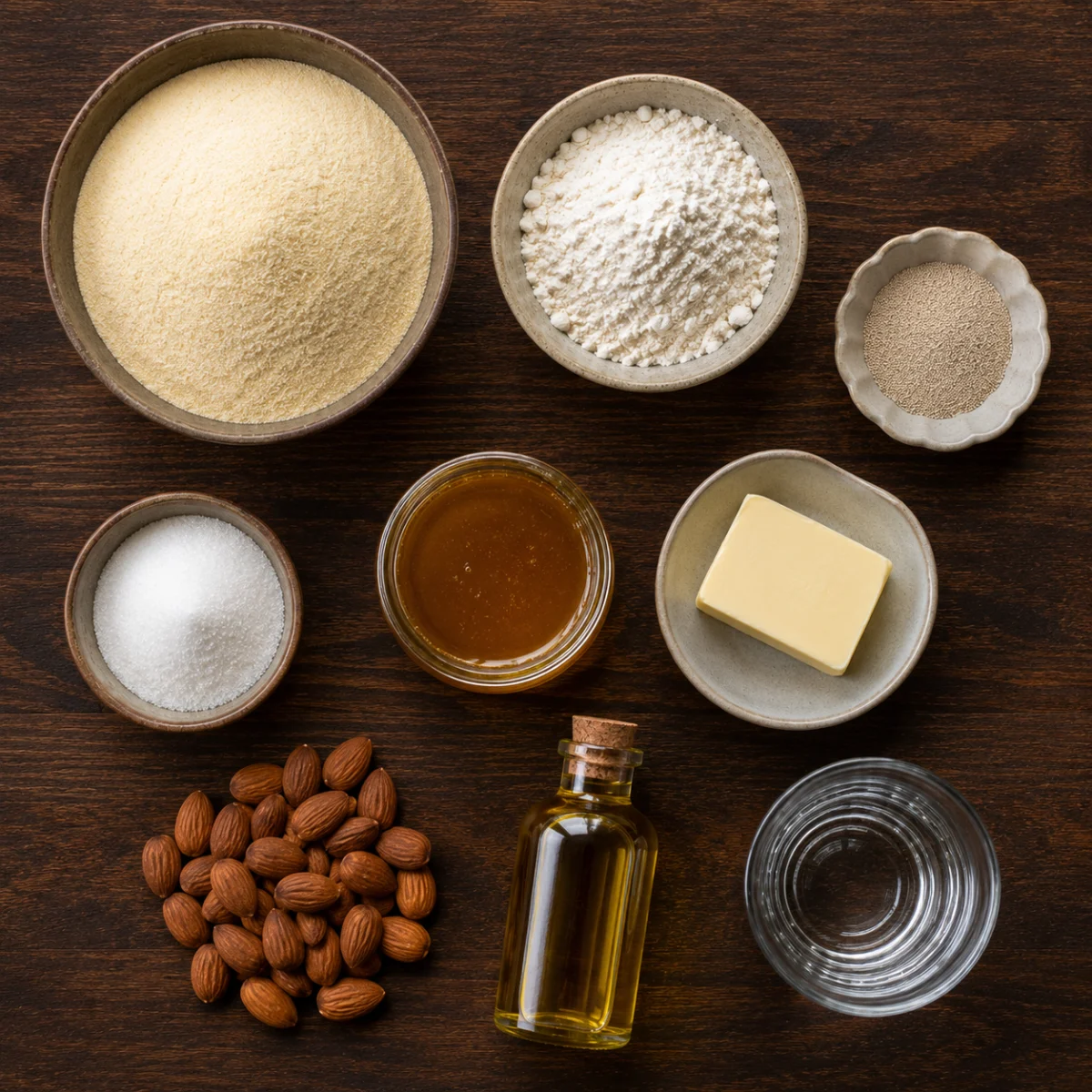
Makes about 12 pancakes
For the batter:
- 1½ cups (250 g) fine semolina
- ½ cup (65 g) all-purpose flour
- 2½ cups (600 ml) warm water
- 1 tablespoon sugar
- 1 teaspoon instant yeast
- 1 teaspoon baking powder
- ½ teaspoon salt
For the honey butter:
- 4 tablespoons butter
- 4 tablespoons honey
Optional, for amlou:
- 1 cup almonds, toasted
- 3 tablespoons honey
- ¼ cup argan oil, or almond oil as a substitute
- Pinch of salt
Where to Find Fine Semolina and Argan Oil
Fine semolina is the ingredient that decides the texture, and it is the same one used in the easy Moroccan bread recipe and the namoura recipe. Look in the baking aisle in the UK, near the specialty flours or pasta section in the US, and in bulk at any Middle Eastern or North African grocery.
Argan oil for amlou is the genuine luxury here, nutty and expensive, sold in small bottles at Middle Eastern groceries and online; make sure it is culinary argan oil, not the cosmetic kind. If that seems like a lot of commitment for one spread, almond oil or even a spoonful of good almond butter gets you most of the way there.
Semolina Swaps
- No fine semolina? Use all flour. The pancakes will be softer and slightly less toothsome but the holes still appear.
- No yeast? Increase the baking powder to 1 tablespoon and skip the rest. You will get holes, though fewer and larger, and the flavour is less complex.
- Dairy-free? Replace the honey butter with olive oil and honey, which is completely traditional and arguably better.
Blending, Resting, Cooking on One Side
Step 1: Blend the Batter Smooth and Thin
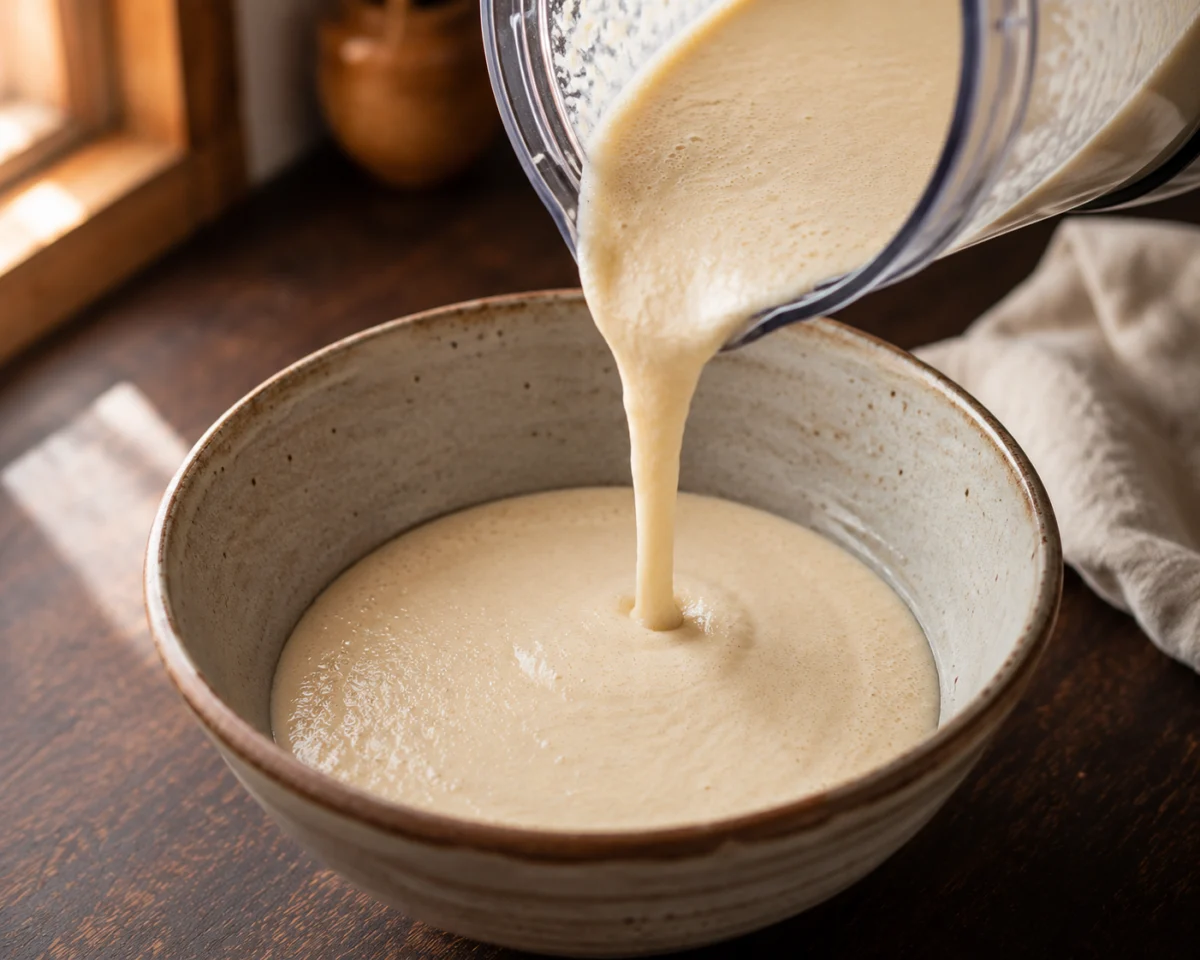
Put every batter ingredient into a blender and blend for a full minute, until completely smooth and the texture of thin cream. It should pour easily and coat a spoon barely at all.
Prep tip: Thin is the whole game. Batter as thick as pancake batter will not open into holes; it sets before the bubbles can rise and escape. If yours seems even slightly heavy, add water two tablespoons at a time. Thin batter is the single most common fix when holes refuse to appear.
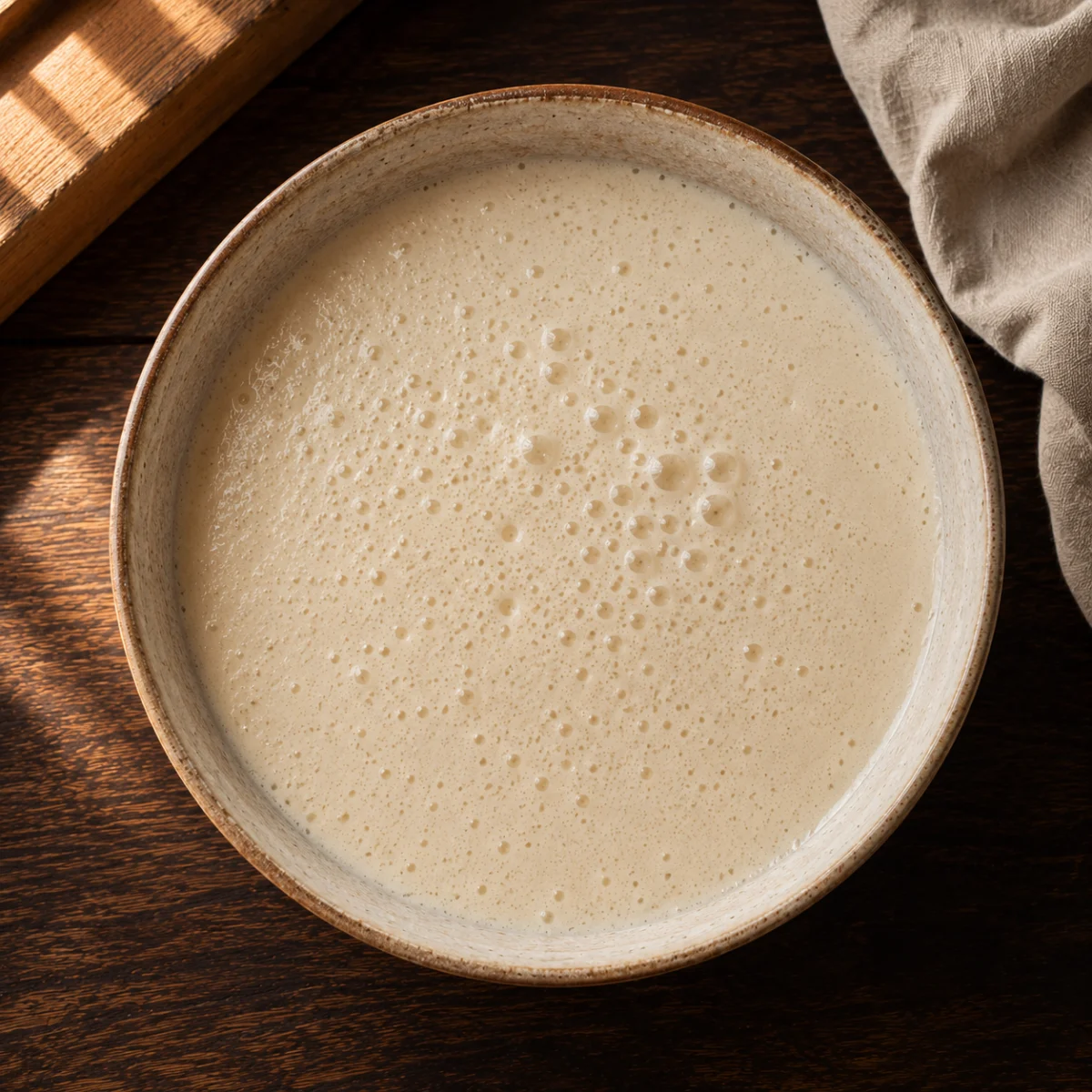
Step 2: Rest Until Foamy
Cover the batter and leave it somewhere warm for 20 to 30 minutes, until the surface is visibly foamy and bubbles are breaking at the top. Stir it gently once, without knocking out the air.
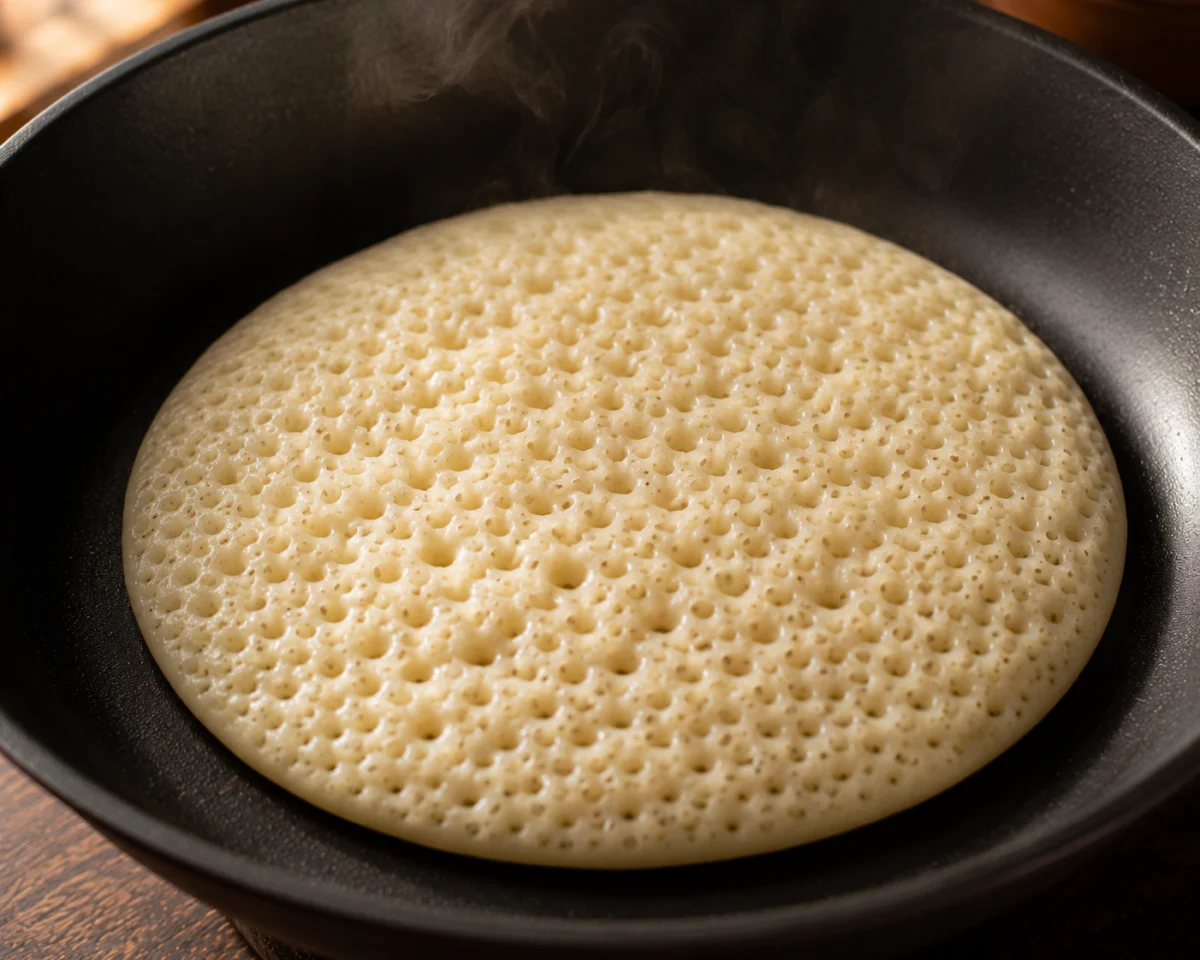
Step 3: Cook One Side Only, and Never Flip
Heat a non-stick or well-seasoned pan over medium heat with no oil at all. Pour in a ladleful, letting it spread into a circle about 6 inches across. Within seconds holes will begin appearing across the surface. Cook for 1 to 2 minutes, until the top is completely dry and matte with no wet shine anywhere. Lift it out. Do not turn it over.
Prep tip: Two things go wrong here. A pan that is too cool sets the batter before the bubbles can rise, and a pan that is too hot seals the surface. Medium, dry, and patient is right. And genuinely never flip: the porous top is the entire point, and cooking it kills the texture that makes baghrir worth making.
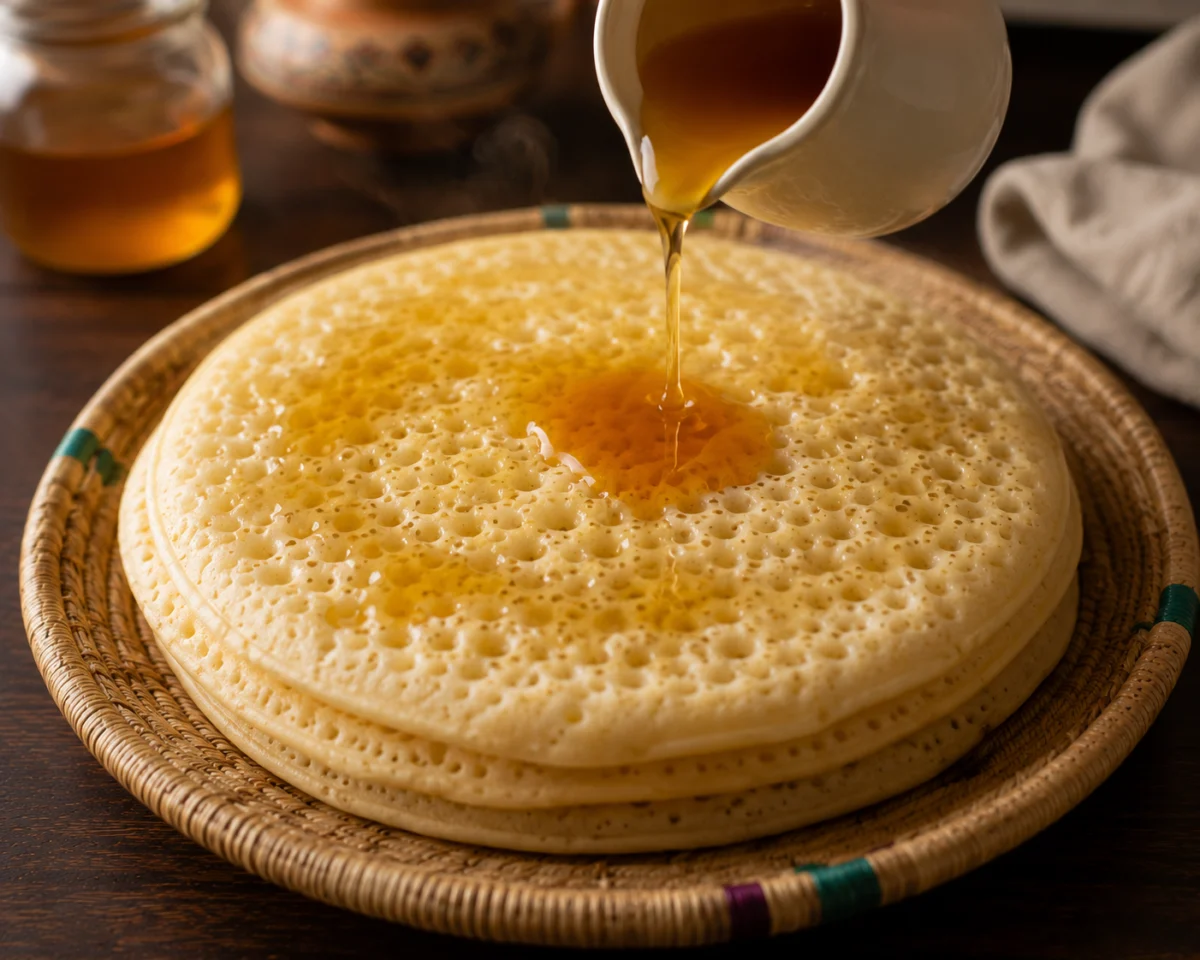
Step 4: Melt the Honey Butter and Pour
Warm the butter and honey together until melted and combined. Stack the baghrir on a plate, holes facing up, and pour the honey butter generously over the top so it soaks down through the layers. Serve immediately with mint tea.
What Else Belongs on a Moroccan Breakfast Table
- Msemen. Square, layered, flaky griddle bread, folded and folded again with oil and semolina. The savoury counterpart to baghrir, and the thing most Moroccans would name first.
- Harcha. Thick semolina griddle cakes with a sandy, shortbread-like crumb, split and spread with butter and jam.
- Khobz. The everyday round loaf, torn and dipped in olive oil or used to scoop everything else. the easy Moroccan bread recipe covers it.
- Amlou. A thick, glossy spread of toasted almonds, honey, and argan oil, blended until it pours slowly. Sometimes called Moroccan Nutella, which undersells it. Blend 1 cup toasted almonds until they turn to paste, then add the honey, argan oil, and salt and blend again.
- Olive oil and honey, side by side. Two small bowls, for dipping bread alternately. Simple and completely addictive.
- Olives, white cheese, and jam. The savoury and sweet edges of the table.
- Eggs. Often fried in a small pan with cumin and salt, or scrambled with tomato.
- Mint tea, always. Poured from height, sweet, and refilled without asking. the Moroccan mint tea recipe has the method and the pour.
Nobody makes all of this at once. Baghrir, bread, amlou or honey, olives, and tea is a full Moroccan breakfast in most homes.
Why the Holes Sometimes Never Open
- A blender beats a whisk. Hand-whisked batter keeps tiny semolina lumps that block the bubble channels. Sixty seconds in a blender solves it completely.
- Cool them in a single layer. Stacking hot baghrir traps steam and glues the holes shut. Lay them out on a towel or rack until cool, then stack freely.
- Storage: They keep 2 days at room temperature under a cloth and freeze beautifully for 2 months with parchment between them. Refresh in a dry pan for 30 seconds, holes facing up.
- The first one is always a test. Every pan and stove is different. Treat the first pancake as a calibration exercise, adjust the heat, and eat the evidence.
Amlou, Honey Butter, and Savoury Versions
Baghrir with Amlou
Skip the honey butter entirely and spread the still-warm pancakes with amlou. Nuttier, richer, more grown-up, and it turns breakfast into something worth inviting people for. Almonds bring protein and healthy fats to the table, per the USDA food database.
Savoury Baghrir
Reduce the sugar to 1 teaspoon and serve with olive oil, salt, and a soft-boiled egg, or alongside the spiced beef from the kofta kebab recipe for a substantial weekend brunch.
The Two Camps
A pinch of orange blossom water in the honey butter is a common addition, and Moroccan households divide over whether baghrir is better hot from the pan or cool from the stack. Hot is the more defensible position. The stack rarely survives long enough to settle the debate.
Filling Out the Table
Mint tea is not optional: the Moroccan mint tea recipe is the drink this entire table is built around, and the Arabic coffee recipe suits anyone who prefers cardamom to mint. Round out the spread with warm khobz, and if there is baking to be done, the Moroccan almond cookies belong on the same tray.
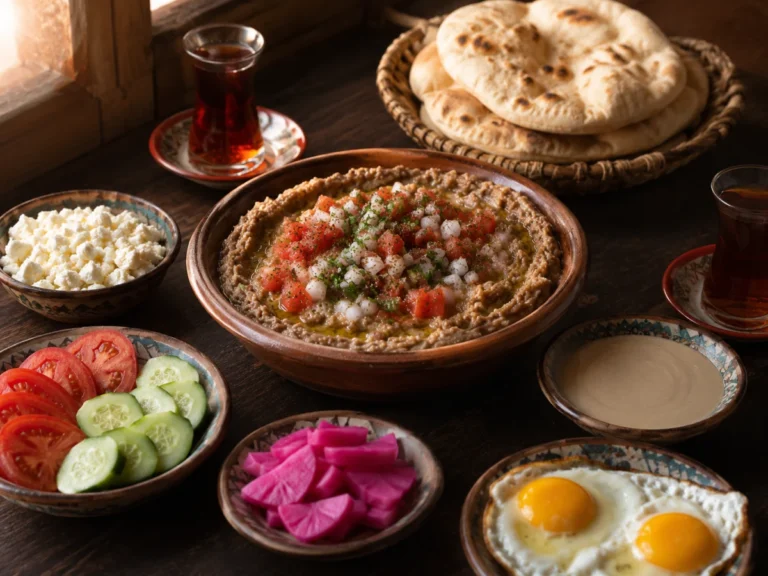
For a different corner of the Arabic breakfast world, the Egyptian breakfast guide covers ful medames and the table built around it, which is the savoury counterpart to this sweet one.
Baghrir, Answered
Why does my baghrir have no holes? Three causes, in order of likelihood: the batter was too thick, it was not rested long enough to become foamy, or the pan was too cool. Thin the batter until it pours like cream, rest until you see bubbles on the surface, and cook on steady medium heat.
Do you flip baghrir? Never. It cooks on one side only, and the pancake is ready when the top is completely dry and matte. Flipping seals the porous surface and destroys the texture that lets the honey butter soak in.
Can I make baghrir batter the night before? Yes: blend it, cover, and refrigerate overnight, then bring it to room temperature and stir gently before cooking. The flavour deepens and the morning gets considerably easier.
Is baghrir vegan? The pancakes themselves are, since the batter is just semolina, flour, water, yeast, sugar and salt. Swap the honey butter for olive oil and date syrup and the whole plate is vegan.
What is amlou made of? Toasted almonds, honey, and argan oil blended into a thick spread, with a pinch of salt. Almond oil substitutes acceptably if argan is unavailable, and the result is still excellent on warm bread.
Put the Kettle On
A Moroccan breakfast is not a rushed thing. It is a table with bread in several forms, small bowls of oil and honey, olives and cheese, and a pot of mint tea that keeps coming back. Baghrir is the piece people remember, and it costs almost nothing to make.
Make a batch this weekend and report back: honey butter or amlou, hot from the pan or cool from the stack, and how many holes you counted before giving up. Nobody has ever finished counting.
Rate this recipe
No ratings yet — be the first!
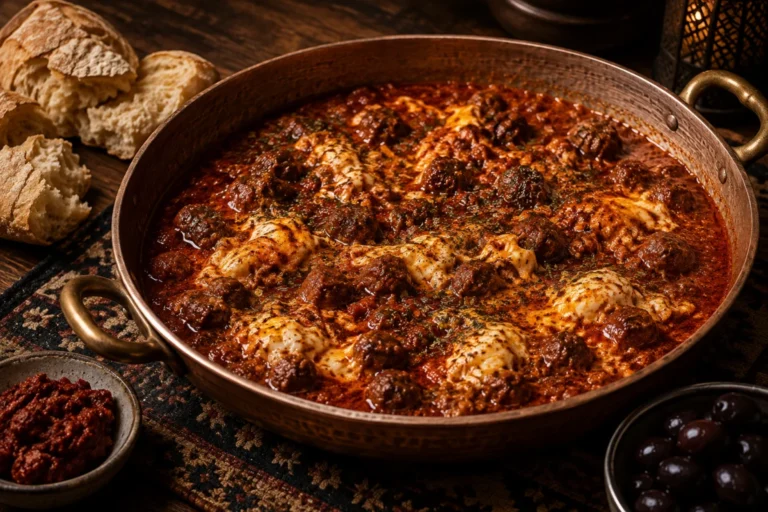



If your baghrir has no holes, the batter was too thick. It should pour like thin cream. Add water two tablespoons at a time until it does, and never flip them.
Comments
No comments yet. Yours would be the first.
Made a batch? Tell me: honey butter or amlou, and how many holes you counted before giving up.
Leave a comment
Comments are anonymous and appear after admin approval. If you rated this recipe above, your stars will show with your comment.