
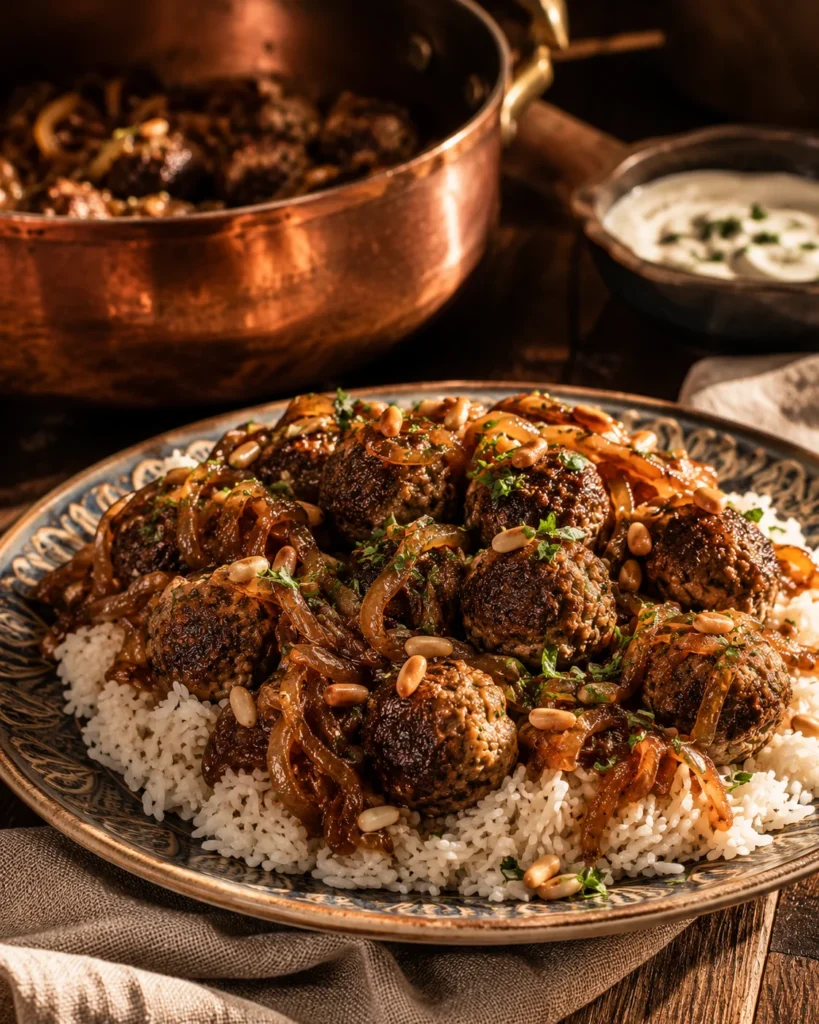
The Dish Named After a Governor
Most recipes are named for what is in them. This one is named for a person: Dawood Basha, the Ottoman governor of Mount Lebanon in the 1860s, whose name somehow attached itself to a pot of lamb meatballs in onion sauce and never let go. Nobody agrees on exactly why, which is very much in keeping with how food history usually works.
What everyone does agree on is what it tastes like: deeply savoury, faintly sweet, tangy at the back of the throat from pomegranate molasses, with onions cooked so long they have collapsed into the sauce itself. It is served over plain white rice, and the rice matters, because half the pleasure is the sauce soaking into it.
Look at the ingredient list and you will notice something that reads like an error: one and a half kilos of onions to one kilo of lamb. It is not an error. The onions are not a flavouring here, they are the sauce, and understanding that is the difference between making this dish and making meatballs that happen to have onions nearby.
This is cold-weather food, the sort that fills a house with a smell people comment on when they walk in. The method below is unfussy, but there are two moments where it can go wrong, and both are marked in the steps.
Ahead: the ingredient list, four steps with photos, what pomegranate molasses actually is and where to buy it, the onion question answered properly, and the rice that belongs underneath.
About Dawood Basha: Lebanon’s Everyday Classic
Dawood Basha belongs to the family of Levantine home cooking that turns very few ingredients into something that tastes considered. It appears on tables across Lebanon, Syria and Jordan, usually midweek rather than at celebrations, and it is the kind of dish people describe as tasting like their mother’s cooking.
The signature is the sweet and sour balance: onions bring the sweetness as they break down, pomegranate molasses brings the sour, and the lamb sits between them. That sweet-sour pairing runs right through Levantine cooking, from fattoush dressing to stuffed vegetables, and once you recognise it you start noticing it everywhere.
If you know Persian or Turkish onion-based meat stews, this is a cousin. If you know Italian meatballs in tomato sauce, expect something quite different: there is no tomato here at all, and the sauce is amber-brown rather than red. For grilled lamb in the same tradition, the kofta kebab recipe is the fire-cooked sibling.
Meatballs, Onions, Molasses
For the Meatballs and Sauce
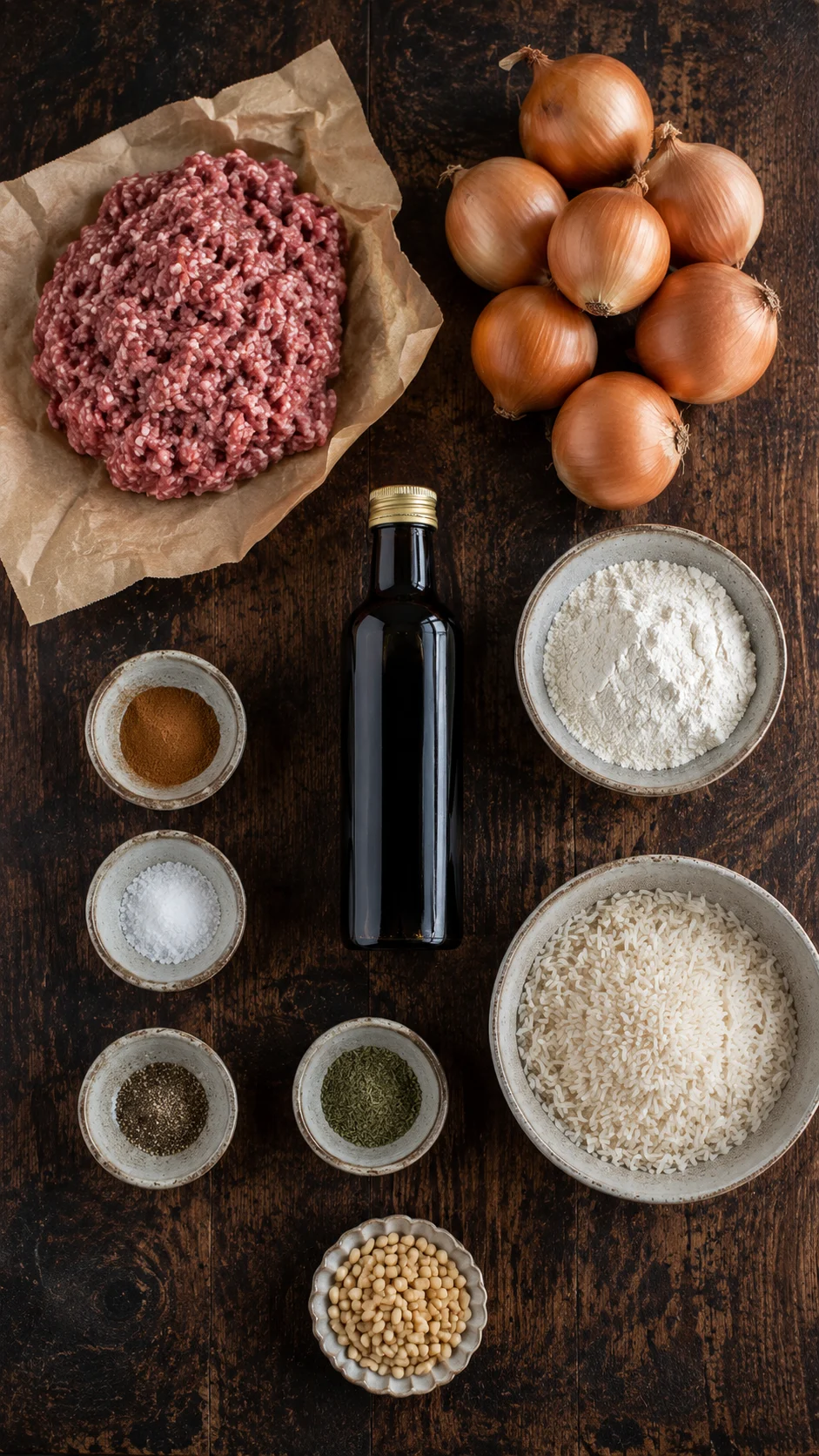
Serves 5
For the meatballs:
- 2¼ lbs (1 kg) ground lamb, about 20 percent fat
- ¼ cup all-purpose flour, for coating
- 1 teaspoon salt
- 1 teaspoon black pepper
- ½ teaspoon ground cinnamon
- Optional: 1 small onion, grated and squeezed dry, and ¼ cup chopped parsley
For the sauce:
- 3¼ lbs (1.5 kg) onions, halved and thinly sliced
- 3 tablespoons olive oil or butter
- 2 tablespoons pomegranate molasses
- 1 cup (240 ml) water or stock
- Pinch of dried mint
- Salt and pepper to taste
To serve:
- Plain white rice, or vermicelli rice
- Optional: toasted pine nuts and fresh parsley
Where to Find Pomegranate Molasses
Pomegranate molasses is pomegranate juice reduced to a thick, dark, sweet-sour syrup, and it is the ingredient this dish cannot do without. In the UK it sits in the world foods aisle of most large supermarkets; in the US, check the international aisle, Whole Foods, or any Middle Eastern grocery, where it costs a fraction of the price. Amazon carries several brands.
One bottle lasts a year in the cupboard and it earns its shelf space: it also goes into the baba ghanoush recipe, and a spoonful improves almost any roast vegetable.
If You Have No Pomegranate Molasses
- No pomegranate molasses? Simmer ½ cup of pomegranate juice with 1 teaspoon of sugar until syrupy, or use 1 tablespoon of balsamic vinegar with 1 teaspoon of honey. Neither is identical, both work.
- No lamb? Ground beef makes a milder version, and a half-and-half mix is common in many households.
- Fewer onions? You can reduce them, but not by much. Below about 1 kg the sauce loses its body and the dish becomes something else.
Rolling, Browning, Sweetening the Onions
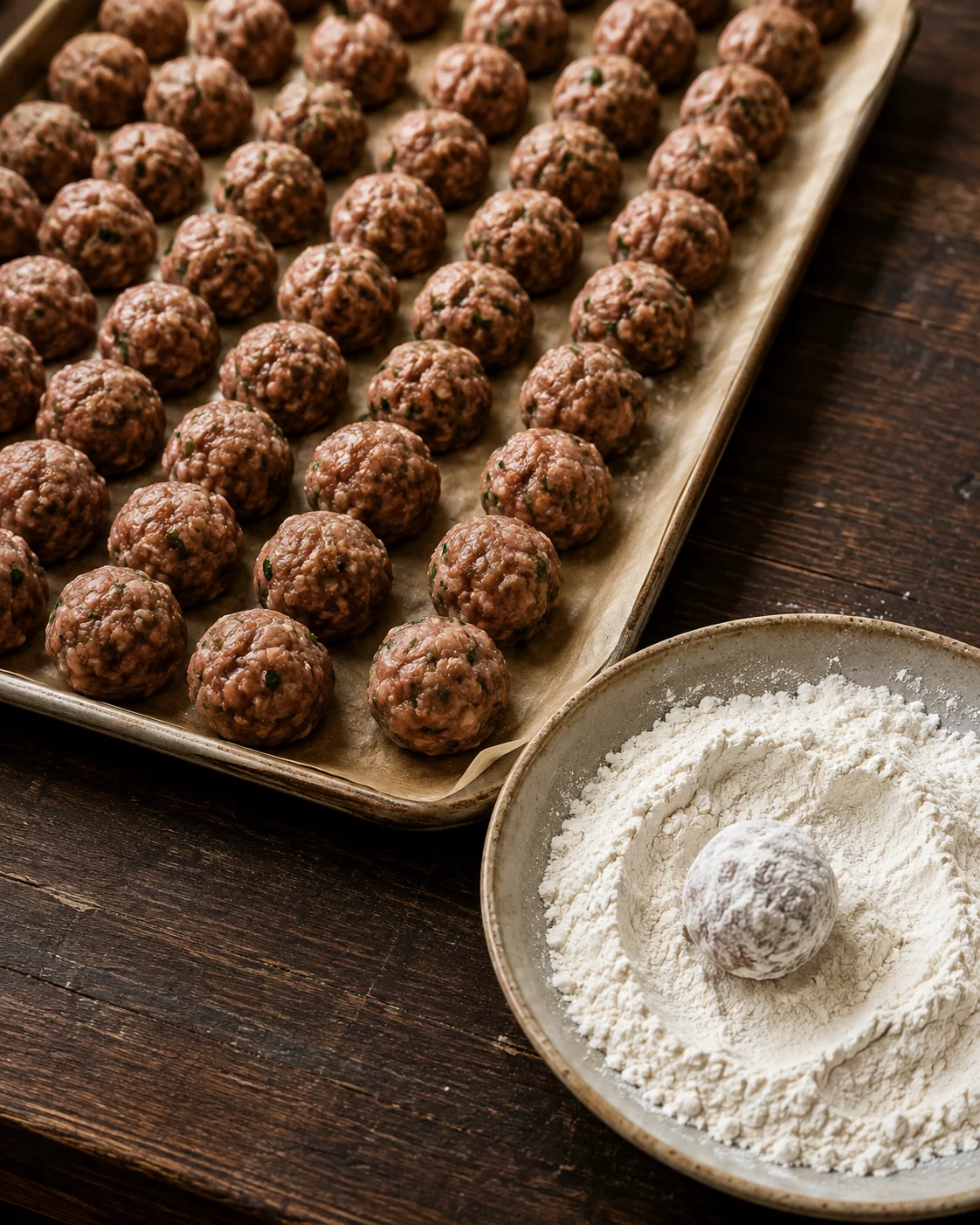
Step 1: Season and Shape the Meatballs
Mix the lamb with the salt, pepper, and cinnamon, plus the grated onion and parsley if using, and knead briefly until combined. With damp hands, roll into small meatballs about 1 inch (2.5 cm) across, then roll each lightly through the flour and tap off the excess.
Prep tip: Keep them small. Inch-wide meatballs cook through in the simmer and stay tender, while larger ones need longer and tighten up before the sauce is ready. You should end up with somewhere around forty, which feels like a lot until they hit the table.
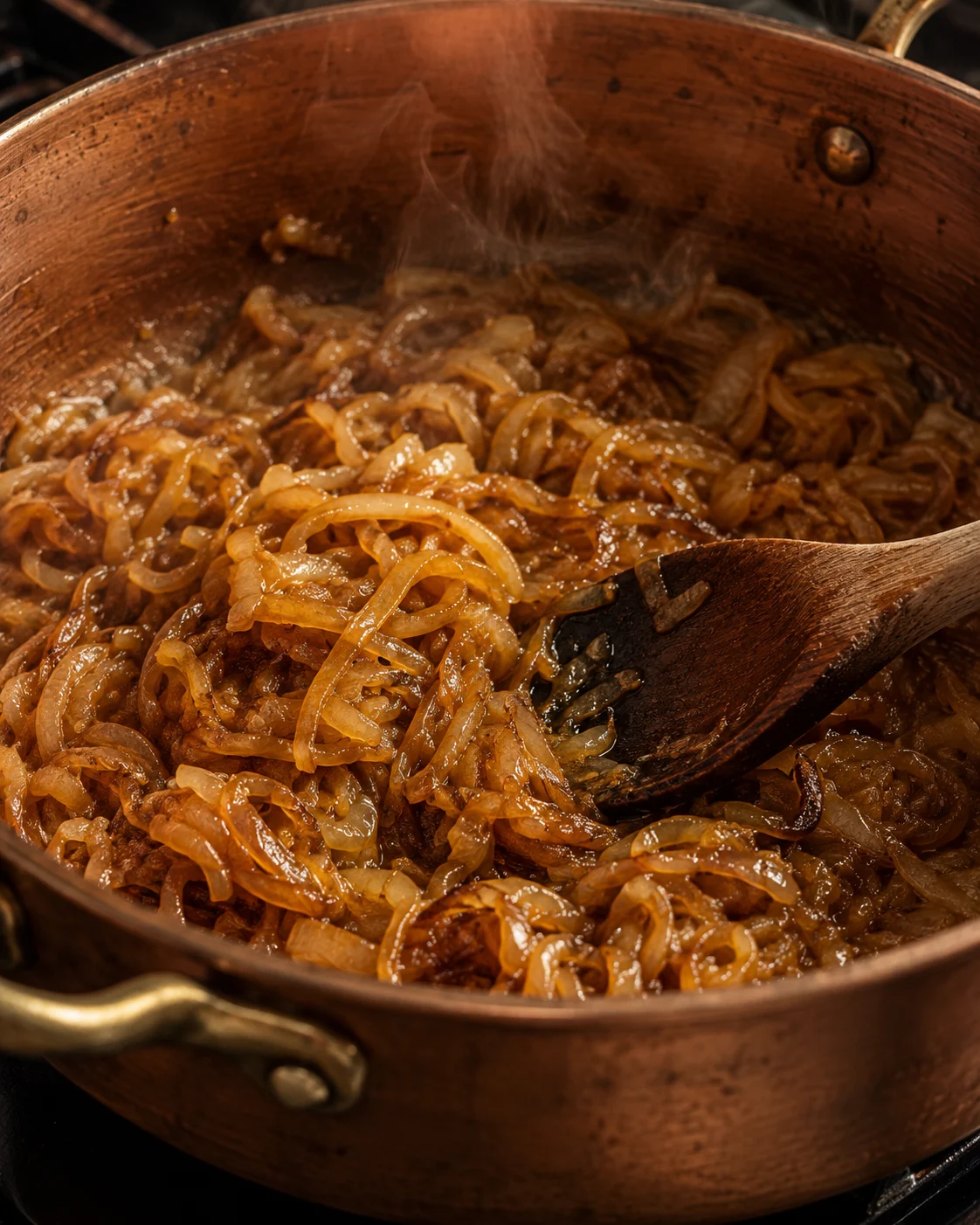
Step 2: Cook the Onions Down Properly
Warm the oil in a large pot, add the sliced onions with a pinch of salt, and cook over medium heat for 20 to 25 minutes, stirring often, until they have collapsed, turned deep golden, and reduced to roughly a third of their original volume.
Prep tip: This is the step that makes the dish, and it is the one people rush. The mountain of raw onion looks absurd in the pot and will not fit under the lid; that is expected, and it cooks down. Stop while they are still pale and you get a thin, sharp sauce instead of a sweet, thick one. Give it the full twenty five minutes.
Step 3: Brown the Meatballs in the Onions
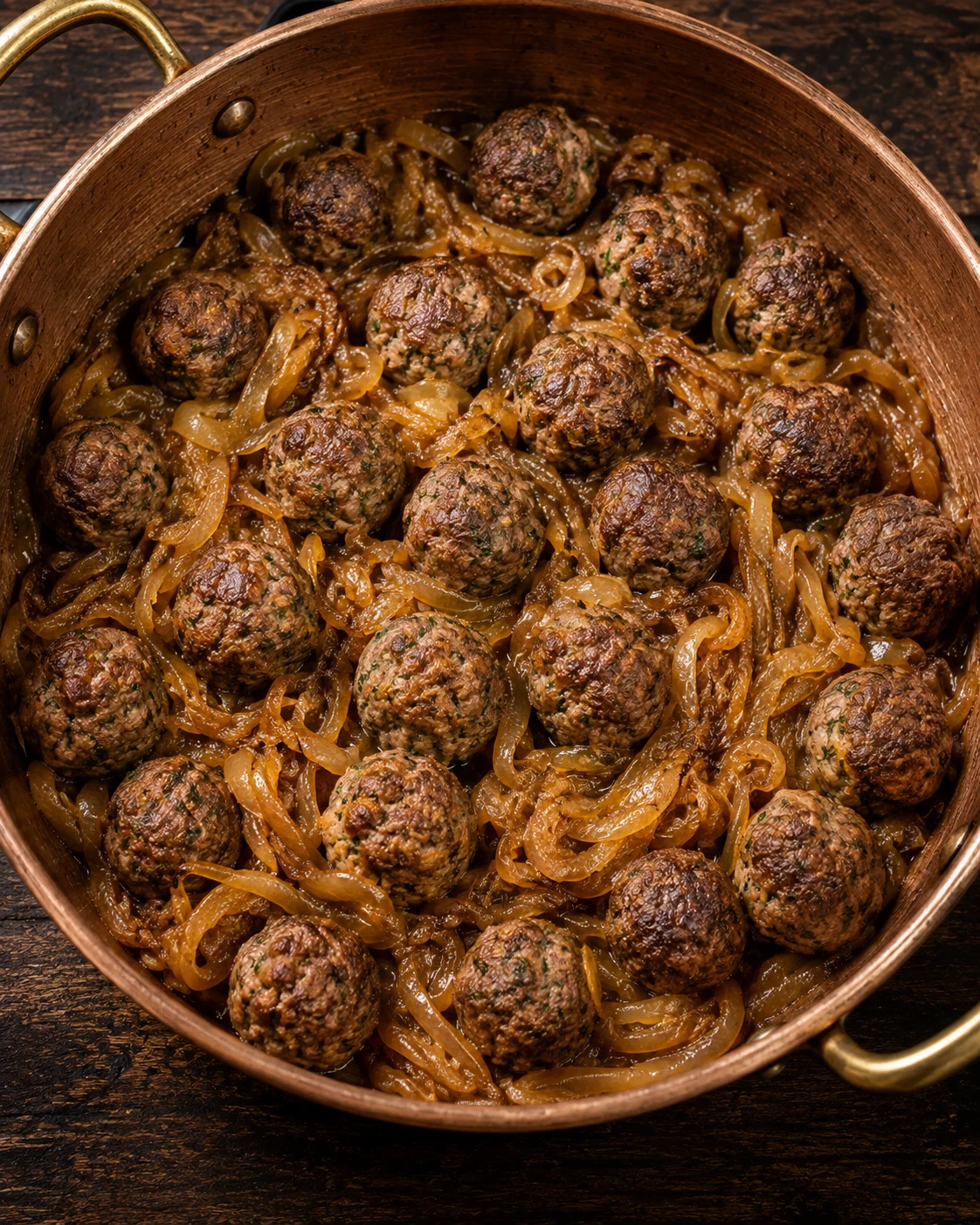
Add the meatballs to the pot, nestling them among the onions, and cook for about 10 minutes, turning them gently a few times, until lightly browned on all sides.
Step 4: Add the Molasses and Simmer
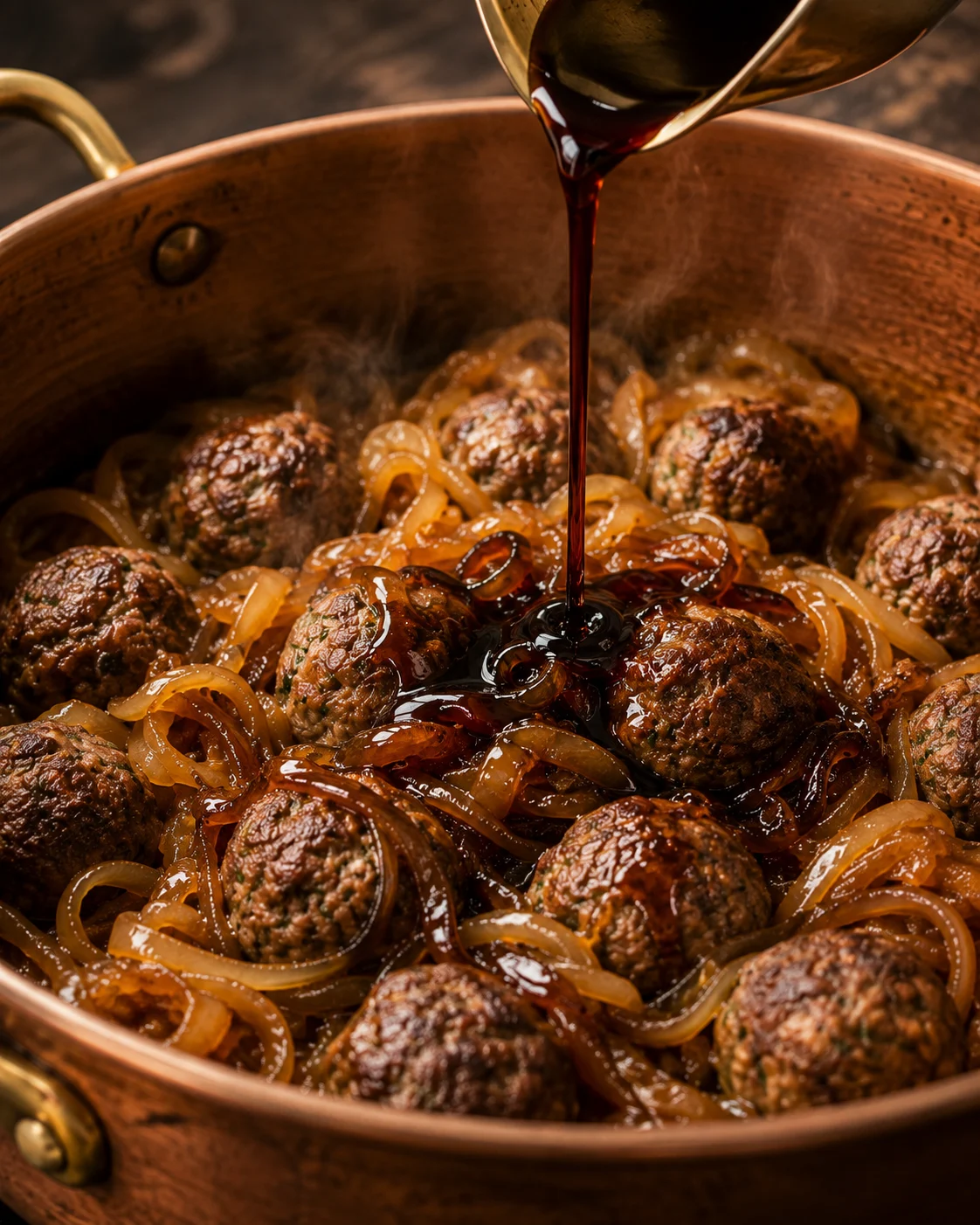
Stir in the pomegranate molasses and the dried mint, pour in the water, and bring to a gentle simmer. Cover and cook on low for 30 minutes, until the meatballs are cooked through and the sauce has thickened and turned glossy amber-brown. Taste, adjust the salt, and add a little more molasses if you want it sharper. Serve over white rice.
Cook the Onions Longer Than You Think
- Slice the onions, do not chop them. Slices melt into strands that give the sauce its texture. Chopped onion turns to mush and the sauce loses its character.
- Taste the molasses before you measure. Brands vary a lot in sweetness and acidity. Start with two tablespoons, taste at the end, and adjust; some bottles need a little more, some are already sharp enough.
- Storage: Keeps 3 days in the fridge and is genuinely better on day two, once the sauce and meatballs have settled together. It freezes well for 2 months, though the meatballs firm up slightly. Lamb should reach a safe internal temperature per USDA guidance.
- Do not skip the rice. This is a sauce dish. Bread works, but rice underneath, absorbing everything, is how it is meant to be eaten.
Beef, Pine Nuts, and Sourness Levels
With Pine Nuts
Toast a handful of pine nuts in butter and scatter them over just before serving. Common in Lebanese households, and the crunch against the soft onions and meatballs is worth the small extra step.
The Baked Version
Brown the meatballs and onions as above, transfer everything to a baking dish with the molasses and water, and bake covered at 350°F (175°C) for 35 minutes. Slightly deeper flavour, and useful when you want the oven doing the work.
How I Cook the Onions
In my kitchen a grated onion and a handful of parsley always go into the meat itself, not just the sauce, which keeps the meatballs softer. And the mint goes in twice: a pinch in the pot, and a pinch crushed over the finished dish, where it smells much stronger.
Rice, and Why It Matters Here
Plain white rice is the answer, and vermicelli rice (rice cooked with toasted broken vermicelli) is the traditional one. Beyond that, keep it fresh and sharp: the easy tabbouleh recipe cuts through the richness, and a bowl of plain yoghurt on the table is never wrong.
For a fuller Levantine spread, the baba ghanoush recipe and rounds of the easy Moroccan bread recipe open the meal, and the Arabic coffee recipe with dates closes it.
Dawood Basha, Answered
Why is it called Dawood Basha? It is named after Dawood Basha, the Ottoman governor of Mount Lebanon in the 1860s. Exactly how his name became attached to a dish of lamb meatballs in onion sauce is disputed, and every family seems to have a different explanation.
Is 1.5 kg of onions really correct? Yes. The onions are the sauce, not a seasoning, and they cook down to about a third of their raw volume. It looks like far too much in the pot and it is not.
What can I substitute for pomegranate molasses? Reduce ½ cup of pomegranate juice with a teaspoon of sugar until syrupy, or use 1 tablespoon of balsamic vinegar plus 1 teaspoon of honey. The dish will be slightly less complex but still balanced.
Can I make Dawood Basha ahead? Yes, and it improves: make it up to 2 days ahead, refrigerate, and reheat gently with a splash of water. The flavours settle overnight in a way that is genuinely better than fresh.
Is this recipe halal and gluten-free? Halal with halal-certified lamb, since nothing else needs checking. It is not gluten-free as written because of the flour coating, but you can swap it for cornstarch or simply skip it; the flour helps the sauce thicken slightly but the dish works without it.
Onions, Lamb, and a Governor’s Name
Four steps, two ingredients doing almost all the work, and a sauce that tastes like it took far longer than it did. Cook the onions properly and the rest of this Dawood Basha recipe is just patience.
Make it on a cold evening and report back: lamb or the beef mix, pine nuts or plain, and whether anyone at your table believed you about the onions. Nobody ever does until they taste it.
Rate this recipe
No ratings yet — be the first!
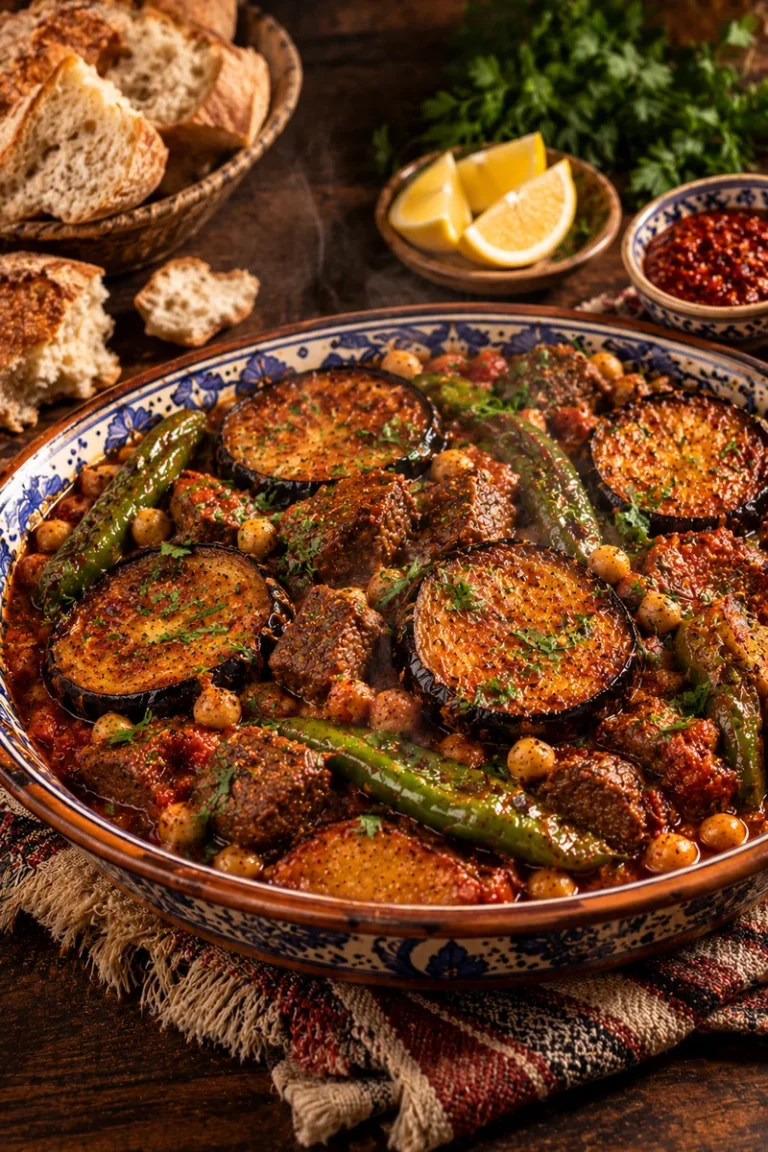
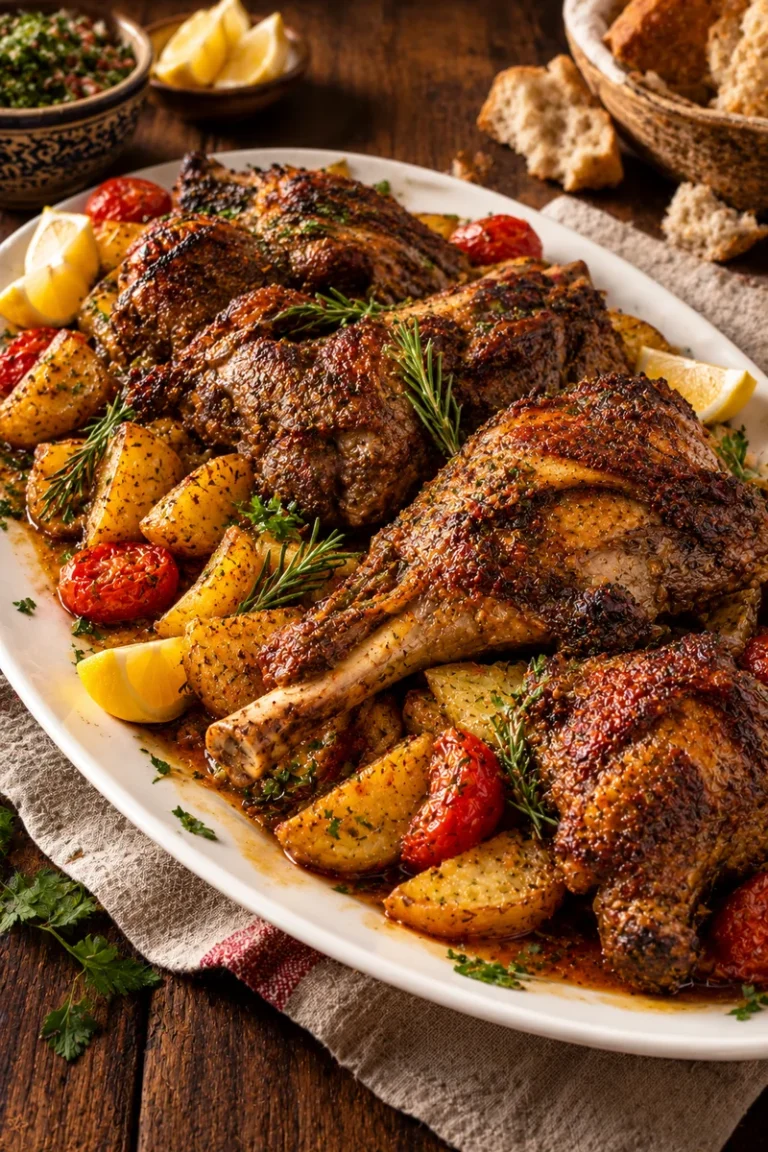
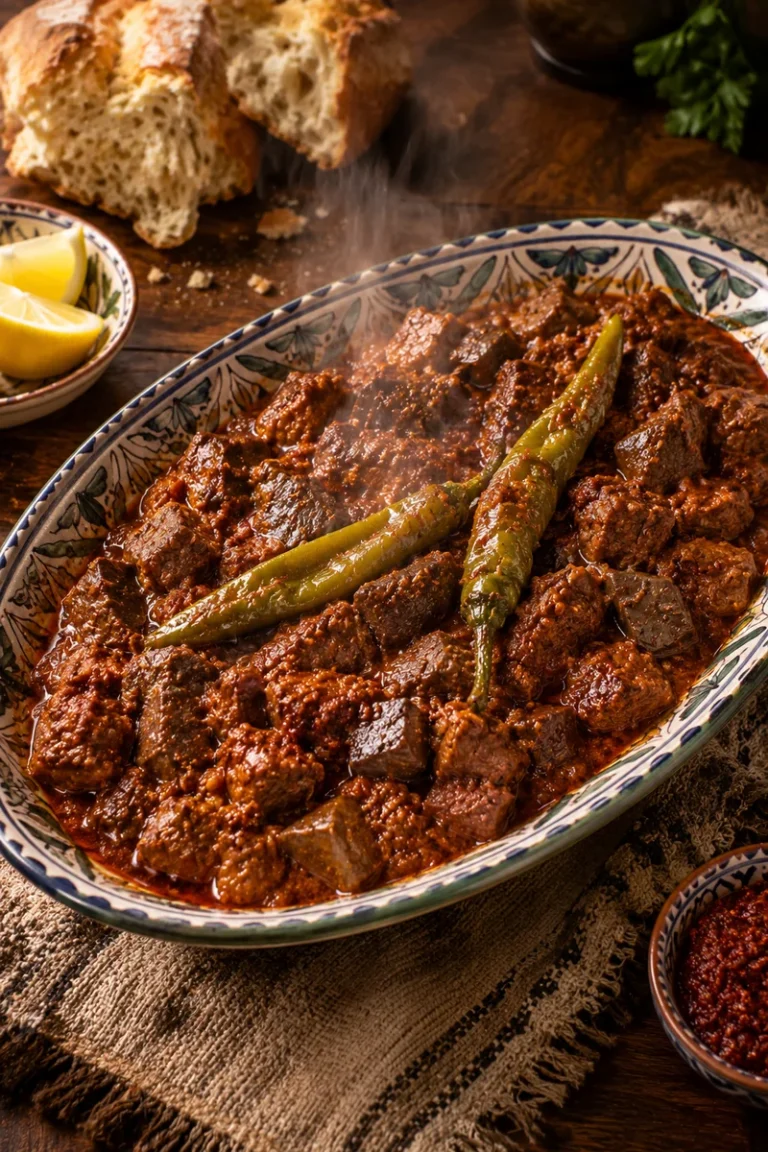

The onions are the sauce, not a seasoning. One and a half kilos looks absurd in the pot and cooks down to about a third. Stop early and you get a thin, sharp sauce instead of a sweet, thick one.
Comments
No comments yet. Yours would be the first.
Made this? Tell me whether anyone believed you about the quantity of onions.
Leave a comment
Comments are anonymous and appear after admin approval. If you rated this recipe above, your stars will show with your comment.