
Four Ingredients, One Very Real Difficulty
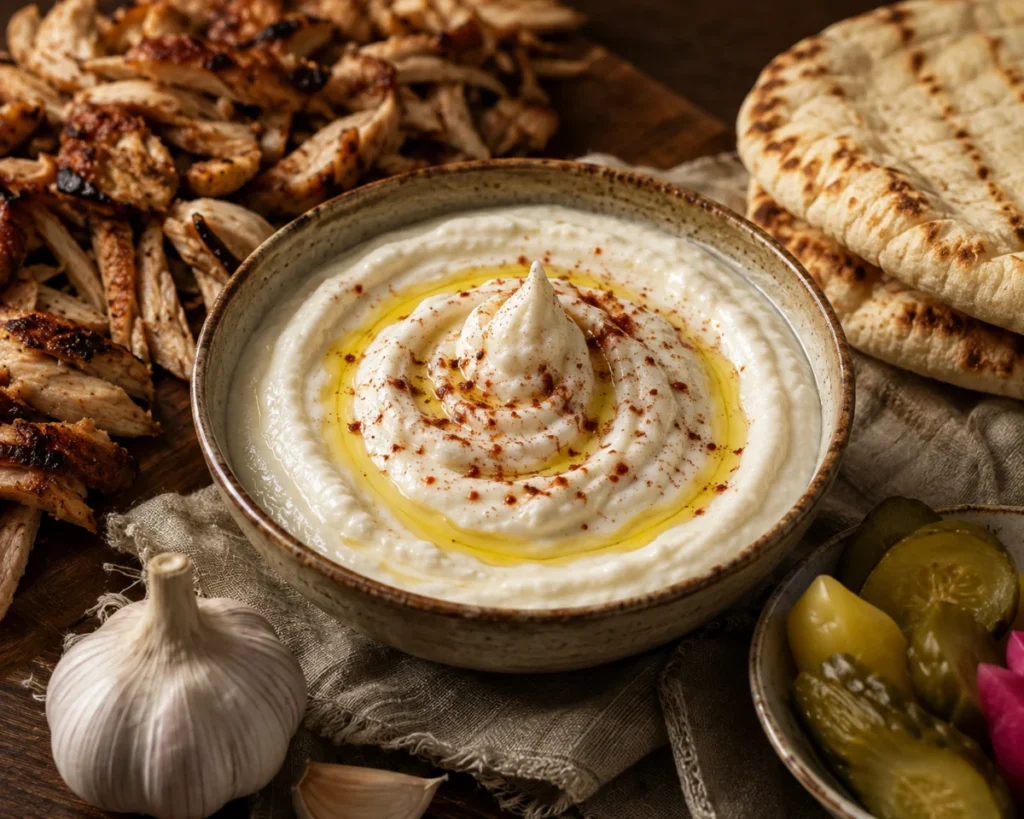
Toum is garlic, oil, lemon and salt. That is the entire list, and there is no egg in it, which is the first thing that surprises people. It comes out of the machine as a thick, brilliant white, almost fluffy sauce with a garlic hit that clears your sinuses, and it is the thing that makes shawarma taste like shawarma.
It is also the recipe most likely to fail on this blog, and that is worth saying at the top rather than pretending otherwise. Toum is an emulsion held together by nothing but garlic, and garlic is a far weaker emulsifier than egg yolk. Add the oil too quickly and the whole thing splits into a thin garlicky puddle.
The good news is that the failure has exactly one cause, the fix is reliable, and a broken batch is completely rescuable. Once you understand what is actually happening in the bowl, toum stops being intimidating and becomes a ten-minute job you do without thinking.
Every Levantine cook makes the same point about it: the oil goes in slowly. Slower than feels reasonable. That is the whole technique.
Ahead: why it breaks, the ingredient list, four steps with photos, the rescue method for a split batch, and how long it keeps.
Why Toum Breaks, Explained Properly
Understanding this makes the recipe easy, so it is worth two minutes.
An emulsion is oil suspended in tiny droplets through a water-based liquid. Something has to coat those droplets and stop them merging back together, and in mayonnaise that job is done by lecithin in the egg yolk, which is very good at it. In toum there is no egg. The only emulsifier is the garlic itself, plus the small amount of water in the lemon juice.
Garlic can do the job, but it has far less capacity than yolk. So the oil must be added in a stream thin enough that the garlic can coat each droplet as it arrives. Pour faster than that and the droplets merge, the emulsion collapses, and you get oil floating on garlic water.
Three practical consequences:
- The oil goes in very slowly, particularly at the start. A thread rather than a stream.
- Ratio matters. One head of garlic holds roughly 3 cups of oil and no more. Push past that and it breaks no matter how careful you are.
- Everything should be room temperature. Cold oil and cold garlic emulsify poorly.
Ingredients You’ll Need for Toum
Main Ingredients
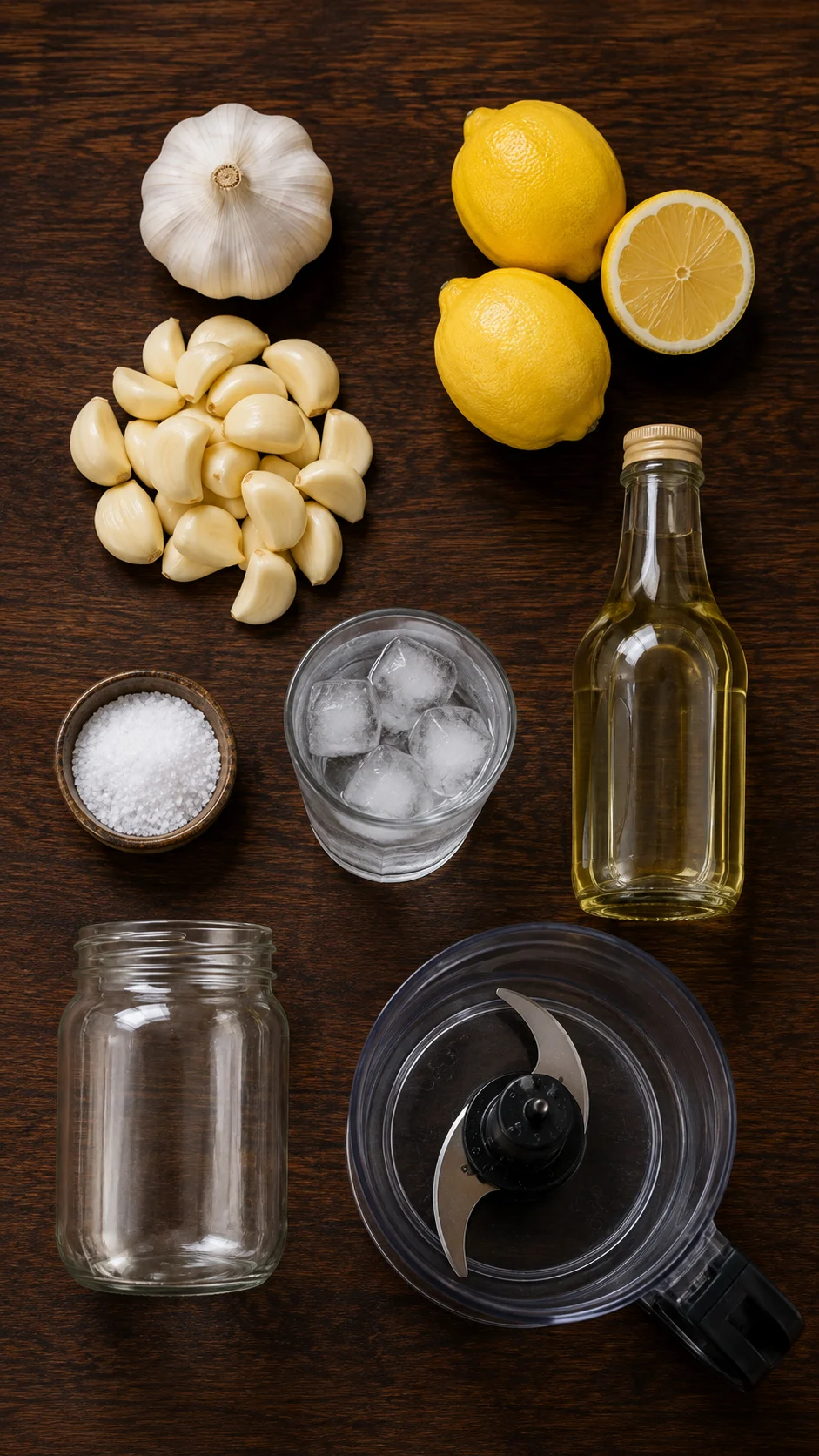
Makes about 3 cups
- 1 cup (about 1 large head) garlic cloves, peeled
- 1 teaspoon salt
- 3 cups neutral oil (sunflower, canola or light vegetable oil)
- 4 tablespoons lemon juice
- 2 tablespoons ice water, optional but helpful
Why Not Olive Oil
This is the one substitution that will not work, so it is worth stating plainly. Extra virgin olive oil turns bitter when whipped at high speed, and toum uses a lot of oil at high speed. Use a neutral oil throughout. If you want olive oil flavour, stir a spoonful in by hand at the very end.
Where to Find the Ingredients
Nothing to source, which is part of toum’s appeal. The only quality decision is the garlic: use fresh, firm heads with no green shoots inside the cloves. Sprouted garlic tastes bitter and the bitterness is very noticeable in a sauce this pure. Garlic is also a good source of manganese and vitamin B6, per the USDA food database.
Peeling a whole head is the tedious part. Pre-peeled garlic from the chilled section works perfectly well and saves ten minutes.
Easy Substitutions
- Too garlicky for your household? Blanch the peeled cloves in boiling water for 30 seconds and drain before starting. It softens the raw heat considerably without changing the texture.
- Smaller batch? Halve everything. Do not go below half a head of garlic, since a food processor needs enough volume to work against.
- No food processor? A mortar is the traditional tool and it genuinely works, though it takes about twenty minutes of steady effort.
Step-by-Step Instructions: Toum in 4 Steps
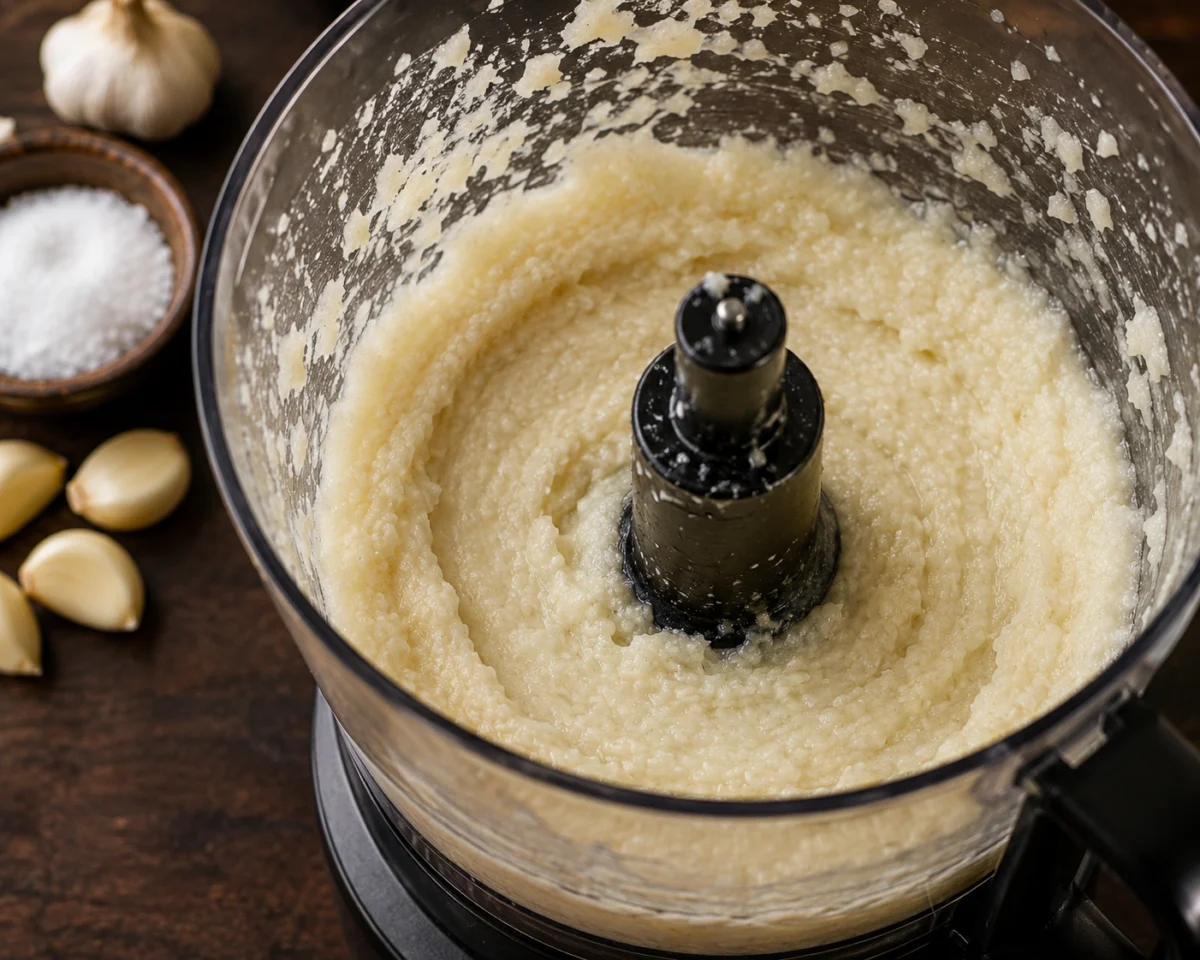
Step 1: Process the Garlic and Salt
Put the peeled garlic and salt in a food processor and run it for a full minute, stopping twice to scrape the sides down. You want a smooth, wet paste with no visible chunks.
Prep tip: Scrape the sides properly. Any pieces of garlic that stay stuck to the wall are pieces not doing emulsifying work, and the sauce needs all of it. The paste should look uniform before a drop of oil goes in.
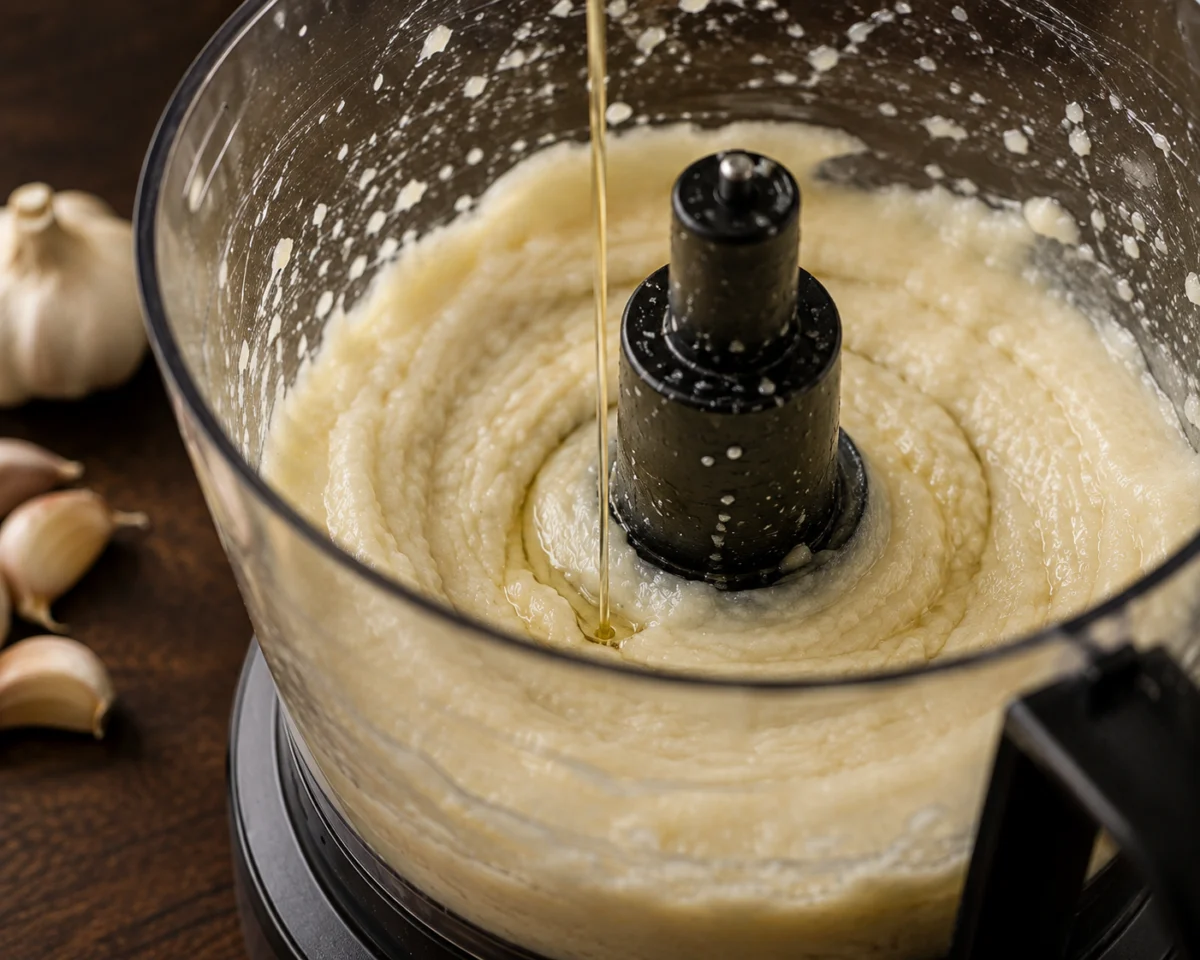
Step 2: Start the Oil, Very Slowly
With the processor running, begin adding the oil in the thinnest possible thread, almost drop by drop. Keep this up for the first ½ cup, which takes a couple of minutes. The mixture will begin to lighten and thicken.
Prep tip: This is the whole recipe. The first half cup decides whether you have toum or a puddle, and there is no way to hurry it. If your processor has a feed tube with a small hole in the bottom, use it; if not, pour with the patience of someone doing something slightly boring, because you are.
Step 3: Alternate Oil and Lemon
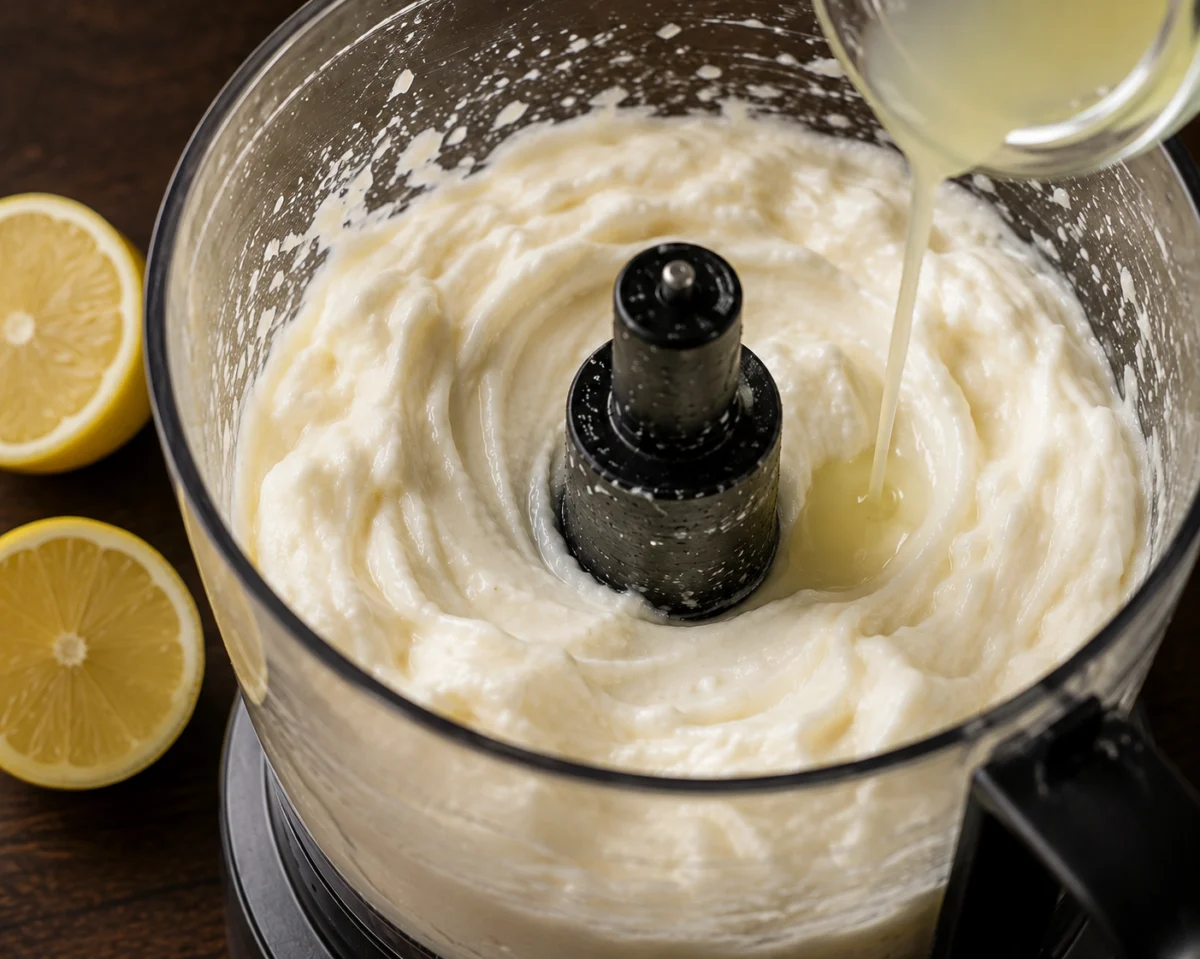
Once the emulsion has taken and the mixture looks white and thick, add a tablespoon of lemon juice. Then continue with oil, still in a thin stream but slightly faster, alternating a tablespoon of lemon after every ½ cup or so of oil. Finish with the ice water if using.
Prep tip: The lemon is not just for flavour. Each addition thins the emulsion slightly and gives the garlic more capacity to take the next batch of oil. Alternating is what lets one head of garlic hold three cups.
Step 4: Check the Texture and Store
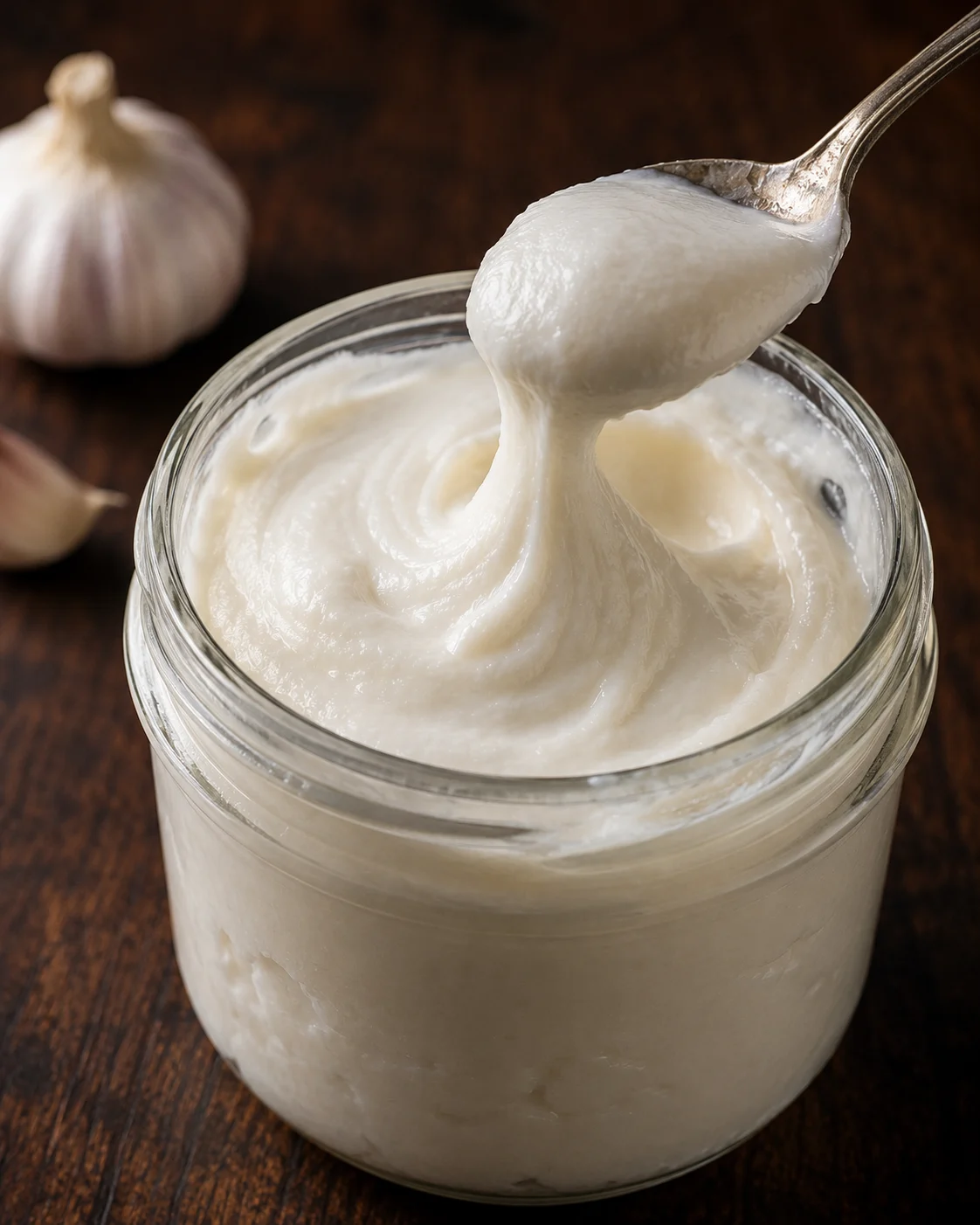
The finished toum should be brilliant white, thick enough to hold a peak, and fluffy rather than dense. Transfer it to a jar, press a piece of cling film onto the surface, and refrigerate.
How to Rescue a Broken Batch
If the mixture goes thin, curdled or oily, do not throw it away. Nothing is wasted and the fix works almost every time.
Method one, with an extra egg white. Put one egg white in a clean processor bowl, run it, and add the broken mixture very slowly in a thin stream. It will re-emulsify. This is no longer strictly traditional toum, since it now contains egg, but it tastes right and it saves the batch.
Method two, fully traditional. Process two fresh peeled garlic cloves with a pinch of salt into a paste, then add the broken mixture very slowly, exactly as you would have added the oil. The fresh garlic provides new emulsifying capacity.
Method three, the boiled potato trick. Blend two tablespoons of plain mashed potato with a spoonful of the broken mixture, then add the rest slowly. The starch stabilises it. Less traditional again, and very reliable.
In all three cases the failure was going too fast, so go slower on the rescue than you did the first time.
Where to Use It on This Blog
Toum belongs with anything grilled or fried. The easy chicken shawarma recipe is its natural home, and a spoonful in the wrap is not optional in most Lebanese households. It is equally at home with kofta kebab straight off the grill, spread on the plate under the roast turkey legs, or served alongside the lemon with Tunisian brik.
Beyond the blog: chips, roast potatoes, grilled vegetables, and in sandwiches where you would otherwise use mayonnaise.
Pro Tips for the Best Toum
- Use fresh garlic without green shoots. The green germ inside older cloves is bitter, and in a sauce with only four ingredients that bitterness has nowhere to hide. Cut it out if you see it.
- Room temperature everything. Cold oil straight from a cupboard is fine, but cold garlic from the fridge emulsifies noticeably worse.
- Storage: Three to four weeks in the fridge in a sealed jar with cling film pressed onto the surface. It does not freeze; the emulsion breaks on thawing.
- It mellows. Freshly made toum is aggressively sharp. After two or three days in the fridge the raw heat softens into something much rounder, and most people prefer it then.
Variations
Milder Toum
Blanch the peeled garlic for 30 seconds in boiling water and drain before processing. Considerably gentler, same texture, and the version worth recommending to anyone making it for guests.
Herbed Toum
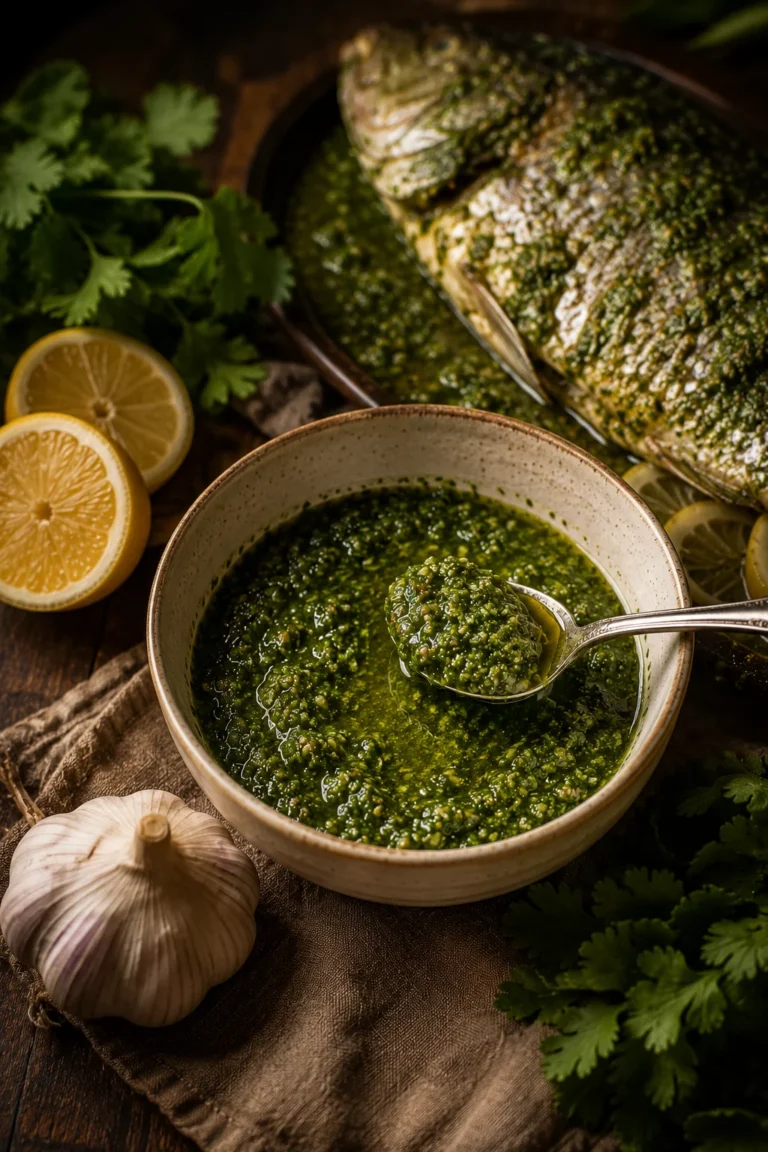
Add a handful of parsley or coriander with the garlic at the start. It turns pale green and works particularly well with grilled fish.
Give It Two Days
Whether to blanch depends entirely on who is eating, but the resting is not optional if you can help it. Day-three toum is a different and better sauce than day-one toum, so it is worth making it well ahead of the meal it is meant for.
Toum FAQs
Why did my toum break? The oil went in too fast, almost certainly during the first half cup. Garlic is a much weaker emulsifier than egg yolk, so the oil must arrive slowly enough for the garlic to coat each droplet. The rescue methods above will save the batch.
Can I use olive oil for toum? No. Extra virgin olive oil turns bitter when whipped at high speed, and this recipe whips a lot of oil. Use a neutral oil and stir in a spoonful of olive oil at the end if you want the flavour.
Is there egg in toum? Not traditionally. Toum is garlic, oil, lemon and salt, which makes it naturally vegan. Egg white appears only as a rescue method for a broken batch.
How long does toum keep? Three to four weeks in the fridge in a sealed jar. It does not freeze, since the emulsion splits on thawing. The flavour mellows and improves over the first few days.
Why is my toum so sharp? Raw garlic in quantity is intense, and fresh toum is at its sharpest. Let it sit two or three days and it softens considerably. For a gentler version, blanch the cloves for 30 seconds before starting.
Slow Oil, White Sauce, Long Memory
Four ingredients, one technique, and a jar of brilliant white garlic sauce that lasts a month and improves for the first week. The only skill is patience during the first two minutes.
Make it before your next batch of shawarma and report back: sharp or blanched, and whether the first attempt held. If it broke, the rescue works, and the second one almost never does.
Rate this recipe
No ratings yet — be the first!



If it breaks, do not throw it out. Three rescue methods are in the post and they work almost every time. The cause is always the same: the oil went in too fast during the first half cup.
Comments
No comments yet. Yours would be the first.
Made this? Tell me: sharp or blanched garlic, and did the first attempt hold?
Leave a comment
Comments are anonymous and appear after admin approval. If you rated this recipe above, your stars will show with your comment.