Turkey, Rescued from the Holidays
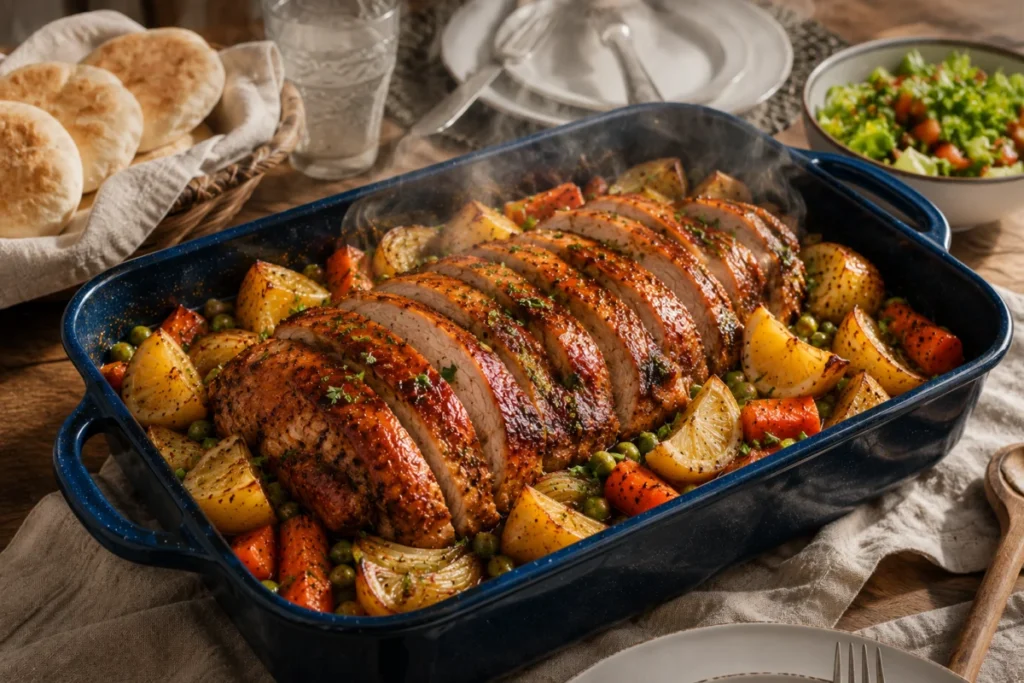
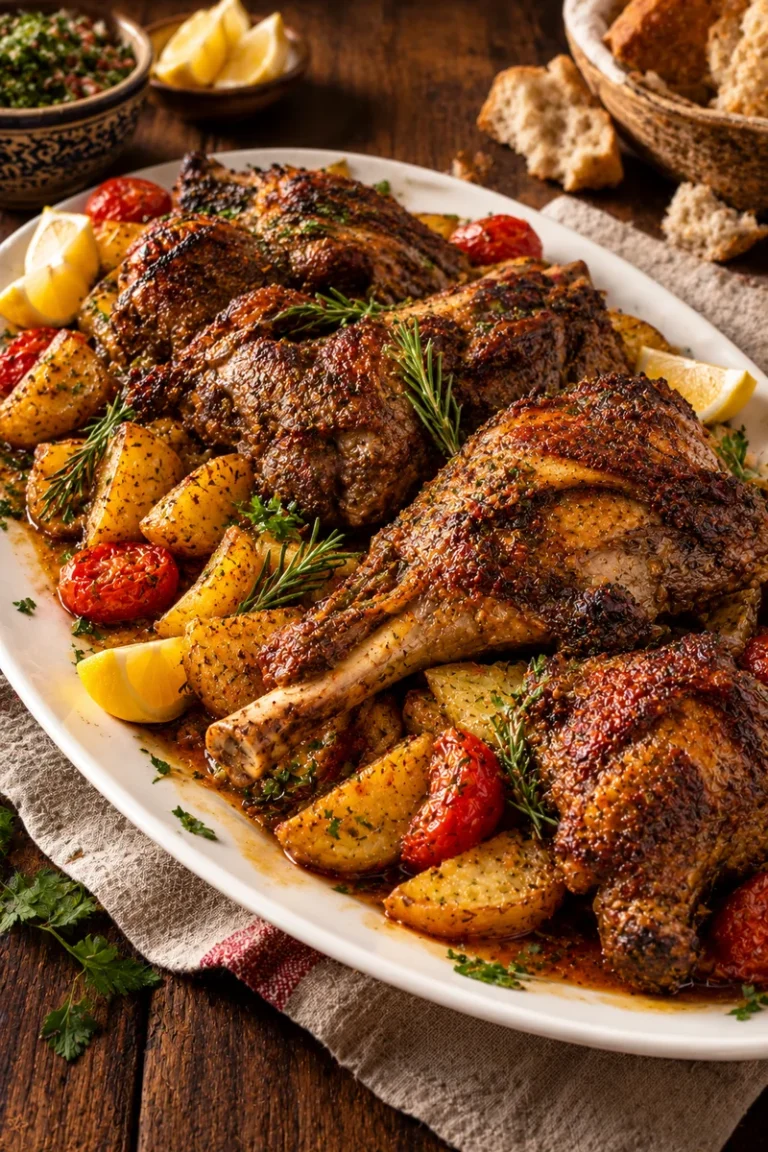
In the US and UK, turkey lives eleven months in exile and one month in a state of national panic. North Africa never signed that treaty. There, turkey legs and thighs are ordinary, excellent roasting meat, and this recipe treats them that way: rubbed with dersa, the garlicky Algerian spice paste, and roasted over potatoes and carrots that drink every drop the meat lets go.
The result is burnished, deeply seasoned turkey with vegetables that taste better than the meat has any right to allow, from one pan, on a random Tuesday, for a fraction of what chicken thighs now cost per flavor unit.
This is the roast that converts turkey skeptics, the ones who only knew it dry and ceremonial. The dersa does the heavy lifting and the slow-then-hot oven does the rest, and the timings below give juicy meat without a thermometer panic, though the FAQ covers the thermometer too.
Ahead: what dersa is and how to make it in five minutes, the ingredient list, five steps with photos, the vegetable timing that stops mushy carrots, and the leftover plan that might outshine the roast.
What Is Dersa? The Five-Minute Flavor Engine
Dersa is the garlic paste at the heart of Algerian home cooking: garlic pounded with salt, sweet and hot paprika, cumin, and black pepper, loosened with olive oil. It is rubbed on meats and fish before roasting or frying, and it does in one step what a marinade, a spice rub, and a baste do in three.
Traditionally it is made in a mortar, and five garlic cloves take about two minutes of pounding. A grater or garlic press gets you there too. Once you have made it, you will start finding other jobs for it, and the chicken tagine and shawarma on this blog are both happy landing zones, as is the Algerian beef roulade, which uses dersa inside and out.
The Legs, the Dersa, the Vegetables
Legs, Paste, Vegetables
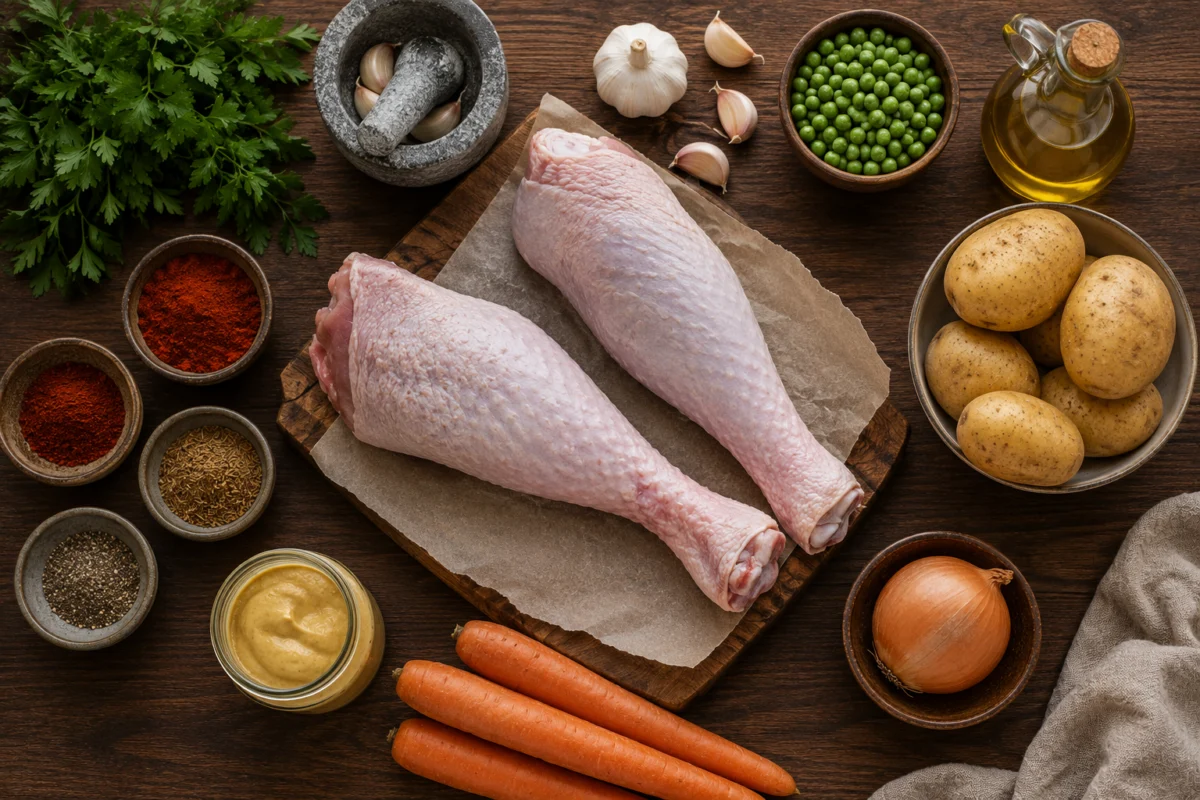
Serves 4 to 5
For the turkey and dersa:
- 2 whole turkey legs or 4 turkey thighs, bone-in, skin-on (about 3 lbs / 1.4 kg total)
- 5 garlic cloves
- 1 teaspoon salt
- 1½ teaspoons sweet paprika
- ½ teaspoon hot paprika or a pinch of cayenne
- 1 teaspoon ground cumin
- ½ teaspoon black pepper
- 1 teaspoon Dijon mustard (optional, a common French-Algerian touch)
- 3 tablespoons olive oil
For the vegetables:
- 1½ lbs (700 g) potatoes, cut into large chunks
- 3 carrots, cut into thick batons
- 1 large onion, cut into wedges
- 1 cup (150 g) frozen peas
- ¾ cup (180 ml) water or chicken stock
- Chopped parsley, to serve
Other Birds
- No turkey? The dersa-and-vegetable method works identically on 8 bone-in chicken thighs; shorten the covered roast to 25 minutes.
- No mustard? Skip it. It is a borrowing from the French side of the Algerian kitchen, loved but optional.
- Different vegetables? Chunks of squash, parsnips, or fennel all roast happily in the same pan; keep the pieces large so they survive the full time.
Rubbing, Resting, Roasting
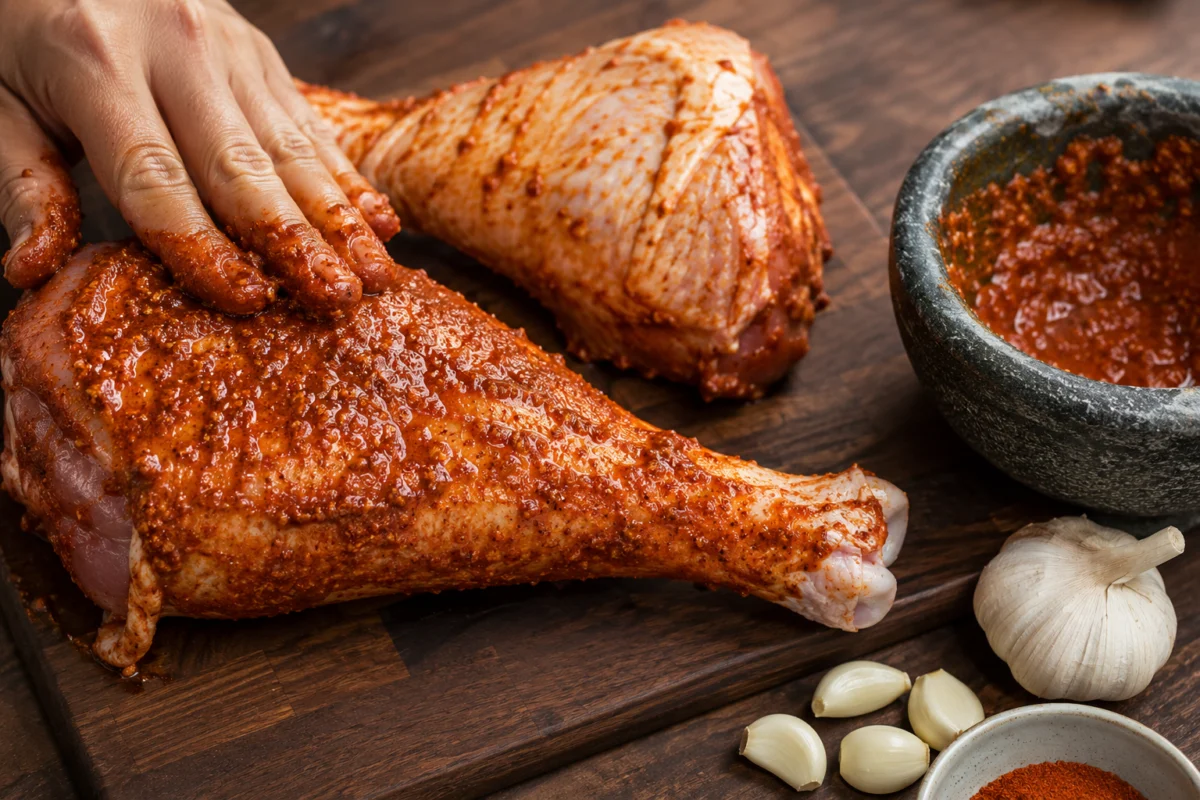
Step 1: Make the Dersa and Rub It Everywhere
Pound or grate the garlic with the salt into a paste, then work in the paprikas, cumin, pepper, mustard if using, and olive oil. Pat the turkey very dry, then rub the dersa over every surface and, where the skin lifts easily, underneath it. Rest at room temperature for 30 minutes, or covered in the fridge up to overnight.
Prep tip: Under the skin is where the dersa earns its keep. Seasoning that sits on top of turkey skin flavors the skin; seasoning under it flavors the meat. Loosen the skin gently with a finger and spend half the paste there.
Step 2: Build the Vegetable Bed
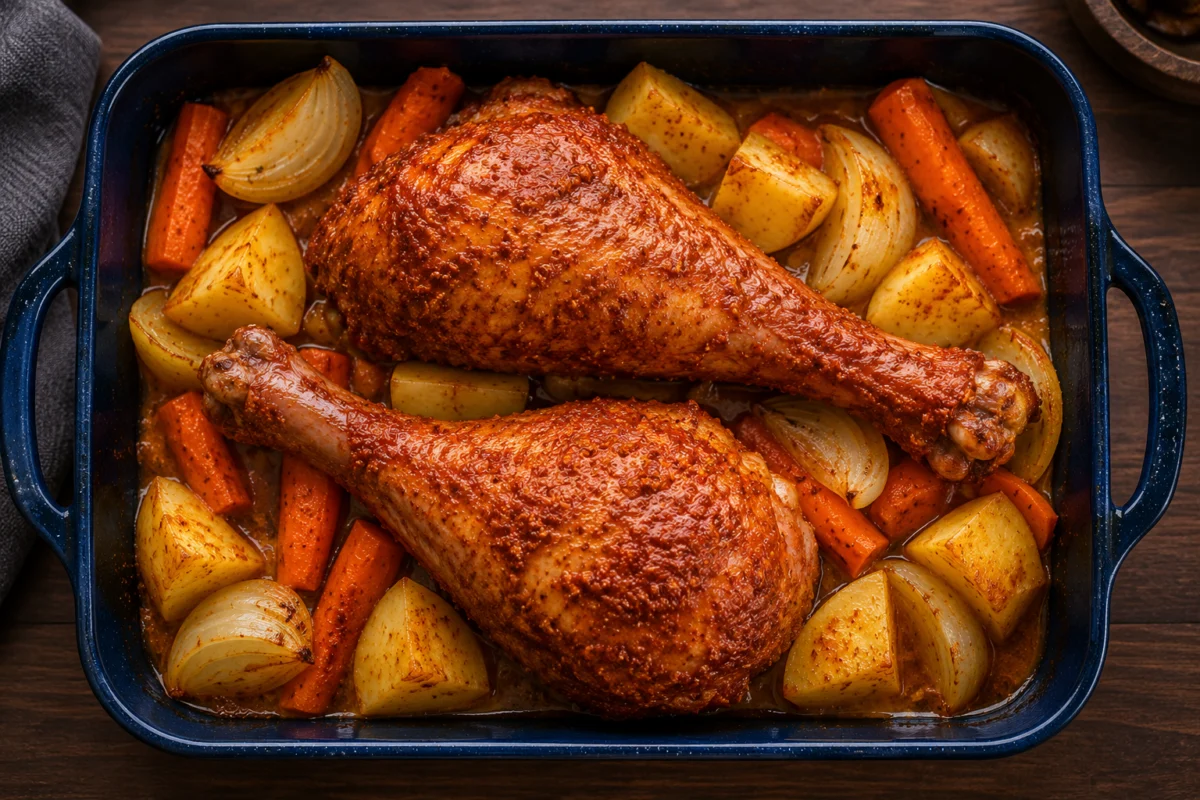
Heat the oven to 350°F (175°C). Toss the potatoes, carrots, and onion in the roasting pan with a pinch of salt and any dersa left in the bowl, then pour in the water or stock. Set the turkey on top, skin side up.
Step 3: Roast Low and Covered
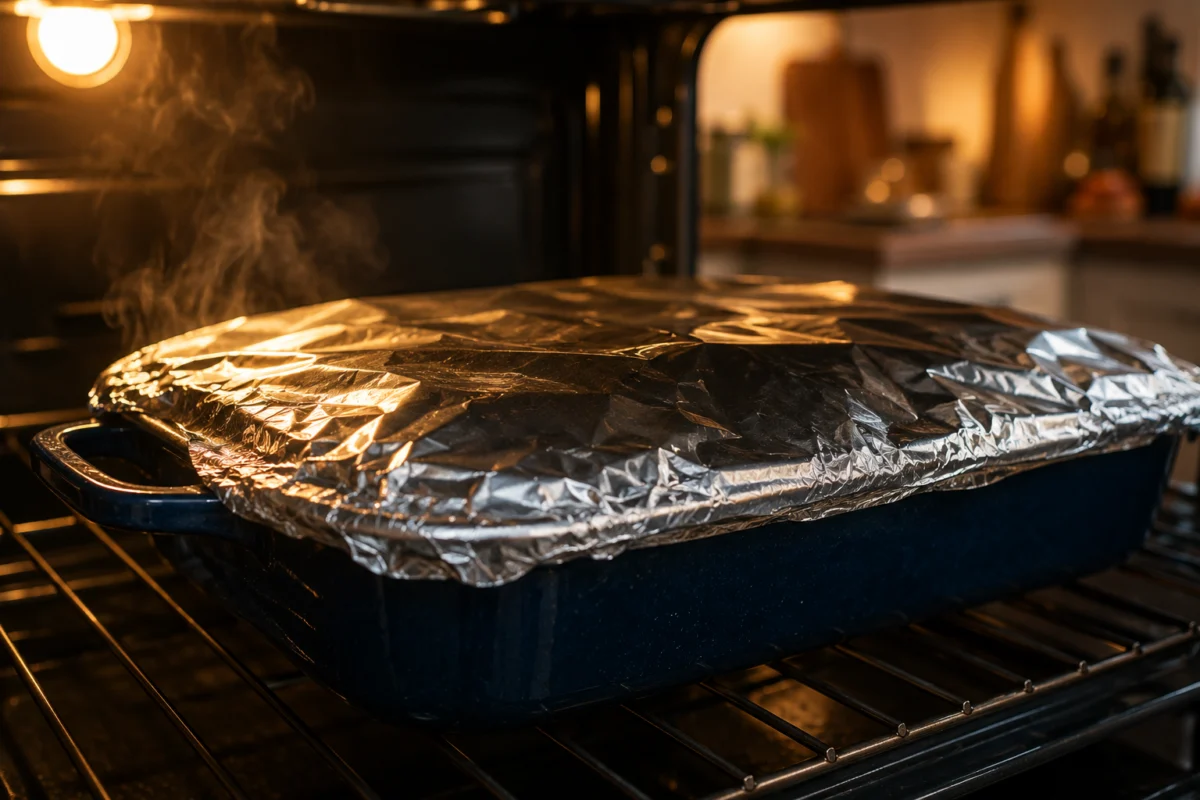
Cover the pan with foil or a lid and roast for 1 hour. The gentle, steamy start is what cooks the legs through without drying them, while the vegetables soften in the spiced juices below.
Step 4: Uncover, Raise, and Brown
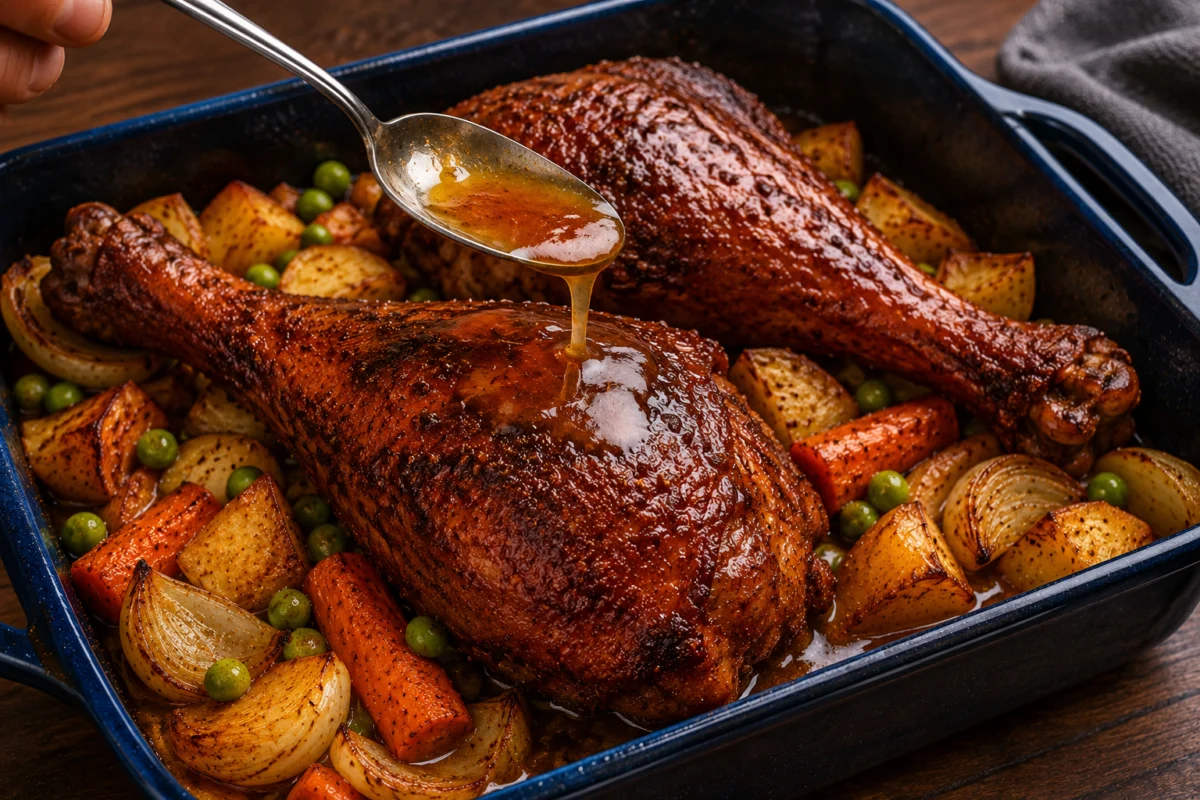
Remove the foil, raise the oven to 425°F (220°C), scatter the peas among the vegetables, and roast 25 to 30 minutes more, basting the turkey once with the pan juices, until the skin is deep mahogany and the thickest part of the leg reads 170°F (77°C).
Prep tip: Legs and thighs are dark meat, and unlike the breast that gave turkey its dry reputation, they are better at 170 to 175°F than at the minimum. The connective tissue softens, and the meat turns silky instead of stringy.
Step 5: Rest, Carve, and Serve from the Pan
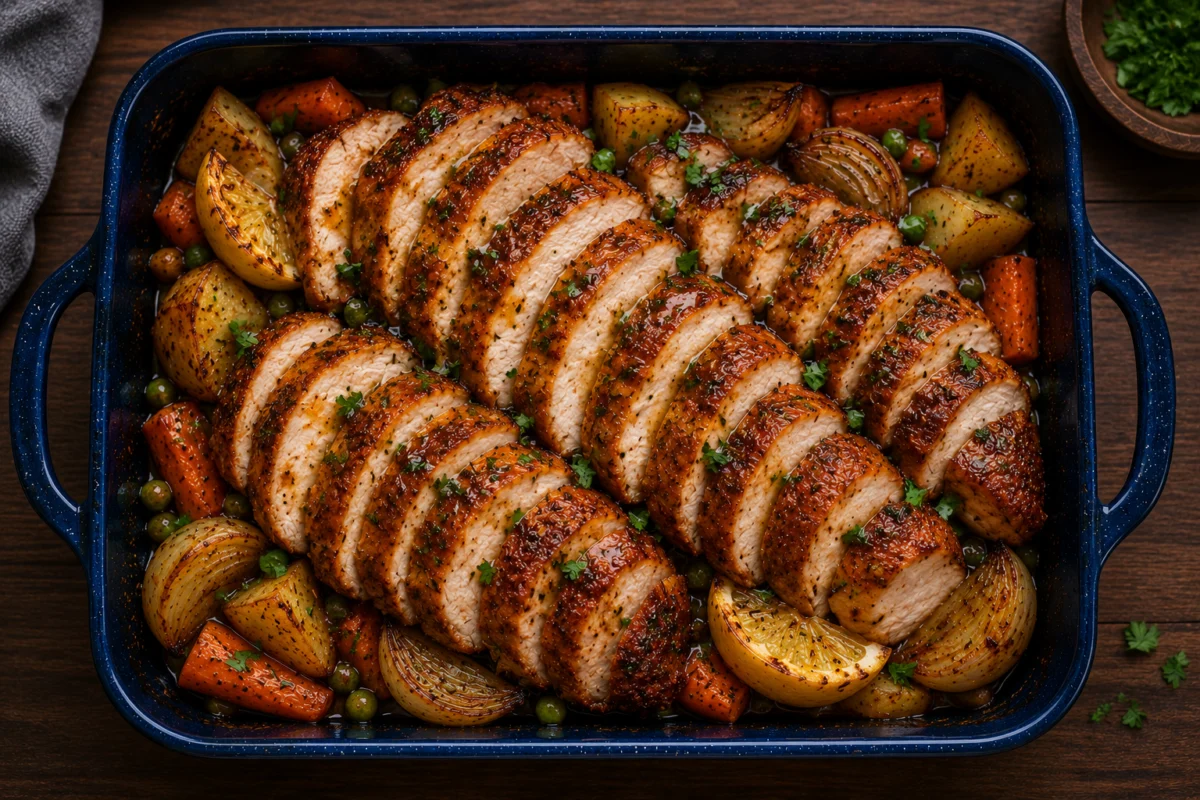
Rest the turkey 10 minutes on a board, then slice the meat off the bone in thick pieces. Return them to the pan on top of the vegetables, spoon the juices over, scatter the parsley, and bring the whole pan to the table.
Getting the Skin to Crisp
- Dry skin before dersa. Paste on wet skin slides and steams; paste on dry skin roasts into a crust. Paper towels are the first ingredient.
- Large vegetable pieces only. Small chunks dissolve during the covered hour. Halve small potatoes at most, and cut carrots in fat batons.
- Storage: The meat keeps 3 days in the fridge, and the leftover plan is the point: shredded dersa turkey reheated in the pan juices makes sandwiches, grain bowls, and a filling for wraps that rivals the shawarma on this blog.
- Save the bones. One roast’s bones plus an onion and a bay leaf is tomorrow’s stock, and that stock is the best possible base for the harira.
Chicken, Duck, and Other Birds
The Saffron Sunday Version
Add a pinch of saffron soaked in 2 tablespoons of warm water to the stock in the pan, and a small handful of green olives with the peas. This steers the pan toward celebration cooking, and the golden juices over the potatoes are worth the saffron’s price.
The Hot Dersa Version
Double the hot paprika and add a fresh chili to the pounded garlic. Real dersa in many Algerian homes bites back, and turkey carries heat beautifully.
How I Roast Mine
In my kitchen, a lemon gets quartered and tucked among the vegetables, and its roasted wedges get squeezed over the carved meat at the table. And the crisp bits of potato that glued themselves to the pan corner are the cook’s tax, collected before serving.
What Catches the Juices
The pan is nearly a complete dinner, so additions are about freshness and bread: the easy tabbouleh recipe cuts the richness perfectly, and rounds of the easy Moroccan bread recipe are the correct tool for the pan juices. A bowl of harira to start turns it into a proper cold-weather feast.
For familiar Western pairings, this slots exactly where a Sunday roast goes: add greens and mustard, or shred the leftovers into anything that usually wants rotisserie chicken.
Turkey Legs, Answered
How long do turkey legs take in the oven? With this method, about 1 hour 30 minutes total: 1 hour covered at 350°F, then 25 to 30 minutes uncovered at 425°F, to an internal 170°F at the thickest part. Very large legs may need 15 extra covered minutes.
Why are my turkey legs tough or stringy? Almost always undercooking, oddly: dark meat needs to reach 170 to 175°F for its connective tissue to soften. The covered-then-hot method gets it there without drying the surface.
Can I make this ahead? The dersa rub improves overnight in the fridge, so Step 1 the night before is the ideal plan. Fully cooked, the dish reheats well covered in a moderate oven with a splash of water.
Is this recipe halal? With halal-certified turkey, completely: there is no alcohol or pork product anywhere in it, and halal butchers stock turkey legs year-round.
Can I use a whole turkey breast instead? You can, but the method changes: breast is done at 160°F and dries beyond it, so roast it covered only 40 minutes before uncovering. Honestly, the legs are the point of this recipe; they forgive, and they flavor the vegetables better.
Turkey Deserved Better, and Here It Is
One paste, one pan, and turkey stops being an annual obligation and becomes what North Africa always knew it was: honest, affordable roasting meat that makes its own side dish. The dersa keeps working long after the oven turns off.
Roast it some ordinary week and report the verdict: legs or thighs, mild or hot dersa, and whether the pan-corner potatoes survived until serving. And when November comes and someone volunteers you for the whole bird, you will already know the important secret: the legs were the best part all along.
Rate this recipe
No ratings yet — be the first!

Get the dersa under the skin, not just on it. Paste on top flavours the skin; paste underneath flavours the meat. Loosen the skin gently with a finger and spend half the paste there.
Comments
No comments yet. Yours would be the first.
Made this? Tell me whether the legs converted any turkey skeptics at your table.
Leave a comment
Comments are anonymous and appear after admin approval. If you rated this recipe above, your stars will show with your comment.