The Roast with a Secret in Every Slice
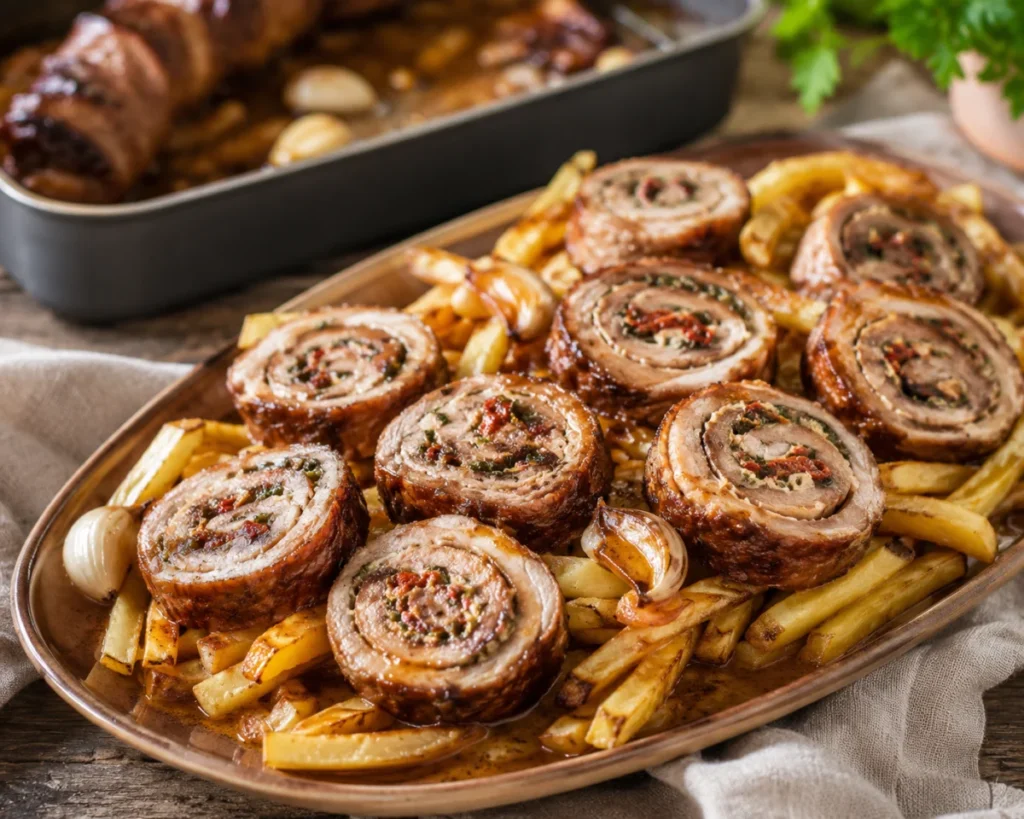
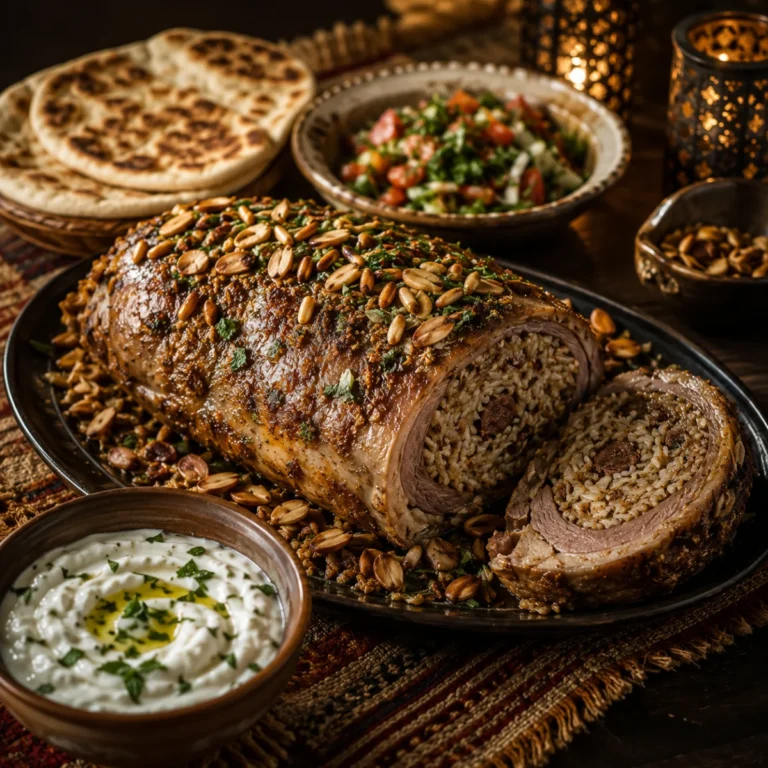
Some roasts announce everything from the outside. This one keeps its best news for the carving board: slice through the mustard-glossed, garlic-studded exterior and every piece is a pinwheel, spiced meat wrapped around a darker spiral of dersa-seasoned stuffing.
This is the Algerian rôti, the rolled roast that home kitchens bring out for Fridays, Eids, and the guests who matter, and it belongs to the great roulade family that stretches from Italian braciole to South American matambre. The Algerian signature is doubled garlic: dersa paste inside and out, and whole cloves pressed into the mustard coat where they roast soft and sweet.
The traditional plate is wonderfully unpretentious for such an elegant slice: pinwheels over a pile of fries, because Algeria’s love affair with frites is real and correct. This recipe honors that, with alternatives for the fry-averse.
This is occasion cooking that secretly takes thirty minutes of hands-on work. Two moments make or break it: the tying, snug and never strangled, and the rest before slicing, which is what separates pinwheels from crumbles.
Ahead: the ingredient list with the veal-versus-beef honesty, five steps with photos, the tying method in plain words, and the carving rules that make the spiral survive the knife.
About the Rôti: Friday Food in Rolled Form
The rolled, tied, and roasted joint entered North African kitchens through the French period, and Algerian cooks made it theirs the usual way: by putting dersa on it. The garlic-spice paste (introduced in full in the roast turkey legs recipe) seasons the meat inside and out, mustard adds the French handshake, and whole garlic cloves stud the surface like intentions.
Traditionally it is made with veal escalopes; abroad, thin-cut beef is the honest, affordable stand-in, and flank or topside rolls beautifully. Either way it is celebration food that slices into portions with built-in presentation, which is exactly why it survives every generation’s turn at hosting.
The Beef and the Stuffing
For the Roll
Serves 5 to 6
For the meat:
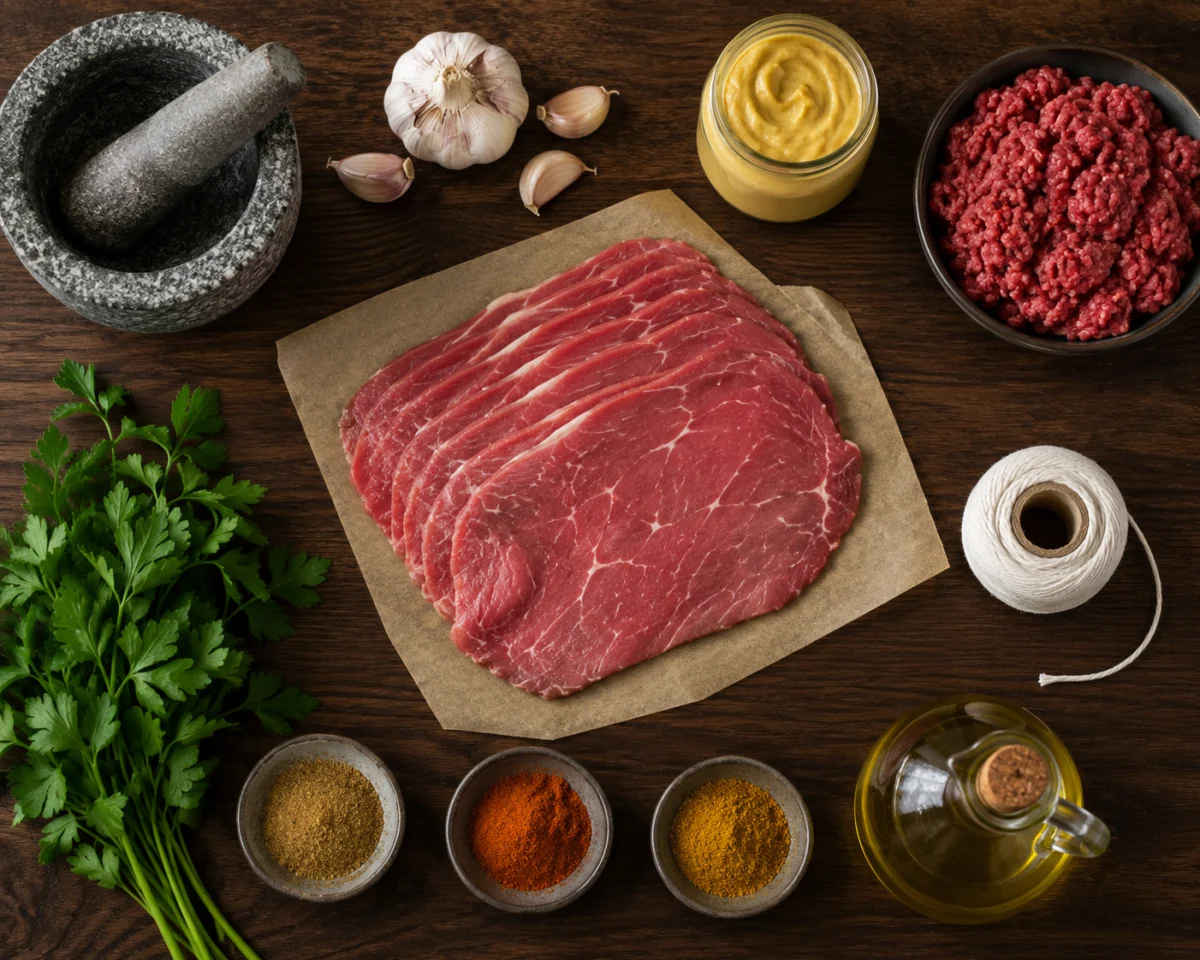
- 2 lbs (900 g) thin-cut beef topside or flank, in wide slices (or veal escalopes, the traditional cut), pounded to ¼ inch (6 mm)
- 2 teaspoons Dijon mustard
- 8 to 10 whole garlic cloves, peeled
- 1 tablespoon olive oil
- ¾ cup (180 ml) water, plus more as needed
For the dersa:
- 1 small head of garlic (about 8 cloves)
- 1 teaspoon salt
- ¾ teaspoon black pepper
- ¾ teaspoon sweet or hot paprika
- ½ teaspoon ground cumin
- Pinch of ras el hanout (optional but very Algerian)
- 3 tablespoons olive oil
For the stuffing:
- ½ lb (250 g) ground beef
- 1 tablespoon butter
- ½ cup chopped fresh parsley
- ¼ teaspoon black pepper
- ½ teaspoon salt
You will also need kitchen twine (or sturdy toothpicks in a pinch).
Stuffing Swaps
- No wide slices? Overlap smaller thin slices like roof shingles on a sheet of parchment; the roll holds them together and the slices fuse as they roast.
- No mustard? Brush with olive oil and a little extra dersa. The mustard is the French accent, not the foundation.
- No twine? Toothpicks every inch along the seam work; count them in and count them out.
Stuffing, Rolling, Tying, Braising
Step 1: Pound the Dersa
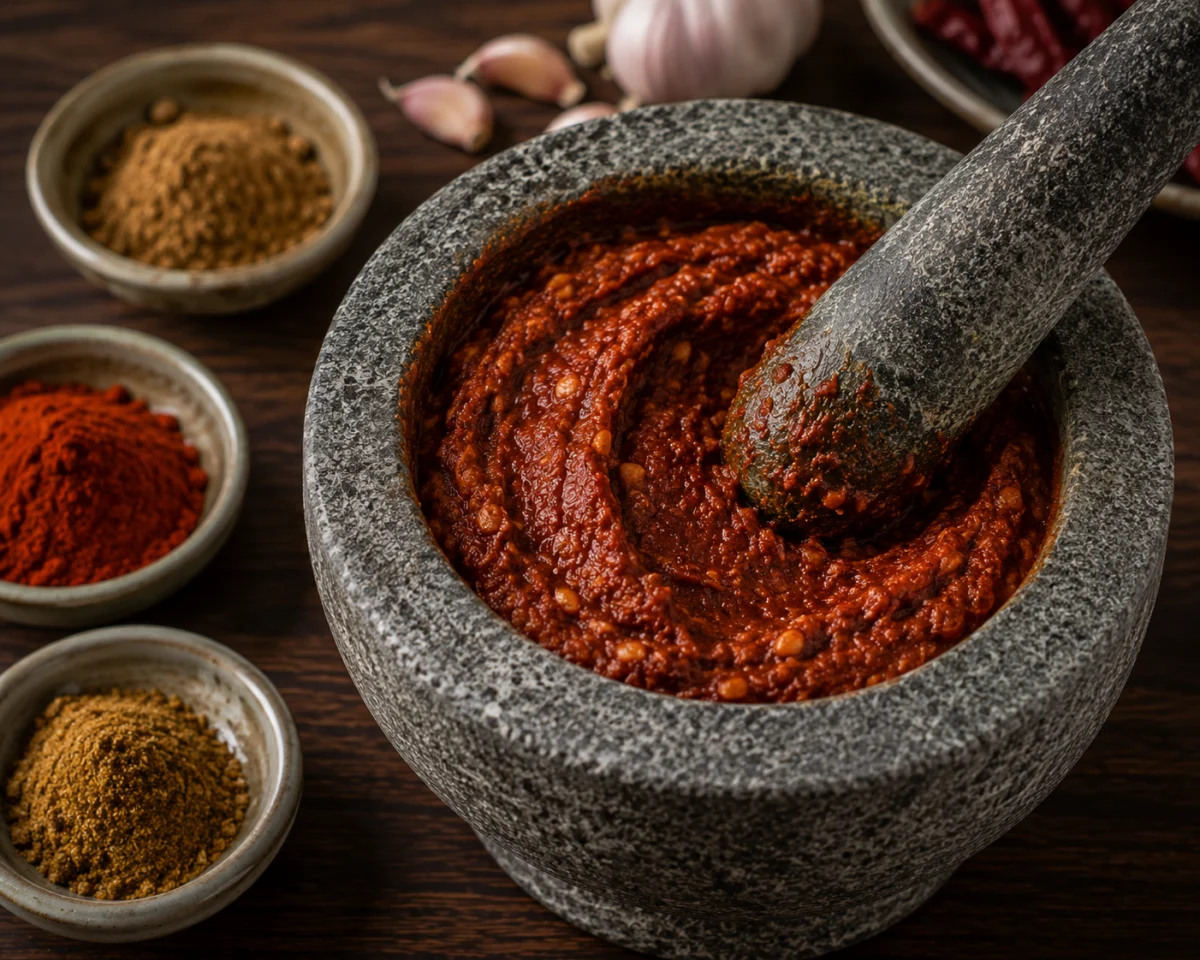
Crush the garlic with the salt in a mortar (or grate it), then work in the pepper, paprika, cumin, ras el hanout, and olive oil to a loose paste. Divide it in half: one half for the stuffing, one for the meat.
Step 2: Cook the Stuffing
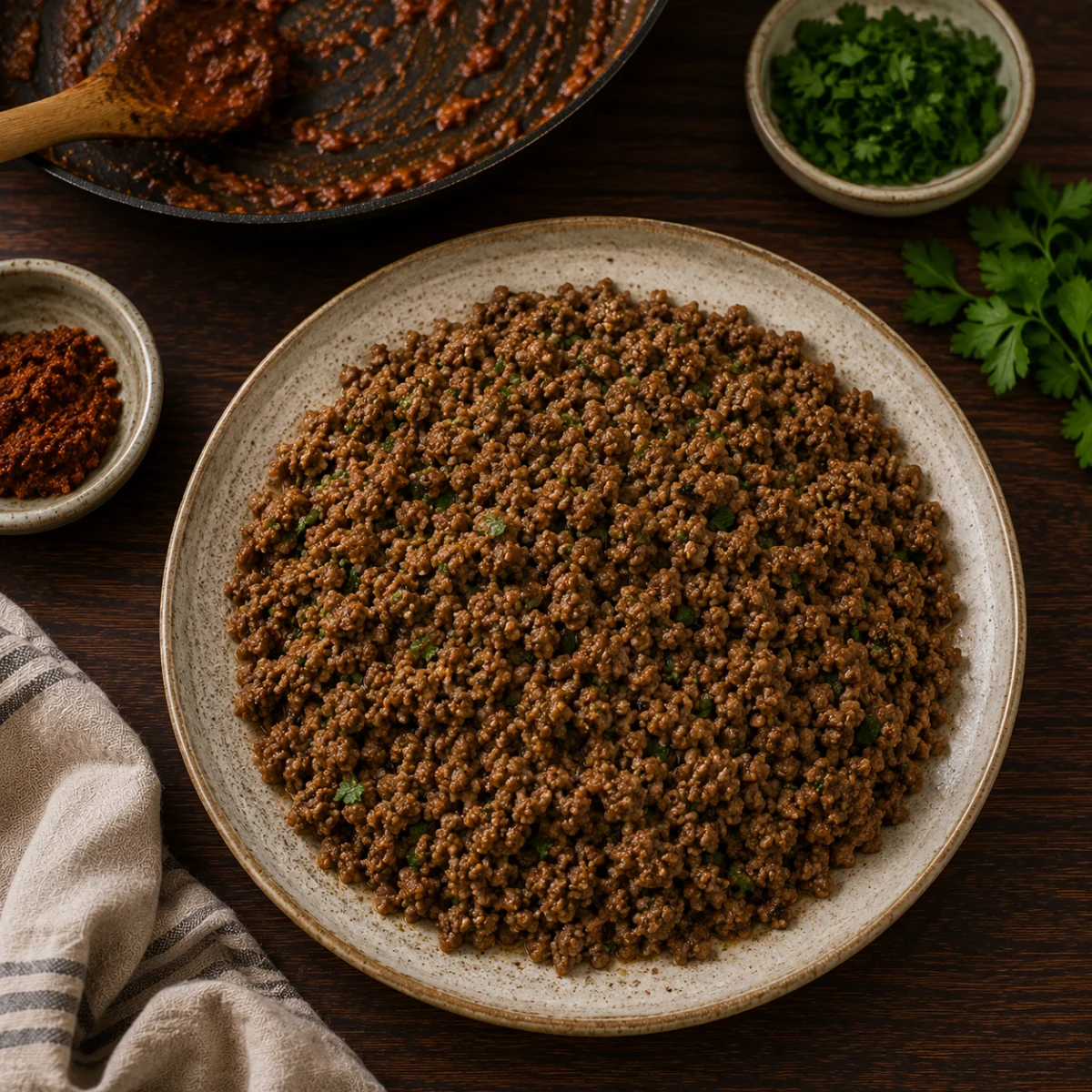
Melt the butter in a skillet, add the ground beef, salt, and pepper, and cook, breaking it up, until browned and the pan is dry. Stir in half the dersa for the last minute, then the parsley off the heat. Cool for 10 minutes; a hot stuffing makes a slippery roll.
Step 3: Layer, Roll, and Tie
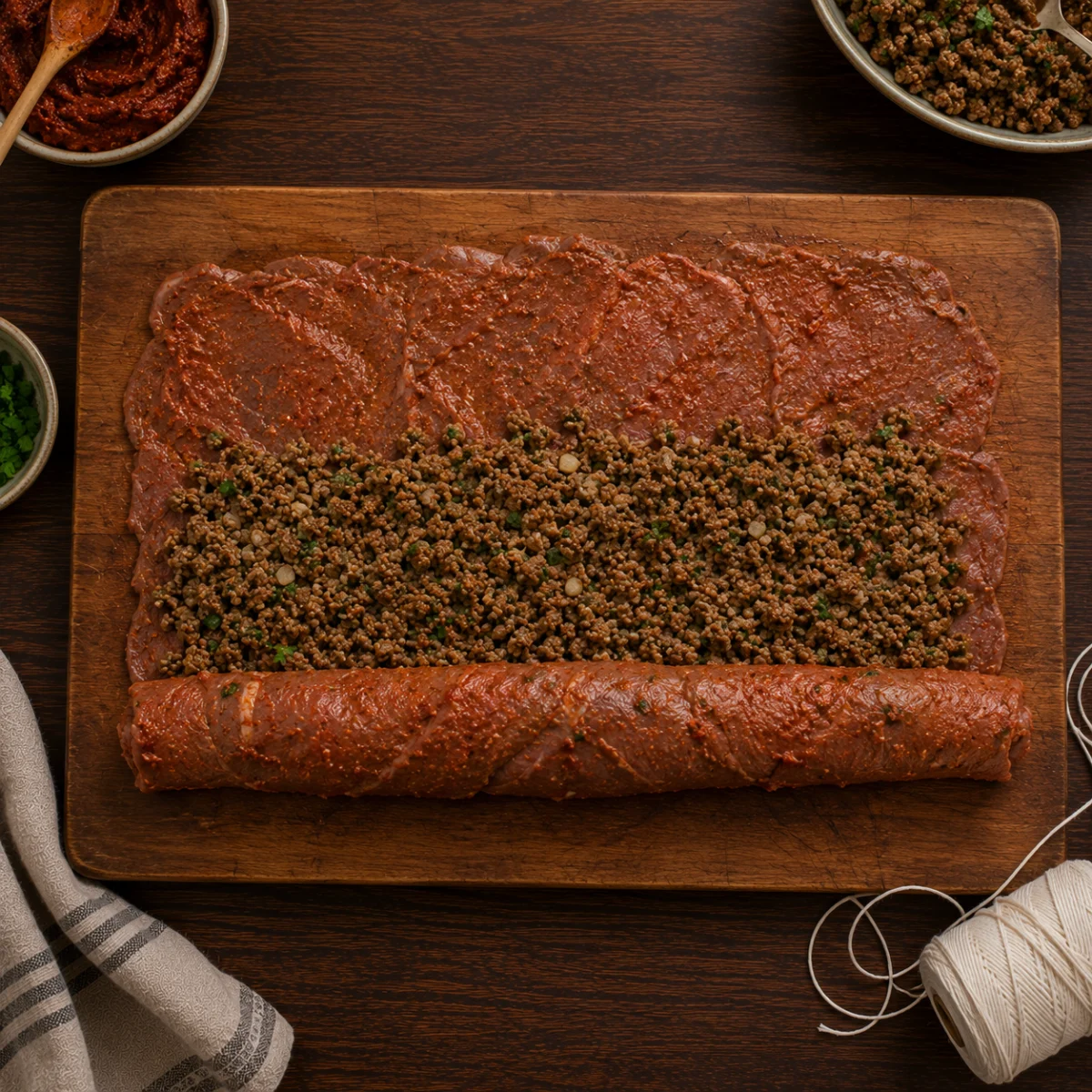
Rub the remaining dersa over both sides of the beef slices. On a board, lay the slices into one wide rectangle, edges overlapping. Spread the cooled stuffing over, leaving a bare inch at the far edge, and roll away from you into a firm log, seam down. Tie with twine at 1½ inch intervals, snug enough to hold, loose enough to dent with a finger.
Prep tip: Strangle-tight twine squeezes the stuffing out the ends and makes hourglass slices. The roll should feel held, not corseted; it will firm further as it roasts.
Step 4: Mustard, Garlic, and a Patient Roast
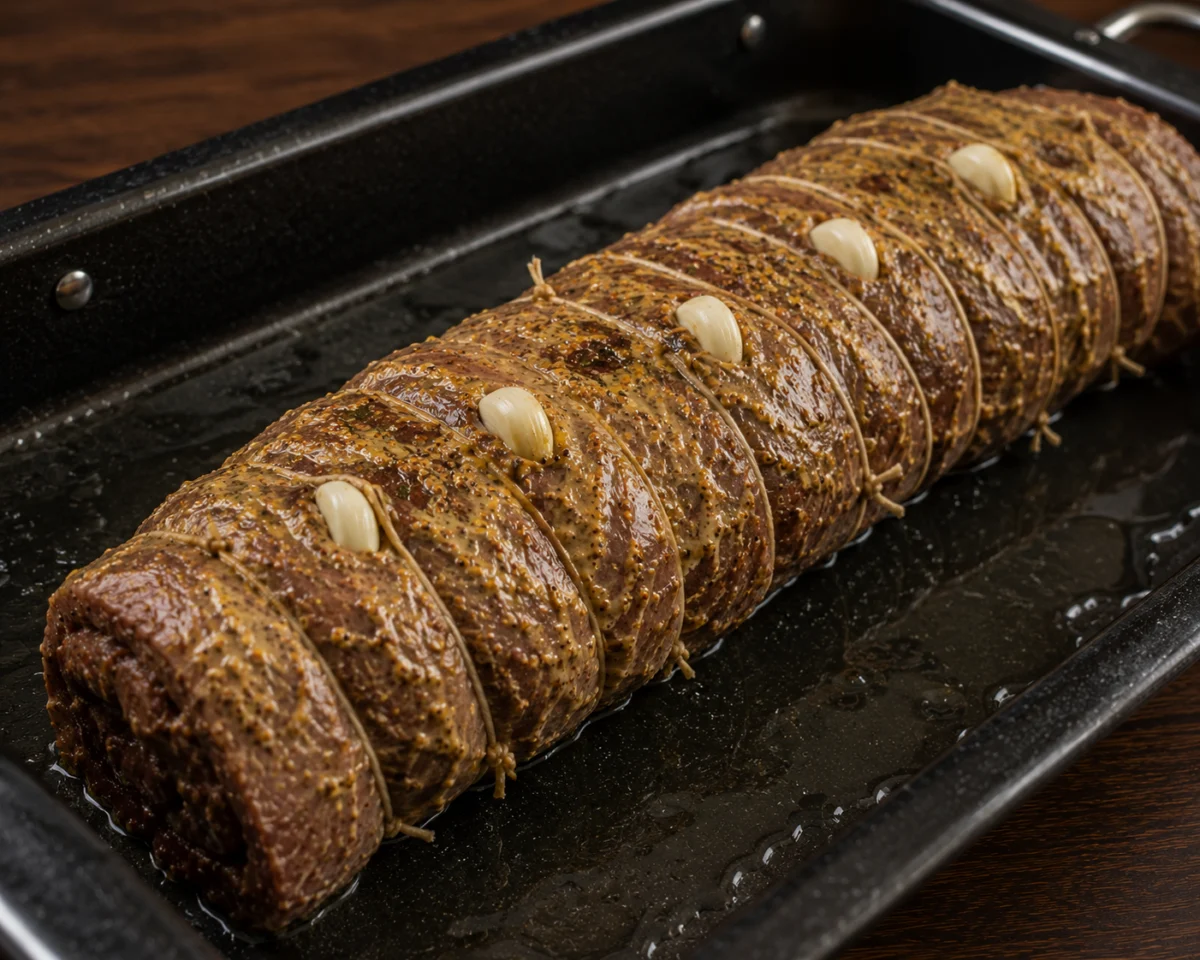
Heat the oven to 350°F (175°C). Set the roll in a buttered roasting dish, brush all over with the mustard, and press the whole garlic cloves into the surface between the ties. Drizzle with the olive oil, pour the water into the dish (never over the roll), and roast for 1 hour 15 minutes, adding a splash more water whenever the dish runs dry, until the roll is deeply browned and reads 150°F (65°C) at the center. For a darker crust, give it 10 final minutes at 425°F (220°C).
Prep tip: The water in the dish is the Algerian method working quietly: it keeps the drippings from burning and becomes a small spoonable jus by the end. The dish should sizzle, never smoke.
Step 5: Rest, Snip, and Slice Into Pinwheels
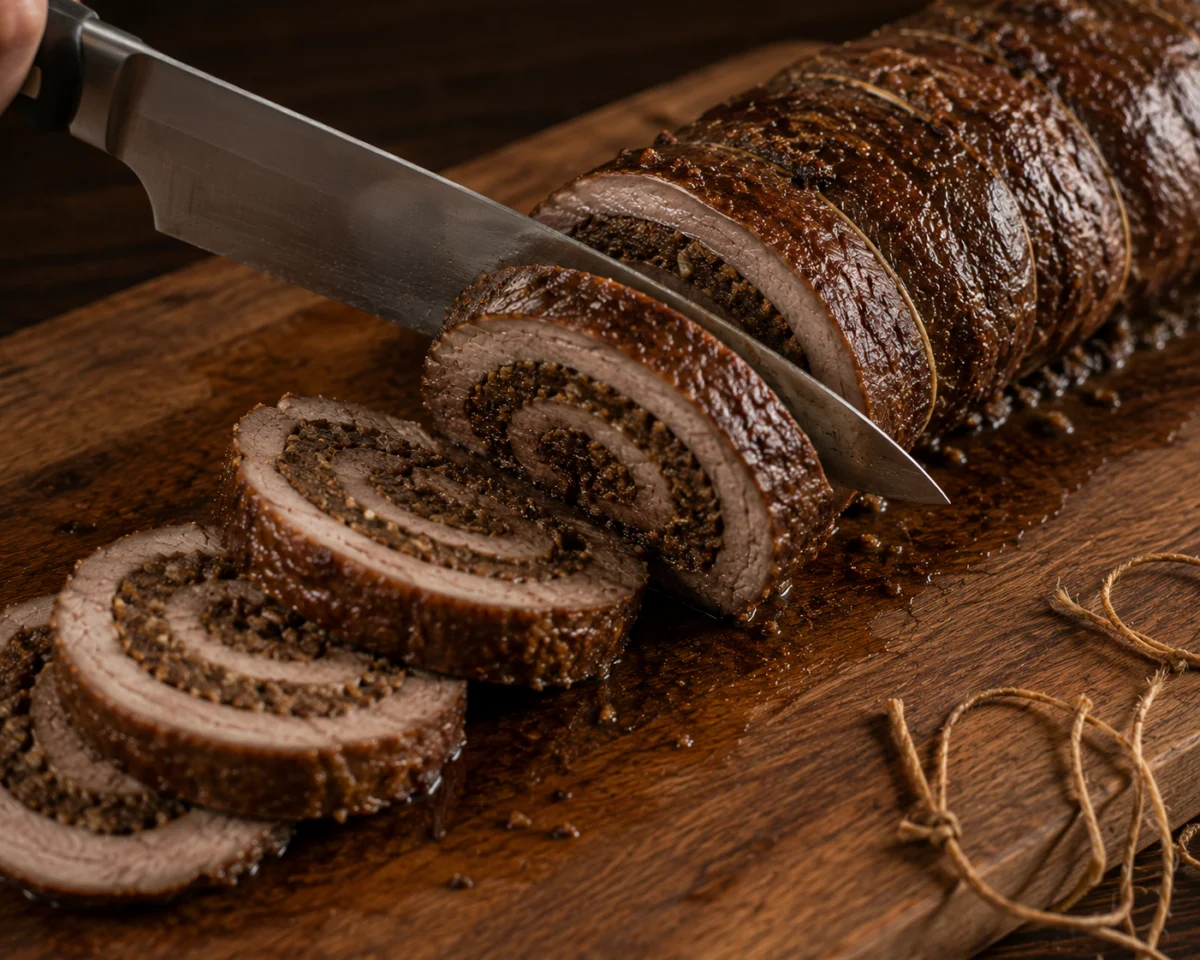
Rest the roll under loose foil for 15 minutes, then snip and remove the twine, and slice with a sharp knife into ¾ inch pinwheels. Serve over fries in the traditional style, with the dish juices spooned across.
Prep tip: The rest is not optional ceremony: slice hot and the spiral unwinds and weeps. Fifteen minutes lets the roll set, and the pinwheels come off the knife whole.
Tying It So It Holds
- Pound even, not just thin. A slice of uniform thickness rolls into a tight spiral; a wedge rolls into a cone. Work from the center outward with a pan or mallet.
- Seam side down, always. In the dish and on the board, gravity is your co-signer on the seam until the roast sets it permanently.
- Storage: Keeps 3 days in the fridge, and cold pinwheel slices are genuinely excellent, sandwich-grade excellent. Reheat gently covered with a spoon of the juices, or embrace the cold-cut destiny.
- Roast the extra garlic. Any peeled cloves left over go into the dish water, where they confit softly and get mashed into the jus at the end.
Other Stuffings and Cuts
The Egg Ribbon Version
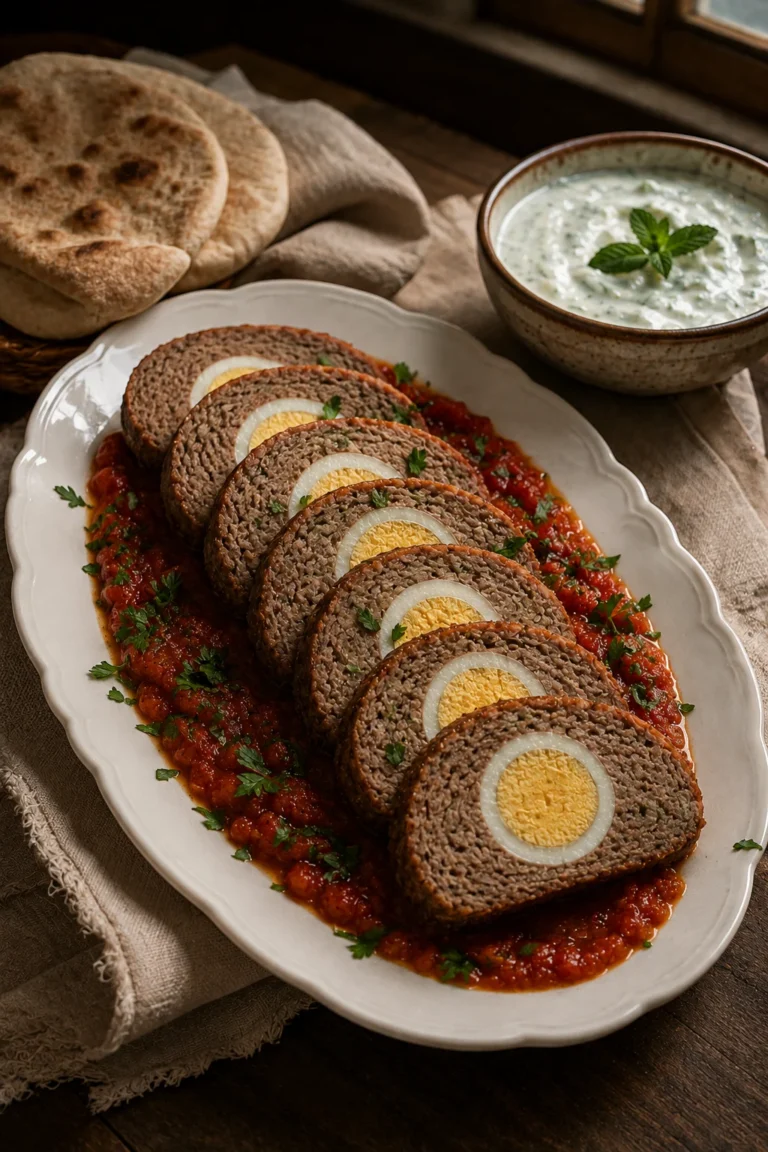
Lay two peeled hard-boiled eggs end to end along the near edge before rolling, a beloved trick across the roulade world: every slice gains a white-and-gold center medallion, and the platter turns festive with zero extra skill.
The Chicken Roulade
The same dersa, stuffing, and method work on butterflied, pounded chicken breasts rolled individually; roast 35 to 40 minutes to 165°F. Weeknight-sized, lunchbox-destined.
How I Tie Mine
In my kitchen, a handful of chopped olives goes into the stuffing with the parsley, the fries are non-negotiable because tradition is tradition, and the end pieces of the roll, the untidy ones that never make the platter, are the cook’s wages, eaten standing up at the board.
What Goes on the Platter
Fries first, per Algiers: crisp, salted, and under the pinwheels where they catch the juices. Purists may object; they are wrong and also welcome to the potato gratin from this blog instead, which makes a grander plate for guests. A sharp salad completes it, and the easy tabbouleh recipe both do the cutting-through job.
For familiar Western settings, this slices onto any Sunday-roast plate: roasted vegetables, mashed potatoes, and the dish juices standing in for gravy.
Roulade Questions, Answered
How do I keep a beef roulade from falling apart? Three holds working together: overlap the slices so the roll fuses them, tie snug but not tight at regular intervals, and rest 15 minutes before slicing. Slice with a sharp knife in one draw, not a saw.
What cut of beef is best for roulade? Topside or flank, sliced thin and pounded even, roll and roast best. Ask a butcher to slice for rolling; halal counters do it daily. Veal escalopes are the traditional Algerian choice where budget allows.
Can I make roulade ahead? Roll and tie it a day ahead and refrigerate; the dersa works overnight like a marinade and the roast improves for it. Roasted, it keeps 3 days, and cold slices are a legitimate second act.
What temperature is beef roulade done? 150°F (65°C) at the center suits this braised-roast method: the stuffing is fully cooked and the thin-rolled beef stays tender. The chicken variation goes to 165°F (74°C).
Is this recipe halal? With halal-certified beef throughout, entirely: mustard, dersa, and the method contain no alcohol or pork product. Check specialty mustards for wine on the label if you keep strictly; standard Dijon lists spirit vinegar.
One Roll, A Platter of Spirals
This is what occasion cooking should be: thirty minutes of honest work, an oven doing the drama, and a carving board that hands out pinwheels like compliments. The dersa seasons it twice, the garlic roasts sweet in the mustard, and the fries underneath collect everything that falls. If you liked the shrimp gratin, this is the same occasion energy in roast form.
Roll one for the next table that deserves effort and report back: beef or veal, egg ribbon or classic, and whether the cook’s-wages end pieces made it to witnesses. Tradition says no, and tradition is undefeated.
Rate this recipe
No ratings yet — be the first!

Tie it snug, not tight. Strangled twine squeezes the stuffing out the ends and gives you hourglass slices. It should feel held, and you should still be able to dent it with a finger.
Comments
No comments yet. Yours would be the first.
Made this? Tell me: beef or veal, and did the end pieces survive to the table?
Leave a comment
Comments are anonymous and appear after admin approval. If you rated this recipe above, your stars will show with your comment.