
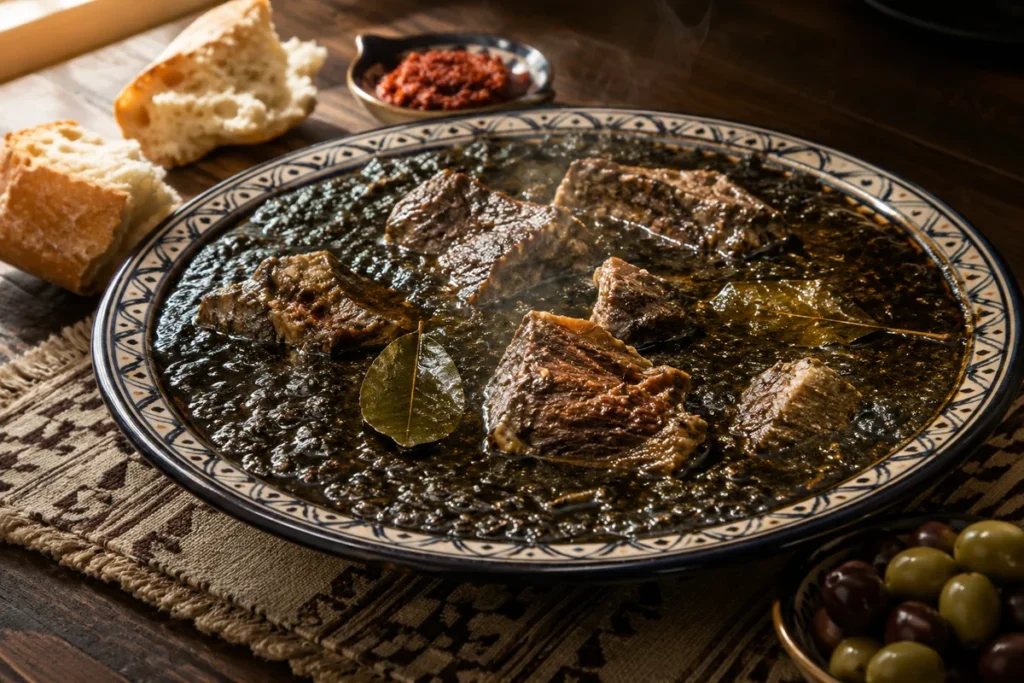
The Dish That Takes All Afternoon
Most recipes on this blog can be made after work. This one cannot, and pretending otherwise would set you up to fail.
Tunisian mloukhia is powdered jute leaves cooked slowly with veal or lamb until the pot turns from bright green to deep olive to almost black, and the sauce thickens into something dense and glossy that coats the meat. It takes two to three hours of low heat, and the colour change is how you know it is ready. There is no shortcut.
What you get is unlike anything else in North African cooking: earthy, slightly bitter, deeply savoury, closer to a thick sauce than a soup. It is served with bread rather than rice, and in Tunisia it appears at family gatherings, at Eid, and at the start of a new year, where the dark colour is said to close the old one.
If you know Egyptian molokhia, this is a different dish sharing an ingredient. That one is a light green soup from fresh or frozen leaves, finished with garlic and coriander, ready in twenty minutes. The Tunisian version uses dried powder and cooks for hours until it darkens. Same plant, opposite result.
Ahead: where to buy mloukhia powder, the ingredient list, five steps with photos, why the colour matters, and how to avoid the two things that ruin it.
Buying Mloukhia Powder
This is the one ingredient you cannot improvise, so it is worth getting right.
You want finely ground dried jute leaf powder, sold as mloukhia, molokhia or corchorus. Tunisian and Libyan brands grind it finer than Egyptian ones. Any North African grocery carries it, most Middle Eastern shops do, and it is easy to find online.
Do not substitute frozen or fresh molokhia leaves. They are the same plant but a completely different product, and they make the Egyptian soup rather than this stew. The powder is what allows the long cook and the dark colour.
Check that it is finely milled. Coarse powder gives a gritty sauce that never fully smooths out. Rub a little between your fingers; it should feel like flour rather than dried herbs.
One 100 g bag makes one large pot and keeps for a year in a sealed container.
Ingredients You’ll Need for Mloukhia
Main Ingredients
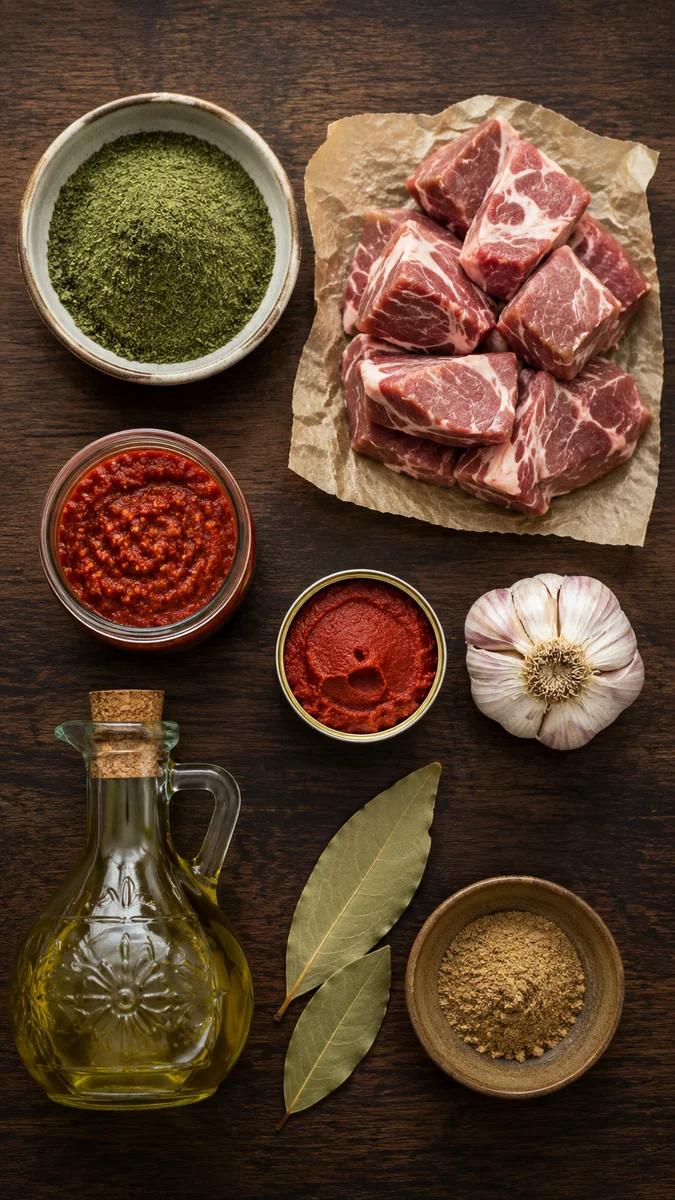
Serves 6
- 3½ oz (100 g) mloukhia powder
- 2¼ lbs (1 kg) veal or lamb, cut into large pieces on the bone where possible
- 1¼ cups (300 ml) olive oil
- 1 tablespoon harissa
- ½ tablespoon tomato paste
- 1 whole head of garlic
- 2 teaspoons ground coriander
- 2 bay leaves
- 1½ teaspoons salt
- 1 teaspoon black pepper
- 6½ cups (1.5 liters) hot water
To serve:
- Crusty bread, and plenty of it
On the Oil
The quantity is not a misprint. The oil is structural rather than indulgent: it carries the powder, stops the sauce catching during the long cook, and rises to the surface at the end as the sign the dish is done.
You can reduce it to about a cup if the full amount feels excessive, and the dish still works. Below that the sauce tends to catch and the texture suffers.
Easy Substitutions
- No veal? Lamb shoulder is the most common alternative and arguably better. Beef shin works too with a slightly longer cook.
- No harissa? A teaspoon of tomato paste plus half a teaspoon of paprika and a pinch of cayenne. Not the same, but workable. The homemade harissa recipe is worth a jar if you cook Tunisian food often.
- Vegetarian? Uncommon for this dish, but it can be made with chickpeas and vegetable stock. The long cook and the colour change still apply.
Step-by-Step Instructions: Mloukhia in 5 Steps
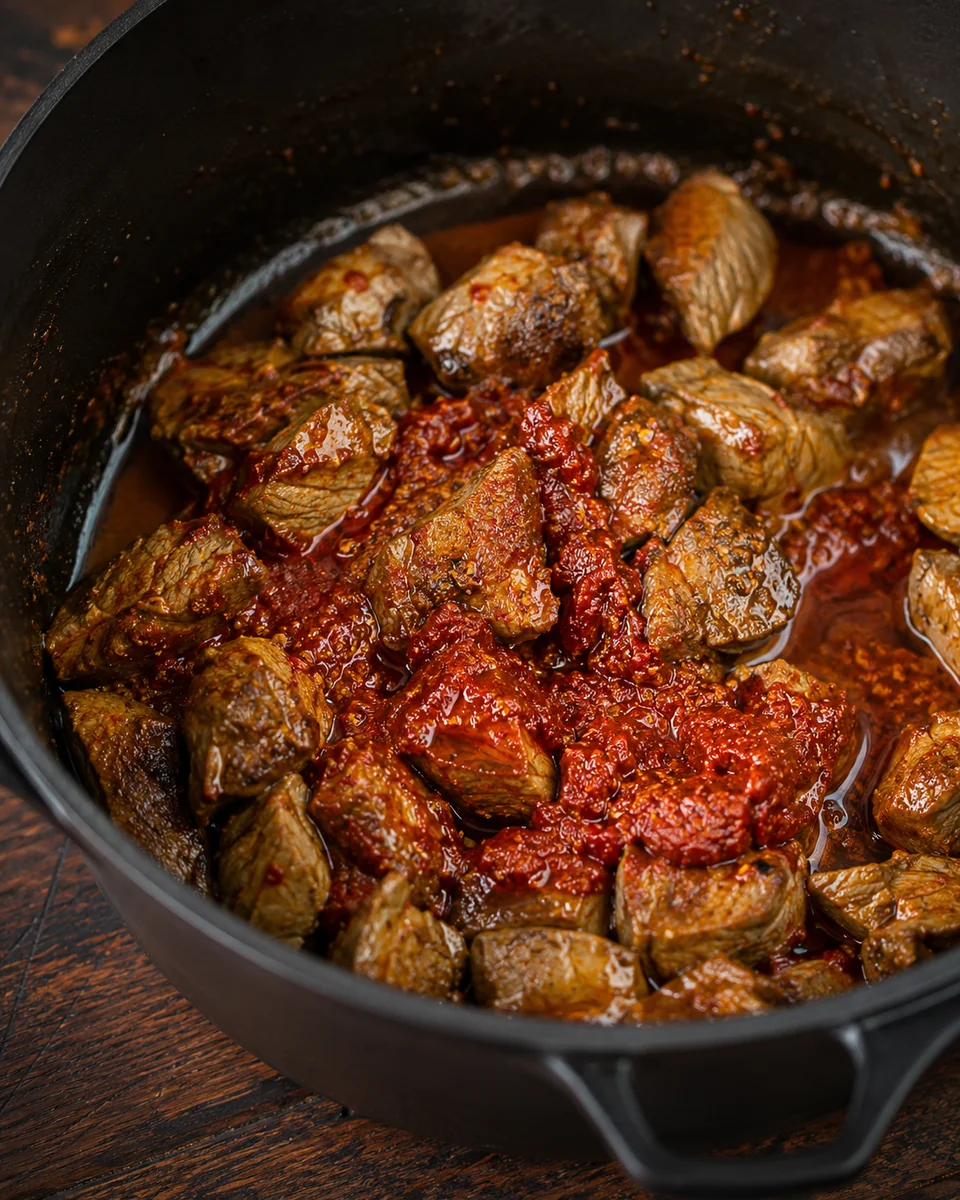
Step 1: Brown the Meat with Harissa
Heat a third of the olive oil in a large heavy pot and brown the meat well on all sides. Add the salt, pepper, harissa and tomato paste and cook for 3 to 4 minutes, stirring, until the paste darkens and coats the meat.
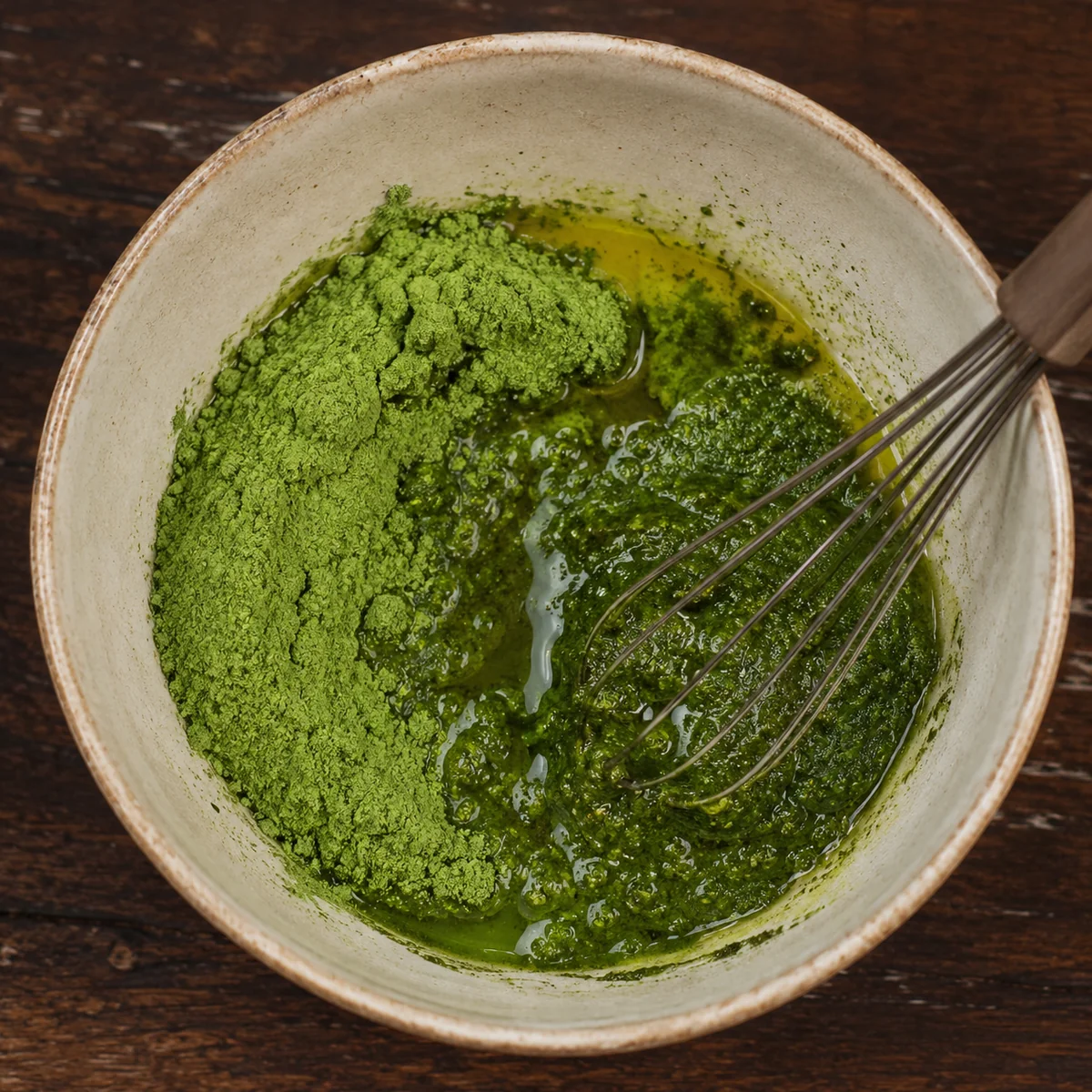
Step 2: Slake the Powder
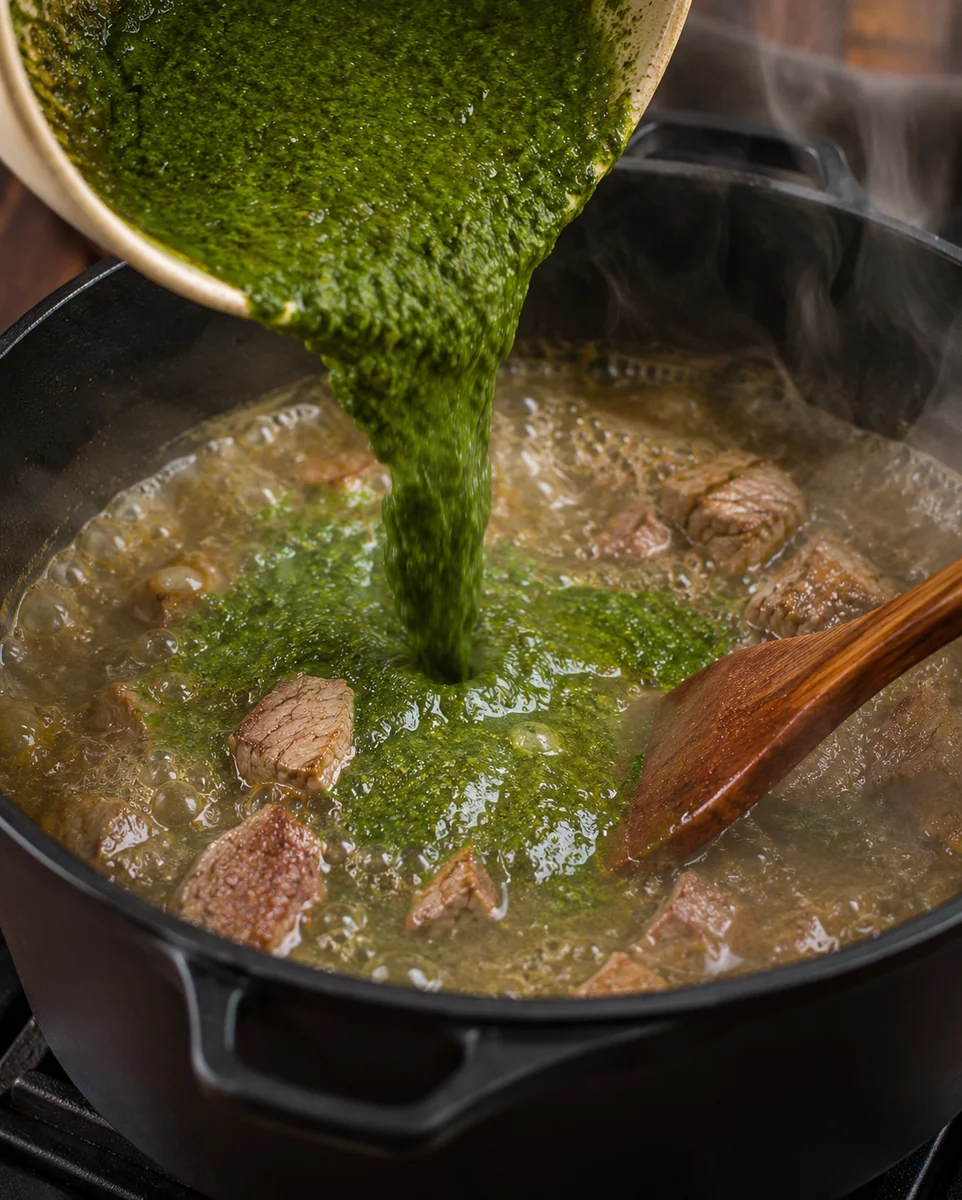
In a bowl, whisk the mloukhia powder with the remaining olive oil into a loose paste, thinner than a batter and thick enough to pour slowly.
Prep tip: Mix it with oil, never with water. Water makes the powder clump instantly into lumps that will not disperse for the rest of the cook, and no amount of stirring later will remove them. Oil coats each particle and lets it dissolve smoothly into the pot.
Step 3: Add Hot Water, Then the Paste
Pour the hot water over the meat and bring the pot to a rolling boil. Once it is boiling properly, pour in the mloukhia paste in a steady stream while stirring continuously until it is fully incorporated and the pot is uniformly green.
Prep tip: The water must be hot and the pot must be boiling before the paste goes in. Added to lukewarm liquid the powder sinks and settles on the base, where it scorches and flavours the whole pot bitter. Boiling liquid keeps it suspended until it disperses.
Step 4: Cook Low, and Wait for the Colour
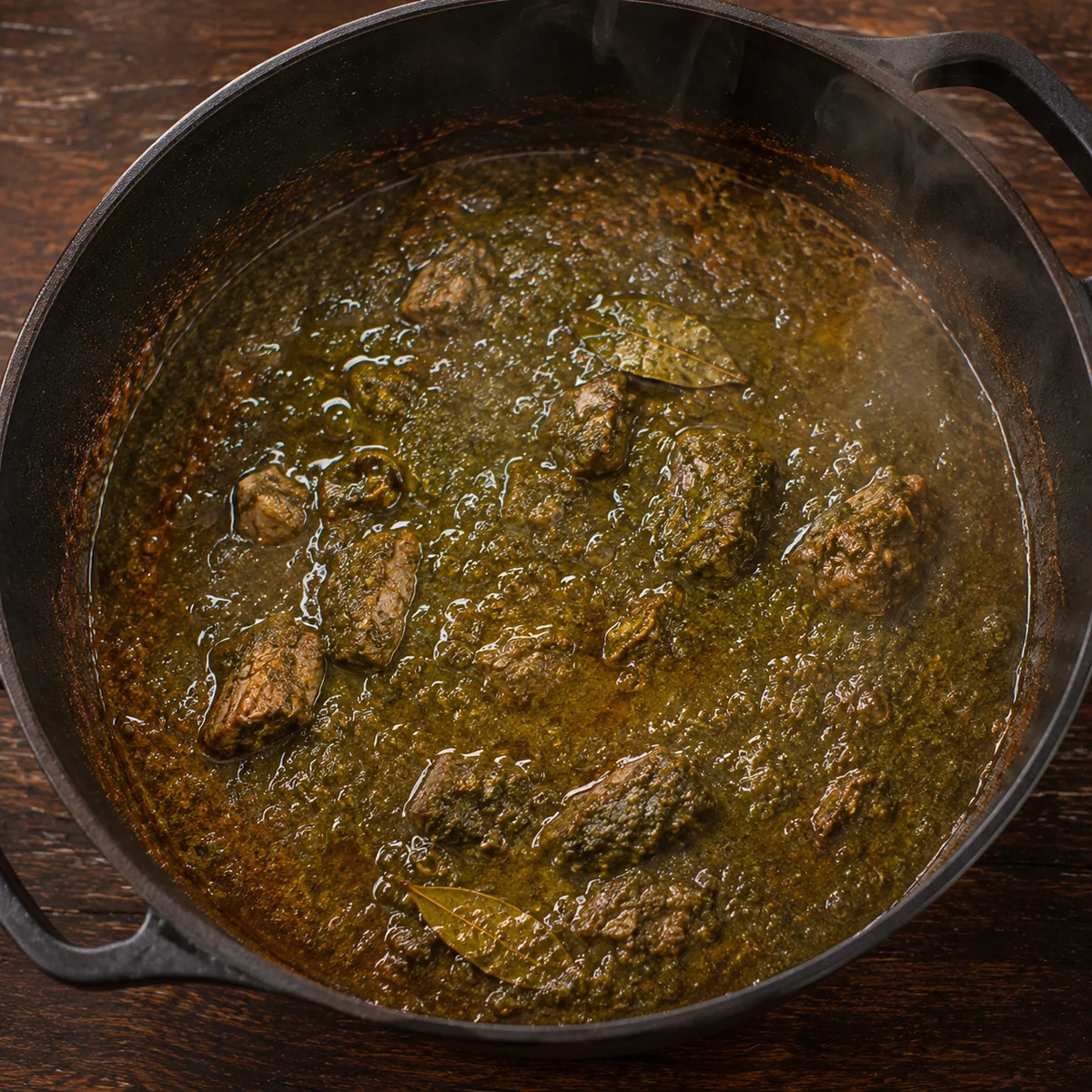
Reduce the heat to low, add the bay leaves, and cook uncovered for 2 to 3 hours, stirring every 20 minutes or so. The pot will move from bright green through olive to deep brown-black, and the sauce will thicken and reduce considerably.
Prep tip: The colour is your timer, not the clock. Mloukhia eaten while still green tastes raw and grassy, which is the most common disappointment with this dish. It is ready when it has gone genuinely dark and the oil has risen to the surface at the edges of the pot.
Step 5: Finish with Garlic and Coriander
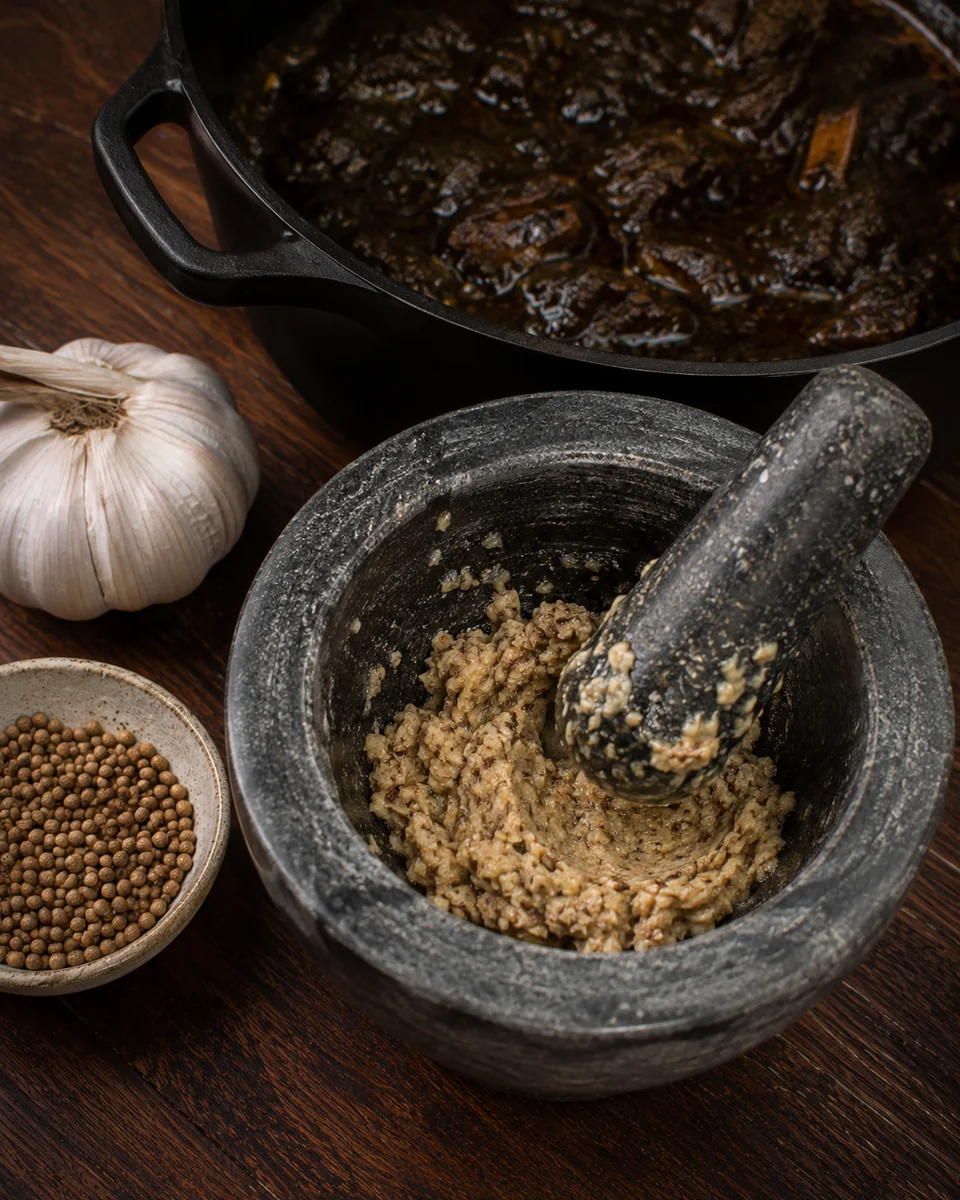
After about an hour, crush the whole head of garlic with the ground coriander and stir it in. Continue cooking on low until the sauce is thick and glossy and the meat is falling apart. Taste, adjust the salt, and serve hot with bread.
About Mloukhia: One Plant, Two Dishes
Jute leaves are eaten across North Africa and the Levant, and the two most famous versions could not be more different.
Egyptian molokhia uses fresh or frozen chopped leaves, cooks in about twenty minutes, stays bright green, and is finished with a sizzling garlic and coriander tarka poured in at the end. It is a soup, served over rice.
Tunisian mloukhia uses dried powder, cooks for hours, turns almost black, and thickens into a dense sauce. It is served with bread, not rice, and it is the version in this recipe.
Libyan and Algerian versions sit closer to the Tunisian one, Levantine versions closer to the Egyptian. If a recipe you have seen elsewhere looks nothing like this, that is why.
In Tunisia the dish carries a particular association with new beginnings. The dark colour is said to close the year that has passed, which is why it turns up at the start of a new one and at gatherings that mark a change.
Pro Tips for the Best Mloukhia
- Use a heavy-based pot. Three hours on low heat with a thickening sauce is exactly the situation where a thin pan scorches. Cast iron or a heavy stainless pot is worth it here.
- Stir every twenty minutes, scraping the base. The sauce thickens gradually and will catch if left alone. This is the only demanding part of the whole cook.
- Do not add salt heavily at the start. The sauce reduces by roughly half over three hours, so seasoning early concentrates into something far too salty. Correct it at the end.
- Storage: Keeps 4 days in the fridge and is genuinely better on day two, once the flavours settle. It freezes well for 2 months and reheats gently with a splash of water.
Variations
Mloukhia with Lamb
Lamb shoulder on the bone, cut into large pieces, is the most common alternative to veal and gives a richer result. Same method, same timings.
The Milder Version
Reduce the harissa to a teaspoon and add an extra half tablespoon of tomato paste. The dish loses some heat but keeps its depth, and it suits a table with children.
My House Version
In my kitchen the whole head of garlic goes in rather than a few cloves, crushed with the coriander into a rough paste, because at this length of cooking garlic softens into the sauce rather than dominating it. And the pot goes on early in the afternoon so nobody has to watch the clock.
What to Serve with Mloukhia
Bread, and that is genuinely the answer. Mloukhia is eaten with crusty bread torn and used to scoop, not with rice, which is one of the clearest differences from the Egyptian version. My easy Moroccan bread recipe or any good crusty loaf works.
A sharp salad alongside cuts the richness well, and my slata mechouia recipe or a simple tomato and onion salad both do the job. Olives and pickles on the table finish it.
Tunisian Mloukhia FAQs
Why is my mloukhia still green? It has not cooked long enough. Tunisian mloukhia needs two to three hours on low heat to darken from green through olive to almost black. Green mloukhia tastes raw and grassy, and the colour is the only reliable indicator that it is done.
Why did my mloukhia turn out lumpy? The powder was mixed with water instead of oil, or it went into liquid that was not boiling. Always slake the powder with olive oil first, and always add it to a pot at a rolling boil while stirring.
Can I use fresh or frozen molokhia leaves? Not for this recipe. Fresh and frozen leaves make the Egyptian soup, which is a different dish entirely: light green, quick to cook, served over rice. Tunisian mloukhia specifically requires the dried powder.
Why does it use so much olive oil? The oil carries the powder, stops the sauce catching during the long cook, and rises to the surface at the end as a sign the dish is ready. You can reduce it to about a cup, but going much lower risks the sauce scorching.
Is mloukhia halal and gluten-free? Halal with halal-certified veal or lamb, and naturally gluten-free, since the sauce is thickened by the jute powder itself rather than any flour.
Put the Pot On Early
Brown the meat, slake the powder in oil, add it to boiling water, then leave it on low for three hours and let it go dark. That is the whole method, and the only skill it asks for is patience and a stir every twenty minutes.
Make it on a slow afternoon and report back: veal or lamb, and how long it took your pot to go properly black. Everyone underestimates it the first time, and everyone eats it too early.
Rate this recipe
No ratings yet — be the first!
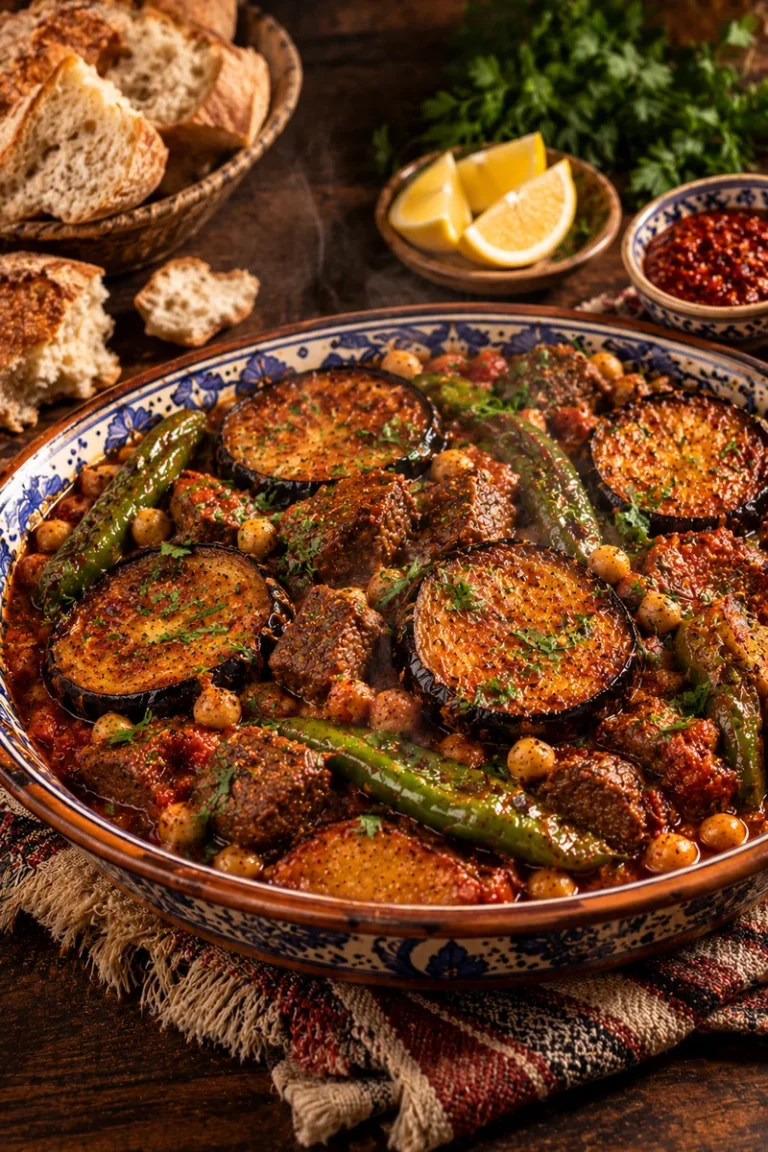
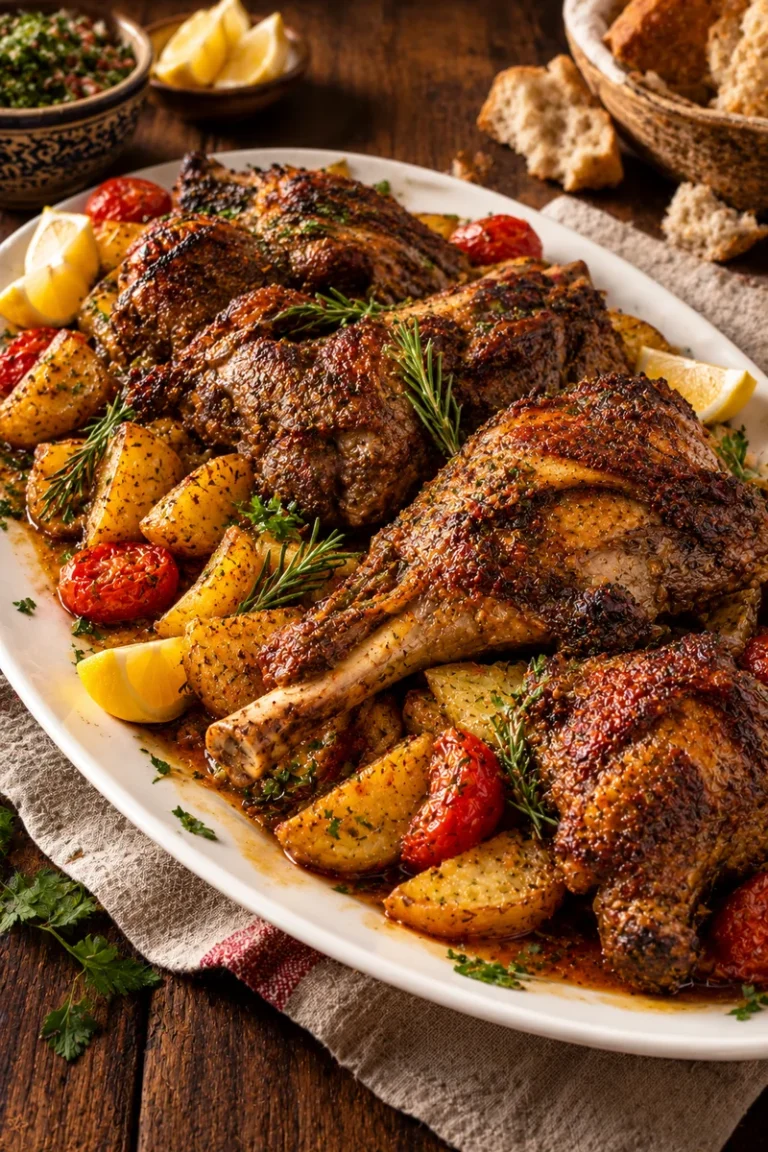
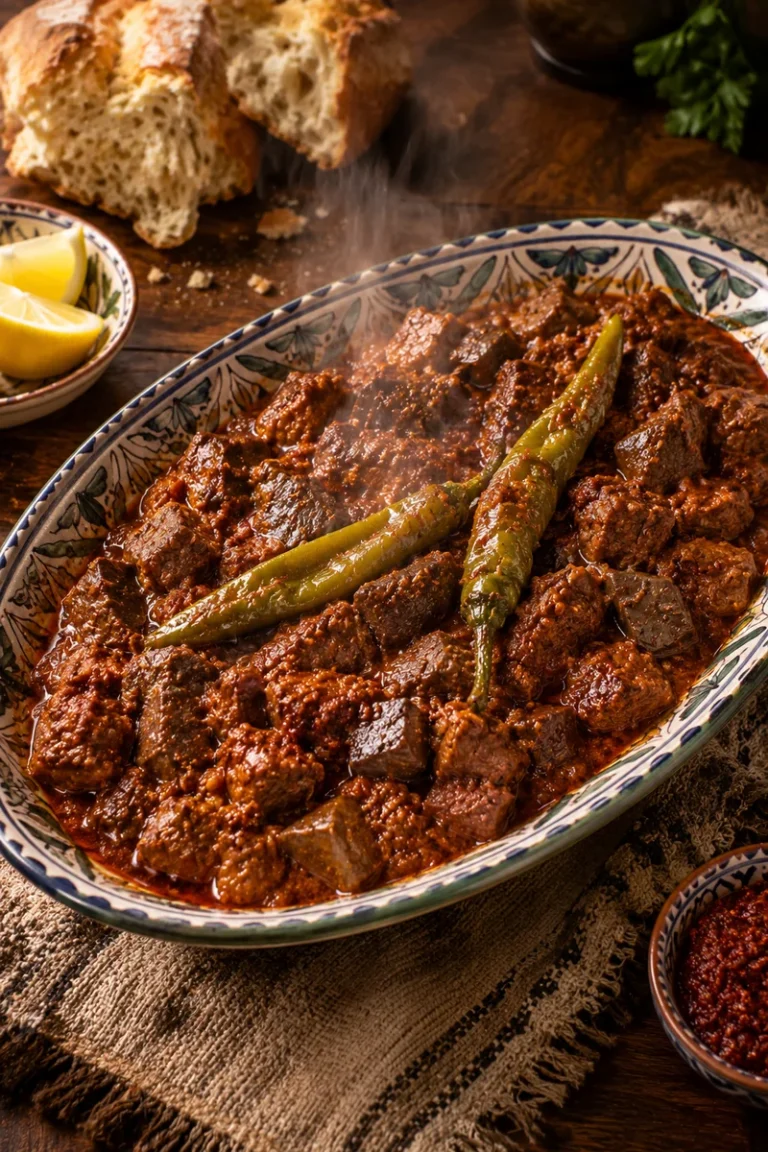
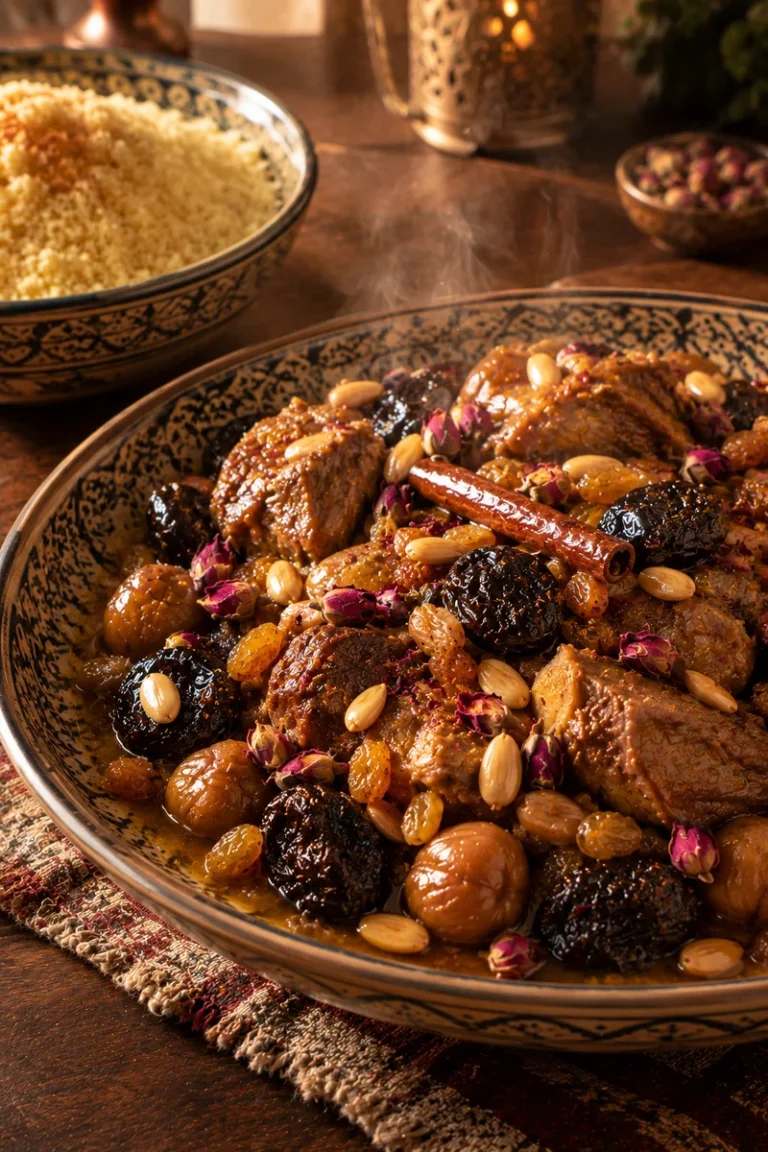

The pot goes on early in the afternoon. Every time I have tried to rush it the sauce was still green at dinner, and green mloukhia is the one version nobody finishes.
Comments
No comments yet. Yours would be the first.
Made a pot? Tell me: veal or lamb, and how long it took yours to go properly black.
Leave a comment
Comments are anonymous and appear after admin approval. If you rated this recipe above, your stars will show with your comment.