
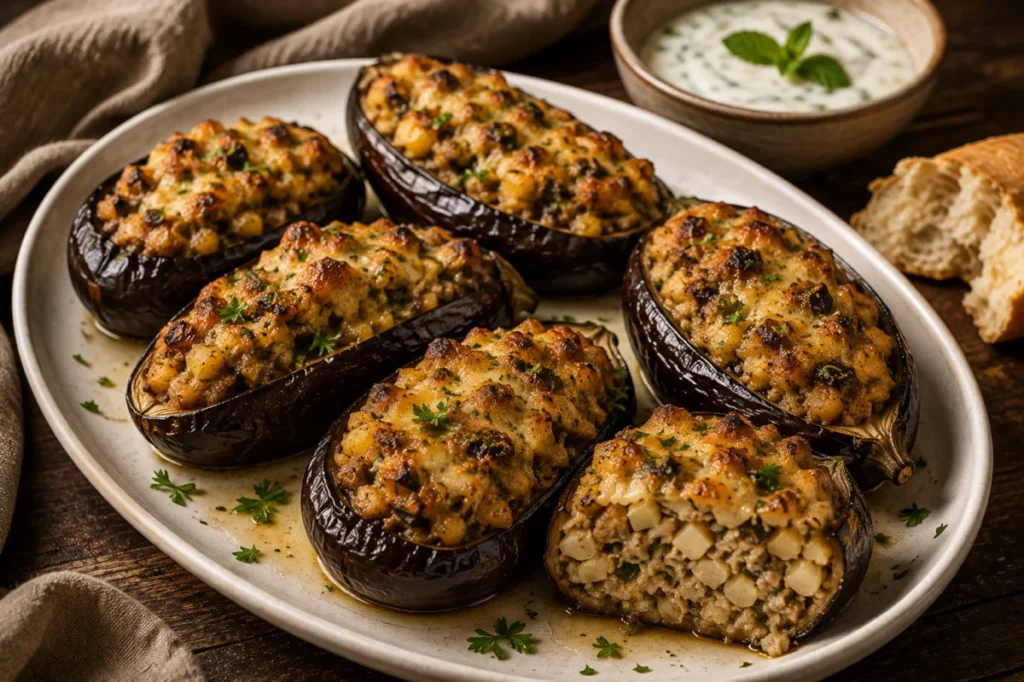
Vegetables That Bring Their Own Dish
There is a particular satisfaction to food that arrives in its own container. Stuffed aubergines are the best example in North African home cooking: the shells hold everything, they go from oven to table without a serving dish, and each person gets a whole one that looks considered rather than portioned.
Inside is nothing complicated. Diced potato cooked until golden, the scooped aubergine flesh cooked alongside it, then everything bound with beaten egg and grated Gruyère and packed back into the shells. It bakes until the tops turn deep golden and slightly puffed, and it eats somewhere between a gratin and a very good baked potato.
This belongs to the French-North African kitchen, the same tradition that produced the gratins on this blog. The Gruyère is the French inheritance, the technique is the local one, and the result is a vegetarian main that even people who claim not to like aubergine tend to finish.
These are worth making when aubergines are cheap and there are potatoes that need using. They are also genuinely good cold the next day, which is not true of most baked vegetable dishes.
Ahead: the ingredient list, four steps with photos, the salting question, why roasting beats frying for a weeknight, and what to do with the shells so they hold their shape.
Ingredients You’ll Need for Stuffed Aubergines
Main Ingredients
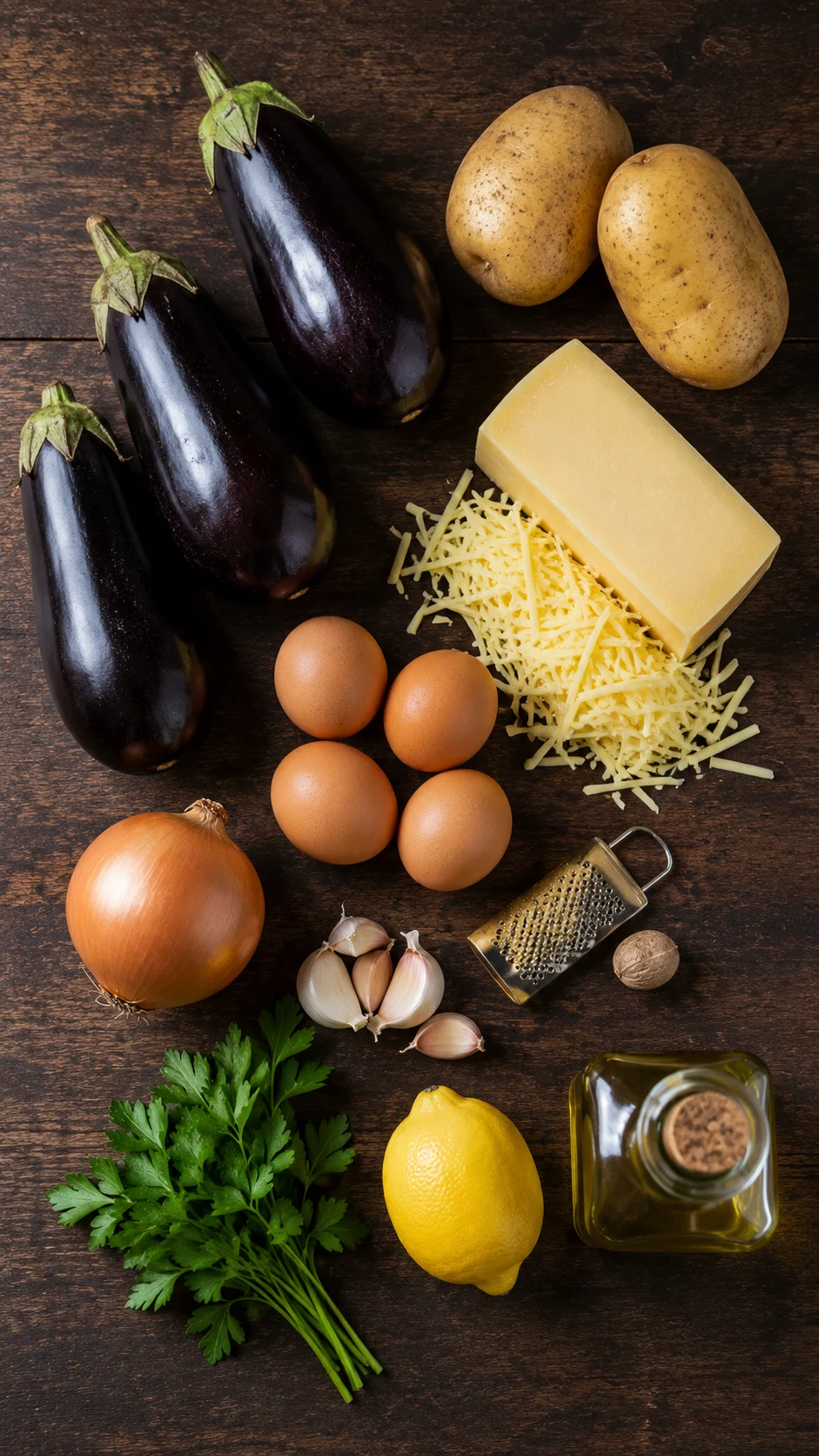
Serves 6
For the shells and filling:
- 3 medium aubergines (eggplants)
- 2 medium potatoes, peeled and cut into small cubes
- 3½ oz (100 g) Gruyère, grated
- 4 eggs, beaten
- 3 tablespoons olive oil, plus more for the shells
- 1 small onion, finely chopped
- 2 garlic cloves, minced
- ¼ teaspoon grated nutmeg
- 1 teaspoon salt, plus more for salting the shells
- ½ teaspoon black pepper
- Optional: 2 tablespoons chopped parsley
For the baking dish:
- ½ cup water
- 1 tablespoon olive oil
- Squeeze of lemon juice
Where to Find the Ingredients
There is nothing to source here beyond the cheese. Gruyère sits with the specialty cheeses in most large supermarkets in the US and UK, and it is worth using because it melts smoothly and browns beautifully. Emmental behaves almost identically, and a mild cheddar works if that is what is in the fridge, though it browns faster so watch the top.
Aubergines are sold as eggplants in the US and aubergines in the UK. Choose ones that feel heavy and firm with tight glossy skin, since older aubergines have more seeds and more bitterness.
Easy Substitutions
- No Gruyère? Emmental, mozzarella, or a mozzarella and cheddar mix. Avoid anything very strong, which overwhelms the aubergine.
- Want it heartier? Add 200 g of cooked ground beef or lamb to the filling, seasoned with a pinch of cinnamon. This turns it from a vegetarian main into a full family dinner.
- Dairy-free? Skip the cheese and add 3 tablespoons of breadcrumbs plus extra olive oil to the filling. The eggs still bind it and the top still browns.
Step-by-Step Instructions: Stuffed Aubergines in 4 Steps
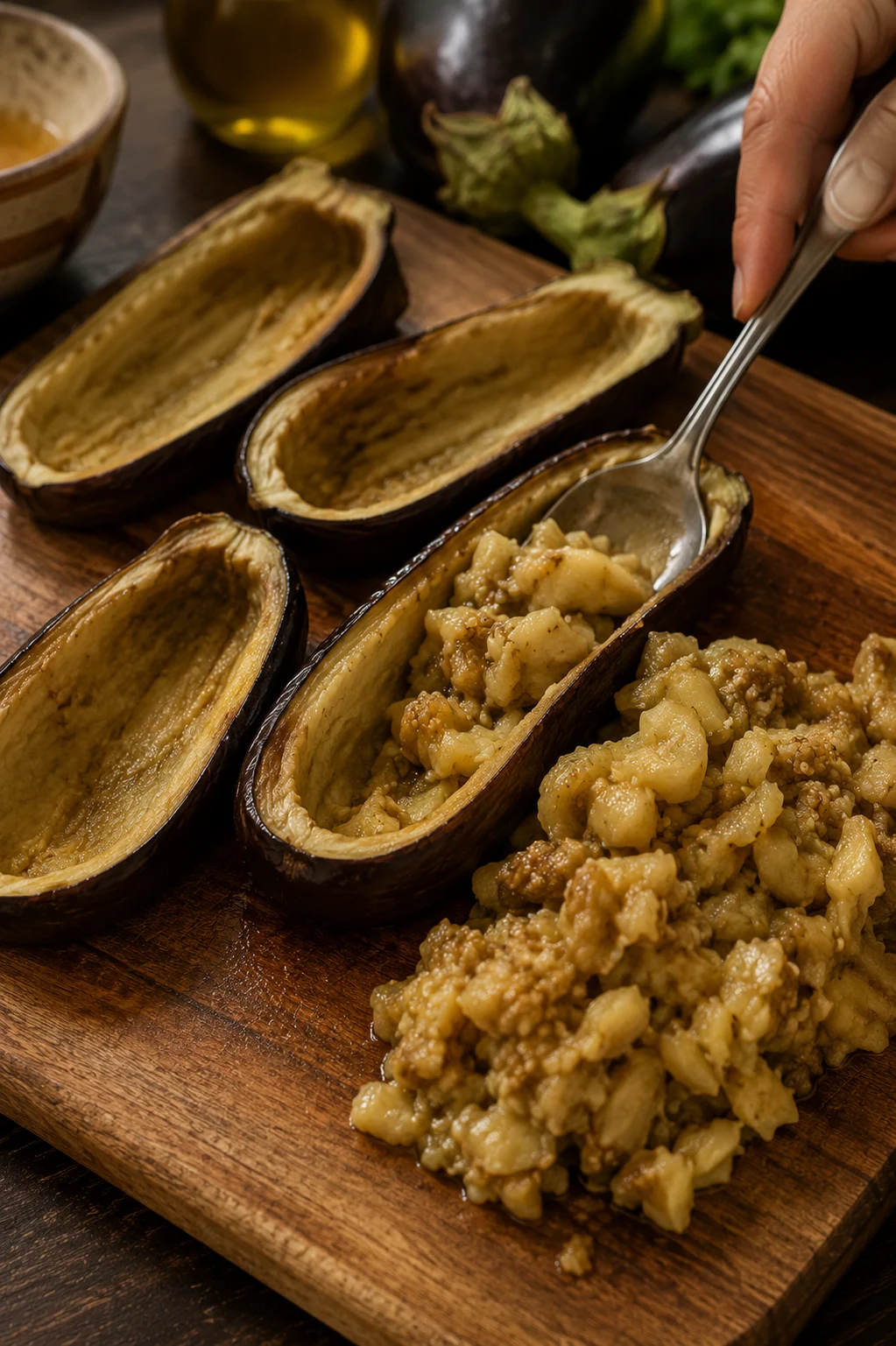
Step 1: Halve, Scoop and Salt the Shells
Heat the oven to 400°F (200°C). Halve the aubergines lengthways and scoop out the flesh with a spoon, leaving shells about ½ inch thick. Chop the scooped flesh into small pieces. Salt the inside of the shells lightly and leave them face down on paper towel for 15 minutes, then pat dry.
Prep tip: Leave the shells thicker than feels necessary. Scooped too thin, they collapse in the oven and the filling spreads across the dish. Half an inch of flesh keeps the walls standing and gives you something to eat rather than just a skin.
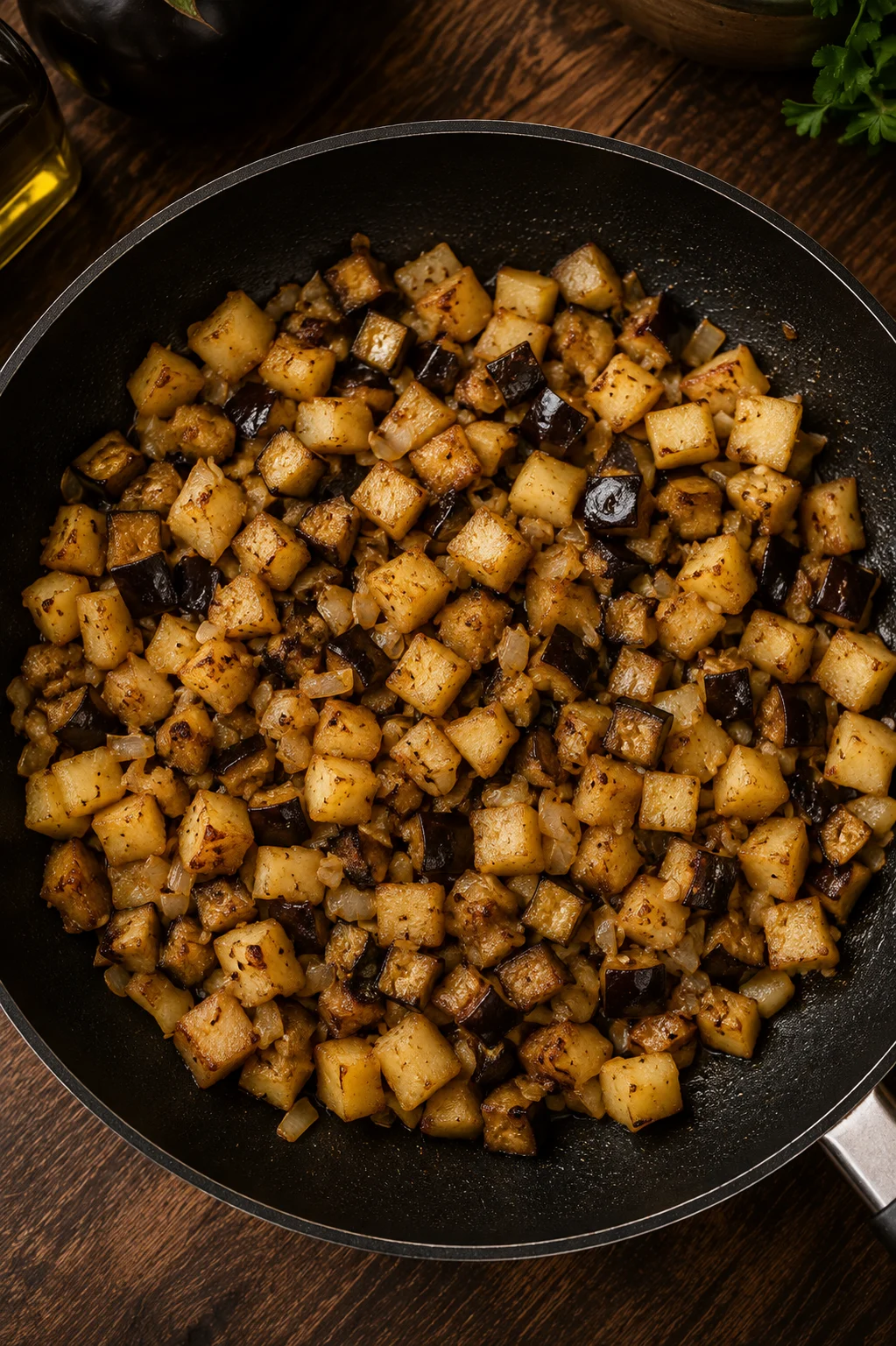
Step 2: Cook the Potato and Aubergine Filling
Heat the olive oil in a large pan and cook the potato cubes over medium heat for 10 to 12 minutes, until golden and tender. Add the onion, garlic and chopped aubergine flesh and cook for 8 minutes more, until everything is soft and lightly coloured. Season with salt, pepper and nutmeg and let it cool for 10 minutes.
Prep tip: Cook until the pan is dry and the pieces have colour on them. Pale, wet filling makes a soggy stuffed aubergine, and colour here is where most of the flavour comes from. Ten minutes is not enough; the potato should look properly golden.
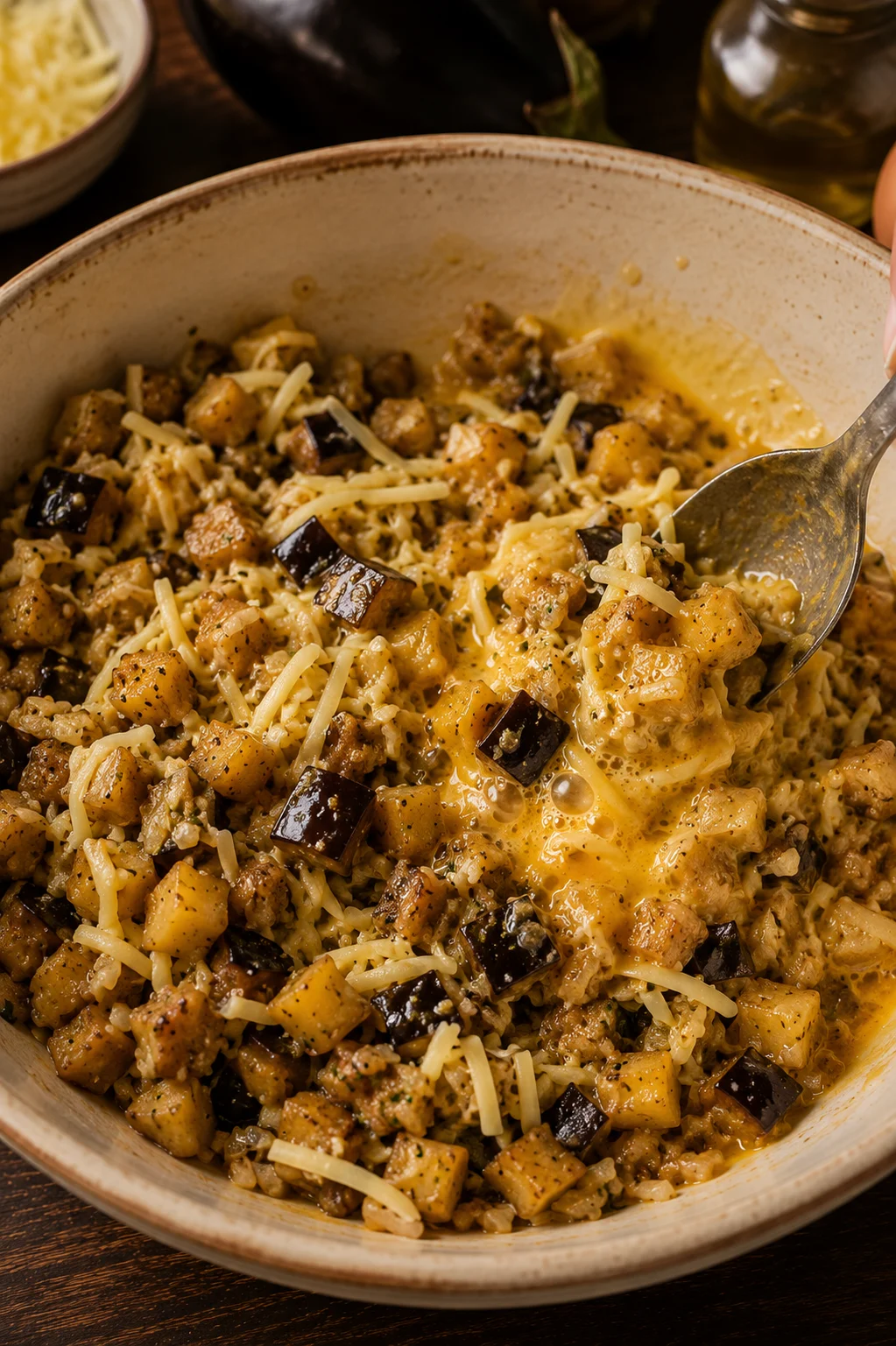
Step 3: Bind with Egg and Cheese
Stir the beaten eggs and most of the grated Gruyère through the cooled filling, along with the parsley if using. Taste and adjust the seasoning.
Prep tip: The filling must be cool before the eggs go in, or they scramble on contact and the mixture turns grainy. Ten minutes off the heat is enough, and it is the difference between a smooth set filling and something that looks curdled.
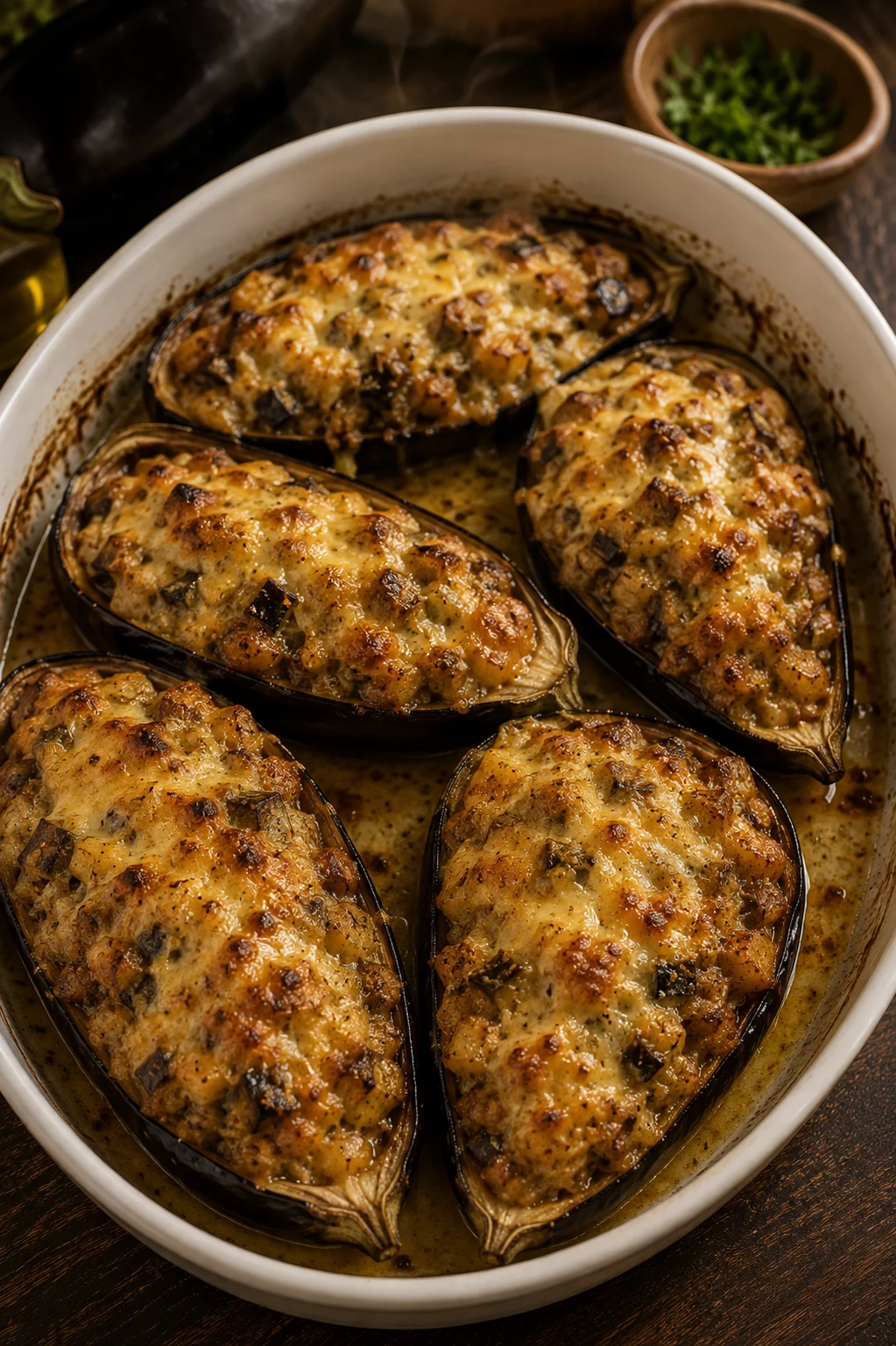
Step 4: Fill, Bake and Brown
Sit the shells in a baking dish, brush them with olive oil, and pour the water, oil and lemon juice into the base of the dish around them. Fill each shell generously, mounding slightly, and scatter the remaining cheese over the tops. Bake for 35 to 40 minutes, until the shells are tender and the tops are deep golden and set. Rest 5 minutes before serving.
About This Dish: The French-North African Kitchen
Stuffed vegetables run through the entire Mediterranean, but this particular combination belongs to the North African kitchen after the French period, when Gruyère, béchamel and the gratin technique arrived and stayed. Algerian and Tunisian home cooks kept what was useful and seasoned it locally.
You can see the same logic in the gratins on this blog: a French method applied to whatever the market offered, with nutmeg and cheese doing the French part and the vegetables doing the rest. It sits alongside the stuffed tomatoes recipe and the stuffed peppers recipe in the same family of dishes where the vegetable becomes the dish.
Traditionally both the potato and the aubergine flesh are deep fried before being mixed, which is richer and, if you have the oil hot anyway, worth doing once. The roasting method above is lighter and considerably less work.
Pro Tips for the Best Stuffed Aubergines
- Salt the shells, briefly. Fifteen minutes draws out enough moisture to stop them going watery, without the aubergine turning limp. Do not rinse afterwards; just pat dry.
- The water in the dish is not optional. It creates steam that cooks the shells tender from below while the tops brown. Without it the skins turn leathery before the filling sets.
- Storage: Keeps 3 days in the fridge and is genuinely good cold, which is unusual for a baked vegetable dish. Reheat in a moderate oven rather than the microwave, which softens the top. Aubergines are also low in calories and high in fibre, per the USDA food database.
- Choose aubergines of similar size. Mismatched ones cook at different rates, and the small one will be collapsing while the large one is still firm.
Variations on Stuffed Aubergines
The Traditional Fried Version
Deep fry the potato cubes and the chopped aubergine flesh separately in hot oil until golden, drain well, then proceed from Step 3. Richer, deeper in flavour, and how it is most often made in Algerian and Tunisian homes. Worth doing at least once.
With Meat
Add 200 g of ground beef or lamb, browned with a pinch of cinnamon, to the filling. This turns it into a substantial main course, and the version many families make for a bigger table.
The Breadcrumb Top
A scatter of breadcrumbs along with the cheese gives a crunchier crust, and a heavier hand with the nutmeg suits the dish well. Brushing the shells with olive oil twice, once before filling and once after, helps the edges crisp rather than steam.
What to Serve with Stuffed Aubergines
As a vegetarian main these want something sharp alongside: the fattoush recipe or the easy tabbouleh recipe both cut through the richness, and warm bread handles anything that escapes the shells.
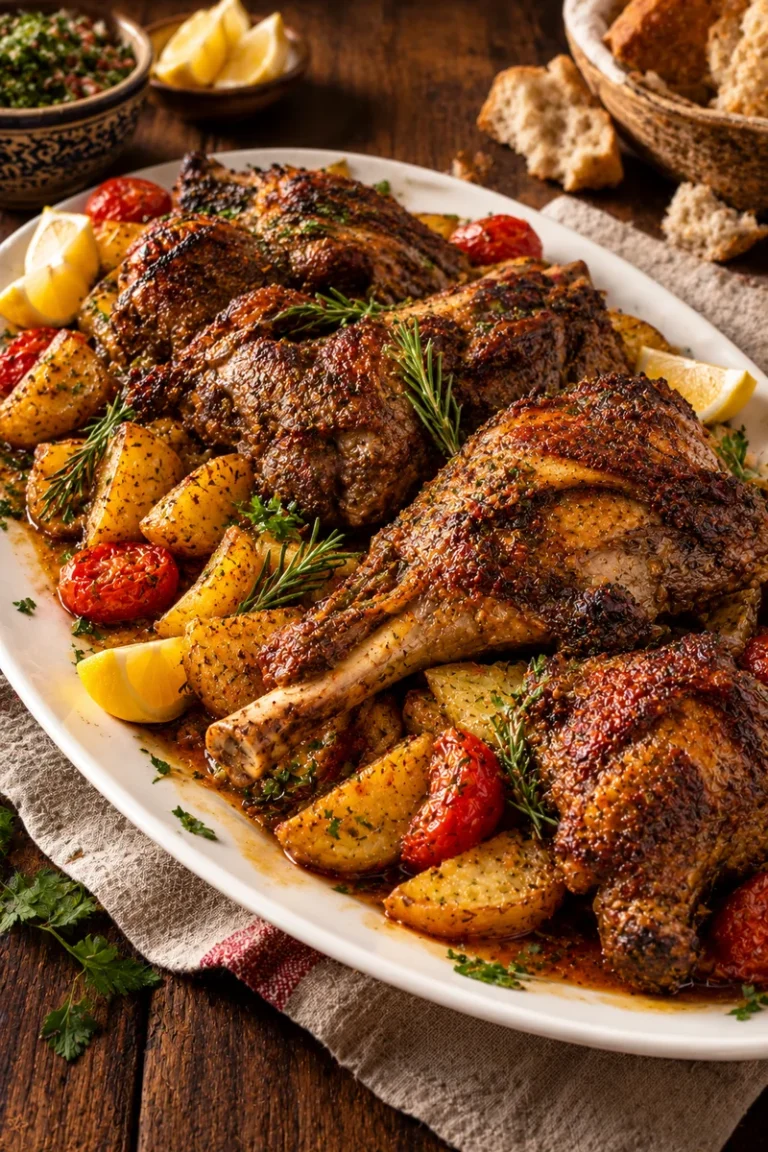
As part of a bigger table they sit comfortably beside grilled meat or the roast turkey legs recipe, and a bowl of plain yoghurt with mint on the side is never a mistake with baked aubergine.
Stuffed Aubergines FAQs
Do I need to salt the aubergine first? For this recipe, a short 15 minute salting of the hollowed shells is enough. It draws out surface moisture so the shells do not go watery, without the long draining that older recipes call for. Modern aubergines are far less bitter than they used to be.
How do I stop the shells collapsing? Leave them about half an inch thick when scooping. Thin shells lose their structure in the oven. The water in the base of the dish also helps by steaming them tender rather than letting them dry out and buckle.
Can I make stuffed aubergines ahead? Yes. Assemble them fully, refrigerate for up to a day, and bake with 5 to 10 extra minutes from cold. Fully baked they keep 3 days and are good cold, which makes them useful for lunchboxes.
Can I freeze them? Baked and cooled, yes, for up to 2 months, though the shells soften on thawing. Reheat covered in a moderate oven. The texture is noticeably better fresh.
Is this recipe vegetarian and can it be gluten-free? It is vegetarian as written, and naturally gluten-free too, since the filling is bound with egg and cheese rather than breadcrumbs. Skip the optional breadcrumb topping to keep it that way.
Six Halves, One Dish, No Plates Needed
Scoop, cook the filling properly, bind it while it is cool, and let the oven do the rest. The aubergines bring their own serving dish and each one comes out looking like it took more effort than it did.
Make them the next time aubergines are cheap and report back: roasted or the traditional fried version, plain or with meat, and whether anyone at your table who claims not to like aubergine finished theirs anyway. They usually do.
Rate this recipe
No ratings yet — be the first!
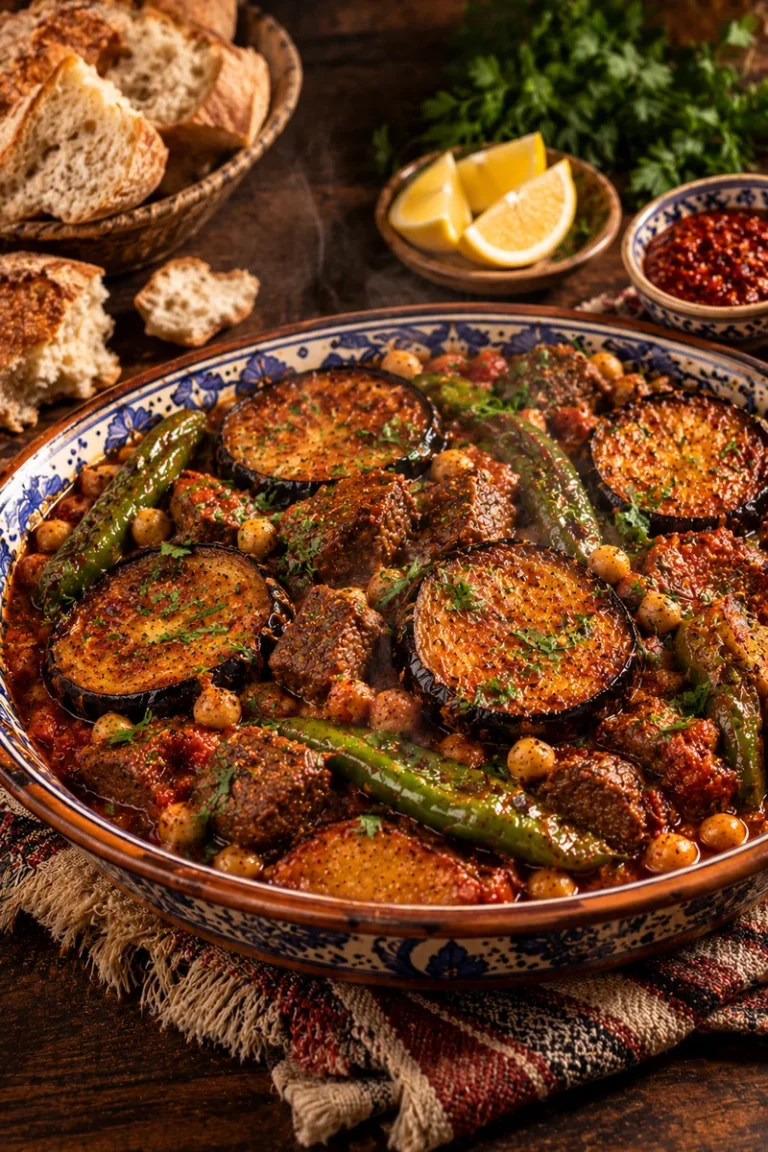

Leave the shells about half an inch thick when scooping. Scooped thinner they collapse in the oven and the filling spreads across the dish, and no amount of baking will rescue the shape.
Comments
No comments yet. Yours would be the first.
Made these? Tell me: roasted or the traditional fried version, and did the aubergine skeptics finish theirs?
Leave a comment
Comments are anonymous and appear after admin approval. If you rated this recipe above, your stars will show with your comment.