
The Dish That Owns Friday
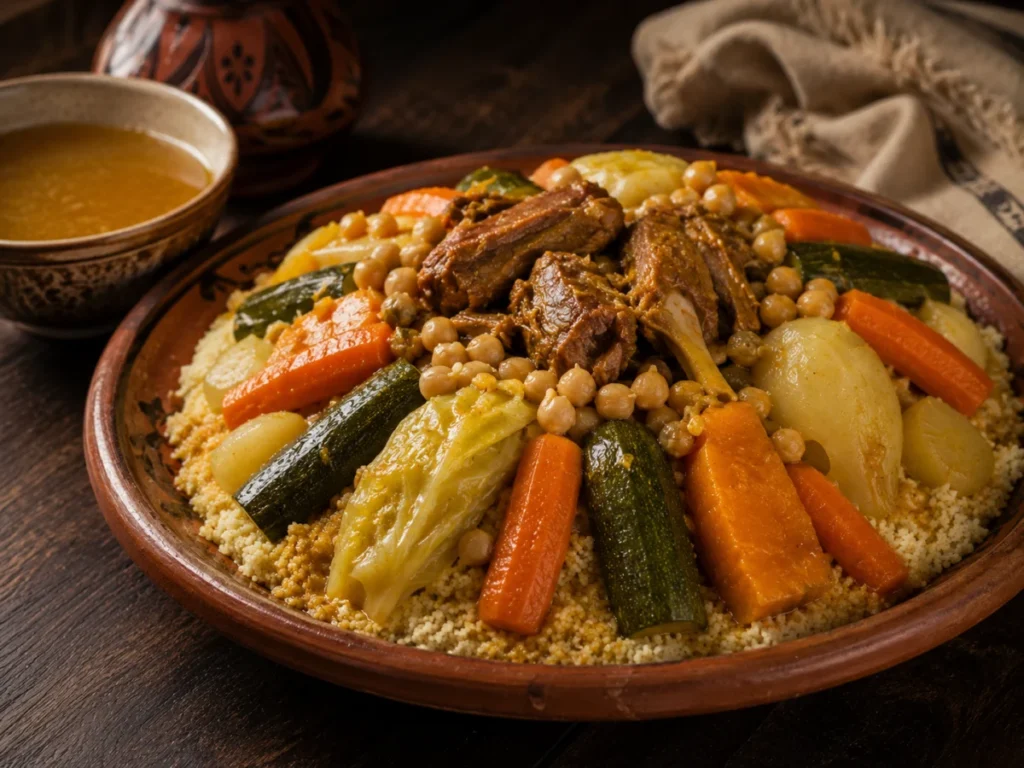
In Morocco, Friday belongs to couscous. After midday prayers the same dish appears in millions of homes: a mountain of fluffy steamed grain, a dome of vegetables over it, and a ladle of golden saffron broth poured across the top.
If your experience of couscous is the boxed kind, hydrated with a kettle and stirred with a fork, this is a different dish entirely. Properly made Moroccan couscous is steamed two or three times over the simmering stew and raked by hand between each pass. The grains come out separate, light, and perfumed with everything below them.
The effort is spread across a slow afternoon rather than concentrated into a stressful hour. And there is an honest middle path for weeknights, set out in its own section below rather than hidden in a footnote.
The couscoussier comes out on cold Fridays and the kitchen smells of ginger and saffron for hours. Both routes are covered below, the proper steaming and the honest shortcut, with exactly what you gain and lose either way.
About Couscous: Friday, Family, and Seven Vegetables
Couscous is North Africa’s oldest and most important dish, and in Morocco it carries weight beyond food: the meal of gathering, hospitality, funerals and celebrations alike. The Friday couscous is an institution, and refusing a second helping requires diplomacy. It is recognised on the UNESCO intangible cultural heritage list, shared across Morocco, Algeria, Tunisia and Mauritania.
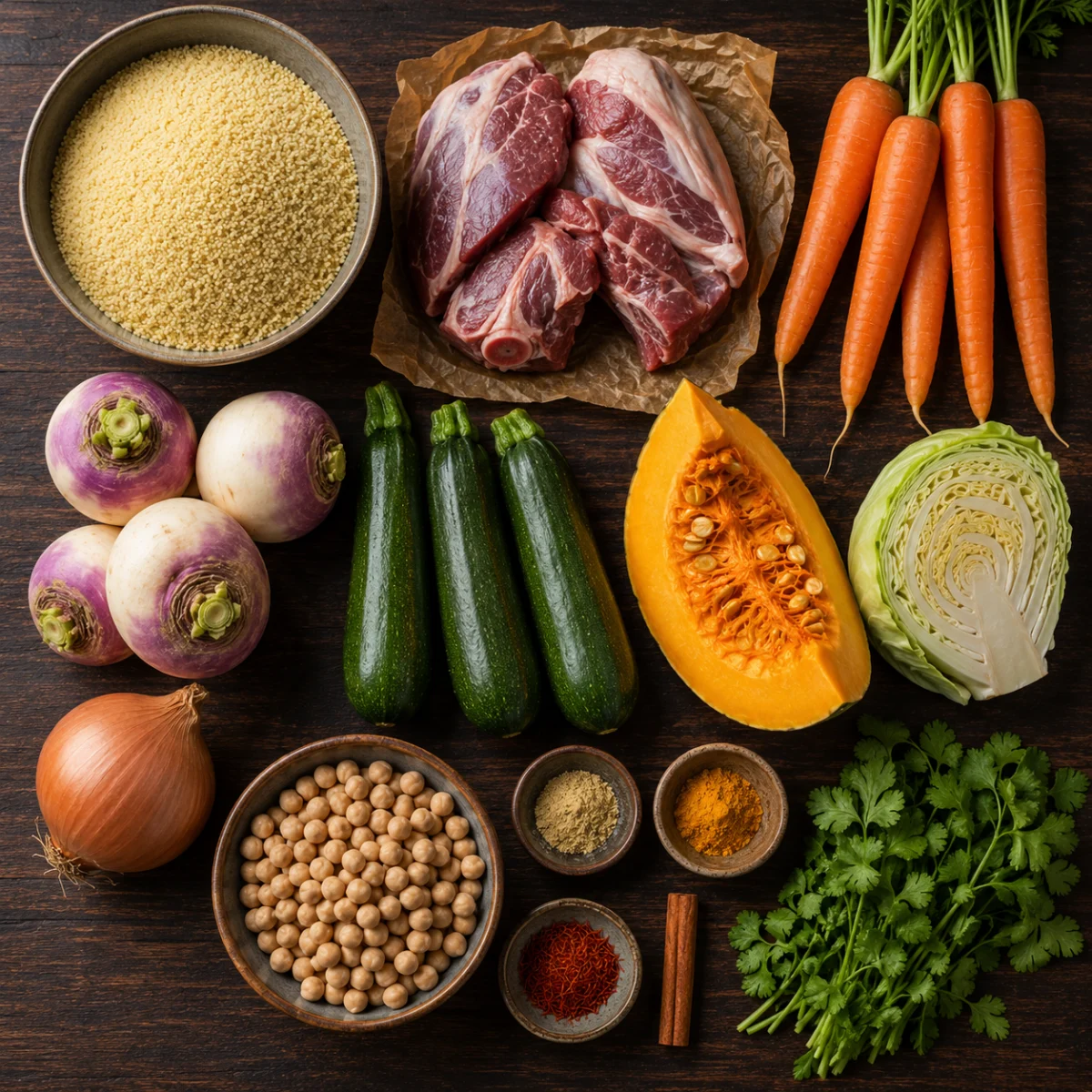
The classic version is seven-vegetable couscous, and the number matters more than the list. Seven is a blessing number, and households use what the season gives: carrot, turnip, courgette, pumpkin, cabbage, onion and chickpeas is a common set, but nobody will police your choices.
Note that couscous is not a grain. It is tiny pasta rolled from semolina, which explains why steaming works and boiling does not: steam hydrates each pellet gently while keeping the pieces separate.
The Grain, the Stew, the Seven Vegetables
The Grain and the Stew
Serves 6 generously
For the stew:
- 2 lbs (900 g) lamb shoulder or chicken thighs, in large pieces
- 2 onions, chopped
- 3 tablespoons olive oil
- 1½ teaspoons ground ginger
- 1 teaspoon turmeric
- 1 teaspoon black pepper
- 1 teaspoon salt, plus more to taste
- Generous pinch of saffron threads
- 1 cinnamon stick
- 1 can (15 oz / 400 g) chickpeas, drained
- 3 carrots, halved lengthways
- 2 turnips, quartered
- ¼ small cabbage, in wedges
- 1 lb (450 g) pumpkin or butternut squash, in large chunks
- 3 courgettes, halved
- Large handful of coriander and parsley, tied together
- 8 cups (2 liters) water
For the couscous:
- 3 cups (500 g) medium couscous
- ¼ cup olive oil
- 1½ teaspoons salt
- About 2 cups warm water, added in stages
- 2 tablespoons butter, to finish
Where to Find the Ingredients
Couscous is in every US and UK supermarket, but read the box: most of it is pre-steamed instant. For the traditional method you want plain medium couscous, sold cheaply in large bags at any North African grocery. Either type works here; the section after the steps explains the difference.
A couscoussier is the two-tier steamer pot the dish is named for, and it is worth owning if you make this often. If not, a metal colander or steamer basket that sits snugly over a large pot, sealed at the join with a strip of damp cloth or foil, does the identical job.
Vegetable Swaps
- Vegetarian version? Skip the meat entirely and use vegetable stock. Seven-vegetable couscous is often made meatless, and the chickpeas carry the protein.
- No saffron? Add an extra half teaspoon of turmeric for colour. The dish loses some perfume but nothing structural.
- Missing vegetables? Use what you have and keep the count near seven. Sweet potato, parsnip, green beans and fennel all belong in the pot happily.
Steaming the Grain Three Times
Step 1: Start the Stew
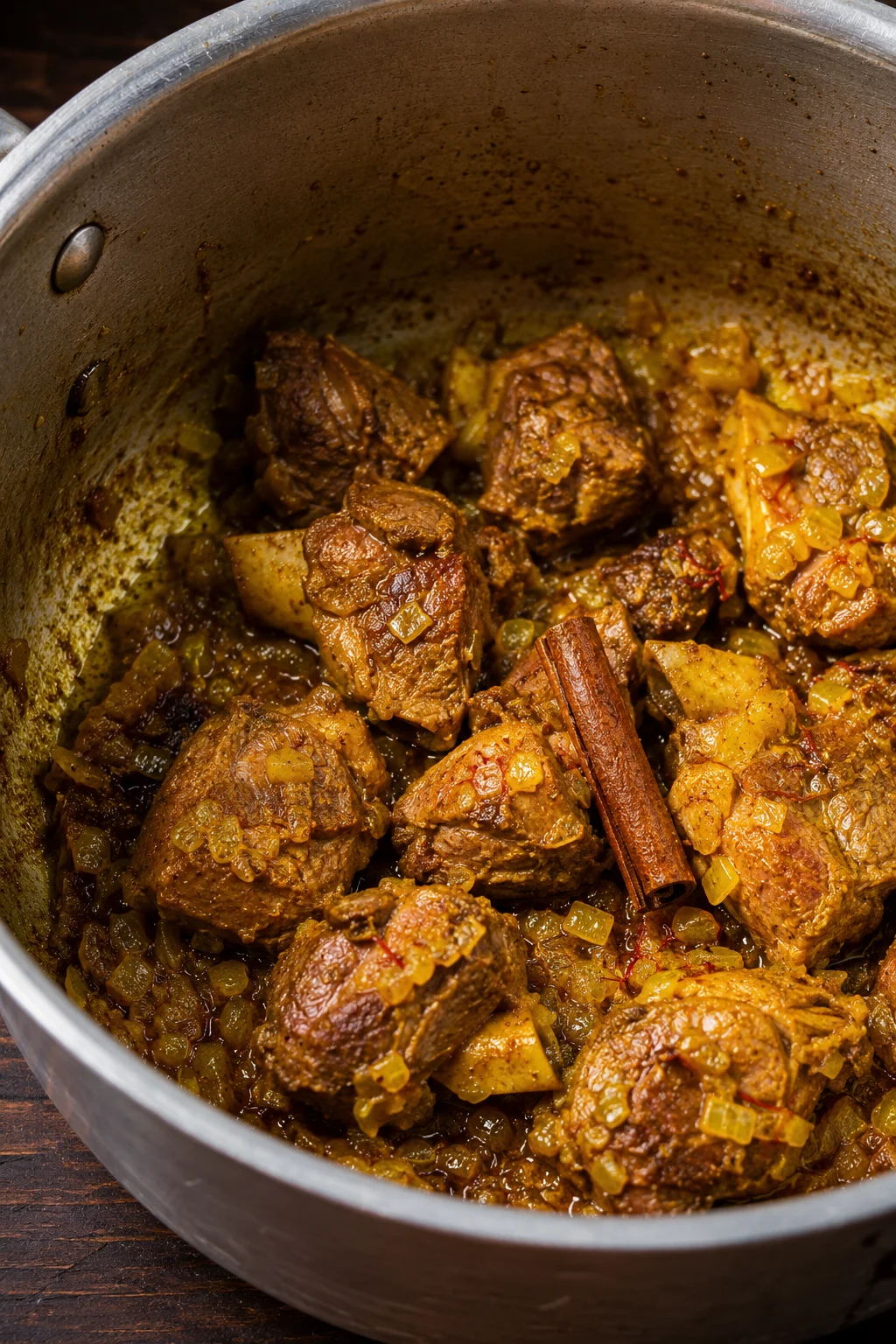
In the bottom of the couscoussier or a large pot, warm the oil and brown the meat with the onions for 8 minutes. Add the ginger, turmeric, pepper, salt, saffron, and cinnamon stick, stir for a minute, then add the water and the tied herbs. Bring to a simmer.
Step 2: First Steaming
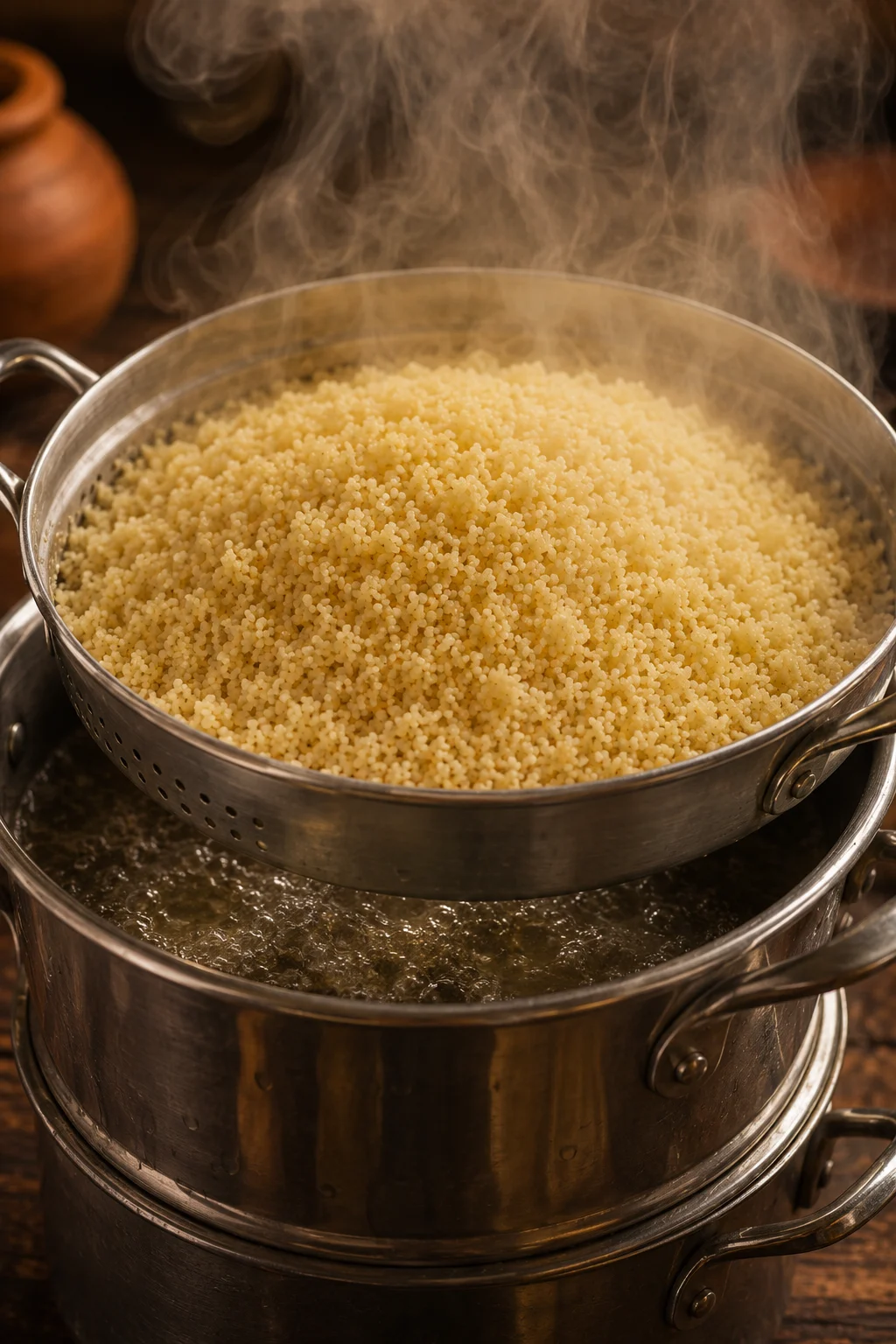
While the stew simmers, put the couscous in a wide bowl, sprinkle over ½ cup of warm water and 2 tablespoons of the oil, and rub it through the grains with your fingers for a minute until every pellet is coated and separate. Tip it into the steamer basket, set it over the pot, seal the join, and steam uncovered for 20 minutes from when steam first rises through.
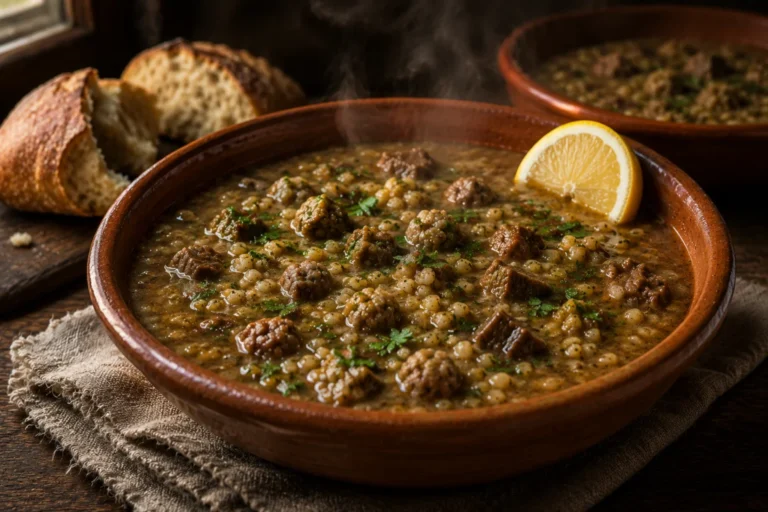
Prep tip: Do not cover the steamer basket. Steam must pass up through the grains and escape, and a lid traps moisture that turns the top layer to paste. This surprises everyone the first time.
Step 3: Rake, Rest, and Steam Again
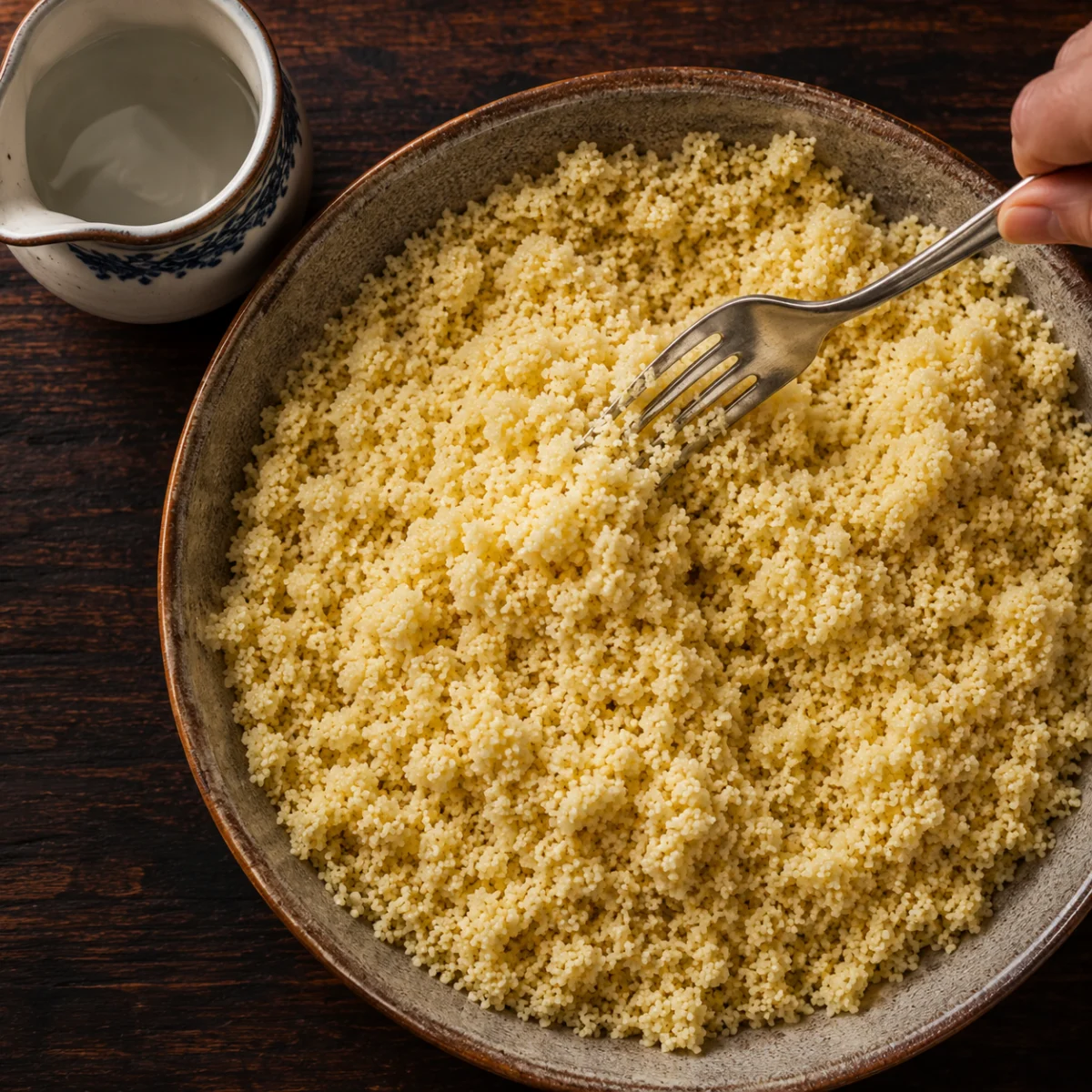
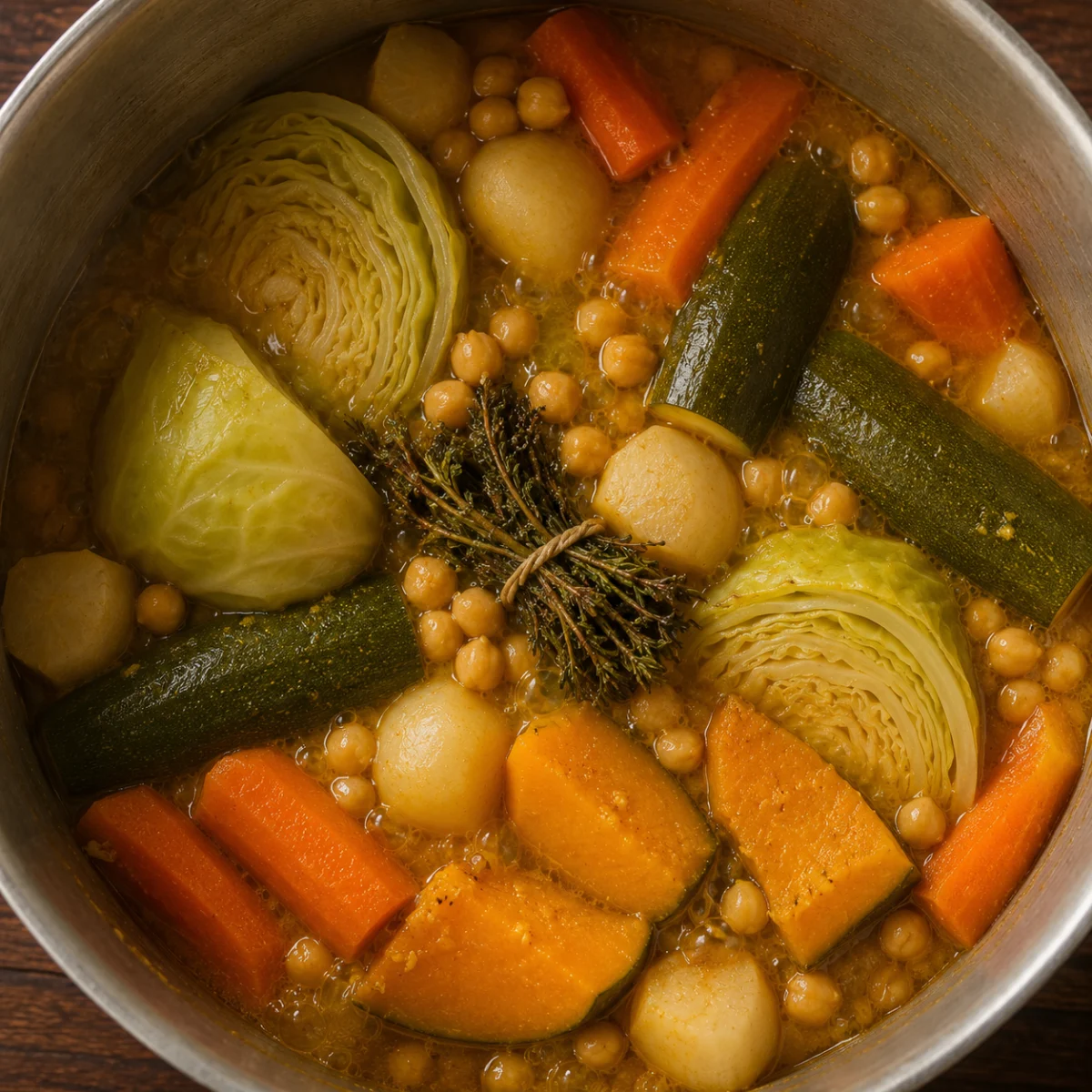
Tip the couscous back into the bowl, sprinkle over another ½ cup of warm water and the salt, and rake it apart with a fork or oiled hands, breaking every lump. Let it rest 10 minutes to absorb, then return it to the basket and steam another 20 minutes. Add the carrots, turnips, and chickpeas to the stew below at this point.
Prep tip: The raking between steamings is where the texture is made. Each pass hydrates the pellets a little more while separating them, so they swell individually instead of clumping. Skip it and the couscous comes out heavy.
Step 4: Third Steaming and the Softer Vegetables
Repeat the raking with the last of the water, then steam a final 15 minutes. Meanwhile add the cabbage, pumpkin, and courgettes to the stew, which need less time, and check the seasoning of the broth. Everything should be tender but still holding its shape.

Step 5: Build the Platter
Tip the couscous into a wide shallow platter, dot with butter, and rake it through until glossy. Shape a mound with a hollow in the centre, lift the meat into the hollow, and arrange the vegetables over the mound in a dome, longest pieces radiating outward. Ladle broth over until it glistens, and serve the rest in a bowl alongside.
The Steaming Question, Answered Honestly
Traditional plain couscous, steamed three times. Best texture by a wide margin: light, separate, deeply flavoured by the broth steam. Takes about an hour of intermittent attention alongside the stew. This is what Friday deserves.
Instant couscous, done well. Hydrate it with hot broth from the stew instead of plain water, using slightly less liquid than the box says, cover 5 minutes, then rake it thoroughly with a fork and 2 tablespoons of olive oil. Steam it over the pot for 10 minutes if you can. Broth-hydrated and raked is dramatically better than kettle-water-and-stir.
What you actually lose with instant: the separateness of the grains and the perfume of the steam. What you keep: all the flavour of the stew, which is most of the dish. On a Tuesday, that is a completely reasonable trade.
Keeping the Grains Separate
- Seal the join between pot and basket. Steam escaping at the seam is steam not passing through the grain. A twisted strip of damp cloth or a collar of foil fixes it.
- Salt the stew, not just the couscous. The broth is the seasoning for the whole platter, so taste it before serving and correct it there. The grain should be lightly salted and let the broth do the work.
- Storage: Couscous and stew keep separately for 3 days. Steaming the grain again for 10 minutes restores it almost perfectly, or microwave it with a splash of water under a damp cloth.
- Make more broth than you need. Serving extra broth alongside is traditional and correct, and leftovers make an excellent base for the harira recipe.
Lamb, Chicken, and Meatless Versions
Couscous Tfaya (Sweet and Savoury)
Top the platter with tfaya: onions cooked slowly with cinnamon, honey, and raisins until jammy, then scattered with toasted almonds. The sweet against the saffron broth is the celebration version, served at weddings.
Vegetarian Seven-Vegetable Couscous
Leave out the meat, build the broth on vegetable stock with an extra onion and a spoon of tomato paste, and add a second can of chickpeas. Genuinely traditional rather than an adaptation, and lighter for a summer table.
How My Family Eats It
In my kitchen a small bowl of broth gets loosened with harissa and set on the table for the heat seekers, which keeps the main broth mild for everyone else. And the smallest courgette goes in whole, because someone always claims it.
What Belongs on the Platter
Almost nothing else is needed: this is a complete meal in one platter, traditionally served with extra broth and a bowl of harissa. For a starter, a small serving of the harira recipe or a plate of the zaalouk recipe with rounds of the easy Moroccan bread recipe fits the Moroccan pattern exactly. If Friday calls for something slower instead, the chicken tagine recipe is the other great platter of the week.
Afterwards, mint tea is not optional in Morocco. the Moroccan mint tea recipe has the method, and the Moroccan almond cookies belong on the same tray.
Couscous, Answered
Can I use instant couscous for this recipe? Yes, and most cooks abroad do. Hydrate it with hot broth from the stew instead of plain water, use slightly less liquid than the box says, then rake it with a fork and olive oil. If you can steam it over the pot for 10 minutes afterwards, it improves further.
Do I need a couscoussier? No. Any steamer basket or metal colander that sits snugly over a large pot works, as long as you seal the join so steam passes through the grain rather than escaping at the sides.
Why is my couscous clumpy and heavy? Almost always too much water at once, or skipping the raking between steamings. Add water in stages, rub it through with oiled hands or a fork each time, and never cover the steaming basket.
What are the seven vegetables in Moroccan couscous? There is no fixed list. Carrot, turnip, courgette, pumpkin, cabbage, onion and chickpeas is a common set, but the number matters more than the specific vegetables, and households use whatever the season offers.
Is couscous a grain? No, it is tiny pasta rolled from semolina wheat. That is exactly why steaming suits it and boiling ruins it, and it also means couscous is not gluten free.
Set the Platter Down in the Middle
Moroccan couscous is not a weeknight dish in Morocco and it does not pretend to be. It is the meal you build slowly on a Friday, carry to the table in one wide platter, and eat from together while the broth keeps circulating.
Make it this weekend and report back: three steamings or the honest shortcut, lamb or vegetarian, and whether anyone at your table managed to refuse a second helping. In Morocco that is considered nearly impossible.
Rate this recipe
No ratings yet — be the first!




Never cover the steaming basket. Steam has to pass up through the grains and escape; a lid traps moisture and turns the top layer to paste. This surprises everyone the first time.
Comments
No comments yet. Yours would be the first.
Made this? Tell me: three steamings or the honest shortcut, and did anyone manage to refuse a second helping?
Leave a comment
Comments are anonymous and appear after admin approval. If you rated this recipe above, your stars will show with your comment.