
The One Sauce Worth Learning First
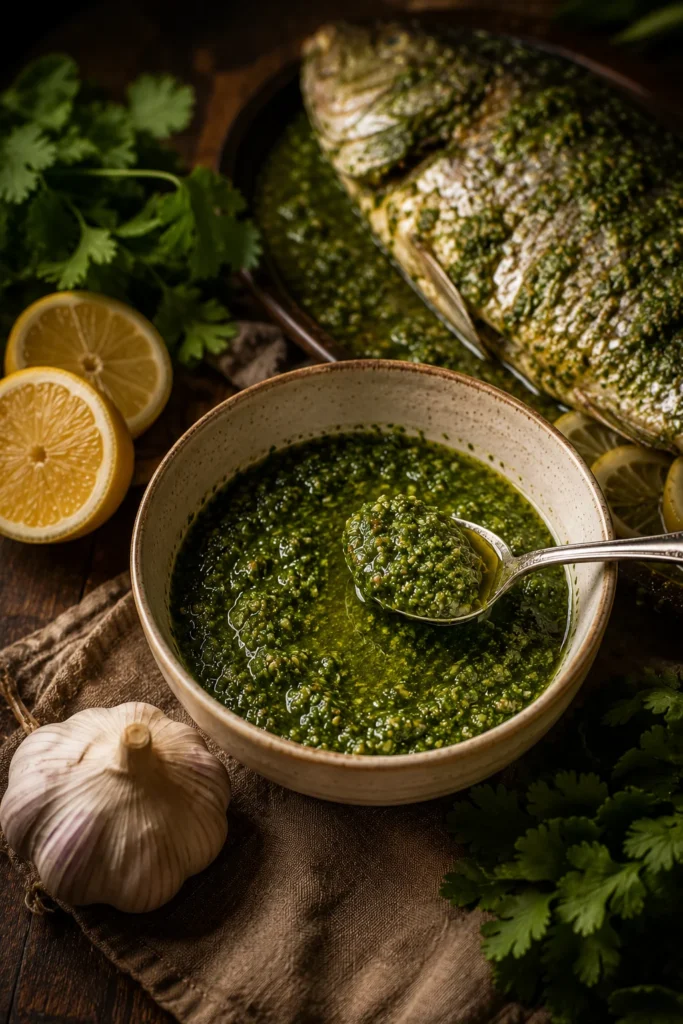
If you only ever learn one North African sauce, make it this one. Chermoula is a loose green paste of coriander, parsley, garlic, cumin, paprika, lemon and olive oil, and it does more jobs than anything else in the fridge: marinade for fish, rub for chicken, dressing for roast vegetables, sauce spooned over a tagine at the table.
It takes ten minutes and no cooking. There is no technique to master, no temperature to judge, nothing that can burn. The only real decisions are how much garlic you can tolerate and whether you make it by hand or in a machine.
Traditionally it is pounded in a mortar, which is how most North African home cooks learn it. A processor works too, and the honest comparison between the two is below, including the one case where the mortar genuinely wins.
What makes chermoula worth your time is not any single dish. It is that one bowl covers a week: fish on Monday, chicken on Wednesday, roast carrots on Friday. It keeps for days and improves for the first two.
Ahead: what goes in it, the ten-minute method, the mortar versus processor question answered honestly, six ways to use it, and how long it actually keeps.
Ingredients You’ll Need for Chermoula
Main Ingredients
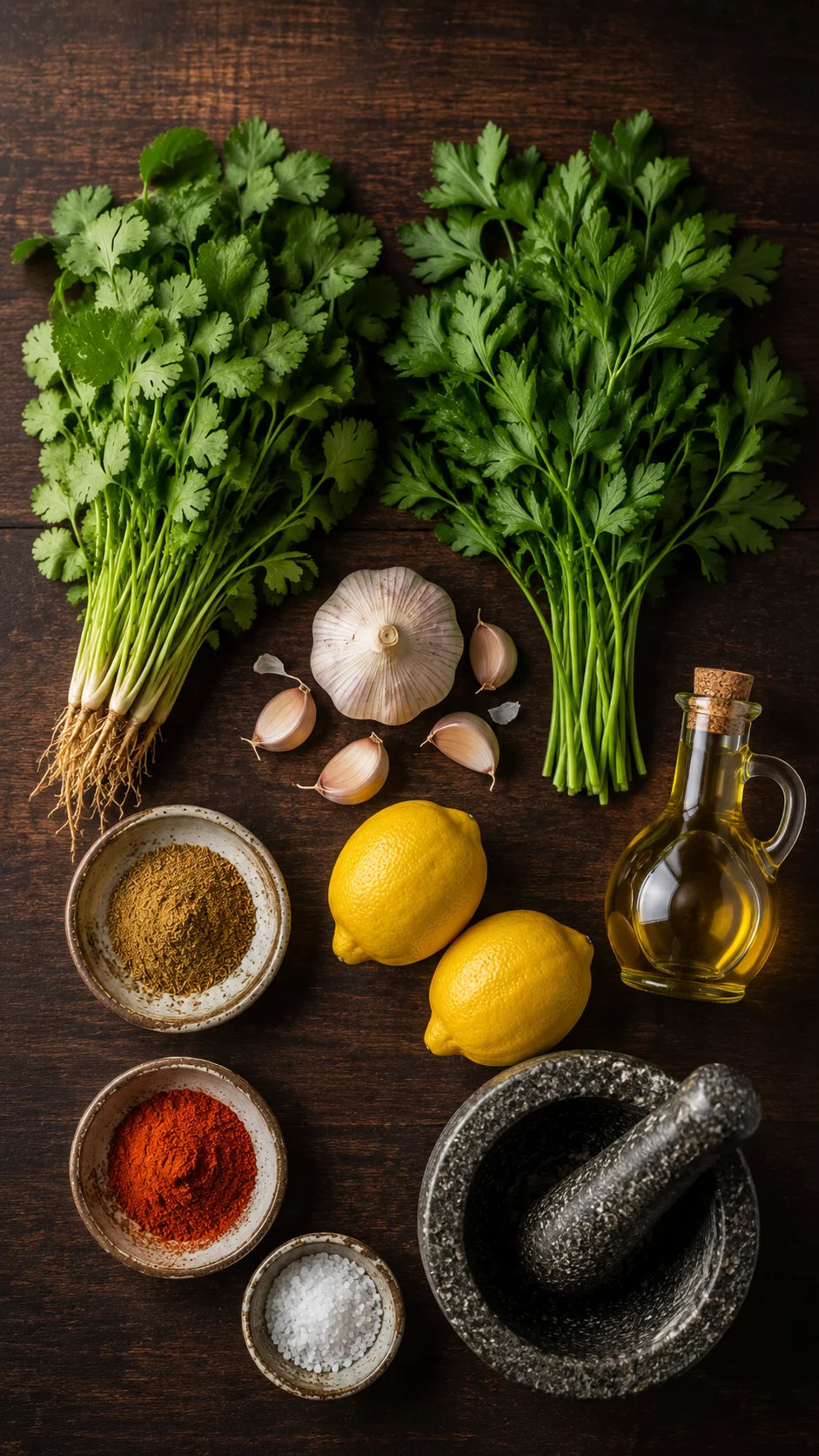
Makes about 1 cup, enough for 2 lbs of fish or chicken
- 1 large bunch fresh coriander (about 2 cups packed leaves and soft stems)
- ½ bunch flat-leaf parsley (about 1 cup packed)
- 4 garlic cloves
- 1½ teaspoons ground cumin
- 1 teaspoon sweet paprika
- ½ teaspoon salt
- ¼ teaspoon black pepper
- Juice of 1 lemon
- ½ cup extra virgin olive oil
Optional, depending on what it is for:
- ½ teaspoon ground ginger, for chicken and tagines
- ¼ teaspoon hot paprika or a small chilli, for grilled meat
- Pinch of saffron, for fish
- 1 teaspoon harissa, for the Tunisian-leaning version
Where to Find the Ingredients
Everything here is in any supermarket in the US and UK, which is part of why chermoula travels so well. The only thing worth insisting on is fresh coriander rather than dried; dried coriander leaf tastes of almost nothing and the fresh bunch is the entire body of the sauce. Fresh coriander is also a good source of vitamin K, per the USDA food database.
Use the soft stems as well as the leaves. They carry more flavour than the leaves do and throwing them away wastes about a third of the bunch.
Easy Substitutions
- Coriander-averse household? Use all parsley plus a teaspoon of ground coriander seed. It is a different sauce, closer to Tunisian chermoula, and it is genuinely good.
- No fresh lemon? Nothing else works properly here. Bottled juice tastes flat in a raw sauce this simple, and vinegar changes it entirely.
- Want it thicker? Reduce the oil to ⅓ cup for a paste that clings to meat rather than pouring.
The Mortar or the Machine?
Most traditional recipes call for a mortar. Here is the honest comparison after making it both ways.
For everyday use, a food processor is fine. Ten seconds of pulsing gives you a rough, uneven, perfectly good chermoula. Nobody at your table will identify it as machine-made.
For a small batch to spoon over finished food, the mortar is better. Pounding bruises the herbs rather than cutting them, which releases the oils differently and gives a slightly rounder, less grassy flavour. If you are making half a cup to dress a piece of grilled fish, it is worth the five minutes.
Do not over-process, whichever you use. Chermoula should look chopped, not blended. A smooth green purée is a different sauce, and it loses the texture that makes it interesting against fish or meat.
Step-by-Step Instructions: Chermoula in 3 Steps
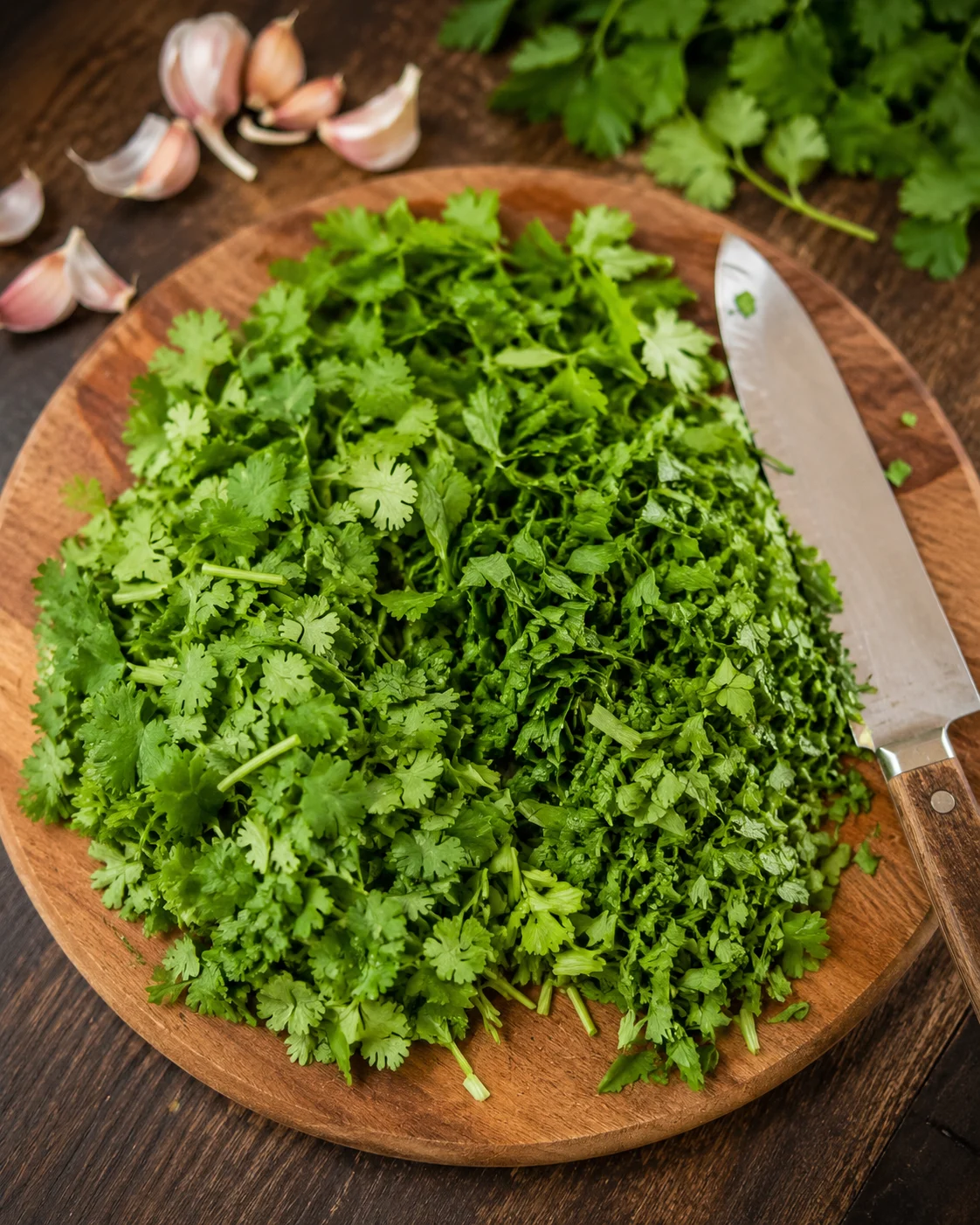
Step 1: Prepare the Herbs
Wash the coriander and parsley and dry them thoroughly. Cut off the tough lower stems but keep the soft upper ones. Roughly chop everything.
Prep tip: Dry the herbs properly, in a salad spinner or a clean towel. Wet herbs dilute the sauce and make it separate faster in the fridge, and this is the only step where you can quietly ruin the result before you have started.
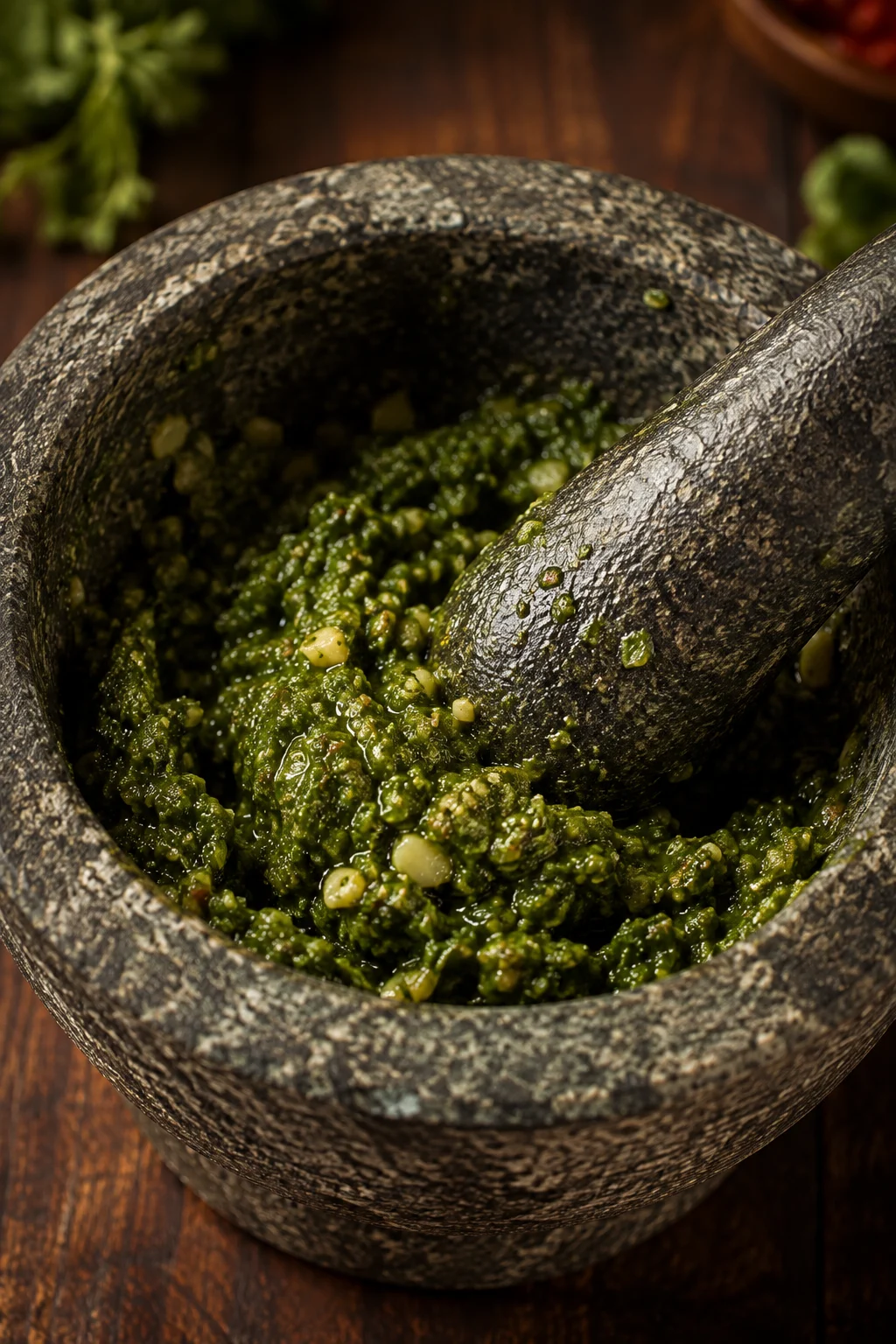
Step 2: Pound or Pulse
In a mortar, pound the garlic with the salt to a paste, then add the herbs in batches and pound to a coarse green mixture. Work in the cumin, paprika and pepper. In a processor, pulse the garlic first, then add everything except the oil and lemon and pulse in short bursts.
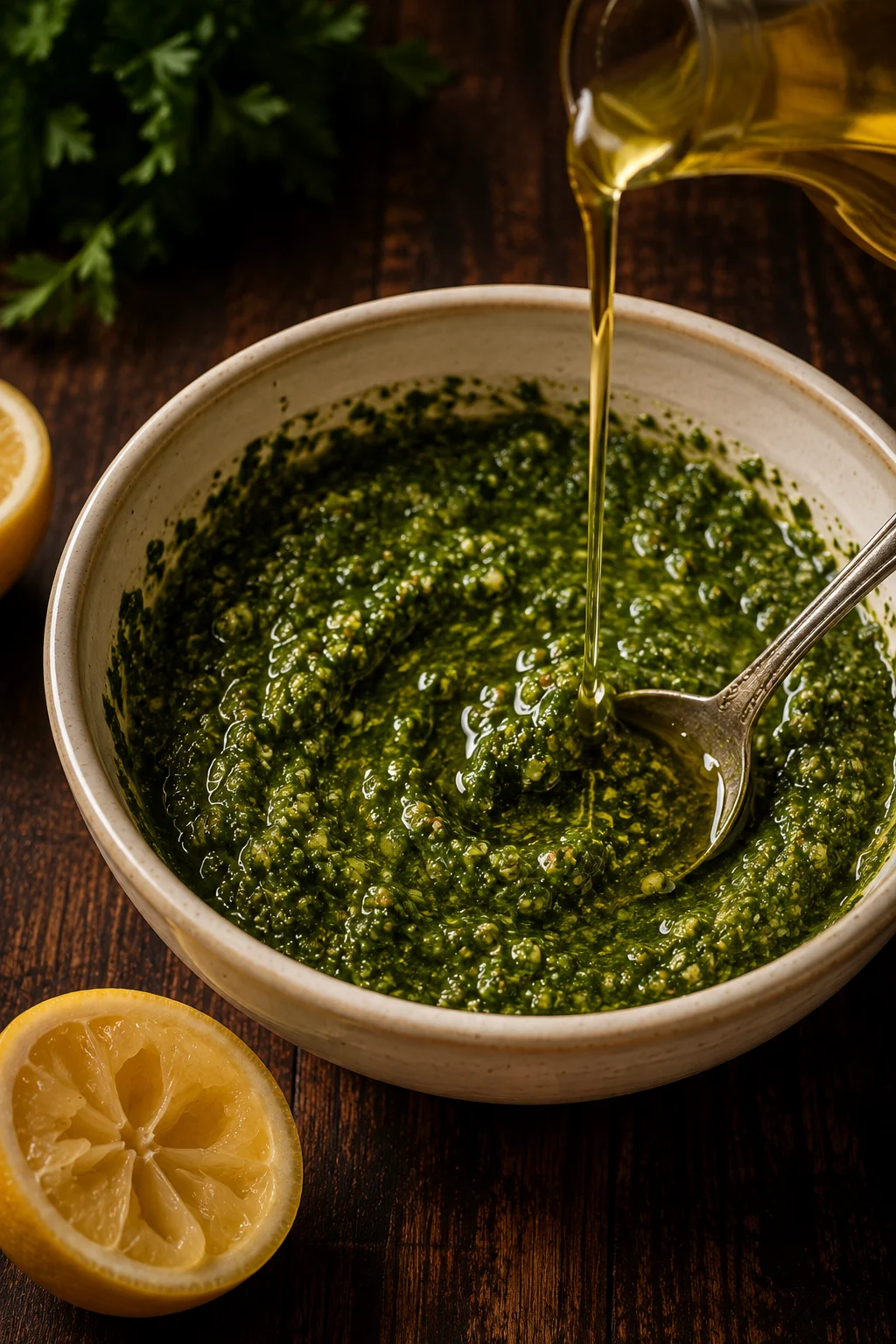
Step 3: Loosen with Lemon and Oil
Stir in the lemon juice, then pour in the olive oil in a steady stream while stirring. Taste and adjust the salt and lemon. It should pour thickly off a spoon.
Prep tip: Add the oil last and stir it in by hand rather than blending it. Olive oil processed at speed can turn slightly bitter, and stirring keeps the sauce loose and glossy instead of emulsified and thick.
Six Ways to Use It
Fish. The classic. Coat whole fish or fillets and leave 30 minutes before baking or grilling. The Tunisian fish soup recipe uses similar flavours, and chermoula-marinated fish is the obvious next step from it.
Chicken. Rub it under the skin and leave overnight. Add the ground ginger for this, and roast as usual. Excellent on the roast turkey legs recipe in place of the dersa.
Roast vegetables. Toss carrots, potatoes or squash in a spoonful before roasting, then add another spoonful after. Two spoons, twice the flavour.
Tagines. Stir a tablespoon into the chicken tagine recipe near the end of cooking, off the heat, so the herbs stay bright.
Grilled meat. Spoon it over kofta kebab straight off the grill. The heat releases the oils and the sauce runs into the bread.
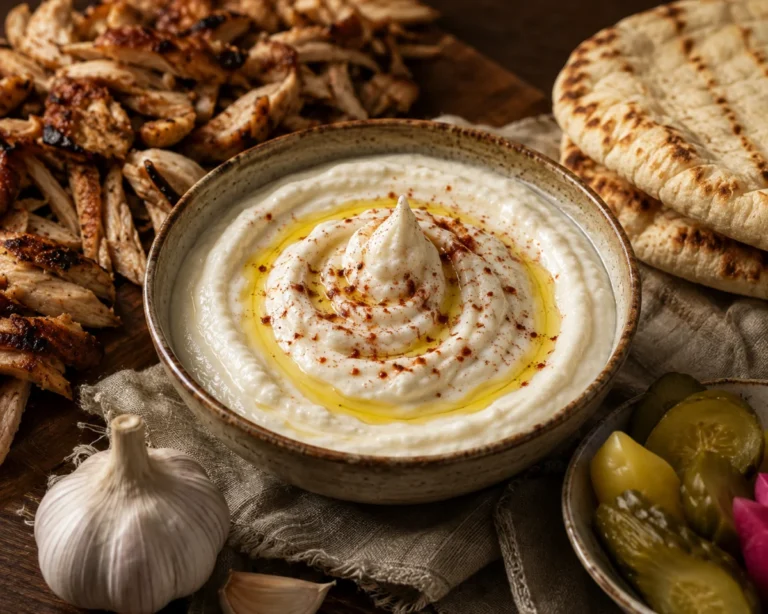
As a dip. Thin it with an extra tablespoon of oil and serve with the easy Moroccan bread recipe alongside olives, or beside a bowl of toum for two very different green and white sauces.
Pro Tips for the Best Chermoula
- Make it the day before if you can. The garlic mellows into the oil and the sauce settles. Day two is noticeably better than day one, which is unusual for a raw herb sauce.
- Store it under oil. Press it into a jar and pour a thin layer of olive oil over the surface. It keeps 5 days in the fridge that way, against 2 or 3 without.
- Freeze it in an ice cube tray. Two cubes is enough for a piece of fish. It freezes for 3 months and defrosts in minutes, which makes weeknight fish considerably easier.
- Salt it last, not first. Salt draws water out of the herbs, so adding it early makes the sauce weep. Season at the end when the oil is already in.
Regional Variations
Moroccan Chermoula
The version above: coriander-forward, lemony, cumin and paprika, sometimes with saffron for fish. This is the one most people mean.
Tunisian Chermoula
Leans on harissa and often uses more parsley than coriander, with a pinch of caraway. Hotter and less green. Add 1 teaspoon of harissa and ½ teaspoon of ground caraway to the base recipe.
Algerian Chermoula
Often includes more garlic and sometimes a little vinegar alongside the lemon, and is used heavily for sardines. Add an extra clove and a teaspoon of white vinegar.
Chermoula FAQs
What does chermoula taste like? Fresh, green and garlicky with warmth from cumin and paprika and a sharp lemon finish. It is not spicy unless you add chilli, and the coriander dominates.
How long does chermoula keep? Five days in the fridge if you store it under a layer of olive oil, or two to three without. It also freezes for 3 months, and ice cube trays are the easiest way to portion it.
Can I make chermoula without a food processor? Yes, and traditionally it is made in a mortar. Pounding gives a slightly rounder flavour than pulsing. Chopping by hand with a knife also works perfectly well; it just takes longer.
What is the difference between chermoula and chimichurri? Both are raw herb sauces built on garlic, oil and acid. Chermoula uses coriander, cumin and paprika and belongs to North Africa; chimichurri uses parsley, oregano and vinegar and belongs to Argentina. They are cousins and neither substitutes for the other.
Is chermoula vegan and gluten-free? Both, naturally. Herbs, garlic, spices, lemon and olive oil, with nothing else in it.
One Bowl, A Week of Dinners
Ten minutes, no cooking, and a jar in the fridge that turns fish, chicken and vegetables into something worth eating for the next five days. Chermoula is the least demanding recipe on this blog and probably the most useful.
Make a batch this week and report back: mortar or machine, coriander-heavy or parsley-heavy, and what you ended up putting it on. Probably more things than you planned.
Rate this recipe
No ratings yet — be the first!



Salt it at the end, not the beginning. Salt pulls water out of the herbs, and a sauce salted early will weep in the jar within a day.
Comments
No comments yet. Yours would be the first.
Made this? Tell me: mortar or machine, and what you ended up putting it on.
Leave a comment
Comments are anonymous and appear after admin approval. If you rated this recipe above, your stars will show with your comment.