
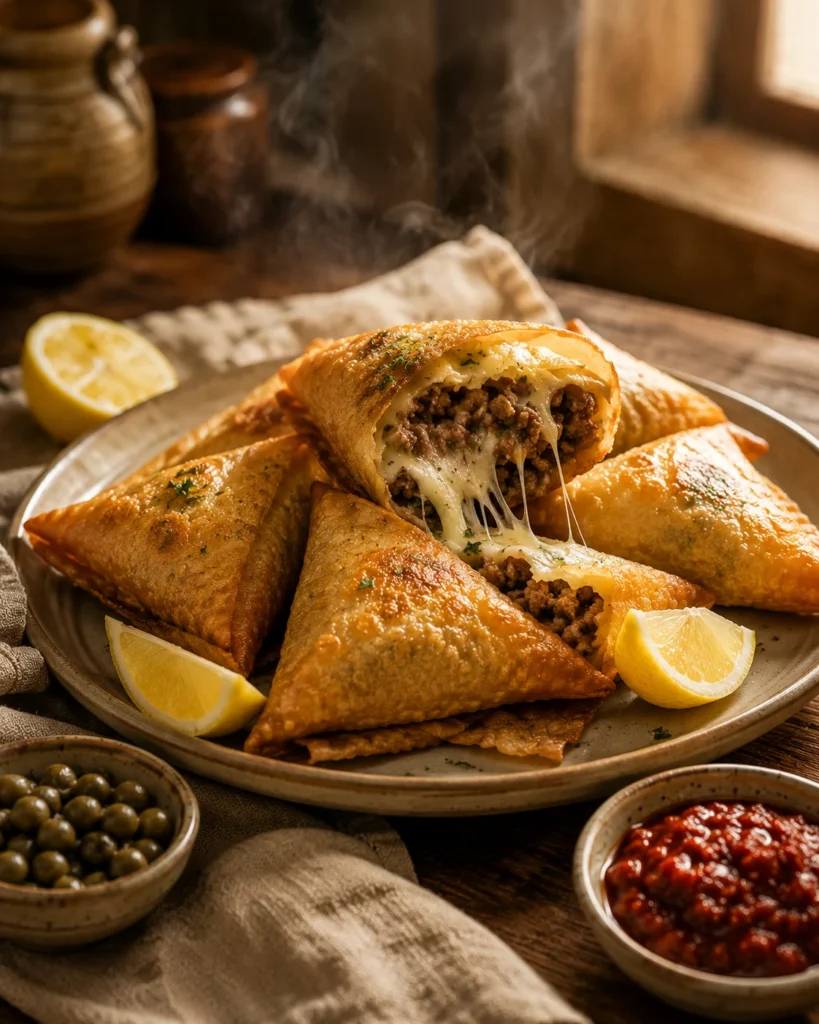
The Snack You Eat Standing Up
Walk through any Tunisian market at dusk and you will find someone frying Tunisian brik: thin pastry triangles dropped into hot oil, puffing and blistering within seconds, lifted out golden and handed over in paper. People eat them standing, folded in half, with a squeeze of lemon and no ceremony whatsoever.
The pastry is the thing. Malsouka, the Tunisian sheet used for brik, is thinner than filo and fries into something that shatters rather than crunches, with a texture no other pastry quite matches. Inside: spiced minced meat, melting cheese, onion and parsley, all bound with egg.
Brik is Ramadan food above all, appearing on iftar tables across Tunisia every single evening of the month, but it belongs to any occasion where people gather and eat with their hands. It is also one of the few fried dishes that takes almost no skill, provided you get two things right.
This is the thing to make when guests arrive unannounced, because the filling takes five minutes and the frying takes two. There are exactly two ways brik goes wrong in hot oil, and both are marked in the steps below.
Ahead: the ingredient list, four steps with photos, where to find malsouka and what to use instead, the folding method explained in plain words, and the famous egg version everyone asks about.
About Brik: Tunisia’s Most Famous Bite
Brik is Tunisia’s national snack and its most recognisable food abroad. The word covers a family of filled, fried pastry parcels, of which two dominate: brik à l’oeuf, containing a whole runny egg, and the meat and cheese version in this recipe, which is easier for a first attempt and far less messy to eat.
It is street food, home food and celebration food at once, sold from carts and stacked on plates at family gatherings. Across the border the same idea appears as Algerian bourek, and further east as Turkish börek, though the Tunisian pastry is thinner and the shape more often a triangle.
The eating ritual matters as much as the recipe: brik is served immediately, always with lemon, and eaten with your hands while it is still too hot to be sensible about. For more of the same street-food tradition, the kaftaji recipe and the Tunisian tajine round out the table.
Pastry, Filling, Oil
Pastry and Filling
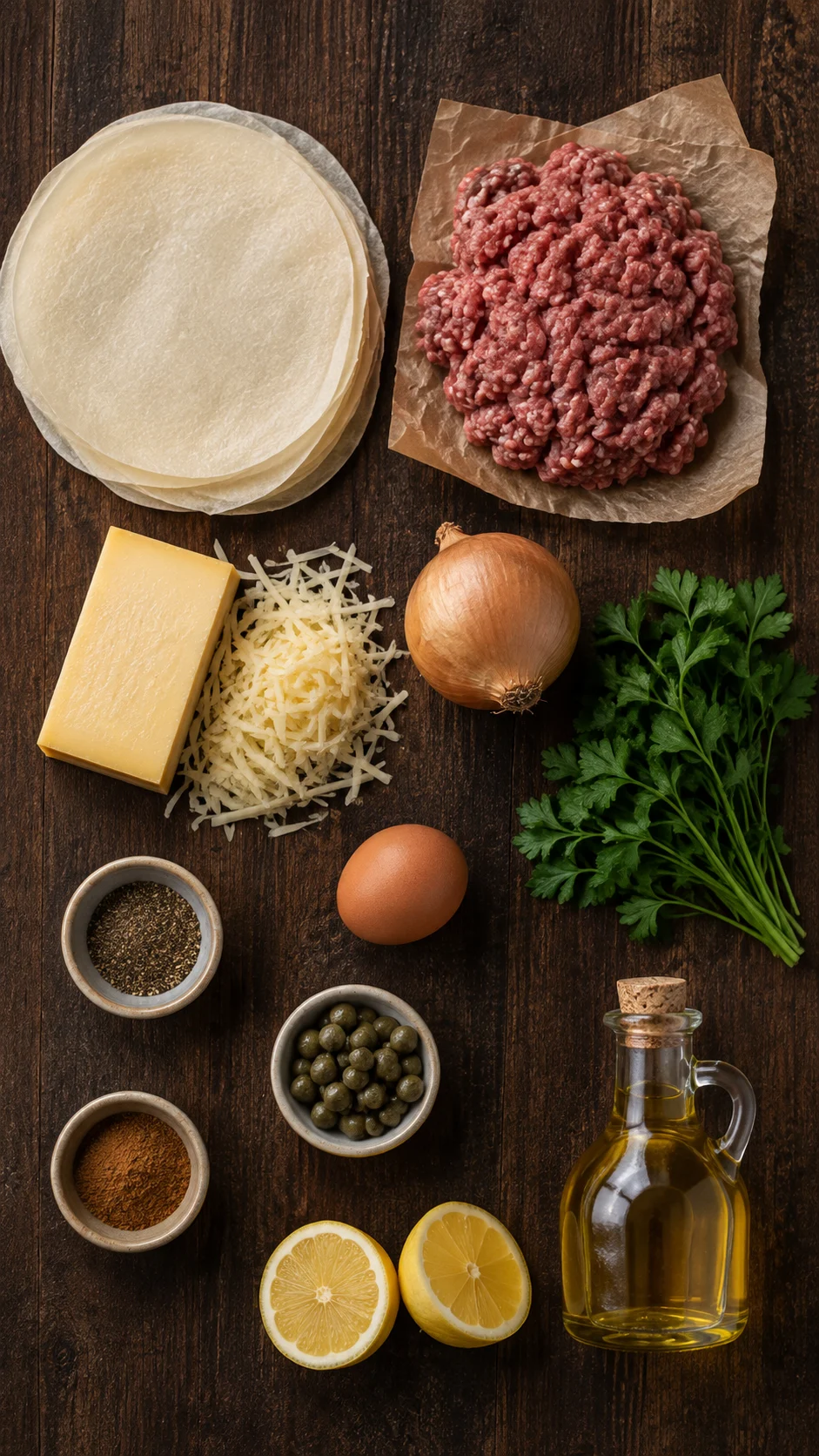
Makes 8 to 10 briks
For the filling:
- 10 oz (300 g) ground beef or lamb
- 1 small onion, finely chopped
- 4 tablespoons chopped fresh parsley
- 3½ oz (100 g) Gruyère, grated
- 1 egg
- 1 teaspoon black pepper
- ½ teaspoon ground cinnamon
- ½ teaspoon salt, plus more to taste
For assembling and frying:
- 8 to 10 sheets malsouka (brik pastry), or filo
- 1 beaten egg or a small bowl of water, for sealing
- Vegetable or sunflower oil, for frying
- Lemon wedges, to serve
- Optional: capers and harissa on the side
Where to Find Malsouka Pastry
Malsouka is the correct pastry and it is worth seeking out: any North African or Middle Eastern grocery stocks it, usually frozen or refrigerated in round sheets, sometimes labelled brick, brik or warqa. Larger supermarkets in France and parts of the UK carry it; in the US it is mostly a specialty-store item.
If you cannot find it, filo is the accepted substitute. Use two sheets stacked together, since filo is thinner and more fragile, and brush lightly between the layers with oil. The result is crisp and very good, just slightly less shattering than the real thing.
If Malsouka Is Unavailable
- No Gruyère? Any firm melting cheese works: Emmental, mozzarella, or even a mild cheddar. Tunisian cooks often use whatever is in the fridge.
- No malsouka or filo? Spring roll wrappers fry up crisp and hold together well, though the texture is chewier.
- Not frying? Brush with oil and bake at 400°F (200°C) for 15 to 18 minutes, turning once, or air fry at 380°F for 10 to 12 minutes.
Filling, Folding, Sealing, Frying
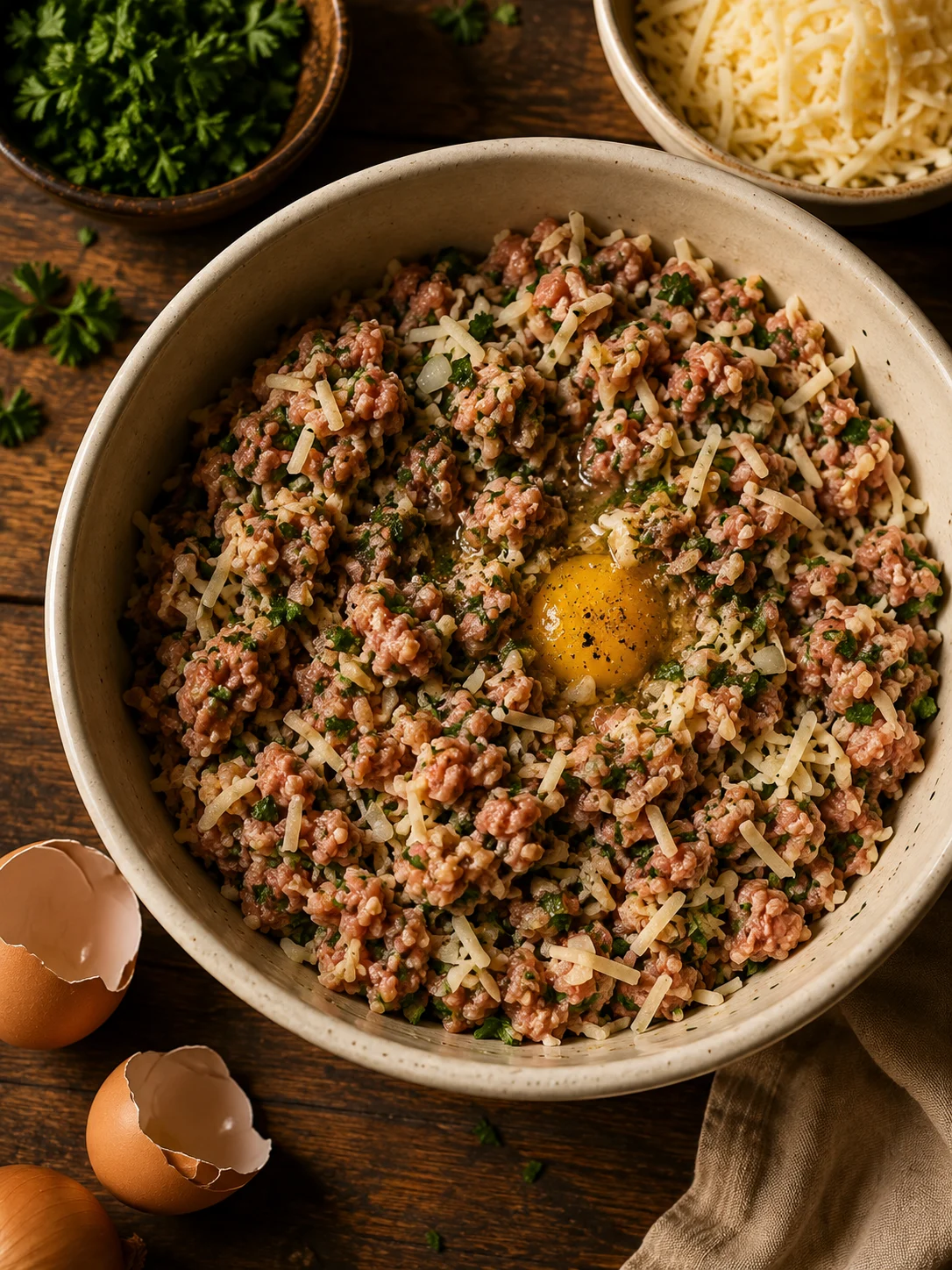
Step 1: Mix the Filling
Combine the ground meat, onion, parsley, grated Gruyère, egg, salt, pepper and cinnamon in a bowl and mix thoroughly until evenly distributed. The mixture should hold together loosely when pressed.
Prep tip: Use the meat raw. It cooks through in the hot oil in the time the pastry takes to colour, and pre-cooking it dries the filling out. If your mixture looks wet, add a spoonful of breadcrumbs rather than draining it.
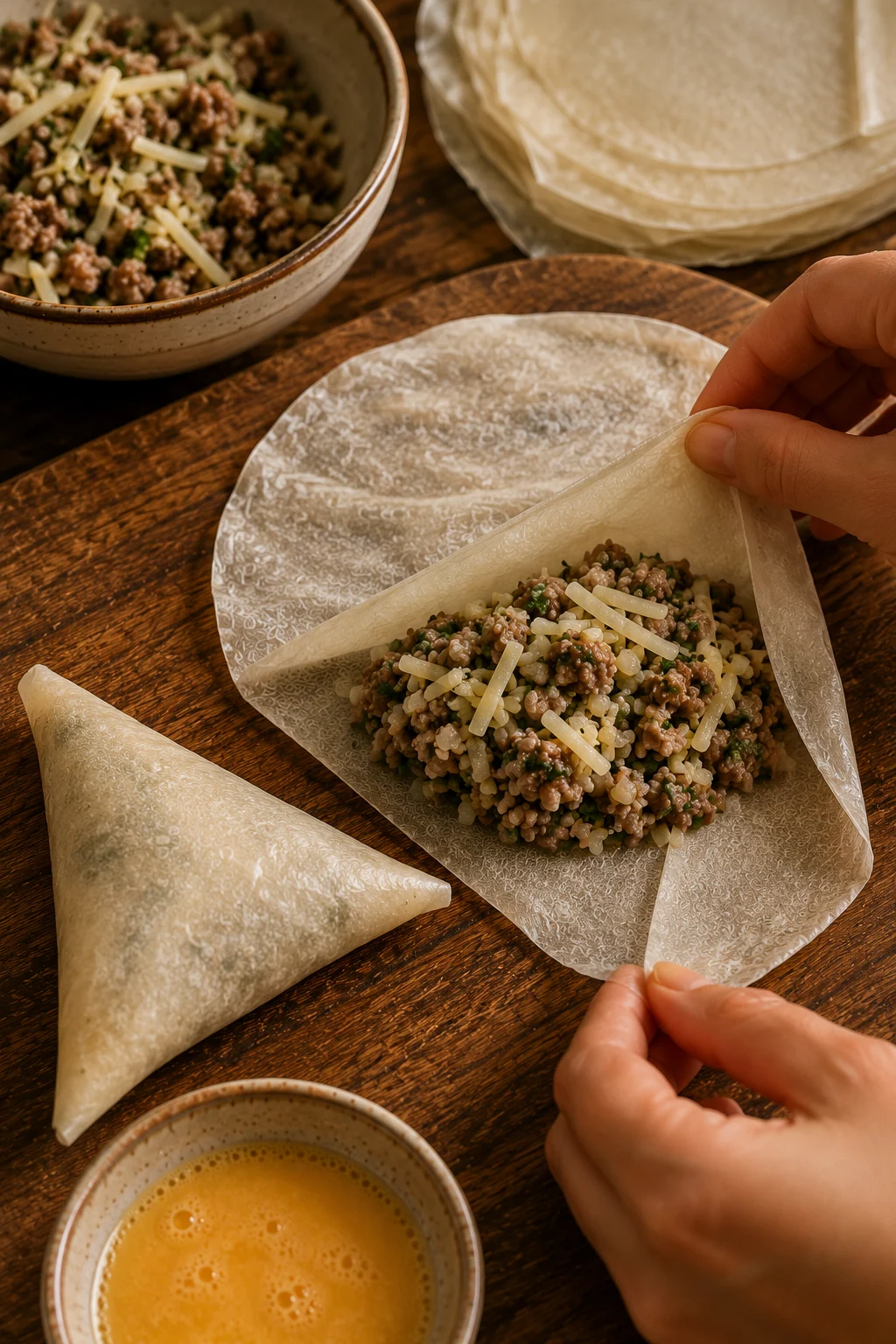
Step 2: Fill and Fold
Lay a sheet of pastry flat. Place a heaped tablespoon of filling in one corner, spreading it into a rough triangle shape and leaving a clear border. Fold the corner over the filling, then keep folding the parcel over on itself along the sheet, alternating direction, until you have a sealed triangle. Brush the final edge with beaten egg and press firmly.
Prep tip: Two rules keep them intact in the oil. Do not overfill, because a fat parcel bursts at the seam, and press every fold flat as you go so no air is trapped inside. Trapped air expands in hot oil and blows the pastry open.
Step 3: Fry Fast and Hot
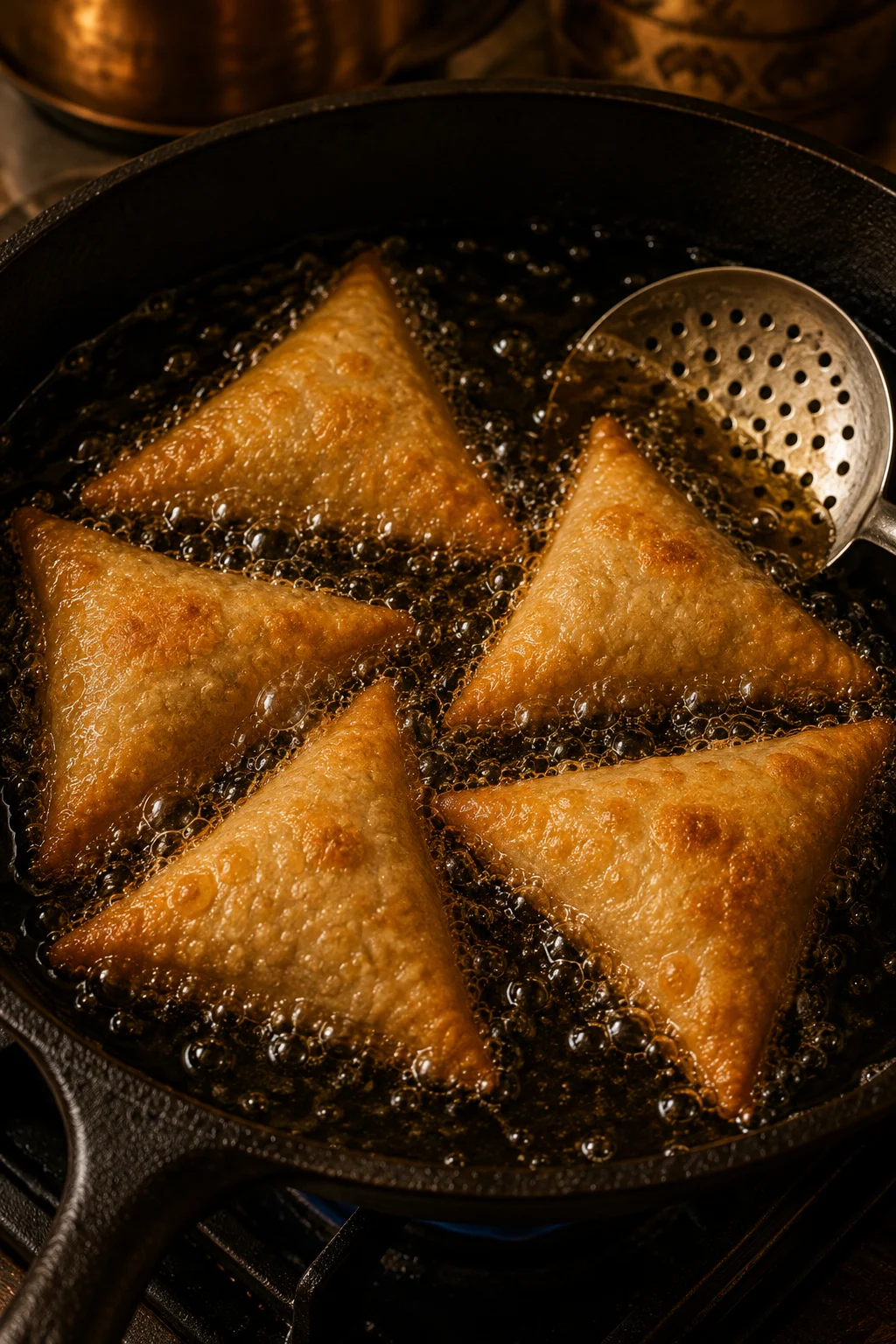
Heat about 1 inch of oil to 350°F (175°C). Slide in two or three briks at a time and fry for 2 to 3 minutes per side, until deeply golden and blistered. Lift out and drain on paper towel.
Prep tip: No thermometer? Drop in a scrap of pastry: it should sizzle immediately and float up within two seconds. Oil that is too cool soaks straight into the pastry and gives you a greasy, heavy brik, which is the single most common complaint with this recipe.

Step 4: Serve Immediately, with Lemon
Pile them onto a plate, add lemon wedges and a small bowl of capers or harissa, and serve straight away while the pastry is still shattering.
Sealing the Edges Before the Oil
- Keep the pastry covered. Malsouka and filo dry out within minutes of being unwrapped and then crack when folded. Keep the stack under a slightly damp cloth while you work.
- Assemble everything before you heat the oil. Frying takes five minutes total; folding takes twenty. Trying to do both at once is how briks end up burnt on one side.
- Storage: Brik does not keep. It is a fresh-from-the-pan food and softens within the hour. What you can do is freeze them raw, laid flat on a tray then bagged, for up to 2 months, and fry straight from frozen with an extra minute per side. Ground meat should reach a safe internal temperature per USDA guidance.
- Serve the lemon, always. The sharpness against the fried pastry and rich cheese is not a garnish, it is part of the design.
Tuna, Egg, and Prawn Fillings
Brik à l’Oeuf (The Famous Egg Version)
The classic. Make a small well in the filling and crack a whole egg into it before folding, then fry just until the white sets and the yolk is still runny, about 2 minutes per side. Eaten by folding it in half and catching the yolk, which is a skill and also the entire point.
Tuna and Potato Brik
The other Tunisian standard: mashed potato, drained tuna, capers, parsley and harissa, no meat. Cheaper, lighter, and just as traditional.
How I Fold Mine
In my kitchen a spoonful of harissa goes into the meat filling, and there is always one brik made with double cheese and no meat for whoever claims not to be hungry. The lemon wedges get squeezed over aggressively, and nobody in this house has ever waited for them to cool.
Lemon, Salad, and Nothing Else
Brik is a starter or a snack rather than a main, so it wants company: lemon wedges without exception, capers, harissa, and a sharp salad. the easy tabbouleh recipe works well, and a bowl of olives never hurts.
On a Ramadan table, brik traditionally arrives alongside soup, and the Tunisian fish soup recipe or the harira recipe are exactly the right partners. Finish with mint tea from the Moroccan mint tea recipe.
Brik, Answered
What is brik pastry called and where do I buy it? Malsouka, sometimes labelled brick, brik or warqa. Any North African or Middle Eastern grocery stocks it, usually frozen. Filo is the accepted substitute if you use two stacked sheets.
Why do my briks burst in the oil? Two causes: overfilling, or air trapped inside the parcel. Use a heaped tablespoon at most, press every fold flat as you go, and seal the final edge firmly with beaten egg.
Why is my brik greasy? The oil was not hot enough. It needs to be around 350°F so the pastry seals instantly on contact. Test with a scrap of pastry: it should sizzle and rise within two seconds.
Can I bake brik instead of frying? Yes: brush with oil and bake at 400°F for 15 to 18 minutes, turning once, or air fry at 380°F for 10 to 12 minutes. The texture is crisp rather than shattering, but it is a genuinely good version.
Can I make brik ahead or freeze it? Fold them ahead and refrigerate for a few hours, or freeze raw on a tray then bag them for 2 months and fry from frozen. Do not fry ahead: brik softens within an hour and cannot be revived.
Fry, Squeeze, Eat, Repeat
Five minutes of mixing, twenty minutes of folding, and two minutes in hot oil for something that shatters when you bite it. Tunisian brik asks almost nothing of you and gives back more than most fried things do.
Make a batch for the next gathering and report back: meat and cheese or the runny egg version, and whether anybody managed to wait for them to cool. Nobody ever does, and the lemon is always gone first.
Rate this recipe
No ratings yet — be the first!


Do not overfill, and press every fold flat as you go. Trapped air expands in hot oil and bursts the pastry, which is the one thing that goes wrong with brik.
Comments
No comments yet. Yours would be the first.
Made these? Tell me: meat and cheese or the runny egg version, and did anyone wait for them to cool?
Leave a comment
Comments are anonymous and appear after admin approval. If you rated this recipe above, your stars will show with your comment.